If you’re old enough to remember the movie Lethal Weapon 3, you may remember all the animal rights posters plastered around the police station in the film. That was classic Donner, who was known for sneaking social messages into his movies. In this instance, he was taking aim at General Motors, which at that time was still smashing up pigs and ferrets in crash tests. His action helped PETA end those deadly experiments.
Donner and his compassionate wife, Lauren Shuler Donner, received PETA’s Humanitarian Award at our 25th Anniversary Gala, but he will be forever remembered for his call to end the confinement of marine mammals. His Free Willy informed a whole generation about animals in marine parks.
“Removal of these majestic mammals from the wild for commercial purposes is obscene. … These horrendous captures absolutely must become a thing of the past.”
—Richard Donner
Donner appealed to SeaWorld to fund the creation of a coastal sanctuary so that the orcas at its parks could be retired. PETA is still pushing that initiative forward.
If you’re one of Donner’s millions of fans, please honor his legacy by doing something to make a difference for animals.
Searching for birds for sale? Before you even think of purchasing one of these sensitive and complex animals at a “pet” store, from a breeder, or anywhere else, be sure to check out the 10 shocking “pet” bird facts below to learn why you should never buy them.
Nature vs. Torture: Why You Should Never Buy Birds for Sale as ‘Pets’
Unlike the dogs and cats with whom many people share their homes and lives, birds are undomesticated (“wild”) animals who haven’t evolved to live indoors alongside humans as companions. Only a few generations removed from free bird colonies living and flying in their natural habitats, birds born into the “pet” industry find being confined to a cramped cage—or even a larger indoor space, such as a room—endlessly frustrating.
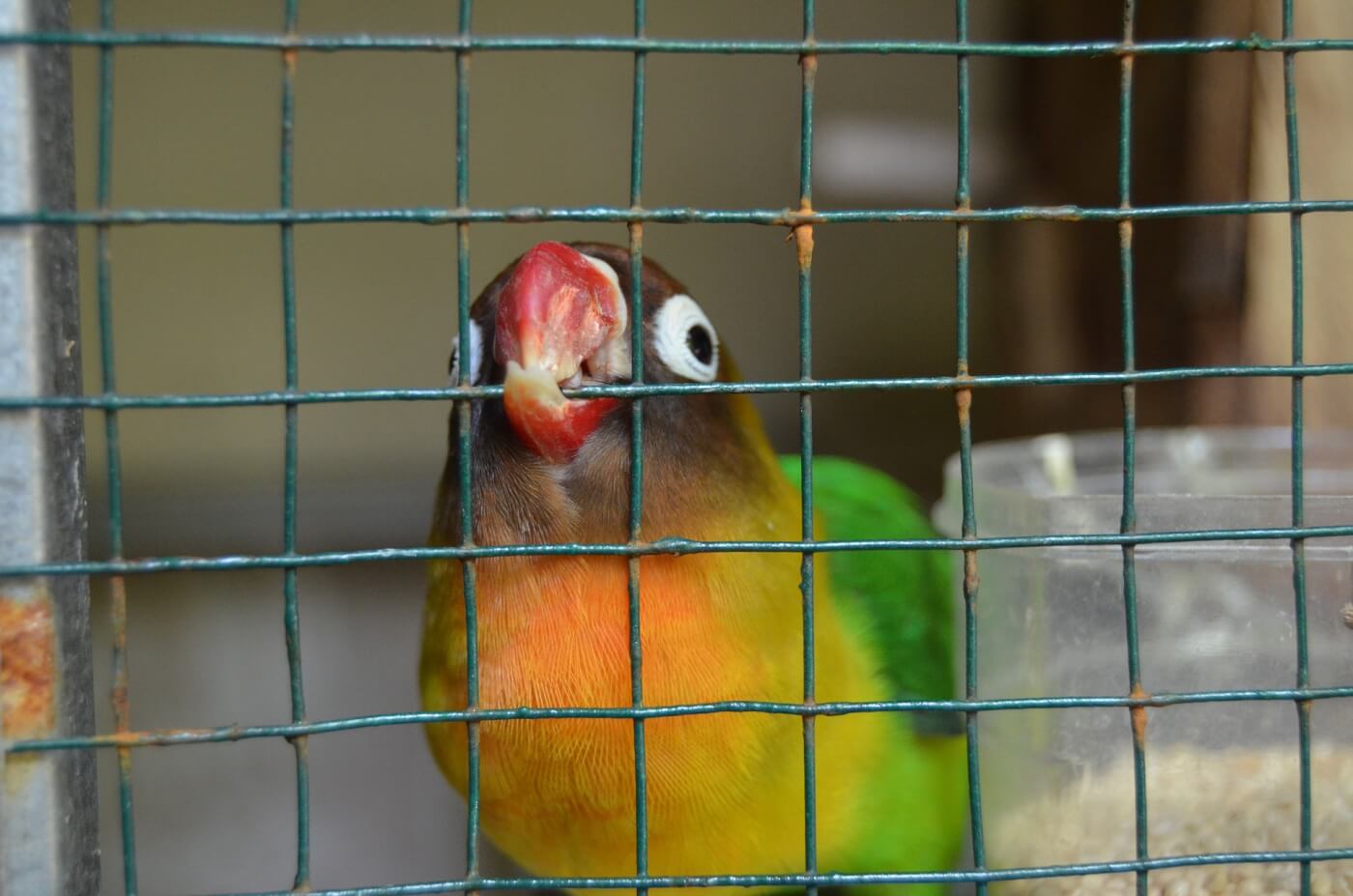
Caging birds or keeping them as “pets” denies them the opportunity to exercise properly through flight, use their large brains to flex their cognitive and social skills, or communicate their feelings to other members of their species—however, all these things are vital to their well-being and survival. The constant stress of captivity and claustrophobia may cause birds sold as “pets” to scream, bite, pace, repeatedly peck at the cage bars, or pull out their own feathers until their skin is raw and bloody.
Birds of all species express different types of physical and social behavior daily that highlight their phenomenal abilities, superb senses, and unique personalities. In nature—perched in the treetops, swimming in the water, or soaring high above the ground—these can help birds woo a mate, locate food for their babies, or call to other members of their flock who may be hundreds of feet away. Indoors, people who’ve bought birds for sale as “pets” often quickly find that the natural—and unnatural—types of behavior exhibited by captive birds just don’t suit life in a human home.
Whenever someone buys parrots, cockatoos, parakeets, conures, lovebirds, cockatiels, ducks, or any other species of bird for sale as “pets,” they deny those animals the ability to express so many of their most basic, instinctual needs. Even those who follow the advice of bird-care books to the letter will never know a “pet” bird who is fully happy, healthy, and whole.
The following 10 facts show why you should never buy birds for sale in pet stores or online.
1. Huge Parrot-Breeding Mills Breed Many of the Birds for Sale in Pet Stores
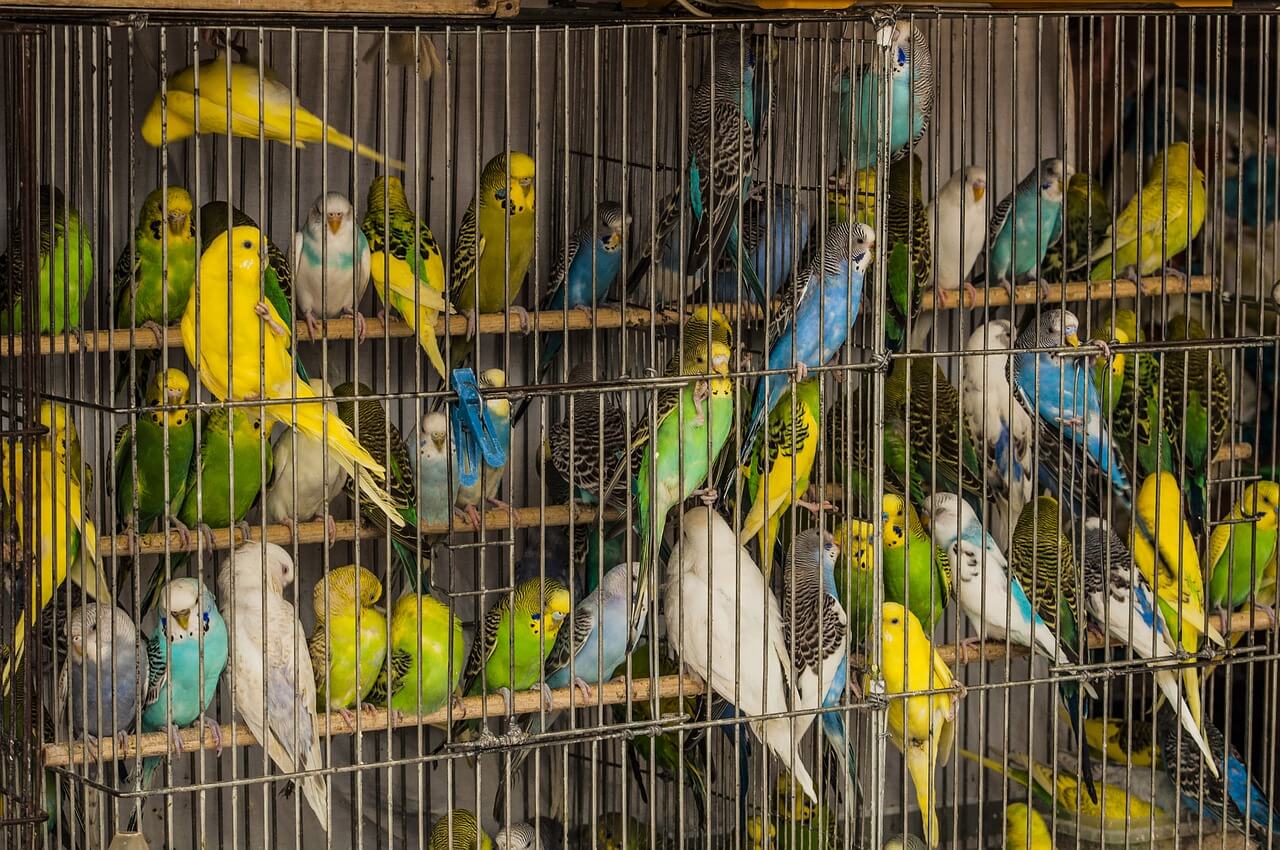
In these filthy facilities, breeders keep hundreds of birds in rows of barren cages, depriving the social and intelligent animals of enrichment or interaction . These seedy operations are no different from other breeding mills, like puppy mills, where animals are churned out as quickly as possible for profit.
No matter where you buy birds for sale, you should expect that your money is probably flowing back into one of these breeding mills, where baby birds and their parents suffer and die.
2. Breeders Steal Baby Birds Away From Their Doting Parents
In order to force mother birds—who are possibly still grieving and recovering—to lay eggs again more quickly, breeders take their eggs and hatchlings away and shove them under hot, artificial lights. There, the newborns huddle together on paper towels in a plastic bin. Humans feed the young birds unnaturally by hand, denying them the warmth and care of their parents. To reduce costs further, breeding mills often sell babies like these to pet stores, where they may be fed by inexperienced or undertrained staff members.
Petco sells birds who have been “hand-fed,” which means that humans tore them from their parents at a young age. Pet stores, websites, and breeders falsely market hand-fed birds as friendlier and better able to bond with humans because of their forced early exposure to them— but removing a fledgling from his or her nest is always inhumane. Baby parrots, for example, have evolved to stay with their parents for months in nature.
Many young birds for sale in pet stores die as a direct or indirect result of hand feeding, while the survivors go out onto the sales floor. There, sales clerks try to peddle them to uninformed customers in an environment that’s loud, bustling, unfamiliar, and stressful for the animals.
3. ‘Pet’ Birds’ Wings Are Often Clipped, Which Prevents Them From Flying
Some birds, such as cockatiels, can fly up to 30 miles a day and as fast as 30 mph in their natural habitats. Green-cheeked conures have been spotted roughly 9,000 feet in the air, flying through the clouds above the Andes Mountains.
Devastated by their inability to fly as they’re meant to, birds with clipped wings who are sold as “pets” often suffer greatly from emotional stress. Some even turn their frustration outward and begin exhibiting psychological or behavioral problems. And clipping doesn’t just take a mental toll on birds—it can cause physical issues as well.
Birds kept as “pets” need to be out of their cages all day so that they can walk around and explore safe environments—but be aware that parrots will eat or chew wood cabinets, baseboards, drywall, and other household objects. Many people who rush out to buy a bird aren’t prepared for this, so they lock the animals away in cages, where they scream for attention and hurt themselves.
4. Millions of Birds Worldwide Are Stolen From Their Homes and Smuggled Illegally
Once they’ve been torn from their nests, mates, or flocks, these birds are traded on the black market and are often ultimately sold to unsuspecting people. Many people who buy birds as pets are unprepared for their needs and unable to provide any meaningful relief to the traumatized animals. Some birds may spend the rest of their lives in a state of mourning or distress after being abused and exploited by humans in this way.
5. Just Like Cats, Dogs, and Humans, Birds Feel Love, Fear, Pain, and Joy
They can never lead the rich, full lives that they deserve when they’re caged and kept as “pets.” Their goal in life is to bond and find a mate, and free birds will fly miles and miles in search of this companionship.
Birds are intelligent and require stimulation. In captivity, they need puzzles and enrichment in order to mimic their natural behavior and stay cognitively engaged. They also require expensive toys that they can pick apart—meaning that the toys have a short shelf life and that bird guardians must frequently replace them.
6. Companionship Means Everything to Birds
In nature, birds such as zebra finches live together in large groups of 100 or more. Cockatiels live for around 10 years in their natural habitats, where they spend their days socializing, preening, and foraging on the ground with their large flocks. Sun conures typically live in groups of 10 to 30 and rarely leave each other’s sides. But confined to lonely cages and kept as “pets,” these and other highly social birds often live in too-small groups—or sometimes completely alone. For them, this is no life at all. Some stores like Petco even encourage customers to buy a solitary bird so that the animal will bond to them instead of to another bird.
Kept apart from others of their own kind, birds will bond deeply with their human companions, and they’ll scream endlessly when separated. Making a social animal spend the majority of their time alone is like taking away half of their heart. Once bonded with a human companion, many birds left home alone will pluck out their own feathers or destroy objects out of distress and frustration.
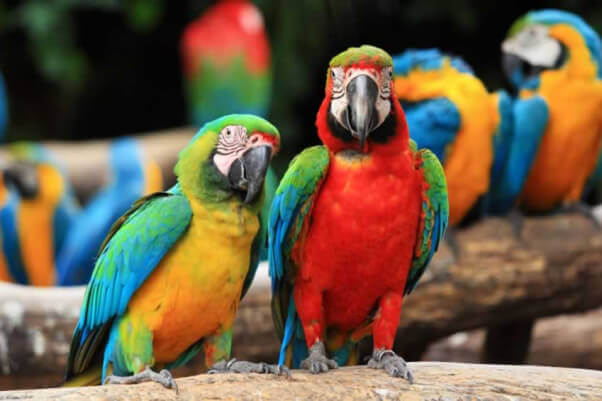
7. Macaws Can Live for 80 Years
Many consumers purchase parrots from pet stores or breeders on a whim when the birds are still very young. But buyer beware: To sell as many birds as possible, some retailers will purposefully withhold information about the high level of long-term, specialized care that birds like these—who can live for multiple decades—require in order to achieve a semblance of a tolerable life. For instance, some people don’t even realize when buying a parrot as a “pet” that the bird may very well outlive them.
Anyone who buys a macaw from a pet store or breeder needs to have a multigenerational plan in place to provide that animal with a safe home for the entirety of his or her life. This means securing the commitment of another human guardian (or guardians) to continue caring for the bird properly after his or her first human companion has died.
8. Birds Need to See Expensive Avian Veterinarians for Bloodwork
Did you know that birds need fresh fruits and veggies every day? Or that in some bird species, the formation of eggs can lead to a serious calcium depletion that can prove fatal?
Caring for birds in a way that keeps them even relatively happy and healthy is no easy feat, and they have many species-specific needs. For example, many owners don’t realize that some bird species must spend a certain amount of time in the dark to keep from developing or laying eggs—and female birds can become ill or even die if eggs become stuck inside their bodies.
Finding a high-quality vet who specializes in bird care in your area may be difficult. If you can’t find a good avian vet anywhere near you, that’s yet another important reason why you should never buy birds for sale.
9. The Novelty Can Quickly Wear Off
Breeders and retailers market some bird species to humans by promoting their intelligence and talents, including the ability to speak—but sometimes, if a bird doesn’t behave or “perform” as expected by impatient or speciesist humans, the animal is considered a “nuisance.”
It may not be apparent to impulse buyers just how loud birds can actually be. Because some species have voices specifically adapted to carry through thick jungle canopies across vast distances, bird guardians may discover that they need to wear headphones at home whenever the bird is awake to help muffle the sounds of their vocalizations. Other bird-buyers may not know that they can’t own or use any nonstick cookware because the fumes will kill birds.
Unwanted birds endure neglect, relinquishment to already overburdened shelters, or, in some cases, a short-lived freedom after being released outdoors. There, they face an almost certain death because of their inability to find food or water, handle adverse weather conditions, protect themselves from diseases, or escape attacks from predators.
10. Birds Kept as Pets Are Often Neglected and Misunderstood
As a result of their nearly constant depression, loneliness, and unhappiness, many caged birds kept as “pets” may bite, scream, pick their own feathers, self-mutilate, eat too little, pace, or swing their heads. Never buy birds for sale as “pets” if you’re not prepared to deal with the following types of behavior.
Biting: This is often a sign of stress and fear. Birds will frequently bite and lunge to try to protect themselves when they’re afraid, but they’ll bite for fun as well. They have beaks for a reason, after all—to crack open seeds and nuts. They’ve also evolved over generations to interact with other animals who have beaks, not with soft and fleshy humans. A curious bird can pierce a human lip or nostril in a heartbeat, but it’s not aggression—for them, it’s a natural, curiosity-driven behavior.
Screaming: A sudden increase—or decrease—in screaming, screeching, or other vocalizations may indicate that a bird is stressed, unhappy, deprived, or ill. However, some birds, like cockatoos, just enjoy screaming. They derive fun and enjoyment from seeing how loud they can get.
Feather picking: This is a common outward manifestation of internal stress, heartbreak, or frustration. Although this troubling behavior is usually seen in larger species—such as eclectus parrots, cockatoos, and African grey parrots—it can develop in smaller species, too, including Quaker parrots and lovebirds. Some birds will start picking as a result of a specific cause or trauma, such as loud noises from home renovation or construction projects, and they may continue to pick long after the stressful event has ended.
Self-mutilation: Some deeply stressed or unhappy birds will go beyond feather picking to chew on their skin—in some cases even digging into muscle and bone—which causes severe trauma. Many birds start to mutilate themselves after they’re abandoned and passed from home to home by owners who are unwilling to continue caring for them. They’ll take the stress and pain that they experience from loneliness or abandonment and turn it on themselves.
Decreased appetite: Depressed birds may eat less and lose weight.
Other: Some species, especially cockatoos, manifest stress as stereotypical (repetitive) types of behavior, such as pacing, toe tapping, and head swinging. Birds often perform these actions to stimulate themselves because they’re profoundly frustrated.
Never Buy Birds for Sale
Pet stores and bird breeders are unlikely to tell you any of the important information above. That’s because, at the end of the day, they just want to sell a “product” and make some quick cash. But remember—there’s no such thing as a “starter pet.” Birds in the pet industry are individuals with complex needs and big personalities. They’re not learning tools for children, and they should never be given as gifts. They experience deep emotions and can never be fully satisfied with a life spent trapped in a cage or cooped up indoors.
Don’t fund their suffering.Say no to “pet” birds and never buy birds for sale.
If you’re certain that you can provide birds with diligent, loving care for their entire lives, be sure to do the responsible thing and adopt from a shelter or rescue group. Never fund the cruel pet trade by buying animals.
Tomorrow morning, PETA supporters will arrive at National Institutes of Health (NIH) Director Francis Collins’ Chevy Chase, Maryland, home with a monkey statue bearing more than 179,000 signatures demanding an end to NIH experimenter Elisabeth Murray’s painful, traumatizing, deadly experiments on monkeys. Murray has received nearly $50 million in taxpayer funding since 1998 to inflict brain damage on monkeys. She cuts into their heads and injects toxins into their brains, surgically implants “head posts” directly into their skulls to keep their heads stock-still for hours, deprives them of food and water to force them to cooperate, and terrorizes them with realistic-looking snakes and spiders. And she hasn’t produced a single treatment or cure for humans.
When: Wednesday, July 7, 9 a.m.
Where: Collins’ Home
“Decades of caging, mutilating, and terrorizing monkeys have, unsurprisingly, taught us nothing about human health,” says PETA Vice President Dr. Alka Chandna. “PETA is bringing the message home to Francis Collins: The monkey fright laboratory must be shut down.”
PETA—whose motto reads, in part, that “animals are not ours to experiment on”—opposes speciesism, a human-supremacist worldview. For more information, please visit PETA.org or follow the group on Twitter, Facebook, or Instagram.
Because a tropical storm watch is in effect in southwest Florida, PETA reminds that people should never leave dogs tethered or penned outside and always take their animal companions with them if they have to evacuate their homes.
Believe it or not, every time there’s a natural disaster, many dogs and other companion animals are left outside to fend for themselves and even left behind when humans evacuate. Dogs kept tethered will swim to exhaustion and drown—and there are tethered dogs everywhere. PETA’s Animal Rescue Team has witnessed firsthand the trauma that animals endure when left behind to face floodwaters and flying debris. During previous storms, we have found dogs dead. We have also found them up to their necks in water, unable to sit or lie down, and in almost-submerged crates inside houses and seen animals who have been flung around by high winds. And of course, animals are petrified in these kinds of weather conditions.
PETA is sharing its natural disaster–preparedness PSA featuring Dean Winters. It will remind people to make plans to ensure the safety of their animal companions long before evacuating. For more information, please visit PETA.org.
Because a tropical storm watch is in effect in southwest Florida, PETA reminds that people should never leave dogs tethered or penned outside and always take their animal companions with them if they have to evacuate their homes.
Believe it or not, every time there’s a natural disaster, many dogs and other companion animals are left outside to fend for themselves and even left behind when humans evacuate. Dogs kept tethered will swim to exhaustion and drown—and there are tethered dogs everywhere. PETA’s Animal Rescue Team has witnessed firsthand the trauma that animals endure when left behind to face floodwaters and flying debris. During previous storms, we have found dogs dead. We have also found them up to their necks in water, unable to sit or lie down, and in almost-submerged crates inside houses and seen animals who have been flung around by high winds. And of course, animals are petrified in these kinds of weather conditions.
PETA is sharing its natural disaster–preparedness PSA featuring Dean Winters. It will remind people to make plans to ensure the safety of their animal companions long before evacuating. For more information, please visit PETA.org

 © StarMaxInc.com