
The post Hot Backyard Dog Warning (0:60) appeared first on PETA.
Python Escapes Enclosure in Shopping Mall—Stand Against Seedy Mall Aquariums!
Large reptiles don’t belong in shopping malls. The escape of a 12-foot-long python from an enclosure at the BlueZoo aquarium—located within a Louisiana shopping center—is just one reason why. The aquarium shut down temporarily as authorities searched for Cara, the Burmese python who was loose in the mall for approximately 62 hours—but this is just more proof that these seedy facilities shouldn’t exist.
Friends, while our day and night search for Cara continues, we want to give you a quick update. We’ve brought in…
Posted by Blue Zoo Baton Rouge on Wednesday, July 7, 2021
The best way to prevent exotic animals from getting loose in shopping malls is to not have them in shopping malls in the first place.
Reptiles like Cara don’t want to interact with humans—so imagine how stressful a busy shopping mall is to a solitary snake. In their natural habitat, snakes warm themselves in the sun, cool off by burrowing underground, climb trees, and swim gracefully.
A roadside zoo inside a shopping mall can’t possibly offer snakes the space, habitat, climate, and other highly specific conditions that they require. In the cramped, impoverished enclosures that snakes are often confined to, many may die from mouth rot, parasites, infections, or even stress.
Don’t Support Shoddy Shopping Mall Petting Zoos Like SeaQuest
SeaQuest—another seedy roadside zoo chain that sets up in shopping malls—has an ugly history of animal welfare violations. At SeaQuest aquariums, animals have died, suffered from neglected injuries, been hit with a metal food bowl, and reportedly been trampled by guests.
SeaQuest’s model of confining animals to cramped, entirely indoor shopping mall enclosures is dangerous for everyone involved—animals and visitors. Members of the public have been bitten and scratched because SeaQuest forces animals into highly stressful public interactions. Employees have reported that animals are kept hungry so that they’ll come to visitors for food.
SeaQuest’s reckless business model has led to the deaths of many animals. Animals aren’t objects for us to poke, hold, and pass around. Forcing them into constant, distressing interactions with humans is inhumane. Speak up for animals who are exploited by SeaQuest aquariums by urging the company to transport all animals trapped in its enclosures to reputable facilities:
Urge SeaQuest to Stop Exploiting Animals
The post Python Escapes Enclosure in Shopping Mall—Stand Against Seedy Mall Aquariums! appeared first on PETA.
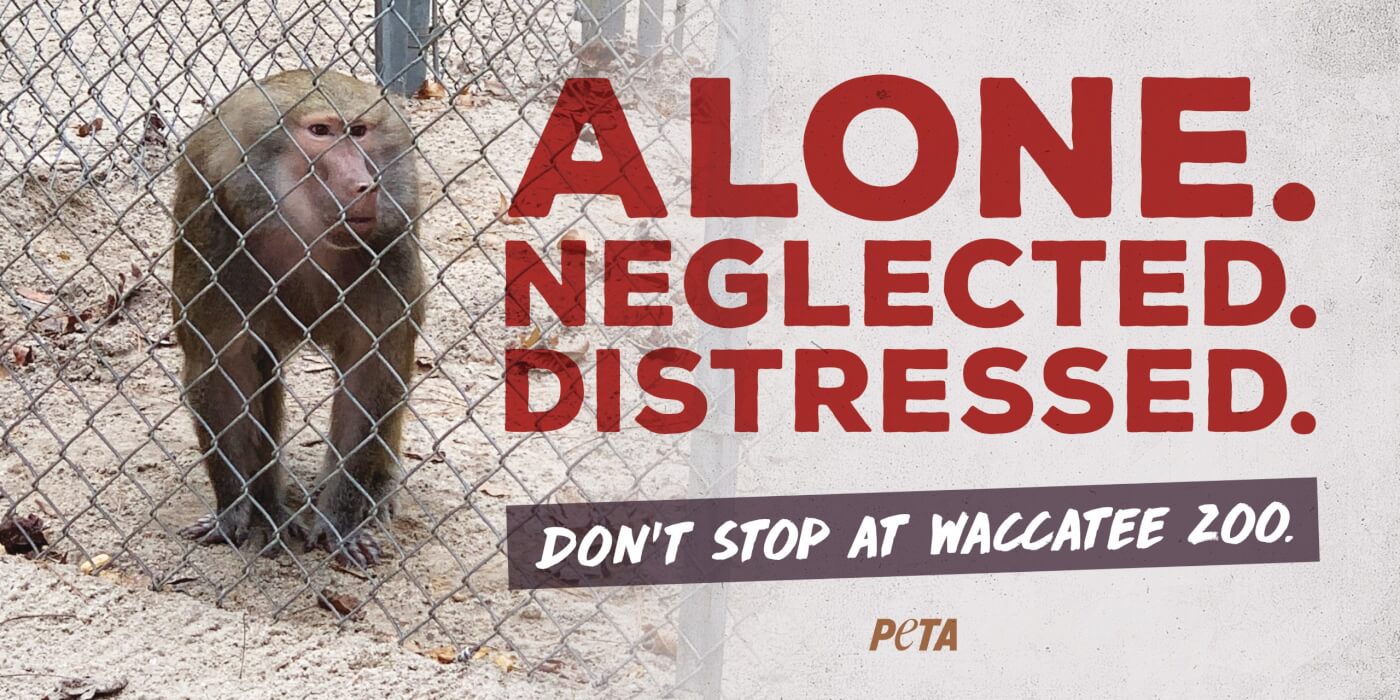
Alone. Neglected. Distressed. Don’t Stop At Waccatee Zoo
The post Alone. Neglected. Distressed. Don’t Stop At Waccatee Zoo appeared first on PETA.
A Potential ‘Catastrophe’: PETA Comes for Butterball Over Whistleblower Revelations
Turkeys don’t want to be slaughtered for a sandwich, and they don’t want to suffer in hot sheds in the summer, either. And a whistleblower’s warnings of looming “catastrophe” amid Butterball layoffs as well as a pamphlet leaked to PETA prove what we’ve known for some time: Butterball’s alleged commitment to “maintaining the health and well-being of [its] turkeys” is all hooey. And now we’re bringing a little heat, too—in an urgent letter, we’re calling on Butterball to lay off overgrowing birds.
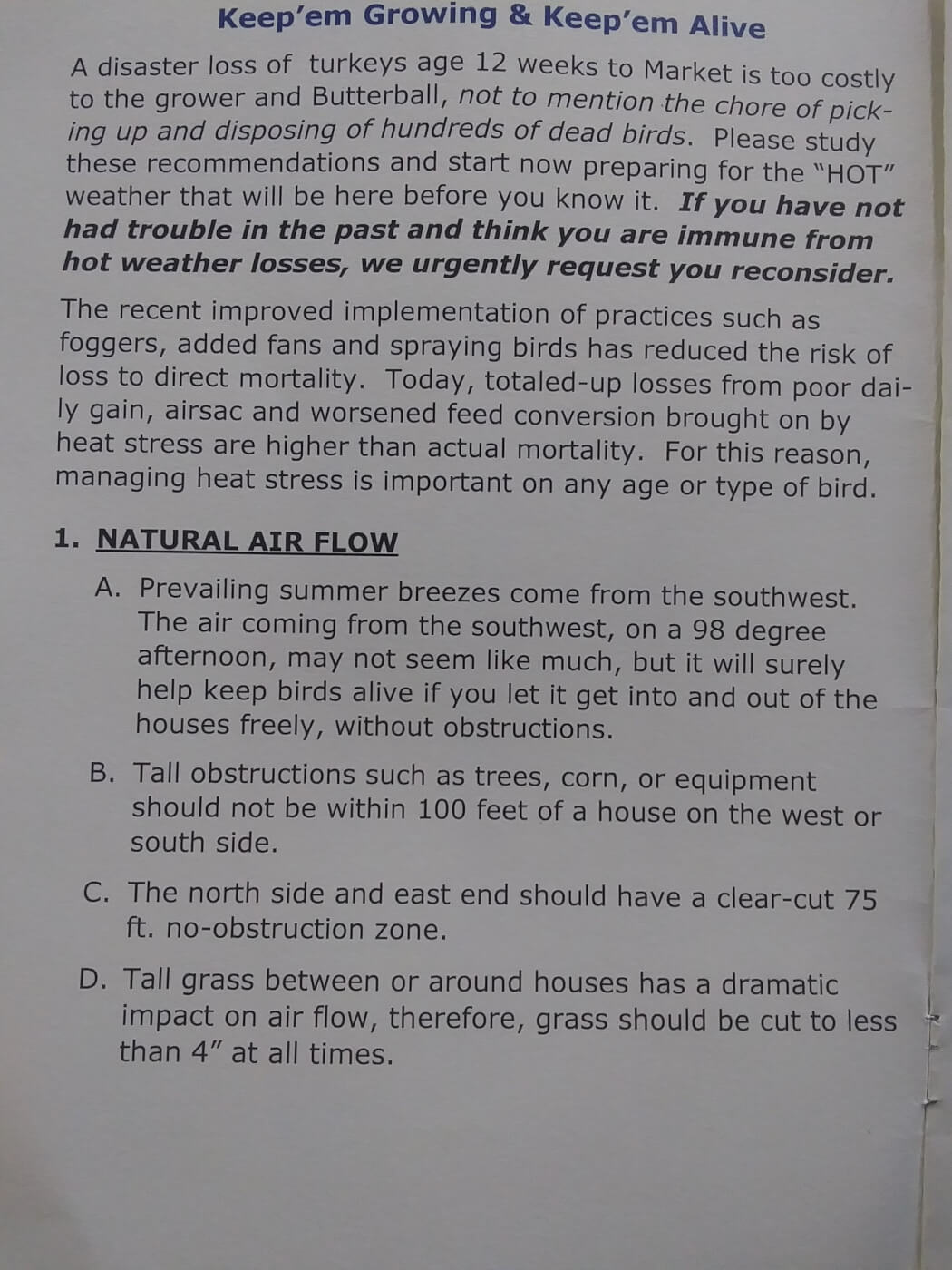
In a Butterball pamphlet leaked to PETA, “managing heat stress” via measures like “spraying birds” is emphasized—at Butterball, it’s apparently all about the bottom line.
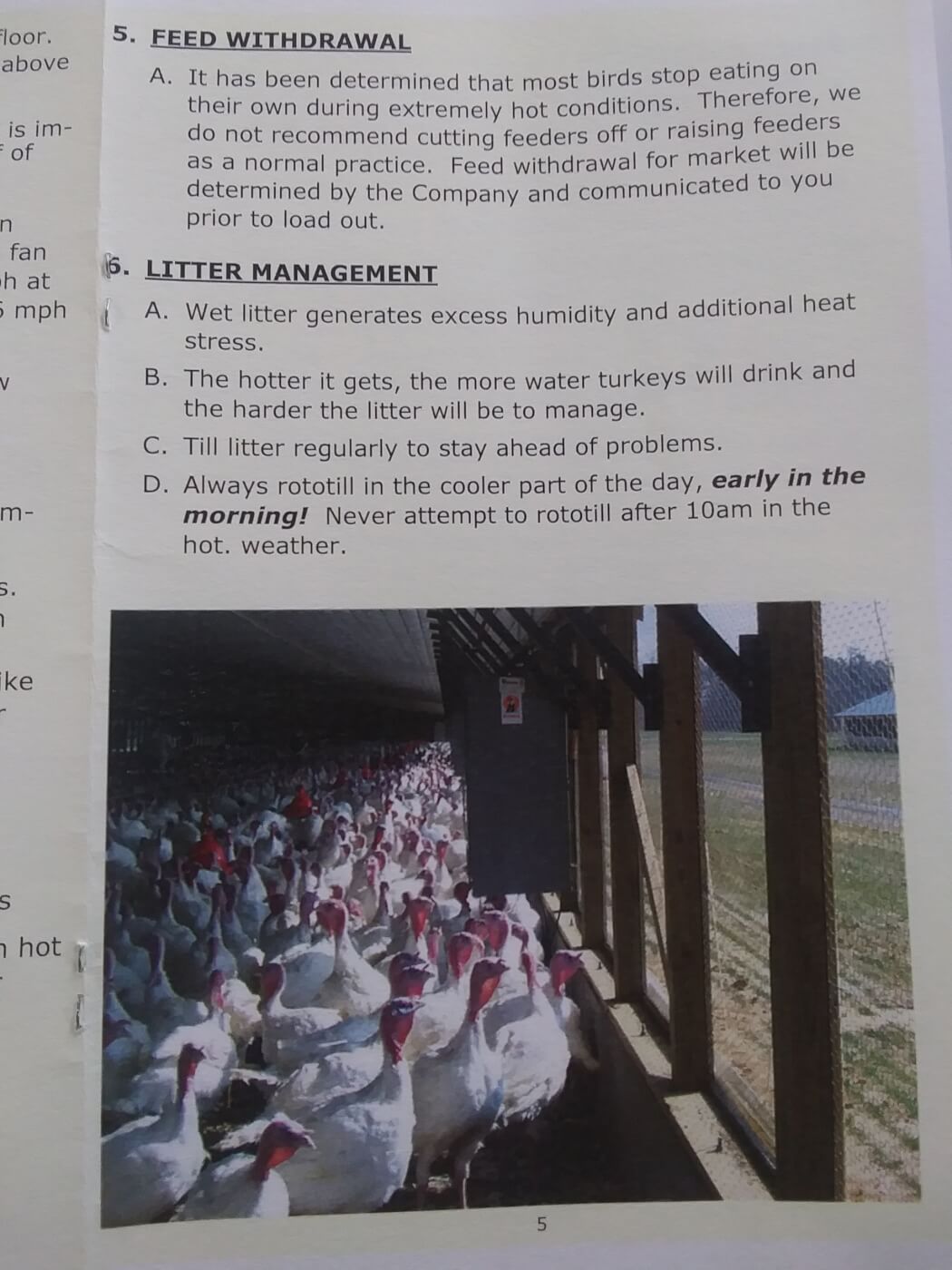
Page 5 of a leaked Butterball pamphlet includes a photo of turkeys looking out at a field that they’ll never be allowed to enjoy.
Turkeys already suffer when they’re crammed into stifling sheds and hauled down the highway to slaughterhouses, where their throats are cut. But at Butterball’s Carthage, Missouri, slaughterhouse, a reported new company policy that would dramatically increase the weight and age of turkeys killed there would also dramatically increase the potential for the animals to die of heatstroke.
Heat exhaustion is a serious threat to turkeys.
Butterball’s own pamphlet reveals that even smaller birds could die if farmers don’t blast them with power washers and drive around the barns honking at them, startling them into standing up and dissipating the heat that builds up under their torsos. Now—according to the whistleblower who contacted PETA—because layoffs have reduced the capacity of Butterball’s Carthage slaughterhouse, the birds the company calls “super toms” will be kept for an extra three to four weeks and will grow 20% larger, which the whistleblower called a “catastrophe.”
When asked at a company meeting what the plan was to keep these extra-large turkeys alive in the summer heat, a Butterball supervisor reportedly replied, “Pray for a mild summer.”
When asked at a company meeting what the plan was to keep these extra-large turkeys alive in the summer heat, a Butterball supervisor reportedly replied, “Pray for a mild summer.”
While such callousness is certainly disappointing, it’s hardly surprising. After all, at a Butterball slaughterhouse, an undercover PETA investigator witnessed workers stomping on birds, slamming them into walls, and tearing off their limbs.
If Butterball’s “super tom” birds and pointless prayers have you fuming, too, there’s only one thing to do: Boycott the company’s plans to pile the miseries of heatstroke and suffocation on top of the other systemic abuse already inflicted on these animals. Giving such cruelty the cold shoulder is as simple as leaving turkeys and all other animals, eggs, dairy, and honey off your plate. Click below to discover just how easy it is:
For Turkeys and All Other Animals, Go Vegan
The post A Potential ‘Catastrophe’: PETA Comes for Butterball Over Whistleblower Revelations appeared first on PETA.
National Black Agriculture Group Joins PETA’s Push to End ‘Tax’ Forcing Farmers to Fund Animal Tests
A national advocacy group for Black farmers has joined PETA’s campaign to stop fruit, vegetable, and grain research and promotion (R&P) boards—or “checkoffs”—from charging farmers mandatory assessment fees in order to fund experiments on animals. The deadly tests are done in an attempt to bolster the marketing of common foods.
Family Agriculture Resource Management Services (F.A.R.M.S.)—a leading nonprofit dedicated to reversing small farmland loss in low-income rural areas—sent letters this morning to several checkoffs and to the U.S. Department of Agriculture, which oversees them, to demand an end to animal tests funded by these mandatory assessment fees, which amount to a tax on farmers.
“Many farmers in today’s economy are struggling,” writes F.A.R.M.S. Founding CEO Jillian Hishaw. “They don’t need barbaric tests on animals to sell their agricultural commodities. Rather, they need economic relief from inflated assessment fees that are wasted on worthless experiments on animals.”
More than 2,600 animals have been douched, poisoned, force-fed, starved, irradiated, bled, suffocated, beheaded, and dissected in tests funded by agricultural commodity R&P boards and published between 2015 and 2019, in dubious attempts to promote blueberries, mushrooms, mangos, watermelons, raspberries, sorghum, soybeans, and other common agricultural commodities. The Government Accountability Office reports that in 2016, assessment fees for agricultural commodity producers, handlers, processors, importers, and others totaled over $885 million, of which a portion is wasted on animal testing.
After discussions with PETA and receiving e-mails from more than 85,000 consumers, the Hass Avocado Board—which had funded avocado experiments in which animals were force-fed, starved, bled, suffocated, and dissected—adopted a public policy stating that it “does not support, fund, or conduct animal research.”
PETA—whose motto reads, in part, that “animals are not ours to experiment on”—opposes speciesism, a human-supremacist worldview. To learn more, please visit PETA.org or follow the group on Twitter, Facebook, or Instagram.
The post National Black Agriculture Group Joins PETA’s Push to End ‘Tax’ Forcing Farmers to Fund Animal Tests appeared first on PETA.