PETA Exposes Texas A&M’s Lies About Fate of Dogs in Lab, Calls for Release of the 19 Remaining

Today, PETA fired off a letter to Texas A&M University President M. Katherine Banks, alerting her to misleading and false statements made by university representatives about Texas A&M’s canine muscular dystrophy (MD) laboratory and offering—again—to take the remaining dogs and place them in loving homes.

In December, Peter Nghiem, the laboratory’s lead experimenter, publicly stated (page 6) that healthy dogs who carry the MD gene are released for adoption from his program, but nine healthy dogs, eight of them carriers, were transferred to another Texas A&M laboratory rather than placed in homes.

A state legislator who called the university was also told that all the dogs still in the laboratory must remain there for round-the-clock veterinary care for canine MD—but only seven out of the 19 dogs still there are afflicted with the disease.

“Texas A&M is denying these dogs their only chance at freedom and lying about it to the public,” says PETA Senior Vice President Kathy Guillermo. “PETA is calling on the school to stop warehousing these dogs and allow them out of its barren cages and into loving homes.”

Since PETA first exposed the suffering of the dogs in the laboratory—and under pressure from 500 physicians and humans with MD—Texas A&M has stopped breeding dogs to develop the disease. Many of the nearly 100 dogs have been adopted into homes. Recent records show that the 19 remaining aren’t being used in any study.

Two of the MD-affected dogs, Garen and Grinch, were euthanized in March and May, respectively, after a lifetime of misery in Texas A&M’s laboratory. At just 2 years old, Garen had a swollen tongue and was losing weight. Grinch had developed a host of health conditions related to MD. Both suffered from poor appetite as their condition worsened.

PETA—whose motto reads, in part, that “animals are not ours to experiment on”—opposes speciesism, a human-supremacist worldview. For more information, please visit PETA.org or follow the group on Twitter, Facebook, or Instagram.

The post PETA Exposes Texas A&M’s Lies About Fate of Dogs in Lab, Calls for Release of the 19 Remaining appeared first on PETA.
6 Simple Ways YOU Can Help Monkeys Forced to Pick Coconuts

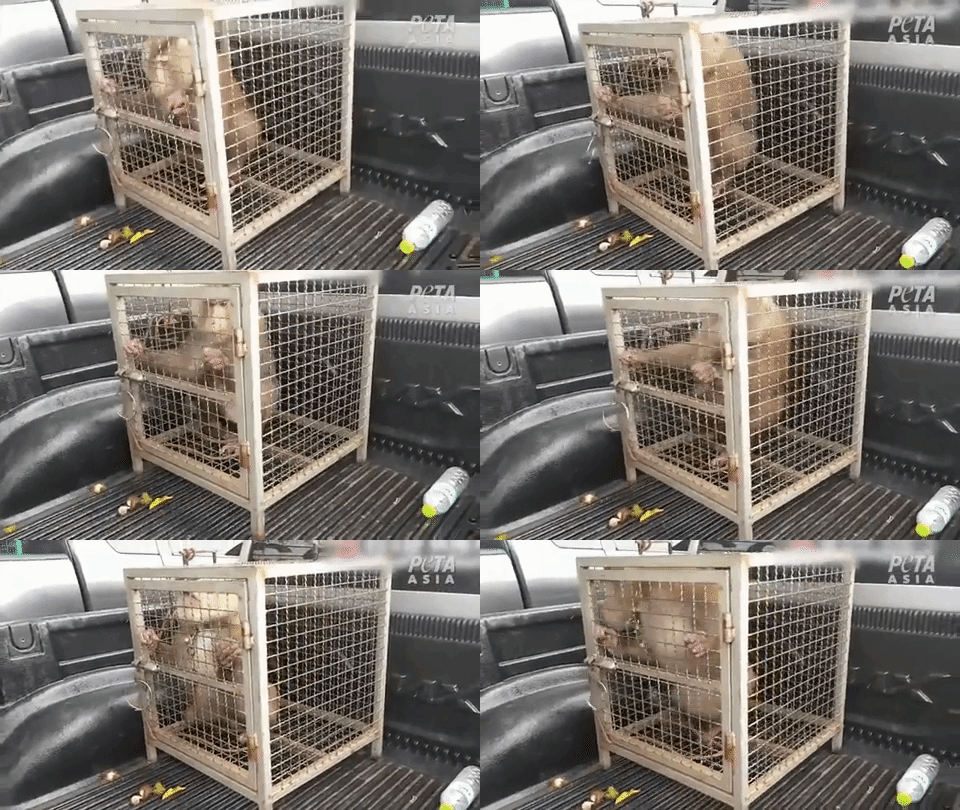
Many kind people choose coconut milk instead of cow’s milk because they don’t want to support cruelty to animals. But a disturbing PETA Asia investigation revealed that terrified young monkeys in Thailand are chained, abusively trained, and forced to climb trees to pick coconuts that are used to make coconut milk, meat, flour, oil, and other products.

PETA Asia investigators visited eight farms on which workers force monkeys to pick coconuts—including suppliers for one of Thailand’s major coconut milk producers, Chaokoh (pronounced CHOW-kaw)—as well as several monkey-training facilities and a coconut-picking competition. At each one, eyewitnesses documented that these sensitive animals were abused and exploited. Young monkeys were forced to perform frustrating and difficult tasks, such as twisting heavy coconuts until they fall off the trees from a great height. An investigator learned that if monkeys try to defend themselves, their canine teeth may be removed.

Following PETA Asia’s investigation, more than 33,000 stores—including Albertsons, Target, Costco, Safeway, Kroger, and Wegmans—stopped purchasing this brand’s products, and the majority will no longer buy any coconut products derived from Thai monkey labor. But despite having been alerted to the ugly origins of Chaokoh coconut milk, major grocery chains Publix, Walmart, Jewel-Osco, Woodman’s Markets, and Tony’s Fresh Market continue to sell these products.

You can help protect monkeys by taking the following six actions.

1. Organize a Protest to Urge Retailers to Reconsider Their Ties With Chaokoh—We Can Help!

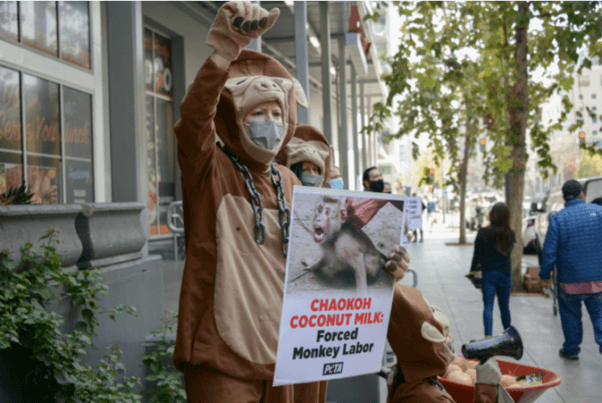
Coconut Milk Monkey Labor Protest

Make sure everyone knows that Publix, Walmart, and the other grocery stores listed above are paying for forced monkey labor. Hold a protest outside a store location near you—we’ll help you! We’ll supply you with eye-catching campaign signs, informative leaflets, and even monkey costumes. We’ll also help you get the word out about your event. Contact us:

Request Protest Supplies

2. Leaflet in Front of a Local Grocery Store That Sells Chaokoh Coconut Milk

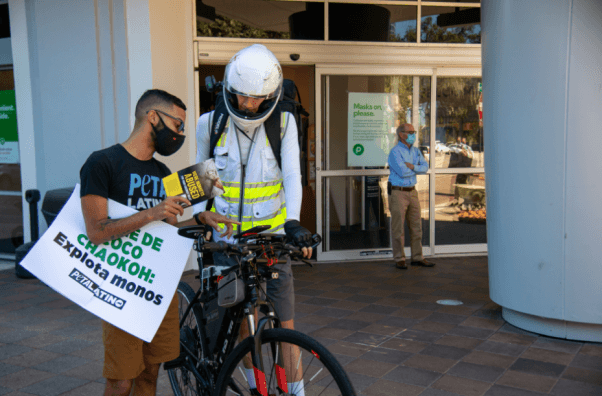
Demonstration against forced monkey labor for coconuts

Not able to organize a protest? It only takes one person to make a huge statement. Order a “Chaokoh Coconut Milk: Forced Monkey Labor” sign and “Were Monkeys Abused for Your Coconut Milk?” leaflets to distribute at your nearest Walmart, Publix, or other grocery store that sells Chaokoh coconut milk. We’ll send you free supplies—just let us know how many signs and leaflets you need along with your complete name, mailing address, and the name of the store where you’ll be leafleting. Be sure to give a leaflet to the manager and ask them to reconsider their relationship with Chaokoh.

Request Leafleting Supplies

3. Order Free Peel-Off Stickers

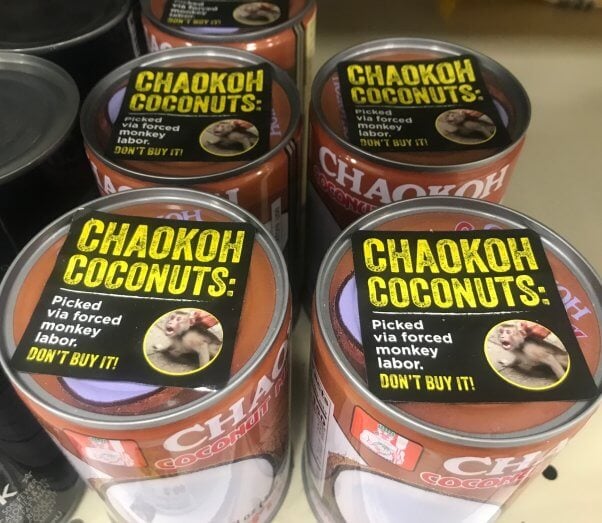
Chaokoh Coconuts Picked via Forced Monkey Labor: Don't Buy It!

Get creative with these peel-off Chaokoh stickers. Send us photos of your work at ActionTeam@peta.org.

Order Free Stickers

Chaokoh Stickers on Coconut Milk Cans

4. Call and Ask Retailers to Reconsider Their Relationships With Chaokoh

Pick up the phone and take action right now for monkeys:

  • Call Publix at 1-800-242-1227; press 4, then 2
  • Call Walmart at 1-800-925-6278; press 3, then 1, then say, “No”
  • If you live in Illinois, Indiana, or Iowa, call Jewel-Osco at 630-948-6000
  • If you live in Illinois or Wisconsin, call Woodman’s Markets at 608-754-8382
  • If you live in Illinois, call Tony’s Fresh Market at 630-735-6760 and press 4

Not sure what to say? Our talking points can help guide your conversation:

  • Please reconsider your company’s ties to coconut milk brand Chaokoh, whose suppliers keep monkeys chained and force them to pick coconuts. If the monkeys try to defend themselves, their canine teeth may be pulled out.
  • I’ll encourage my friends and family to shop elsewhere until you no longer condone the exploitation of monkeys.

Tell Us About Your Call

5. Bombard Retailers’ Inboxes

Insist that retailers reconsider their ties with Chaokoh by sending e-mails to store executives. Use your own words or the talking points listed in action 4.

6. Blast Retailers on Social Media

Use social media to call out stores that sell Chaokoh coconut milk. You can use your own words or use the talking points listed in action 4.

The post 6 Simple Ways YOU Can Help Monkeys Forced to Pick Coconuts appeared first on PETA.

Nationwide Crisis as Dogs Left in Hot Cars in Island Heights—PETA Provides Urgent Tips Here

A child was rescued by police after being left in a hot car in Island Heights recently, and similar reports nationwide are rolling in at an out-of-control rate. For some dogs, including a K-9 who recently died after being left behind in a patrol car, help comes too late. Already this year, 22 dogs have been reported dead from heat-related causes. (Figures are far likely higher, as most heat-related companion animal deaths go unreported.)

This week’s scorching temperatures put dogs at a high risk of enduring heat prostration and dying, so PETA is issuing an urgent warning to anyone with a dog: Never leave them inside vehicles, and please be sure to do the following.

  • Touch the pavement before walks to ensure that it won’t burn dogs’ foot pads.
  • Be alert to a long, curled-up tongue and heavy panting, as dogs cannot sweat as humans can and heat builds up inside their bodies.
  • Walk only in the shade or on earth or grass, and neverleave animals alone (On Memorial Day weekend, PETA fieldworkers discovered the body of a dog who had died after being left chained up in the hot sun.)

PETA thanks Island Heights police and other rescuers for taking action and urges everyone to support the Hot Cars Act of 2021, which would require automakers to install technology in vehicles to detect the presence of an animal or a child and alert drivers when someone is in the backseat.

Anyone who leaves animals in hot cars or outside to suffer in severe weather may be prosecuted for cruelty.

For more information, visit PETA.org.  

The post Nationwide Crisis as Dogs Left in Hot Cars in Island Heights—PETA Provides Urgent Tips Here appeared first on PETA.

Boston Lab Put Live Baby Mice in a Refrigerator, Starved Animals

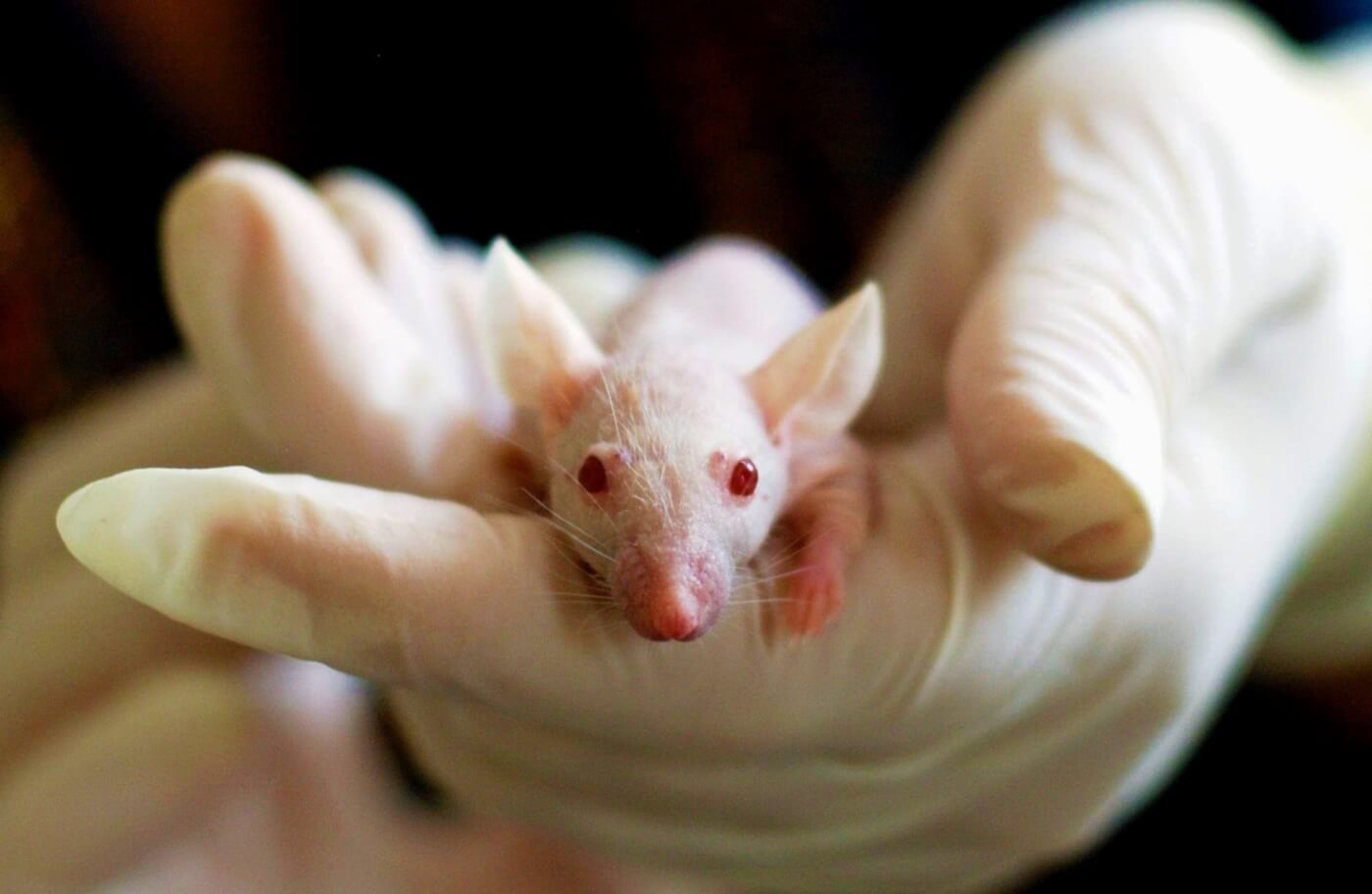
After uncovering damning reports documenting chronic violations of federal animal welfare provisions at Brigham and Women’s Hospital (BWH)—including laboratory staff members who tossed live baby mice into a refrigerator, starved mice to death, and performed surgery on them without proper pain relief—PETA is calling on the Boston Police Department to investigate the hospital for cruelty to animals and to hold all those involved accountable.Small white mouse in gloved experimenter's hand

Brigham and Women’s Hospital: Mutilating, Tormenting, and Starving Animals

Massachusetts law prohibits animals from being “deprive[d] of necessary sustenance,” tormented, killed, or “subjected to unnecessary torture, suffering or cruelty of any kind.” The long list of horrors that PETA found through a Freedom of Information Act looks a lot like cruelty and suffering to us:

  • Experimenters performed surgery on a sheep and without giving them proper analgesics (pain relief).
  • Experimenters performed surgery on sheep, but failed to give them antibiotics as required.
  • Staff neglected to euthanize multiple suffering or dying animals in a timely manner.
  • Nineteen mice were found dead after staff members failed to anticipate the behavioral consequences of an experiment in which the animals became “more aggressive than expected.”
  • Staff neglected to provide animals with food on multiple occasions, which led to several animals starving to death.
  • An experimenter who hadn’t completed the necessary training killed four mice while subjecting them to a surgical procedure.
  • After an experimenter injected mice with an unapproved substance, 12 of them developed ulcers and had to be euthanized.
  • Experimenters subjected mice to surgery and placed a sponge on the surgical incision, which “interfered with the animals’ ability to access food and water.” Seven mice were found dying and were subsequently euthanized.
  • Four mice died and one more had to be euthanized when staff members failed to notice that some were trapped on top of an enrichment device, some were left “on top of a food hopper,” and one had their tail trapped between the cage and the lid.
  • Thirteen rats died because experimenters neglected to monitor them and failed to notice that laboratory equipment was defective.
  • Several mice and rats were left to languish beyond the specified humane endpoints, enduring additional pain and distress.

These are just some of the violations that we found. By allowing the torment and suffering of vulnerable animals in its laboratories, it seems that BWH laboratory staff may have violated Massachusetts law. That’s why PETA is asking the Boston Police Department to take appropriate action immediately.

Mice, Rats, and Others Are Not Ours to Use in Crude Experiments

There’s no excuse for laboratories to use social, family-oriented mice and rats in experiments. Unlike state-of-the-art computer modeling and research using human cells—methods outlined in PETA’s Research Modernization Deal—experiments on rodents are cruel and ineffective.

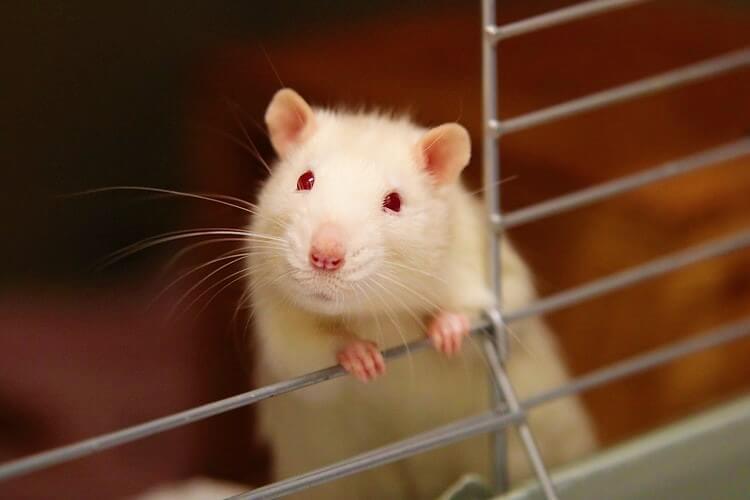
Because tests on mice and rats kept in stressful laboratory settings shed so little light on the way treatments will affect humans, even the chief of the Tuberculosis Research Section of the National Institute of Allergy and Infectious Diseases said, “If we look to the mouse to model every aspect of the disease for man, and to model cures, we’re just wasting our time.”Mouse looks out of cage

Help End Cruel Tests on Animals—Support PETA’s Research Modernization Deal!

Studies show that 90% of all basic research, most of which involves animals, fails to lead to human treatments. Research needs to change, and the first step is looking toward humane, human-relevant methods. You can help revitalize research by supporting PETA’s Research Modernization Deal:

support PETA’s research modernization deal

The post Boston Lab Put Live Baby Mice in a Refrigerator, Starved Animals appeared first on PETA.