Animal-Friendly Songs for Your Musical Classroom

Over the years, TeachKind has created a collection of songs that are animal-friendly and promote empathy. We’ve taken common songs that you and your students might be familiar with and adapted them so that the lyrics promote compassion, we’ve updated classic nursery rhymes to discourage speciesism, and we’ve made our own fun music videos featuring various songs, some of which have been performed by award-winning artists. Check out these engaging musical teaching resources below, along with the corresponding lesson plans and activities!

TeachKind teamed up with Dr. Jean Feldman to create “Eat Green,” a song that gets kids excited about eating fruits and veggies. The song is to the tune of “Jenny Jenkins,” and there’s an accompanying lyrics sheet with easy hand motions that your students can do as they sing!

We worked with a former music teacher to create four songs about being kind to bugs as part of a virtual read-aloud of the compassionate children’s book Junebug: No Life Too Small. Our handy insect rescue poster gives step-by-step instructions on gently escorting insects to the outdoors.

“We Are Animals” is a PETA Kids song and music video from various animals’ perspectives. You could play this video for your class, or if you’re a music teacher, you could perform it by using a simple D6-A progression for most of the song.

The PETA Kids team put together five animal-friendly versions of outdated nursery rhymes. When singing one of these super-popular nursery rhymes to your class, exchange the outdated lyrics for the compassionate new ones.

TeachKind has compiled a factsheet of options for music teachers who want to replace their non-vegan instrument components with vegan ones. The next time you need new drums for your music classroom, you can select drums with synthetic heads. You can also replace the horsehair bows in your orchestra with bows made of synthetic hairs.

Finally, our collection of lessons to go along with the compassionate children’s book How to Heal a Broken Wing includes interdisciplinary activities in reading, music, and art. There are also discussions on empathy and a really catchy song about fascinating pigeons!

Many of these songs and lesson plans can be used in general music classrooms, but teachers of Pre-K through first grade can also use them to engage young learners. Please share these resources with your colleagues and encourage them to sign up for our TeachKind E-News below.

All fields in bold are mandatory.

FormBuilder Form – 3364

First name
Last name
E-mail
Please sign me up for Teachkind E-News. Current subscribers: You will continue to receive e-mail unless you explicitly opt out by clicking here
Please sign me up for PETA E-News. Current subscribers: You will continue to receive e-mail unless you explicitly opt out by clicking here
Please sign me up for PETA's Membership Updates. Current subscribers: You will continue to receive e-mail unless you explicitly opt out by clicking here
Get texts & occasional phone calls for Action Alerts, local events, & other updates to help animals with PETA! (optional)
Tel. (mobile)
By clicking, you agree to receive automated texts and calls from PETA and accept our terms and conditions. Message and data rates may apply. U.S. mobile users only. You can opt-out anytime.

The post Animal-Friendly Songs for Your Musical Classroom appeared first on PETA.
PETA Sues University of Washington Over Secret Animal Experimentation Board

Today, PETA filed a lawsuit against the University of Washington (UW) in the Superior Court of the State of Washington in and for King County over its refusal to disclose exactly who is serving on its Institutional Animal Care and Use Committee (IACUC). The UW IACUC animal experimentation oversight committee is required under federal laws and guidelines to review all proposed animal experiments and ensure that animal protection laws are enforced in the school’s laboratories—but as PETA has exposed, it has failed to prevent animals’ deaths by starvation, dehydration, strangulation, dehydration, scalding, blood loss, and more.

If PETA is successful, actions taken by the IACUC—including its approval of experimental protocols—in violation of the law may be deemed null and void and any such experimental protocols may need to be reviewed again properly.

The IACUC is a governing body of UW under the Washington Open Public Meetings Act (OPMA), which requires public access to meetings of the committee, but UW is concealing its members’ names and approving most animal experiments behind closed doors. The IACUC meets on Zoom, where members are identified (and typically referred to) merely as “IACUC1,” “IACUC2,” and so forth, and even those labels are not applied consistently to the same members. The lawsuit asks the court to order the disclosure of IACUC members’ names and to set aside any actions taken by the IACUC in violation of the OPMA.

“This committee is the last line of defense for animals in UW’s publicly funded laboratories—including monkeys whose skulls are repeatedly cut open—yet it operates without public scrutiny,” says PETA Senior Vice President Kathy Guillermo. “PETA’s lawsuit aims to uncover who is secretly approving hundreds of highly invasive procedures every year while failing to provide adequate oversight of UW experimenters who are starving and scalding animals to death.”

Although federal regulations require IACUCs to have a certain makeup of members, including a nonscientist and a community member representing the general community’s interests in the treatment of animals, one of its “nonscientific” members is Ken Gordon, the executive director of the Northwest Association for Biomedical Research, which promotes animal experimentation.

PETA filed a related Public Records Act lawsuit—seeking records and documents associated with the experimental use and breeding of primates at UW’s Washington National Primate Research Center and about the school’s IACUC membership—in December 2020.

PETA—whose motto reads, in part, that “animals are not ours to experiment on”—opposes speciesism, a human-supremacist worldview. For more information about PETA’s investigative newsgathering and reporting, please visit PETA.org or follow the group on Twitter, Facebook, or Instagram.

The post PETA Sues University of Washington Over Secret Animal Experimentation Board appeared first on PETA.

Ben’s Chili Bowl Wins #1 Spot: Best Vegan Chili in the Country!

To celebrate the start of fall, PETA has scoured the country for the best and heartiest vegan chili dishes—and beloved icon Ben’s Chili Bowl has landed the top spot for its Vegan Chili, a thick stew made from fresh veggies, kidney beans, soy protein, a rich blend of spices, and “love.”

“Vegan chili is the ultimate comfort food, and the dishes on our list come with the comforting thought that no animals were harmed to make them,” says PETA President Ingrid Newkirk. “PETA celebrates Ben’s Chili Bowl for helping people tuck into their favorite foods without the cruelty or the cholesterol.”

PETA—whose motto reads, in part, that “animals are not ours to eat”—notes that vegan meat sales increased 148% in 2020 compared to the year before and that 47% of Americans want to incorporate more vegan foods into their meals in 2021.

Other honorees include Plant Bae in Montgomery, Alabama; Arles & Boggs Vegan Eatery in Wallingford, Connecticut; House of Leaf & Bean in Jacksonville, Florida; The Grit in Athens, Georgia; and The Social Vegan in Lexington, Kentucky. Each eatery will receive a framed certificate from PETA, which offers many vegan chili recipes on its website.

PETA opposes speciesism, a human-supremacist worldview. For more information, please visit PETA.org or follow the group on Twitter, Facebook, or Instagram.

The post Ben’s Chili Bowl Wins #1 Spot: Best Vegan Chili in the Country! appeared first on PETA.

‘Eating Our Way to Extinction’ Is Here: How to See the Eye-Opening Climate Doc

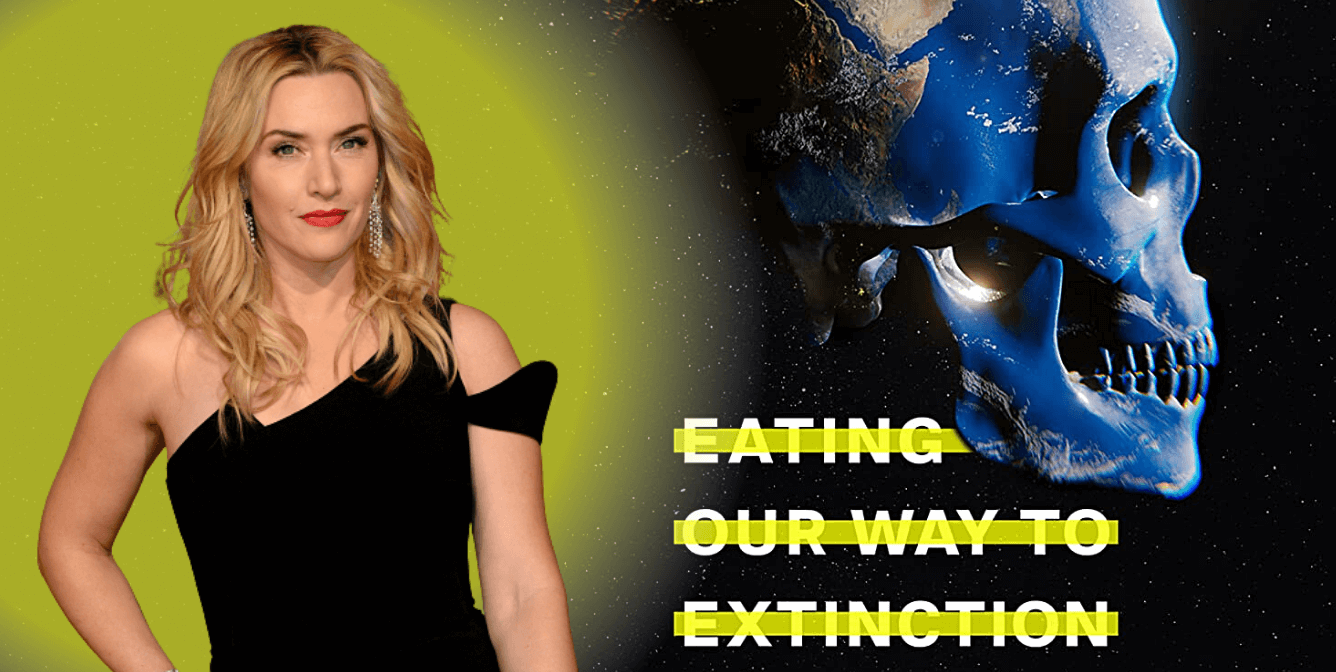
A powerful new documentary called Eating Our Way to Extinction, narrated in English by Kate Winslet and in Spanish by PETA Latino celebrity supporter Marco Antonio Regil, has debuted on various streaming services, including Apple, Amazon, and Vudu. To learn more about the impact of the food we eat on the climate crisis, check out the trailer below—and be sure to keep reading.

Rent Your Copy

PETA Reacts to Eating Our Way to Extinction

Eating Our Way to Extinction hits the ground running, presenting viewers with several clear and undeniable facts about the devastating effects of the global animal agriculture industry on the environment.

Throughout the film, the use of powerful imagery and easy-to-digest graphics demonstrates the negative impact that the production of meat, fish, and dairy has on animals, our planet, human health, and indigenous communities living off the land.

Kate Winslet and movie poster for eating our way to extinction© StarMaxInc.com

The rampant destruction of tropical rainforests and ocean ecosystems—which are vital to regulating our planet’s atmosphere—is fueling the climate crisis. According to the United Nations , rising temperatures are contributing to the environmental degradation, natural disasters, weather extremes, food and water insecurity, economic disruption, conflict, and terrorism that we’re seeing around the globe.

Eating Our Way to Extinction pulls back the curtain on corruption, showing how fishing-industry executives wield major political influence yet seem to lack any concern for humans or the planet. The filmmakers also do a deep dive into factory fish farms, where countless animals languish in filthy pools of their own waste.

After hearing what the film had to say about the global fishing industry, one viewer simply said, “I can’t imagine how anyone could ever eat fish again after watching this.”

And viewers also get to see how delicious vegan food is. A side-by-side taste test with the general public proves that, these days, it’s essentially impossible to tell animal flesh apart from plant-based meats.

Takeaways From Eating Our Way to Extinction

Time and time again, Eating Our Way to Extinction presents going vegan as the only choice that humans can make to help reverse the ecological damage already done to our planet by the animal agriculture industry—a message that PETA can happily get behind.

But we can’t wait for public policies or politicians to make the changes needed to prevent the worst effects of climate change. We all have to do our part now, and it starts by thinking more critically about what we should eat and who we shouldn’t.

What Are You Waiting For? Start Eating Your Way to Salvation

Watch Eating Our Way to Extinction Now

Looking to download the film? Click the links below to buy or rent it today!

The post ‘Eating Our Way to Extinction’ Is Here: How to See the Eye-Opening Climate Doc appeared first on PETA.

Slutty Vegan’s Pinky Cole Launches New PETA Push for Food Justice

The fight against food deserts never tasted so good! On Monday, Slutty Vegan restaurateur Pinky Cole will dish up free vegan Buffalo chicken and bratwurst sandwiches in Atlanta to kick off PETA’s new Food Justice Campaign, which calls on the government to redirect meat, egg, and dairy industry subsidies as incentives for grocers in low-income areas to stock fresh fruits, vegetables, and other healthy, humane vegan foods.

“We’ve made veganism fun and accessible at Slutty Vegan and are all about indulging in the little pleasures life brings,” says Cole. “We want to show that eating plant-based doesn’t have to be boring. With lines down the block at each of our locations, we’re honored to bring good, kinder food to Atlanta and are grateful for PETA taking up this issue on a national level.”

The U.S. government spends about $38 billion in tax money each year to subsidize the meat, egg, and dairy industries—the vast majority of which goes to big corporations, not American farmers—while only about $17 million is used to subsidize the fruit and vegetable industries.

“Many families in food deserts have few grocery options beyond the unhealthy processed meat and packaged snacks at the local corner store,” says PETA Executive Vice President Tracy Reiman. “PETA is calling on local, state, and government agencies to stop propping up the cruel meat, dairy, and egg industries and instead redirect those funds to provide healthy vegan food in underserved communities.”

At Monday’s event—and at upcoming events in Baltimore, Detroit, Indianapolis, Los Angeles, and other cities across the country—PETA will also give away its new vegan meal starter kits filled with fresh produce and other healthy foods. Stocking stores in food deserts with healthy vegan foods like these would save animals’ lives; help vulnerable communities reduce their rates of cancer, diabetes, and heart disease; benefit slaughterhouse employees, many of whom are immigrants who could lose their jobs if they report unsafe working conditions; and help the planet, given that animal agriculture is responsible for nearly one-fifth of human-induced greenhouse-gas emissions.

PETA—whose motto reads, in part, that “animals are not ours to eat”—opposes speciesism, a human-supremacist worldview. For more information, please visit PETA.org or follow the group on Twitter, Facebook, or Instagram.

The post Slutty Vegan’s Pinky Cole Launches New PETA Push for Food Justice appeared first on PETA.