
EPA Continues to Prioritize Scientifically Sound Non-Animal Tests

Today, the U.S. Environmental Protection Agency (EPA) released the first update to its Work Plan for reducing the use of animals in testing. The plan lists concrete steps that the agency will take in the coming three years to reduce tests on animals for pesticides and industrial chemicals.
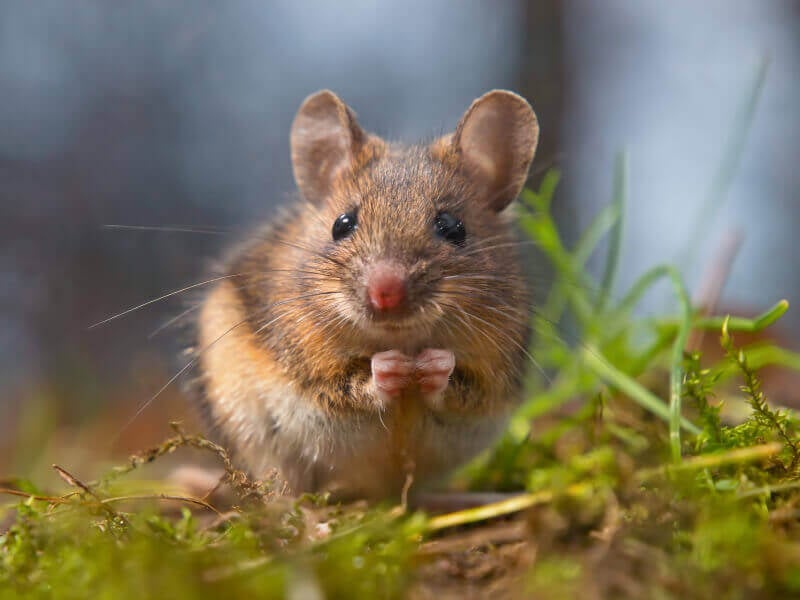
EPA reduces tests on animals© iStock.com/CreativeNature_nl

The pillars of the updated plan remain unchanged as the EPA continues to prioritize reducing the use of animals for toxicity testing—and now the plan includes all vertebrates, not only mammals!

The Work Plan notes that the EPA will continue to develop, establish confidence in, and accept non-animal tests; establish metrics to monitor the agency’s progress in replacing animal use; offer educational opportunities on the use of non-animal methods; and engage with stakeholders as it moves away from vertebrate animal testing. The EPA Work Plan also highlights that non-animal methods have the potential to increase the “rigor and sophistication” of chemical assessment by the agency.

We challenge the EPA to keep working toward the elimination of all animal tests, and our scientists will continue working with the EPA and other government agencies, method developers, academics, industries, and nonprofits around the world to advance the best non-animal science.

Numerous reliable and relevant non-animal methods are available to be used today, including computer models, in vitro methods (such as cells and tissues grown in petri dishes), human-on-a-chip technology, and epidemiological studies.

More efforts than ever before are being dedicated to the development and use of non-animal testing approaches for assessing chemicals because of their key advantages, including the following:
  • Protection of endangered species: Computer models can use genetic information from endangered species to help researchers understand their susceptibility to certain chemicals and therefore offer support for regulation that prevents these species from being exposed to chemicals.
  • Support for environmental justice and protection of vulnerable populations: Pregnant people, children, older adults, fenceline communities, impoverished populations, people with chronic conditions, and factory or farm workers may be particularly susceptible to certain chemicals and need to be given special consideration when deciding the risks of chemical exposure. Non-animal tests can be used to protect vulnerable populations by rapidly identifying potential impacts to overexposed or sensitive populations and by using genetic information and data on the working and living environments from these populations.
  • Relevance: Instead of using mice, rats, or other animals, tests can be conducted using human cells to predict what will happen in humans. Because these tests are based on human biology, they can better predict whether a chemical is likely to cause a toxic effect in humans and provide us with information on how it would cause that effect. And instead of using a mallard duck to predict what might happen to herons, sparrows, and other birds, computer models can be used to predict effects in many species and better protect all wildlife.
  • Rapidity: The public is exposed to combinations of chemicals on a daily basis. Using animals to assess these complex combinations of chemicals would not be feasible because of the time that each test takes as well as the ethical issue of using essentially limitless numbers of animals. Non-animal methods, on the other hand, can be used to assess thousands of mixtures quickly.
  • Reproducibility: Many non-animal methods have been shown to be reproducible—in other words, to provide the same result repeatedly when the same chemical is tested more than once. On the other hand, decades-old animal tests were not assessed for their reproducibility before being used. With the scientific methods of analysis available today, experts have confirmed that many animal tests are not very reproducible.

Keep the Momentum for Animals Going

Ask your legislators to support PETA’s Research Modernization Deal

The post EPA Continues to Prioritize Scientifically Sound Non-Animal Tests appeared first on PETA.

State Cracks Down on Petting Zoo After ‘Influencer’ Party Stunt

The Florida Fish and Wildlife Conservation Commission (FWC) has just informed PETA that it cited and issued two warnings to Jennifer Walker Caudill—who operates Jenny’s Petting Zoo in Hillsborough County and exhibits animals in circuses and traveling shows—for importing wildlife without proper permits and for unlawful possession of a spider monkey. The citations come after PETA notified the FWC that Caudill’s partner, disgraced former tiger exhibitor Lancelot Ramos Kollman, brought the monkey and other animals to an Atlanta birthday party for rapper and social media influencer Ti Taylor.

“Spider monkeys are sensitive wild animals, not birthday party props,” says PETA Foundation Director of Captive Animal Law Enforcement Rachel Mathews. “PETA encourages kind people to stay away from Jenny’s Petting Zoo and any other operation that trucks wildlife around without regard for the animals’ well-being or the laws designed to protect them.”

PETA notes that this is not Caudill’s nor Kollman’s first run-in with authorities. Caudill notoriously allowed zebras to escape on multiple occasions from her home and while touring with the UniverSoul Circus, and the U.S. Department of Agriculture (USDA) stripped Kollman of his license in 2009 after confiscating an emaciated elephant he’d been using for rides. Kollman was previously fined $66,000 for, among other violations of federal law, operating without a license—something he evidently continues to do.

PETA—whose motto reads, in part, that “animals are not ours to use for entertainment”—opposes speciesism, a human-supremacist worldview. For more information, please visit PETA.org or follow the group on Twitter, Facebook, or Instagram.

The post State Cracks Down on Petting Zoo After ‘Influencer’ Party Stunt appeared first on PETA.

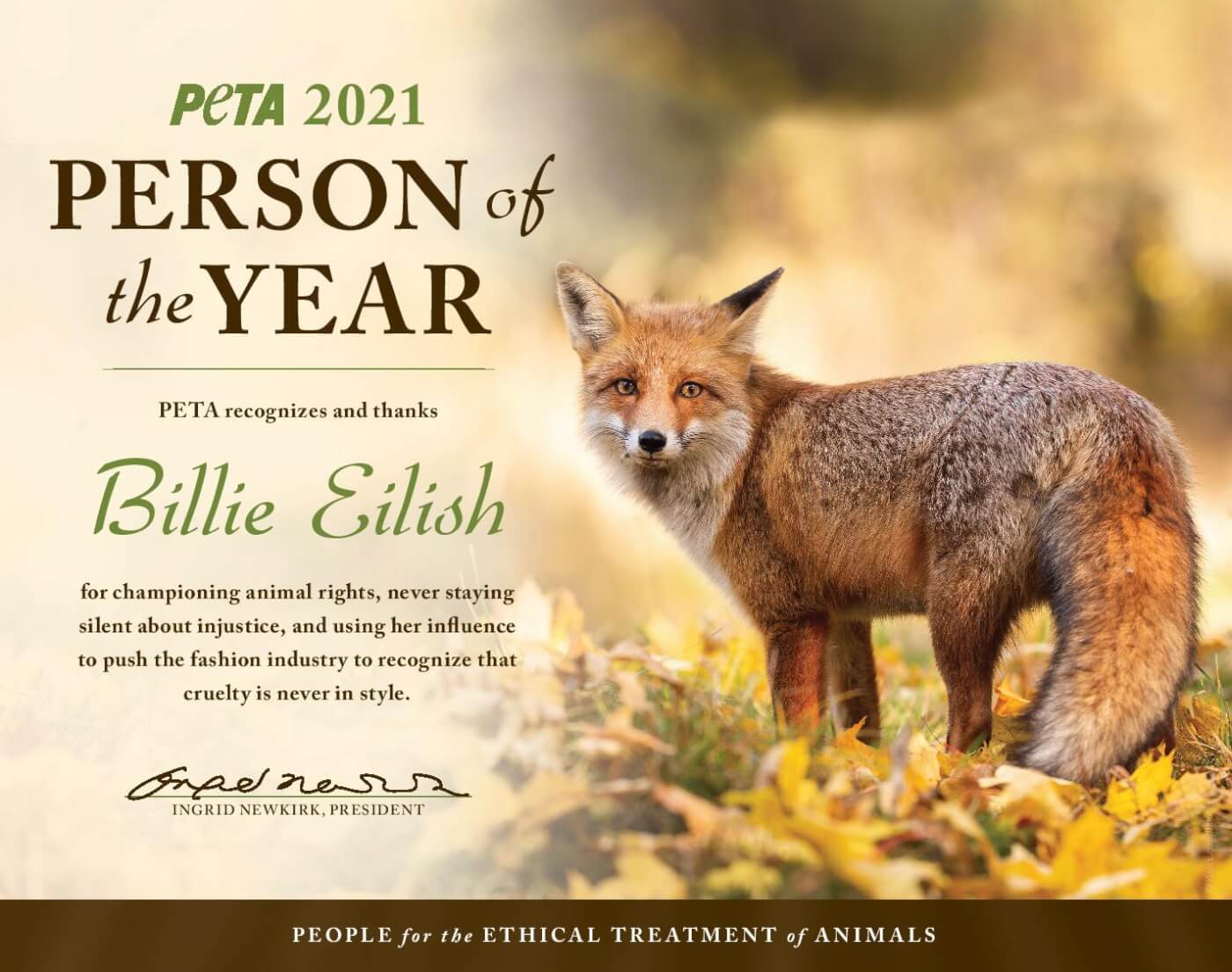
Billie Eilish Is PETA’s 2021 Person of the Year

For pushing the fashion world to dump fur and embrace going vegan, Billie Eilish has won the title of PETA’s 2021 Person of the Year. She joins past winners who never stay silent and have changed the world for animals, including Tabitha Brown, Joaquin Phoenix, Pope Francis, Oprah Winfrey, and Anjelica Huston.

Billie Eilish at the 2021 met gala©Kevin Mazur/MG21 via Getty Images

This year, Eilish made waves when she agreed to wear an Oscar de la Renta gown to the Met Gala—but only if the brand agreed to ban fur, which it did.

“I find it shocking that wearing fur isn’t completely outlawed at this point in 2021. I am so beyond thrilled that … the Oscar de la Renta team heard me on this issue and have made a change that not only makes an impact for the greater good for animals but also for our planet and environment, too.”

—Billie Eilish

Billie Eilish Named PETA's 2021 Person of the Year

Eilish, a longtime vegan, was also a Met Gala co-chair. For the first time ever, the high-profile, celeb-studded event served exclusively vegan meals.

“With all eyes on Billie Eilish at her first Met Gala, she turned the spotlight onto the plight of animals killed for food and fashion. PETA is happier than ever to celebrate her for pushing the fashion industry toward its sustainable vegan future.”

—PETA President Ingrid Newkirk

This year, Eilish also launched a vegan Air Jordan shoe collection with Nike; served as executive producer on and was featured in the vegan documentary They’re Trying to Kill Us, which explores racial inequality within the food system; launched her own vegan fragrance; and announced the release of her own vegan milk chocolate bar.

With more than 96 million followers on Instagram, she uses her massive social media platform for animal rights activism, including posting video exposés of the mink-fur and wool industries. Ahead of Thanksgiving, she reminded her fans that turkeys are “some of the most gentle creatures in the world,” urging them to consider embracing kinder holiday traditions.

Be Like Billie: Go Vegan Today

Everyone who follows Eilish’s lead and goes vegan spares the lives of nearly 200 pigs, chickens, cows, and other animals per year and combats the animal agriculture–induced climate crisis. Going fur-free helps keep foxes, minks, and rabbits from being caged, killed, and skinned. And choosing cosmetics that weren’t tested on animals helps spare mice and rabbits suffering in painful laboratory tests.

Take PETA’s 3-Week Vegan Challenge

The post Billie Eilish Is PETA’s 2021 Person of the Year appeared first on PETA.