REWARD! Tony Award–winning actor Alan Cumming continues to be an avid animal advocate, doubling PETA’s reward—raising it as high as $20,000—for information leading to the discovery of the whereabouts of Tonka, the missing chimpanzee who appeared alongside him in the 1997 film Buddy.
Tonka is one of the chimpanzees who were to be rescued from the misleadingly named Missouri Primate Foundation (MPF), a former breeding compound for chimpanzees used in the entertainment industry and sold into the pet trade. After PETA sued under the Endangered Species Act, a court consent decree among PETA, MPF operator Connie Casey, and exotic-animal broker Tonia Haddix, to whom Casey had transferred ownership of the animals, ordered that the seven remaining chimpanzees be transferred to an accredited sanctuary. But when PETA arrived in July 2021 to move them from their cages, he was missing. Haddix claimed—without any solid evidence—that he had died.
In January 2022, a judge acknowledged that a mystery surrounds Tonka’s disappearance and found that Haddix’s testimony and various stories weren’t credible, leaving PETA to try to determine his whereabouts or perhaps his final resting place.
“During the months we filmed together, baby Tonka and I became good friends, playing and grooming each other and just generally larking about,” says Cumming. “It’s horrible to think he might be in a cage in a dark basement somewhere or have met some other fate, so I’m appealing to whoever knows what has become of him to please come forward claim the reward.”
“If you know where Tonka may have been shipped, sold, or hidden away, PETA wants to hear from you,” says PETA Foundation Deputy General Counsel for Captive Animal Law Enforcement Brittany Peet. “If he’s still alive, he deserves to live out the rest of his days surrounded by chimpanzee friends in a lush sanctuary, as ordered by the court, and there may be someone out there who can help PETA get him there.”
The eight chimpanzees PETA rescued from MPF are now thriving in spacious sanctuaries, where a home is waiting for Tonka—who would be the 20th chimpanzee PETA has rescued from roadside zoos and private owners since 2013.
Anyone with pertinent information should call 757-622-PETA (7382) or submit their tips below.
PETA is offering a reward of up to $5,000 for information leading to the location of an abused dog as well as to the arrest and conviction on cruelty charges of the dog’s attacker.
At around 9 p.m. on Sunday, April 24, a man was caught on surveillance cameras beating a dog in the empty parking lot of a warehouse located in the 1500 block of Highland Avenue. The man repeatedly punched, kicked, and hit the dog during the assault, which lasted approximately 15 minutes. When the dog tried to escape, the man yanked the leash and struck the cowering animal again. The footage shows the abuser wearing a white T-shirt, cargo shorts, and dark sneakers, and the dog appears to be of medium to large build and possibly tan-colored.
Police are investigating this incident as a case of cruelty to animals, and PETA is asking for help from the public in order to ensure this dog’s safety and justice for the abuser. Would you please share this information with your audience? It may mean a break in the case.
“This clearly terrified dog was punched, kicked, and dragged in a merciless, prolonged attack,” says PETA Senior Vice President Colleen O’Brien. “PETA urges anyone with information to come forward so that the abuser can be held accountable and separated from his victim, who may well be in need of urgent veterinary care.”
Tipsters should contact the Los Angeles County Sheriff’s Department’s Temple Station at 626-285-7171.
PETA—whose motto reads, in part, that “animals are not ours to abuse in any way”—opposes speciesism, a human-supremacist worldview. For more information, please visit PETA.org or follow the group on Twitter, Facebook, or Instagram.
Attention-deficit/hyperactivity disorder (ADHD) is the most commonly diagnosed neurodiversity seen in children, affecting anywhere between 8% and 13% of the population worldwide.
Symptoms of ADHD Vary Considerably Among Individuals
Some people with ADHD exhibit symptoms of hyperactivity and/or impulsivity, whereas others struggle to focus their attention, especially in traditional learning environments. Some children with this disorder have difficulty with emotional regulation, whereas others are more likely to find sitting still to be a challenge.
ADHD is significantly more common in males, and approximately half of all children diagnosed with it will continue to experience symptoms well into adulthood. The age of onset, developmental course, and responsivity to pharmaceutical and/or behavioral treatments also vary among individuals.
Although the world may be becoming more accepting of neurodiversities and schools may be more flexible in their curricula, children and adults with ADHD may still find it difficult to thrive. Different individuals respond differently to therapies, making it challenging for those seeking assistance. Low self-esteem, depression, anxiety, sleep disorders, and substance-abuse disorders are more common in those with ADHD than in neurotypical individuals.
Treatment for ADHD has traditionally involved a combination of behavioral therapy and drug therapy. The most commonly used medications are stimulants, including Ritalin, Concerta, Focalin, Metadate, and Adderall. Although these drugs have proved helpful for increasing focus and reducing hyperactivity for some, they don’t work for everyone. Furthermore, they can cause unwanted side effects, and the effects of taking these drugs long-term still aren’t clear.
The ability of stimulants to reduce hyperactivity was discovered accidentally in the 1930s—not from the ridiculous animal experiments that are performed today.
What Are the Causes of ADHD?
The exact causes of ADHD are still unknown. What we do know from decades of research with human volunteers is that it’s a “polygenic” condition, which means that a number of genes are involved in the manifestation of physical and behavioral characteristics observable in individuals. For example, small variations in genes that affect the functioning of dopamine, serotonin, and other neurotransmitters in the brain can increase an individual’s risk for developing the disorder.
We also know that environmental influences—including in utero exposure to neurotoxic substances, birth complications, obesity, diabetes, asthma, epilepsy, visual problems, and autoimmune diseases—also appear to put children at a higher risk for ADHD.
Most Individuals Who Develop ADHD Have Both Genetic and Environmental Risk Factors
In other words, ADHD is a very complex condition with variable symptoms, multiple genetic and environmental risk factors, and frequent psychiatric and physical comorbidities.
Can Animals Have ADHD?
ADHD is a human-specific condition, and other animals don’t exhibit symptoms the way they appear in humans. However, many experimenters still try (and fail) to induce symptoms in mice and rats.
ADHD Experiments on Mice, Rats, and Owls
Experimenters have tried everything from breeding hyperactive rats to genetically engineering animals to have genes that interfere with brain development or neurotransmitter function.
In other experiments, young animals are deliberately exposed to a host of harmful substances, including lead, nicotine, alcohol, pesticides, and methamphetamine. Other experimenters purposely deprive developing mice and rats of oxygen by putting them in oxygen-deprivation chambers. Some experimenters have injected neurotoxins directly into the brains of baby rats, whereas others force mice to endure social isolation in order to cause extreme stress.
In an absurd and cruel test known as the Morris water maze, animals are dropped into a pool of water and forced to swim frantically in order to find a platform hidden under the surface.
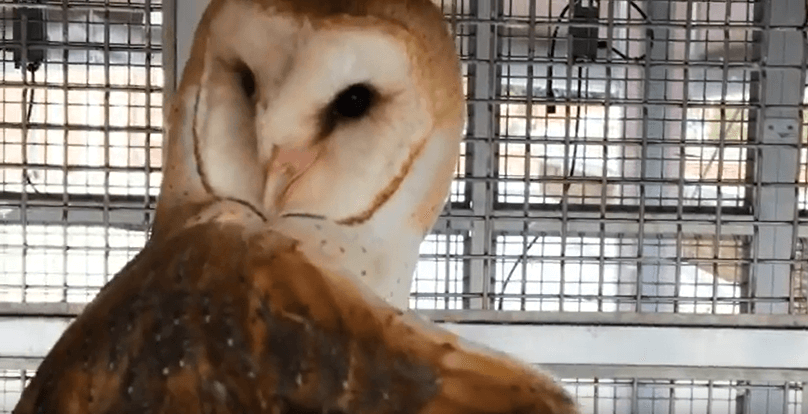
Believe it or not, an experimenter at Johns Hopkins University has been using barn owls in a cruel attempt to study attention deficits in humans. To do this, he breeds the birds, restrains them in tubes or jackets, inserts electrodes into their brains, and then bombards them with lights and sounds. Needless to say, how the brain of a captive barn owl forced into a straightjacket responds to stimuli has little relevance to how the human brain processes and attends to information.
This owl is one of many imprisoned in Shreesh Mysore’s laboratory, where he cuts into their skulls and screws metal devices onto their heads in curiosity-driven experiments with no relevance to human health.
While all these animal “models” of ADHD have resulted in hundreds of thousands of sick and miserable animals, none truly mimics the complex condition that is human ADHD.
In a survey of 121 animal studies claiming to investigate ADHD, only five were found to be in any way relevant to the hypotheses of the medical articles in which they were cited. The authors of the survey concluded that “animal research has contributed very little to contemporary understanding of ADHD.”
Fortunately, some researchers are using non-invasive methods to study ADHD in humans. Advanced neuroimaging and genetic tools are unlocking the complex mystery of attention disorder without harming animals.
Critically, funds must be shifted away from experiments on animals and toward providing patients with greater access to mental health care.
For an accurate diagnosis of suicidality, depression, alcohol problems, or other mental illnesses, consult a qualified healthcare professional. If you are in crisis or think that you may have an emergency, call your doctor or 911 immediately. If you’re feeling suicidal, thinking about hurting yourself, or concerned that someone you know may be in danger of hurting themselves, call the National Suicide Prevention Lifeline at 1-800-273-TALK (1-800-273-8255). This free service is available 24 hours a day, seven days a week, and is staffed by certified crisis-response professionals. If you’re located outside the U.S., call your local emergency line immediately.
After PETA uncovered records revealing that experimenters at the University of California–Davis caused the deaths of a dozen monkeys—among other incidents that prompted a complaint to the federal government—caged students in monkey masks will soon take over a nearby park and shout down the school for tormenting primates. The action is from Students Opposing Speciesism (SOS), a PETA-backed, youth-led movement for animal liberation.
When: Saturday, April 30, 11:30 a.m.
Where: Central Park, 401 C St., Davis
At UC-Davis, an infant rhesus macaque died after suffering from heat stress when a finger became trapped in a perch bar. In addition, staff operated on a severely underweight monkey, who was subsequently killed. Seven infant rhesus macaques died after they tried to nurse and ingested dye that was used to mark their mothers. After receiving a canine distemper/measles vaccine, three titi monkeys developed such severe complications that they had to be euthanized and dozens of others developed lameness, skin and eye inflammation or infections, and other symptoms.
“Baby monkeys have died after overheating, being poisoned, and enduring other horrors at UC-Davis,” says SOS organizer Kara Long. “Together, we’re urging our school to embrace animal-free research instead of caging and killing monkeys.”
Heads up, Howard! This Sunday, members of PETA and Animal Rights Initiative (ARI) will be unmissable outside Starbucks CEO Howard Schultz’s lakeside gated community, bearing giant photos of his face and calling him out for charging customers extra for the animal-friendly vegan milks the company already agrees are better for the planet. Starbucks gave former CEO Kevin Johnson a $60 million payout when he stepped down in March, which alone could have offset nearly 86 million 70-cent vegan milk upcharges.
When: Sunday, May 1, 10:30 a.m.
Where: At the intersection of 43rd Avenue E. and E. Garfield Street, Seattle
“If Howard Schultz thinks Starbucks can get away with milking customers who care about animals and the planet, he’s in for a brewed awakening,” says PETA Executive Vice President Tracy Reiman. “PETA is calling on Starbucks to drop the upcharge on vegan options that slash carbon emissions and leave mother cows and their calves in peace.”
Starbucks’ upcharge for vegan milks is also under attack for penalizing those who are lactose intolerant and those prescribed a low-cholesterol diet. This will mark PETA and ARI’s 99th consecutive day of protesting the vegan upcharge in Seattle. Last week, two PETA supporters were arrested after supergluing their hands to the café counter at Starbucks’ headquarters.