On your mark! Get set! “Stop Sponsoring the Deadly Iditarod!” That’s the message that PETA supporters unfurled today with a banner drop at the Formula One (F1) race starting line, right as the drivers took off. It’s the latest in a push for F1’s owner, Liberty Media, to stop sponsoring—through the company’s Alaska-based subsidiary GCI—the controversial dog-sled race, in which more than 150 dogs have died. Photos and video from the event are available here.
Each year, the Iditarod still receives more than $250,000 from GCI—an Alaskan telecommunications provider—even after losing major sponsors that no longer want to be associated with the deadly race, including ExxonMobil, Millennium Hotels and Resorts, Jack Daniel’s, Coca-Cola, Wells Fargo, and Alaska Airlines.
“Drivers choose to race in Formula One, but the Iditarod forces dogs to cross nearly 1,000 miles of ice and wind, running some to their deaths,” says PETA Executive Vice President Tracy Reiman. “PETA is calling on everyone, from mechanics to team principles to drivers, to stand up for these dogs and get Liberty to hit the brakes on this disgraceful sponsorship.”
Nearly 250 dogs were pulled from the trail this year due to exhaustion, illness, or injury, leaving the remaining ones to work even harder to pull the mushers. The Iditarod’s official death toll doesn’t include countless others who were killed simply because they weren’t fast enough or who died during the off-season while chained to dilapidated boxes or plastic barrels in the bitter cold, a practice exposed by a PETA undercover investigation.
PETA’s campaign against Liberty Media has included enlisting a pack of its supporters to wear husky masks and howl outside the company’s headquarters, purchasing stock in order to exert pressure at Liberty’s annual meetings, and sending a dead dog prop to F1 CEO Stefano Domenicali along with a letter urging him to tell Liberty to cut ties with the event.
PETA—whose motto reads, in part, that “animals are not ours to use for entertainment”—opposes speciesism, a human-supremacist worldview.
Please see the following statement from PETA Senior Vice President Kathy Guillermo regarding Greg Blasi, who hit Rich Strike while the horse was agitated after his Kentucky Derby win:
“Whipping horses in a race is abuse and should be eliminated, but punishing a horse who was in a frenzy as the crowd roared is inexcusably cruel. PETA will be filing a complaint about the outrider Greg Blasi, who appeared to hit Rich Strike. Blasi should have let go of the horse until he calmed down, and the lead pony should have had protective gear. Stewards must also question whether Blasi was angry that Derby favorite Epicenter didn’t win, as his brother Scott Blasi works for Epicenter’s trainer, Steve Asmussen. PETA’s 2013 investigation of Asmussen revealed Scott’s frequent outbursts, and last year, Scott was fined and suspended for a “physical altercation.” The Blasi family apparently needs better self-control.”
PETA—whose motto reads, in part, that “animals are not ours to use for entertainment or abuse in any other way”—opposes speciesism, a human-supremacist worldview. For more information, please visit PETA.org or follow the group on Twitter, Facebook, or Instagram.
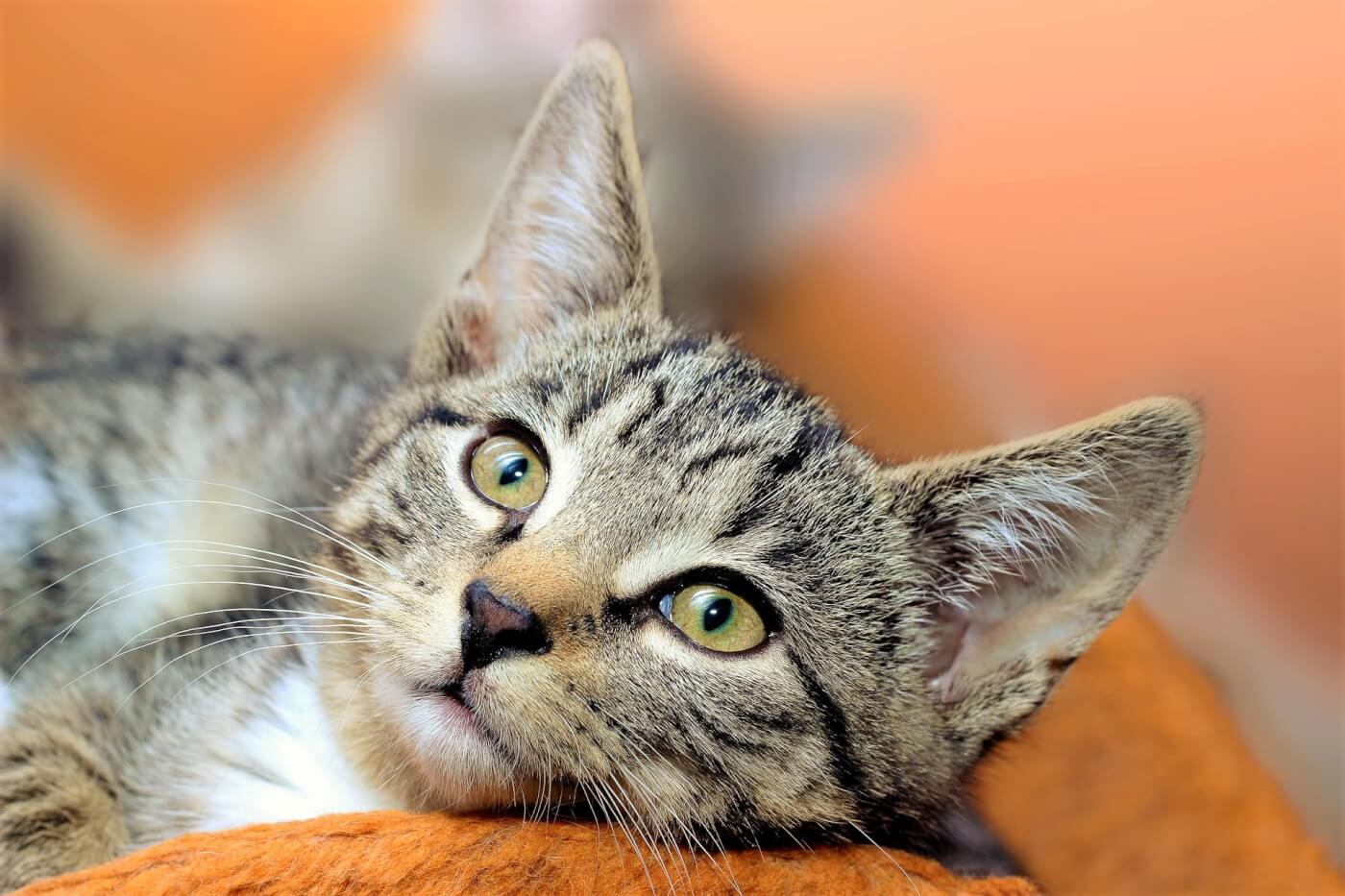
Cats are intelligent, loving animals with a sweet, playful sense of humor—and if you have the time, patience, and compassion necessary to be a suitable guardian, they can be purrfect animal companions. However—like all animals—cats suffer when they’re bred, sold, and bought.
Here are five reasons to never buy a cat:
1. Breeders Kill the Adoption Chances of Animals in Shelters
Right now, there are more than 60 million homeless cats in the U.S. Most of them will never make it into a shelter, let alone a loving, responsible home. Instead, many are hit by cars, contract deadly contagious diseases, or die in other grisly ways outside. There are too many animals and not enough responsible guardians. For every kitten born at a breeding facility or in a breeder’s backyard, a homeless cat loses a chance at finding a caring home. Cats are bred and sold by humans for only one reason—to make money. Animals’ health and well-being are never top priorities when turning a profit is involved.
2. Kitten-Breeding Factory Farms
Many kittens (and puppies) are born at factory farm–like breeding operations and sold into the pet store industry. The atrocious suffering of kittens and cats exploited by backyard breeders is similar to the suffering endured by animals on puppy and dog farms. These facilities are often full of dirty cages, exhausted mother cats who are used as breeding machines, overflowing litter boxes, and excrement-covered floors. Most breeders operate strictly indoors, making it nearly impossible to see abuse or neglect as it occurs. There is no way to estimate the number of kitten factory farms operating in the U.S. The good news is that there’s one simple way to help cats and other animals: Never buy them—always adopt from a reputable shelter.
3. Painful and Life-Threatening Genetic Defects: Breeders Only Care About Profit From ‘Purebred’ Cats
To ensure that breed-specific traits are inherited by kittens, breeders encourage cat family members to mate among themselves. This inbreeding has dire consequences for felines’ health—many kittens inherit predispositions to liver issues, hip dysplasia, and other genetic diseases and disorders.
Think about it: Would you really try to design your human companions?
If you only want a cat who looks a certain way, it’s time to reevaluate why you want a cat at all. Some breed standards encourage traits that cause the animals to suffer. Persian cats’ flat faces make them prone to dental disease and runny eyes as well as toe problems, as cats rely on their teeth to clean in between their toes. Sphynx cats, bred to be hairless, often suffer from chronic ear infections, oil buildup on the skin, and the inability to stay warm—because a cat’s fur protects their ears and body from accumulating dirt and oil and helps regulate body temperature.
4. Breeders Are Lying to You—There’s No Such Thing as a Hypoallergenic Cat
“Hypoallergenic” is a favorite buzzword of breeders when making claims about certain cats. But they’re lying to you—hypoallergenic cats do not exist. If you’re allergic to cats, you’re probably allergic to a protein in their saliva—not to their fur or dander. The allergen-inducing protein is spread to cats’ fur and skin when they groom themselves, which is why some people have an allergic reaction after touching them. Some cats produce less of the protein or shed less, but someone with an allergy could still have a reaction. If you have a particular breed in mind, remember that many “purebred” cats end up in shelters, too. Visit Petfinder.com to find animals available for adoption from reputable shelters near you.
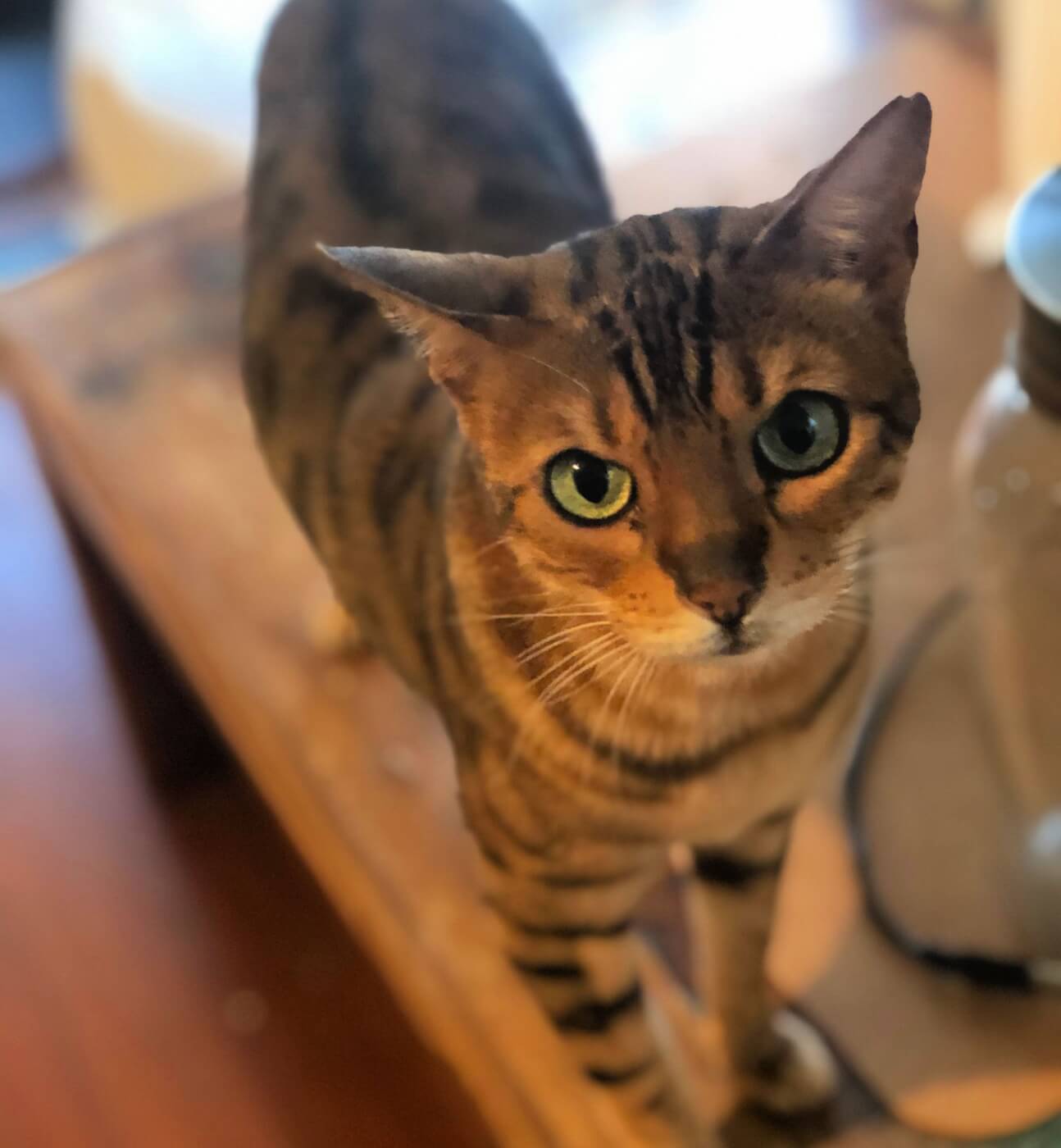
A Bengal cat named Indigo who PETA helped find responsible guardians for.
5. Cats Are a Big Responsibility
Becoming a cat’s guardian means committing to providing them with all their necessities—food, fresh water, a clean litter box, veterinary care, mental and physical exercise, and love and affection. Caring for cats is a huge responsibility—one that could last 20 years. If giving a feline companion a purrfectly loving and safe home is a responsibility you’re prepared to take on, visit a reputable shelter to adopt—never buy a cat or any other animal.
iStock.com/Elitsa Deykova
So you did the right thing: You adopted—not bought—a cat. But did you order your “cat guardian’s bible” yet?
“How do I make my home a cat’s paradise?” “What do I do if my cat gets lost or eats a poisonous houseplant?” “How do I introduce my cat to a new feline friend?” “For heaven’s sake, how do I get my cat to stop scratching the couch without declawing him?” Luckily for you and your feline friend, PETA President Ingrid Newkirk answers all these questions and many more in 250 Vital Things Your Cat Wants You to Know.
Written with the cat’s perspective in mind, this book—now available on Amazon—is a must-read for anyone who wants to keep cats happy and healthy throughout all their nine lives.
As an Amazon Associate, PETA earns from qualifying purchases. If you buy something after clicking the AmazonSmile links on this page, a percentage of the qualifying purchase will be donated to PETA and will help us protect more animals from exploitation.
Please see the following statement from PETA Vice President Shalin Gala regarding Ford Motor Company’s new ad that takes a jab at those who “fly away on their own personal spaceships when things get hard”:
Don’t be fooled by this Ford ad taking a not-so-subtle shot at Elon Musk. The car company is no better than the Tesla owner when it comes to horrific animal experiments. Musk has a long and disturbing history of harming animals, including shooting squid, mice, and water bears into outer space as well as implanting a computer chip into a monkey’s skull and coin-size computer chips into pigs’ brains. Likewise, Ford recently funded an experiment that involved obtaining 27 pigs, killing them, and then smashing pendulums into the animal cadavers while they were suspended in the air by wires through their spines—an obvious violation of the company’s 2009 policy agreement not to use animals. Ford’s ad can claim that its employees are “working together to move us all forward,” but that doesn’t change the fact that the company is stuck in the past with regard to animal testing.
For more information on PETA’s investigative newsgathering and reporting, please visit PETA.org or follow the group on Twitter, Facebook, or Instagram.
Just in time for Teacher Appreciation Month (May), TeachKind—PETA’s humane education division—has announced the results of its national 2022 Teacher Appreciation Contest, and Canyon High School educator Dennis Yong has been named a runner-up. Through creative classroom assignments, field trips to restore local habitats, and much more, Yong is helping his students explore the animal issues they’re passionate about—and, along the way, teaching them compassion for all sentient beings.
As a biology and AP environmental science teacher, Yong weaves in eco-conscious and animal-friendly teaching opportunities whenever he can. He helps his students pursue real-world learning experiences through “Compassion Challenges,” in which students can elect to make kinder food choices and track monthly progress. He also took his students on a field trip to Santa Monica Beach to go “trash fishing”—that is, “catching” trash instead of fish—to create a cleaner, safer environment for animals. When insects and other small animals end up inside the school, his students transport them safely outside and film a short video explaining the animal’s role in the local ecosystem.
To support his students’ interests in reducing their carbon footprints and protecting animals, Yong screens documentaries such as Cowspiracy and facilitates discussions about the meat industry’s impact on animals, the environment, and human health. He also plans to enhance his lessons by introducing SynFrog—a simulated whole-body frog model that can replace the use of frog cadavers and spare millions of lives.
“Whether he’s discussing the impact of animal agriculture or leading field trips to protect marine life, Dennis Yong is helping his students think critically about how our actions affect others,” says PETA Senior Director of Youth Programs Marta Holmberg. “TeachKind is delighted to honor him for building innovative curricula that inspire young people to champion justice for animals.”
In addition to a framed certificate, Yong will receive an animal-friendly gift basket designed especially for teachers.
TeachKind—whose motto reads, in part, that “animals are not ours to abuse in any way”—opposes speciesism, a human-supremacist worldview. The group offers free resources, presentations, lessons, and more to help teachers add compassion to their curricula.