
Provocative Exhibit to Expose Violent History of Animal Experiments, Including at Duke University

As part of a national tour, PETA is erecting a large exhibit titled “Without Consent” that explores the troubled history of experiments on nonconsenting animals and challenges institutions—including Duke University—to rethink this exploitative, expensive, cruel, and archaic concept of science. On display for five days, 24 panels will bear concise descriptions and photographs of nearly 200 animal experiments conducted at U.S. institutions from the 1920s through today. An interactive virtual exhibit is also available here.

When:    Wednesday, May 25, 12 noon

Where:    CCB Plaza, at the intersection of E. Chapel Hill and Corcoran streets, Durham

“‘Without Consent’ tells the true stories of animals harmed and killed in experiments that they did not and could not consent to,” says PETA Vice President Dr. Alka Chandna. “Humans are only one animal species among many, and having the power to exploit the others does not give us the right to do so.”

The 110 million animals killed every year in U.S. laboratories are individuals who experience pain and fear—yet they’re burned, force-fed chemicals, sickened with disease, and robbed of their babies. In recent tests, Duke experimenters drained adult pigs of blood and then transfused it into piglets. The experimenters surgically implanted tubes into the jugular vein, carotid arteries, and bladders of the piglets, causing hemorrhaging. They also inserted probes into the piglets’ rectums and measured vital signs every 15 minutes. The piglets became anemic, and fluid accumulated in their abdomens. The animals were killed, and their organs were dissected.

Other Duke experimenters pushed a thick plastic tube down the throats of mice to force-feed them ethanol five times over five days—damaging their pancreas and lungs. The mice who survived were decapitated, and their blood and organs were removed.

Because 95% of all new drugs that test safe and effective in animal studies go on to fail or cause harm in human clinical trials, PETA is calling on the National Institutes of Health—which gave Duke more than $731 million in taxpayer funds in 2021—to phase out the use of animals in experiments and adopt the group’s Research Modernization Deal.

“Without Consent” uses a historical perspective to point out that beginning in medieval times, experiments were conducted on vulnerable humans—including orphans in tuberculosis and psychological experiments, immigrant women in gynecological surgeries, soldiers in LSD and poison gas tests, and impoverished Black men in syphilis experiments. The exhibit illustrates that just as society now understands that these experiments were wrong, we need to let a similar moral awakening guide our conduct today by extending consideration to other nonconsenting sentient beings who suffer and die in experiments—from floor-cleaner product tests to mother-infant separation studies.

PETA—whose motto reads, in part, that “animals are not ours to experiment on”—opposes speciesism, a human-supremacist worldview. For more information, please visit PETA.org or follow the group on Twitter, Facebook, or Instagram.

The post Provocative Exhibit to Expose Violent History of Animal Experiments, Including at Duke University appeared first on PETA.
‘Hell of a Steak’ Commercial Reveals How the Planet Pays the Price for Your Steak Dinner

This new anti-meat ad provides one hell of a wake-up call, well-done.

The “Hell of a Steak” commercial, which was created by the group Vegan Friendly and aired in front of hundreds of thousands of viewers during the Eurovision Song Contest 2022, poses this question: If you knew the true cost of eating meat, would you still do it? After being showered—figuratively and literally—with facts about the environmental footprint of the meat industry, the diners in the video decide to skip the cruel, unsustainable dish.

What’s Really at Steak?

In addition to causing horrendous animal suffering, the meat industry’s impact on the planet is similarly detrimental. As the ad points out, animal agriculture burns through resources: It takes about three football fields of land and 800,000 gallons of water to produce 18,000 pounds of feed and hay to feed a single cow. “As if world hunger doesn’t exist,” the waiter snaps.

The amount of waste and pollution generated by animal agriculture is just as alarming. According to the U.S. Environmental Protection Agency, animals on U.S. factory farms produce about 500 million tons of manure each year. Runoff from factory farms and livestock grazing is one of the leading causes of pollution in our rivers and lakes. Animal agriculture is also a leading source of carbon dioxide, nitrous oxide, and methane emissions—by some estimates, it’s responsible for more greenhouse gases than all the world’s transportation systems combined.

It’s not only the planet that pays the price for meat consumption—our fellow animals do, too. Cows, pigs, chickens, and others who are raised and killed for food often spend their entire lives in cramped, filthy conditions. Commercial farms often deny them the opportunity to raise their young, breathe fresh air, roll around in the mud, build nests, or do anything else that’s natural and important to them.

Say ‘Fork You’ to the Climate Catastrophe—Go Vegan!

One of the best ways to fight the climate catastrophe—and spare our fellow animals—is to go vegan. Get started today:

Go Vegan for the Planet

The post ‘Hell of a Steak’ Commercial Reveals How the Planet Pays the Price for Your Steak Dinner appeared first on PETA.

U.S. Judge Bars Envigo From Breeding, Selling Dogs in Groundbreaking Order

Today, Senior U.S. District Court Judge Norman K. Moon issued a temporary restraining order in the United States’ civil case against Envigo. The court concluded, “[T]he Government has provided sufficient evidence that Envigo is engaged in serious and ongoing violations of the Animal Welfare Act, and that an immediate temporary restraining order must issue to put a halt to such violations pending further proceedings.” The court ordered that Envigo “[i]mmediately cease breeding, selling, or otherwise dealing in beagles at the Cumberland Facility, until in full compliance with [the order’s other requirements].”

“The court’s action is groundbreaking and essential to protect the beagles,” says PETA Senior Vice President Daphna Nachminovitch. “Federal intervention is the only way to prevent the neglect and abuse of dogs that PETA’s undercover investigation exposed—and we hope it leads to the end of this miserable business.”

According to the ruling, Envigo must “[p]ermit unencumbered access to the Cumberland Facility by the United States … to check for compliance with this Order” and “cease disposing of any beagle at the Cumberland Facility by transferring … or euthanizing any beagle … without the consent of counsel for the United States or, if they do not consent, a court order.” Envigo is ordered to house only compatible dogs together, ensure that puppies can access water, feed all dogs at least once a day unless the United States or the court agrees otherwise, add food receptacles to cages, and provide dogs deemed in need of veterinary treatment with the necessary care and submit documentation of such treatment to the United States.

The ruling sheds light on federal investigators’ findings this week at the Cumberland, Va. site. “[T]he Government’s veterinarians continue to examine dogs throughout the weekend” there, and the number of dogs seized “is likely to grow,” according to the ruling. Beagles have been found with “significant and serious health conditions, including wounds … swollen or enflamed paws, or … dental disease” and “many more beagles still face inadequate food and water, veterinary care, and the other torturous conditions described.” This week, “investigators observed ‘widespread fighting’ between beagles sharing food sources … [and] beagles fighting between adjacent cages.” According to the court, “In multiple enclosures, puppies were unable to access the spigots to get water on their own, and when the investigator ‘held down the spigot to release water,’ the puppies ‘immediately rushed to the spigot to get water, and drank heavily and quickly.’” Investigators also found numerous beagles trapped in cage floors, one whose jaw was stuck in the cage bars, and unhygienic conditions including insects, mold and a buildup of old food.

Federal agents’ latest findings mirror those of PETA’s seven-month undercover investigation of the Cumberland facility, which revealed hundreds of dead puppies and workers with no veterinary credentials injecting euthanasia drugs directly into puppies’ hearts without sedation—causing them immense pain—among other abuse. Broadcast-quality video from PETA’s investigation is available here, and photographs from the investigation are available here.

The post U.S. Judge Bars Envigo From Breeding, Selling Dogs in Groundbreaking Order appeared first on PETA.

Buffalo Shooting Suspect Allegedly Beheaded Cat Weeks Before Attack

As details emerge about the suspect in the May 14 mass shooting at a grocery store in Buffalo, New York, a disturbing history of violence is coming to light. Payton S. Gendron—the 18-year-old accused of fatally shooting 10 people in the racially motivated attack—reportedly had a history of violence toward animals. Prior to the shooting, he reportedly wrote in an online journal entry about chasing and stabbing a homeless cat for an hour and a half, grabbing him by the tail and smashing his head into the concrete floor, and slashing at his neck repeatedly until he was completely beheaded.

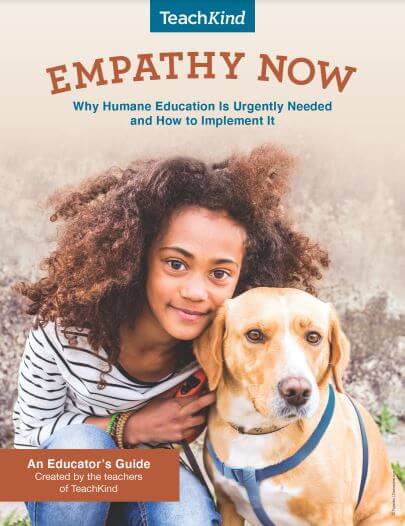
Study after study has confirmed a link between killing animals and committing violent acts against humans, and amid an epidemic of youth violence, PETA is responding by rushing its empathy-building curricula to schools in Gendron’s former school district. Youth violence toward animals is a prevalent issue, and educators have the unique opportunity to help students develop compassion for all animals—including humans—and detect early warning signs of violence before it takes place.

This worrying trend often goes unreported, but in just the past few weeks, the media have covered cases of similar violence toward animals. Teens in Colorado allegedly flushed a live squirrel down a toilet, a Tennessee teen reportedly posted a video of another teen beating a dog to death, and in Florida, a group of students reportedly gutted a shark and hung the animal from the school rafters. In each of these cases, TeachKind—PETA’s humane education division—contacted local school districts in order to provide them with our compassion-building curricula.

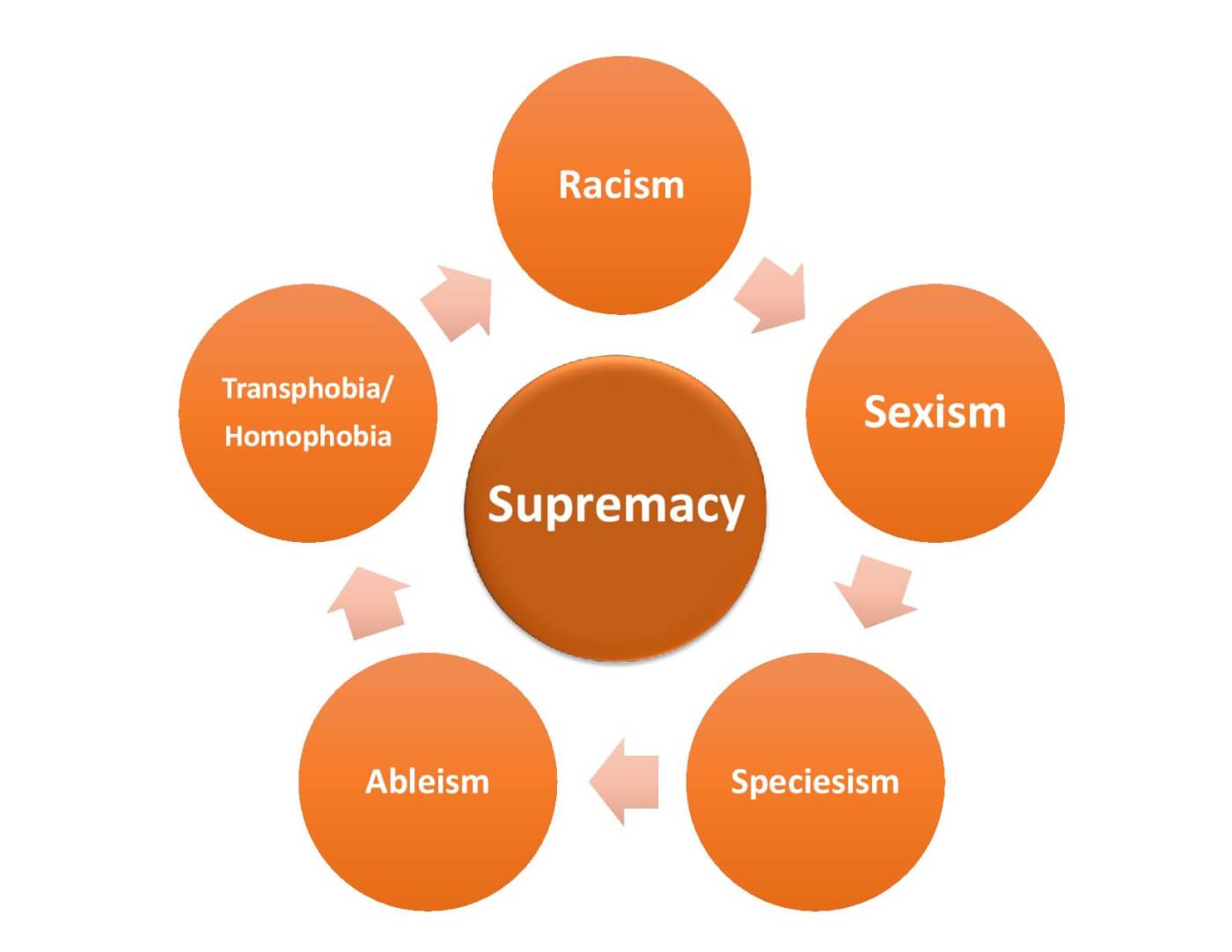
teachkind empathy now cover image child and dogThis pattern of violence is also an example of how speciesism can go hand in hand with other forms of discrimination. The mindset that condones the oppression of humans—including people of color, Muslims, women, older people, and members of the LGBTQ+ community—is the same mindset that permits the exploitation of animals. Prejudice arises when we start to believe that I am special and you are not and that my interests somehow trump those of other sentient beings.supremacy flowchart

Every single case of cruelty to animals needs to be taken seriously. Many lives may depend on it.

The post Buffalo Shooting Suspect Allegedly Beheaded Cat Weeks Before Attack appeared first on PETA.