
Proposal for Illegal Monkey Prison in Louisiana Prompts PETA Complaint to CDC

PETA has uncovered documents that should make Louisianans nervous. Quebedeaux Transport, the company behind a high-profile monkey transport crash on January 21, 2022, involving a truck transporting 100 monkeys across several states, is now attempting to remodel an abandoned human prison to create one for monkeys—even though state officials oppose the plan. It’s bad news for monkeys and for public health.

According to records recently obtained by PETA, the Louisiana Department of Wildlife & Fisheries recently sent a letter urging the company’s owner, Jeffrey Quebedeaux, to cease plans to build a warehouse in Avoyelles Parish meant to warehouse hundreds of monkeys slated for use in experiments. If the project goes through, the facility would apparently violate state laws prohibiting possession of primates and would risk the spread of diseases.

PETA is calling on the Centers for Disease Control and Prevention (CDC) to block Quebedeaux and his businesses from importing, quarantining, or holding primates. We pointed out that monkeys can carry tuberculosis, West Nile virus, malaria, Chagas disease, simian immunodeficiency virus, herpes B, hepatitis, and other pathogens and diseases that can spread to humans.

“This proposed prison would be miserable for monkeys warehoused before being sent to laboratories, and it poses an alarming health threat for humans in the community. Jeffrey Quebedeaux seems to be willfully ignoring the law, which should be a red flag to the CDC that his company shouldn’t be trusted to warehouse primates, particularly those who are coming directly from overseas with unknown health histories. PETA is urging the agency to do all it can to stop Quebedeaux’s cruel and dangerous exploits.”

—PETA Senior Vice President Kathy Guillermo

The crash in Pennsylvania scattered dozens of wooden crates holding monkeys across the highway. This disaster followed a long and terrifying flight for the monkeys from Mauritius, during which they were confined to the plane’s cargo hold. The long-tailed macaques had arrived at John F. Kennedy International Airport in New York that morning and had not yet been quarantined or tested for any pathogens that could endanger humans. Witnesses say that the crates bore no labels warning of potential danger or even indicating that they held monkeys. Three monkeys who escaped and desperately tried to find a safe place in the frigid weather were shot and killed. One woman who tried to help was exposed to monkey saliva and had to undergo antiviral and rabies prevention treatment.

That crash wasn’t the company’s first, either: Quebedeaux Transport was also involved in a 2020 incident in New Jersey in which a truck hauling monkeys caught fire. Jeffrey Quebedeaux’s previous transportation company, Stone Oaks Farm and Transports, was also given an official warning letter from the U.S. Department of Agriculture for violations after the death of a chimpanzee it was hauling to a laboratory.

Take Action for Monkeys Used in Experiments

Thanks to the efforts of PETA, other animal protection organizations, and caring people around the globe, nearly every major airline in the world has stopped transporting monkeys slated to be sent to laboratories—but EGYPTAIR is still shipping them.
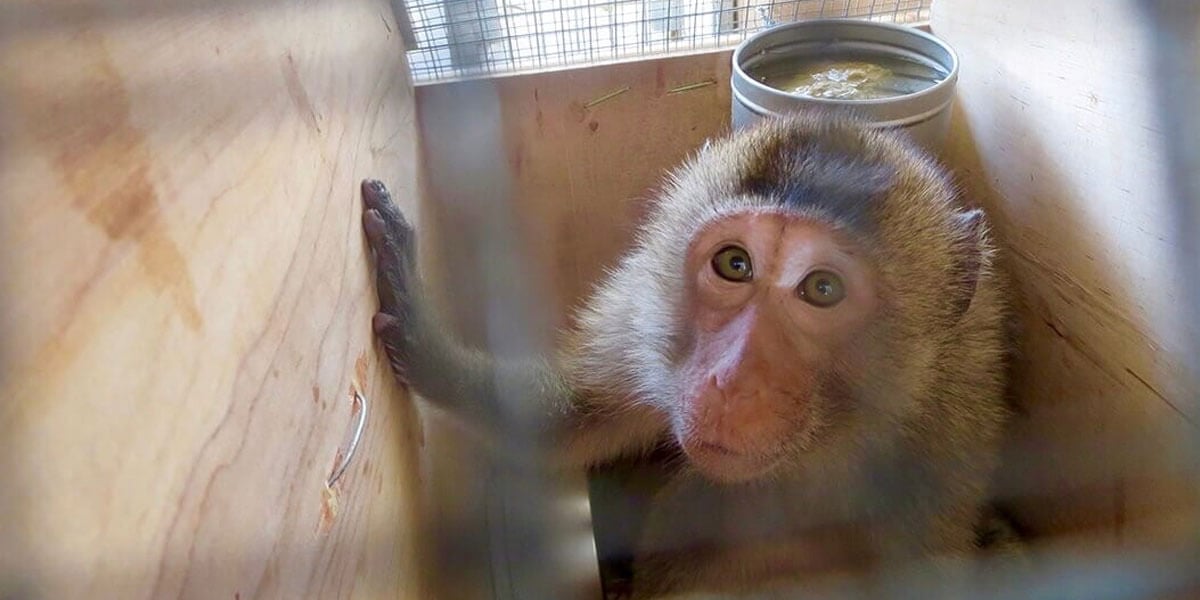
monkey in shipping crate

Now, it’s time for us to let EGYPTAIR know that it has made a very bad business decision by getting involved in the cruel trade in primates for experimentation.

The post Proposal for Illegal Monkey Prison in Louisiana Prompts PETA Complaint to CDC appeared first on PETA.


Vegan Butcher Shop in Los Angeles Is Merging Mexican Flavors With Deli Classics

Los Angeles’ Highland Park neighborhood has welcomed a new staple for vegans: Maciel’s Plant-Based Butcher & Deli serves vegan meats inspired by Mexican flavors along with made-to-order sandwiches, agua frescas, house-made salsas, and more.

Owner Maciel Bañales Luna grew up in Durango, Mexico, and she draws inspiration from her upbringing for the shop’s chicharrones, chorizo, and salsas.

Time spent living in Brooklyn with her husband also inspired other offerings commonly seen in New York–style delis, including the pastrami, which comes piled high with provolone, sauerkraut, and Thousand Island dressing on the Reuben sandwich. This blend of cultural influences has made for a unique shop that fits perfectly within Los Angeles’ diverse vegan food scene.

maciel's vegan butcher reuben

Here are some other items you shouldn’t miss at Maciel’s Plant-Based Butcher & Deli.

The Breakfast: bacon or chorizo with vegan eggs and cheddar cheese, tomato, red onion, and spicy sauce on a brioche bun

Order Your FREE Vegan Starter Kit

Send Me a Vegan Starter Kit

The Flores: Mexican ribs, pickled onions, arugula, and mayo on ciabatta

Aguas Frescas (available in Pineapple Ginger, Cucumber Lime Mint, and Hibiscus flavors)

maciel's vegan butcher aguas frescas

*****

Maciel’s is one of the city’s first vegan butcher shops, closely following The Butcher’s Son in Hollywood, which opened just a month before. Clearly, people are interested in compassionate, animal- and planet-friendly meats and cheeses that are made with care. When you go vegan, you help spare the lives of many animals. Plus, it’s the best thing you can do for the planet and your own health. For tips and resources to help you make the transition, order your free vegan starter kit today:

Send Me a Free Vegan Starter Kit

The post Vegan Butcher Shop in Los Angeles Is Merging Mexican Flavors With Deli Classics appeared first on PETA.

California Community Might Gun Down Rabbits to Protect Lawns?

PETA has received complaints from upset residents of Mission Viejo, California, regarding an application seeking permission to hire a contractor to shoot and kill wild rabbits that was filed by Palmia, a gated senior community. According to news sources, Palmia has been massacring rabbits since 2010 because the animals have a tendency to munch on grass and flowers. Meanwhile, California is experiencing one of the most severe droughts in history and natural food sources are scarce, pushing wildlife to forage more in areas where humans have encroached—but apparently Palmia management feels that curb appeal is more important than the lives of animals who are merely trying to eke out an existence.

The Mission Viejo City Council is reportedly set to discuss this matter at its next meeting—on Tuesday, July 12, at 6:00 p.m. ET. Now is the time to make your voice heard and urge the city council to prioritize wildlife over pristine summer lawns and deny the permit to kill rabbits at Palmia.

E-Mail Mission Viejo City Council Members

cityclerk@cityofmissionviejo.org

Please also contact Powerstone Property Management, which manages Palmia, and let it know that killing isn’t a lasting measure—as is evidenced by repetitive shooting initiatives. Unwanted rabbits can be encouraged to move on naturally by keeping bushes trimmed back to reduce hiding places, using rocks and mulch instead of grass in landscaping, spraying repellents where animals chew, and implementing sonic deterrents, motion-activated lights or sprinklers, and other scare tactics.

E-Mail Powerstone Property Management

Scott Mourer, general manager: smourer@powerstonepm.com

Cesar Chavez, assistant general manager: cchavez@powerstonepm.com

Sheri Goldsbrough, lifestyle director: sgoldsbrough@powerstonepm.com

Thank you for your compassionate action for wildlife!

The post California Community Might Gun Down Rabbits to Protect Lawns? appeared first on PETA.

‘Running of the Bulls’ Bloodbath Returns to Pamplona; 6 Runners Reportedly Hospitalized

The infamous Running of the Bulls returned to Pamplona, Spain, on Thursday after a two-year pause, and the bloodbath has already begun. So far, half a dozen runners—including a teenage girl who lost part of her finger and a man who fractured his arm—were reportedly hospitalized because of their injuries.

According to reports, several runners were stomped, trampled, or shoved to the pavement, and two men were bumped in the head by an animal’s horn.

The ‘Running of the Bulls’ Has Always Been a Bloodbath

It’s par for the course for participants to sustain injuries during the dangerous Running of the Bulls. According to Pamplona officials, hundreds of runners are injured during the treacherous event. In the 2019 Running of the Bulls, eight humans were reportedly gored.

As for the unwilling participants—the bulls who are provoked to charge through the streets lined by screaming crowds—slaughter is guaranteed. After a frantic run, the animals are corralled into the bullring, where they will be slowly slaughtered one by one in front of roaring, taunting crowds.

In a typical bullfight, men on horses (known as picadors) circle a bull and drive lances into his back and neck, twisting and gouging the weapons to ensure significant blood loss. Then, the banderilleros enter on foot and plunge sticks with a harpoon point on the end into the bull’s back before running him in circles to disorient him.

Finally, the matador (literally, “killer”) enters to deliver the final blow to the dying, mutilated animal. The matador uses a long sword to sever the bull’s aorta, and if that doesn’t work, he may use daggers to cut the bull’s spinal cord.

Torture Is Not a Tradition Worth Preserving—Help PETA End the Cruel ‘Running of the Bulls’

PETA entities have been protesting the Running of the Bulls for almost two decades, urging the city to end this cruel, violent spectacle. Leading up to this year’s event, our supporters, clad in inflatable dinosaur costumes, paraded through the streets to send a message that torture and public executions are archaic and barbaric and need to end.

In the last two years, PETA U.K. has also offered nearly €300,000 to Pamplona Mayor Enrique Maya Miranda to permanently end the cruel bull runs and subsequent bullfights.

If you want to help end the torture and slaughter of bulls in Pamplona, send a message to the prime minister of Spain:

Take Action!

The post ‘Running of the Bulls’ Bloodbath Returns to Pamplona; 6 Runners Reportedly Hospitalized appeared first on PETA.

Hamsters Kept in Complete Darkness in UMass Lab for Over 200 Days: PETA Statement

Please see the following statement from PETA neuroscientist Dr. Katherine Roe regarding federal documents that reveal a serious animal welfare violation in the laboratories of the University of Massachusetts–Amherst (UMass). According to documents obtained by PETA through a Freedom of Information Act request, UMass experimenters held 10 golden hamsters in constant darkness for more than 200 days, in violation of the protocol that had been approved by the university’s animal experimentation oversight body.

The University of Massachusetts–Amherst’s (UMass) animal laboratories should lose their license to operate. Federal documents obtained by PETA reveal that the school’s experimenters went rogue and kept young hamsters in constant, complete darkness for 200 days, even though approval had been given for only half that duration. Apparently, UMass personnel lack both empathy and a willingness to follow the law. PETA has filed a complaint with the U.S. Department of Agriculture (USDA).

This is just the latest in a litany of violations at UMass: Mice have drowned, birds have starved to death, and zebrafish have died from overheating. In one incident, experimenters failed to give necessary pain relief to mice several hundred mice who had just undergone surgery. All these problems are in addition to the university’s use of fragile marmosets in deadly menopause experiments—even though these tiny monkeys don’t naturally experience menopause. UMass has been cited by the USDA for its mistreatment of marmosets in these experiments. In one incident, a marmoset was severely burned when experimenters put hand warmers on his body while he was recovering from surgery, leading to his death three days later. Another violation occurred when a marmoset escaped from a device that restrained him and was injured during recapture by staff, causing them to amputate his tail.

UMass must shut down its animal laboratories, beginning with its marmoset laboratory, and redirect its resources toward modern, non-animal research methods that will actually help humans. We urge officials there to adopt PETA’s Research Modernization Deal.

For more information on PETA’s investigative newsgathering and reporting, please visit PETA.org or follow the group on Twitter, Facebook, or Instagram.

The post Hamsters Kept in Complete Darkness in UMass Lab for Over 200 Days: PETA Statement appeared first on PETA.