Oroville Resident Sues National Dairy Co. for Cruel Separation of Newborn Calves From Their Mothers

Local resident Amber Takahashi-Mendoza is a plaintiff in a class-action lawsuit against dairy company Organic Valley, which markets nationwide and exports to 25 countries, filed today in the Superior Court of California in Alameda County by PETA Foundation attorneys—and it’s seeking to upend factory-farming practices. Takahashi-Mendoza accuses the company of misleading her into buying its products at a premium price because it falsely claims to treat cows “with love”—when in fact it separates newborn calves from distraught mothers, who have been observed on dairy farms running after the trucks taking their babies away and crying for days over the loss.

The lawsuit cites numerous studies showing that the public roundly disapproves of the secretive practice, describing it as “unethical,” “inhumane,” “cruel,” and “totally unacceptable” and argues that Organic Valley’s deception helps sustain the company’s position in the industry, which includes taking in $1.2 billion in sales in 2020 alone.

The lawsuit alleges that Organic Valley does the following:

  • Denies vulnerable calves a sufficient weaning period before taking them from their mothers, a process that inflicts immense psychological and physical suffering on both
  • Allows calves to be raised in isolation without vital socialization and natural sustenance
  • Claims on its milk cartons, despite these inhumane practices, to provide cows with the “highest standards” of animal care, which go “above and beyond other standards”—and charges a higher price based on those assurances

“All babies need their mothers, and as a mother myself, I can’t imagine a greater trauma than having my newborn taken from me,” says Takahashi-Mendoza. “I am sure other people bought Organic Valley milk thinking its cartons promising humane animal care practices—not to mention love—meant it didn’t inflict some of the cruelest practices typical of dairy factory farming.”

Takahashi-Mendoza is also represented by Helen Zeldes, Joshua Fields, and Aya Dardari of Schonbrun Seplow Harris Hoffman & Zeldes LLP.

PETA—whose motto reads, in part, that “animals are not ours to eat”—opposes speciesism, a human-supremacist worldview. For more information on PETA’s investigative newsgathering and reporting, please visit PETA.org or follow the group on Twitter, Facebook, or Instagram.

The post Oroville Resident Sues National Dairy Co. for Cruel Separation of Newborn Calves From Their Mothers appeared first on PETA.
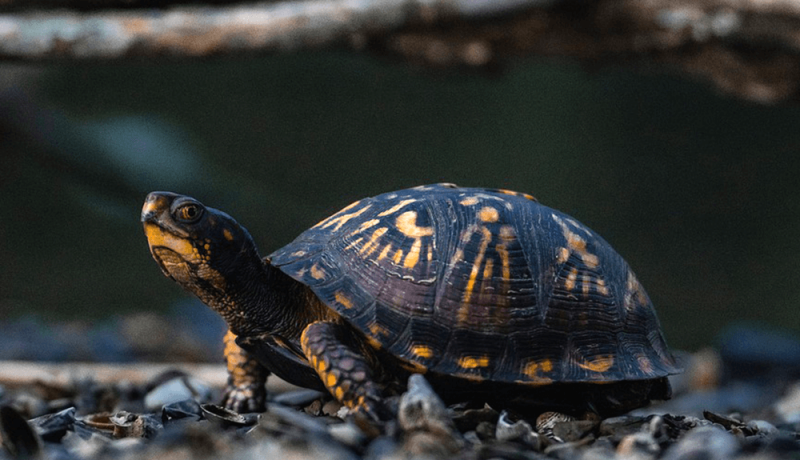
Urge Johnson State Bank in Kansas to Nix Turtle ‘Racing‘!

Apparently, Johnson State Bank in Johnson City, Kansas, encourages residents to remove turtles from their natural homes every summer and use them to “race.”

This year’s event is scheduled for this Saturday, July 23.

So-called “turtle-racing” events typically involve taking wild turtles out of their habitats, keeping them trapped, changing their diets, traumatizing them, and either releasing them or killing them once the events are over. Competitors at the races make loud noises to scare the turtles in an effort to encourage them to move faster. Turtles only move quickly when they believe their lives to be in danger. Although we don’t know what specifically becomes of every turtle cruelly exploited by Johnson State Bank, even those who are returned to nature are likely not deposited in the exact place they were found, which decreases their likelihood of survival. And when turtles are passed around by human hands or housed together—common practices for such events—they’re at risk for infection.

Please politely urge the bank and the county’s chamber of commerce, which appears to be advertising the “race,” to do the right thing by scrapping this cruel event:

Then forward this alert far and wide!

The post Urge Johnson State Bank in Kansas to Nix Turtle ‘Racing‘! appeared first on PETA.

Pass the Banchan! How to Find Vegan Options at Your Local Korean BBQ Spot

Have you been invited to dine at a Korean BBQ restaurant? Are you wondering what you can eat that’s animal-friendly? We have you covered! While each restaurant will vary in what it offers and how it prepares specific dishes, we’ve found a few common offerings that will point you in the right direction. As always, be sure to check with the restaurant for details about vegan options—some spots have special vegan menus, so don’t be shy.

Here are some vegan options you might find at a Korean BBQ restaurant:

Banchan Is Your Friend (Usually)

Banchan are the small side dishes that arrive at your table. They can vary from bean sprouts in sesame oil to pickled cucumbers to spicy daikon. Just steer clear of items that look creamy—like dressed cabbage shreds and potato salad—and you’ll be off to a great start. It’s also a good idea to ask if any dishes contain fish (particularly the kimchi).

Get Lit … With Veggies

Ditch roasting meat on that sizzling plate, because cows and pigs are individuals who simply want to spend their lives in peace, without having them cut short by a human’s appetite. Depending on the restaurant’s availability, you can request an array of fresh vegetables and mushrooms to grill up instead. Season them with a dipping mixture of soy sauce, vinegar, and Korean chili powder, and you’re good to go.

You Can’t Go Wrong With Tofu

If you’re hungry for more after the veggies, reach for some tofu. Some places carry “tofu steak,” which are slabs of tofu served on a sizzling plate—yum! Other versions include sundubu, a spicy tofu stew. Make it vegan by requesting a water-based broth and ask for no egg in your piping-hot bowl.

Rice Will Fill You Up

Warm steamed rice is a given, but if you’re looking for an all-in-one bowl, go for bibimbap. Dolsot bibimbap is served in a stone pot (be careful—it comes out super-hot!) with a mix of fresh sautéed vegetables. Get yours without beef and ask the server to hold the egg, then stir the ingredients with gochujang (a spicy sauce) and enjoy!

Order Your FREE Vegan Starter Kit

Send Me a Vegan Starter Kit

Japchae

Japchae is a dish of stir-fried glass noodles made from sweet potato, which are tossed with fresh vegetables and a sweet soy- and sesame-based sauce. It’s often made with meat, so be sure to ask for only veggies when you order. It’s also delicious with tofu!

Tteokbokki

This Korean street food of soft, chewy stewed rice cakes can sometimes be ordered vegan—just ask if the sauce contains any fish, egg, or cheese before you order.

Make It at Home

Korean BBQ is so easy to make at home, and it can be a fun dinner party idea! Make seitan or tofu bulgogi from scratch, or use an accidentally vegan marinade. Grab freshly made banchan from your local Korean market. You can also find ready-made Korean-inspired meals at Trader Joe’s, including beefless bulgogi, tteokbokki, kimchi tofu soup, and japchae.

*****

Don’t sweat it—our dining tips will help you figure out how to find vegan-friendly dishes at all your favorite restaurants. We’ve also got you covered with our comprehensive guide to going vegan and our free vegan starter kit:

Order Your Free Vegan Starter Kit Today!

The post Pass the Banchan! How to Find Vegan Options at Your Local Korean BBQ Spot appeared first on PETA.

USDA Files Official Warning Against NCSU After Horse, Rabbit, and Ferret Deaths: PETA Statement

Please see the following statement from PETA Vice President Dr. Alka Chandna regarding the official warning posted by the U.S. Department of Agriculture against North Carolina State University for its violations of federal animal welfare regulations:

This official warning from the feds won’t undo the trauma endured by animals, but it shows that North Carolina State University (NCSU) shouldn’t be trusted with even one more penny of taxpayer funding for experiments on animals. PETA has filed a complaint with the National Institutes of Health, calling on it to turn off the money spigot to the school. The university’s obscene incompetence and neglect have resulted in suffering and death: A horse who was repeatedly being bled by the university suffered from urinary incontinence and urine scalding on his legs but was denied adequate veterinary care. Eventually, he was found to have a large bladder stone and was euthanized. In two other incidents, veterinary students improperly handled animals, resulting in their deaths. A rabbit had to be euthanized after careless handling by a student resulted in a broken back, and a ferret had to be euthanized after a student conducted a prolonged surgery on the animal. According to the federal report, the university’s animal experimentation oversight body failed to investigate the deaths of these animals—as required by law—let alone to implement a plan to prevent future violations.

These critical violations, originally documented in an inspection report earlier this year, were so serious that U.S. Department of Agriculture (USDA) inspectors referred them to its Investigative and Enforcement Services (IES) arm, which issued the rare warning. Last year, IES issued only 58 official warnings—even though the USDA’s inspection arm filed thousands of inspection reports documenting violations. NSCU has the distinction of being one of the few singled out for its failures.

For more information on PETA’s investigative newsgathering and reporting, please visit PETA.org or follow the group on Twitter, Facebook, or Instagram.

The post USDA Files Official Warning Against NCSU After Horse, Rabbit, and Ferret Deaths: PETA Statement appeared first on PETA.