Is Regenerative Agriculture Humane and Sustainable? PETA Explains

As the climate catastrophe makes headlines every day, concepts like “regenerative agriculture” and other “sustainable” farming methods are being examined—but does regenerative agriculture do anything for the animals tormented by the farming industry?

What Is Regenerative Agriculture?

“Regenerative agriculture” is an umbrella term for farming and grazing practices that aim to create sustainable supply chains in food- and clothing-production systems by releasing as little greenhouse gas as possible. Typical farming techniques—such as plowing and overgrazing— force too many animals to feed off too little land, leave the soil barren, and release a high amount of carbon into the air.

A huge tractor plows through a field, churning the soil

Regenerative agricultural tactics, such as “low-till” farming and “holistic grazing,” focus on rebuilding organic matter by disrupting natural vegetation and soil as little as possible—but when it comes to farmed animals, do these methods really make a difference?

Is Regenerative Agriculture Better for Animals and the Planet?

There’s not enough evidence to suggest that regenerative agriculture can make animal-derived products “sustainable,” and the practice does nothing to prevent the immeasurable cruelty inherent in exploiting animals for their bodies. Because the term “regenerative” is vague, some brands are now using claims of regenerative farming as a way to greenwash and “humane wash” animal-based products. Companies are using misleading marketing terms with implicit beneficial claims—such as “carbon-neutral burgers,” “regenerative wool,” or “regenerative leather”—giving consumers the false impression that their purchases are ethical and eco-friendly.

Studies show that the amount of greenhouse gas emitted by even the most “carbon-friendly” beef production is still over double that of the least carbon-friendly tofu, bean, pea, or nut production. The same is true for animal skins. Wool, silk, and cow leather have global-warming impacts more than three times greater than those of vegan textiles like polyester fabric or polyurethane synthetic leather. The Food Climate Research Network and the University of Oxford have found that a significant expansion of animal agriculture—even if animals are “sustainably raised”—would cause “catastrophic” land-use change and other intense environmental damage. There simply isn’t enough land to make regenerative methods scalable in a way that would make animal agriculture sustainable.
Jo-Anne McArthur / Eyes On Animals / We Animals Media

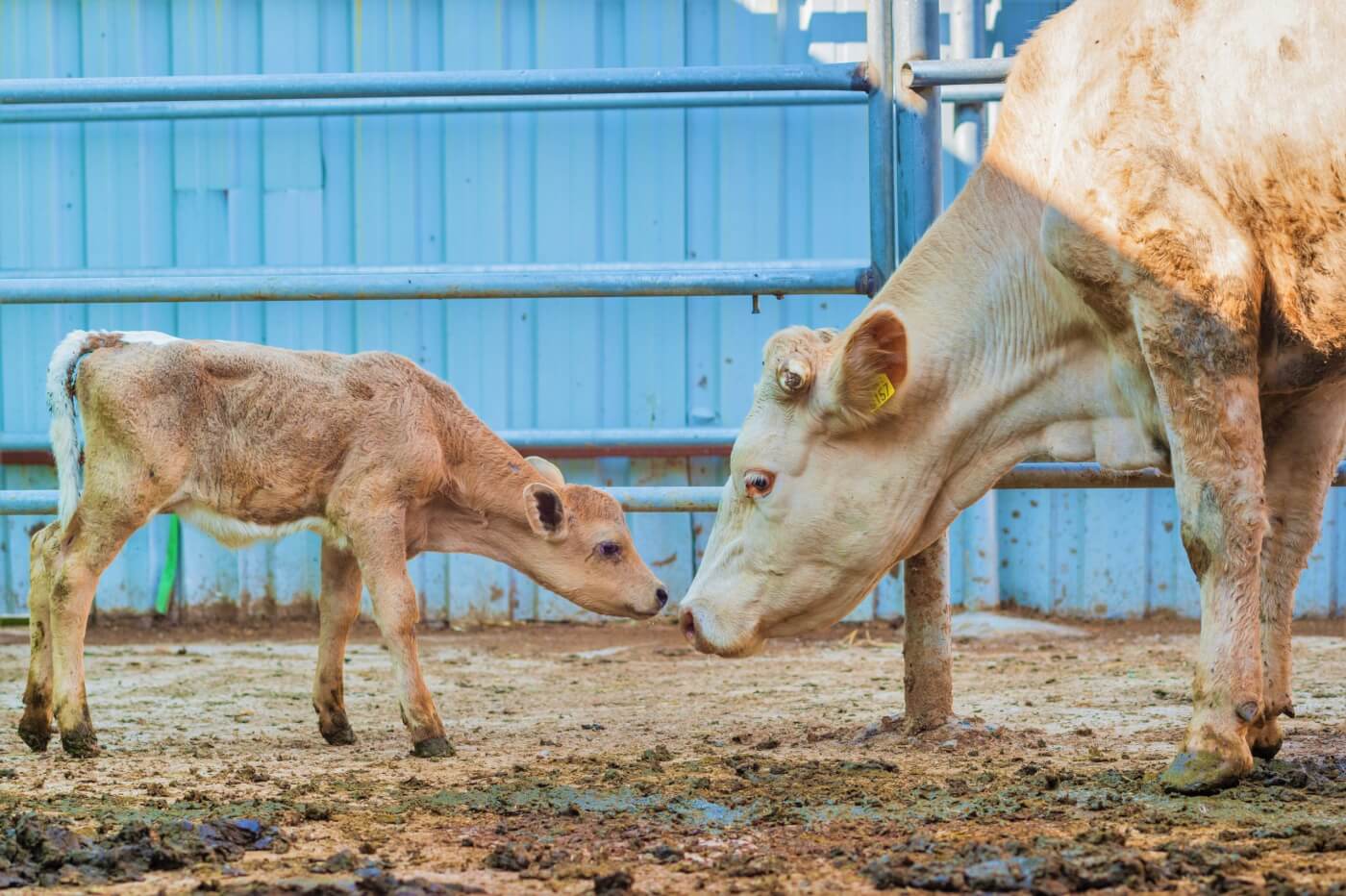
Regenerative farming also doesn’t address animal welfare issues and does nothing to prevent the rampant cruelty in the animal agriculture industry. For example, cows used for milk—regardless of the “humane” or “ethical” labels on dairy packages—are forcibly separated from their babies, often within a day of their birth, and the strong emotional bond between mother and calf is traumatically severed. Mother cows will often cry out for their babies for days after they’ve been torn away.

Going Vegan Is the Only Sustainable Choice

Instead of purchasing animal-derived merchandise produced by agricultural methods that may be only slightly less environmentally harmful than traditional farming, brands and consumers should make the immediate and truly sustainable decision to buy only vegan products. Every person who goes vegan reduces the carbon footprint of their eating by 70% and spares about 200 animals every year.

Try PETA’s 3-Week Vegan Challenge

The post Is Regenerative Agriculture Humane and Sustainable? PETA Explains appeared first on PETA.

PETA Scientists Show How to Improve Research Without Using Fetal Bovine Serum

A new paper coauthored by PETA Science Consortium International e.V. shows how to improve research by replacing media containing fetal bovine serum (FBS) with animal-free media.

Every year, an estimated 1.8 million unborn calves are killed worldwide to produce FBS—a mixture of molecules, including hormones, proteins, and growth factors, obtained from the blood of fetal calves after their mothers are slaughtered for food. FBS, which is used in laboratories to help grow cells in petri dishes (in vitro), contributes to the reproducibility problem in research, as differences between batches of FBS increase the variability of studies using cells grown in it.

The paper, published in Toxicology in Vitro, describes the transition of a human lung cell line commonly used in research to cell culture media without FBS or any other animal-derived components. The success of this project sets a precedent for making the same transition for other cell types and has far-reaching implications for the field of in vitro research.

Scientific organizations, such as the Organisation for Economic Co-operation and Development and the European Union Reference Laboratory for Alternatives to Animal Testing, have encouraged the transition from using FBS to using animal-free, chemically defined media.

PETA scientists are now sharing the publication with laboratories. They are also working to transition other cells out of FBS and encouraging researchers to do so as well.

Two brown cows in a field of flowers


The Science Consortium and its members have donated millions of dollars toward improving and implementing non-animal test methods, including funding their development and validation as well as organizing free workshops, webinars, and training opportunities for scientists.

The post PETA Scientists Show How to Improve Research Without Using Fetal Bovine Serum appeared first on PETA.

Pugs, French Bulldogs, and Other Breathing-Impaired Breeds at Serious Risk of Heatstroke Death Amid Record-Breaking Heat

EMERGENCY ALERT: As record-breaking heat waves rip through the U.S., it’s critical to remember that French bulldogs, Boston terriers, pugs, boxers, and other breathing-impaired breeds (BIBs) are at risk of suffering—or even dying—from heatstroke.

BIBs Struggle More to Withstand the Heat

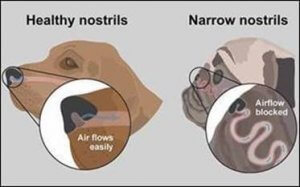
Because BIBs have flat faces and abnormally small airways, they’re twice as likely to suffer from heatstroke than other breeds. These dogs have been bred for a particular look, resulting in drastically shortened airways that make it hard for them to breathe and stay safe—or even alive!—in the heat.


Be on High Alert for Signs of Distress

Gasping and rasping, shortness of breath, and panting may be mistaken as “typical” types of behavior for BIBs—but these are all signs of distress and can lead to fatalities in heat waves. In July alone, a French bulldog came close to dying from heatstroke, even though he was sitting in the shade; a bulldog with heatstroke collapsed in public; another died in a greenhouse; and yet another died from the heat at a doggie daycare—and those are just the reported cases.

Breeding Dogs Into a Lifetime of Suffering Is Cruel—Take Action Now!

According to a recent veterinary study, BIBs can no longer be classified as “normal dogs” because of their genetic health defects. They might be banned in the U.K., restrictions have been imposed on them in Germany, and in Norway, a court ruling established a precedent for the recognition that flat-faced breeds suffer more and should no longer be bred.

It’s time to save dogs’ lives by banning their breeding and sale in the U.S. You can help by taking the pledge to adopt and never shop:

Take the pledge!

The post Pugs, French Bulldogs, and Other Breathing-Impaired Breeds at Serious Risk of Heatstroke Death Amid Record-Breaking Heat appeared first on PETA.

Victory: Department of Transportation Ends Animal Testing Requirement!

It’s been a long road, but every journey has a destination. This week, with encouragement from PETA, the U.S. Department of Transportation (DOT) expanded its acceptance of animal-free skin testing. This change comes more than 30 years after PETA first helped persuade DOT to accept animal-free methods to partially replace the use of rabbits in painful skin-corrosion tests.

DOT requires that companies test chemicals for their ability to cause permanent skin damage—corrosion—before they’re shipped around the country on trucks, trains, boats, and airplanes. In skin-corrosion tests, hazardous substances are applied to the shaved skin of rabbits and the animals are checked for chemical burns.

With this week’s update to its testing requirements, DOT has at last fully accepted non-animal tests for skin corrosion! In a letter to PETA, DOT writes that this change will encourage companies to use animal-free tests, and PETA will continue to make sure that every company knows about this updated rule.

White rabbit in grass in front of woods

This victory is in no small part because of the years of hard work and dedication from our supporters. Thanks to your efforts—including tens of thousands of supportive messages in response to our action alerts about rabbits who suffered in these tests—PETA met with officials at DOT who listened to our scientists and helped move mountains for animals by bringing the U.S. into alignment with many other countries already using superior, animal-free tests.

It goes to show that, no matter how long it takes, PETA is always ready to take the first, middle, and last step to save animals.

Rabbits Need Your Help — Hop to It!

Rabbits are socially complex, intelligent animals with unique personalities, just like dogs and cats. In their natural habitat, they keep meticulously clean burrows and spend their time foraging for fresh, leafy food and interacting with other members of their warren.

But right now, all over the world, rabbits are suffering in laboratories and on fur farms. Exploited because of their gentle nature, rabbits are subjected to harsh chemical tests, their hair is torn out by the fistful, and they languish in barren wire cages.

The post Victory: Department of Transportation Ends Animal Testing Requirement! appeared first on PETA.

‘Disgraceful!’ PETA Ads Slam NIH’s Multimillion-Dollar Taxpayer Handout to Troubled Primate Lab

PETA is placing full-and front-page ads in The Washington Times and a full-page ad in The Hill condemning the National Institutes of Health’s (NIH) disgraceful decision to award a nearly $13 million annual infrastructure grant—$65 million over the next five years—to the Washington National Primate Research Center (WaNPRC) at the University of Washington (UW). This grant is in addition to the tens of millions of dollars it has received in 2022 to fund experiments on monkeys. NIH awarded the grant despite WaNPRC staff’s admitted destruction of data, the facility’s appalling record of infant primate deaths, multiple serious violations of federal animal protection laws and state animal health and import regulations, and rampant disease and toxic waste exposures at its breeding facility in Arizona.

PETA has called on U.S. Department of Health and Human Services Secretary Xavier Becerra to investigate NIH’s review process in light of the award. In October, the group provided Becerra with evidence of unethical and illegal actions by the WaNPRC that endangered primate and public health, as documented by state and federal agencies in addition to UW’s own records.

“NIH knew of the primate center’s violations, destruction of data, failure to prevent zoonotic disease outbreaks, and starvation deaths of monkeys—and still awarded it a multimillion-dollar grant,” says PETA Senior Vice President Kathy Guillermo. “NIH can’t be trusted with public funds.”

In December 2021, the King County Superior Court in Seattle held the primate center liable in civil litigation brought by PETA based in part on the facility’s failure to turn over videos and photographs of monkeys used in experiments. In a series of shocking under-oath admissions, the former director and experimenters there described routinely deleting data, making it impossible for UW to comply with not only the Public Records Act but also, apparently, the school’s own records-retention duties as the recipient of hundreds of millions of dollars in taxpayer-supported funding from NIH.

PETA—whose motto reads, in part, that “animals are not ours to experiment on”—opposes speciesism, a human-supremacist worldview. For more information on PETA’s investigative newsgathering and reporting, please visit PETA.org or follow the group on Twitter, Facebook, or Instagram.

The post ‘Disgraceful!’ PETA Ads Slam NIH’s Multimillion-Dollar Taxpayer Handout to Troubled Primate Lab appeared first on PETA.