Danny Trejo Says, ‘Don’t Let Your Ride or Die Die in a Hot Car’

Danny Trejo is best known for his rugged roles and tough exterior, but when it comes to his dogs, he’s tenderhearted as can be. In his debut PETA Latino campaign, Trejo is joined by his dogs—The Duke, John Wesley Hardin, Penny Lane, and Sgt. Pepper—to remind folks not to let their “ride or die” die in a hot car.
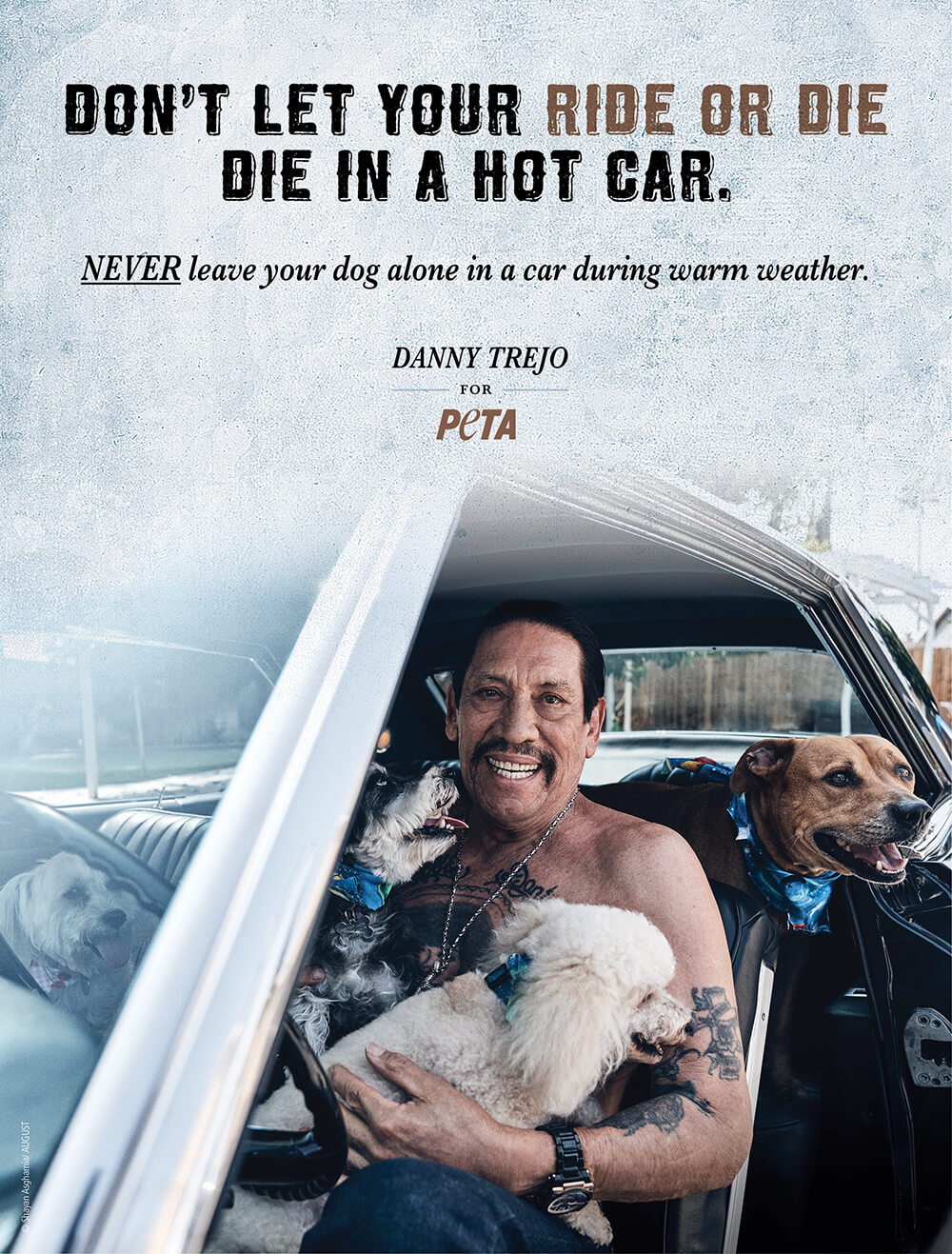
Ad picturing Danny Trejo outside in open car with multiple dogs on his lap and behind him with text that says Don't Let Your Ride Or Die Die In A Hot Car.
In an interview with Whistle, Trejo said, “I think the good Lord wants us living up to all our responsibilities, which one of them is taking care of these guys.” And that means not leaving them in hot cars!

Every year, dogs suffer and die when their guardians make the mistake of leaving them in a parked car—even for “just a minute”—while they run an errand. Parked cars are death traps for dogs: On a 75-degree day, the temperature inside a parked car can soar to 94 degrees in just 10 minutes, and on a 90-degree day, it can get up to 109 degrees in just minutes.

Unlike humans, dogs can sweat only through their footpads and cool themselves by panting, which isn’t effective when they’re trapped in a car with only hot air to breathe. As the temperature climbs, dogs endure agonizing symptoms: They go into shock, vomit blood, urinate, have diarrhea, and can experience multi-organ failure, cardiopulmonary arrest, fluid buildup in the lungs, muscle tremors, seizures, unconsciousness, and death.

If you see a dog trapped in a hot car, take the following steps:

1. Gather information.

Note the car’s color, make, and model, and write down the license plate number or take a picture of it.

2. Notify others.

If time allows, go into the nearest business and find a manager. (Remember that it takes only minutes for a dog to sustain brain damage when the weather is hot—time is of the essence!) Politely ask the manager to page the owner of the car. Be persistent.

3. Monitor the dog.

Go back outside and wait by the car. (Don’t leave until the dog is safe.)

4. Inform the guardian.

When the dog’s guardian appears, share some facts about what dogs endure when they’re trapped in cars on hot days—and be sure to carry PETA literature on the topic.

5. Call for help.

If the car’s owner doesn’t show up or doesn’t do anything to provide the dog with relief, call animal control. If animal control can’t come immediately, call 911. If all else fails, do what’s necessary to save the animal’s life. Get the dog into shade as quickly as possible, reduce his or her body temperature with lukewarm water, and immediately call a veterinarian.

In 2021, at least 59 companion animals died from heat-related causes and another 145 were rescued from potentially deadly situations—and since these numbers include only incidents reported in the media, the actual figures are surely far higher.

Please never leave your dog alone in a parked vehicle, and make sure that your family, friends, and neighbors know not to leave dogs in hot cars. If you see a dog alone in a hot car, you may think you need Machete of Spy Kids fame to free them, but our emergency hammer might be a bit safer.

The post Danny Trejo Says, ‘Don’t Let Your Ride or Die Die in a Hot Car’ appeared first on PETA.
Cat-Friendly Cities, States, and Countries Where Declawing Is Illegal

Declawing has already been banned in many countries as well as in some U.S. cities and states. In Europe, it’s recognized as a cruel and unnecessary amputation, and as widespread conversation about it flourishes in North America, the list of places where declawing is illegal keeps growing.

What Is Declawing?

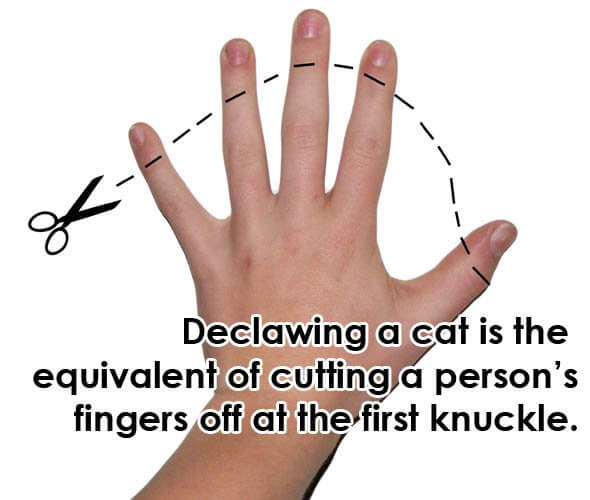
“Declawing” is a deceptively named surgical mutilation of cats’ paws usually performed electively on healthy cats for human convenience. Although the term may sound innocuous, it’s a barbaric procedure—cats’ claws are integrated into their fingers, and removing them is the equivalent of cutting off a human’s fingers at the top knuckle.

This typically unnecessary and cruel amputation requires that cats relearn how to walk. Walking on the affected legs remains painful for the rest of their lives and permanently disables them, affecting their balance and climbing abilities. As a result of their chronic pain and weakened defenses, declawed cats suffer from mental anguish and are fearful in situations in which they were once confident.

Thankfully, more and more people understand the grave harm declawing presents to animals, and no veterinarian worth their salt would ever declaw cats.

U.S. States With Declawing Bans

Only two states in the U.S. have successfully passed declawing bans so far—Maryland (2022) and New York (2019). But the tide is turning, and several states are making progress on introducing legislation that would make declawing illegal.

Cities in the U.S. With Declawing Bans

These U.S. cities have become leaders in compassionate cat care by outlawing declawing procedures:

  • Austin, Texas
  • Berkeley, California
  • Beverly Hills, California
  • Burbank, California
  • Denver, Colorado
  • Madison, Wisconsin
  • Pittsburgh, Pennsylvania
  • Louis, Missouri
  • San Francisco, California
  • Santa Monica, California
  • West Hollywood, California

Countries Where Declawing Is Illegal

In these countries, declawing operations are either illegal or only available in cases of “severe injury or disease of the claw,” in which case the procedure would help the animal regain comfort in a disabled paw and promote good health:

  • Australia
  • Austria
  • Belgium
  • Bosnia and Herzegovina
  • Brazil
  • Bulgaria
  • Cyprus
  • The Czech Republic
  • Denmark (does not apply to Greenland or the Faroe Islands)
  • England
  • Finland
  • France
  • Germany
  • Greece
  • Ireland
  • Israel
  • Italy
  • Latvia
  • Lithuania
  • Luxembourg
  • Macedonia
  • Malta
  • Montenegro
  • The Netherlands
  • New Zealand
  • Northern Ireland
  • Norway
  • Portugal
  • Romania
  • Scotland
  • Serbia
  • Slovenia
  • Spain
  • Sweden
  • Switzerland
  • Turkey
  • Ukraine
  • Wales

Where Is Declawing Banned in Canada?

Canada has made great progress on declawing bans, as eight of its 10 provinces have banned the procedure:

  • Alberta
  • British Columbia
  • Manitoba
  • New Brunswick
  • Newfoundland and Labrador
  • Nova Scotia
  • Prince Edward Island
  • Québec (effective February 2024)

Learn More About Cats’ Needs

Cats need vocal advocates in places where declawing hasn’t been banned yet. Unless it’s medically necessary, declawing should never be done. If you ever have the opportunity to intervene in someone’s decision to put their feline companion through this hell, start a conversation.

Most people are horrified when they discover what declawing really is. Declawing bans are a direct consequence of people learning more about cats—most loving human companions don’t want to mutilate their friends.


When it comes to understanding cats, there are many feline cues we humans miss. PETA President Ingrid Newkirk’s book 250 Vital Things Your Cat Wants You to Know: The Cat Guardian’s Bible has plenty of valuable advice that will help you better understand the felines in your life.

The post Cat-Friendly Cities, States, and Countries Where Declawing Is Illegal appeared first on PETA.

Stop Pouring State Funds Into Elephant Abuse, PETA Urges Gov. Evers

Ahead of next month’s budget requests, PETA sent a letter to Gov. Tony Evers this morning urging him to block the Wisconsin Historical Society from using any taxpayer dollars to fund cruel, outdated animal acts at Circus World Museum. Last year, $873,903—or 82% of Circus World’s revenue—came from state taxpayers.

PETA points out that Circus World uses elephant acts provided by Carson & Barnes Circus, whose head trainer was caught on video instructing other trainers to sink a bullhook—a weapon resembling a fireplace poker with a sharp hook on one end—into elephants’ flesh and twist it until the animals screamed. A PETA investigation also revealed that Circus World exploited geriatric elephants in shows twice a day—every day—despite their foot problems.

“Circus World forces elephants—including elderly animals with apparent joint problems and swollen feet—to perform painful, unnatural, and stupid tricks under the threat of violence,” says PETA President Ingrid Newkirk. “PETA is calling on Gov. Evers to end taxpayer handouts to animal abusers.”

PETA—whose motto reads, in part, that “animals are not ours to use for entertainment”—opposes speciesism, a human-supremacist worldview. For more information, please visit PETA.org or follow the group on Twitter, Facebook, or Instagram.

PETA’s letter to Evers follows.

August 24, 2022

The Honorable Tony Evers
Governor of Wisconsin

Dear Gov. Evers:

I’m writing on behalf of People for the Ethical Treatment of Animals U.S.—PETA entities have more than 9 million members and supporters globally, including more than 85,000 in Wisconsin—regarding next month’s deadline for budget requests. Although the public is turning away from circuses that still use live animals and businesses that exploit wild animals are shutting down or going animal-free, taxpayer funds are giving Circus World Museum in Baraboo, Wisconsin, a financial lifeline to continue abusing animals. I do not use that term lightly, as I will explain. You have the opportunity to help end elephant abuse in your state by making it clear in your policy directives that Wisconsin Historical Society funds are not to be used to pay for live-animal acts. 

Circus World—operated by the Wisconsin Historical Society and funded largely by state taxes—hires notoriously abusive companies for its live-animal acts, such as Carson & Barnes Circus, which has been cited for over 100 violations of the federal Animal Welfare Act. Its head trainer was caught on video instructing trainers to sink sharp steel-tipped bullhooks into elephants’ flesh and twist until the animals scream. Last year, a PETA investigator documented that Circus World was forcing geriatric elephants to perform grueling tricks twice a day, every day, while they suffered from chronically swollen feet and showed clear signs of other painful foot and joint problems.

Elephants—like other wild animals used in circuses—are often taken from their mothers as infants and subjected to immense suffering to compel them under the threat of punishment to perform confusing and even painful tricks. Because of this constant mistreatment, elephants and other wild animals sometimes can’t endure the suffering, lash out in frustration, and have been involved in dozens of incidents resulting in human injuries, deaths, and significant property damage. In fact, an elephant connected with Carson & Barnes recently left a visitor disabled and disfigured, and another elephant escaped from Circus World, endangering the public.

Funding for the Wisconsin Historical Society is supposed to be used to preserve history, but preserving history means admitting hard truths. And the truth here is that Circus World is perpetuating animal abuse as well as a disregard and disrespect for elephants. There are far better uses for tax dollars. Please consider righting a historical wrong by making sure the Wisconsin Historical Society doesn’t use its funding for animal acts. Thank you for your consideration.

Very truly yours,

Ingrid Newkirk
President

The post Stop Pouring State Funds Into Elephant Abuse, PETA Urges Gov. Evers appeared first on PETA.