
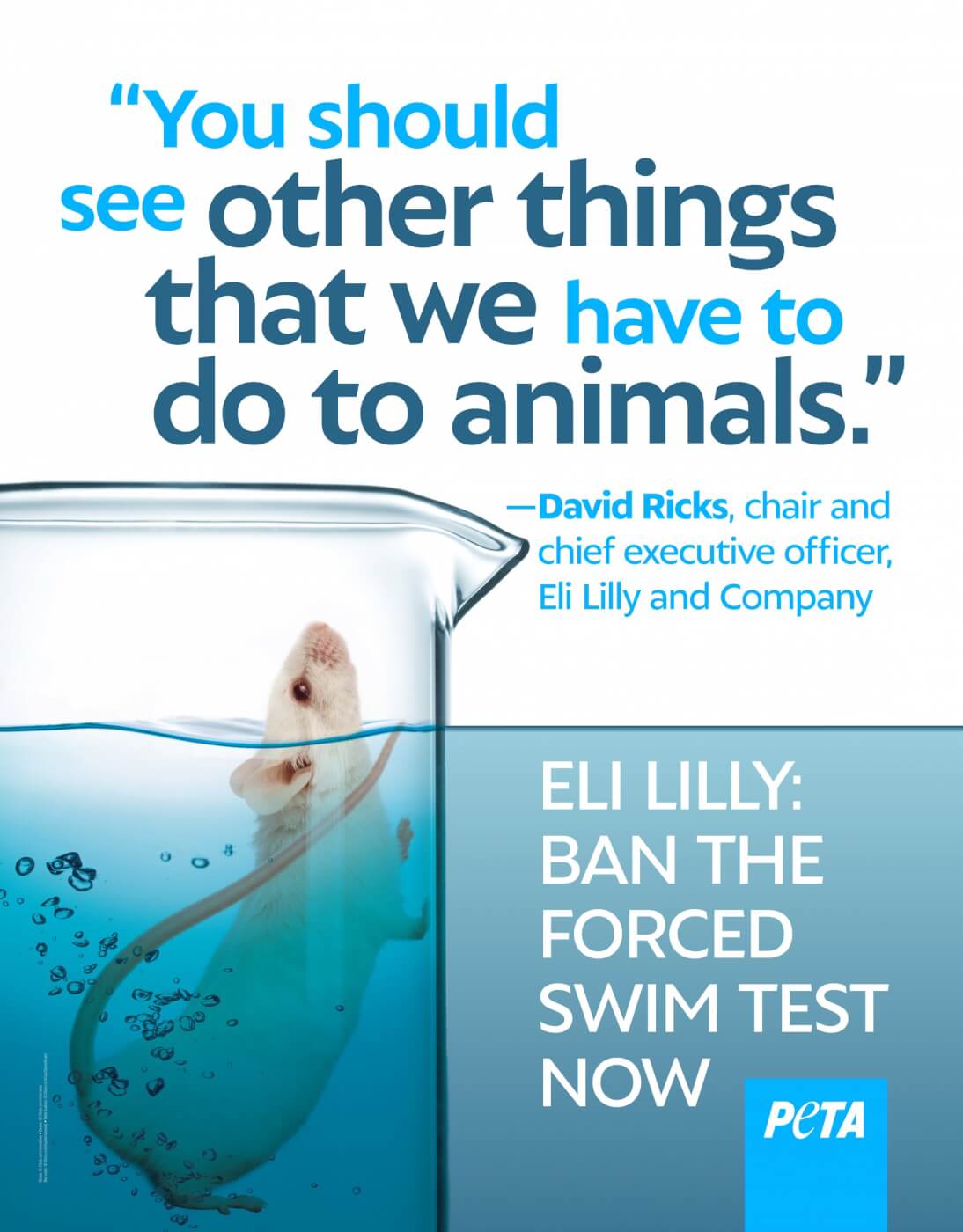
The post Eli Lilly: “You Should See Other Things That We Have To Do To Animals.” appeared first on PETA.
Bear Cub Reported Tortured and Killed; PETA Latino Demands Justice
Just 4 months old and weighing only 29 kilos (about 64 pounds), a black bear cub had apparently wandered into Castaños, a municipality in Coahuila, looking for water. But instead of leaving the cub alone, several residents reportedly decided to subdue the animal.
The ensuing tragedy was shocking.
View this post on Instagram
Graphic images of the incident appear to show the villagers, some of whom seem to be minors, tying up the cub with ropes while others hold the frightened animal by the legs. Unwilling to let the cub go, the villagers apparently beat the animal and tightened the rope around their neck until they suffocated.
The images also appear to show some villagers and members of the municipal police, who apparently did not intervene, smiling for the camera afterward. Reports say the cub’s body was taken to a veterinarian to be weighed and to determine the cub’s age, then buried near the animal’s natural habitat.
Black bears are considered an endangered species in Mexico—the result of shrinking habitat and illegal hunting—and are protected in other areas of Coahuila.
Earlier this month, police in Norway killed a walrus after she chased a woman taking a selfie. In June, a woman at Yellowstone National Park was gored by a bison when she got too close. Those incidents, like the reported one in Castaños, are graphic reminders to respect wildlife and leave them alone.
The Federal Attorney for Environmental Protection is reportedly pursuing a criminal complaint against the bear’s suspected killers. We can help save wildlife now by leaving them alone—and by going to @profepa_mx and @fgecoahuila to call for swift action against the bear’s alleged abusers and the police who reportedly failed to stop them.
The post Bear Cub Reported Tortured and Killed; PETA Latino Demands Justice appeared first on PETA.
Ignoring Congress, NIH Study Promotes Continued Exploitation of Endangered Monkeys: PETA
Yesterday, a workshop convened by the National Academies of Sciences, Engineering, and Medicine (NASEM) as part of a congressional mandate to review the current state and future use of primates in experimentation turned into an expensive, taxpayer-funded gathering dominated by primate experimenters, commercial suppliers, and lobbyists who profit from the primate experimentation industry.
The study—requested by Congress and commissioned by the National Institutes of Health (NIH)—was intended to identify areas in which primate experiments could be eliminated in NIH’s intramural program. The workshop—which is expected to provide the same level of independent, broad scrutiny as a similarly convened committee did for chimpanzees in 2011—opened with a statement that ethical considerations are outside the purview of the committee, even though they were the impetus for the study in the first place. Not surprisingly, rather than discussing opportunities to reduce or eliminate the use of primates in laboratories, this group of primate experimentation profiteers concluded that they need more money and more monkeys—a lot more money and a lot more monkeys.
The committee opted not to discuss the harm associated with animal experimentation, the high translational failure rate of these experiments, or the industry’s complicity in the growing illegal capture, international importation, and transport of the most commonly used monkey species, which has contributed to the recent elevated classification of long-tailed macaques and pig-tailed macaques from “vulnerable” to “endangered.”
At this “public” workshop, dissenting voices were not welcomed or solicited. Instead, the workshop rolled out the red carpet for the very people who rake in millions of taxpayer dollars selling monkeys, tormenting and killing monkeys, and lobbying for experimenting on monkeys. Many panelists complained that they didn’t have enough monkeys, but when asked by other panelists for hard evidence of this shortage, you could hear crickets chirping.
It’s a dark day when NASEM—esteemed as a body that’s supposed to provide “independent, objective advice to inform policy with evidence, spark progress and innovation, and confront challenging issues for the benefit of society”—chooses to make a mockery of an important study by embedding itself with entities that have vested interests and no intention of investigating a controversial issue fairly but only want to further entrench the status quo.
For more information on PETA’s newsgathering and reporting, please visit PETA.org or follow the group on Twitter, Facebook, or Instagram.
The post Ignoring Congress, NIH Study Promotes Continued Exploitation of Endangered Monkeys: PETA appeared first on PETA.
PHOTOS: PETA Exposes Pain, Misery for Rabbits, Guinea Pigs at Pacific BioLabs
Please see the following statement from PETA Vice President Dr. Alka Chandna regarding federal documents that reveal serious animal welfare violations at the Hercules-based contract testing laboratory Pacific BioLabs.
Injecting animals with experimental compounds and rubbing substances into their raw, abraded skin is business as usual for Pacific BioLabs, but incompetence and a culture of disregard add to the animals’ suffering. According to a just-posted federal inspection report obtained by PETA, employees injected two rabbits with a chemical at full concentration—although the protocol required that it be diluted. Although the error was noticed, the veterinarian was not notified and the rabbits were left to suffer overnight. The following day, they had to be euthanized.
Pacific BioLabs has previously been cited for running afoul of animal welfare laws. Just last year, two guinea pigs who had been used in a “dermal sensitization” test were found to have deep wounds, measuring 2 inches by half an inch, in their flesh. PETA recently obtained photos of the animals’ condition via a Freedom of Information Act request to the U.S. Department of Agriculture. The rabbits, guinea pigs, and other animals in Pacific BioLabs’ facility feel pain and value their lives just as much as any of the company’s executives, and it would do well to modernize its operations by ending cruel and archaic animal tests and using only sophisticated, human-relevant research methods, such as those described in PETA scientists’ groundbreaking Research Modernization Deal.
For more information on PETA’s investigative newsgathering and reporting, please visit PETA.org or follow the group on Twitter, Facebook, or Instagram.
The post PHOTOS: PETA Exposes Pain, Misery for Rabbits, Guinea Pigs at Pacific BioLabs appeared first on PETA.
‘The Great Whale Rescue’ Highlights the Powerful Journey of Beluga Whales From a Marine Park to the First-of-Its-Kind Beluga Sanctuary
A powerful new documentary highlights the now-possible outcome for animals confined at marine parks—a life in which they can return to naturalistic habitats, finally free from exploitation.
Both heartwarming and gut-wrenching, The Great Whale Rescue follows the story of two beluga whales—Little White and Little Grey—from their marine park rescue in China to their relocation at the first-ever real open-water beluga sanctuary on the island of Heimaey, off Iceland’s southern coast.
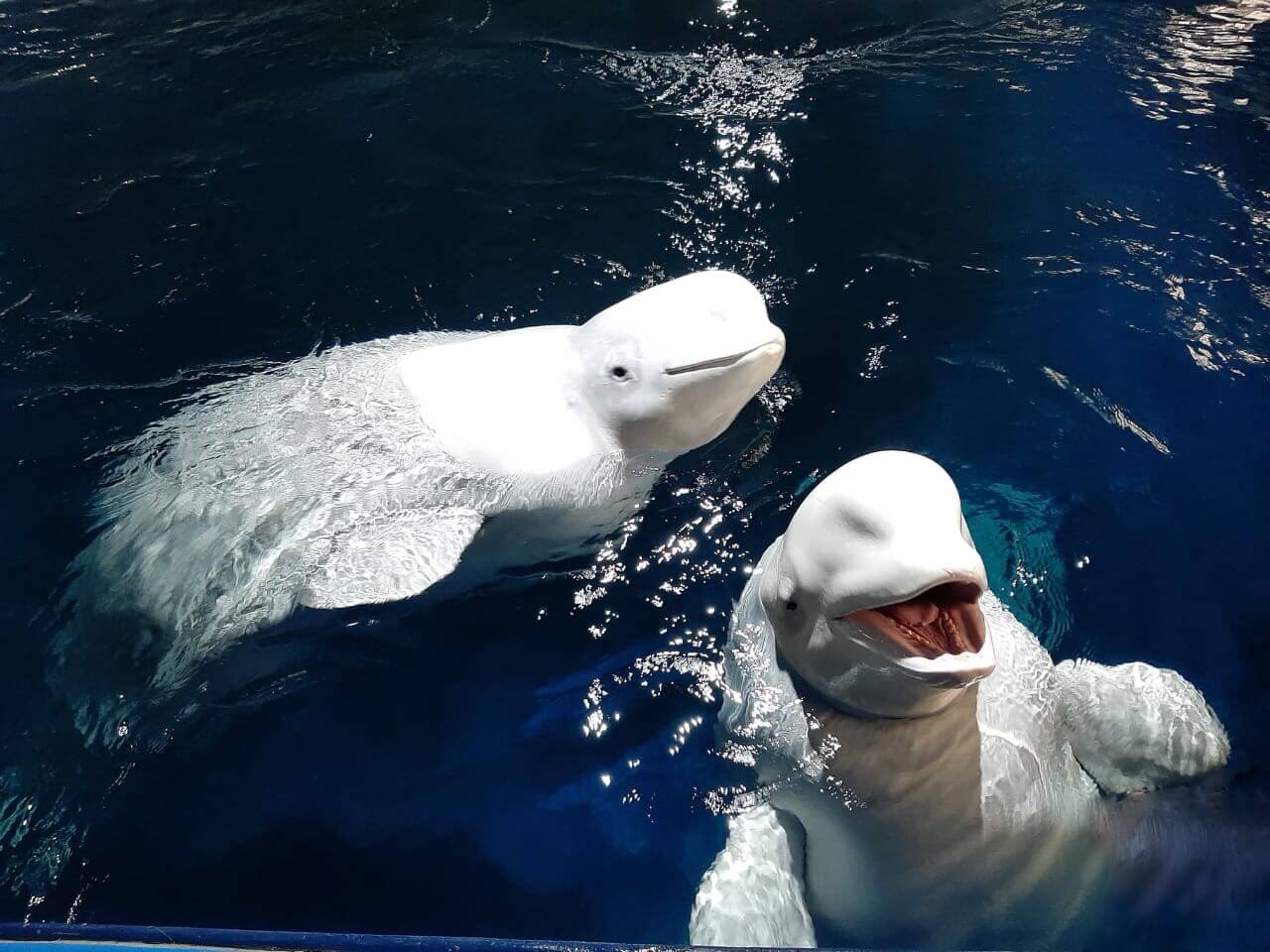 SEA LIFE Trust and Press Association
The two whales were taken from their homes when they were only 2 years old to be used in a “research” program before they were shipped off to Changfeng Ocean World in Shanghai, where they remained for more than eight years. Following a change in leadership at the marine park, the plan to return Little White and Little Grey to the ocean where they belong was set in motion.
 SEA LIFE Trust and Press Association
The two-part documentary takes viewers behind the scenes of the epic journey, from the years of intense planning and preparation leading up to the rehoming to the actual transportation of the two 1-ton whales 6,000 miles by land, air, and sea to freedom.
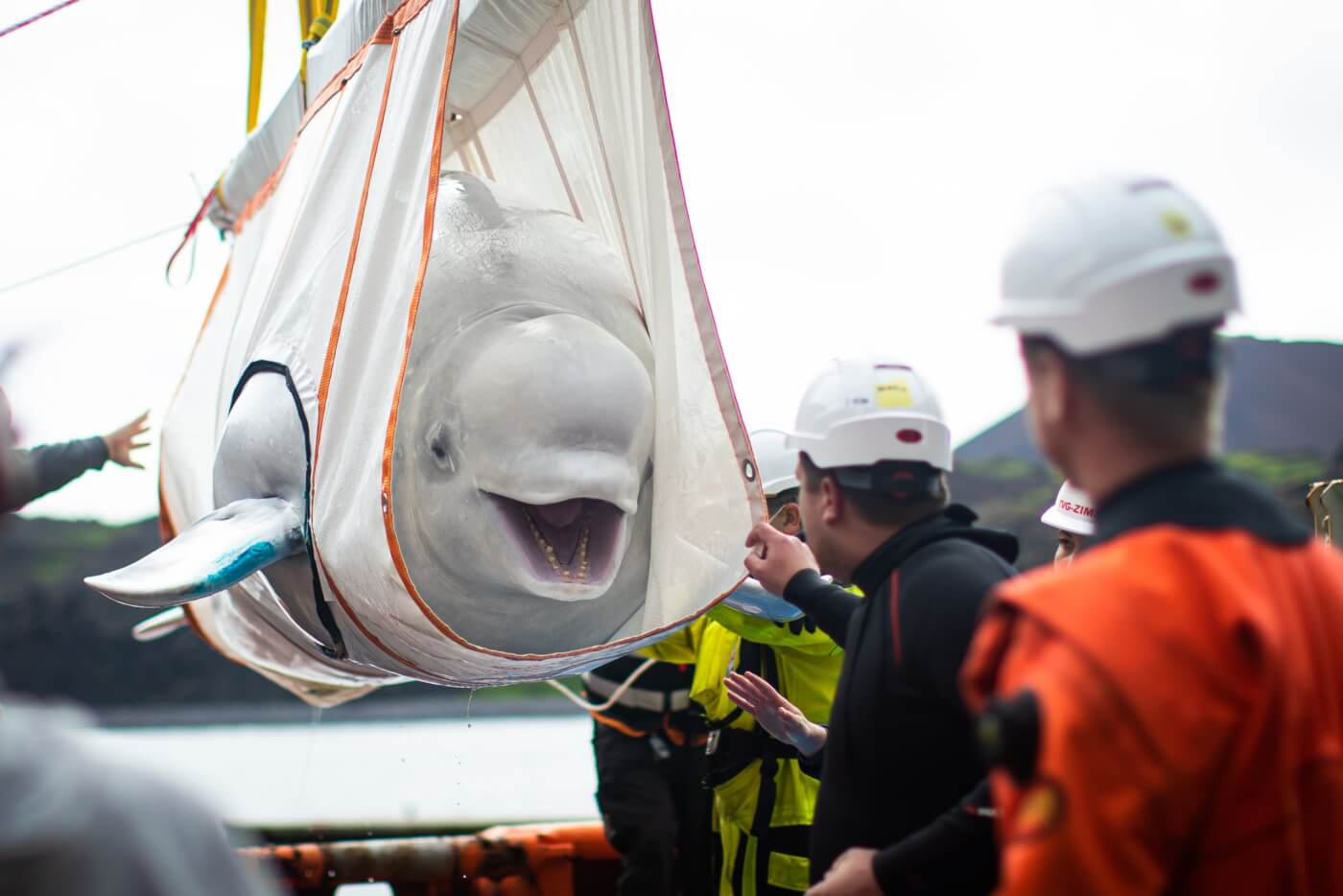 Aaron Chown PA Wire
Spearheaded by the SEA LIFE Trust, the rescue of Little White and Little Grey drives home one key message: Freeing animals from marine parks isn’t just possible—it’s necessary.
As PETA has been saying all along, it’s time for marine parks like SeaWorld to develop a plan to retire the imprisoned dolphins and whales to seaside sanctuaries.
The Great Whale Rescue is coming soon to PBS, so keep an eye on your local TV listings. In the meantime, tell SeaWorld to stop stalling and release the animals it imprisons to real sanctuaries!
No more excuses—it’s time for SeaWorld to establish a firm and rapid plan to end its use of animals, stop breeding all dolphins and whales, and relocate them to seaside sanctuaries. Take action below to send a message to SeaWorld:
The post ‘The Great Whale Rescue’ Highlights the Powerful Journey of Beluga Whales From a Marine Park to the First-of-Its-Kind Beluga Sanctuary appeared first on PETA.