TODAY (Video): PETA Allies Confront Eli Lilly CEO at Purdue Over Near-Drowning Test on Animals

Earlier today, a group of PETA supporters crashed Purdue University’s seventh annual Lilly Day fireside chat at Stewart Center, where they stormed the stage to confront Eli Lilly CEO David Ricks and interrupted his talk with Purdue President Mitch Daniels in order to expose the pharmaceutical company’s shameful refusal to ban the cruel forced swim test. Photos and video footage of the disruption are available here. 

In the forced swim or “behavioral despair” test, mice, rats, or other small animals are often dosed with a test substance, placed in inescapable beakers filled with water, and made to swim to keep from drowning in failed efforts to understand and treat human depression. The test has been heavily criticized by scientists who argue that floating isn’t a sign of depression or despair, as some claim, but rather a positive indicator of learning, saving energy, and adapting to a new environment. Eli Lilly has tormented a total of 3,400 mice and rats in this test since 1993, but none of the drugs it has attempted to develop by using it are on the market to treat depression.

“The public deserves to know that David Ricks is defending a scientifically debunked experiment that torments tiny animals,” says PETA Senior Vice President Kathy Guillermo. “PETA is calling on him to admit that watching panicked animals struggle to stay above water doesn’t help us treat human depression and to ban the test now.”

PETA’s campaign against Eli Lilly has included ads, tens of thousands of e-mails from consumers, attendance at annual meetings, and numerous protests, including outside Ricks’ home. And at every turn, PETA has pointed out that Johnson & Johnson, Bayer, GlaxoSmithKline, AbbVie, Roche, AstraZeneca, Novo Nordisk A/S, Boehringer Ingelheim, Pfizer, and Bristol Myers Squibb have all banned the test.

PETA—whose motto reads, in part, that “animals are not ours to experiment on”—opposes speciesism, a human-supremacist worldview. For more information on PETA’s investigative newsgathering and reporting, please visit PETA.org or follow the group on Twitter, Facebook, or Instagram.

The post TODAY (Video): PETA Allies Confront Eli Lilly CEO at Purdue Over Near-Drowning Test on Animals appeared first on PETA.
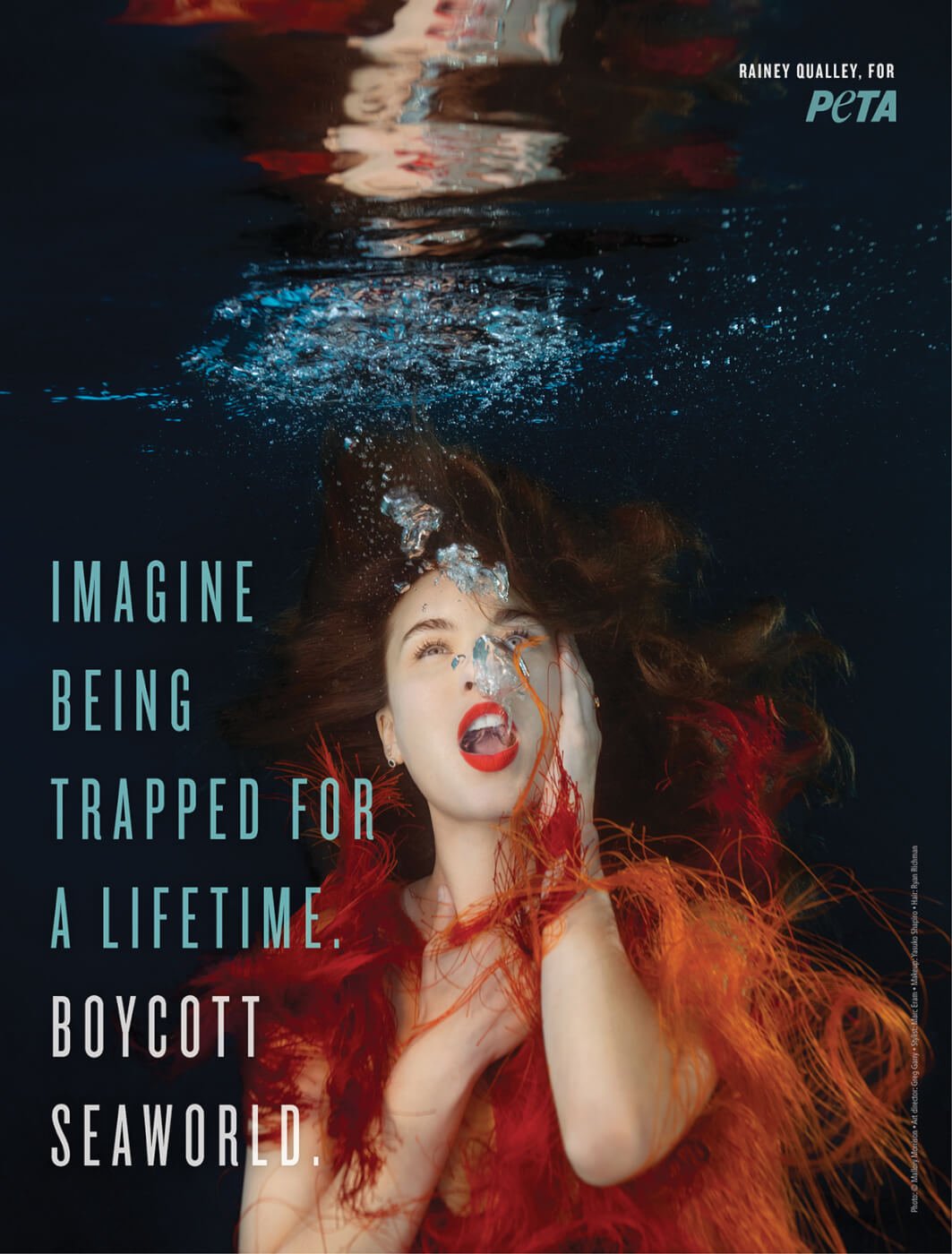
Rainey Qualley: ‘If You Love Animals, Don’t Go to SeaWorld’

You’d expect to see a celebrity in a ball gown floating down a red carpet, but this one is floating in a pool to bring attention to the animals imprisoned at SeaWorld. In her debut PETA campaign, Rainey Qualley wants you to imagine being confined for a lifetime. 

Rainey, much like her mother, Andie MacDowell, is a true animal advocate. She urges people to #AdoptDontShop, regularly fosters kittens, loves animal-free fashion, and wants to empty the tanks at SeaWorld.

In her behind-the-scenes video with PETA, Rainey shares how devastating it is that animals at SeaWorld’s parks are imprisoned in tiny tanks and forced to perform.

“If you love animals, don’t go to SeaWorld.”

—Rainey Qualley, for PETA

Orcas are a highly intelligent and social species, and they often stay with their families for life. They work together to search for food, and in some populations, they rarely leave their mother’s pod. They can travel up to 140 miles in the ocean in a single day.

The tiny tanks they’re confined to at SeaWorld leave them with nothing to do but float listlessly or swim in endless circles while enduring stress and frustration. In the ocean, aggression between orcas within a family pod is almost nonexistent, but at SeaWorld they’re often stuck in incompatible groups.

These tanks don’t leave any room to escape conflicts with other frustrated or aggressive animals, resulting in attacks, injuries, and even deaths. In August 2022, an attack occurred among orcas at SeaWorld San Diego, which resulted in a serious wound to one. In an eyewitness video, the injured orca can be seen trying to escape the attacks by beaching themselves—which is a highly unnatural behavior. The park has a history of similar attacks, including when an orca named Nakai sustained puncture marks and lost a chunk of his jaw in an attack reportedly by two other orcas with whom he was sharing a tank.

Join Rainey Qualley by Helping Animals Imprisoned at SeaWorld

If you want to help orcas and other animals confined to tanks, you can start by joining Rainey and never visiting SeaWorld or any other abusement park. Urge SeaWorld to end its use of animals and retire them to seaside sanctuaries:

Tell SeaWorld to Empty Its Tanks!

The post Rainey Qualley: ‘If You Love Animals, Don’t Go to SeaWorld’ appeared first on PETA.

Video Taken at Lagoon in Mexico Serves as a Reminder to Leave Wildlife Alone

“Don’t go swimming in crocodiles’ home” isn’t a tall order—you wouldn’t want someone invading your home, so don’t do it to others. A video reportedly taken by visitors to a lagoon in Tamaulipas, Mexico, shows the lifeless body of a man who apparently ignored warning signs and swam in the lagoon, which is home to many crocodiles.

The footage serves as a morbid reminder to leave wildlife alone. Like all our fellow animals, crocodiles deserve respect—which means they don’t want humans intruding in their natural habitats.

Did You Know?

Mother crocodiles are doting and protective of their young. They remain close to their babies, protecting them from predators for several weeks to months.

Live in Harmony With Wildlife

Crummy roadside zoos, cruel marine parks, and other facilities that exploit our fellow animals perpetuate speciesism—the idea that humans are superior to other animals—which may lead to the false notion that approaching wild animals isn’t dangerous. In reality, wild animals don’t want to be approached by humans in their natural habitats, and when they feel provoked, they may attack intruders out of self-defense.

The solution is simple—don’t approach wildlife, don’t attempt to use wild animals as props for your selfie, and don’t support or visit places that exploit our fellow animals for entertainment. Click the button below for more tips on living in harmony with wildlife:

The post Video Taken at Lagoon in Mexico Serves as a Reminder to Leave Wildlife Alone appeared first on PETA.

PETA Files NIH Complaint Against the University of Puerto Rico After USDA Citations

Please see the following statement from Dr. Lisa Jones-Engel, PETA’s senior science advisor on primate experimentation, concerning just-released critical violations of the federal Animal Welfare Act at the University of Puerto Rico’s Caribbean Primate Research Center that involved the deaths of four monkeys due to neglect and incompetence. One monkey was found dead in her cage after the center failed to provide her with medical treatment. Two other monkeys were found dead in their cages—but the university failed to determine what caused their deaths. A fourth monkey was euthanized after sustaining traumatic injuries inflicted by other likely stressed monkeys with whom he had been caged. And a fifth monkey escaped from his enclosure and caused injuries to other monkeys. According to the U.S. Department of Agriculture’s inspection report, these incidents occurred during the university’s Union incident in February when only four of the total 20 employees responsible for providing the monkeys with care were able to enter the facility. However, the violations also suggest systemic problems at the facility—including failing to ensure that monkeys who were caged together were compatible and failing to adhere to standard veterinary practices, which would have included determining the two monkeys’ cause of death.

The citations issued by the U.S. Department of Agriculture won’t undo the pain and trauma endured by the four monkeys who died in the University of Puerto Rico’s laboratories, but they demonstrate that the school shouldn’t be trusted with even one more penny of taxpayer funding for experiments on animals. PETA has filed a complaint with the National Institutes of Health, calling on it to turn off the money spigot to the university.

The revelation of the monkeys’ agonizing deaths in their small, barren cages coincides with the participation of Dr. Melween Martinez, director of the Caribbean Primate Research Center (CPRC), in a national workshop on primate experimentation—at which the assembled committee called for more monkeys for experimentation. However, it is amply clear that the CPRC is incapable of adhering to minimum animal welfare standards for the 2,300 monkeys presently imprisoned at the facility. Adding more monkeys to this population would only increase the misery these sensitive and intelligent animals endure.

PETA is calling on the university to modernize its research program by leaving cruel, archaic, and unreliable experiments on animals behind and using only sophisticated, human-relevant research methods. PETA is also calling on Emory University, Oregon Health & Science University, Texas Biomedical Research Institute, Tulane University, the University of California–Davis, and the University of Washington to do the same and to sever any ties with the University of Puerto Rico in order to avoid complicity in the neglect and suffering documented at the CPRC.

For more information on PETA’s investigative newsgathering and reporting, please visit PETA.org or follow the group on Twitter, Facebook, or Instagram.

The post PETA Files NIH Complaint Against the University of Puerto Rico After USDA Citations appeared first on PETA.

PETA Latino Hosts Its Biggest Spay/Neuter Event Yet, in Cancún

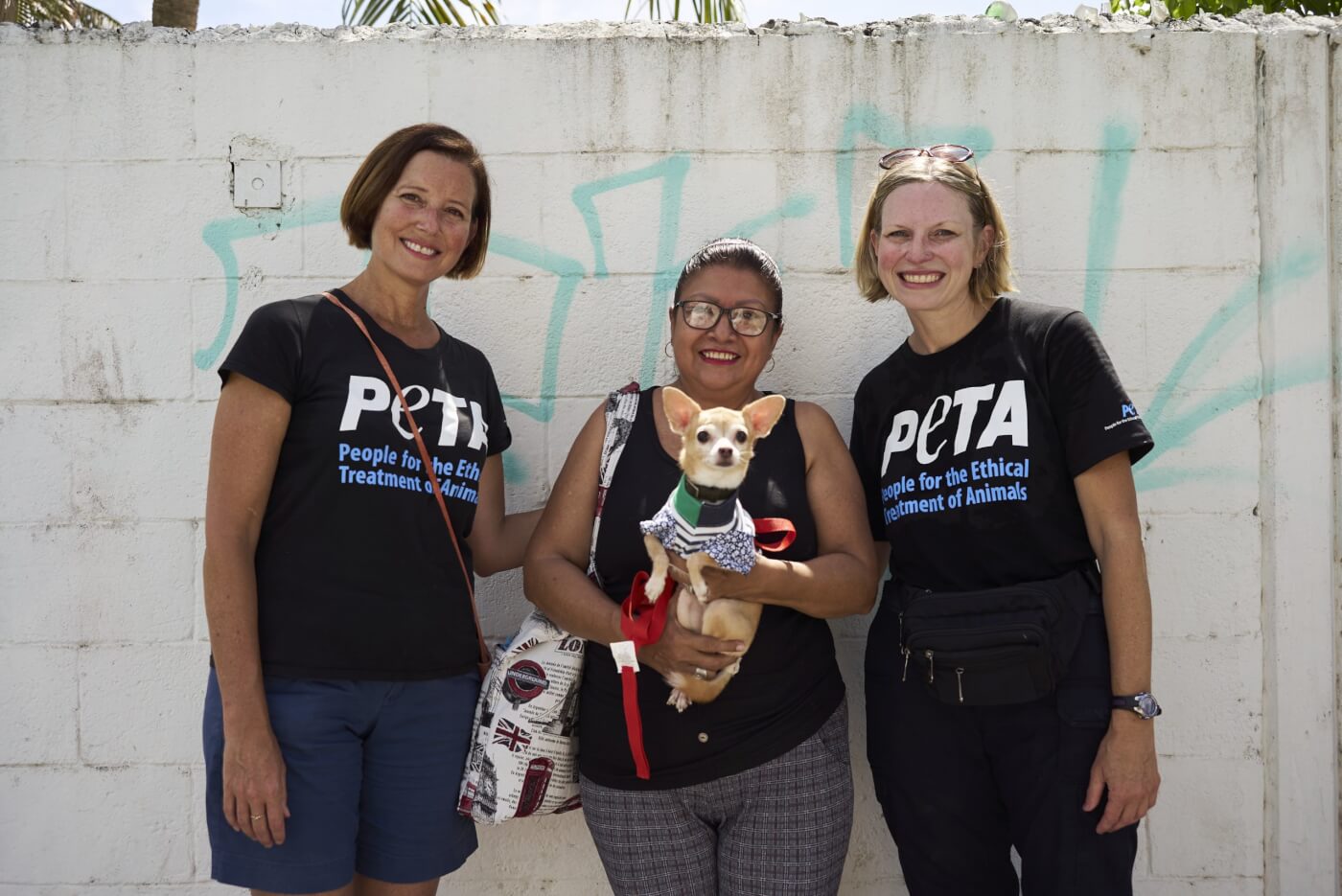
To help combat the deadly homeless-animal overpopulation crisis, PETA Latino hosted its biggest spay/neuter event to date, in Cancún, Mexico.

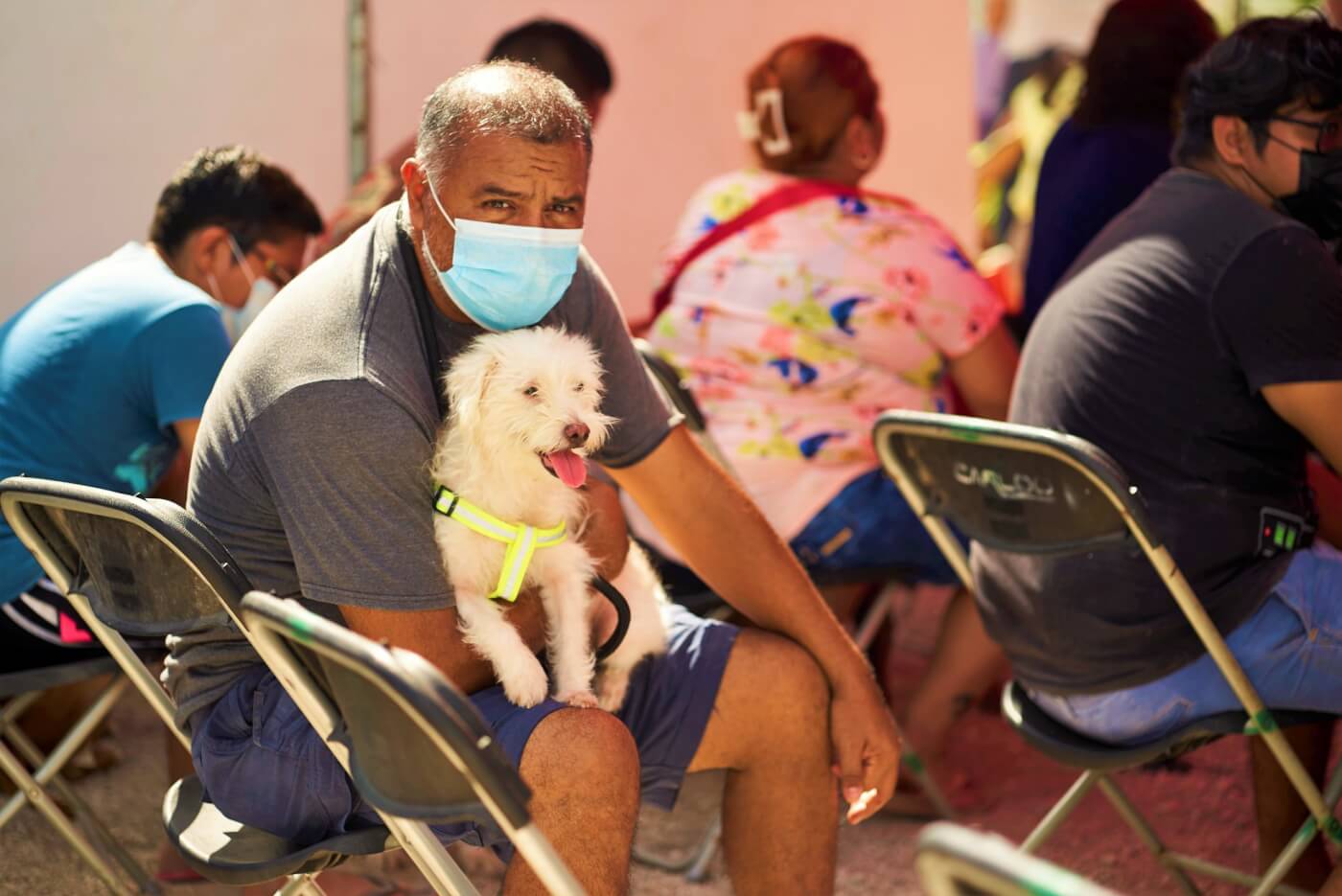
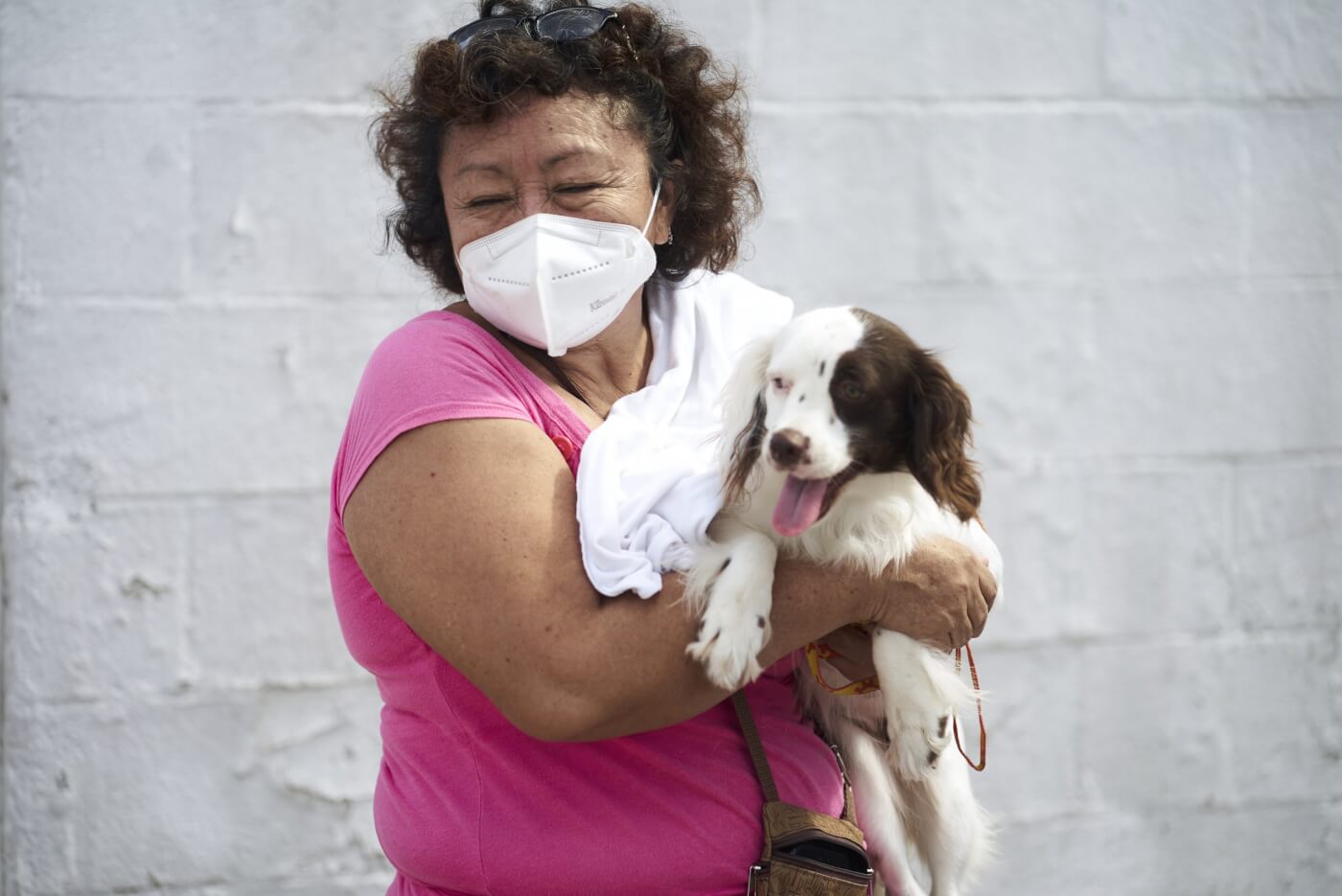
With the help of local shelter Dirección de Protección y Bienestar Animal, 500 local dogs and cats were given free spay/neuter surgeries in just five days. Meat-free meals, goodies, and vegan starter kits were available during all five days to thank attendees for getting their animal companions sterilized. Here are some of the animals who attended the event with their guardians:

People at PETA Latino's cancun spay neuter-a-thon

Why Should You Have Your Animal Companion Spayed or Neutered?

Unlike humans, dogs and cats can’t do their own family planning. It’s up to their guardians to make the responsible choice to have them spayed or neutered in order to help curb the companion animal overpopulation crisis. However, sometimes resources aren’t accessible or even available. That’s why PETA Latino is putting in the work to reduce the number of homeless animals and help care for dogs and cats in need.

A woman with her dog who attended the spay neuter evet in Cancun

How PETA Clinics Help Mitigate the Homeless-Animal Crisis

In just one year, an unspayed cat can give birth to 12 kittens and an unspayed dog can give birth to 16 puppies—which means that PETA’s Cancún event may have prevented the birth of more than 6,000 animals in the next 12 months alone. On any given day in the U.S., there are roughly 70 million homeless animals struggling to survive. The number of homeless animals around the world is almost unfathomable.

Funding for temporary sterilization clinics like PETA Latino’s in Cancún helps limit the suffering of animals for generations, as fewer unsterilized dogs and cats mean fewer animals born into communities that don’t have the resources to care for them. Please help us limit the continued suffering of homeless and vulnerable animals:

The post PETA Latino Hosts Its Biggest Spay/Neuter Event Yet, in Cancún appeared first on PETA.