This Quiz Will Reveal Your Vegan Recipe Personality Type

Which vegan recipe are you? Do you sizzle like a Soyrizo scramble or are you timeless like a tempeh BLT?

Take PETA’s “Which vegan recipe are you?” quiz to find out, and then share the results with your friends!

This Quiz Will Reveal Your Vegan Recipe Personality Type

Fields with an asterisk(*) are required.

1. At summer cookouts, which vegan condiment is your top choice for burgers or veggie dogs fresh off the grill?
2. For your birthday, you and your friends visit a reputable farm sanctuary. You can’t wait to see all the animals, but you’re particularly excited to blow kisses to whom?
3. Which song resonates with you most?
4. On a long road trip, at which fast-casual or fast-food restaurant do you pull over for a quick lunch?
5. If you had to live off one entrée item for the rest of your life, which would you choose?
6. What is your favorite kitchen appliance?
7. What sounds best for breakfast?
8. If you could choose one free item from the PETA Shop to show your animal rights pride, which would you opt for?
9. You’re inevitably going to double-tap each video, but the PETA TikTok that you’re most likely to repost is which one?
10. During which era of the vegan revolution did you go vegan?

This field is for validation purposes and should be left unchanged.

The post This Quiz Will Reveal Your Vegan Recipe Personality Type appeared first on PETA.

Legislators Participating in Horse Racing PR Stunt to Face Ire Over Corporate Welfare

Unfurling an unmissable banner that reads, “Fund Education, NOT Horse Racing,” members of the Coalition to End Horse Racing Subsidies will greet legislators on Tuesday at the annual Legislative Pace—an event in which New York State senators and assemblymembers “compete” in live harness horse races. The coalition notes that the New York horse racing industry receives a whopping $230 million in casino profits every year, despite the well-documented abuse of horses and backstretch workers as well as the state’s dire need for education funding.

“Hiring hundreds of teachers or propping up the private horse racing industry—that’s the choice New Yorkers must make,” says Kathy Guillermo, a senior vice president of PETA, which is a member of the coalition. “The Coalition to End Horse Racing Subsidies backs bills that would divert this corporate welfare back to education, as intended by the legislature.”

When:             Tuesday, September 13, 3:30 p.m.

Where:           Empire City Casino and Yonkers Raceway, 810 Yonkers Ave., Yonkers (near the intersection of Clark Street and Central Park Avenue)

 The Coalition to End Horse Racing Subsidies is composed of education, fiscal policy, human rights and services, food justice, and animal protection organizations, including the Alliance for Quality Education, the Human Services Council, LiveOn NY, the Worker Justice Center of New York, Hip Hop is Green, Strong Economy for All, NYCLASS, PETA, and the New York State Humane Association. Senate bill S8485, introduced by Sen. Robert Jackson, and Assembly bill 8468, introduced by Assemblymember Linda B. Rosenthal, would redirect the $230 million in annual subsidies for horse racing to education. Senate bill S7260, introduced by Sen. Julia Salazar, and Assembly bill 7745, introduced by Rosenthal, would end sales tax exemptions for racehorses.

Please visit EndHorseRacingSubsidies.com for more information.

#

The post Legislators Participating in Horse Racing PR Stunt to Face Ire Over Corporate Welfare appeared first on PETA.

Campaign Updates: University of Tennessee Mutilates Pigs in Medical Training

During emergency medical training at the University of Tennessee College of Medicine—which is part of the University of Tennessee Health Science Center—live pigs are mutilated and used as stand-ins for bleeding and critically injured humans. Pigs’ anatomy and physiology are vastly different from humans’, making such training irrelevant to learning how to treat human clinical patients. PETA is calling for an immediate end to this barbaric use of animals—and you can help.

UTCOM’s Partner Hospital Bans Use of Animals in Medical Training

August 4, 2022

Following pressure from PETA and more than 75,000 of our supporters, Erlanger Health System has announced a new policy banning its staff—including its emergency medevac provider, LIFE FORCE—from participating in medical training that uses animals. Previously, LIFE FORCE personnel were forced either to attend emergency medical training sessions involving invasive procedures on pigs held by the University of Tennessee College of Medicine (UTCOM) or risk losing their jobs. We applaud Erlanger’s progressive decision to use human-relevant training methods, and we urge UTCOM to follow suit.

“Erlanger’s policies and procedures do not include the use of live animals for any purpose including training. … To further support this endeavor of utilizing high-fidelity simulation models, Erlanger recently opened a new simulation lab for training which features six of these simulation models ranging from newborns to adults.”

—Blaine Kelley, Public Relations Manager, Erlanger Health System


PETA Activists Call Out UTHSC at Faculty Senate Meeting

June 14, 2022

During the faculty senate meeting at the University of Tennessee Health Science Center (UTHSC), PETA activists challenged Chancellor Peter F. Buckley, asking, “When will you replace the cruel use of animals in emergency medical training conducted by UTHSC?” The chair of UTHSC’s Department of Emergency Medicine, James R. Walker, replied that the center doesn’t “use animals” and has “never been cruel to animals.” However, in a prior letter to University of Tennessee President Randy Boyd, PETA pointed to public records—received from UTHSC and confirming the school’s use of animals for emergency medical training—stating, “In August we will be having 3 animals in the Skills Lab every Thursday. … The LifeForce [sic] crews would like to attend also.”


Babe Star James Cromwell Urges UTHSC to Ban Training That Uses Live Animals

March 1, 2022

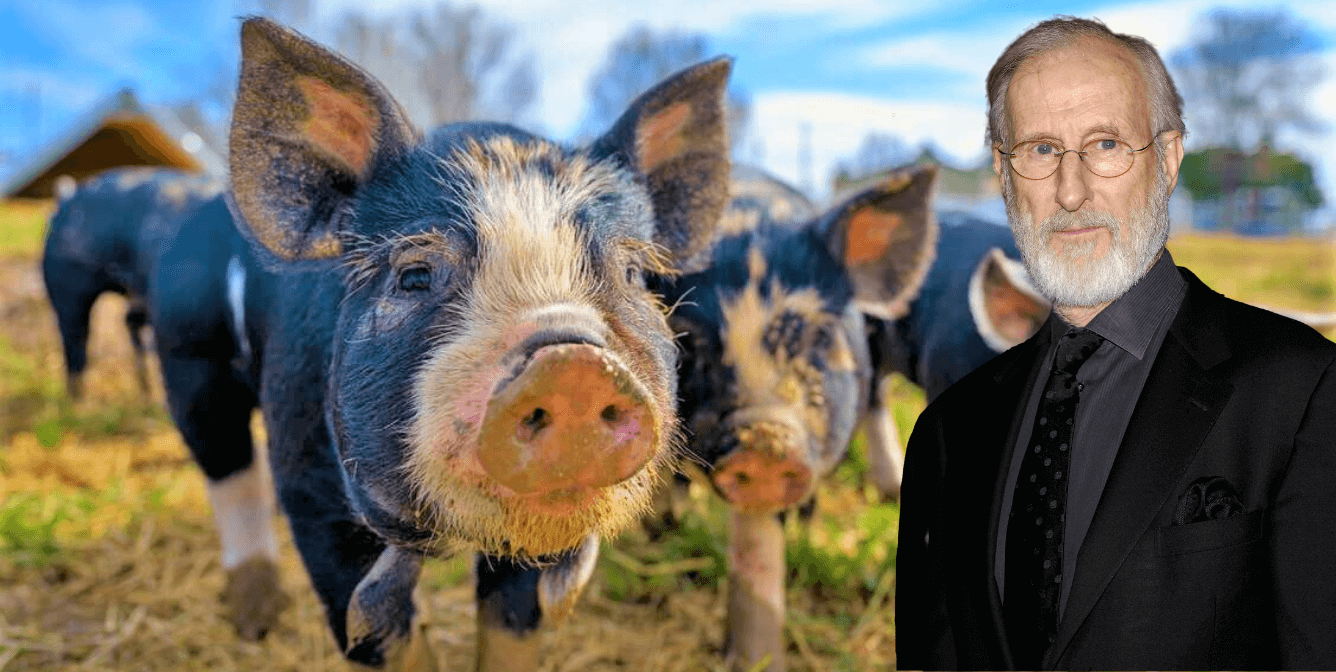
Emmy Award winner and star of Babe James Cromwell sent a powerful letter on PETA’s behalf calling on University of Tennessee Health Science Center Chancellor Peter F. Buckley to end crude pig mutilation drills held at the University of Tennessee College of Medicine. Cromwell writes that he “had the privilege of witnessing and experiencing pigs’ intelligence and inquisitive personalities while filming the movie Babe” and goes on to urge an end “to this barbaric use of animals.”

James Cromwell speaks up for pigs used in experiments© StarMaxInc.com

The post Campaign Updates: University of Tennessee Mutilates Pigs in Medical Training appeared first on PETA.

Smelly Sacks Containing 7,000 Smuggled Donkey Penises Intercepted at Nigerian Airport

What’s that smell? Nigerian customs officers reportedly intercepted 7,000 smuggled donkey penises at an airport in the country’s largest city, Lagos, after the stench emanating from 16 bags slated for export aroused suspicion. The illegally shipped equine genitalia were allegedly headed to Hong Kong to be used in making a traditional Chinese medicine called ejiao.

PETA entities around the world, including PETA U.S., have been pressuring officials, companies, and consumers to stop supporting the cruel ejiao industry. There are numerous alternatives to ejiao, including modern medications and herbal remedies, that are more effective and don’t require that any animals be killed.

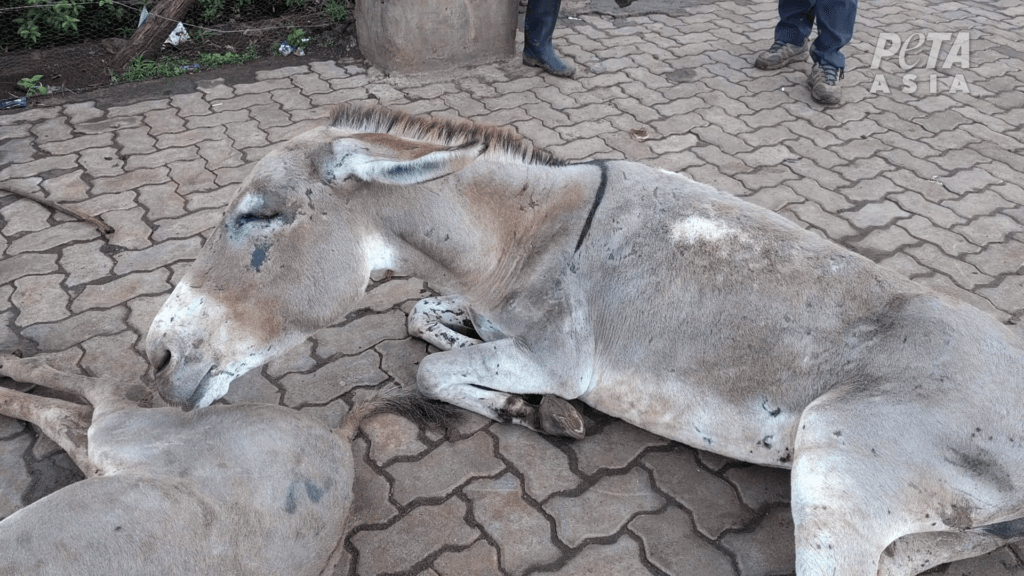
Injured donkey dumped outside slaughterhouse in African ejiao industry

What Is Ejiao?

One PETA Asia investigation revealed that donkeys in China—some as young as 5 months old—are bashed in the head with a sledgehammer and that their throats are slit so their skin can be boiled down to make gelatin for ejiao, which is purported to improve blood circulation. Some of the donkeys continue to breathe and move after being bludgeoned.

A separate PETA Asia investigation found horrific abuse in Kenya’s donkey slaughter industry, which exists only to meet the demand for this product in China. Watch the video below to learn more about the production of ejiao:

Many other African countries—including Botswana, Burkina Faso, Mali, Niger, Senegal, Tanzania, and Uganda—have banned the export of donkey skin or have closed down Chinese-owned slaughterhouses. Yet despite a warning from China’s official National Health and Family Planning Commission that ejiao is really just “boiled donkey skin,” donkey slaughterhouses continue to operate in countries such as Kenya in order to meet China’s demand for the product.

What You Can Do

As consumers, we can reject cruelty to animals and help save donkeys’ lives simply by choosing vegan alternatives, never buying ejiao products, and refusing to shop at stores that sell them. For the sake of suffering donkeys, please read ingredient lists and steer clear of medicines, beauty products, candy, and beverages containing ejiao.

Want to do more?

Donkeys Killed in Africa for Ejiao: Take Action

The post Smelly Sacks Containing 7,000 Smuggled Donkey Penises Intercepted at Nigerian Airport appeared first on PETA.

‘Hell on Wheels’ Is Coming to Columbus: Squawking Chicken Truck to Ruffle Feathers Downtown

Local diners just might think twice about chowing down on chicken after they see—and hear—“Hell on Wheels,” PETA’s new guerilla-marketing campaign featuring a life-size chicken transport truck covered with images of real chickens crammed into crates on their way to a slaughterhouse, complete with actual recorded sounds of the birds’ cries and a subliminal message every 10 seconds suggesting that people go vegan. The truck will drive around the city—where chicken-serving eateries include Hot Chicken Takeover, The Naked Bird, Chicken & Eggs, and Fame’s Diner—on Monday as part of the group’s national tour.

“Behind every chicken sandwich or fried wing is a once-living, sensitive individual who was crammed onto a truck for a terrifying, miserable journey to their death,” says PETA Executive Vice President Tracy Reiman. “PETA’s ‘Hell on Wheels’ truck is an appeal to anyone who eats chicken to remember that the meat industry is cruel to birds and that the kindest meal is a vegan one.”

Birds killed for their flesh are bred to grow such unnaturally large upper bodies that their legs often become crippled under the weight, and the sheds to which they’re confined are so filthy that the red, watery goo in packages of chicken is referred to as “fecal soup.” They’re trucked through all weather extremes, sometimes over hundreds of miles and without any food or water, to slaughterhouses, where their throats are slit—often while they’re still conscious.

The truck is also confronting diners at chicken restaurants in Baltimore, Philadelphia, Pittsburgh, St. Louis, and other cities as well as attendees of Oktoberfest events in Cincinnati and Cleveland.

PETA—whose motto reads, in part, that “animals are not ours to eat”—opposes speciesism, a human-supremacist worldview. For more information, please visit PETA.org or follow the group on Twitter, Facebook, or Instagram.

#

The post ‘Hell on Wheels’ Is Coming to Columbus: Squawking Chicken Truck to Ruffle Feathers Downtown appeared first on PETA.