Kohana Is the Third Orca to Die at Spain’s Loro Parque in 18 Months

How many more orcas are going to die at Loro Parque in Tenerife, Spain, before this marine prison is shut down? Yesterday, orca Kohana died at just 20 years old at the park, decades short of her natural life expectancy. She is the third orca to die there in the last 18 months, following Ula, who was just 2 years old, and Skyla, who was 17.
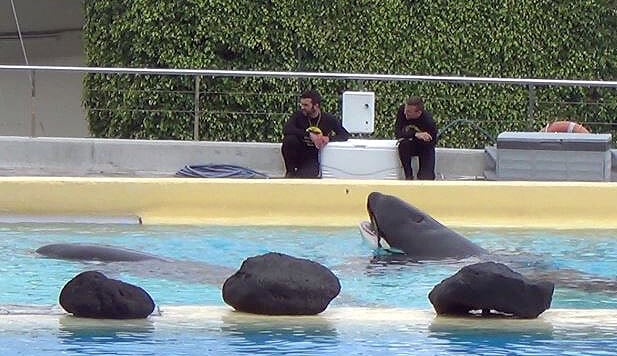
orca kohana at loro parque in spain

These two orcas, Kohana and Keto, were filmed while locked in a medical tank, which is also used as a holding tank. They attempted to get food or attention from trainers but were completely ignored.

Who Was Kohana?

Separated from her family and transported to Loro Parque from SeaWorld Orlando at just 3 years old, Kohana spent years confined to a barren concrete tank and was forced to perform demeaning tricks in exchange for food in order to entertain humans.

While she was alive, two PETA staffers visited Loro Parque and filmed orcas with fractured teeth and other injuries. They floated listlessly in small tanks and appeared to have mucus running from their eyes. Orcas at the park had “rake marks” caused by aggression and attacks from tankmates.

It’s tragic that Kohana was never able to experience the feeling of freedom—and that her only peace came through death. She deserved so much more.

What You Can Do

Jet2holidays, a U.K.-based travel company, shamefully continues to profit from the misery of highly intelligent and social animals at Loro Parque. We urge all compassionate travelers to book their vacations through one of the many tour operators that have committed to not selling tickets to this hellhole.

The post Kohana Is the Third Orca to Die at Spain’s Loro Parque in 18 Months appeared first on PETA.
Who Are You Wearing? PETA Makes Noise, Saying ‘Leather Destroys’

Leather made from animals’ skin is one of the worst things you can buy in terms of its impact on animals, the environment, and other humans. Read on to find out why it has no place in your wardrobe, home, or car and how you can help PETA spread the word that “leather destroys”!

How Bad Is Leather?

Global leather production, measured by the weight of the skin torn off animals of all kinds, was more than 12.5 million metric tons in 2020 alone. That’s nearly the same weight as 40 Empire State Buildings.

Worldwide, more than a billion cows, sheep, and other animals are killed annually for their skin. Much of the leather sold in U.S. stores comes from countries where animal welfare laws are nonexistent or largely unenforced. In Brazil—the world’s single-largest source of animal hides—a PETA exposé revealed that gentle cows and bulls were burned on the face with hot irons, beaten, and electroshocked so that their skin could be turned into car interiors.

According to the Higg Materials Sustainability Index, leather made from cows’ skin contributes far more to water pollution, water depletion, and greenhouse gas emissions than any synthetic or plant-based vegan leather.

Raising cows requires that thousands of acres of land be cleared of trees and the animals who live there. Roughly 80% of deforestation in the Amazon rainforest has been caused by cattle ranchers destroying land to raise animals for their skin and flesh.

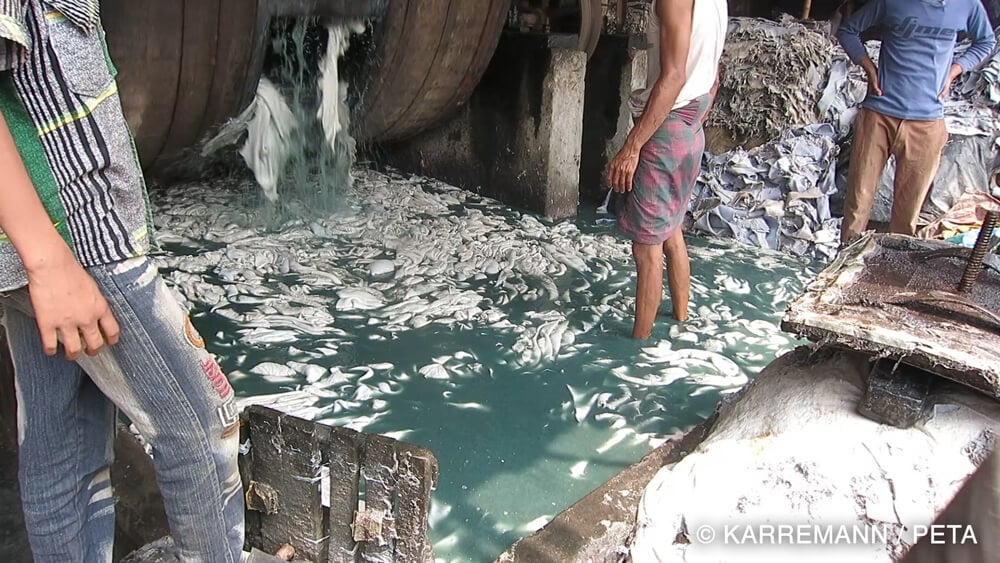
Turning a cow’s skin into leather is an extremely unnatural process—halting decomposition through chemical baths and dehydration. Formaldehyde, coal-tar derivatives, and various oils, dyes, and finishes—some of which are cyanide-based—are used to turn animal skins into finished leather goods. This toxic waste runs off into local water sources in countries like Bangladesh, poisoning entire ecosystems and increasing tannery workers’ risk of skin cancer at rapid rates. An estimated 90% of Bangladeshi workers will die before the age of 50 because of the hazardous production of leather.

How PETA Is Spreading the Word That ‘Leather Destroys’

  • In September 2022, we placed dozens of posters around Spring Studios—the hub of New York Fashion Week—showing a desolate runway and the words “Your Leather Outfit Is Killing Animals and the Planet,” created by ad agency Archer Troy.
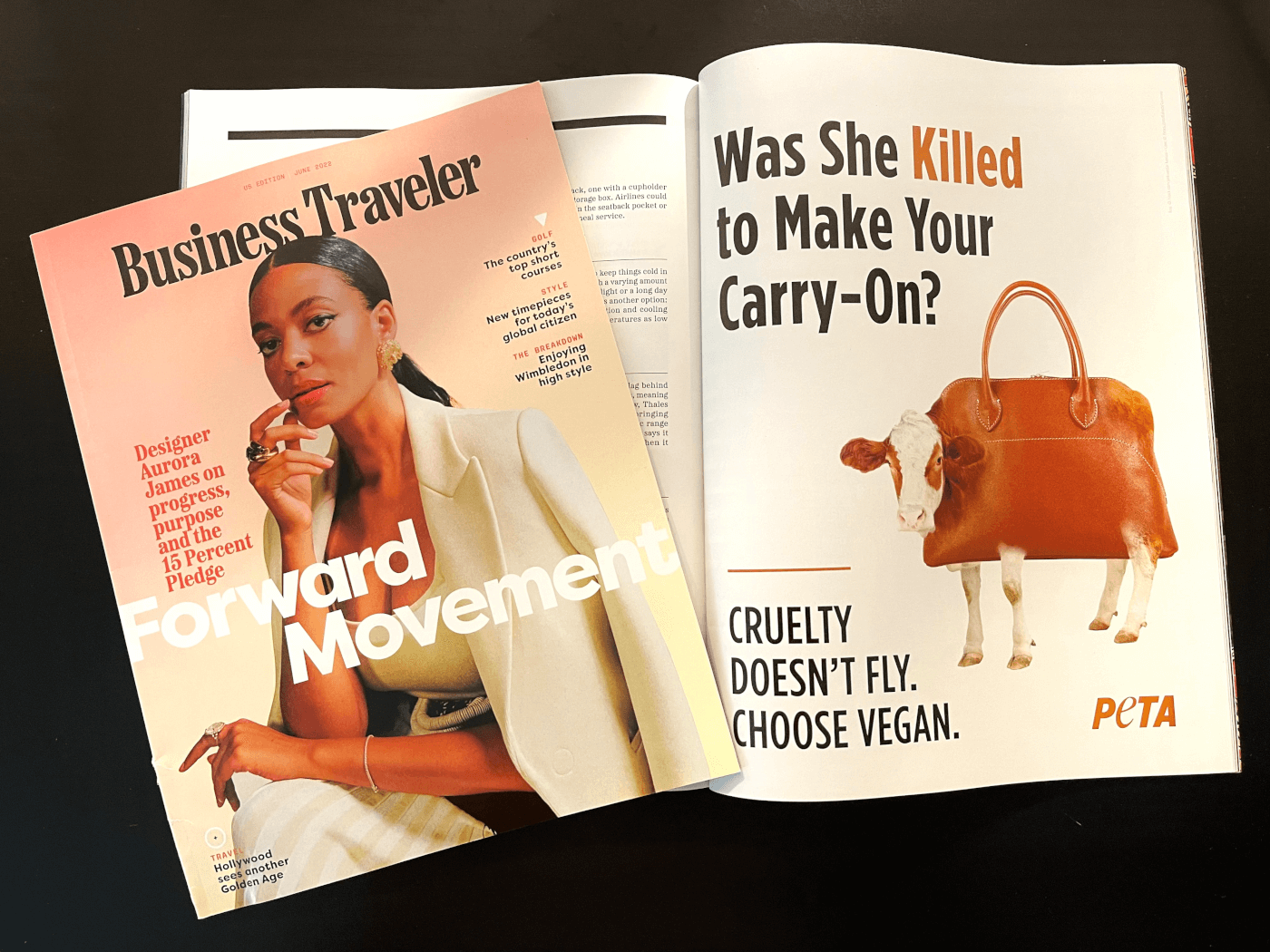
  • We made it clear that “cruelty doesn’t fly” in Charlotte, North Carolina, and Business Traveler magazine, which is sold in airports all across the U.S.

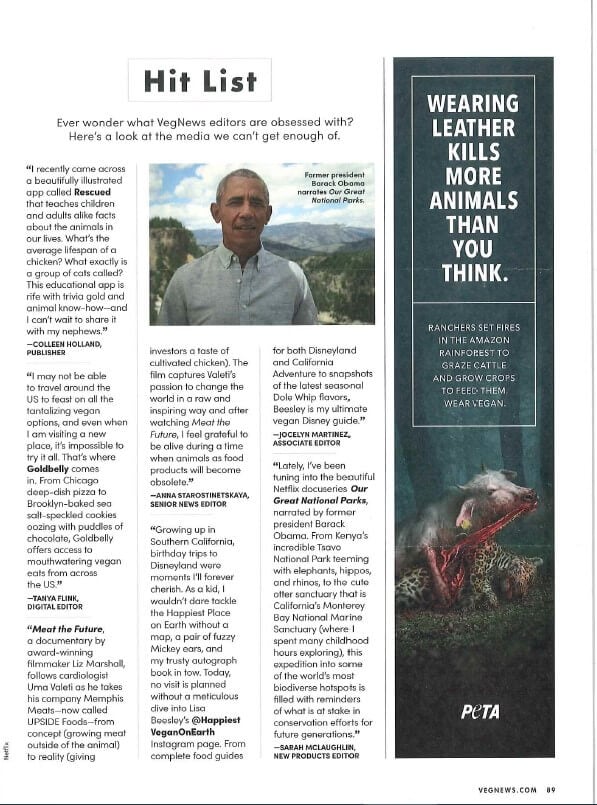
  • In July 2022, we ran our “Wearing Leather Kills More Animals Than You Think” ad in VegNews.

  • We attended Levi’s annual meeting to encourage the brand to stop using leather patches on its jeans—which would look better without them and make a world of difference to animals who want to keep their skin!
  • We gave Crocs an award for ditching leather
  • Since we all should feel comfortable in our own skin, we joined forces with chiseled photographer Mike Ruiz and had a new billboard put up for NYC Pride Week.

Urge Urban Outfitters to Ditch Leather Now

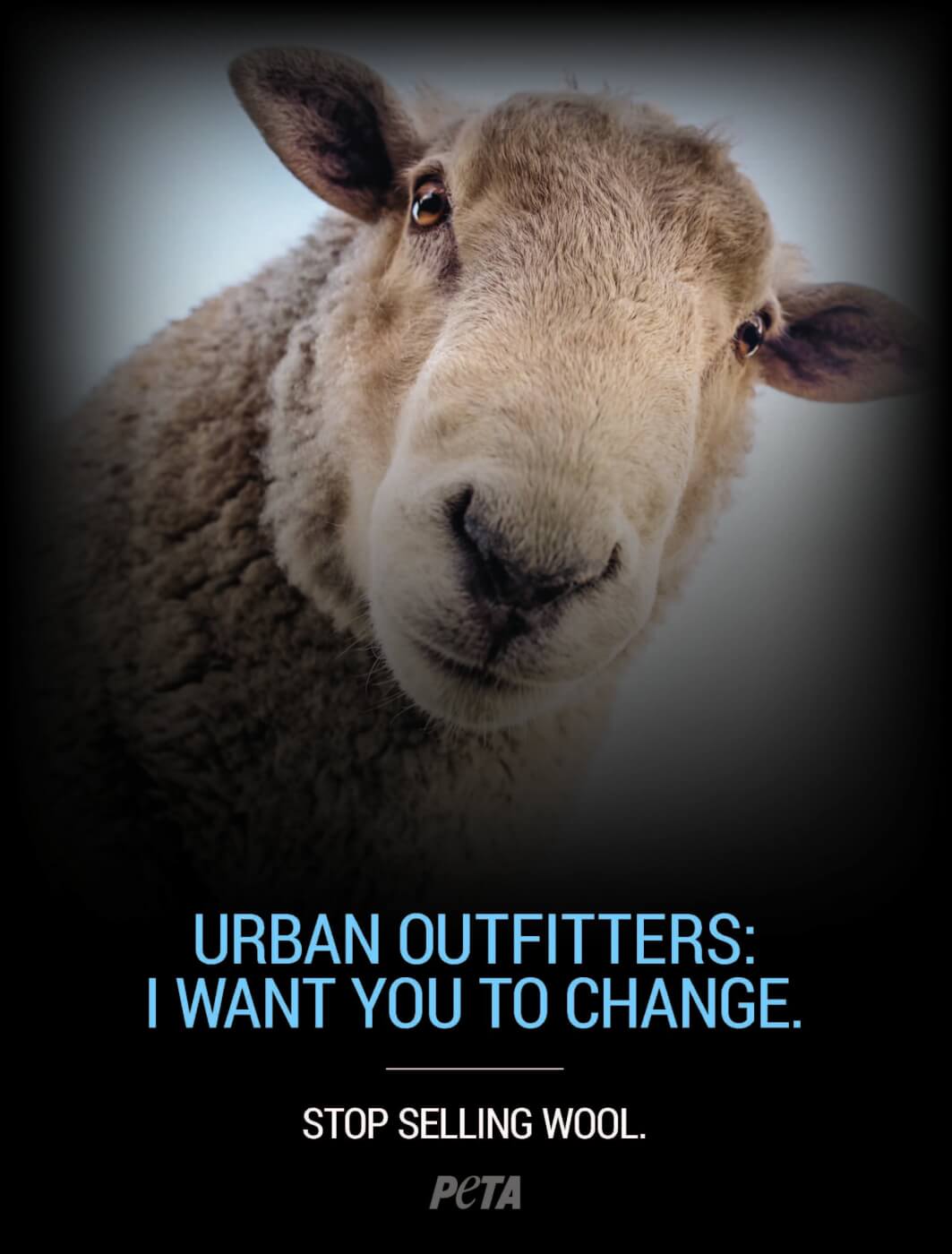
Urban Outfitters’ products condemn sensitive, playful, communicative animals to a lifetime of suffering. Urban Outfitters, Anthropologie, and Free People need to hear from you that products derived from animals have no place in your wardrobe. Urge Urban Outfitters Inc. to remove leather and other animal-derived items from its stores and tell the company that you’ll be shopping elsewhere until then.

The post Who Are You Wearing? PETA Makes Noise, Saying ‘Leather Destroys’ appeared first on PETA.

With PETA Input, Department of Transportation Ends Animal Skin-Corrosion Test Requirement

Following years of pressure and advice from PETA scientists, the U.S. Department of Transportation (DOT) has ended its requirement for a painful test in which corrosive substances are smeared onto rabbits’ sensitive skin. Now, companies will no longer be required to use rabbits in order to determine whether chemicals cause permanent skin damage.

The DOT requires that companies test products for possible permanent skin damage to allow safe handling in case of accidental spills during transport. PETA successfully asked the DOT to accept Corrositex, an animal-free skin test that works with most kinds of corrosive substances, almost 30 years ago. Now, with this 2022 update to the DOT testing requirements, all chemicals can be tested without using animals.

In a letter informing PETA of the new rule, the agency stated that its decision would encourage companies to use animal-free tests. PETA will make sure that every company knows about this updated rule, including spreading the word about a September 21 webinar hosted by the DOT to discuss the rule change.

“Animal-free skin-corrosion tests are more relevant for protecting human health, and the DOT’s update brings the U.S. in alignment with other countries that have been using non-animal methods safely for years,” says Dr. Amy Clippinger, managing director of the Regulatory Toxicology Department. “When PETA and regulatory agencies work together, it’s a win-win situation for everyone: We prevent animals from being killed in painful experiments and better protect humans.”

For more information on PETA’s investigative newsgathering and reporting, please visit PETA.org or follow the group on Twitter, Facebook, or Instagram.

The post With PETA Input, Department of Transportation Ends Animal Skin-Corrosion Test Requirement appeared first on PETA.