
Why Do Vegans Eat Food That Looks Like Meat? The Answers May Surprise You

Vegan chicken, mock tuna, burgers that “bleed”—sometimes vegan food can come so close to the “real thing” that even flesh-eaters are fooled. But what’s the point of making plants look and taste like meat? And if vegans like meaty flavors, why don’t they just eat meat? Let us explain.

Vegans Stop Eating Meat to Spare Animals Suffering and Exploitation

Most people who go vegan were raised eating animal flesh and became used to how it tastes. However, once we realized that eating meat hurts animals, the planet, and our health, that taste wasn’t worth the cost. Whether it was watching a video of one of the many cows who escaped a truck bound for the slaughterhouse or looking into the eyes of our dog and noticing they’re the same color as a pig’s, that “lightbulb moment” led us to realize that we can’t in good conscience continue eating meat, eggs, or dairy.

It’s speciesist to eat another sentient being’s flesh. Our fellow animals aren’t here for humans to eat. It’s wrong to breed them, deprive them of a life worth living, and then kill them to satisfy our urges.
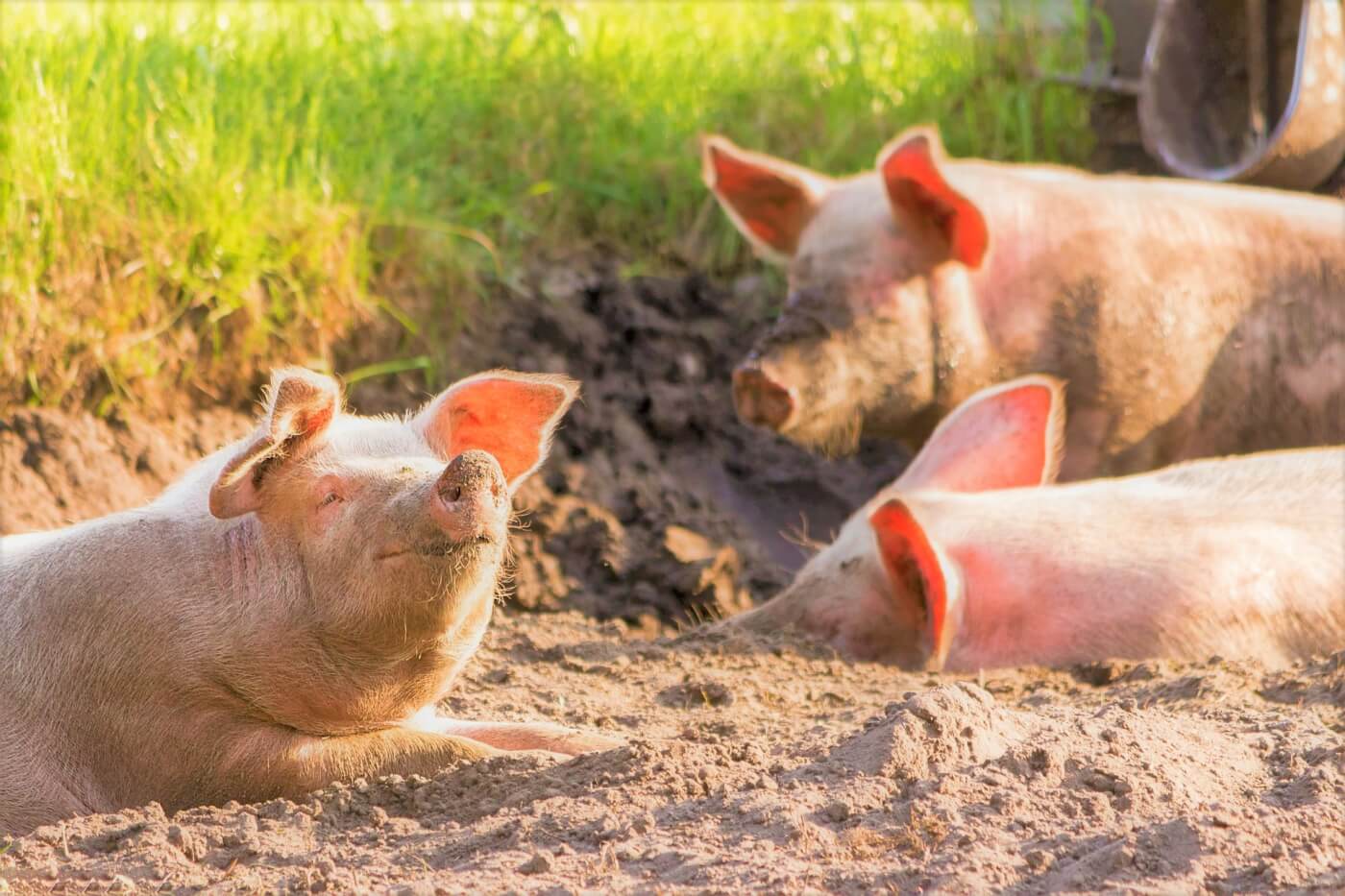
Happy pigs playing in mud

For a short and sweet answer to why vegans eat food that looks like meat, check out Thee Burger Dude’s video on the subject:

Meatless Meat Can Make Going Vegan Even Easier

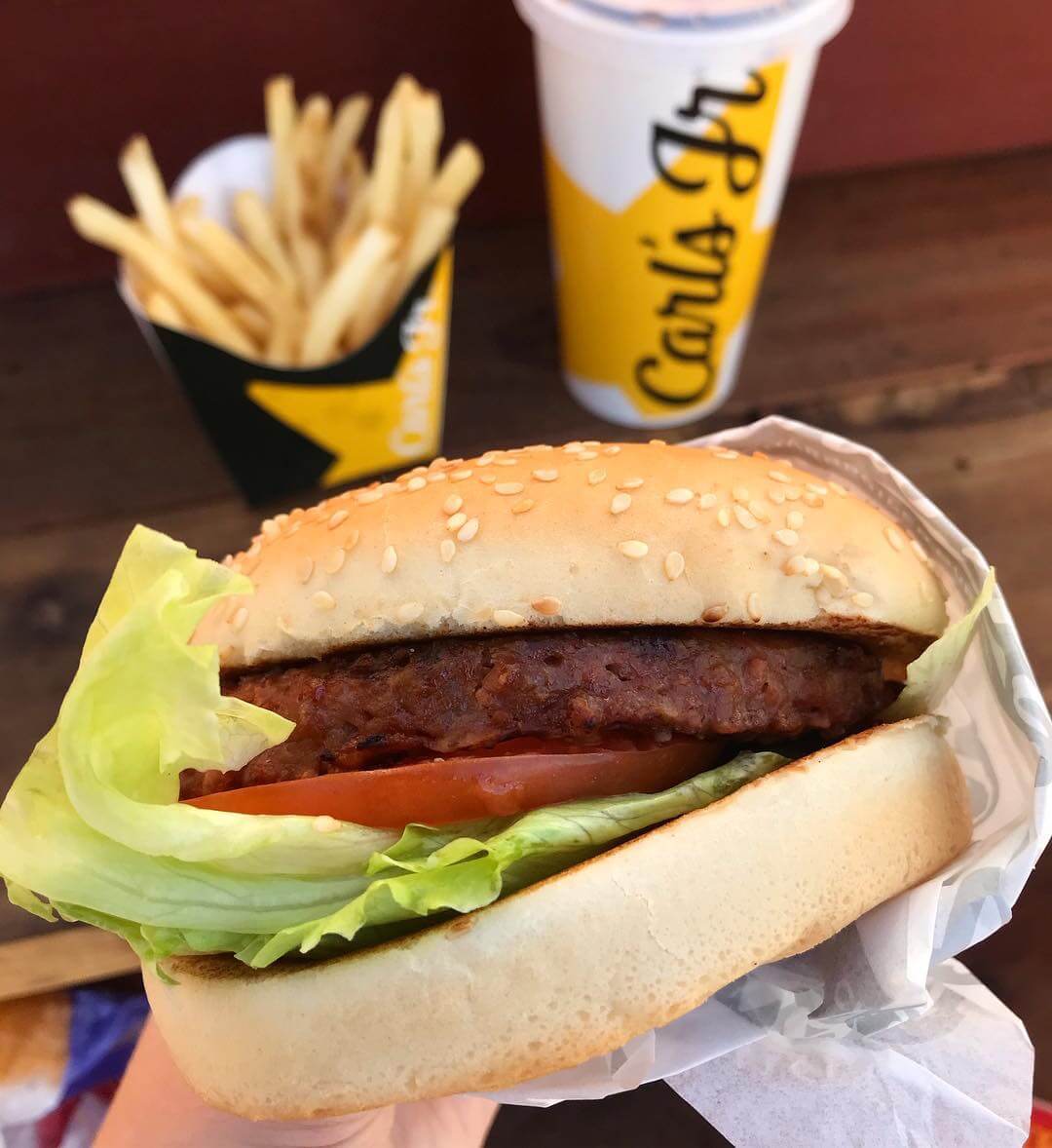
After going vegan, people may still crave some of the animal-derived foods they’re familiar with, since our taste buds can take time to adjust. Vegan meats, nondairy milk, and other vegan products can help bridge the gap and make it easier to enjoy the same flavors without harming animals. When a Beyond Burger tastes the same as eating a burger made of cow flesh, we know there’s no reason to continue eating anything that an individual suffered and died for.
Food Brings Us Together

Food is more than just sustenance—it’s a connection. Sharing a meal can help create new bonds and bring us closer together. Think of Thanksgiving, summer barbecues, Sunday brunches, and even just family dinners—the social element is what makes them stand apart from other meals. With Beyond Burgers, Tofurky Roasts, and fakin’ bacon, vegans can enjoy a meal that more closely resembles what others might be eating at these events. Taking these foods to get-togethers can also spark a conversation, which could encourage nonvegans to rethink their reliance on meat and other animal-derived products.
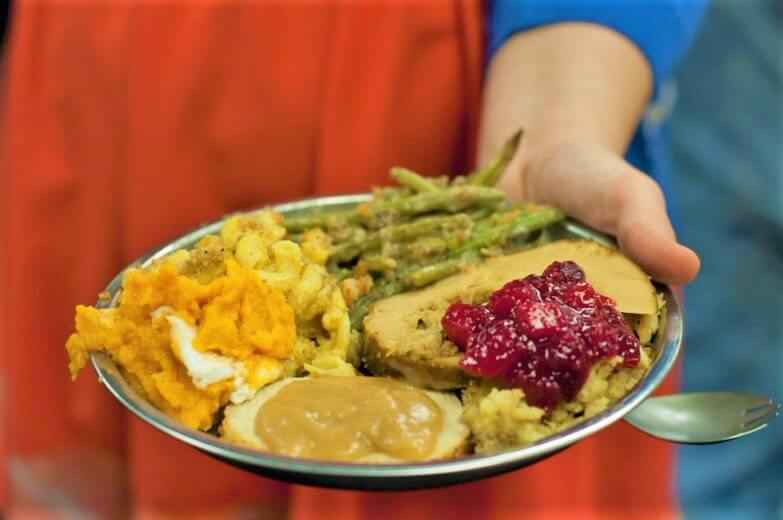
Person holding plate of vegan holiday food

To Put It Simply, It’s Fun and It Tastes Great!

Turning tomatoes into tuna, cashews into stretchy mozzarella, and banana peels into pulled “pork” is a creative culinary challenge that many vegans love to take on. We know how to completely transform veggies and fruits into something totally different. And if you’ve ever watched even a single PETA video exposé of a farm, you know why eating a burger made from beans is much more appealing than one made from the flesh of a sensitive cow.


Being vegan is about causing the least amount of harm possible to our fellow animals with whom we share the planet. Cows, pigs, chickens, and all other animals aren’t ours to experiment on, eat, wear, use for entertainment, or abuse in any other way. We can make personal choices daily that impact animals’ lives in a major, positive way, such as eating vegan meat instead of animal flesh. For help going vegan, order our free vegan starter kit today:

The post Why Do Vegans Eat Food That Looks Like Meat? The Answers May Surprise You appeared first on PETA.
Unique State Law Helps PETA Win Freedom for Chained, Neglected Dogs (Photos)

A unique civil lawsuit, through a rarely used North Carolina statute, helped PETA win its seven-month battle to free five neglected dogs from being chained up 24/7, surrounded by filth and suffering without basic care—a victory that has helped these dogs’ lives completely transform.

When they could, PETA’s fieldworkers visited the chained dogs in rural North Carolina for more than a year, repeatedly trying to persuade the property owner, Cherelle Turner Askew, to provide for their basic needs. The group provided the dogs with food, custom-built doghouses, spay/neuter services, and more—all free of charge. But when the fieldworkers would return, they would find the dogs malnourished and neglected, and on one visit, they discovered the skeletal remains of a young black pit bull named Minnie—a dog they knew well—still chained inside her doghouse. A necropsy revealed that she had died of “starvation and extreme neglect.”

After months of pleading by PETA, the local sheriff’s office charged Askew with seven counts of cruelty to animals, seized four surviving dogs—Zeus, Duke, Sandy, and Duchess—from her property, and delivered them to the local dog pound. Knowing that they were in urgent need of veterinary care, suffering from heartworm disease and other conditions, but would have stayed at the pound—which has no veterinarian—for months or even years until the case’s conclusion, PETA went to court using a unique state statute that allows any person to file a civil action for custody of abused animals.

This month, PETA was granted permanent custody of the four dogs as well as a fifth dog named Billie, who was acquired after Minnie starved to death and was kept tethered in the same spot—together, the “Bertie 5.” In PETA’s headquarters and in caring foster homes, they’ve been receiving treatment for bronchitis, heartworm disease, parasites, and other ailments—and enjoying long-overdue affection at last, playing with other dogs, relaxing indoors, snuggling in cozy beds, and just being dogs. Askew’s criminal case is scheduled for October 5—but whatever the outcome, the Bertie 5 will never be chained up and neglected again.

Photos and more details about these dogs and their astonishing transformations since their rescue can be found here.

The post Unique State Law Helps PETA Win Freedom for Chained, Neglected Dogs (Photos) appeared first on PETA.

Help Lolita Retire to a Seaside Sanctuary—Tell Companies to Stop Sponsoring Her Abuse

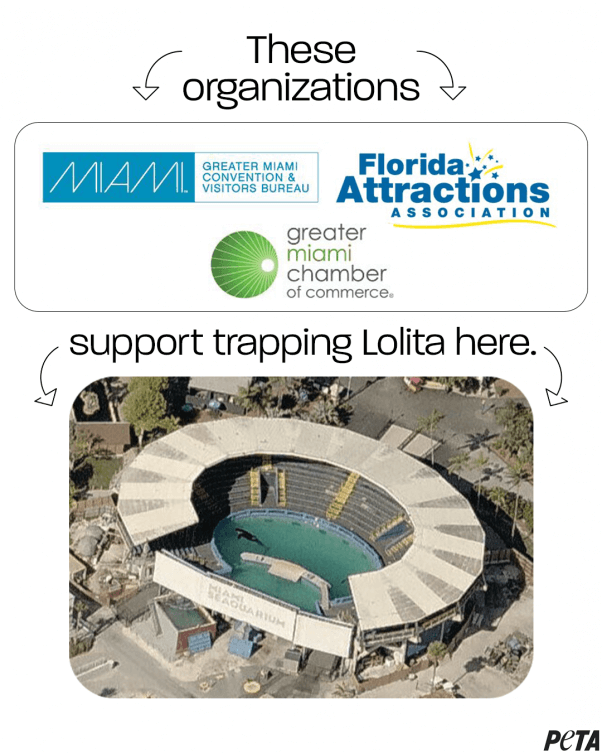
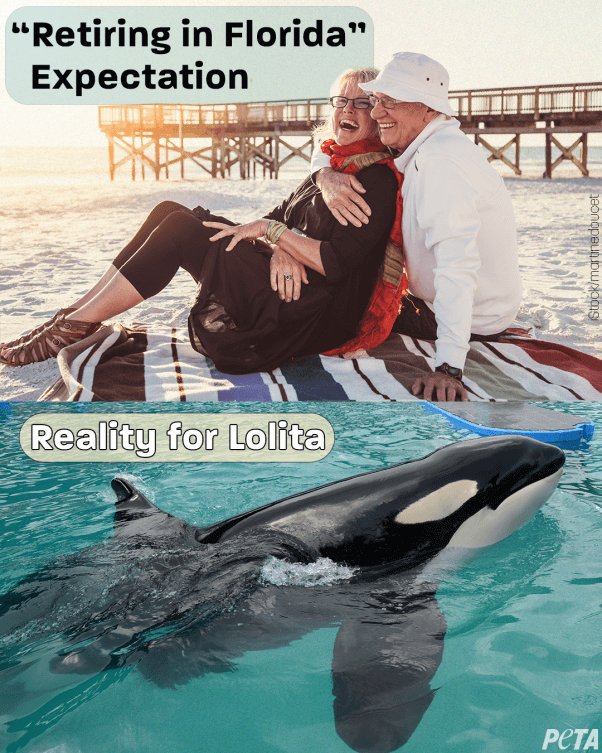
Lolita the orca is still being held prisoner in the world’s smallest orca tank, at the Miami Seaquarium. She was taken from her pod in the ocean over 50 years ago and has lived without the companionship of another orca for over 40 years, since her tankmate, Hugo, died after repeatedly bashing his head into a wall. Despite knowing that Lolita is languishing at the Miami Seaquarium, the Florida Attractions Association, the Greater Miami Convention & Visitors Bureau, and the Greater Miami Chamber of Commerce still sponsor the park.

Lolita is now around 56 years old. If she were a human, she’d be preparing for retirement. While many senior citizens in the U.S. move to Florida to enjoy their retirement years, Lolita has been imprisoned in a tiny tank there for 52 years. Please speak up for her today—she needs to enjoy the last years of her life at a seaside sanctuary.

An image showing an older couple on a Florida beach and says Retiring in Florida Expectation and shows Lolita under that trapped in a tank at the Miami Seaquarium and says Reality for Lolita

Take the steps below to tell the Miami Seaquarium’s sponsors to end their business partnership with the abusement park and to use their influence to urge The Dolphin Company to move Lolita to a seaside sanctuary.

1. Politely contact the sponsors on social media:

2. Call the Greater Miami Chamber of Commerce at 305-350-7700 and politely ask it to end its business partnership with the Miami Seaquarium. Let it know that Lolita has been suffering in the world’s smallest orca tank there for over 50 years.

Call the Greater Miami Chamber of Commerce

Note: Please call during business hours, which are Monday through Friday from 8 a.m. to 5 p.m. ET.

Let Us Know How Your Call Went

3. Use the Greater Miami Convention & Visitors Bureau’s contact form to tell it that the Miami Seaquarium isn’t a tourist destination—it’s a prison that has been holding Lolita the orca captive for over 50 years. Ask it to stop endorsing the cruel park:

4. Send an e-mail to the CEO of the Miami Seaquarium’s owner, The Dolphin Company, asking it to release Lolita to a seaside sanctuary.

Contact CEO Eduardo Albor:
ealbor@latitud21.com.mx

E-Mail Eduardo Albor

The post Help Lolita Retire to a Seaside Sanctuary—Tell Companies to Stop Sponsoring Her Abuse appeared first on PETA.