PETA Asia Helps Animals After Typhoon Noru Devastates the Philippines

While Typhoon Noru ripped through the central Philippines, PETA Asia’s rescue team began preparing for the worst. On September 27, the team visited San Miguel, Bulacan, which was reportedly badly hit by the typhoon, to assess the situation and distribute dog and cat food. PETA Asia’s squad was on the ground where five rescuers died during relief operations just hours before. Flooding from the deadly storm engulfed the first floor of many houses that had managed to withstand the typhoon’s impact, and after the water receded, massive devastation could be seen everywhere.

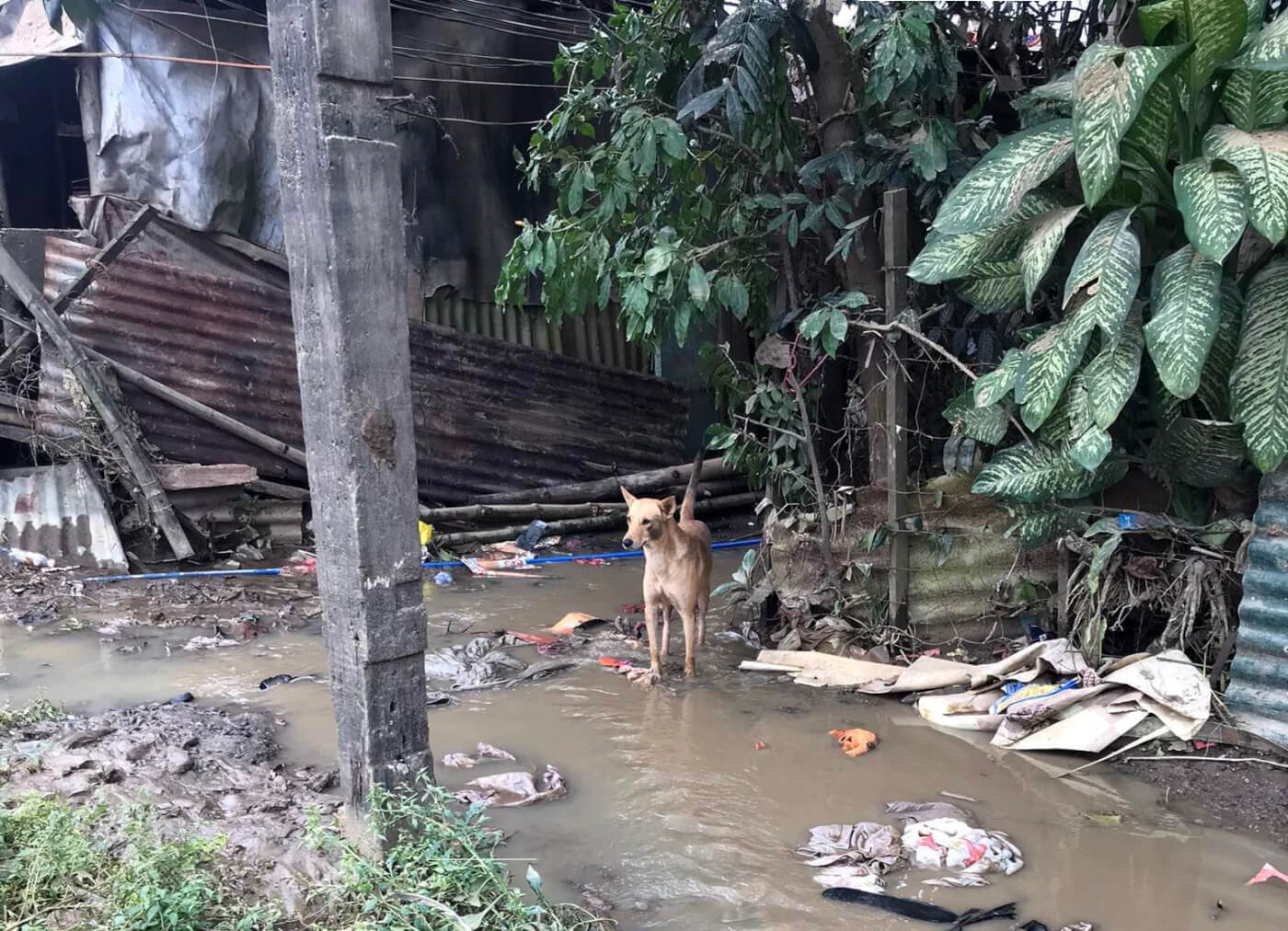
A dog standing in paw-height flooding among rubble and damage from Typhoon Noru.

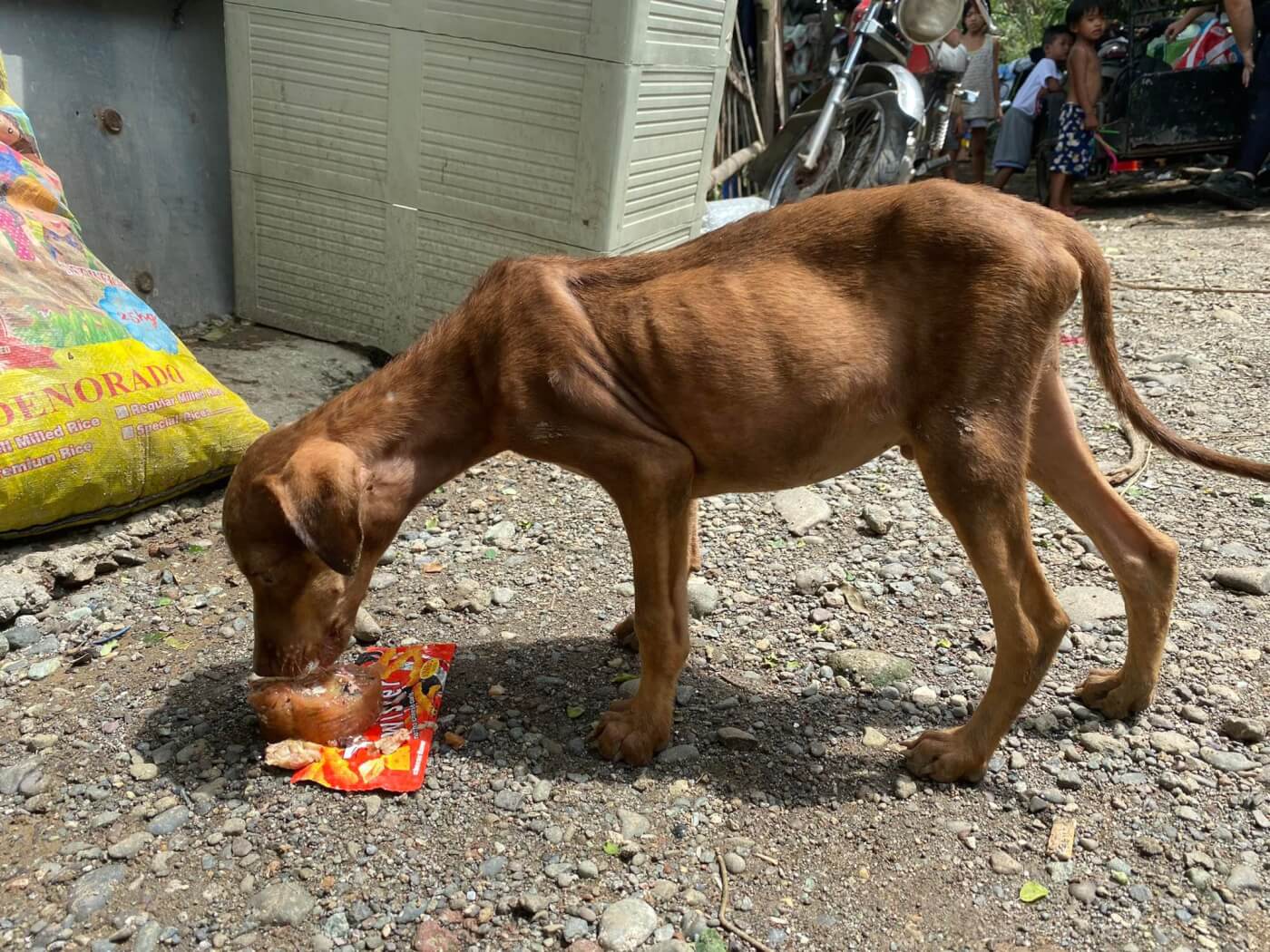
The moment PETA Asia rescuers could safely reach the area, they began looking for wounded animals. The team members then turned their focus to ensuring that those who had survived wouldn’t go hungry while waiting for power to be restored and stores to reopen. Many animal guardians were very grateful for the food the team distributed, including 175 pounds of cat food and 440 pounds of dog food. The group also treated several animals suffering from mange and other maladies.

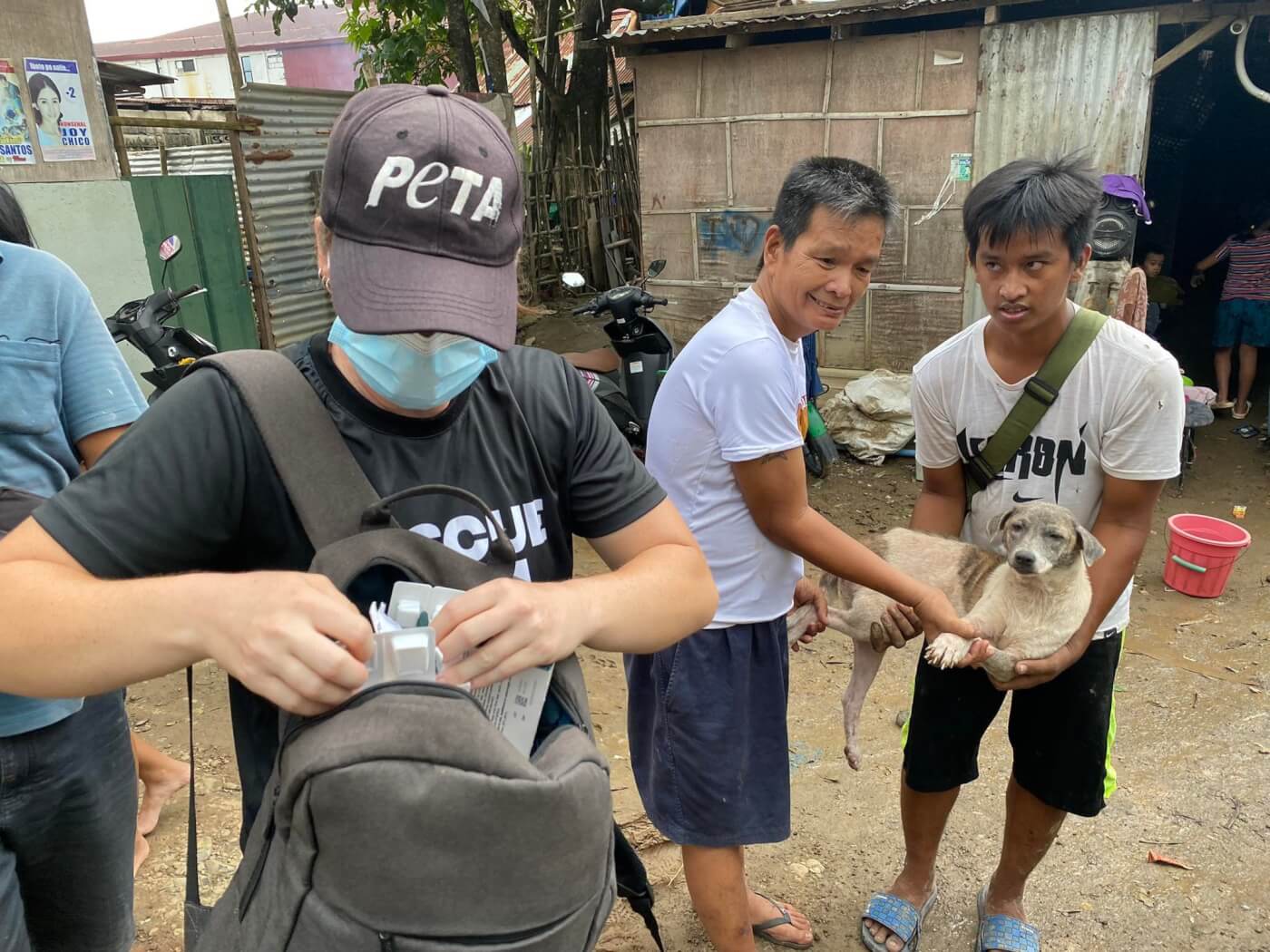
Because there was little time for the government and residents to prepare for the typhoon, PETA Asia encourages all residents to create an evacuation plan that includes their animal companions.

As PETA Asia wades into the aftermath of Typhoon Noru, the U.S. braces for Hurricane Ian. Please donate to the Global Compassion Fund to help PETA and other PETA entities continue to help animals.

Learn About PETA U.S.’ Global Compassion Fund

The post PETA Asia Helps Animals After Typhoon Noru Devastates the Philippines appeared first on PETA.
‘Hell on Wheels’ Is Coming to Charleston: Squawking Chicken Truck to Ruffle Feathers Downtown

Local diners just might think twice about chowing down on fried chicken after they see—and hear—“Hell on Wheels,” PETA’s new guerilla-marketing campaign featuring a life-size chicken transport truck covered with images of real chickens crammed into crates on their way to a slaughterhouse, complete with actual recorded sounds of the birds’ cries and a subliminal message every 10 seconds suggesting that people go vegan. The truck will make stops outside the Capitol Complex, the Chick-fil-A on Mountaineer Boulevard, Kanawha City Elementary School, and other locations throughout the city from Friday to Sunday, World Day for Animals on Farms, as part of the group’s national tour.

“Behind every bucket of fried chicken or order of barbecued wings are once-living, sensitive individuals who were crammed onto a truck for a terrifying, miserable journey to their death,” says PETA Executive Vice President Tracy Reiman. “PETA’s ‘Hell on Wheels’ truck makes an appeal to anyone who eats chicken to remember that the meat industry is cruel to birds and that the kindest meal is a vegan one.”

Birds killed for their flesh are bred to grow such unnaturally large upper bodies that their legs often become crippled under the weight, and the sheds to which they’re confined are so filthy that the red, watery goo in packages of chicken is referred to as “fecal soup.” They’re trucked through all weather extremes, sometimes over hundreds of miles and without any food or water, to slaughterhouses, where their throats are slit—often while they’re still conscious.

Other stops on the “Hell on Wheels” tour include staking out chicken restaurants in Baltimore, Chicago, Philadelphia, Pittsburgh, and other cities as well as the Michigan Chicken Wing Festival in Lansing, Oktoberfest Zinzinnati in Cincinnati, and the Illinois State Fair in Springfield.

PETA—whose motto reads, in part, that “animals are not ours to eat”—opposes speciesism, a human-supremacist worldview. For more information, please visit PETA.org or follow the group on Twitter, Facebook, or Instagram.

The post ‘Hell on Wheels’ Is Coming to Charleston: Squawking Chicken Truck to Ruffle Feathers Downtown appeared first on PETA.

No Matter Whether Victim Was a Dog or a Wolf, Amber Rose Barnes Is Still a Murderer

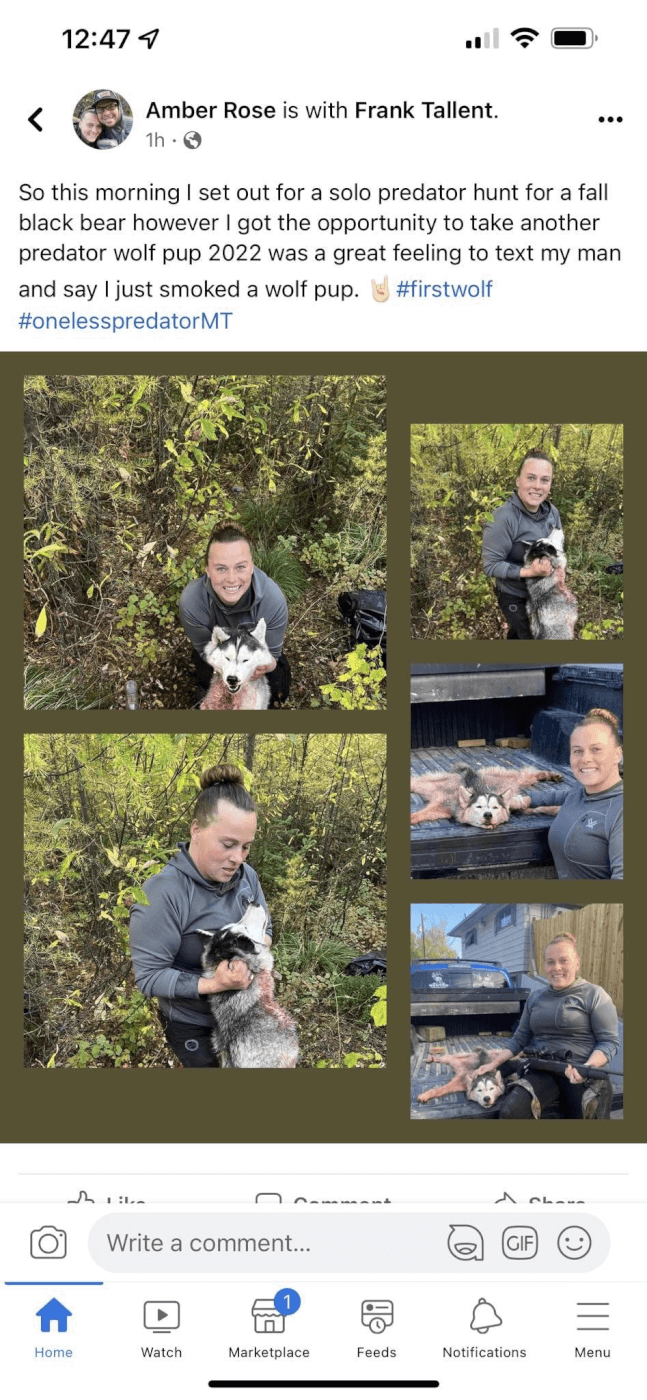
Amber Rose Barnes of Montana proudly posted a photo on Facebook of herself posing and smiling with the corpse of a dog she had murdered in the woods and skinned. She killed someone she thought was a baby wolf and flaunted the dead, mangled body of her victim for the world to see.

(Warning: graphic image)

montana woman amber rose kills husky poses with corpse

Barnes dropped that storyline the moment she realized that she had murdered a dog. As the public condemned her, she claimed that she had killed the animal in self-defense, but we’re not buying it. As one commenter on Twitter noted, she was well-equipped with a loud weapon and other hunting gear to scare a dog or a wolf away if she’d felt threatened.

It seems much more likely that Barnes killed this dog in cold blood—in her first post, she refers to the war on wolves in Montana, which saw hunters kill at least 273 gray wolves last year, and doesn’t mention being afraid for her life.

Wolves: Just Like Dogs, Just Like Humans

Amber Rose Barnes and other hunters clearly have no qualms about killing animals, no matter how young they are—hunters in Montana and Idaho torture wolves with leg-crushing traps and shoot pups as they sleep in their dens. Because of speciesism, hunters believe they’ve crossed a line only if they kill the wrong type of canine.

Just like dogs, humans, and countless other animals, wolves experience grief and depression over losing a loved one. Since wolves mate for life, remain faithful to their partners, and live in close-knit packs in which everyone pitches in, killing even a single wolf ruins multiple lives. It’s speciesist to deny other animals the love and consideration we give our “best friends.”

To anyone outraged by the thought of Barnes killing and skinning a husky, remember that this murder wouldn’t have been right if she had killed a wolf. The dog she killed was an individual who went through the same suffering, fear, and pain that was intended for someone just like them.

Stop the War on Wolves

The Flathead County Sheriff’s Office is investigating Barnes and her story, but in the meantime, you can do your part to end the bloody war on gray wolves, which traumatizes the animals, destroys their families and social structures, and threatens their already dwindling populations across the U.S.

Please send an urgent message to Secretary of the Interior Deb Haaland asking her to implement immediate emergency protections for gray wolves and to reinstate full federal protections for them under the Endangered Species Act.

The post No Matter Whether Victim Was a Dog or a Wolf, Amber Rose Barnes Is Still a Murderer appeared first on PETA.

PETA Statement on Animal Welfare Violations at Bertek Inc.

Please see the following statement from PETA Vice President Dr. Alka Chandna regarding a just-obtained federal document indicating critical animal welfare violations at Bertek Inc. in Greenbrier, Arkansas:

Using rabbits, dogs, and cats as feeding troughs for ticks and fleas is horrifying enough, but the animal experimenters at Greenbrier-based Bertek Inc. can’t even abide by minimal animal protection regulations. According to a just-posted federal inspection report obtained by PETA, Bertek placed large numbers of larval ticks on rabbits who were confined to tiny enclosures in which temperatures soared to over 87 degrees. According to the report, the rabbits “develop welts from the ticks that last 24 hours after removal of the engorged ticks, indicating significant irritation”—but Bertek failed to provide the rabbits with any “pain management or other measures” to alleviate their discomfort. Also, the enclosures were smaller than what is legally required, restricting normal postural adjustment and movement.

The feds also determined that Bertek’s animal experimentation oversight body hadn’t even adequately reviewed protocols for using live rabbits and cats to feed fleas and ticks—and thus failed to ensure that pain and distress to the animals were minimized.

Last year, Bertek used 549 dogs, 390 rabbits, and 18 cats in experiments and confined an additional 17 dogs who had not yet been used in experiments. These animals feel pain and value their own lives just as much as the company’s executives do—so Bertek should commit to using non-animal methods to rear fleas and ticks.

For more information about PETA’s investigative newsgathering and reporting, please visit PETA.org or follow the group on Twitter, Facebook, or Instagram.

The post PETA Statement on Animal Welfare Violations at Bertek Inc. appeared first on PETA.