This morning, PETA’s Christian outreach division, PETA LAMBS (“Least Among My Brothers and Sisters” from Matthew 25:40), sent a letter to the city’s archbishop, Cardinal Blase J. Cupich, offering to replace his church’s stock of Advent candles with vegan options free of beeswax, tallow, or any other animal-derived ingredient and light up the community with kindness.
The letter insists that God intended for humans to be caretakers of all his creation, yet many candles contain ingredients derived from the abuse and slaughter of dogs, cats, cows, sheep, and pigs. Rendering companies process carcasses into purified fats like tallow, and for beeswax, it’s common for producers to clip the queen bee’s wings in order to prevent her from leaving the colony and to forcibly inseminate her.
“Genesis 1:29 teaches us that Eden was vegan and that humans flourished in harmony with other animals,” writes PETA Foundation Christian Outreach and Engagement Campaign Coordinator Candice Kelsey. “Thankfully, with the abundance of widely available cruelty-free candle waxes, including soy, coconut, ceresin, and sustainable palm, we can better honor God’s plan.”
Vegan Advent candles are available from CocoSoy, DEMDACO, and Bear Natural Organics. PETA LAMBS—which has also sent letters to cardinals in Boston and Newark, New Jersey—offers an enlightening guide to finding animal-free candles for the Advent season and beyond.
PETA LAMBS opposes speciesism, a human-supremacist worldview. Its motto, a variation of PETA’s, is “Animals are not ours. They’re God’s.” For more information, please visit PETALambs.com or follow PETA on Twitter, Facebook, or Instagram.
Monkeys in U.S. laboratories have been found to be infected with herpes B—a disease that is benign and largely asymptomatic in monkeys but has a fatality rate of greater than 70% in humans if not treated properly—as well as campylobacter, cholera, hepatitis, MRSA, salmonella, tuberculosis, West Nile virus, and other pathogens and diseases. In addition to the disease risk posed by Livingstone’s failure to wear PPE, her laboratory has endangered staff and animals by allowing a monkey to escape from a cage, leading to a fight with another stressed monkey that caused injuries so severe that one animal’s finger had to be amputated.
“It’s virtually impossible to guarantee that monkeys are free of all infectious agents, so Margaret Livingstone’s PPE blunder risked her own health and that of her staff,” says PETA Senior Vice President Kathy Guillermo. “PETA is calling on OSHA to investigate Livingstone’s failure to comply with even the most minimal safety guidelines.”
Livingstone’s experiments involve removing infant monkeys from their mothers at birth, caging them alone, and either distorting their vision with various devices or never allowing them to see a human or monkey face. She has also sewn infant monkeys’ eyelids shut. In many experiments, the monkeys’ heads are immobilized using helmets, chin straps, and bite bars, and some of the animals are killed and dissected. Livingstone has conducted these sensory-deprivation experiments on monkeys for 40 years and, since 1998, has collected $32 million in taxpayer money from the National Institutes of Health to bankroll them—all without producing any cures or treatments for humans.
PETA—whose motto reads, in part, that “animals are not ours to experiment on”—opposes speciesism, a human-supremacist worldview. For more information on PETA’s investigative newsgathering and reporting, please visit PETA.org or follow the group on Twitter, Facebook, or Instagram.
Ahead of the annual presidential turkey “pardon,” PETA sent a letter today to President Biden, asking him to also extend some mercy to geese and ducks by banning foie gras—produced by force-feeding birds until their livers become swollen—from the White House, as King Charles just did from all royal residences.
“If King Charles can ban tormented birds’ diseased livers from Buckingham Palace, we hope President Biden will follow his lead and keep foie gras out of the White House,” says PETA President Ingrid Newkirk. “Extending the holiday spirit of giving to geese and ducks would set an example of compassion for the whole country, and PETA would gladly send some delicious and decadent faux gras for the president and his chefs to sample.”
During foie gras production, several pounds of fat and grain are pumped into birds’ stomachs every day through tubes shoved down their throats, causing their livers to swell to up to 10 times their normal size. A PETA investigation into a foie gras producer in New York found that a single worker was expected to force-feed 500 birds three times each day—a pace that frequently left birds injured—and so many ducks died from ruptured organs due to overfeeding that workers who killed fewer than 50 birds a month were given a bonus. Other investigations into farms in the U.S. and Europe have revealed sick, dying, and dead animals, some with holes in their necks from overfeeding injuries.
Foie gras production is outlawed in more than a dozen countries as well as in California—where Vice President Kamala Harris, during her tenure as the state’s attorney general, successfully fended off attempts to reverse the state’s prohibition on the sale of foie gras—and numerous companies, including Costco, IKEA, Sam’s Club, Target, and Whole Foods, refuse to sell it.
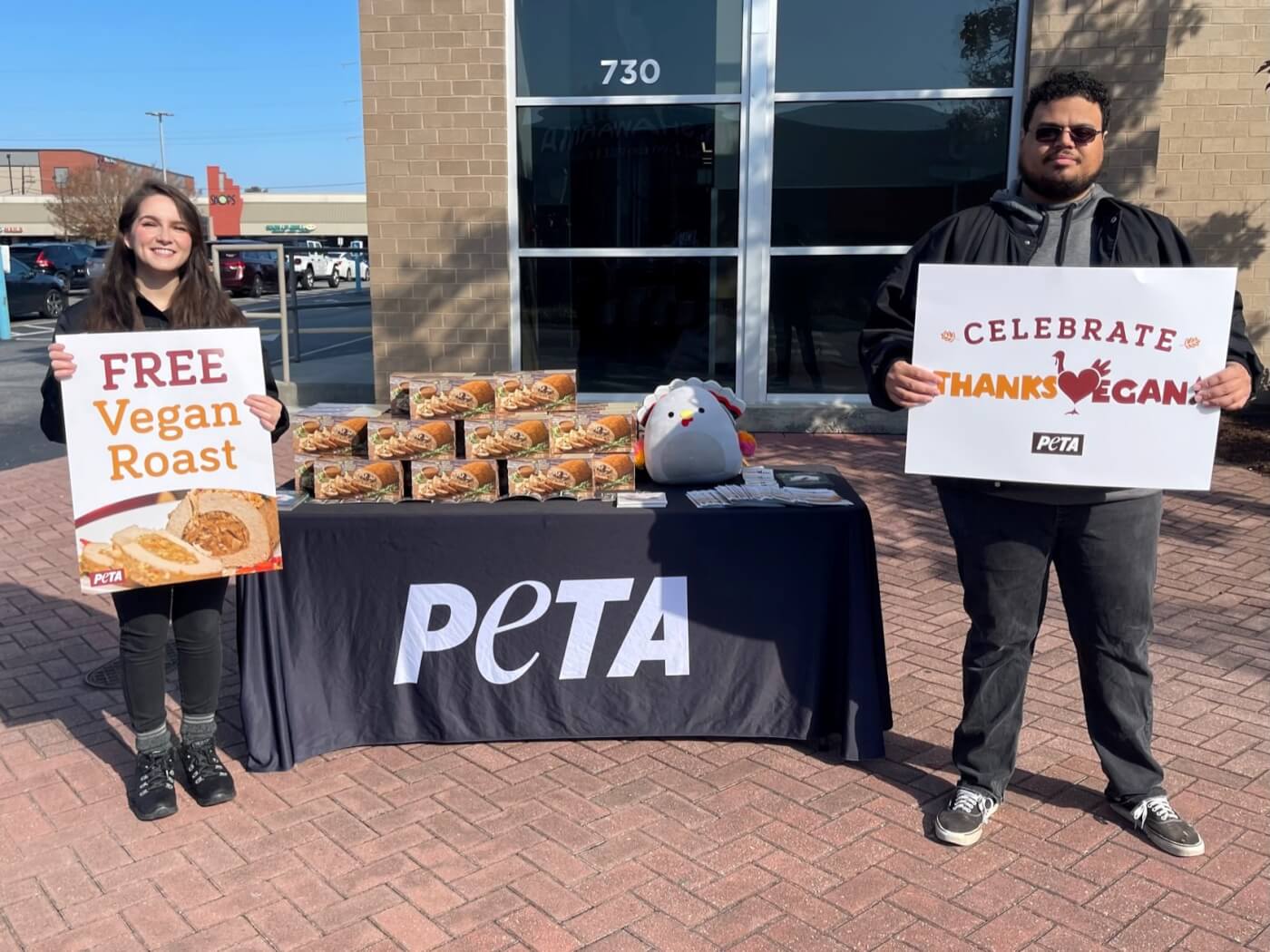
PETA—whose motto reads, in part, that “animals are not ours to eat,” and which opposes speciesism, a human-supremacist worldview—also encourages everyone to celebrate “ThanksVegan.” For more information, please visit PETA.org or follow the group on Twitter, Facebook, or Instagram.
After you’ve finished your holiday cooking, shopping, and decorating, why not kick back with a festive beverage to celebrate the season? Whether you’re partial to cocktails, mocktails, wine, or beer, we’ll help you find animal-friendly vegan holiday drinks you can sip (responsibly) all season long.
Many holiday cocktails, wines, and beers are already vegan, but some are made with ingredients like dairy, eggs, or honey, or they’re processed using fish bladders or bone marrow. This simple guide will help you find options that are kind to cows, chickens, bees, fish, and other intelligent animals.
Vegan Cocktails for the Holidays
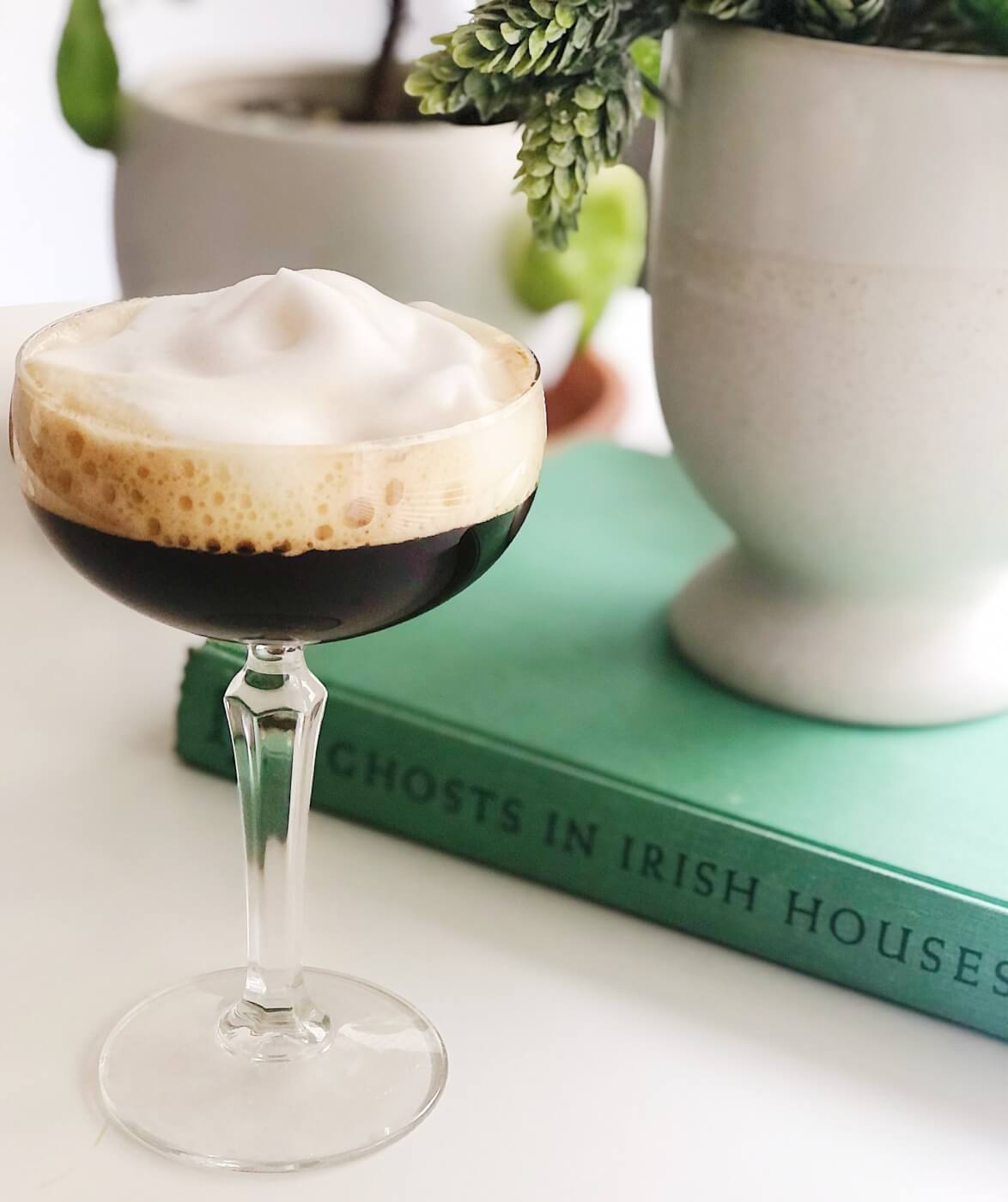
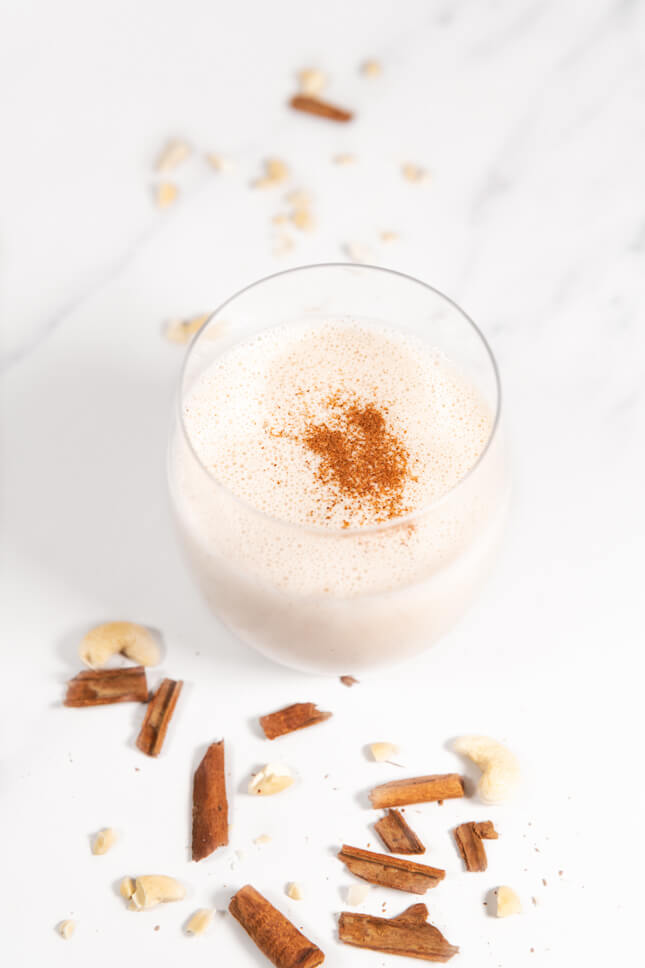
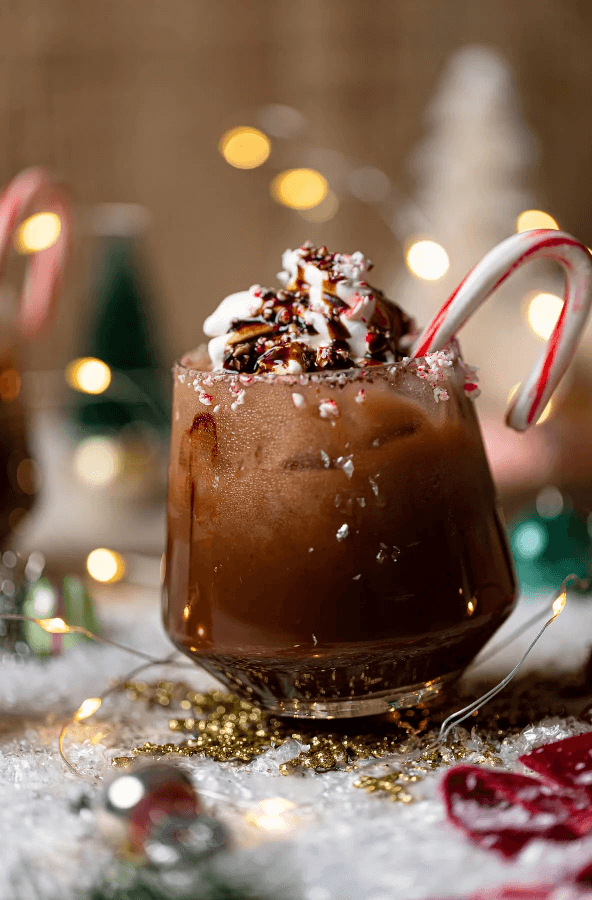
Lots of holiday cocktails are vegan as is, and those that aren’t can easily be made with ingredients that don’t come from animals. Instead of eggs, try using aquafaba to get a foamy top on your whiskey sour. Hot toddies can easily be made with vegan honey, maple syrup, or agave nectar instead of honey stolen from bees. And there are endless options to replace cow’s milk and cream. Plus, there are tons of vegan eggnog brands on grocery store shelves! Here are some vegan liqueurs and recipes we love to help make your holiday cocktail dreams come true:
Add a splash of Baileys Almande to your morning coffee, or serve it over vegan ice cream for a rich dessert.
How to Find Vegan Wine
Most wines are vegan, but some are filtered with “fining agents” that sometimes include animal-derived substances like gelatin from fish bladders (called isinglass), casein (derived from milk), or bone marrow. Avoid those and go for a vegan wine instead—these use plant-derived fining agents like carbon, limestone, or bentonite clays. “Natural” and “unfined” wines like pét-nats (an abbreviation for “pétillant naturel”) are usually vegan because they aren’t clarified at all.
Of course, vegan wines are wonderful when enjoyed on their own, but there are also a few festive wine-based drinks that are delicious and crowd-pleasing. Mulled wine is made with red wine that’s infused with wintery spices and served warm. Sangria is similar but served cold, and it can be made with red, white, or sparkling wine. Don’t forget mimosas, too!
Beers, hard ciders, and hard kombuchas are usually vegan, but some are clarified with fish bladders or made with lactose from cow’s milk or honey. Barnivore.com offers an easy way to check whether your favorite options are animal-friendly. Plus, it has an extensive list of vegan wines and liquors.
Non-Alcoholic Drinks and Mocktails
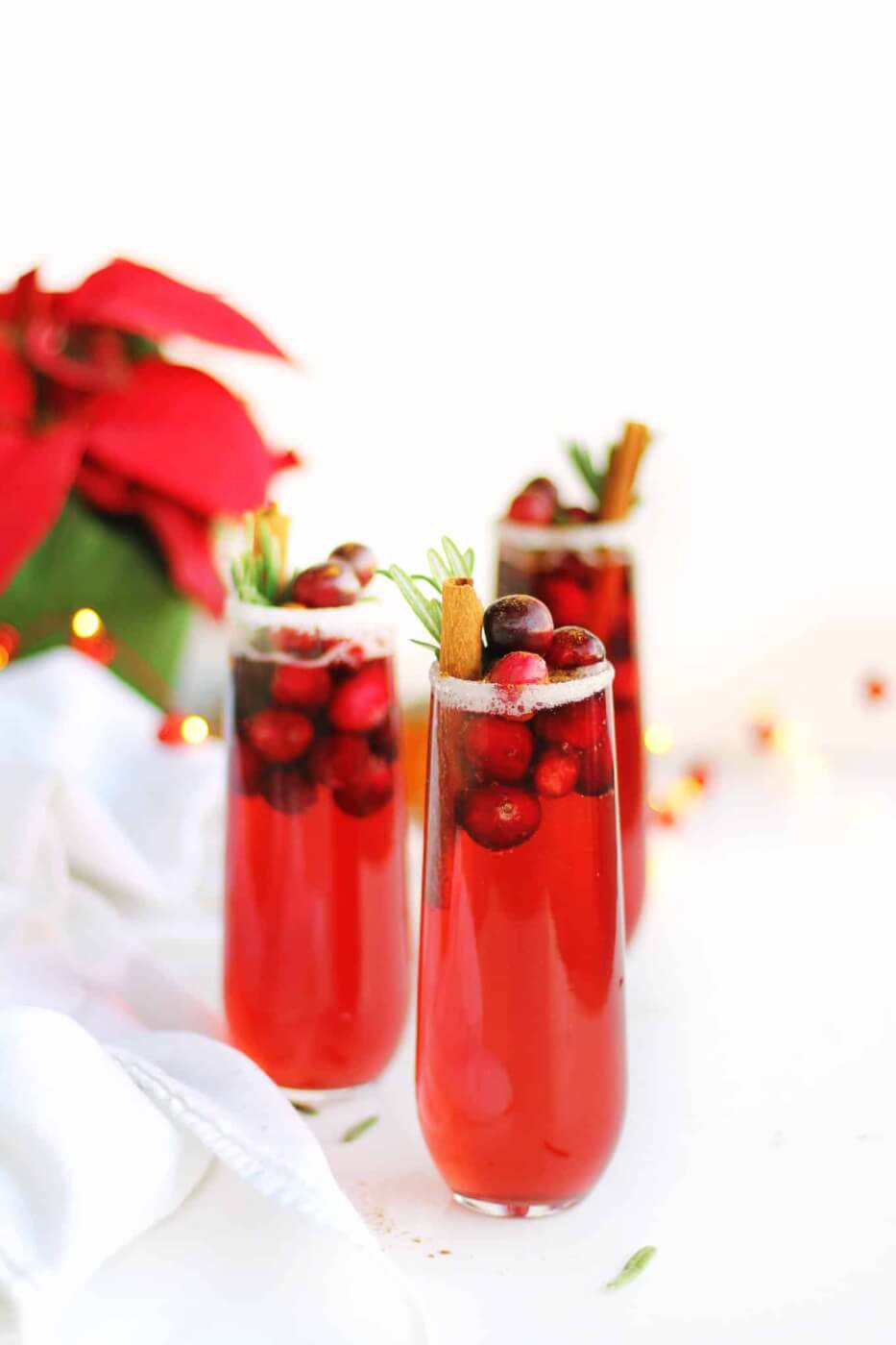
Tons of non-alcoholic beverages are vegan, but the same filtering concerns can still be an issue. Try the vegan versions of these popular holiday mocktails:
The “most wonderful time of the year” can be a nightmare for animals—be sure to keep them in mind during the holiday season while choosing animal-friendly drinks and filling your tables with vegan food. For more tips, check out our vegan holiday guide, and keep it going all year long by ordering a vegan starter kit: