PETA-Supported Teams Overcome Tremendous Odds to Secure Food for 35 Skinny Horses in Ukraine

Little Boni Goes to Germany

Boni was unable to use her back legs after being attacked by a large dog. The team rescued her a few months ago and transported her to a partner clinic in Hungary, where veterinary experts devised a treatment plan to help her recover from the neurological problem causing the temporary paralysis.
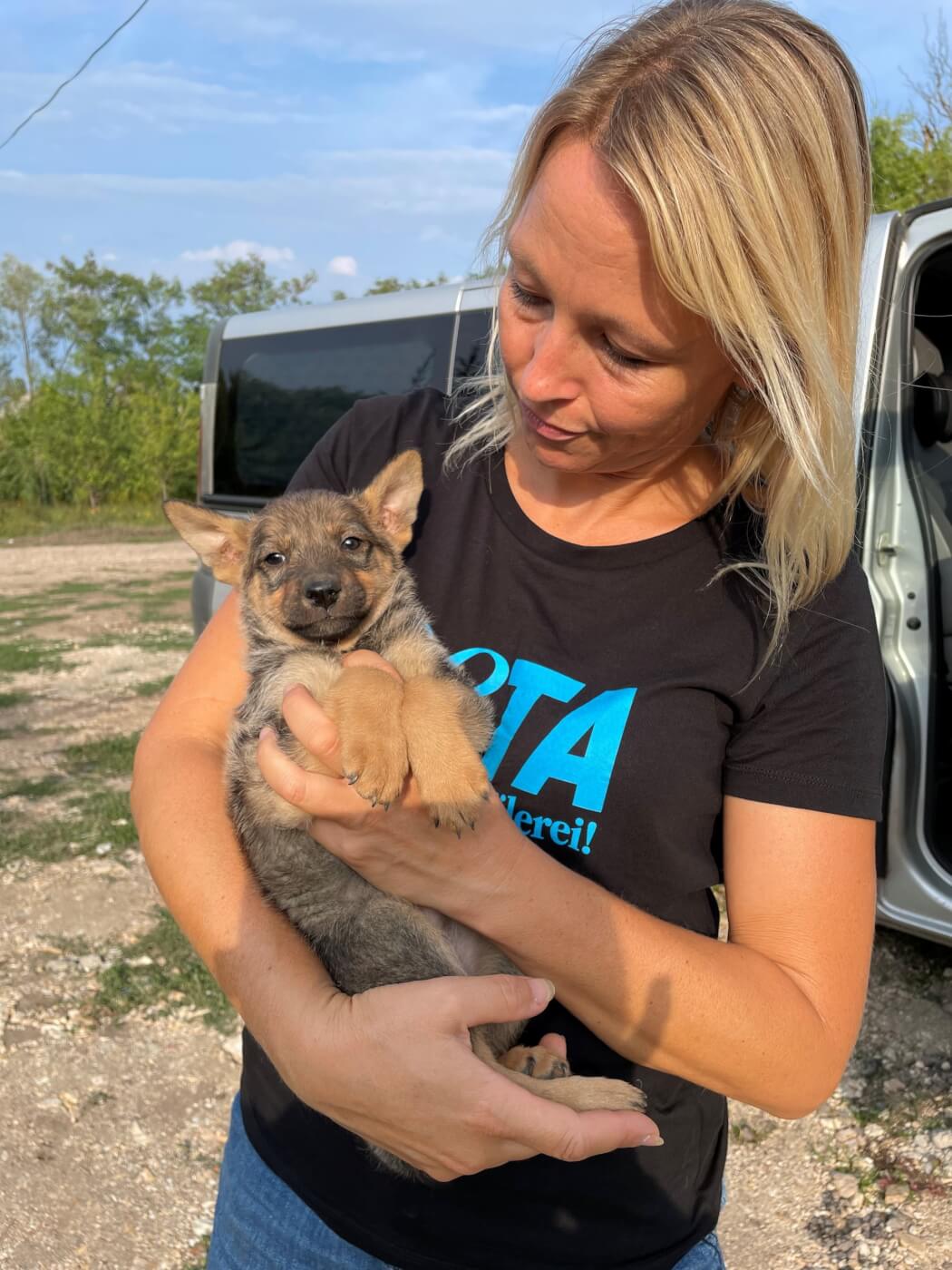
Boni the dog being rescued in Ukraine
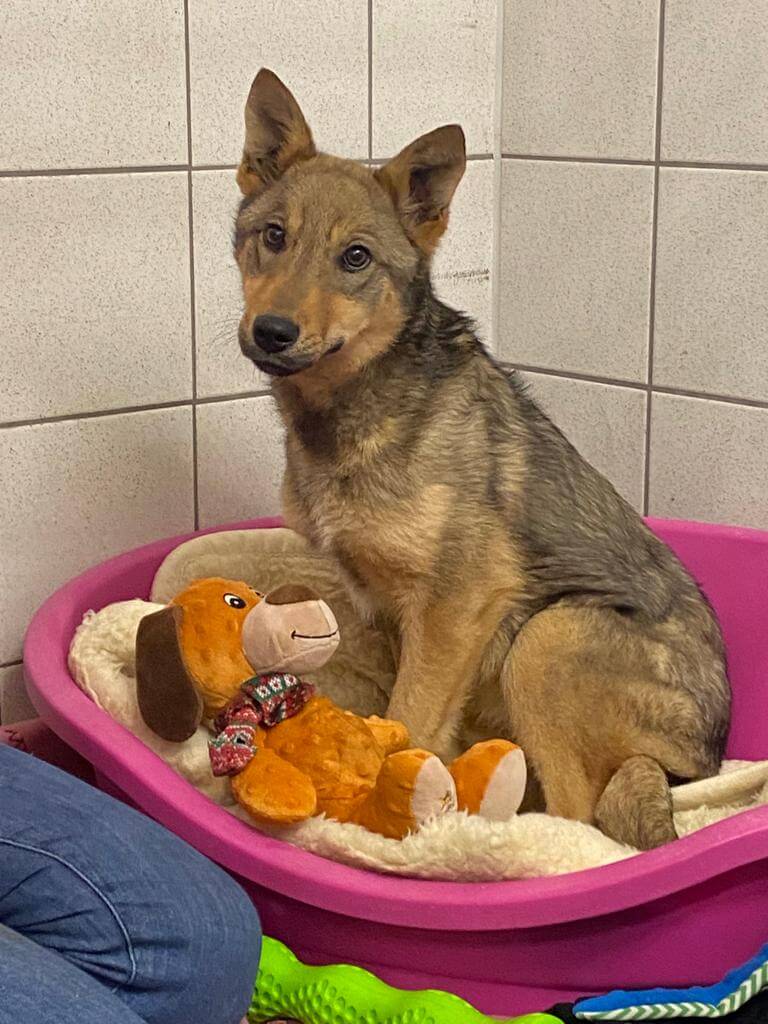
Boni the dog five months after being rescued in Ukraine

After months of required quarantine and treatments, Boni is now at an animal shelter in Germany. A veterinarian there is overseeing her continued treatment, and the team has every confidence that the growing girl will soon have full use of her back legs and become the newest member of a loving family!

Rescuers Help Severely Hungry Horses

PETA Germany and partner Animal Rescue Kharkiv have overcome tremendous odds to secure food for 35 skinny horses. Three Ukrainian women rescued the abandoned equines, but the war and harsh winter weather have made finding a reliable source of straw and desperately needed nutritious food difficult. Thanks to the team’s hard work to import the provisions each month, the beautiful horses now have fresh bedding and are eating their way to healthy weights.
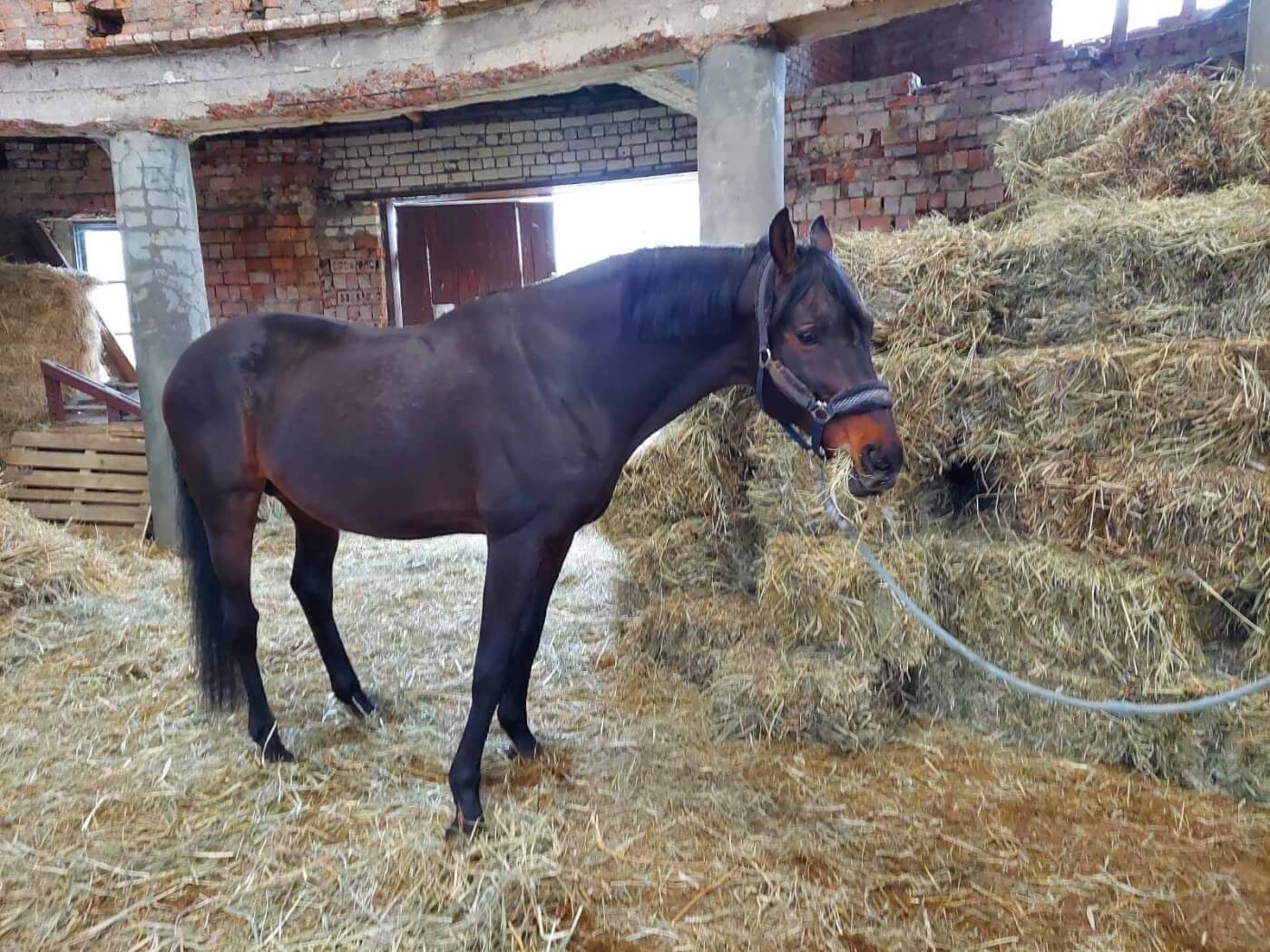
A brown horse eating straw

Orphans Care for Abandoned Animals

When abandoned animals sought refuge at an orphanage in Mykolaiv, the team began providing them with the dog and cat food they needed. They’re also keeping the children at that orphanage engaged with their donations of colorful PETA Kids’ booklets.
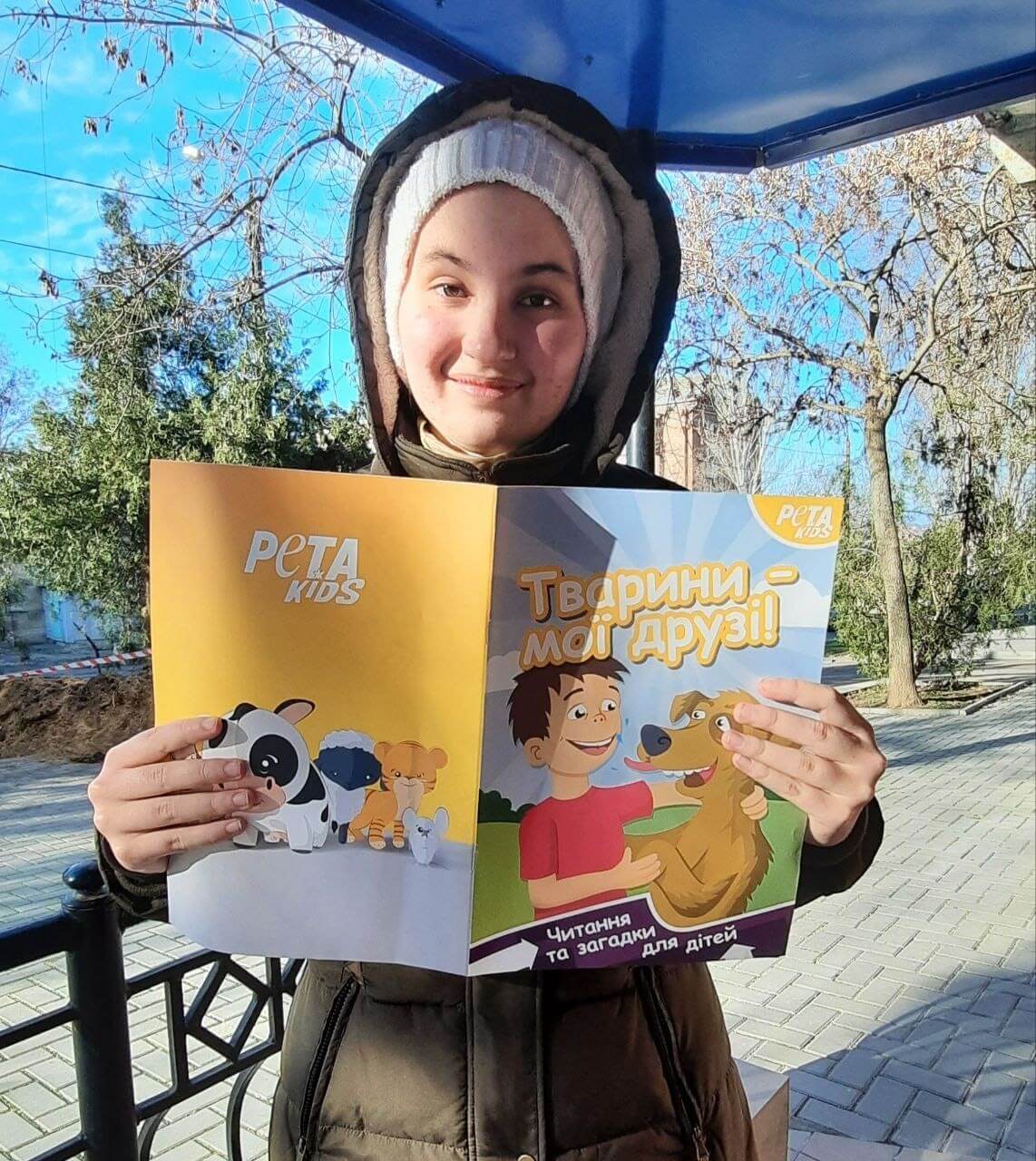
A child in Ukraine poses with a PETA Kids brochure

More Than a Year of War and Fighting Back for Animals
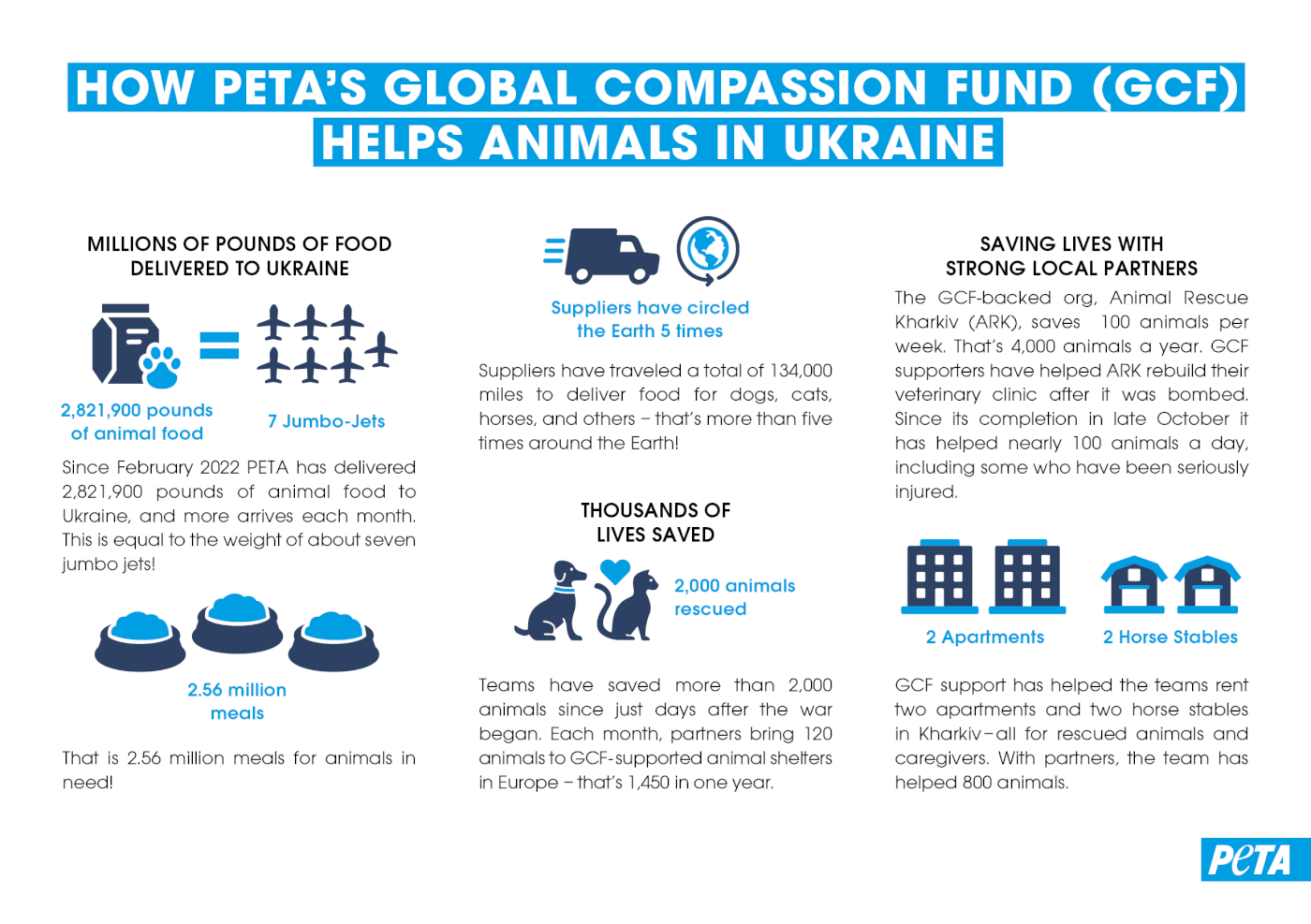
An infographic demonstrating the ways PETA has helped in Ukraine

Don’t miss the images of the many grateful dogs and cats who rely on the team’s food deliveries to stay alive:
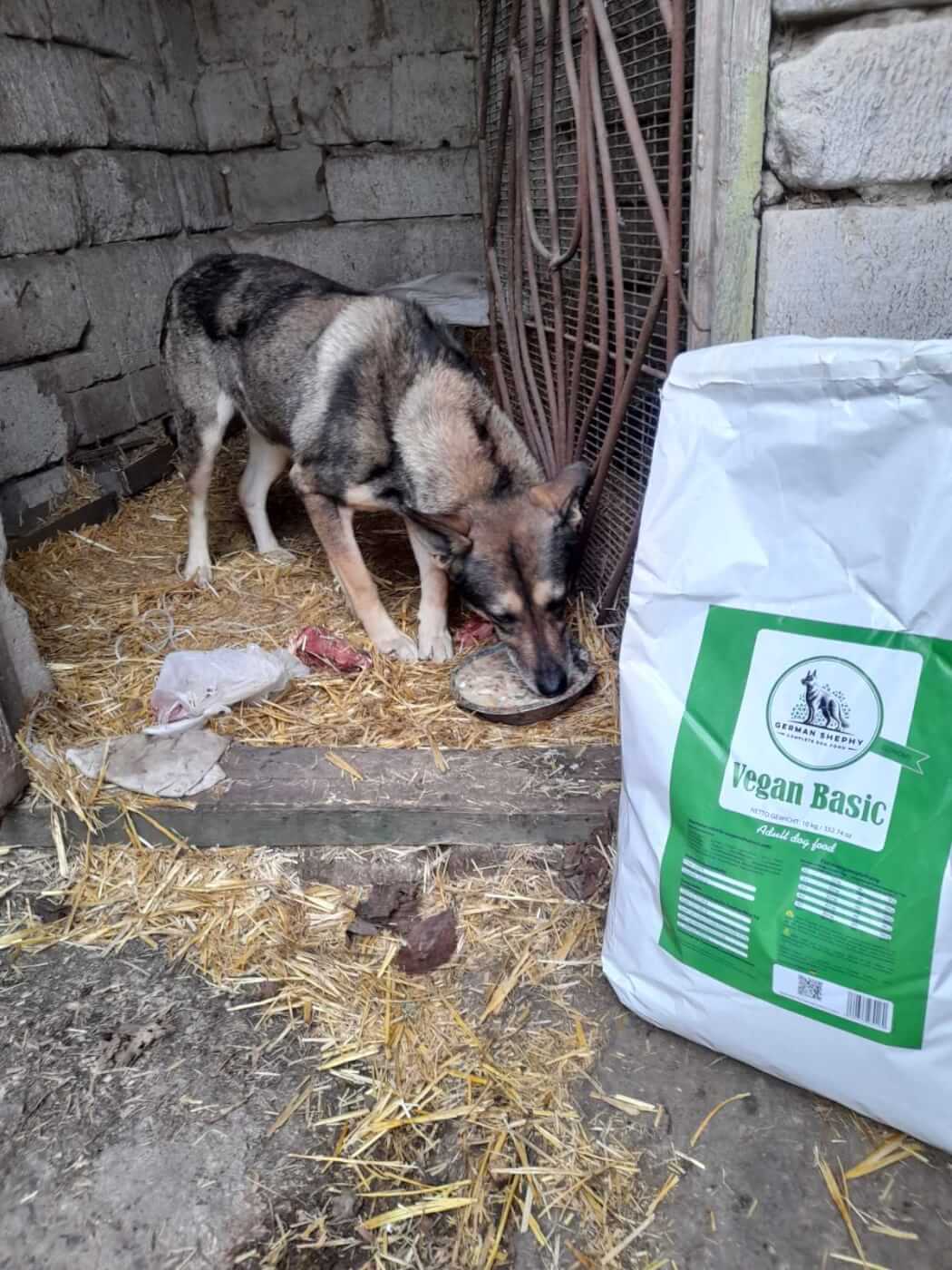
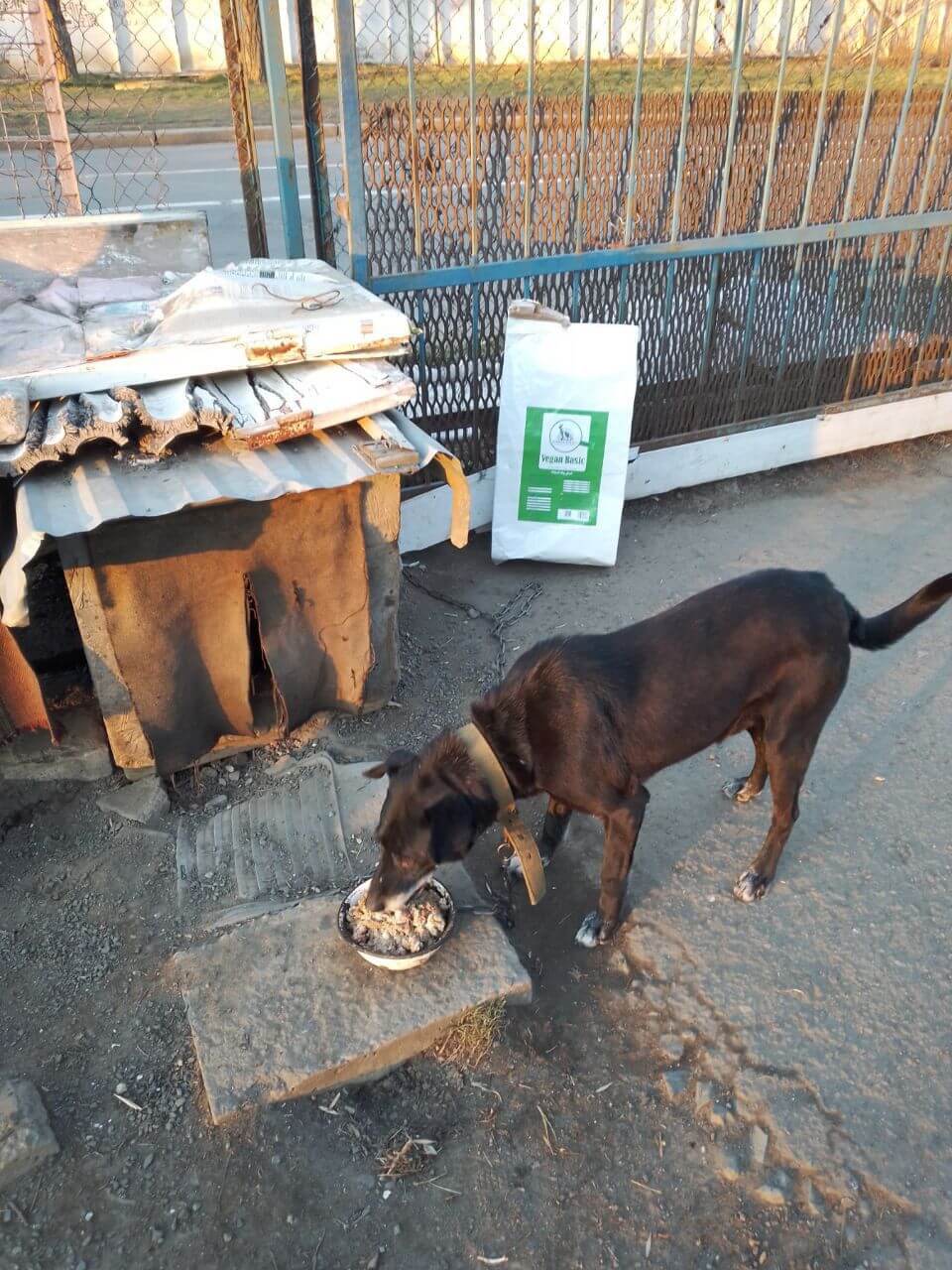
A dog eats from a bowl of food on the streets of Ukraine

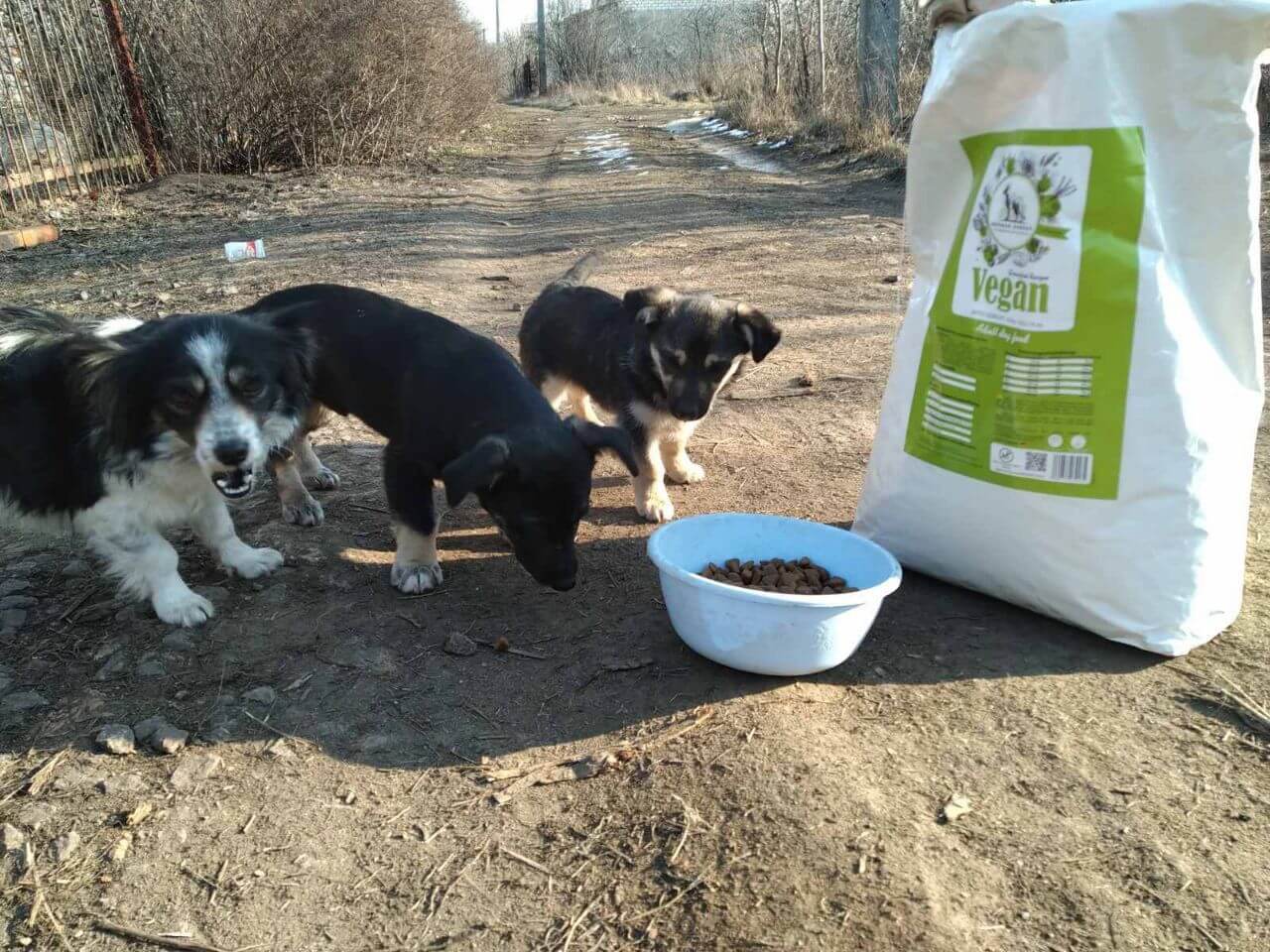
Three puppies eat from a bowl of food on the streets of Ukraine

Thanks to the generosity of Global Compassion Fund donors, this truck—outfitted with expandable cages to transport animals safely—is in action in Ukraine.
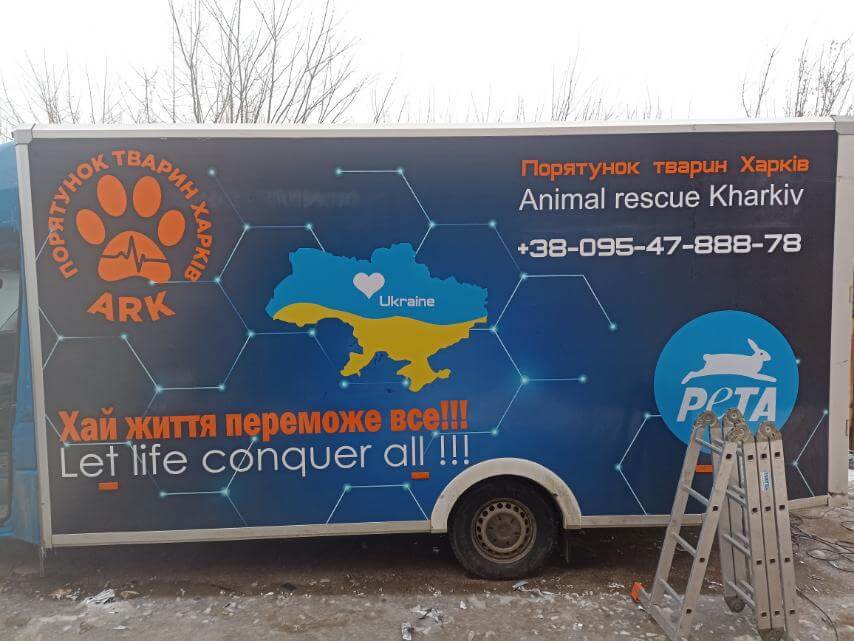
PETA and ARK's branded truck in Ukraine

How You Can Help Animals

PETA Germany and its partners’ determination and grit have helped thousands of animals in Ukraine survive famine, injuries, and other traumatic experiences. PETA Germany’s volunteers put their own safety on the line every day as they deliver food and veterinary care and transport animals out of the war zone. Global Compassion Fund donors make this work possible, and you can join the many who are helping animals in Romania, Turkey, Ukraine, and elsewhere by donating today!

The post PETA-Supported Teams Overcome Tremendous Odds to Secure Food for 35 Skinny Horses in Ukraine appeared first on PETA.
PETA Calls For Charles River to Stop Deceiving Shareholders Over Monkey Imports

Charles River Laboratories may not have told the whole truth when it released its annual shareholder report last month. The report followed the company’s announcement that it was under investigation by the Department of Justice (DOJ) for possible involvement in an alleged monkey-smuggling ring.

PETA, in a letter today, is calling on Charles River CEO James Foster to come clean to shareholders with the whole truth, including the facts below—one of which is that the company purchases monkeys from the unindicted co-conspirators in the alleged smuggling operation:

  • A recent DOJ indictment alleges that monkeys sold by Vanny Bio Research (Colombia) Corporation Ltd. (VBRC) were being laundered as “captive-bred,” despite being wild-caught. Last year, Charles River’s Reno laboratory received 697 long-tailed macaques from Worldwide Primates, believed to be one of the two unindicted co-conspirators referred to in the DOJ complaint.
  • Charles River has also received at least 2,537 long-tailed macaques, shipped to laboratories across the country, from two monkey-import facilities in Alice, Texas, owned by Inotiv, whose principal primate supplier is VBRC.
  • Records indicate that Charles River also obtains monkeys from a second Cambodian monkey supplier, KF LTD, which was previously known as Golden China Group and reportedly engaged in the illegal capture of long-tailed macaques.
  • The importation of monkeys by Charles River and other U.S. laboratory suppliers is pushing two species to the brink of extinction.
  • PETA recently revealed that last year, the Centers for Disease Control and Prevention alerted monkey importers that long-tailed macaques imported from Cambodia had been arriving infected with a bacteria so deadly that it’s listed as a Tier 1 Select Agent.

“Charles River’s shareholders have a right to know that their company is linked to businesses allegedly mixed up in illegally importing wild monkeys,” says PETA primate scientist Dr. Lisa Jones-Engel. “PETA is calling on Charles River to divulge its full role in driving the extinction of macaques worldwide by importing and experimenting on monkeys instead of embracing superior animal-free research.”

PETA previously submitted a shareholder resolution calling on Charles River to report on the species, country of origin, and number of monkeys it imports into the U.S. and to report any measures it takes to mitigate its impact on monkeys’ dwindling wild populations.

PETA—whose motto reads, in part, that “animals are not ours to experiment on”—opposes speciesism, a human-supremacist worldview. For more information on PETA’s investigative newsgathering and reporting, please visit PETA.org, listen to The PETA Podcast, or follow the group on Twitter, Facebook, or Instagram.

The post PETA Calls For Charles River to Stop Deceiving Shareholders Over Monkey Imports appeared first on PETA.

‘Cocaine Cat’ Case in Cincinnati Causes Commotion; PETA Says, ‘Leave Servals Alone’

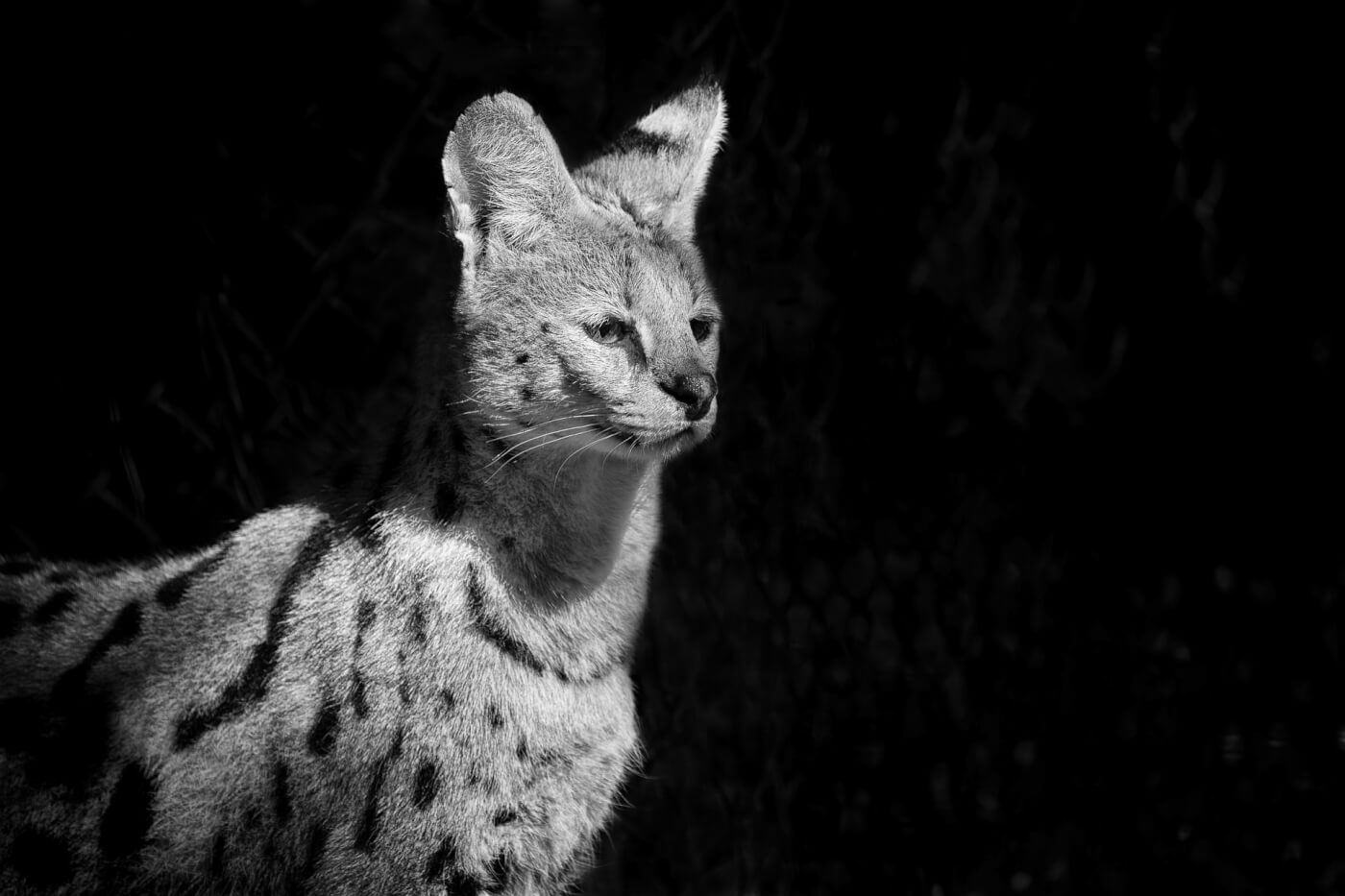
Forget Cocaine Bear—a new incident involving a wild animal on drugs is making headlines. According to reports, an African serval cat formerly kept as an illegal “pet” in Ohio is recovering at the Cincinnati Zoo & Botanical Garden after a harrowing ordeal. The serval, who allegedly escaped from his owner’s car and climbed a tree, was ultimately rescued by animal control officials. Unfortunately, he sustained a broken leg in the process—and a toxicology report revealed that there was cocaine in his system. Thankfully, he’s receiving veterinary care and expected to recover.

black and white image of an African serval cat

Wild Animals Aren’t ‘Pets’—Leave Servals and Other Animals in Peace

The exotic-animal trade poses a danger to humans as well as animals. There have been dozens of attacks by captive wild cats on humans in the past decade. In one incident, a tiger mauled his owner’s 3-year-old grandson. A lion killed several dogs and trapped a child in his room, and a Bengal tiger tore off the arm of a 4-year-old boy.

Selling protected wildlife in stores, at auctions, or on the Internet is one of the largest sources of criminal earnings, behind only arms smuggling and drug trafficking. But the animals pay the price. Many don’t survive the journey from their homes, and those who do often die prematurely from malnutrition, an unnatural and uncomfortable environment, loneliness, or the overwhelming stress of confinement.

African serval cats for sale at an auction

In the hands of unprepared or incompetent owners, many exotic animals die or are abandoned outdoors. Without appropriate habitats or rehabilitation, these animals starve or fall victim to the elements or predators. Those who do survive may overpopulate and wreak havoc on local ecosystems, killing native species.

Few Government Regulations

Federal, state, and local governments are passing laws that prohibit the private ownership of certain dangerous species, but most of these regulations are poorly enforced and designed to protect humans from injury and disease rather than ensuring that animals are handled humanely.

What You Can Do to Help Animals Like the Cocaine Cat

Never buy exotic animals—or any other animals—from dealers, breeders, or pet shops, and support legislation that would make owning them illegal and prohibit their interstate sale.

The post ‘Cocaine Cat’ Case in Cincinnati Causes Commotion; PETA Says, ‘Leave Servals Alone’ appeared first on PETA.

Looking for Vegan Sports Gear for Kids? Here’s How to Knock It Out of the Park

Is Your Kids’ Sports Gear Vegan? Catch PETA Kids’ Tips

Don’t Strike Out With Animals—Here’s How to Find Vegan Sports Gear for Kids

Looking for Vegan Sports Gear for Kids? Here’s How to Knock It Out of the Park

Here’s How You Can Help Your Kids Score a Home Run for Animals

PETA Kids’ Top Tips for Keeping Kindness on the Court and Field

The post Looking for Vegan Sports Gear for Kids? Here’s How to Knock It Out of the Park appeared first on PETA.