BREAKING: Kiska the Orca Has Died at Marineland of Canada

Breaking news: Kiska the orca has died from a bacterial infection at Marineland of Canada in Ontario. She was abducted from her home in the ocean more than four decades ago. At Marineland, she spent her final years isolated in a cramped tank, swimming in endless circles or sometimes floating listlessly. Like all orcas and other dolphins held prisoner in marine parks and exploited for entertainment, she deserved to stay in the ocean with her family, where she could have experienced a natural life.

Kiska’s Dismal Life at Marineland

In September 2021, video footage showed Kiska appearing to slam her head and body against a glass wall in the cramped tank she was kept isolated in at Marineland. The sight and sounds of Kiska as she appears to bash her head repeatedly against the tank at the Canadian tourist trap haunted viewers, as did the rest of her heartbreaking story.

In 2011, her tankmate, Ikaika, was shipped back to SeaWorld San Diego, leaving Kiska alone and isolated. Years prior to Ikaika’s transfer, all five of Kiska’s calves born at Marineland died—all of them before they were even 7 years old. In nature, orcas have an average life expectancy of 30 to 50 years, and their estimated maximum life span is 60 years for males and 80 for females.

Kiska’s death marks the end of orca captivity in Canada.

The country banned whale and dolphin captivity years ago, preventing any new cetaceans from being bred there and preventing others from being brought in from elsewhere. Sadly, Kiska was forced to remain imprisoned until the bitter end, and orcas are still held prisoner at SeaWorld parks in the U.S.

You can take action to help those animals, before they meet a fate similar to Kiska’s:

The post BREAKING: Kiska the Orca Has Died at Marineland of Canada appeared first on PETA.
Up to $5,000 Reward Offered in Dowdy Ferry Road Dog-Dumping Case

PETA is offering a reward of up to $5,000 for information leading to the arrest and conviction of the man caught on camera abandoning a young male German shepherd on Dowdy Ferry Road near the intersection with Teagarden Road on Wednesday evening.

Video footage from The Dowdy Ferry Animal Commission—which installed cameras in the area to combat frequent animal dumping—shows an older model white Chevrolet SUV pulling over at around 6:45 p.m. A light-skinned, dark-haired man got out of the car and unloaded the dog, who has golden fur and a dark-brown back and muzzle—and then got back into the car and drove off. The dog chased after the vehicle, narrowly avoiding being hit by passing cars.

Neighbors who rescued the dog reported that the light-blue collar he was wearing was so tight that it was barely visible—but other than a minor injury on his leg, he is in good health. Police are now searching for the man who abandoned him but don’t yet have any leads, so PETA is asking for the public’s help. Would you please share this information with your audience?

“Our dogs rely on us to protect them, but instead, this man dumped this dog on the side of the road, leaving him to chase after the car—and likely the only family he’s ever known,” says PETA Senior Vice President Colleen O’Brien. “This is an egregious betrayal of a dog’s trust, and PETA urges anyone who recognizes this dog or the man who abandoned him to come forward immediately.”

Tipsters should contact the Dallas Police Department’s Animal Cruelty Team at 469-504-3394.

PETA—whose motto reads, in part, that “animals are not ours to abuse in any way”—opposes speciesism, a human-supremacist worldview. For more information, please visit PETA.org, listen to The PETA Podcast, or follow the group on Twitter, Facebook, or Instagram.

The post Up to $5,000 Reward Offered in Dowdy Ferry Road Dog-Dumping Case appeared first on PETA.

PETA ‘Monkey’ to Rattle School Reception at Naples Resort

A large “monkey” will lead PETA supporters outside Naples Grande Beach Resort on Tuesday during an alumni event for the University of Massachusetts–Amherst (UMass) to protest against the school’s cruel and deadly menopause experiments on marmosets.

When:    Tuesday, March 14, 2:45 p.m.

Where:    Outside the Naples Grande Beach Resort, 475 Seagate Dr., Naples

UMass experimenter Agnès Lacreuse cuts into and screws electrodes into monkeys’ skulls, cuts into their necks, deprives them of water, restrains them for hours at a time, and torments them in various other ways, purportedly to study menopause, a condition marmosets don’t even experience. To simulate the condition, Lacreuse cuts out their ovaries and uses hand warmers on their bodies to mimic hot flashes. She has squandered $5 million in taxpayer funds on this farce.

“Life is anything but a beach vacation for the marmosets who remain imprisoned inside cold, sterile laboratory cages,” says PETA neuroscientist Dr. Katherine Roe. “PETA urges the UMass community to demand an end to this costly monkey torment.”

PETA—whose motto reads, in part, that “animals are not ours to experiment on”—opposes speciesism, a human-supremacist worldview.

For more information on PETA’s investigative newsgathering and reporting, please visit PETA.org, listen to The PETA Podcast, or follow the group on Twitter, Facebook, or Instagram.

The post PETA ‘Monkey’ to Rattle School Reception at Naples Resort appeared first on PETA.

No Mere ‘Fowl Play’ on the Internet: Video on the Putrid Search Results for ‘Chicken’

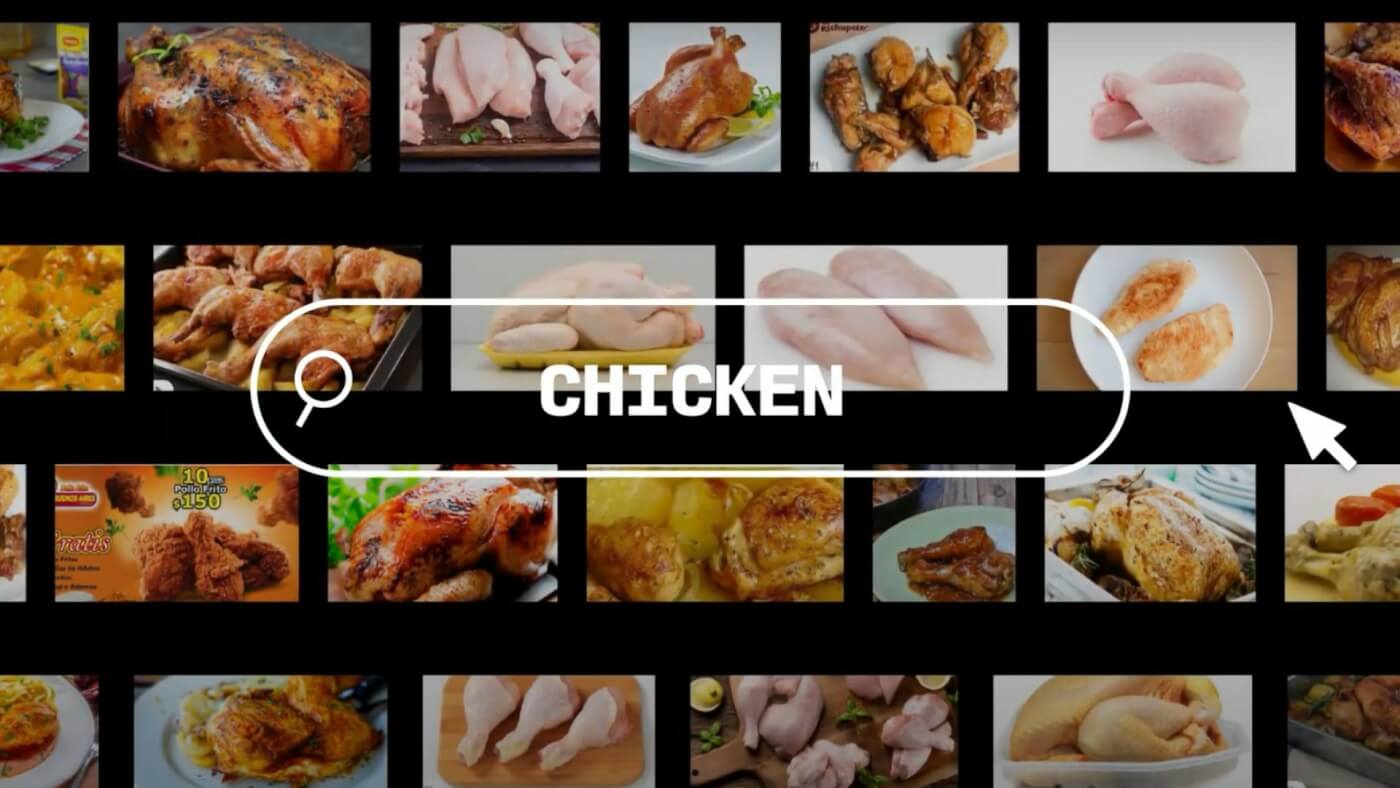
When you google “chicken,” what do you find? PETA reveals the most common outcome by sharing this brief video:

Made by The Juju, a creative agency started in Argentina, the video shows that most search results for “chicken” display speciesism and are about how humans use the bird for food, not the living animal.

when you Google "chicken" and most results are about or images of the exploited and cooked flesh of the bird

Why Disturbing Results Appear When You Google ‘Chicken’

Worldwide, humans breed, confine, abuse, and kill chickens for meat and eggs every day, every hour, every minute—every second. In 2020, Americans ate more flesh from chickens than from cows, averaging 96.4 pounds of broiler chickens per person. The U.S. repeated that pattern in 2021, but the amount dropped to an average of 68.1 pounds per person.

factory workers in a processing plant with countless bodies of beheaded chickens being made into food

What chickens endure to end up on a plate is horrifying. Humans breed and drug them to grow so large so quickly that their legs and organs can’t keep up, making heart attacks, organ failure, and crippling leg deformities common. Many chickens become crippled under their own weight and eventually die because they can’t reach water nozzles. When they’re only 6 or 7 weeks old, they’re crammed into cages and trucked to slaughter.

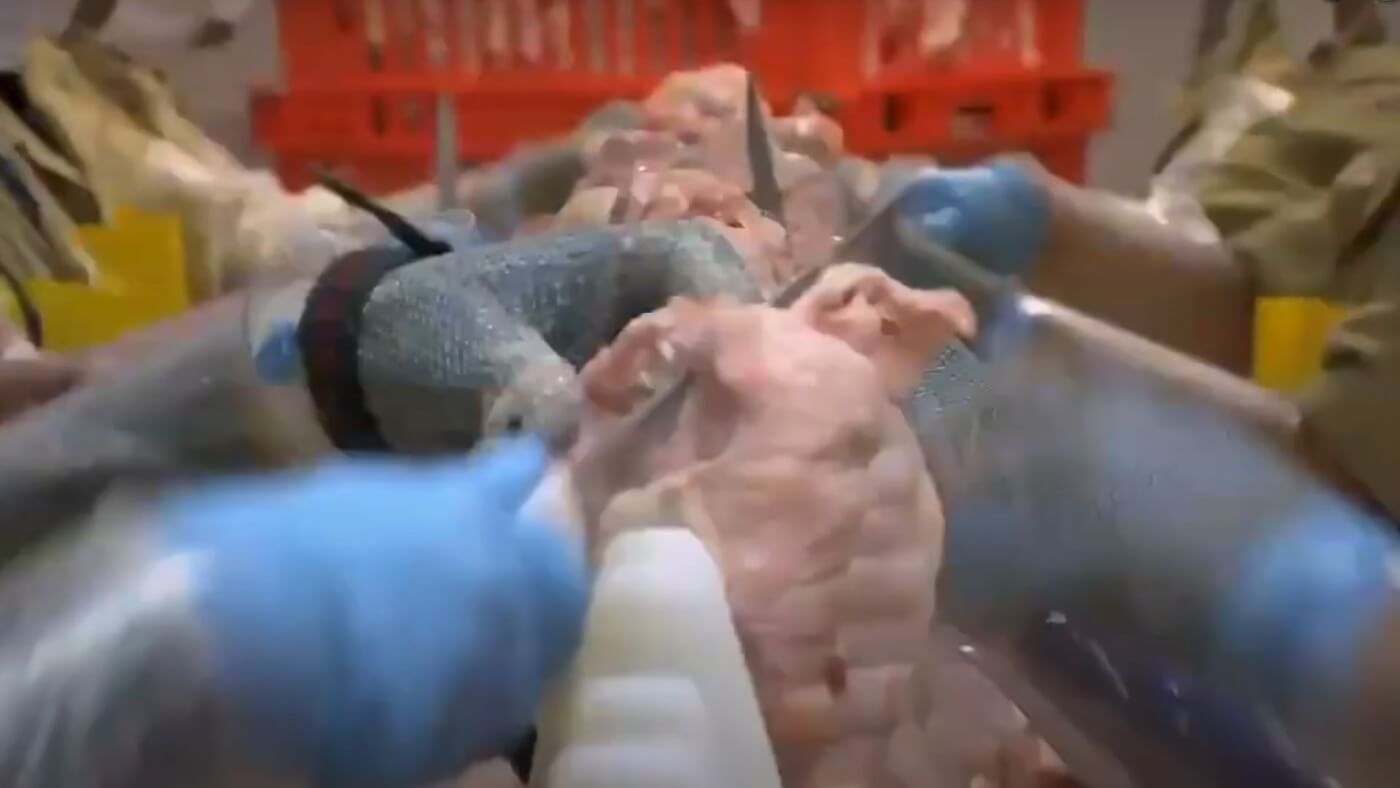
chickens' bodies being chopped up in a factory by workers' blue-gloved hands holding knives

In the time it takes to look up “chicken” online, factory workers kill and cut up countless chickens for food. The search results will remain the same until we take a closer look.

Don’t Google ‘Chicken’—Instead, Search Your Heart for Compassion

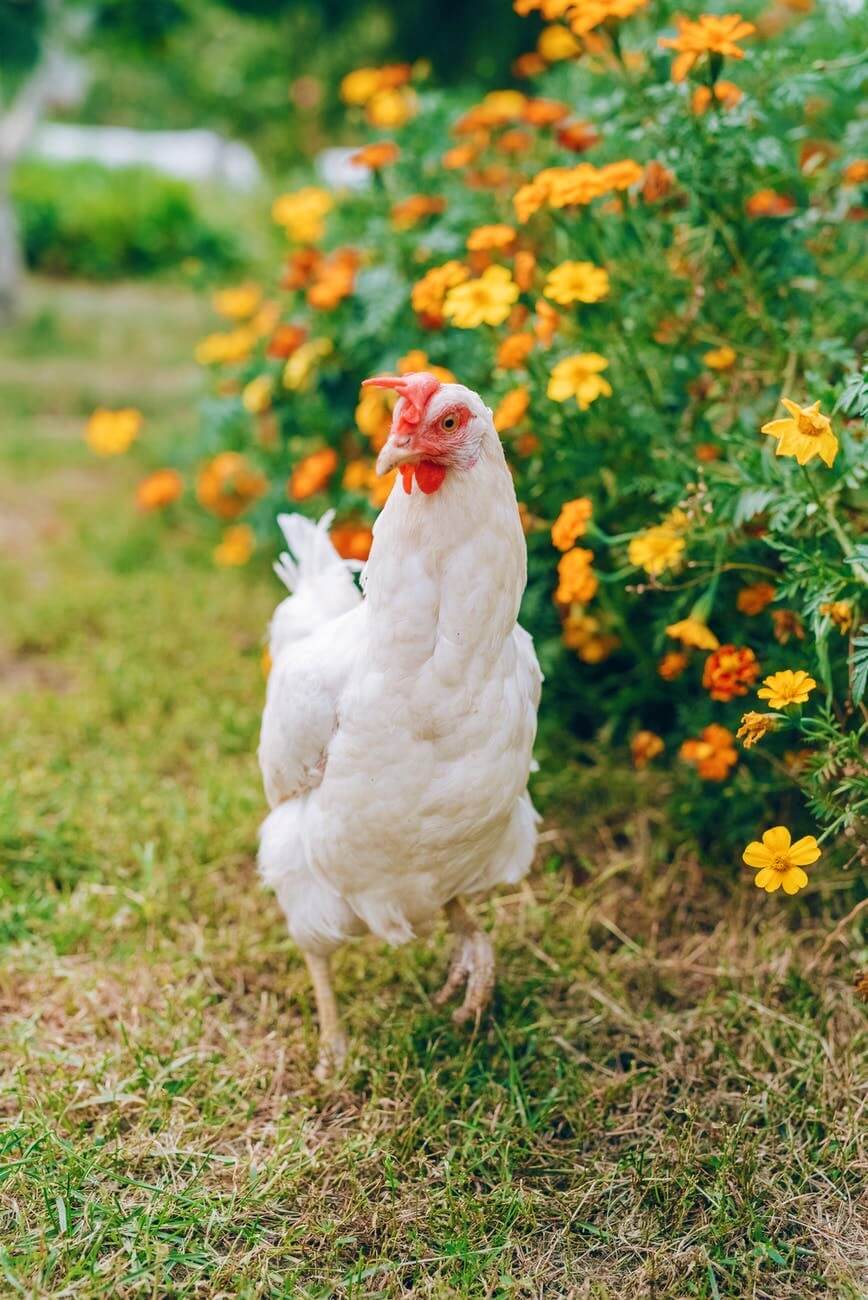
Chickens are fascinating individuals who are intelligent and inquisitive. Like all animals, they value their lives. They are highly social and caring birds, looking out for their families and for other chickens in their group. They like to spend their days together, scratching for food, taking dust baths, roosting in trees, and lying in the sun.

white chicken with flowers

Chickens also have highly developed communication skills. They use dozens of types of vocalizations to distinguish between threats approaching by land as opposed to those approaching by water. A mother hen begins to teach these calls to her chicks before they hatch. She clucks softly to them while sitting on the eggs, and they chirp back to her and to each other from inside their shells.

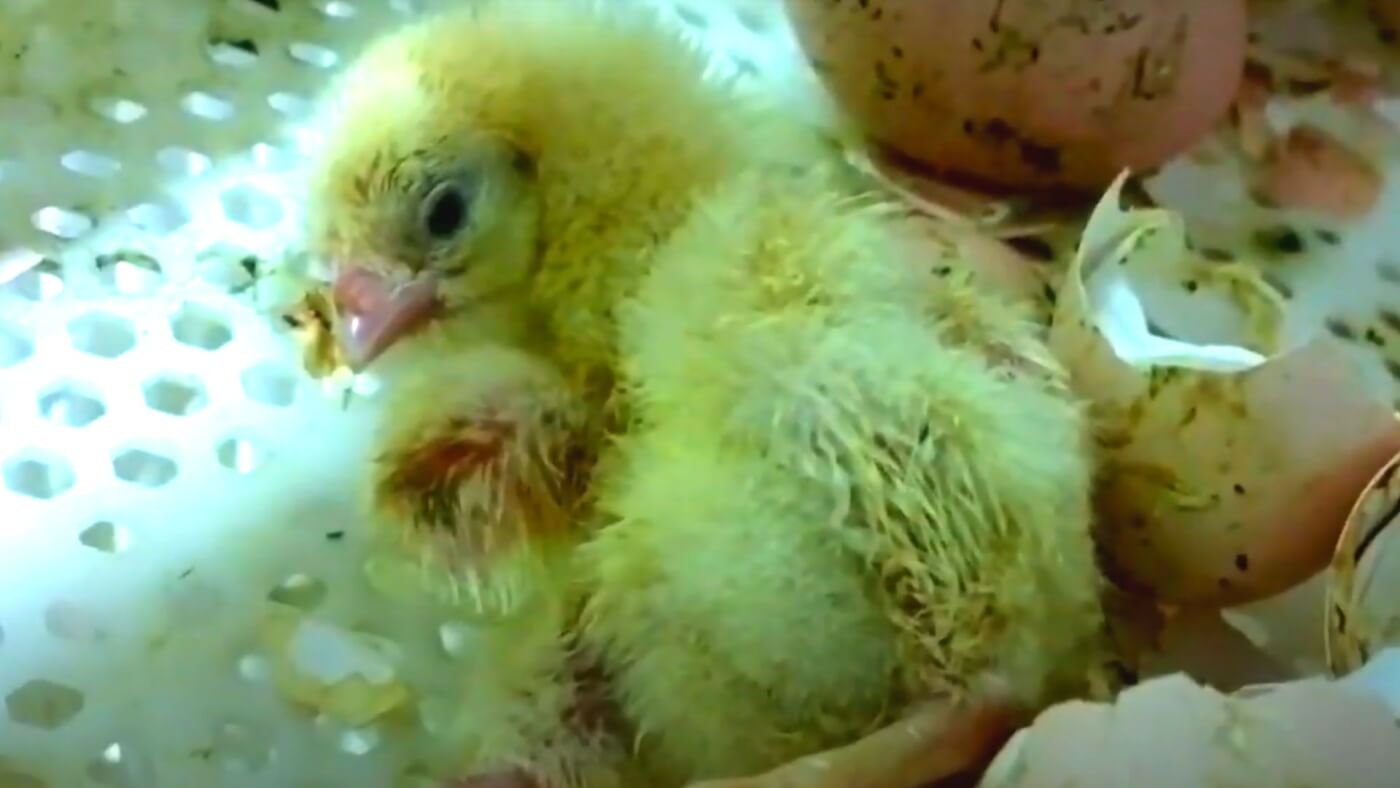
Google "chicken" and you mostly find results about or images of the bird being used for food like this baby chick treated like a waste product in a crate next to broken eggshells

Choose to Be Kind to Chickens by Going Vegan

Perhaps someday, smart devices will reveal the full horror of what happens to animals used for food. Until then, have compassion for chickens—and all animals—as individuals, and never view them as a meal.

The video concludes by asking viewers to “see the individual” and “go vegan.” For chickens, the environment, and your health, learn how simple going vegan is and choose kindness:

The post No Mere ‘Fowl Play’ on the Internet: Video on the Putrid Search Results for ‘Chicken’ appeared first on PETA.