PETA to Met Gala Co-Chairs: Feathers as Cruel as Fur

Ahead of the 2023 Met Gala on May 1, PETA sent a letter today to co-chairs of this year’s event—Anna Wintour, longtime furriers’ darling; fur foe Dua Lipa; Roger Federer, who created a vegan sneaker; Penélope Cruz, who appeared in a beautiful PETA anti-fur ad in 2018; and vegan actor Michaela Coel—urging them to instruct designers to steer clear of fur, exotic skins, and especially feathers, as they’ve been prominently featured recently on runways and red carpets. PETA’s investigation into the feather industry, including ostrich farming and killing, has caused many major retailers to shy away from it.

“It’s past time for designers to get more creative—it’s what fashion is supposed to be all about—to be more innovative, and to stop relying on birds and other animals who suffer terribly for their designs,” says PETA President Ingrid Newkirk. “PETA is hopeful that the Met Gala sponsors will show compassion to all animals by asking designers to stick to fabulous featherless materials, faux fur, and simulated skins.”

This year’s Met Gala is a tribute to Karl Lagerfeld, and although he was criticized for years for using animals, his brand banned fur in 2019 and exotic skins, like those of lizards and snakes, in 2020.

PETA—whose motto reads, in part, that “animals are not ours to wear”—opposes speciesism, a human-supremacist worldview. For more information, please visit PETA.org, listen to The PETA Podcast, or follow the group on Twitter, Facebook, or Instagram.

PETA’s letter to the Met Gala co-chairs follows.

April 11, 2023

Dear Ms. Wintour, Ms. Lipa, Ms. Cruz, Ms. Coel, and Mr. Federer,

I’m writing on behalf of People for the Ethical Treatment of Animals (PETA) to request that you advise people not to wear fur, feathers, or exotic-animal skins while attending The Costume Institute Benefit this year. Obviously, the high-profile people in the spotlight at this wonderful event wield enormous influence on the viewing public, so we’re asking that you implement a policy to permit designers only to use vegan feathers, faux fur, and simulated skins, for the good of both animals and the environment.

We’re particularly concerned about feathers. Video footage from an investigation into the largest ostrich-slaughter companies in the world shows that workers forcibly restrain curious young ostriches, electrically stun them, and then cut their throats. Moments later, the feathers are torn from the birds’ still-warm bodies before they’re skinned and dismembered. Other birds fare no better—pheasants, turkeys, peacocks, ducks, and other birds all endure miserable lives on factory farms and painful deaths, simply so that their feathers can be used for fashion. The feathers of some are torn out while they’re still conscious. The influence of just one celebrity who wears feathers on the famed Met Gala red carpet could lead to immense suffering for thousands of birds—and, of course, in the cases of fur and exotic skins, enormous cruelty to other animals is involved in the procurement. In addition to causing suffering and death, the production of animal-derived materials requires toxic chemicals and contributes to climate change, land devastation, and water contamination on a far, far greater scale than the production of vegan materials.

We’re aware that the evening is intended to honor Karl Lagerfeld. Although he previously used animals in his designs, his brand banned fur in 2019 and, the following year, banned exotic skins. We hope you will honor this progress in your directives to designers who are dressing their clients for this event. We would be very grateful, and you would be doing something that helps both animals and the environment.

Very truly yours,

Ingrid Newkirk

PETA President

The post PETA to Met Gala Co-Chairs: Feathers as Cruel as Fur appeared first on PETA.
This Is Why Cornelius Must Be Moved to a Reputable Sanctuary—Before It’s Too Late

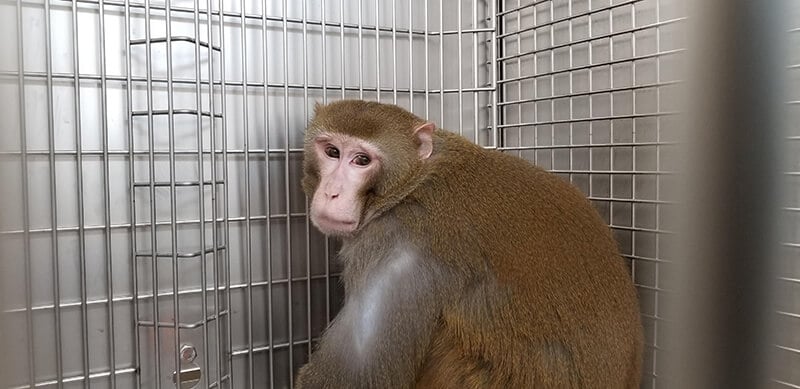
PETA is urging the Dane County, Wisconsin, district attorney to consider how the latest raft of violations of federal animal welfare guidelines at the University of Wisconsin’s Wisconsin National Primate Research Center (WNPRC) underscore the dire need to issue criminal charges and conclude the court case filed on behalf of Cornelius, a macaque who for years was held in solitary confinement there, in apparent violation of the state’s cruelty-to-animals laws.

Photo of cornelius at the primate center

PETA began asking the district attorney to prosecute the crimes against animals in the laboratory in May 2021, after our undercover investigation into the facility revealed the appalling condition of monkeys imprisoned there. In June 2022, after a year of no meaningful action by the district attorney, PETA petitioned the court to appoint a special prosecutor to step in. The court has given the district attorney until May 12, an additional five weeks, to provide an update. But now that reports obtained from the National Institutes of Health (NIH) show ongoing neglect and abuse of animals held at the WNPRC, it’s imperative that he act to bring a small measure of justice for Cornelius.

PETA is also filing a complaint with the U.S. Department of Agriculture (USDA), requesting swift punitive action against the university for the latest laundry list of violations found in NIH reports.

Among other violations at the WNPRC, the reports reveal the following:

  • Over a five-year period, 35 baby rhesus macaques didn’t receive adequate pain relief after undergoing cerebrospinal fluid collections.
  • One animal caretaker administered a blood sugar treatment and a liver function support treatment to the wrong monkey. Along with misidentifying the animal’s ID number, the caretaker also failed to write the entire animal ID number on the treatments—allowing the error to continue for a full week.
  • Laboratory personnel performed 29 blood collections each on three macaques, even though the protocol was only approved for 20 blood collections per animal.
  • Workers allowed incompatible monkeys to access each other, and their stressful, unnatural setting led them to scratch and bite each other. An adult macaque as well as two juveniles sustained injuries that required veterinary intervention, including fluid therapy and the administration of antibiotics and anti-inflammatory medication.

You Won’t Believe the Misery Cornelius Has Endured at the WNPRC

Cornelius, who was born at the WNPRC in 2010, was separated from his mother as an infant. Experimenters infected him with the dengue virus when he was 4 years old. As a baby, he suffered from full-body rashes. As a juvenile, he was plagued with persistent diarrhea, a common sign of stress in caged monkeys. For years, he was warehoused in solitary confinement, adding psychological suffering to the physical torment inflicted on him by the WNPRC.

Here’s What You Can Do to Help Cornelius

State and federal officials must not stand by and allow the WNPRC to continue to evade the law. Cornelius must be moved to a reputable sanctuary before it’s too late. There, he could live the rest of his days free of loneliness, dread, and despair.

Take Action Now!

The post This Is Why Cornelius Must Be Moved to a Reputable Sanctuary—Before It’s Too Late appeared first on PETA.

Viral Story of Slaughtered Goat Reveals How 4-H Seeks to Desensitize Kids to Violence

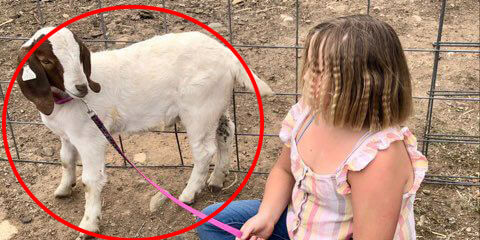
This little goat went to slaughter, traumatizing the girl who had cared for him. The viral story of Cedar the goat, whose killing sparked a nationwide uproar, is showing people that 4-H and other youth agricultural programs promote speciesism and desensitize young people to violence. Most animals used as “projects” in these archaic programs end up on a trip to the slaughterhouse. The “lucky” ones spend the rest of their lives as breeding machines.

image of little girl with cedar the goat, who was slaughtered for a 4H program

Young people who are interested in our fellow animals may gravitate toward programs like the National FFA Organization or 4-H. But these programs view animals as commodities, not as individuals with needs and desires of their own. Young people quickly learn that the cow, pig, sheep, or goat they take on will be either a “market” animal or a “breeding” animal. Cows fated to become meat are judged according to their “yield of the carcass.” Those destined to spend their lives producing milk are judged on their potential for “heavy production and a long period of usefulness.” The rabbit with a “well fleshed rump” will end up on a dinner plate.

4-H participants spend countless hours tending to their charges as best they can, learning everything about their personalities, quirks, likes, and dislikes. But at the end of the season, they must watch the animals they’ve bonded with and nurtured be sold off to the highest bidder.

Kids and teens are given the dangerous message that sending their animal friends off to endure a violent, terrifying death at the slaughterhouse is normal and routine. The disconnect is chilling. As one former 4-H member blithely put it, “I can honestly say I looked at it as … an opportunity to make some money. … The rewards are greater than the heartache.”

Learning kindness is crucial to the health and well-being of future generations.

Our natural affinity and respect for other animals should never be snuffed out to make room for a cold, uncaring attitude that would allow young people to abandon intelligent, social animals to be slaughtered.

As psychologist Dr. Aubrey H. Fine puts it, “Early life experiences seeing animals being treated fairly seems to have a positive impact [on] children and helps them in developing their moral character.”

It’s unfair both to animals and to young people when their trust is betrayed. Animals go from a familiar environment one day to a frightening and confusing experience the next, which only ends when a worker slits their throat. And young people who were tending to their animals’ needs and snuggling with them in the hay between showings watch as their beloved friends are taken away, never to be seen again.

But not all 4-H participants are cavalier about this grim outcome. When one 8-year-old sold her first “market” calf, she lamented, “His name was Justin, and he was my best friend. We went to the fair and I got a blue ribbon. When the reality of the fact that he had to go to market hit, it was awful.”

How to respect animals for who they are, instead of how humans can profit from them, is a lesson worth learning.

What You Can Do to Honor Cedar and Countless Other Animals

Did you know that you could save nearly 200 animals per year just by going vegan? That’s right—being vegan saves lives.

Getting started is easy! PETA’s vegan starter kit has everything from recipes and tips on eating out to health information:

The post Viral Story of Slaughtered Goat Reveals How 4-H Seeks to Desensitize Kids to Violence appeared first on PETA.

Join Us on April 27 to Learn About Our Plan to Save Donkeys

Join Us on April 27 to Learn About Our Plan to Save Donkeys

What’s Our Plan to Save Donkeys? Find Out on April 27

Find Out Our Plan to Save Donkeys on April 27

Want to Help Donkeys Like Them? Join Us on April 27 to Find Out How

How Are We Saving Donkeys? Join Us on April 27 to Find Out

Meet just a few of the donkeys we’re helping in this free virtual event. Sign up now to save your spot!

You won’t believe all the ways we’re helping donkeys—but you can see the work in action at this free virtual event. Sign up today!

The post Join Us on April 27 to Learn About Our Plan to Save Donkeys appeared first on PETA.

Pig’s Throat Cut and Other Rogue Experiments at the University of Michigan: PETA Statement

Please see the following statement from PETA Senior Vice President Kathy Guillermo regarding just released federal documents that revealing four new serious animal welfare violations at the University of Michigan:

The animal experimentation oversight committee at the University of Michigan (U-M) should be fired and the animal laboratories closed. Rogue experimenters who cut into a pig’s throat without approval, used expired anesthetics, and denied injured animals veterinary care reveal a broken system that should be dismantled. U-M raked in more than $644 million in public funds last year, but it can’t even abide by the most basic animal protection laws. Between 2018 and 2022, university staff killed nearly 12,000 animals in 18 separate violations of federal animal welfare guidelines. U-M officials should act immediately to modernize the university’s research program and implement the more effective animal-free methods outlined in PETA scientists’ Research Modernization Deal.

For more information on PETA’s investigative newsgathering and reporting, please visit PETA.org, listen to The PETA Podcast, or follow the group on Twitter, Facebook, or Instagram.

The post Pig’s Throat Cut and Other Rogue Experiments at the University of Michigan: PETA Statement appeared first on PETA.