The Shareholder Question Churchill Downs Refused to Answer

PETA, which owns shares in Churchill Downs Inc., submitted a question in advance of this morning’s annual shareholder meeting. Please see the following statement from PETA Senior Vice President Kathy Guillermo about the board’s failure to acknowledge or respond to the question:

Churchill Downs Inc.’s board and CEO, William Carstanjen, failed to address PETA’s shareholder question regarding the mutilation of horses and the company’s tacit support for it. Churchill Downs doesn’t permit the severing of Thoroughbreds’ tailbones, so the company should not allow the appearance on its properties of Budweiser Clydesdales, whose tails have been severed at the lower spine.

PETA’s Shareholder Question to Churchill Downs Inc.

Increasing public attention on horse injury and death in the last decade has put racing’s social license to operate in jeopardy and, as a result, some in the racing industry have taken significant steps to protect horses. Our company is now in a position to extend that consideration to horses beyond our own stalls and to send a clear message to those who abuse these magnificent animals. Anheuser-Busch cruelly amputates the tailbones of the Budweiser Clydesdales, who have filmed a commercial at Churchill Downs and have appeared at Turfway Park, just for cosmetic reasons. Severing horses’ tailbones for cosmetic reasons is painful and is condemned by both the American Veterinary Medical Association and the American Association of Equine Practitioners. It affects the horses’ ability to defend themselves against insects and impairs their balance. Thoroughbreds would never be subjected to this atrocity. Will Churchill Downs Inc. stand against this abuse of horses by prohibiting appearances by the Budweiser Clydesdales at Churchill Downs Incorporated properties until Anheuser-Busch ends this practice? Thank you.

PETA—whose motto reads, in part, that “animals are not ours to use for entertainment or abuse in any other way”—opposes speciesism, a human-supremacist worldview. For more information, please visit PETA.org or follow the group on Twitter, Facebook, or Instagram.

The post The Shareholder Question Churchill Downs Refused to Answer appeared first on PETA.
After Deadly Fire at Colorado Gators Wildlife Park, PETA Demands Shutdown

Today, after learning that hundreds of animals, including tortoises, snakes, lizards, parrots, and cats, died in a recent fire at Colorado Gators Wildlife Park, PETA fired off a letter to Colorado Parks and Wildlife (CPW), urging the agency to investigate the park and revoke its permit as appropriate to prevent it from reopening. PETA points out that the closure would protect the public, stop the park from acquiring more animals, and protect those remaining—including two Nile crocodiles, a species classified as threatened under the Endangered Species Act, who are believed to have survived the inferno.

In its letter, PETA notes that tragedies are a repeat occurrence at the park and have included the deaths of 12 alligators who developed pneumonia after a hot-water pipe malfunctioned and went unnoticed for days. One report prepared by reptile experts who visited the site documents that animals were suffering from wounds, infections, and poor living conditions, such as splintering cages and a leaking roof.

Despite the report—to which PETA alerted the CPW in 2021—and repeated calls for the agency to investigate the park, no public records document that it has done so.

“These animals must have been in agony as they were engulfed by flames with no means of escape, and it’s up to officials to prevent another crisis at Colorado Gators Wildlife Park,” says PETA Foundation General Counsel Lori Kettler. “PETA is calling on CPW to do its job and stop blindly approving the license year after year for this deathtrap of a roadside zoo.”

PETA—whose motto reads, in part, that “animals are not ours to use for entertainment”—opposes speciesism, a human-supremacist worldview. For more information on PETA’s investigative newsgathering and reporting, please visit PETA.org, listen to The PETA Podcast, or follow the group on Twitter, Facebook, or Instagram.

The post After Deadly Fire at Colorado Gators Wildlife Park, PETA Demands Shutdown appeared first on PETA.

Victory! West Hollywood City Council Unanimously Votes to Ban Glue Traps

PETA’s celebrating big news for small animals: After months of communication with us and local animal defenders, West Hollywood City Council voted unanimously on April 17 to ban the use and sale of all glue traps. That makes West Hollywood the first city in the U.S. to pass a full citywide ban on these vile devices.

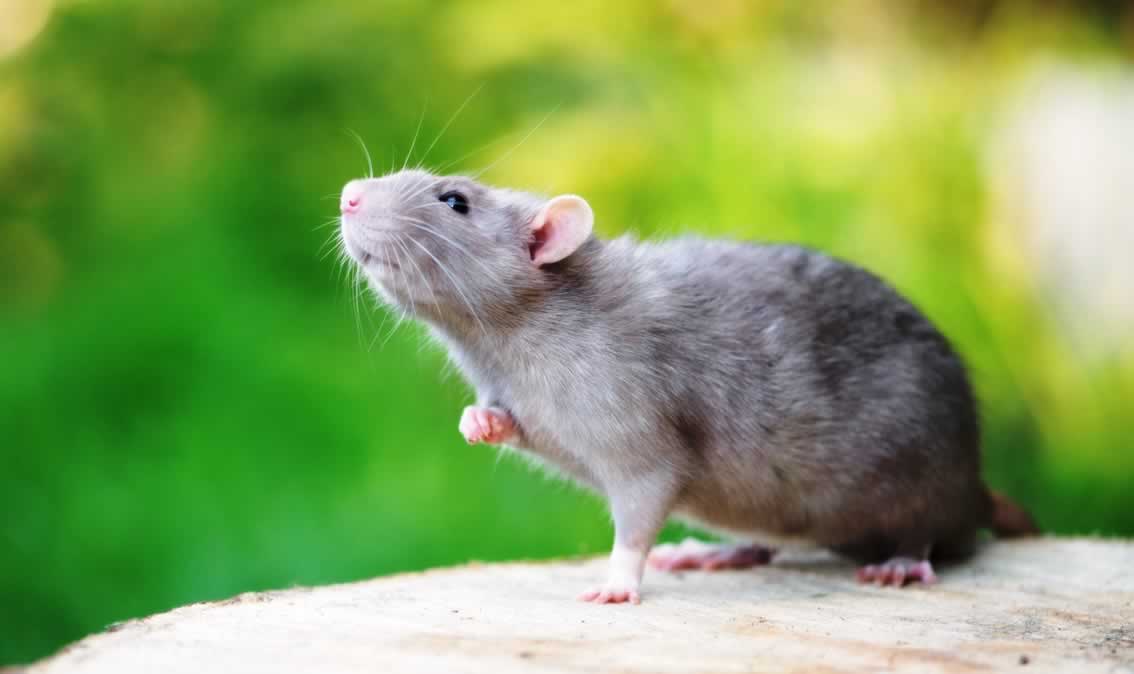
Cute gray domestic rat poses outside© iStock.com/Alona-Rjabceva

Glue Traps Are Hell for All Animals

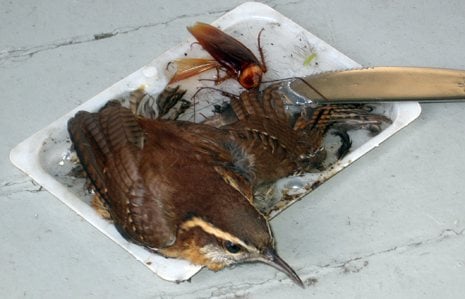
Glue traps—trays coated with a sticky adhesive that ensnare small animals—only make the world worse for everyone. Wildlife, including birds, snakes, mice, rats, and squirrels, who get stuck in the glue struggle desperately to escape, sometimes chewing off their own limbs before succumbing to shock, dehydration, asphyxiation, or blood loss. As long as food remains accessible, more animals will move in to take the place of those who have been killed. For situations in which a trap may be needed, humane and effective live traps are available at low cost.

Glue traps are indiscriminate, killing any animal who happens upon them.

The U.S. Centers for Disease Control and Prevention has warned the public not to use glue traps because they increase people’s exposure to disease. Animals stuck in the glue continue to produce urine and feces, through which pathogens, including hantavirus, salmonella, and the bacteria that cause leptospirosis, are transmitted.

West Hollywood Leads the Way, but the U.S. Is Still Stuck on Glue Traps

Glue traps have no place in the world: We’re hoping the city council’s decision in West Hollywood helps make that message stick. The city joined hundreds of companies and entities, along with England, Germany, Iceland, Ireland, the Netherlands, and Norwayplus two Australian states and nine Indian states, which have all banned glue traps.

With your help, we’re confident that we can end sales of glue traps altogether. Please take a moment of your time to defend all the small animals who are painfully mutilated and killed by glue traps.


The post Victory! West Hollywood City Council Unanimously Votes to Ban Glue Traps appeared first on PETA.

PETA to Browns: Let a ‘Pound Dog’ Represent the Dawg Pound

In response to the Cleveland Browns’ request for fan submissions for a new dog logo, PETA is sending a letter today to team owner Jimmy Haslam urging him to choose a brown mixed-breed dog from an animal shelter for the design. The group notes that bullmastiffs, such as the current team mascot, Swagger Jr., are a breathing-impaired breed prone to heart murmurs, hip dysplasia, and other painful conditions and that promoting this breed through the logo would contribute to the homeless-dog crisis by encouraging fans to increase the demand to breed more of them while dogs in shelters lose the opportunity to be adopted into a loving home. Featuring a homeless dog could instead inspire fans to save a life by finding their next animal companion at a shelter.

“The Dawg Pound has had a rough time of it, but the 70 million animals who are homeless in the U.S. right now face far worse,” says PETA President Ingrid Newkirk. “PETA is calling on Jimmy Haslam to score a win for these dogs by promoting adoption and making a dog from a shelter the new face of the franchise.”

PETA—whose motto reads, in part, that “animals are not ours to abuse in any way” and which opposes speciesism, a human-supremacist worldview—notes that there are tens of millions more homeless dogs than available homes and that as a result, countless dogs die on the streets every year after they are hit by cars or succumb to starvation, the elements, disease, injury, or human cruelty. For more information, please visit PETA.org, listen to The PETA Podcast, or follow the group on Twitter, Facebook, or Instagram.

PETA’s letter to Haslam follows.

Jimmy Haslam

Owner

Cleveland Browns

Dear Mr. Haslam:

Greetings! I’m writing on behalf of People for the Ethical Treatment of Animals—PETA entities have more than 9 million members and supporters globally, including many thousands in Ohio—after hearing the news that you’re seeking fan submissions for a new dog logo and that fans have recently voted the mastiff as the “Browns Dawg.” Please help homeless dogs score a home by choosing an adopted mixed-breed dog as the team’s logo.

By choosing a “purebred” dog, you’d be encouraging Browns’ fans to buy bullmastiffs, contributing to the homeless dog overpopulation crisis. Animal shelters across the country are overflowing with healthy, friendly dogs of all shapes, sizes, breeds, and colors—including brown—who desperately need loving homes. Because there are tens of millions more dogs than there are homes for them, countless homeless dogs die on the streets every year after they have been hit by cars or succumb to starvation, the elements, disease, injury, or human cruelty.

Breeding dogs for certain features can also cause genetic defects, especially in breathing-impaired breeds. Bullmastiffs, such as Swagger Jr., your live mascot, are prone to genetic conditions like heart murmurs, entropion, and hip dysplasia.

Today’s conscientious choice means promoting adoption at the actual “dawg pound,” and we hope you’ll be a true winner for dogs by choosing a logo of an adopted mixed-breed brown dog. We just checked, and there are at least 50 brown dogs available for adoption at local shelters throughout the city, from whom fans could draw inspiration. Thank you for your time and consideration—I look forward to hearing from you. Best of luck this season!

Very truly yours,

Ingrid Newkirk

President

The post PETA to Browns: Let a ‘Pound Dog’ Represent the Dawg Pound appeared first on PETA.

PETA Earth Day Gift to Starbucks CEO Is a Gas

New Starbucks CEO Laxman Narasimhan will get a cheeky gift from PETA in honor of Earth Day: a “cow fart” in a jar. The mock Starbucks Frappuccino bottle contains a foul-smelling spray that draws attention to the devastating climate impact of methane—a greenhouse gas generated by cows on dairy farms—and will remind Narasimhan that Starbucks’ upcharge for vegan milks stinks. PETA points out that although Starbucks pledged to cut its carbon footprint in half by 2030, it still punishes its customers for choosing climate-friendly, animal-friendly, healthier nondairy milks.

“Cow farts and belches might not be silent, but they are deadly—methane has 80 times the warming power of carbon dioxide,” says PETA Executive Vice President Tracy Reiman. “PETA urges Narasimhan to stop milking his customers and harming animals and the planet.”

By incentivizing customers to choose dairy milk, Starbucks perpetuates immense cruelty to cows, whose beloved calves are torn away from them so that the milk meant to nourish their babies can be used by humans. Once the cows’ bodies wear out after repeated pregnancies, they’re sent to slaughter.

PETA—whose motto reads, in part, that “animals are not ours to abuse in any way”—opposes speciesism, a human-supremacist worldview. For more information, please visit PETA.org, listen to The PETA Podcast, or follow the group on Twitter, Facebook, or Instagram.

PETA’s letter to Narasimhan follows.

April 21, 2023

Laxman Narasimhan, CEO

Starbucks

2401 Utah Ave. S

Suite 800

Seattle, WA 98134

Dear Mr. Narasimhan:

In advance of Earth Day, I’m writing on behalf of People for the Ethical Treatment of Animals (PETA) and enclosing a cow fart in a jar, in the hope that unlike your predecessors, you are not full of hot air. We don’t mean to be rude, but I think you’ll agree this is an apt reminder of the stinky problem Starbucks has and an appeal to you to drop the extra fee on vegan milks.

During Starbucks’ last shareholder meeting, you stated, “At our best, we give to the Earth more than we take”—but regrettably, Starbucks is not currently at its best. Far from it! When Starbucks pledged to reduce its carbon footprint by 50% and recognized that cow’s milk is the largest contributor to it, we hoped the company would take great strides to encourage consumers to choose nondairy options. However, your company continues to disregard your own message and pimp the public, charging as much as 90 cents extra for eco-friendly vegan milk—and that surcharge stinks.

Cow farts and burps may not be silent, but they are deadly. Dairy factory farms that Starbucks supports produce massive amounts of methane gas, which is 80 times more potent in warming the atmosphere than carbon dioxide. Cow emissions are the primary source of this harmful gas, which exacerbates the climate catastrophe we’re all facing. Any milk from plants is far better for the planet, so Starbucks should, at a minimum, offer nondairy milk at no extra charge to get closer to achieving its environmental goals.

It’s also past time for Starbucks to help lactose intolerant folks (most of whom are people of color) and all customers who avoid dairy for ethical or religious reasons. The chain’s locations in other countries have rejected the surcharge, including recently in Germany, and it’s time for Starbucks here in the U.S. to follow suit. As the new CEO, you have the power to make a significant impact and ensure that your legacy really matters.

Thank you for your consideration. I hope you’ll take this opportunity to make a positive change for animals, the environment, and your customers.

The post PETA Earth Day Gift to Starbucks CEO Is a Gas appeared first on PETA.