‘Blackfish’ Made a Splash When It Debuted 10 Years Ago—What’s Changed Since Then?

Ten years ago today, the debut of a documentary film made a big splash and ushered in a sea change for animals used for human entertainment. The way people felt about keeping orcas in tiny tanks at SeaWorld and other marine parks shifted dramatically after Magnolia Pictures and CNN Films released the critically acclaimed Blackfish in the U.S. on July 19, 2013.

Do you want to learn more about this groundbreaking film? Watch the trailer now:

Director Gabriela Cowperthwaite’s documentary centers on a captive orca named Tilikum, who was torn away from his family and ocean home at the age of 2. He spent more than 30 years in captivity, most of it at SeaWorld. His anguish and frustration—caused by years of intense confinement and lack of emotional and intellectual stimulation—led him to kill three humans.

Cowperthwaite pieced together Tilikum’s story with shocking film footage, expert testimony, and heartbreaking interviews with the people who knew this orca better than anyone, his former trainers. By telling Tilikum’s tragic tale, Blackfish inspired countless viewers never to visit marine parks again.

Since Blackfish’s release, what has happened to orcas at SeaWorld?

Seven orcas have died at SeaWorld parks since 2013. Unna, Kasatka, Kyara, Kayla, Amaya, Nakai, and Tilikum all died in the abusement park’s small tanks. Orcas Skyla and Kohana—whom SeaWorld shipped to Loro Parque in Spain along with Tekoa and Keto, who killed Loro Parque trainer Alexis Martínez while a senior SeaWorld trainer supervised a session—have also died since the film’s release.

Eighteen orcas still suffer at SeaWorld parks, including Corky. Humans captured her from her natural home in 1969, and she has spent more time in captivity than any other orca alive today.
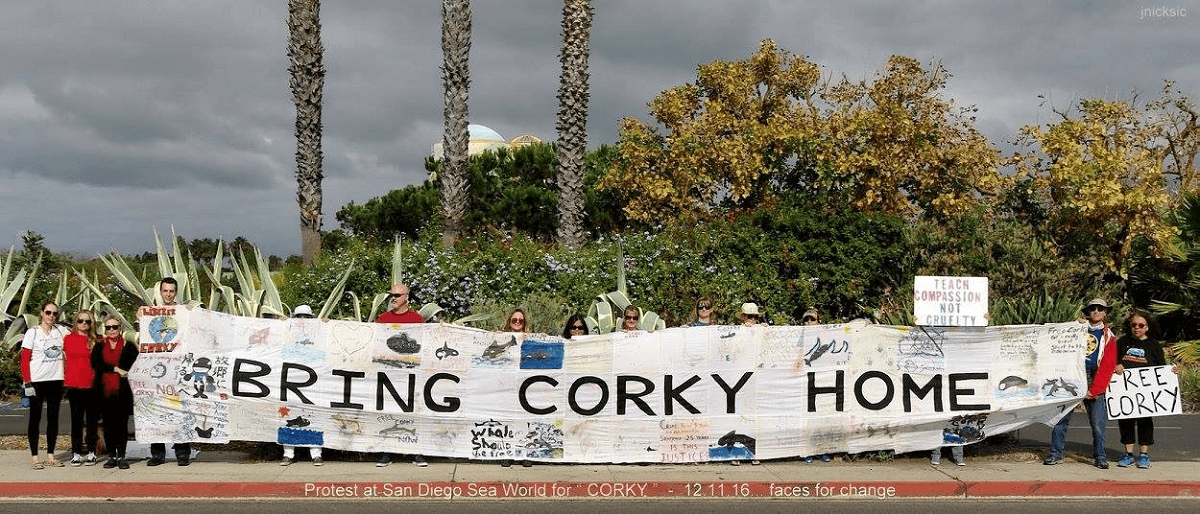
Corky 47th year anniversary demoPhoto Credit: JNicksic

In 2016, because of PETA’s campaigns and mounting criticism of SeaWorld from the public, the company ended its sordid orca-breeding program. However, it still uses other dolphins and whales as breeding machines to create generations of suffering animals in order to fill the park’s tanks.

In 2023, SeaWorld opened a park in Abu Dhabi. While no orcas are at this facility, over 100,000 other marine animals are imprisoned there, including dolphins the company secretly shipped from parks in the U.S.

What happened to SeaWorld because of Blackfish?

SeaWorld faced more than half a dozen lawsuits from shareholders, including a securities class-action lawsuit alleging that it had misled investors about the impact of Blackfish and the unethical treatment of the orcas at its parks. The company agreed to a $65 million settlement of the lawsuit, and the company and its former CEO separately paid $5 million to settle fraud charges brought by the U.S. Securities and Exchange Commission for misleading investors about how the documentary was hurting the company.

Since the film debuted, SeaWorld has cycled through four CEOs and eliminated more than 3,300 positions.

In 2020, following pressure from PETA, SeaWorld ended the practice of “dolphin surfing” during shows, in which trainers would stand on dolphins’ faces and ride on their backs.

Numerous companies—including Tripadvisor, Airbnb, and JetBlue Airways—cut ties with SeaWorld after acknowledging that keeping highly intelligent, emotionally complex animals in concrete tanks is cruel.

Musicians including Willie Nelson, Pat Benatar, and the groups Heart and the Beach Boys canceled performances at SeaWorld-owned parks following the release of the documentary.

In the 10 years since Blackfish premiered, many celebrities have joined PETA in urging people to shun SeaWorld. They include the following:

  • Pamela Anderson
  • Eric Balfour
  • Miguel Bernardeau
  • Jessica Biel
  • Jason Biggs
  • Colbie Caillat
  • Holly Marie Combs
  • Noah Cyrus
  • Kate del Castillo
  • Eva Gutowski
  • Joanna Krupa
  • Tommy Lee
  • Dulce María
  • Marisa Miller
  • Kathy Najimy
  • Behati Prinsloo
  • Rainey Qualley
  • Cassie Randolph
  • Krysten Ritter
  • Kelly Slater
  • Bella Thorne
  • Christopher von Uckermann
  • and the cast of Vanderpump Rules

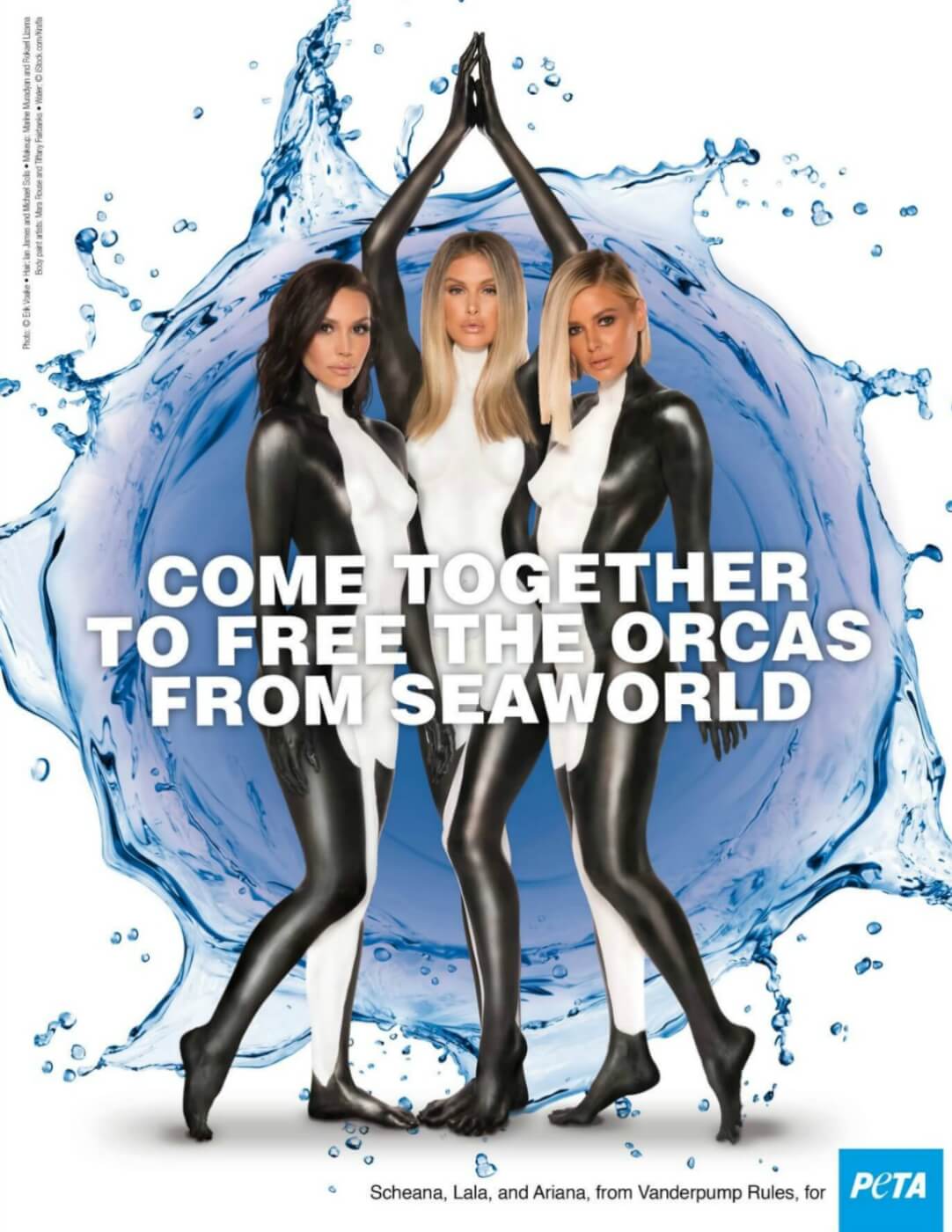
Lala Kent, Scheana Shay, and Ariana Madix appear as body painted orcas

Ripple Effects: How the World Changed Outside of SeaWorld After Blackfish

In 2016, the state of California passed the Orca Protection Act, which banned captive orca breeding and bringing any new orcas into the state. That same year, the National Aquarium in Baltimore announced that it would send the dolphins there to a seaside sanctuary.

In 2018, the world’s first beluga sanctuary opened in Iceland. Two belugas were moved from a marine park in China to the sanctuary.

In 2019, Canada banned dolphin and whale captivity nationwide.

In 2020, The Whale Sanctuary Project announced a plan to build a sanctuary for rescued orcas and belugas off the coast of Nova Scotia.

In March 2023, the Miami Seaquarium announced plans to move the lone orca Lolita to a seaside sanctuary following decades of pressure from PETA and other orca defenders. This announcement sent a message that it’s high time for SeaWorld to retire the dolphins and whales it imprisons as well.


Watch Blackfish on Amazon Prime Video, Hulu, Magnolia Selects, or other streaming services:

Want to do more to help orcas and other dolphins still held at SeaWorld?

Urge SeaWorld to establish a firm and rapid plan to end its use of animals, stop breeding all dolphins and whales, and relocate them to seaside sanctuaries.

The post ‘Blackfish’ Made a Splash When It Debuted 10 Years Ago—What’s Changed Since Then? appeared first on PETA.

‘Break the Window,’ Says ‘Silicon Valley’ Star: Always Rescue Dogs From Hot Cars

As record-breaking temperatures scorch the country, Silicon Valley fan-favorite Chris Diamantopoulos appears in a new video for PETA urging people to save dogs from suffering in hot cars. In the spot—which will run in Silicon Valley, California, (and elsewhere!) throughout the summer—the star of the new thriller comedy series Mrs. Davis explodes into action to rescue a trapped canine, played by his own animal companion, Zeus, using his emergency window-breaking hammer.

“Parked cars are death traps for dogs,” says Diamantopoulos. “You should always take situations like these seriously and move fast because death can come very, very quickly.”

PETA points out that even when it’s 75 degrees outside, the temperature inside a parked car can soar to 94 degrees in just 10 minutes, and when it’s 90 degrees outside, the temperature inside a parked car can reach 109 degrees in just minutes. As the temperature climbs, dogs endure agonizing physical reactions to the heat: They go into shock, vomit blood, urinate, have diarrhea, and can experience multi-organ failure, cardiopulmonary arrest, fluid buildup in the lungs, muscle tremors, seizures, unconsciousness, and, finally, death. Already this year, 116 dogs have reportedly died from heat-related causes. (The actual figure is likely far higher, as most deaths go unreported.)

Anyone who sees a dog or a child in a parked car should never leave the scene and should take immediate action: Call 911. Then write down the vehicle’s make, model, color, and license plate number, and rush to have nearby stores page the owner. Diamantopoulos adds, “If the authorities are unresponsive or too slow and the dog’s life appears to be in imminent danger, find a witness and take the steps to remove the suffering animal from the car.”

PETA—whose motto reads, in part, that “animals are not ours to abuse in any way”—opposes speciesism, a human-supremacist worldview. For more information on PETA’s investigative newsgathering and reporting, please visit PETA.org, listen to The PETA Podcast, or follow the group on Twitter, Facebook, or Instagram.

The post ‘Break the Window,’ Says ‘Silicon Valley’ Star: Always Rescue Dogs From Hot Cars appeared first on PETA.

PETA Helps Barbie and Ken Get Busy for Animals

When Margot Robbie’s Barbie and Ryan Gosling’s Ken leave Barbieland for the real world in their upcoming movie, they’ll have a lot more to think about than just their own mortal fates. If the pair witness how wickedly humans choose to treat our fellow animals in laboratories, on factory farms, in the clothing business, and in countless other settings, they’ll get the chills.

Far from plastic and fantastic, things that are made of bits and pieces of animals or tested on them come by way of their torment and suffering. Animals are used to make shoes, purses, meals, and even lifestyle accessories chosen to match an outfit, as if they didn’t have any feeling at all.

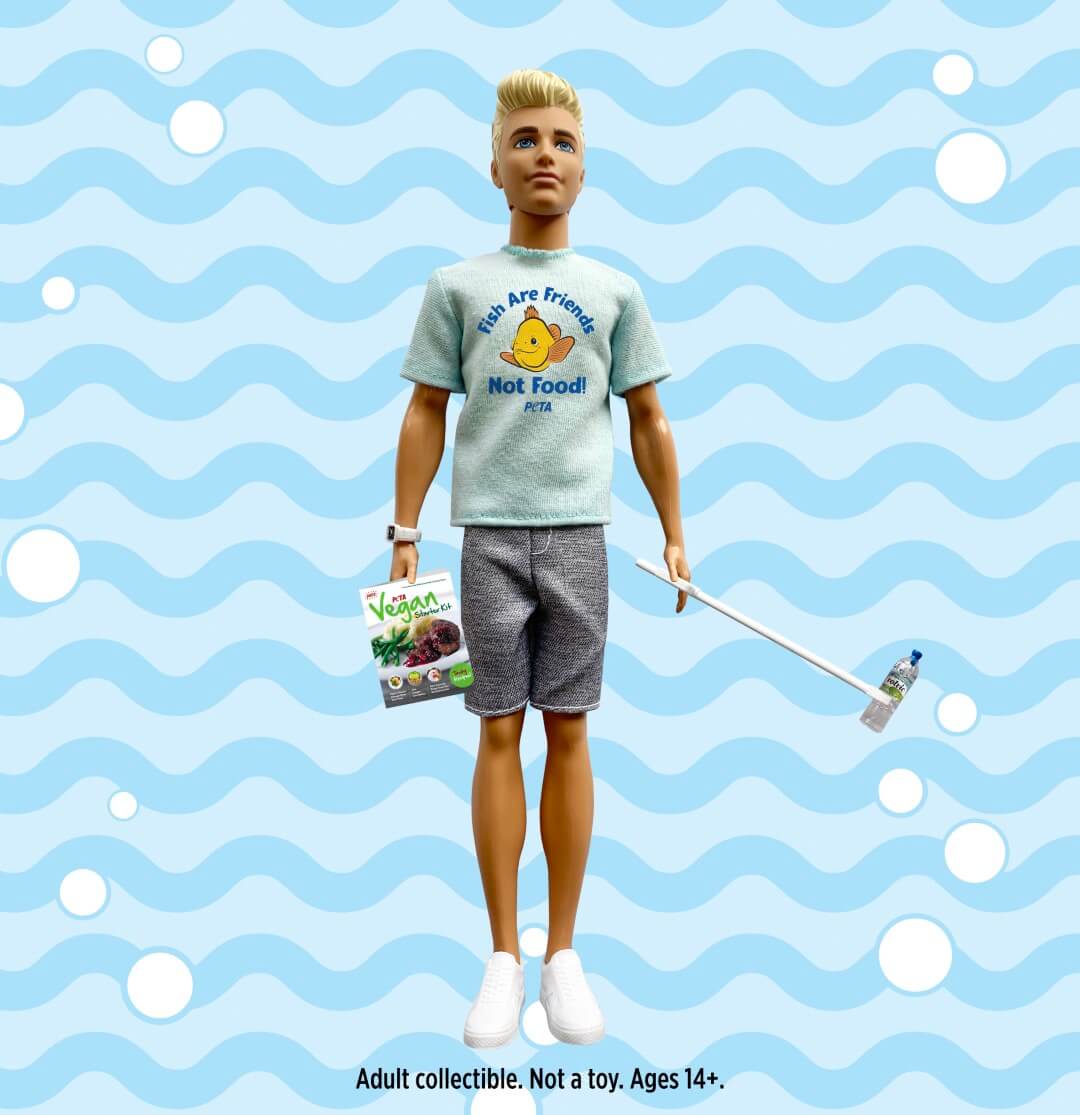
We believe that if Barbie and Ken find out about the work PETA does in their adventure, they’ll be on board as enthusiastic supporters of animal rights. So we’re releasing a trio of unofficial, Barbie-compatible packs so your Barbie and Ken dolls can take part in animal-saving action.

Make Your Barbie Turn Heads as a ‘Lettuce Lady’

Give your Barbies the chance to break the mold with a certified PETA original: our iconic leafy “Lettuce Lady” dress. With a lollipop sign reading, “Go Vegan,” Barbie can live the legacy of our vegan ambassadors who have traveled the globe, including to Cuba and Turkey, to spread awareness of the many benefits of a plant-based lifestyle.

Of course, this kit equips your Barbie with her own miniature vegan starter kit, which she can use to help others turn over a new leaf in life.

Ken Goes Fishing … for Trash

If you’re not content with your doll being “just Ken,” our “trash fishing” kit enables him to pursue a fish-friendly calling. Complete with a “Fish Are Friends, Not Food” tee, a trash grabber, and, of course, some trash to catch, our kit will get Ken all set to clean his local waterways of harmful litter that hurts and kills fish. This kind of fishing sure beats putting holes in fish’s sensitive lips and suffocating them.

Be sure to snag PETA’s human-size Trash Fishing Provisions Kit and photograph yourself doing the good deed with your kitted-out Ken.

Barbie Converts to the Sanctuary Life

“If you’ve already got the facilities, why not use them for good?” That’s the question we’re asking all farm owners, who can change the lives of many animals by opening a sanctuary. Now Barbie can get in on that compassionate action with our new sanctuary accessory kit, which converts existing farm playsets into fully fledged animal sanctuaries, where animals can live in peace and won’t be exploited for human purposes.

The conversion kit includes a shirt with PETA’s classic “Not a Nugget” print and a sign designating the farm as a sanctuary.

Support Animals—in Work and Play

We’re hoping Barbie and Ken run into a PETA demonstration during their adventures—we know they’d take up the cause of animal liberation for life. If you think a career in animal defense is right for you, we’re hiring! Check out PETA’s open positions and bag yourself a career that makes a difference for animals everywhere.


Note: BARBIE and KEN are registered trademarks of Mattel Inc., which is not affiliated or connected with and does not necessarily approve of, endorse, sponsor, or otherwise support PETA or PETA’s unofficial doll accessories.

The post PETA Helps Barbie and Ken Get Busy for Animals appeared first on PETA.

Cruise Ship Passengers Sickened by Sight of Gruesome ‘Grindadráp’ in Faroe Islands

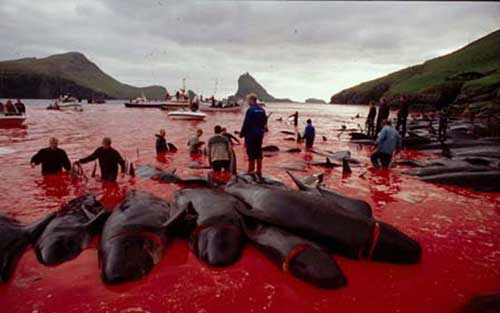
The Faroe Islands, located in the North Atlantic between Scotland and Iceland, are the location of the grindadráp—an annual mass slaughter of pilot whales and white-sided dolphins. Every year, up to 1,000 of these animals are driven into a bay by boats, metal hooks are inserted into their blowholes, and ropes are used to drag them alive to near the shore, where their spinal cords are slashed with a spear or knife. A U.K.-based cruise line recently publicly apologized to passengers aboard one of its ships who bore witness to this bloody event.

cetacean carcasses lay in bloody water during the gruesome “grindadráp” in the Faroe Islands

Because of incidents such as these, the grindadráp is courting negative attention and driving tourists away from the Faroe Islands. If the government there is keen to attract visitors, the gruesome grindadráp must be replaced with an activity that respects dolphins and pilot whales and allows them to live free in their natural home.

And the killings in the Faroe Islands during the grindadráp are just a drop in the bucket.

An estimated 300,000 whales, dolphins, and porpoises die globally each year after being injured by fishing nets or lines.

In the fishing industry, whales are callously referred to as “bycatch”—a speciesist euphemism for animals who are caught or become tangled in fishing nets or other fishing gear and are then discarded and left to die.

Studies show that more than half of some species of large whales have been entangled in abandoned fishing gear at some point in their lives. In many cases, these victims may spend their final moments desperately struggling to free themselves until they die of exhaustion, starvation, suffocation, strangulation, dismemberment, or other injuries.

Entanglement in fishing gear continues to be the leading cause of death for North Atlantic right whales—one of the most endangered large whale species, with fewer than 400 individuals remaining. Since 2017, 50 of these whales have been reported dead or seriously injured. Those individuals make up more than 10% of the total population.

The vast majority of whales who become entangled in fishing gear aren’t even detected.

Whales who survive their initial entanglements with fishing gear but are left severely injured are likely to die within three years, and females who survive have much lower birth rates and longer intervals between calving than those who haven’t been entangled.

Commercial fishing is detrimental to the ocean and all the species that inhabit it. Let’s turn the tide against this destructive industry.

Go Vegan to Save the Whales!

No animal deserves to be trapped in fishing nets and killed for food or discarded and left to die.

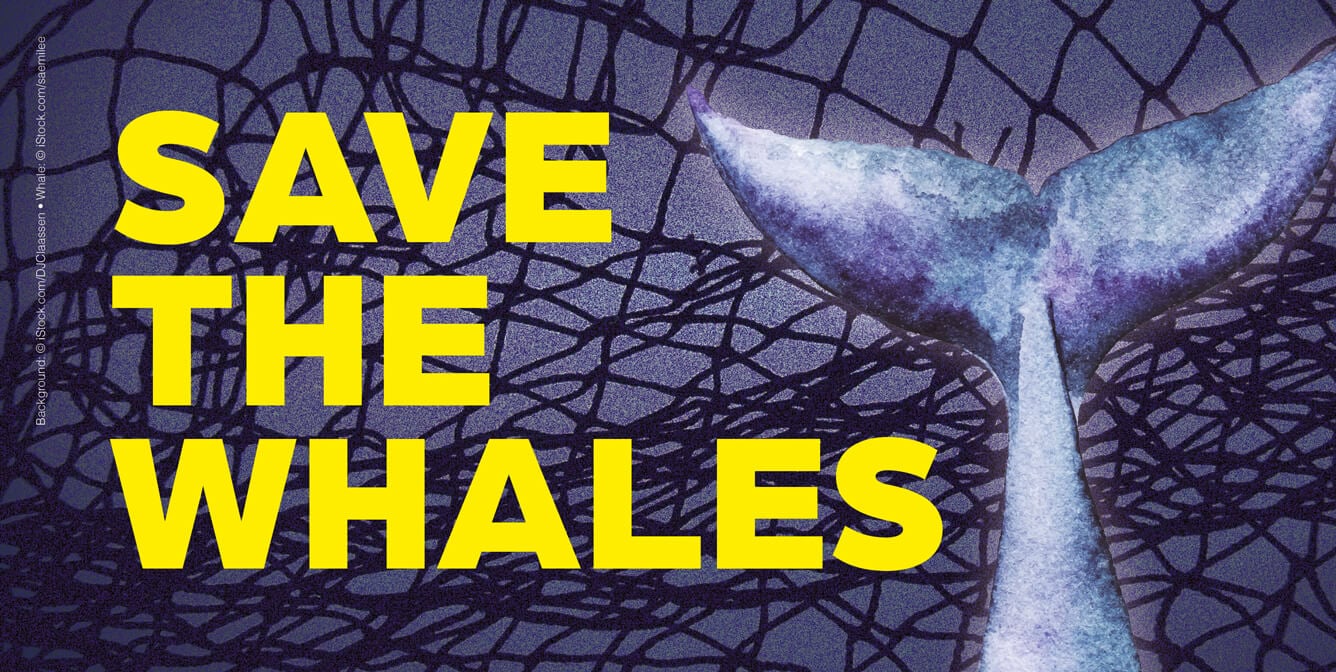
Save the whales with whale tail caught in net

Whales, fish, crustaceans, and other animals need our help. To help protect marine life, don’t support the cruel fishing industry. Go vegan to save the whales today:

The post Cruise Ship Passengers Sickened by Sight of Gruesome ‘Grindadráp’ in Faroe Islands appeared first on PETA.

Golden Gate Fields Is Closing: PETA Statement

Please see the following statement from PETA Senior Vice President Kathy Guillermo regarding the announcement by Belinda Stronach that Golden Gate Fields in Berkeley, California, will close at the end of this year and be consolidated with Santa Anita:

Belinda Stronach and 1/ST have made a smart business decision that will benefit horses. Increased oversight, stronger regulations, and PETA’s demand that injured horses never be put at risk have meant fewer races and race days, smaller fields, and—most importantly—fewer fatalities. Consolidating Santa Anita Park and Golden Gate Fields makes good sense. Horse deaths can’t be part of a sound business plan.

PETA—whose motto reads, in part, that “animals are not ours to use for entertainment or abuse in any other way”—opposes speciesism, a human-supremacist worldview. For more information, please visit PETA.org or follow the group on Twitter, Facebook, or Instagram.

The post Golden Gate Fields Is Closing: PETA Statement appeared first on PETA.