As Trump tears down renewable energy, once again, Mozambique bears the brunt of climate harm caused by fossil fuel producers.
By Tigere Chagutah
In his address to the World Economic Forum (WEF) in Davos on 21 January, US President Donald Trump argued against renewable energy solutions. In a wide-ranging speech, he described them as a “green new scam”, while calling world leaders, mainly from the Global North, to extract more fossil fuels to “avoid a catastrophic energy collapse”. The burning and production of fossil fuels is the major driver of global warming, accounting for 89% of greenhouse gas emissions. In addition to global harm to the planet, fossil fuel production harms nature and human rights.
As Trump made this speech, Mozambique was experiencing deadly floods caused by a tropical depression, an event in part made more likely by human-induced climate change.
Mozambique is not helping itself
Daniel Chapo, Mozambique’s president, cancelled his participation at the 2026 WEF, ostensibly to monitor the impact of the floods and the delivery of assistance to victims. However, such actions are meaningless in the absence of an adequate, consistent and coherent implementation of Mozambique’s Climate Action Strategy.
As global calls for the world to equitably phase out fossil fuels and transition to renewable energy grow ever louder, Mozambique continues to invest heavily in fossil fuel production.
The country is home to the biggest fossil gas project in Africa, the Mozambique Liquefied Natural Gas project, in the poorest province of Cabo Delgado, owned by TotalEnergies, the French oil and gas giant. After its halt in 2021, due to a deadly attack by armed groups that have been fighting against the government since 2017, Chapo authorised the project to resume operation, despite strong allegations of human rights abuses and violations, and the improper displacement of communities to give way to the project.
Besides this project, there are three other major fossil fuel projects in the same province: Rovuma LNG, owned by Eni and ExxonMobil; Coral Sul FLNG, owned by Eni; and Coral North LNG, also owned by Eni. Combined, these facilities will produce 9.9 gigatons of CO2 greenhouse emissions, which will significantly increase Mozambique’s total emissions.
In 2019, Cabo Delgado province was hit by Cyclone Kenneth, which flattened the villages of Quissanga, Macomia and Ibo, killing dozens and leaving thousands of people without shelter, food, crops and assets.
Deadly floods
Once again, Mozambique is experiencing deadly climate-related floods. Between 9 and 26 January, about 692,522 people (151,962 families) were affected across southern and central Mozambique, mainly in Gaza (75%), Maputo and Sofala provinces, where 12 people died, 45 were injured, and four remain unaccounted for. The floods destroyed or damaged more than 4,000 homes and flooded almost 155,000 others.
According to the Mozambique Disaster and Risk Management Institute, since the beginning of the rainy season in October, 137 people have died and 800,000 people have been affected. About 72,000 homes were destroyed, and essential infrastructure, including roads, bridges, health care facilities, agricultural land and schools, was damaged.
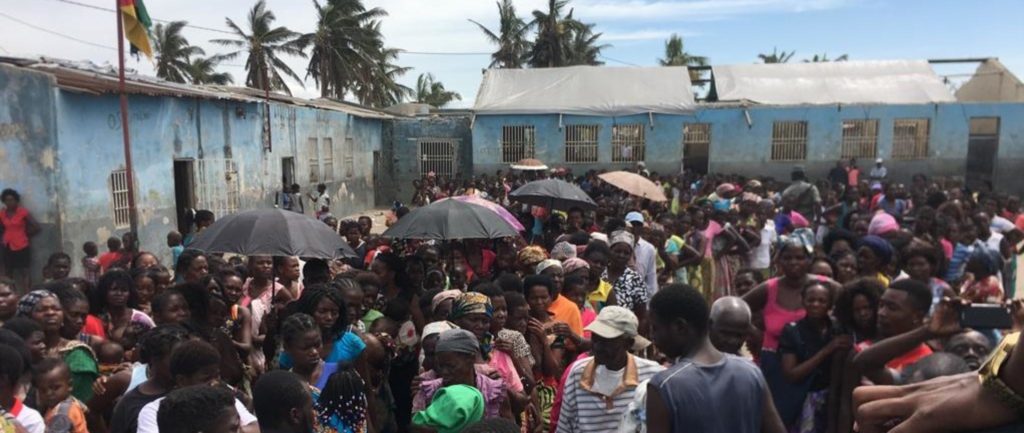
The country will need $644-million to rebuild its essential infrastructure washed away by the rains, which are expected to continue, with the situation likely to worsen.
Despite its insignificant greenhouse gas emissions (60.26 megatons of CO2, about 0.11% of the global total, in 2024), Mozambique is among the top 10 countries most severely affected by climate change and natural hazards. Climate projections indicate that Mozambique’s land surface temperatures are likely to keep rising.
Unprecedented warming
As Trump fiercely opposes renewable energy, the world is warming at an unprecedented rate. After record heat in 2024, the first year to exceed 1.5°C above pre-industrial levels, the critical temperature threshold set in the Paris Agreement, 2026 is likely to be the fourth year in succession with high temperature levels (at least 1.44ºC, above the pre-industrial levels).
Besides Trump’s obstruction of climate action and the devastating effects of climate change, research has shown that fossil fuel companies were responsible for half of all greenhouse gas emissions globally.
According to a recent update to the Carbon Majors’ database, state-owned companies comprised 17 out of the top 20 emitters. All 17 companies are controlled by countries that refused the proposed phase-out plan at COP30, including Saudi Arabia, Russia, China, Iran, the United Arab Emirates and India.
If the world wants to address global warming, unlike the outcome of COP30, at which world leaders failed to commit to a phase-out roadmap, the transition to renewable energy produced in a manner consistent with human rights is paramount, and it must be just.
As reflected in Amnesty International’s COP30 outcome analysis, this must also be accompanied by, inter alia, the operationalisation of the Fund for Responding to Loss and Damage, to meet the needs of vulnerable nations such as Mozambique, which is among the most affected by climate change impacts and is currently experiencing the unjust impact of climate change.
Higher income historical emitters must:
- Provide technical and grant-based or non-debt financial assistance to support Mozambique’s mitigation and adaptation efforts; and
- Provide reparations for loss and damage due to irreversible climate harm, such as the recent floods.
On its side, Mozambique must:
- Invest in more robust emergency disaster response systems and provide remedies to individuals or groups affected by the floods; and
- Embark on an equitable transition away from fossil fuels and invest in adaptation. DM
Tigere Chagutah is the regional director for Amnesty International East and Southern Africa.
This opinion piece first ran in South Africa’s Daily Maverick.
The post Trump’s anti-green stance leaves Mozambique at mercy of climate crisis appeared first on Amnesty International.

