
- Myanmar military relies on ghost fleet to import jet fuel, evidence points to Iran links
- 2025 is deadliest year on record for aerial attacks by military
- More aviation fuel imported in 2025 than in any year since military coup
Aviation fuel used by the Myanmar military to launch deadly air strikes on civilians continues to enter the country via a murky supply chain that has “gone rogue” five years after the junta seized power, a new investigation by Amnesty International has found.
Amnesty’s analysis of trade, shipping, satellite and port authority data indicates that the Myanmar military is adopting the reported sanction-evasion tactics of countries such as Russia, Iran and North Korea by importing jet fuel on “ghost ships” which turn off their location-tracking Automatic Identification System (AIS) radar to avoid detection.
Such methods make it virtually impossible to identify the supplier. However, Amnesty International has tracked multiple shipments of aviation fuel to Myanmar since July 2024 – including on two US-sanctioned vessels with a history of exporting fuel from Iran. According to Kpler, a commodity intelligence platform that tracks global flows of fuels and other commodities, all shipments on these two vessels are assumed to be from Iran, while satellite imagery reviewed by Amnesty International points to a likely Iran connection.
Significantly, Myanmar Port Authority data shows that at least 109,604 metric tonnes of aviation fuel were imported into Myanmar in 2025, a 69 percent increase from 2024 and the highest amount in any year since the coup – despite sanctions imposed to stop fuel reaching the country.
“Five years after the coup, our analysis shows that the Myanmar junta continues to evade sanctions and find new ways to import the jet fuel it uses to bomb its own civilians – with 2025 being the deadliest year on record for aerial attacks since the junta takeover in 2021,” said Montse Ferrer, Amnesty International’s Regional Research Director.
“As aviation fuel shipments into the country increase despite sanctions and the well-documented surge in aerial attacks against civilians, the international community must do more to stop companies and governments facilitating a supply chain that has increasingly gone rogue. Every day of inaction will cost more lives.”
Ghost vessels bring deadly cargo to Myanmar
Amnesty International’s investigation confirmed the delivery of at least nine separate shipments of aviation fuel to Myanmar by four vessels between mid-2024 and the end of 2025, while also uncovering significant changes to how aviation fuel has entered Myanmar during this period.
One notable development was the import of fuel using ‘ghost ships’, which turn off their AIS during onloading and/or offloading – also known as “going dark” – and in some cases intentionally broadcast false or manipulated vessel positions to conceal the ship’s real location (known as ‘spoofing’).
Such vessels may also repeatedly change their name, flag or ownership, and often load fuel through open-water ship-to-ship (STS) transfers, instead of in ports and terminals.
Such methods make tracking of the shipments and the suppliers extremely complicated. However, Amnesty has confirmed the import of aviation fuel to Myanmar on the following four vessels since mid-2024:
- HUITONG 78 (IMO 9646479, now called BARAAWE 1) – Chinese-flagged vessel delivered one shipment in July 2024, following at least nine other shipments in 2023/2024. The 12 July shipment to the Myan Oil terminal in Yangon happened while the vessel appeared to have its AIS radar off. According to AIS data analysis and satellite imagery, it likely loaded in Fujairah’s offshore anchorage area (FOAA) in the United Arab Emirates, an offshore area designated for bunkering, STS oil-product transfers and other maritime services, where it was sighted between 13-26 June.
- YONG SHENG 56 (IMO 9657507, now called LS MERCURY) – Chinese-flagged vessel transported one shipment on 30-31 July 2024. Like the HUITONG 78, AIS data indicates that the YONG SHENG 56 was at FOAA, UAE, between 15-29 June and then travelled to Myanmar to offload.
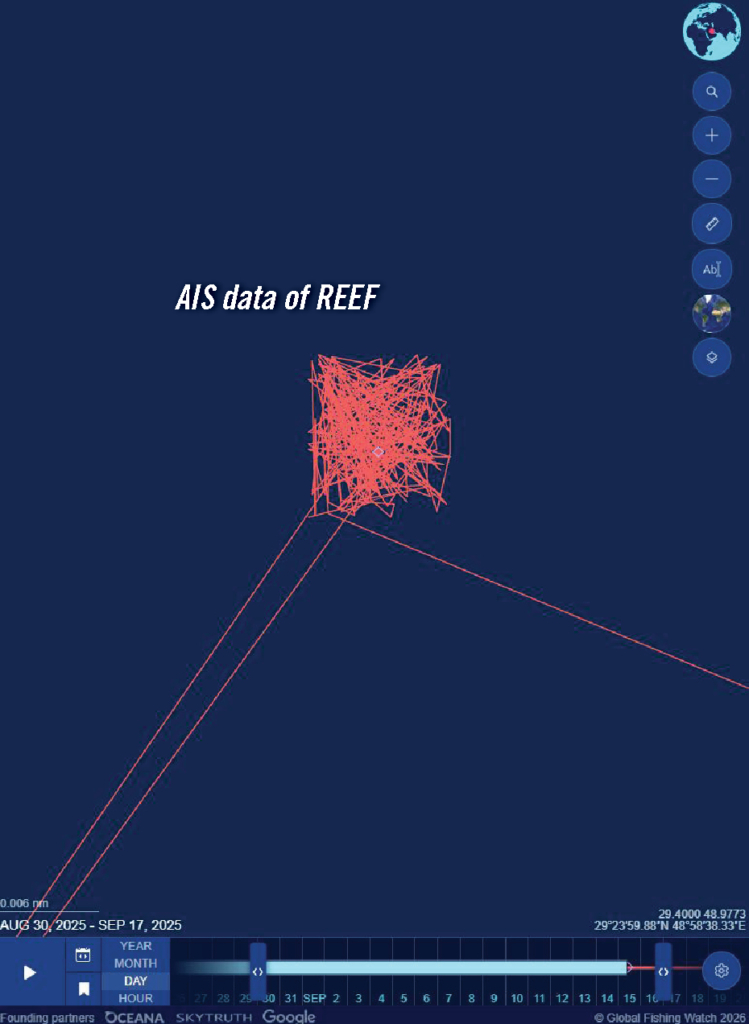
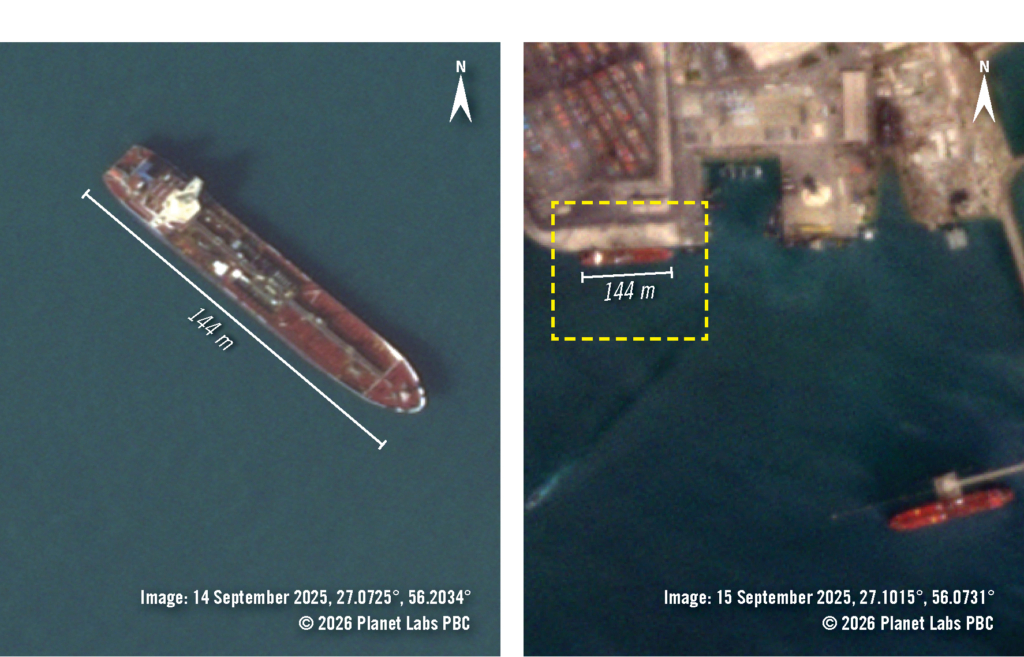
- REEF (IMO 9263382, formerly BALTIC HORIZON) – Guinea-flagged vessel delivered shipments in Oct 2024, July 2025 and October 2025. Although its AIS data places the vessel near Kuwait and again near the UAE at the time of presumed onloading, this contradicts other verified information including satellite imagery, analyzed by Amnesty International’s Evidence Lab, which places this vessel at Bandar Abbas, Hormozgan province, Iran, with high confidence, in September 2025. During the same timeframe, the AIS data of the vessel also displays unnaturally geometric “box‑shaped” loitering patterns over 750 km from Bandar Abbas port, where no ships of similar size to REEF are present. This is inconsistent with normal navigation, indicating AIS manipulation or spoofing.
- NOBLE (IMO 9162928, formerly ASTRA) – Guinea-flagged vessel delivered four shipments between January and June 2025. AIS data and satellite imagery indicate it loitered at FOAA, UAE, before traveling to Myanmar where it turned off its AIS radar. In at least one of the shipments, however, satellite imagery places NOBLE at Bandar Abbas, Hormozgan province, Iran, after FOAA and before arriving in Myanmar (June 2025 delivery).
While Amnesty International was unable to confirm the suppliers or origin of the aviation fuel, several indicators point to an Iran connection.
NOBLE and REEF both have a documented history of transporting sanctioned fuel from Iran, according to the US Office of Foreign Assets Control (OFAC), and both REEF and NOBLE have been sighted at Iran’s Bandar Abbas port in the last 13 months. In addition, Kpler assumed – drawing on AIS data, satellite imagery, customs information and other sources – that all of NOBLE and REEF’s shipments were from Iran.
Finally, the vessels involved display behavioural patterns characteristic of “ghost fleet” tankers, including AIS gaps, anomalous tracks or spoofing, and opaque STS transfers, which mirror methods commonly used by tankers that move sanctioned fuel from Iran.
Background
Since the military coup in Myanmar in February 2021, Amnesty International has documented a persistent and evolving supply chain enabling Myanmar’s military to obtain aviation fuel used in unlawful air strikes against civilians. Amnesty has called for a ban on aviation fuel and withdrawal of all companies involved in the supply chain to prevent further civilian harm.
Amnesty International’s Deadly Cargo report, published in collaboration with Justice for Myanmar in November 2022, revealed that multinational companies based in Singapore and Thailand were part of a supply chain that delivered Jet A‑1 aviation fuel to Myanmar.
Following sanctions introduced in 2023 targeting parts of the jet fuel supply chain, Amnesty International’s January 2024 analysis and July 2024 findings found a major shift in methods. Direct sales diminished; instead, fuel was bought and resold multiple times to obscure its origin. At least nine shipments reached Myanmar in 2023 and early 2024, many routed through a Viet Nam storage unit, revealing deliberate sanctions‑evasion tactics.
The post Myanmar: Jet fuel used in deadly air strikes flowing in on ‘ghost ships’ with suspected links to Iran appeared first on Amnesty International.