Egypt: Authorities must end crackdown on individuals discussing religious beliefs online

The Egyptian authorities have intensified their crackdown on religious expression online in recent months, said Amnesty International today, calling on the authorities to immediately and unconditionally release 23 people arbitrarily detained solely for peacefully exercising their right to freedom of religion and belief.

Over the past six months, security forces have arbitrarily arrested at least 29 people, including one woman, aged between 18 and their late fifties, across six governorates for having posted online content expressing religious views that do not align with state-sanctioned religious narratives, or simply for being members of social media groups discussing atheism and agnosticism and criticising mainstream religious beliefs. They are being investigated in connection with bogus charges of “contempt of religions” and “joining a group established in violation of law”. If convicted, they face up to five years in prison.

“Posting religious views online or taking part in discussions about belief or non-belief is not a crime. Yet the Egyptian authorities have intensified their crackdown on those discussing religious matters online in breach of the country’s international human rights obligations and more specifically the commitments the authorities made regarding freedom of religion during the country’s 2025 Universal Periodic Review at the UN Human Rights Council,” said Mahmoud Shalaby, Egypt and Libya Researcher at Amnesty International.

“Egyptian authorities must stop criminalizing discussions about religious beliefs, including those deemed as divergent from socially dominant views, or sometimes purely for reflecting and questioning them. Authorities must immediately and unconditionally release those arbitrarily detained solely for peacefully exercising their right to freedom of religion or belief.”

Between mid-July 2025 and 1 January 2026, security officials subjected those arrested to enforced disappearance for periods ranging between four and 56 days. At least four detainees reported to prosecutors during their pretrial detention renewal sessions that they had been subjected to torture and other ill-treatment following arrest, while at least 11 were denied their right to legal counsel of their choosing during the interrogation phase. One detainee died in custody, according to statements his fellow inmates made to prosecutors during a pretrial detention renewal session in early January 2026. Amnesty International was unable to obtain information about the cause of death.

Egyptian authorities must end their restrictions on the right to freedom of religion or belief and stop prosecuting people based on what they believe.

Mahmoud Shalaby, Amnesty International

Five were released in early December 2025 pending investigations. The remaining 23 people are held in pretrial detention.

Amnesty International spoke with a relative of one detainee, two lawyers at the Egyptian Initiative for Personal Rights, the Egyptian Commission for Rights and Freedoms and two other lawyers representing 13 of the defendants.

Police arrested most detainees at their homes and seized their laptops and mobile phones, including some devices belonging to family members, without presenting arrest warrants or explaining the reasons for arrest.

A litany of violations during arrest

Upon arrest, security forces concealed the fate and whereabouts of those detained, thereby subjecting them to enforced disappearance. They were held outside the protection of the law in unknown National Security Agency (NSA) facilities for periods ranging from four to 56 days, at heightened risk of torture and other ill-treatment, before security forces brought them before the Supreme State Security Prosecution (SSSP). During their enforced disappearance in NSA facilities, agents interrogated detainees while blindfolded for hours about their religious beliefs, including whether they were Muslim or Christian and whether they prayed.

Among those arrested, was one man who ran a YouTube channel featuring debates or critical discussions about religious ideas; for instance discussing commonly held beliefs in Islam and Christianity, including on the occurrence of signs ahead of Judgement Day. Another posted online content critical of a popular Islamic preacher, while another discussed cosmic justice. A third man shared content satirizing certain religious practices.

Security forces arrested Sherif Gaber, 32, a blogger and YouTuber, at his home in Cairo on 3 November 2025 and subjected him to enforced disappearance for around 56 days before bringing him before a prosecutor. Since 2013, authorities have repeatedly targeted Gaber for his online religious expression. Between 2013 and 2024, courts sentenced him in absentia on three separate trials to one, three, and five years in prison in connection with “contempt of religions” charges. He remains detained pending investigations.

SSSP prosecutors opened investigations against detainees on a range of charges, including joining a group established in violation of the law, exploiting religion to promote ideas harmful to national unity, contempt of religions, insulting religions through public means, and spreading false news. Prosecutors subsequently ordered their pretrial detention.

During one of the pretrial detention renewal sessions, held online in late 2025, three defendants told prosecutors that NSA agents had subjected them to electric shocks during their enforced disappearance. Prosecutors failed to promptly and effectively investigate these allegations by referring detainees for forensic examination and instead stated that they would summon them to an in-person session where they could “report whatever they want.”

Saeed Abo Mustafa, one of the detainees who had participated in online debates about religious beliefs, told prosecutors during his first pretrial detention renewal session that NSA agents beat him with their knees or foot hitting his back and stomach during his enforced disappearance in July 2025. Prosecutors dismissed his complaint, asking why he had not reported the abuse during his initial interrogation.

“The authorities are piling abuse upon abuse against those arbitrarily detained, from bringing absurd charges against them, to subjecting them to enforced disappearance and dismissing their serious allegations of torture and other ill-treatment. The Public Prosecution must immediately stop its complicity in NSA abuses by rubber-stamping arbitrary detention, and ensuring prompt, thorough, independent, impartial, transparent and effective investigations into all allegations of torture and other ill-treatment”, said Mahmoud Shalaby.

“Egyptian authorities must end their restrictions on the right to freedom of religion or belief and stop prosecuting people based on what they believe.”

Background

Religious minorities, including Coptic Christians, Shi’a Muslims and Bahá’ís, consistently face discrimination in law and/or practice in Egypt. Members of religious minorities, atheists and others not espousing state-sanctioned religious beliefs face threats and harassment including abusive summons and interrogations by the NSA and in some cases prosecution over vague “contempt of religions” charges.

State officials continued to discriminate against Christians by denying effective remedies for sectarian violence and imposing customary reconciliation processes that deprived them of compensation and sometimes led to their banishment.

Since March 2025, at least 15 members of the Ahmadi Religion of Peace and Light remain arbitrarily detained solely for peacefully exercising their right to freedom of religion. In April 2025, UN special procedures raised concerns with the Egyptian government over discrimination against the Baha’i community, including confiscation of cemeteries, denial of legal recognition and identity documents, and harassment of Baha’is.

The post Egypt: Authorities must end crackdown on individuals discussing religious beliefs online appeared first on Amnesty International.
Myanmar: Junta Atrocities Surge 5 Years since Coup

Myanmar’s military junta has committed widespread repression and abuse in every facet of life in the country since seizing power on February 1, 2021, Amnesty International, Fortify Rights, and Human Rights Watch said today. The military’s atrocities since the coup, which include war crimes and crimes against humanity, escalated over the past year as the junta sought to entrench its rule through abusive military operations and stage-managed elections.

United Nations Security Council members, governments in the region, and other concerned states should better support Myanmar’s people and act to hold the junta accountable for its crimes. The heavily controlled elections, held in three phases between December 28, 2025, and January 25, 2026, have been widely dismissed as fraudulent and organized to ensure the military-backed party’s electoral victory.

“It’s no accident that this election has been made possible through increased human rights abuses, from arbitrary detention to unlawful attacks on civilians, which has been the military’s modus operandi for decades,” said Ejaz Min Khant, human rights specialist at Fortify Rights. “As this crisis stretches into its sixth year, governments should focus on accountability and justice efforts for the many crimes committed by Myanmar’s military, without which the country cannot move forward.”

Since the coup, the junta has systematically banned dozens of political parties and detained more than 30,000 political prisoners. In January, the junta reported that it had taken legal action against more than 400 people under an “election protection” law passed in July criminalizing criticism of the election by banning speech, organizing, or protest that disrupts any part of the electoral process.

The elections have served as a centerpiece for the junta’s attempts to crush all political opposition, derail efforts to restore civilian rule, and entrench the military-controlled state. As expected, and by design, preliminary election results indicate a landslide victory for the military proxy Union Solidarity and Development Party.

China and Russia, the junta’s primary suppliers of aircraft and arms, both sent election observers to the polls. The two countries have long supported the junta while blocking international action on military atrocities at the UN Security Council. Malaysia, last year’s chair of the Association of Southeast Asian Nations, said the bloc has not sent observers to certify the polls.

In expanded military operations ahead of the elections, the junta in 2025 ramped up its use of airstrikes, including deliberate and indiscriminate attacks on civilians and civilian infrastructure in violation of international humanitarian law. Airstrikes have hit schools, hospitals, religious sites, and camps for displaced people, killing thousands over the past year.

The military has also increasingly used armed drones, paramotors, and gyrocopters in unlawful attacks, creating new threats to civilians. On October 6, a military paramotor attack on a Buddhist festival in Sagaing Region killed at least 24 people, including three children. More than 135 paramotor attacks have been reported since December 2024. Myanmar is one of very few countries that continue to use internationally banned cluster munitions and antipersonnel landmines.

“The past five years are a bleak illustration of the Myanmar military’s failed strategy to assert control by killing and terrorizing civilians,” said Joe Freeman, Myanmar researcher at Amnesty International. “Military air and drone strikes reached new highs in 2025 as the junta intensified its already brutal campaign against opposition areas, leaving more and more people living in fear of bombs falling from the sky.”

Since enacting a conscription law in February 2024, the junta has used abusive tactics such as abducting young men and boys and detaining family members of missing conscripts as hostages. The military’s recruitment and use of child soldiers has surged since the coup.

Since the coup, more than 2,200 people have reportedly died in junta custody, although the actual figure is likely higher. Torture, sexual violence, and other ill-treatment are rampant in prisons, interrogation centers, military bases, and other detention sites, with reports of rape, beatings, prolonged stress positions, electric shock and burning, denial of medical care, and deprivation of food, water, and sleep. In July, Ma Wutt Yee Aung, a 26-year-old activist, died in Insein prison due to reported lack of medical treatment for long-term head injuries from torture.

Following the March 2025 earthquake that struck central Myanmar, the junta obstructed access to lifesaving services in opposition-held areas. The junta’s years of unlawful attacks on healthcare facilities and health workers severely hampered the emergency response. Despite announcing a ceasefire, the military carried out more than 550 attacks in the two months following the quake.

Military abuses and spiraling fighting have internally displaced at least 3.6 million people. Foreign aid cuts, skyrocketing prices, and restrictions on medical care and humanitarian supplies have exacerbated malnutrition, waterborne illness, and preventable deaths. Over 15 million people are facing acute food insecurity, with Rakhine State especially impacted.

Millions who have fled the country face increasing threats and risk of forced returns.

Since late 2023, Rohingya civilians have been caught amid fighting between the junta and ethnic Arakan Army forces. The Arakan Army has imposed oppressive measures against Rohingya in northern Rakhine State, including forced labor and arbitrary detention.

Since the coup, trafficking, scam centers, unregulated resource extraction, drug production, and other illicit operations have proliferated. Online scam centers along Myanmar’s border with Thailand—run by global criminal syndicates led by Chinese nationals—largely rely on human trafficking, forced labor, and torture to run their scams, which are part of a multibillion-dollar industry across the region.

The military’s widespread and systematic abuses have been fueled by decades of impunity and insufficient international efforts to end its violations.

Accountability measures underway at the International Court of Justice and International Criminal Court (ICC) are vital but remain limited to atrocities prior to the coup. In November 2024, the ICC prosecutor requested an arrest warrant for commander-in-chief Sr. Gen. Min Aung Hlaing for alleged crimes against humanity committed in 2017; the judges have yet to issue a public decision on the request.

The UN Security Council has been largely deadlocked, failing to follow up on its December 2022 resolution, which denounced the military’s post-coup abuses, with tangible measures due to opposition from China and Russia.

Security Council members should outline targeted accountability measures to be taken against the junta for its refusal to comply with the council resolution and numerous other international calls. Holding regular open meetings on Myanmar can help build momentum for a follow-up resolution referring the whole country situation to the ICC and instituting a global embargo on arms and jet fuel.

“Five years after the coup, Myanmar’s human rights and humanitarian catastrophe faces dwindling foreign assistance and attention,” said Shayna Bauchner, Asia researcher at Human Rights Watch. “Ending this crisis requires sustained international pressure, meaningful accountability, and concrete humanitarian, political, and technical support for those in Myanmar and the millions forced to flee.”

The post Myanmar: Junta Atrocities Surge 5 Years since Coup appeared first on Amnesty International.
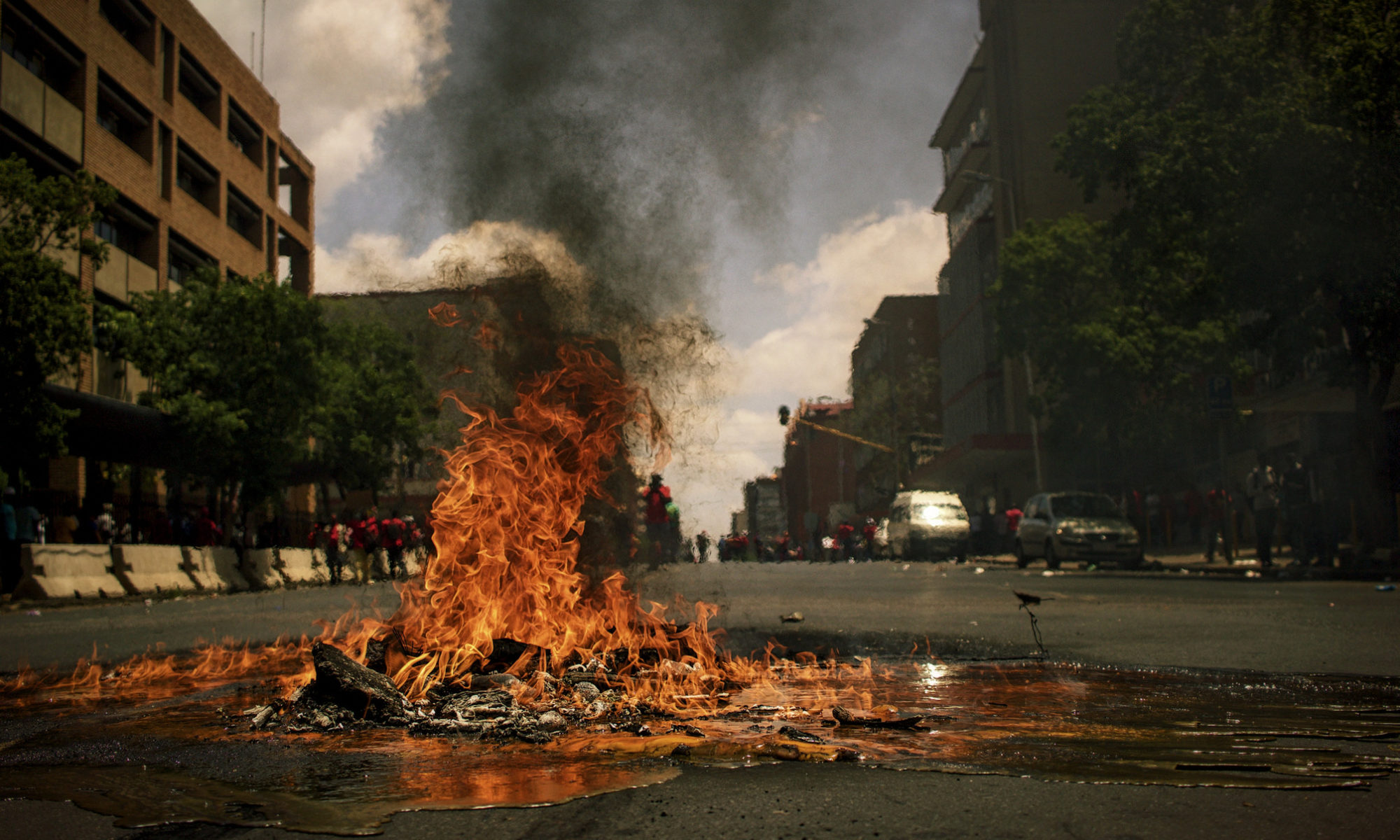
How is US President Trump impacting global climate action?

In 2024, for the first time, the global average temperature exceeded 1.5°C above pre-industrial levels, making rapid coordinated global climate action even more urgent.

Instead of supporting a fast and just phase out of fossil fuels, US President Donald Trump is recklessly assaulting global efforts to combat climate change in five key ways, by:

  1. Withdrawing the US from global climate bodies
  2. Promoting a disinformation campaign against established climate science
  3. Using bullying and coercive measures to push pro-fossil fuel policies
  4. Weakening domestic climate protections and defunding climate science
  5. Restricting civic space which harms climate activism

Which global climate bodies have the US quit and what is the impact?

The USA’s withdrawal from the landmark Paris Agreement came into effect on 27 January 2026. This is the second time the US has withdrawn from the agreement and comes on the heels of its declared intent to withdraw from the United Nations Framework Convention on Climate Change (UNFCCC), the Intergovernmental Panel on Climate Change (IPCC) and the Green Climate Fund (GCF). Trump has also called for the US’ departure from over 60 other international organizations, including several others related to climate change, biodiversity and renewable energy, calling them ‘wasteful, ineffective, or harmful’.

These announcements will likely accelerate the US’ defunding of key multilateral and bilateral climate institutions and programming.  US funding to these UN agencies and their critical work is expected to end imminently. The UN was already facing a financial crisis, exacerbated over the past year by the US’ refusal to pay its contribution to the regular budget. Trump also refused to spend money appropriated by Congress for foreign assistance, including to UN agencies, dismantled the US Agency for International Development (USAID) and other US agencies that provide direct support to communities harmed by climate change, and attacked programmes that address climate change.

What is the Paris Agreement and why is it important?

On 12 December 2015, states adopted the world’s most ambitious framework for fighting climate change during the UN Climate Change Conference in Paris (COP21). Under the Paris Agreement, governments agreed for the first time to try to limit global warming to 1.5° C above pre-industrial levels to avert the most catastrophic effects of climate change. The agreement requires all states to set regularly updated targets for reducing greenhouse gas emissions, for both the long and short term, and share their plans for reaching them.

What will be the impact on the Loss and Damage fund?

The US has also withdrawn from the board of the UN Fund for Responding to Loss and Damage (FRLD). Set up after difficult negotiations at COP27 in 2022, the Fund is dedicated to helping low-income climate vulnerable nations and communities recover from climate change-related “unnatural” disasters. As of 19 November 2025, a total of US$817.01 million has been pledged to the FRLD, including US$17.5 million from the US. However, it is unclear if it will now honour that meagre pledge.

The FRLD’s board meeting in July 2026 is expected to focus on finalizing the operationalization of the fund. It is up to all countries that can, especially those most responsible for climate change, to step up and ensure the fund is adequately resourced. The less that countries contribute, especially historically high-emitting countries including the United States, the more it will cost in the long run for countries on the frontlines of climate harms to address climate change-related losses and damages.

What is Trump’s stand on climate change and how is it encouraging disinformation on climate science?

Trump called climate change a “scam” when he took to the floor of the UN General Assembly in 2025. He also called sustainable energy policies the “greatest hoax in history” at the World Economic Forum in Davos in 2026.

A new report from the US Department of Energy says projections of future global warming are exaggerated. This is part of an effort by the Trump administration’s disinformation campaign to produce a false counter-narrative to global climate science and consensus, and to use this junk science as a justification for overturning climate regulation The US also cancelled a landmark climate change report, the sixth National Climate Assessment, and has taken down numerous webpages on climate science from official websites. The defenestration of these and other climate science programmes and institutions means less reliable information is available to the public and makes it harder for scientists around the world to fact check misleading information on climate change.

How has the US used bullying tactics to undermine global cooperation on climate and the environment?

Over 430 million tonnes of plastic is produced every year, most of it made from fossil fuels and quickly becoming waste that clogs up landfills or ends up in the oceans. Yet negotiations for a landmark Global Plastics Treaty failed to reach consensus last year as the US, along with other fossil fuel producing states, made it clear that it opposed cuts to plastic production.

The Trump administration has also successfully shelved a near-finalized global shipping carbon levy by threatening diplomats engaged in the negotiations and using threats to raise import tariffs to pressure nations.

Elsewhere, US lobbying pressure has greatly undermined the European Union’s corporate sustainability due diligence directive (CSDDD) which requires companies to fix human rights and environmental issues within their supply chains. The US has also actively sought alliances with political parties in Europe who are against climate action.

The purchase of US-produced so-called “natural” gas has been used as a bargaining chip in tariff negotiations; and US banks have retreated from climate action alliances.

What has been the impact of Trump’s anti-climate policies domestically?

The Trump administration has dismantled domestic climate action efforts and engaged in an unprecedented rollback of the regulations protecting people in the US from fossil fuel pollution and climate change.

He has gutted governmental agencies that provide emergency assistance to those harmed by extreme weather events made more likely and more intense by climate change; defunded diversity and climate programmes in US governmental agencies and universities resulting in mass layoffs, grant freezes, and attacks; increased taxpayer-funded subsidies to the fossil fuel industry; and threatened – in some cases successfully – US states with plans to reduce carbon emissions to end those policies. Trump’s “drill, baby, drill” approach has ramped up oil and gas production and fast-tracked deep-sea mining.

Since Trump returned to office, the US government has reduced the availability and collection of air pollution, weather and a host of other environmental and climate data that are used in the US and around the world. The administration has also directly threatened academic freedom and the right to access information, including on climate change, as part of a pattern consistent with rising authoritarian practices.  The US has also increased its military activities, particularly in Latin America and the Middle East, which have a heavy carbon footprint, not to mention the outrageous harm caused to human rights. In the instance of Venezuela, President Trump has cited the fossil fuel industry as part of his decision-making for unlawful action to remove Nicolas Maduro. 

How has Trump’s clampdown on civic space harmed climate activism?

The US government has cracked down on protest and dissent including by limiting climate activists’ ability to exercise their rights to freedom of expression, association and peaceful assembly through intimidation, demonization and threatened changes in laws.

The Energy Department has reportedly added “climate change,” “green” and “decarbonization” to its growing “list of words to avoid” . Climate activists have been described as “ecoterrorists” among other public attacks by the authorities. This has emboldened fossil fuel companies and other anti-climate action actors, and led to a growing threat of litigation against climate activists.

The Trump administration has also demonized marginalized populations, using racial rhetoric in ways that erode public support for essential public services — including those critical for helping Americans prepare for and withstand the impacts of climate change.

What should be done?

Climate change transcends borders and affects everyone, everywhere. It is often those least responsible that are hardest hit. Global cooperation is essential to equitably phase out fossil fuels, support a just transition for affected workers, protect vulnerable communities, and fund recovery from loss and damage. A fragmented approach will deepen climate harms like rising sea-levels, food scarcity, wildfires, extreme storms and floods, and lack of access to safe drinking water.

People and governments around the world must push back against all coercive efforts by the Trump administration. To cede ground now risks our collective future. Humanity must win.

Knowledge is power

Learn how you can take action against fossil fuels

People around the world are demanding the end of fossil fuels. Frontline communities are resisting and you can join them.

The post How is US President Trump impacting global climate action? appeared first on Amnesty International.

Bangladesh: Amnesty chief calls for human rights guarantees during election period in open letter to Muhammad Yunus

Bangladesh’s interim government must restore public trust by guaranteeing full respect for human rights and the rule of law in the fortnight ahead of next month’s national elections, Amnesty International’s Secretary General, Agnes Callamard, said in an open letter to Chief Advisor Muhammad Yunus, the country’s acting leader.

The letter, sent ahead of the 12 February polls, raises concerns about the authorities’ continued misuse of anti-terror legislation against journalists, and their failure to adequately safeguard the rights to life, security of persons, and freedom of expression, and association. It calls on the interim government to “ensure that laws, policies, and practices fully protect” these rights in the lead up to the elections.

“Bangladesh’s interim government had a mandate to restore human rights, in line with the nation’s obligations under international law. The coming weeks will be a decisive test of whether it will honour those responsibilities,” said Agnès Callamard, Amnesty International’s Secretary General.

“The authorities must uphold the rights of individuals and groups to speak freely – including during an election. Chief Advisor Yunus’s government must show genuine leadership by ensuring that all Bangladeshis can participate fully and safely in deciding their country’s future. They must ensure that the right to life is protected. No one should fear for their life for peacefully speaking their minds and sharing their views. ”

Chief Advisor Yunus’s government must show genuine leadership by ensuring that all Bangladeshis can participate fully and safely in deciding their country’s future

Agnès Callamard, Amnesty International’s Secretary General

Despite Bangladesh being a signatory to many of the core international human rights instruments, the interim administration has failed to give effect to these obligations. This includes the International Covenant on Civil and Political Rights, which enshrines the rights to freedom of expression, peaceful assembly and freedom of association that must be upheld, including during an election period.

In the letter, Agnès Callamard said: “Unlawful restrictions on these fundamental freedoms undermine public debate and participation in the electoral process, and weaken public trust in institutions.”

Since assuming power in 2024, the interim authorities have misused the draconian Anti-Terrorism Act (ATA) against journalists and other perceived critics. The letter cites the examples of Monjurul Alam Panna, who was arrested under the ATA in August 2025 for allegedly “attempting to overthrow the interim government,” and Anis Alamgir, who was detained under the ATA in December 2025, for allegedly “spreading propaganda for the Awami League.” Both journalists’ arbitrary arrests violate their rights to freedom of expression and association.

The letter also cites the interim authorities’ inadequate response to the violence that followed the killing of Sharif Osman Hadi on 18 December 2025, when the offices of media outlets The Daily Star and Prothom Alo were set alight, and the editor of the New Age newspaper, Nurul Kabir, was harassed. On the same day, Dipu Chandra Das, a Hindu man, was lynched following allegations of blasphemy.

Background

Ahead of the elections, Amnesty International has published a human rights charter outlining the core human rights priorities that any incoming government must address. The charter, available here, lays out concrete steps across eight key areas that the next government should take to bring Bangladesh closer to its obligations under international human rights law.

Agnès Callamard is an international human rights expert. A leading advocate for freedom of expression, a feminist, and an anti-racism activist, Dr. Callamard has been at the forefront of international efforts to combat some of the greatest human rights challenges of our time. She was appointed Secretary General of Amnesty International in 2021.

The post Bangladesh: Amnesty chief calls for human rights guarantees during election period in open letter to Muhammad Yunus appeared first on Amnesty International.

Annick Nonohou Agani: “I defend the rights of women who give birth in Benin”

Content warning: This story contains graphic stories of violence against women who give birth.

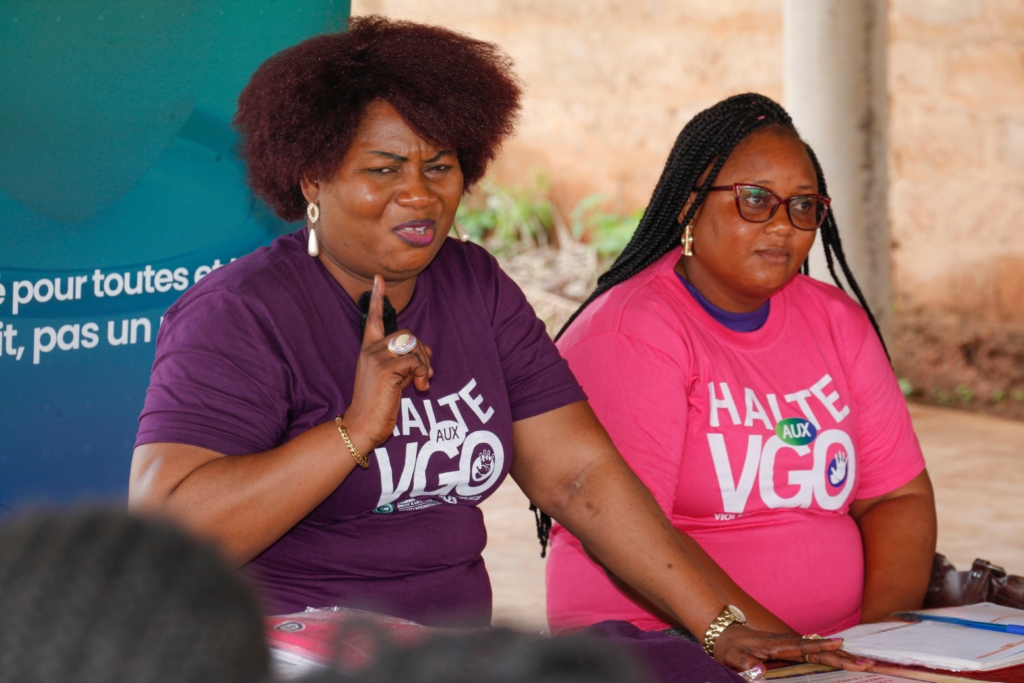
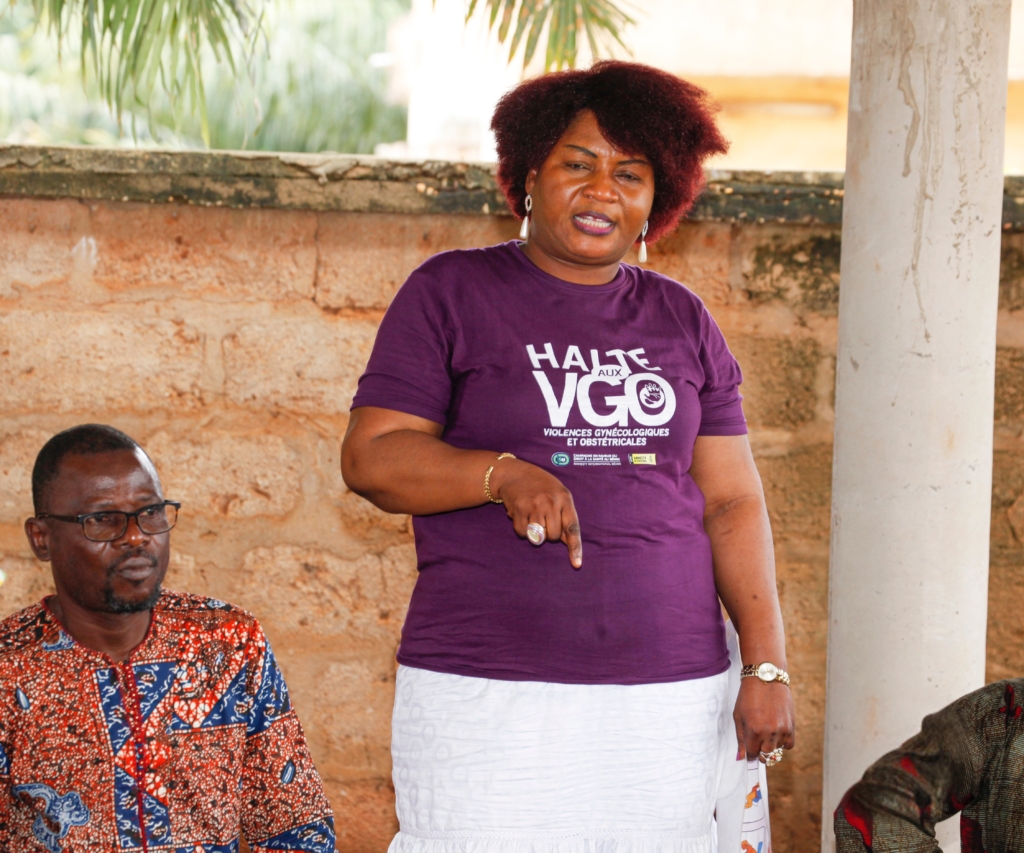
Annick Nonohou Agani, 51, from Benin, is a midwife, jurist, and human rights activist. She founded the Network of Patient-Friendly Caregivers (Réseau des Soignants Amis des Patients) and coordinates an initiative to reduce obstetric and gynecological violence in French-speaking Africa.

She is an award-winning midwife and has delivered around 3,000 babies. She is campaigning for childbirth practices that respect human rights in collaboration with Amnesty International.

Amnesty International Benin and its partners are working to educate public and healthcare professionals about patients’ rights, gynecological and obstetric violence, as well as access to healthcare for prisoners.

“My mother suffered obstetric violence. I was five or six years old at the time, and we were living in Niger. My father and I took my mother to the health center to give birth, but they wouldn’t let him in, so I stayed alone with my mother.

She was in a lot of pain and tried to call the health workers by raising her upper body on the delivery table, which was not wide. Unfortunately, she fell off the table. She wasn’t responding, so I called the health workers, who, without properly checking her breathing, declared her dead. An hour later, she started moving and talking again so I ran to get the health workers… They laughed at me and insulted me, saying that a dead body doesn’t talk! So, I went outside to call for help. In the end, my mother gave birth to my brother and they both survived. But her mistreatment by the clinic workers had a lasting impact on me… I told myself that whatever I became later in life, I would defend the rights of women who give birth.

Defending women’s rights

During my midwifery studies, I was already defending women’s rights. I didn’t want them to be mistreated. I started practicing in 2000, and began working with Amnesty International, conducting awareness-raising sessions with communities in northern Benin. In 2005, I decided to enroll in my first year of law school and completed my master’s degree in public law on the right to health.

Being both a midwife and a jurist allowed me to better assert myself in defending women. I was an activist, but I realized it was difficult to do it alone. I started working with women’s groups I knew through awareness raising sessions. I realized that we could bring about behavioral change through setting up women’s networks. I did internships in Morocco and Japan, where I learned how to deliver babies without violence. In 2013, I founded the Network of Patient-Friendly Caregivers, and today I am an activist at a regional level.  

Even today, in some delivery rooms in Benin, there are straps to whip those who are not pushing properly.

Annick Nonohou Agani

Obstetric violence is widespread

Obstetric violence occurs in almost every country in the world. The first form of violence is denying the father access to the delivery room. It also includes not allowing the woman to choose the position in which she gives birth. There is what is known as abdominal pressure, where staff continue to climb on women’s stomachs and thus bring the baby out. Childbirth is highly medicalized. Unnecessary C-sections are sometimes imposed. Naked women are also subjected to repeated touches by numerous students, and no one asks for their consent. On several occasions, I have supported women victims of obstetric violence who had been left alone on very narrow delivery tables without mattresses, as was the case for my mother.

There is normalized violence because it is part of our care protocols. This is institutional violence, such as episiotomy, the overuse of vacuum extraction and forceps to deliver the baby… Violent deliveries are normalized and women are objectified.

In our countries, it is believed that during childbirth, women must remain silent and not scream. Pain is denied. People say that a woman who cannot bear pain will not be able to give birth to a living child. There is also verbal abuse, with insults related to sexuality. We often hear phrases such as: “While you were enjoying sex, didn’t you think you might get pregnant, and that giving birth would hurt?”

Women are also beaten during childbirth, they are slapped. Even today, in some delivery rooms in Benin, there are straps to whip those who are not pushing properly. Sometimes, when you have a relative with you during childbirth and the midwife hits you, your relative may hit you and slap you in turn.

Protecting patients is paramount

One case that struck me was that of a woman who lost her baby during childbirth. The health workers refused to give her the body because they wanted to extort money from her. The government is fighting against these racketeering practices, as well as the illegal sale of medicines, but it continues.

We need to review midwifery training curricula. They must include human rights-based obstetric practices. It is also essential to update care protocols and make available all the tools and equipment necessary for non-violent childbirth. However, due to the patriarchy that prevails in our health centers, midwives who would like to practice non-violent childbirth face opposition from doctors.

People ask why we, as midwives, would talk about human rights. But we have a vision, we have a goal.

Annick Nonohou Agani

Previously, in Benin, there was no legislation to protect patients. Then, in 2021, the law on the protection of human health was passed, which states that the patient’s consent must be sought and renewed during care. But no law mentions obstetric violence.

The 2012 law on the prevention and punishment of violence against women did cover childbirth, but everything else was missing. There is no mention of the specific cases of pregnant women, women in labour, and women in the postpartum period, even though women must be protected at each of these stages. There are no criminal provisions to punish obstetric violence.

Specific legislation is needed for the prevention and punishment of gynecological and obstetric violence.

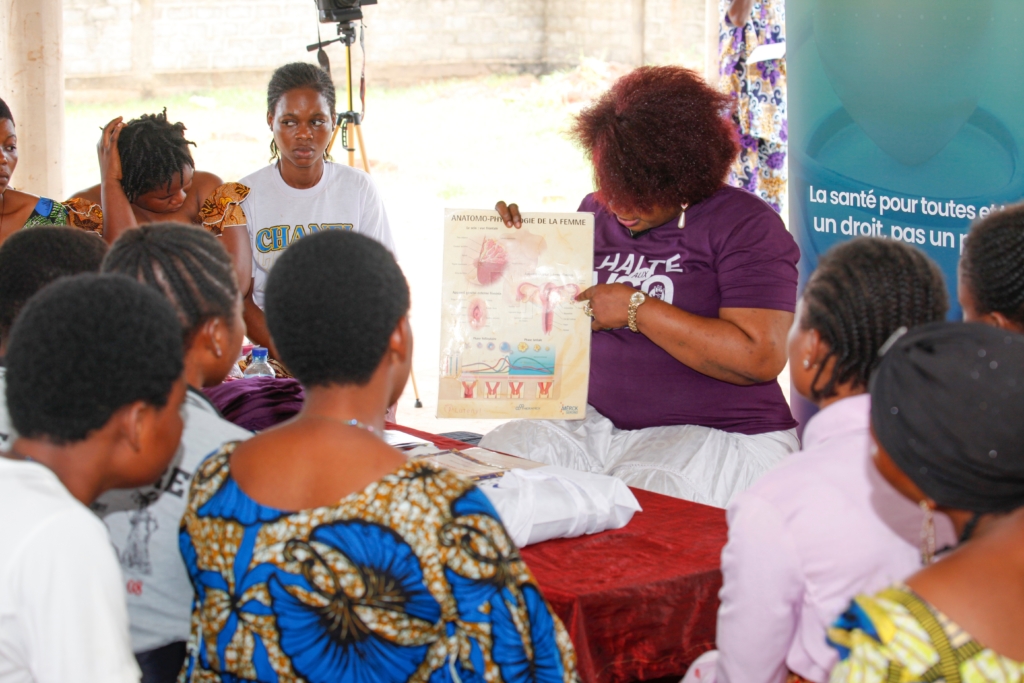
Beninese activist Annick Nonohou Agani during a community awareness session about gynecological and obstetric violence. © Amnesty International Benin

Bringing about change

Amnesty International’s campaign on the right to health has brought about change. We launched the Charter of Patients’ Rights and Responsibilities in September 2025 in collaboration with the Health Sector Regulatory Authority. We produced radio programs and conducted community awareness campaigns in all departments throughout Benin. This is the first time that gynecological and obstetric violence has been discussed in this way, and across the whole country.

We have detractors. People ask why we, as midwives, would talk about human rights. In their minds, we have nothing to do with that. But we have a vision, we have a goal. A paradigm shift is needed.

Most women do not know their rights, including those who have been to school. With social media today, some are beginning to be informed. An informed woman will not let herself be pushed around! Violence is beginning to decline, but we are not yet seeing public denunciations or complaints being filed… As a midwife, jurist, and activist, I am speaking out. Violence persists. It must be eliminated.”

Gender-based violence affects us all, but together we can create a safer world for everyone. 

Enroll on Amnesty’s online course on confronting and countering gender-based violence.

The post Annick Nonohou Agani: “I defend the rights of women who give birth in Benin” appeared first on Amnesty International.