Myanmar: Jet fuel used in deadly air strikes flowing in on ‘ghost ships’ with suspected links to Iran

  • Myanmar military relies on ghost fleet to import jet fuel, evidence points to Iran links
  • 2025 is deadliest year on record for aerial attacks by military
  • More aviation fuel imported in 2025 than in any year since military coup

Aviation fuel used by the Myanmar military to launch deadly air strikes on civilians continues to enter the country via a murky supply chain that has “gone rogue” five years after the junta seized power, a new investigation by Amnesty International has found.

Amnesty’s analysis of trade, shipping, satellite and port authority data indicates that the Myanmar military is adopting the reported sanction-evasion tactics of countries such as Russia, Iran and North Korea by importing jet fuel on “ghost ships” which turn off their location-tracking Automatic Identification System (AIS) radar to avoid detection.

Such methods make it virtually impossible to identify the supplier. However, Amnesty International has tracked multiple shipments of aviation fuel to Myanmar since July 2024 – including on two US-sanctioned vessels with a history of exporting fuel from Iran. According to Kpler, a commodity intelligence platform that tracks global flows of fuels and other commodities, all shipments on these two vessels are assumed to be from Iran, while satellite imagery reviewed by Amnesty International points to a likely Iran connection.

Significantly, Myanmar Port Authority data shows that at least 109,604 metric tonnes of aviation fuel were imported into Myanmar in 2025, a 69 percent increase from 2024 and the highest amount in any year since the coup – despite sanctions imposed to stop fuel reaching the country.

“Five years after the coup, our analysis shows that the Myanmar junta continues to evade sanctions and find new ways to import the jet fuel it uses to bomb its own civilians – with 2025 being the deadliest year on record for aerial attacks since the junta takeover in 2021,” said Montse Ferrer, Amnesty International’s Regional Research Director.

“As aviation fuel shipments into the country increase despite sanctions and the well-documented surge in aerial attacks against civilians, the international community must do more to stop companies and governments facilitating a supply chain that has increasingly gone rogue. Every day of inaction will cost more lives.”

Ghost vessels bring deadly cargo to Myanmar

Amnesty International’s investigation confirmed the delivery of at least nine separate shipments of aviation fuel to Myanmar by four vessels between mid-2024 and the end of 2025, while also uncovering significant changes to how aviation fuel has entered Myanmar during this period.

One notable development was the import of fuel using ‘ghost ships’, which turn off their AIS during onloading and/or offloading – also known as “going dark” – and in some cases intentionally broadcast false or manipulated vessel positions to conceal the ship’s real location (known as ‘spoofing’).  

Such vessels may also repeatedly change their name, flag or ownership, and often load fuel through open-water ship-to-ship (STS) transfers, instead of in ports and terminals.

Such methods make tracking of the shipments and the suppliers extremely complicated. However, Amnesty has confirmed the import of aviation fuel to Myanmar on the following four vessels since mid-2024:

  • HUITONG 78 (IMO 9646479, now called BARAAWE 1) – Chinese-flagged vessel delivered one shipment in July 2024, following at least nine other shipments in 2023/2024.  The 12 July shipment to the Myan Oil terminal in Yangon happened while the vessel appeared to have its AIS radar off. According to AIS data analysis and satellite imagery, it likely loaded in Fujairah’s offshore anchorage area (FOAA) in the United Arab Emirates, an offshore area designated for bunkering, STS oil-product transfers and other maritime services, where it was sighted between 13-26 June.
  • YONG SHENG 56 (IMO 9657507, now called LS MERCURY) – Chinese-flagged vessel transported one shipment on 30-31 July 2024. Like the HUITONG 78, AIS data indicates that the YONG SHENG 56 was at FOAA, UAE, between 15-29 June and then travelled to Myanmar to offload.
  • REEF (IMO 9263382, formerly BALTIC HORIZON) – Guinea-flagged vessel delivered shipments in Oct 2024, July 2025 and October 2025. Although its AIS data places the vessel near Kuwait and again near the UAE at the time of presumed onloading, this contradicts other verified information including satellite imagery, analyzed by Amnesty International’s Evidence Lab, which places this vessel at Bandar Abbas, Hormozgan province, Iran, with high confidence, in September 2025. During the same timeframe, the AIS data of the vessel also displays unnaturally geometric “box‑shaped” loitering patterns over 750 km from Bandar Abbas port, where no ships of similar size to REEF are present. This is inconsistent with normal navigation, indicating AIS manipulation or spoofing.
  • NOBLE (IMO 9162928, formerly ASTRA) – Guinea-flagged vessel delivered four shipments between January and June 2025. AIS data and satellite imagery indicate it loitered at FOAA, UAE, before traveling to Myanmar where it turned off its AIS radar. In at least one of the shipments, however, satellite imagery places NOBLE at Bandar Abbas, Hormozgan province, Iran, after FOAA and before arriving in Myanmar (June 2025 delivery). 

The image above shows the mapped AIS data of REEF (IMO 9263382) while loitering inside the Iranian EEZ (29.3996°, 48.9778°) in September 2025. The data forms a box-like pattern which is atypical for ships loitering and is likely an indication of spoofed data. Further, satellite imagery did not show a ship of similar dimensions to REEF in September.

While Amnesty International was unable to confirm the suppliers or origin of the aviation fuel, several indicators point to an Iran connection.

NOBLE and REEF both have a documented history of transporting sanctioned fuel from Iran, according to the US Office of Foreign Assets Control (OFAC), and both REEF and NOBLE have been sighted at Iran’s Bandar Abbas port in the last 13 months. In addition, Kpler assumed – drawing on AIS data, satellite imagery, customs information and other sources – that all of NOBLE and REEF’s shipments were from Iran.

Finally, the vessels involved display behavioural patterns characteristic of “ghost fleet” tankers, including AIS gaps, anomalous tracks or spoofing, and opaque STS transfers, which mirror methods commonly used by tankers that move sanctioned fuel from Iran.

High resolution satellite imagery from 14 September 2025 (left) shows a ship with the same measurements and layout as REEF (IMO 9263382) loitering approximately 7 km offshore of Bandar Abbas and over 750 km from the AIS signal location. The ship is present in imagery on 12, 13, 14 September and is no longer visible on 15 September. On 15 September, lower resolution imagery (right) shows a ship of the same size and layout newly at a pier in Bandar Abbas. The ship is in that location up to 17 September 2025.

Background

Since the military coup in Myanmar in February 2021, Amnesty International has documented a persistent and evolving supply chain enabling Myanmar’s military to obtain aviation fuel used in unlawful air strikes against civilians. Amnesty has called for a ban on aviation fuel and withdrawal of all companies involved in the supply chain to prevent further civilian harm.

Amnesty International’s Deadly Cargo report, published in collaboration with Justice for Myanmar in November 2022, revealed that multinational companies based in Singapore and Thailand were part of a supply chain that delivered Jet A‑1 aviation fuel to Myanmar.

Following sanctions introduced in 2023 targeting parts of the jet fuel supply chain, Amnesty International’s January 2024 analysis and July 2024 findings found a major shift in methods. Direct sales diminished; instead, fuel was bought and resold multiple times to obscure its origin. At least nine shipments reached Myanmar in 2023 and early 2024, many routed through a Viet Nam storage unit, revealing deliberate sanctions‑evasion tactics.

The post Myanmar: Jet fuel used in deadly air strikes flowing in on ‘ghost ships’ with suspected links to Iran appeared first on Amnesty International.
USA: Expansion of Global Gag Rule will threaten lives and rights of millions worldwide

In response to the expected announcement by the Trump administration on Friday of an expansion of the Global Gag Rule blocking US international aid to non-governmental organizations that provide abortion counselling or information, Amnesty International’s Senior Director for Research, Advocacy Policy & Campaigns, Erika Guevara-Rosas, said: 

“The expansion of the Global Gag Rule is an assault on human rights. By targeting organizations that support diversity, equity and inclusion (DEI) initiatives and recognize gender diversity, the Trump administration is deliberately deepening inequality and putting the lives of millions around the world at risk.  

“The Global Gag Rule is a disastrous and deadly US policy. It strangles healthcare systems, censors information and violates the rights to health, information, and free expression. It forces frontline providers and many struggling organizations that depend on US funding into an impossible choice: limit essential healthcare for the most vulnerable populations or shut their doors. 

“The Global Gag Rule is a disastrous and deadly US policy. It forces many struggling organizations that depend on US funding into an impossible choice: limit essential healthcare for the most vulnerable populations or shut their doors. 

Erika Guevara-Rosas, Amnesty International’s Senior Director for Research, Advocacy Policy & Campaigns

“Doubling down on this policy is cruel, reckless and ideologically driven. Expanding it to international and US-based organizations will impact the poorest and marginalized first and hardest, denying people the chance to live full, healthy, autonomous lives where they are able to access rights and services. It is further proof of this US administration’s blatant disregard for international law, universal rights, and the rules-based international order.”  

Background: 

Trump administration officials told media outlets on Thursday that the expansion of the Global Gag Rule would be announced on Friday. They said the updated policy, which until now impacted organizations operating outside of the United States, will also include international organizations and US nongovernmental organizations. 

First instated by President Ronald Reagan in 1984, the Global Gag Rule has been reinstated by several presidents since. Among them, President Trump reinstated and dramatically expanded it during his first term in office and again on 24 January 2025.  

Human rights organizations including Amnesty International have documented how the policy has restricted people’s ability to access reproductive healthcare, including safe abortions. Amnesty International has also documented how the Trump administration’s decision on 20 January 2025 to drastically and arbitrarily cut foreign assistance to thousands of life-saving humanitarian, health, and human rights initiatives globally has had a devastating impact on millions of people. 

The post USA: Expansion of Global Gag Rule will threaten lives and rights of millions worldwide appeared first on Amnesty International.
EU-India: Crucial partners must prioritize human rights at forthcoming summit

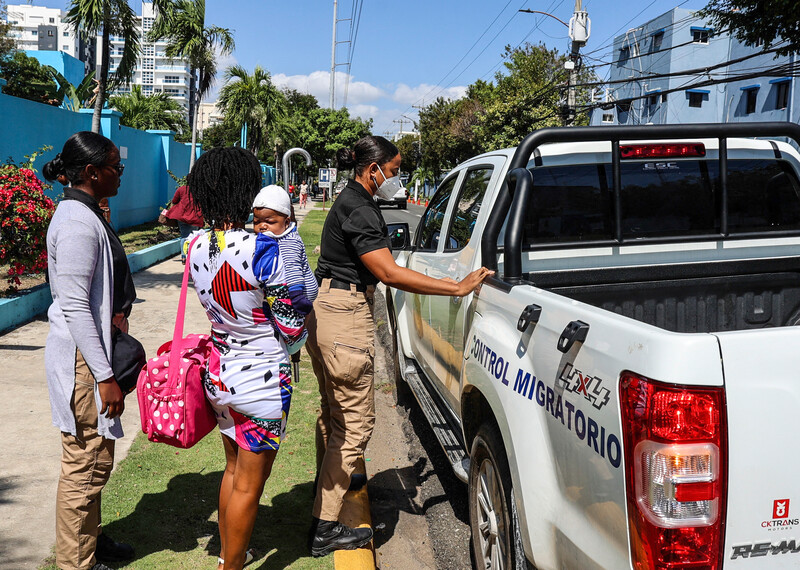
Ahead of India’s 77th Republic Day Parade celebrations on 26 January and the EU-India Summit taking place the following day, Amnesty International urges the European Union and India to work together  to counter global attacks on human rights.

“With human rights ever more embattled worldwide, it’s a crucial moment for two key global players both to get their own houses in order on human rights and to jointly re-assert the importance of human rights and the rule of law across all areas of their relations, including trade, security and defence, energy transition and people to people cooperation. In strengthening their efforts to promote and protect human rights both in domestic and foreign policy, India and the EU have the potential to achieve a partnership that can truly serve their people – and send an important signal for rights and rights holders worldwide,” said Eve Geddie, the Director of Amnesty International’s European Institutions Office.

“India must hold the EU accountable for its delivery on human rights in practice – and equally, the EU must no longer remain silent about India’s human rights record because of geostrategic and economic considerations”, said Aakar Patel, Chair of Amnesty International India. 

“The EU must clearly denounce serious human rights violations and demand that India respect its commitments in this area. Where India and the EU fail to speak about human rights, when they are under attack worldwide, both sides will send a disastrous political signal of normalization and impunity. Human rights defenders and civil society in the EU and India must be able to count on their governments to deliver what they promise on human rights.”

Background

In India, Amnesty International has long documented the mounting use of repressive laws to restrict the rights to freedom of expression, association and peaceful assembly and to crack down on peaceful dissent by harassing, surveilling and detaining human rights defenders, activists, journalists and members of civil society.

Abusive and discriminatory laws and policies against Muslims, Christians and other minorities have intensified alongside the punitive demolition of Muslim homes and other properties, despite a 2024 Supreme Court judgement and calls by United Nations independent human rights experts to end such demolitions. 

Against this concerning backdrop, human rights receive shockingly short shrift in the New Strategic EU-India Agenda, published in October 2025, which defines the EU’s approach to relations with India for the coming years.

Meanwhile in Europe, EU member states have been rolling back respect for the rule of law and backtracking on their stated commitments, affecting the rights of people across Europe, including refugees and migrants in the EU and at its borders. Human rights defenders, activists and civil society organizations – in particular those working on climate justice, refugee and migrant rights, LGBTIQ+ rights, racism and Palestinians’ human rights – increasingly face threats including from smear campaigns, criminalization and restrictions on their work. 

Both EU member states and India continue to transfer military equipment to Israel in violation of international law. Instead, they should impose a comprehensive arms embargo on Israel, including all arms, equipment, technology or parts that allow Israel to carry out the genocide in Gaza, and maintain its unlawful occupation and system of apartheid in the Occupied Palestinian Territory.

For more, see India: Amnesty International’s submission to the European Commission’s new comprehensive strategic approach to EU-India relations – European Institutions Office

The post EU-India: Crucial partners must prioritize human rights at forthcoming summit appeared first on Amnesty International.
Iran: Authorities unleash heavily militarized clampdown to hide protest massacres

Sweeping arbitrary detentions, enforced disappearances, bans on gatherings and attacks to silence families of victims mark the suffocating militarization imposed in Iran by the Islamic Republic’s authorities in the aftermath of protest massacres, Amnesty International said today.

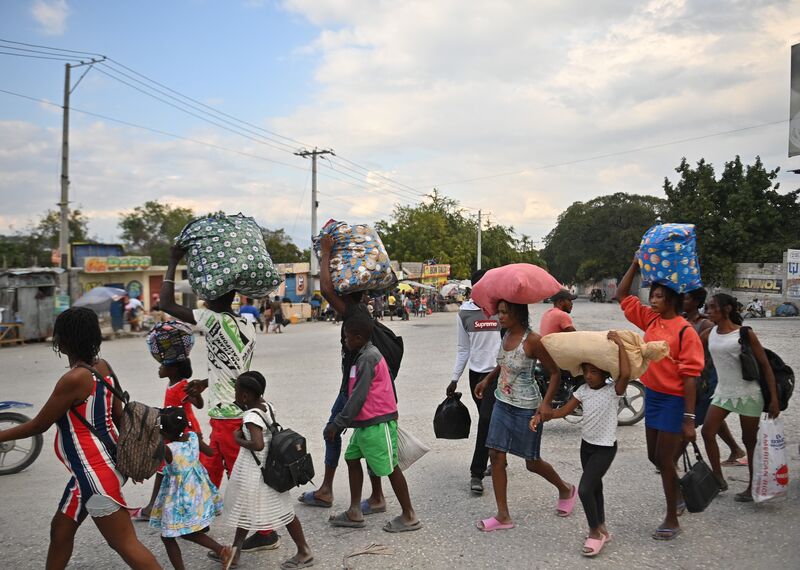
Since 8-9 January 2026, when the Iranian authorities committed mass unlawful killings on an unprecedented scale to crush the popular uprising calling for an end to their repressive rule, they have waged a coordinated, militarized clampdown to prevent further dissent and hide their crimes.

The nationwide repression has involved maintaining a complete internet blackout, deploying heavily armed security patrols, imposing nighttime curfews and preventing any gatherings. Security forces have also arrested thousands of protesters and other dissidents, and subjected detainees to enforced disappearance and torture and other ill‑treatment, including sexual violence. Authorities have further relentlessly and cruelly harassed and intimidated bereaved families of killed protesters.

“While people in Iran are still reeling from the grief and shock of the unprecedented massacres during protest dispersals, the Iranian authorities are waging a coordinated attack on the rights of people in Iran to life, dignity and fundamental freedoms in a criminal bid to terrorize the population into silence. Through the ongoing internet shutdown, the authorities are deliberately isolating over 90 million people from the rest of the world to conceal their crimes and evade accountability,” said Diana Eltahawy, Deputy Regional Director for the Middle East and North Africa at Amnesty International.

“The international community must not allow another chapter of mass atrocities in Iran to be buried without consequence. Urgent international action, including steps towards accountability through independent international justice mechanisms, is long overdue to break the cycle of bloodshed and impunity.”

On 21 January 2026, Iran’s Supreme Council of National Security issued a statement that 3,117 people were killed during the uprising. However, on 16 January 2026, the UN Special Rapporteur on Iran, Mai Sato, said in a media interview that at least 5,000 people had been killed.

Given the gravity of the situation, a Special Session on the human rights situation in Iran is taking place today at the UN Human Rights Council. In a briefing circulated to diplomats in Geneva on 19 January 2026, Iran’s Permanent Representative sought to portray the protests as a foreign-engineered “security threat” in an attempt to avoid international scrutiny. The briefing also falsely claimed that the authorities have “refrained from adopting a broad or indiscriminate hard-security approach” in the aftermath of the uprising, justifying the sweeping internet shutdown as a “public safety” measure.  

Amnesty International calls on the Iranian authorities to immediately restore internet access; release all those arbitrarily detained; disclose the fate and whereabouts of all those subjected to enforced disappearance; protect all detainees from torture and other ill-treatment; and grant detainees access to their lawyers, families and any medical care they require. Authorities must also stop the intimidation and harassment of victims’ families.

The information blackout imposed by the Iranian authorities since 8 January 2026 has severely obstructed in-depth documentation of human rights violations. Further, crucial evidence, including videos and photographs recorded on mobile phones, has been lost when security forces confiscated devices from those unlawfully killed or arbitrarily detained.

Despite this, for this press release, Amnesty International was able to speak to a human rights defender and a medical worker in Iran and 13 informed sources outside Iran, including relatives of victims unlawfully killed or detained, human rights defenders and journalists with information about violations in the provinces of Alborz, Chaharmahal and Bakhtiari, Esfahan, Gilan, Ilam, Kermanshah, Kurdistan, Razavi Khorasan, Tehran, and West Azerbaijan. Amnesty International also analyzed videos published online of the militarized clampdown in Iran and reviewed official statements and reports from independent Iranian human rights organizations.

Mass arbitrary arrests and enforced disappearances

According to reports from state-affiliated media published on 16 January 2026, the authorities have arrested thousands of people in relation to the protests. Independent reports and other information received by Amnesty International indicate that tens of thousands of people, including children, have been arbitrarily detained.

The Iranian authorities have carried out sweeping arrests across the country in recent days, seizing people during night‑time home raids, at checkpoints, in workplaces, and from hospitals. In addition to protesters, among those arrested are university students and schoolchildren, human rights defenders, lawyers, journalists, and members of ethnic and religious minorities.

Amnesty International has received distressing reports indicating that security forces arrested protesters receiving treatment in hospitals. A human rights defender in Iran told Amnesty International that security forces in Esfahan province instructed medical staff in hospitals to notify them about patients with injuries sustained from gunshots and metal pellets. Two informed sources told the organization that security forces in Esfahan and Chaharmahal and Bakhtiari provinces arrested wounded protesters from hospitals, including, those needing life-saving medical care. Given well-documented patterns of torture and other ill-treatment during past protest crackdowns, there are serious concerns that security forces will deny adequate medical care to injured protesters removed from hospitals, increasing the risk of deaths in custody.

According to information received by Amnesty International, security forces have threatened medical staff in Esfahan province with prosecution and other harm for treating injured protesters without notifying the authorities.

Detainees’ families, activists and journalists have told Amnesty International that the authorities are routinely refusing to provide any information about the fate and whereabouts of many of those detained, thereby subjecting them to enforced disappearance, a crime under international law. Some detainees have been taken to prisons and other official places of detention, while others are being held in military barracks, warehouses or other makeshift places of detention without official registration, placing them at heightened risk of torture and other ill-treatment.

Informed sources report that security forces have subjected detainees to torture and other ill-treatment during arrest and in detention, including through beatings, sexual violence, threats of summary executions, and deliberate denial of adequate food, water and medical care.

In one case documented by the organization, security forces raided the family home of a protester, Amirhossein Ghaderzadeh, in Rasht, Gilan province, on 9 January 2026 and arrested him. Agents stripped him and his two sisters, one of whom is a 14-year-old child, naked to inspect their bodies for metal pellets to “prove” their participation in protests. Since then, the authorities have refused to disclose his fate and whereabouts to his family, thereby subjecting him to enforced disappearance.

Amnesty International has received reports from informed sources that, amid the systemic denial of access to lawyers, authorities are forcing detainees to sign statements they have not been allowed to read and to give forced “confessions” to crimes they did not commit as well as to peaceful acts of dissent.

In recent days, state media has broadcast dozens of propaganda videos showing detainees “confessing” to peaceful acts such as sending protest images to media outside Iran, as well as to violent acts including vandalism and arson. The Iranian authorities have a long history of broadcasting torture-tainted forced “confessions” to shape public opinion and pave the way for harsh sentences, including the death penalty.

Amid a climate of systemic impunity granted to security forces, Amnesty International is gravely concerned about the recurrence of previously documented patterns of torture and other ill-treatment against detained protesters, including beatings, floggings, electric shocks, mock executions, suspension from the wrist or neck, rape and other forms of sexual violence.

Public statements by senior officials labelling protesters as “terrorists” and “criminals” have compounded fears of further arrests and expedited grossly unfair show trials leading to arbitrary executions.

Since 10 January 2026, the Prosecutor General of Iran and provincial prosecutors have publicly described protesters as mohareb (“an individual accused of waging war against God”), which carries the death penalty in Iran.

On 19 January 2026, the Head of the Judiciary, Gholamhossein Mohseni-Eje’i, ordered for rapid prosecutions and “deterrent” punishments. Two days later, he publicly boasted about ordering harsher charges against arrested protesters than those levelled by prosecutors. In a flagrant violation of fair trial rights, he has also interrogated protesters without lawyers present in coerced “confessions” broadcast on state media.

Intimidation of victims’ families

Families of those killed or detained have been subjected to a systematic campaign of intimidation and coercion.

Authorities have pressured relatives into holding burials in the middle of the night in the presence of security forces. Amnesty International has received information from a medical worker who said that in Mashhad, Razavi Khorasan province, security forces conducted mass burials without notifying the families of those killed.

According to information gathered by Amnesty International, following the massacres on 8-9 January 2026, many relatives were told that the bodies of their loved ones would be withheld unless they paid extortionate sums of money, signed pledges or made public statements falsely declaring that their deceased relatives were members of the Islamic Revolutionary Guards Corps’ Basij battalions, rather than protesters, and blaming their deaths on “terrorists”.

The relative of a woman killed in Tehran province sent Amnesty International screenshots of a conversation with a family member in Iran, who wrote:

“They [authorities] have committed atrocities here. Security forces shot […] and she bled to death because she didn’t receive any medical care… When someone is killed, they don’t easily hand over the body to the family. If the family wants to claim the body, they should write that the person was from the Basij and that they were killed by protesters.”

An informed source told the organization that he knows of at least one victim killed in Tehran province on 8 January 2026 whose family has not been able to recover their relative’s body more than two weeks after his death because they are unable to afford the sum demanded by the authorities.

The authorities have broadcast statements from several grieving families forced to support false state narratives about the unlawful killing of their loved ones. In one case involving the unlawful killing of a two-year-old child who was shot in the head in Neyshabur, Razavi Khorasan province, on 9 January 2026, state media broadcast several propaganda videos seeking to absolve the security forces of responsibility and blame her killing on “terrorists”. One video shows a statement from her father in which an off-camera voice can be heard prompting him on what to say, with the father repeating verbatim. The authorities have not released the child’s full name but reported her first name as “Bahar”.

Amnesty International has learned that many families are still searching for missing loved ones, as the authorities continue to deny them any information about whether their loved ones have been killed or are held in detention.

Militarized environment causing suffocating repression

Since 9 January 2026, the authorities have imposed sweeping military-style control measures across the country. Heavily armed units of security forces have been deployed nationwide, erecting dense networks of checkpoints and armed patrols across cities and inter-city roads.

Security forces routinely stop people’s cars arbitrarily and conduct vehicle and mobile phone searches. Informed sources have told the organization that the authorities have restricted freedom of movement and enforced nighttime curfews. From dusk onwards, security forces order people through loudspeakers to return to their homes and stay there. Such patrols warn that street gatherings of two or more people are prohibited and will result in arrests. 

Amnesty International analysed videos published online which support eyewitness accounts of the militarization. A video from Mashhad, Razavi Khorasan province, posted on 15 January 2026, shows security forces patrolling Hashemiyeh and Vakil Abad boulevards on foot and vehicles.

Another video from Borujerd, Lorestan province, published online on 17 January 2026, shows armed security forces in beige camouflage uniforms, equipped with lethal firearms, and vehicles along Takhti Boulevard. The video shows tank trucks and what appear to be repurposed civilian trucks mounted with large nozzles, likely to be used as water cannons.

A third video posted on 15 January 2026 from Tonekabon (Shahsavar), Mazandaran province, shows dozens of security forces vehicles, including motorcycles and an armoured personnel carrier, transporting agents through Shiroudi Boulevard.

Other videos show security forces taunting residents to create an intimidating atmosphere. A video published online on 20 January 2026 shows armed security forces with their faces covered, patrolling streets in residential areas in pick‑up trucks mounted with heavy machine guns and repeatedly ordering residents to “go inside” while chanting phrases hailing the Supreme Leader. Amnesty International was unable to independently verify the location where this footage was recorded.

The post Iran: Authorities unleash heavily militarized clampdown to hide protest massacres appeared first on Amnesty International.
Kazakhstan: Drop charges against Atajurt activists facing up to 10 years in prison for peaceful protest

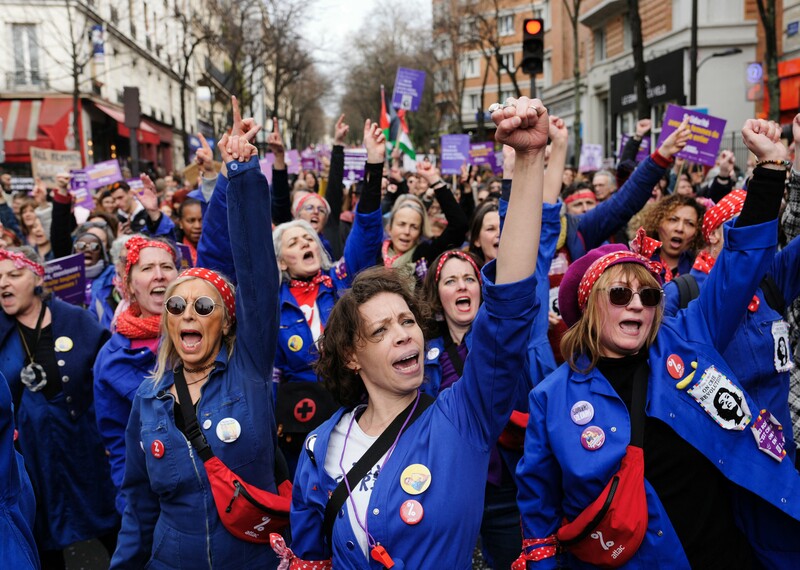
Ahead of the start of the trial of 19 activists from the Kazakhstani human rights group Atajurt, who are being prosecuted for taking part in a peaceful protest calling for the release of a detained Kazakhstani citizen in China, Marie Struthers, Amnesty International’s Eastern Europe and Central Asia Director, said:

“The Kazakhstani authorities must urgently step back from the reckless misuse of criminal law and do what international human rights standards plainly require: drop these baseless charges and immediately release all the detained Atajurt activists. Peaceful protest is not a crime simply because it makes those in power uncomfortable – even when that discomfort extends to displeasing a powerful geopolitical player such as China.”

Peaceful protest is not a crime simply because it makes those in power uncomfortable – even when that discomfort extends to displeasing a powerful geopolitical player such as China

Marie Struthers, Amnesty International’s Eastern Europe and Central Asia Director

“The ‘incitement of hatred’ charges have once again been deployed as a blunt instrument to silence dissent, corrupting this safeguard against genuine incitement to violence or discrimination. The authorities must drop this prosecution and immediately release the activists.”

Background

The trial will begin on 23 January in the city of Taldykorgan. The activists are facing up to ten years’ imprisonment.

On 13 November 2025, the 19 activists were detained after staging a peaceful protest near the Kazakhstan-China border in the Almaty region. The protesters, all ethnic Kazakhs originally from China’s Xinjiang Uyghur Autonomous Region (XUAR), were calling for the release of Alimnur Turganbay, a Kazakhstani citizen detained in China since July 2025 under unclear circumstances.

Following the protest, participants were initially accused of administrative offences, including “hooliganism,” and penalized with fines and short-term detention of up to 10 days. Shortly afterwards, and following a diplomatic note from the Chinese authorities, all 19 activists were charged under Article 174 of the Criminal Code for allegedly “inciting ethnic or national discord.” Thirteen were remanded in custody and six of them were placed under house arrest.

The Atajurt movement, which documents and amplifies testimonies of ethnic Kazakhs and other Turkic minorities subjected to repression in China, has faced sustained pressure since 2019, when its founder, Serikzhan Bilash, an ethnic Kazakh from XUAR, was prosecuted under Article 174, forcing him to flee Kazakhstan and later seek refuge in the United States.

The post Kazakhstan: Drop charges against Atajurt activists facing up to 10 years in prison for peaceful protest appeared first on Amnesty International.