
Ukraine: Russia’s cruel siege warfare tactics unlawfully killing civilians – new testimony and investigation

The Russian military’s siege warfare tactics in Ukraine, marked by relentless indiscriminate attacks on densely-populated areas, are unlawfully killing civilians in several cities, Amnesty International said today in a new on-the-ground investigation.

For the first time, Amnesty International field investigators in Ukraine have independently verified physical evidence of banned cluster munitions, the use of which violates international law. They have also collected testimony that documents Russian siege tactics, including unlawful indiscriminate attacks, disruption of basic utilities, cuts to communication, destruction of civilian infrastructure, and restrictions on access to medicine and healthcare.  

A defining feature of these cruel sieges is Russia’s relentless indiscriminate attacks, which cause utterly devastating harm over time.

Joanne Mariner, Amnesty International’s Crisis Response Director

In recent weeks, Russian forces have been using inherently indiscriminate weapons – such as cluster munitions, and inaccurate weapons with wide-area effects such as unguided ‘dumb’ bombs and Multiple Launch Rocket Systems (MLRS) salvos – in attacks on densely-populated civilian areas.

As such, Russian forces’ assaults on towns and cities and wanton destruction of the infrastructure of daily life violates international humanitarian law and international human rights law. Launching indiscriminate attacks which kill or injure civilians also constitute war crimes.

“A defining feature of these cruel sieges is Russia’s relentless indiscriminate attacks, which cause utterly devastating harm over time,” said Joanne Mariner, Director of Amnesty International’s Crisis Response Programme.

“For five weeks now, civilians across Ukraine have seen their cities razed day-by-day. Our on-the-ground research has documented how some of society’s most at-risk people are disproportionately suffering as these brutal siege tactics continue.

“Civilians trapped in cities under siege must urgently have access to humanitarian corridors to enable the safe evacuation of all who wish to leave. Humanitarian supplies must also be allowed to reach those who remain behind.”

Amnesty International conducted in-person and remote interviews with people who experienced sieges in five cities, including Kharkiv and Mariupol. Amnesty International’s Crisis Evidence Lab analyzed relevant satellite imagery, and verified videos and photos of the incidents described below. In the coming weeks, Amnesty International will publish further evidence gathered during on-the-ground investigations in Ukraine.
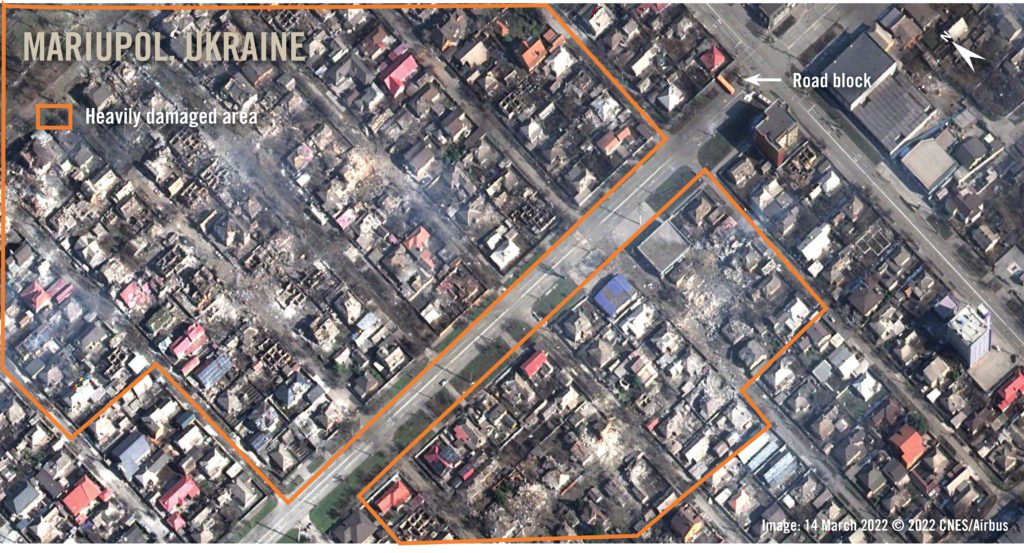
Satellite imagery showing the destruction of Mariupol, March 2022.

Indiscriminate attacks 

Russian forces reached the northern suburbs of Kharkiv in the first days of the invasion, and quickly implemented siege tactics, attempting to encircle the city and firing inaccurate weapons into populated areas.

Amnesty International has documented a broad pattern of unlawful indiscriminate attacks across populated areas in Kharkiv. On 28 February, three MLRS salvos struck the northern part of the city and killed at least nine civilians, including children, and wounded at least another 18.

In an attack on the morning of 4 March, Olesky Stovba, a 41-year-old father, was injured by a cluster munition while buying groceries on Zaliznychna Street in Kharkiv’s Mala-Danylivka district.

He told Amnesty International: “We found some food, and we stood outside the food shop and I heard a great sound. I turned myself and I saw a lot of little fire. It was the height of my knees, 50 metres from me. I fell down, and my wife too, and I felt something hit my right leg… I pulled down my trousers and saw lots of blood.”

Surgeons later removed three fragments from his right groin, calf, and foot. Amnesty International’s Crisis Response weapons investigator examined the physical evidence in person, and confirmed the largest fragment was from either a 9N210 or 9N235 cluster munition.

Kharkiv’s Saltivka district has also been repeatedly targeted during the siege of the city. Amnesty International’s Crisis Evidence Lab verified 22 incidents in the district, showing damage to civilian areas including schools, residential blocks, food markets, and a tram depot, between 27 February and 16 March. Photos from strikes depict remnants of Smerch rockets and cluster munitions across the area.

One man*, who has been running a bomb shelter in Saltivka, told Amnesty International: “It has become my new reality — shootings and bombings, helping older women out of the rubble, no gas, no water, no electricity. Once every three days, we boil ice for water. There are 300 people in the shelter. The majority are older, fragile, [they have] asthma, diabetes. There are some who haven’t left the shelter in three weeks. The biggest problem in Saltivka is that the older people die for lack of medicine, from shock, from a heart attack. It is important to get them in the ground and bury them, it will get warmer soon and they will decompose.”

In a shelter in Lviv, Amnesty International researchers interviewed a 16-year-old girl who had been evacuated alone from Kharkiv. The organization verified a photo showing the remains of a 220mm Uragan rocket that struck close to her family’s apartment complex, which is near a school.

She told Amnesty International: “The missile struck at night, and I smelled the fire and felt the waves. All of my family, we all live in the corridor of the apartment building from the first day of the war.”

Amnesty International has previously confirmed that cluster munitions killed a child and two other civilians taking shelter at a preschool in Sumy Oblast, and documented an airstrike that killed civilians queueing for food in Chernihiv.

Denial of basic services

Communication with civilians in besieged cities is extremely difficult due to disrupted mobile and internet service. Many people spend the majority of their time in underground bomb shelters with weak or no signal. Access to communications and the internet are essential for safety, and for access to vital information regarding possible evacuation routes.

In the cities of Kharkiv and Izium, compounds containing TV towers were damaged by strikes. Open-source research and satellite imagery analysis by Amnesty International shows that Kharkiv's TV tower compound was likely damaged twice between 27 February and 17 March, and service outages were reported from 6 March. A building associated with Izium’s TV tower was damaged on 12 March, then further damaged by 20 March. Open-source reports again confirmed disruption to broadcasting. Many older residents rely on television for news and for emergency information from the government.

Amnesty International previously documented how civilians in Izium are on the brink of a humanitarian disaster as Russian forces have bombarded the town since the invasion began.

Impact on at-risk people

The conflict continues to have a significant impact on older people and people with disabilities, which siege warfare further exacerbates.

Alexander Mihta, a 39-year-old in Kharkiv, is diabetic and has severe trouble walking due to the damage the disease has caused to his feet. He drove his wife and daughter to the Polish border, but then had to stay in Ukraine following the implementation of martial law. His apartment building in Kharkiv was struck by Smerch rockets, which smashed steam pipes, cutting heating and flooding the lower floors. Amnesty International’s Crisis Evidence Lab verified 21 photos that confirmed damage to the residential building. Mihta later escaped to a shelter in Lviv with his father.

He told Amnesty International: “The shelling worsened the whole time. I needed food, so I left and went to shop. I have diabetes and I ran when the shelling worsened, and I twisted my leg. I was trying to get to the bomb shelter but couldn’t. I broke six bones, and they [doctors] want to amputate.”
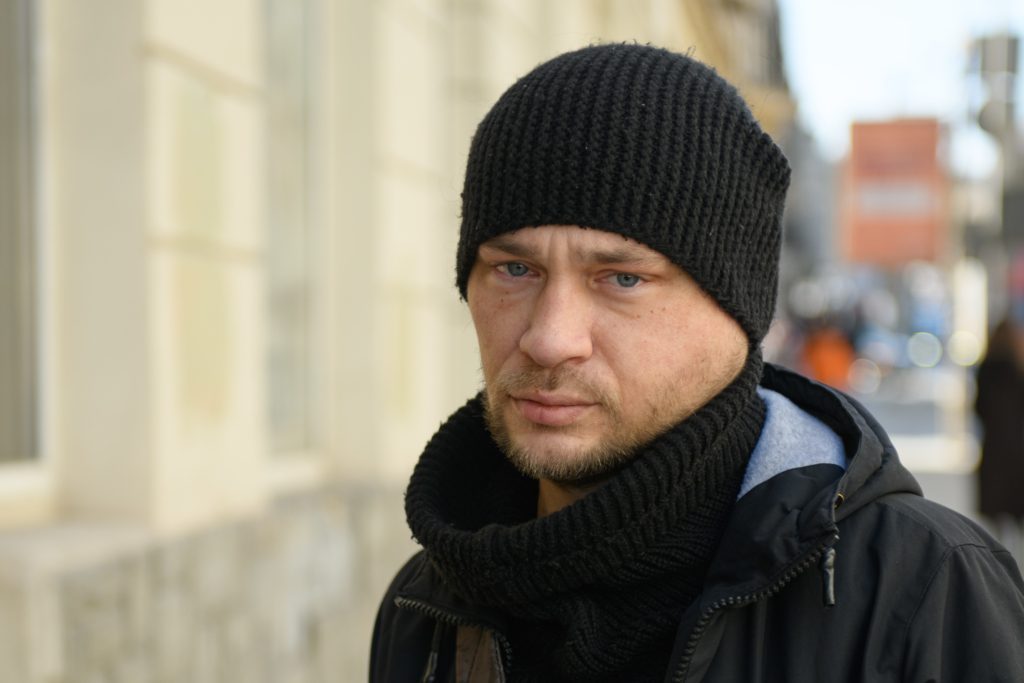
Alexander Mihta.

Amnesty International also interviewed a 61-year-old woman* who has stayed in Kharkiv to care for her mother, aged 84, who has dementia and is unable to travel.

She said: “The older people, we are staying. My mother can hardly move… We are from Luhansk and had to get my mother from Luhansk… We left for my daughter’s flat in Kharkiv and we are stuck here. One in every 24 hours we spend outside.

“I talk to my mother. I take her to the toilet and help her undress. I have to always explain to her why we are in Kharkiv, and why we are in the basement. She has dementia and always forgets why she is in the basement, and I have to tell her all day long. She used to have a decent life, she could walk in the garden. Not anymore.”

Older people and people with disabilities, as well as other groups who may face particular risks and challenges when fleeing, should be prioritized for evacuation, as specified in international humanitarian law. Planning and communication about evacuations and safe humanitarian corridors must also be undertaken in an inclusive way, including by ensuring that information, transportation, and services are all accessible.
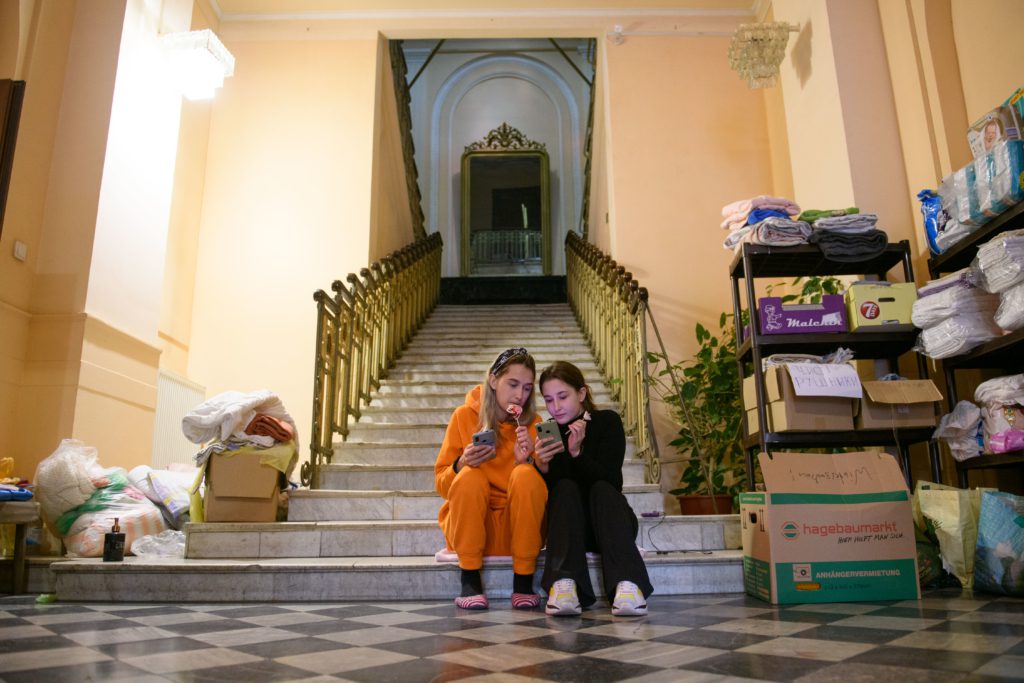
Girls take shelter in Lviv.

STOP THE AGGRESSION AND PROTECT CIVILIANS IN UKRAINE

Right now, people in Ukraine are facing a catastrophic human rights crisis. People are dying, including children, and many thousands of lives are at risk. Take action to demand that the Russian authorities stop this act of aggression and protect civilians now.

The post Ukraine: Russia’s cruel siege warfare tactics unlawfully killing civilians – new testimony and investigation appeared first on Amnesty International.

Syria: New anti-torture law “whitewashes” decades of human rights violations

Responding to the news that Syrian President Bashar al-Assad has enacted a new anti-torture law that fails to address a decade of torture, ill-treatment and extrajudicial executions carried out by Syria’s security forces, Lynn Maalouf, Amnesty International’s Deputy Regional Director for the Middle East and North Africa, said:

“While we welcome any legislative steps towards complying with internationally recognized anti-torture conventions, the new law effectively whitewashes decades of state-sanctioned human rights violations.

“It fails to offer redress to past victims of torture, include any protection measures for witnesses or survivors of torture, nor does it state whether torture survivors, or in the event of their death, their families would receive compensation. Crucially, it fails to mention any measures that could be taken to prevent torture from occurring in detention centres and prisons in the future.”

“Amnesty International calls on the Syrian authorities to urgently allow independent monitors to access the country’s notorious detention centres – where torture leading to death has been taking place at a mass scale for years – as a first step to signalling any genuine intent to curtail the practice of torture by state agents. Furthermore, the anti-torture law must align with international human rights law – and that means as a first step, ensuring that the perpetrators of torture, cruel, inhuman or other ill-treatment face justice in fair trials before ordinary civilian courts and without recourse to death penalty.”

Background

The anti-torture law was enacted by Presidential Decree on 30 March after being discussed in Syria’s parliament for the first time on 28 March. 

Amnesty International has previously documented inhuman conditions across Syria’s prisons. The widespread and systematic use of enforced disappearance, torture and other ill-treatment, which has led to deaths in detention, and extrajudicial executions following sham trials, amount to crimes against humanity.

The post Syria: New anti-torture law “whitewashes” decades of human rights violations appeared first on Amnesty International.

Latest news on Russia’s war on Ukraine


Ukraine: a devastating human rights crisis

Right now, people in Ukraine are facing a human rights crisis. People are dying, including children, and many more are at risk.

As Russia continues its war against Ukraine, Amnesty International is exposing violations of human rights and international humanitarian law, and gathering evidence from our researchers on the ground and our Crisis Evidence Lab. From the devastation of Izium to the siege of Mariupol, from shelling in Kyiv to displaced people in Lviv, we’re helping to keep the world informed about what is happening in Ukraine.

Russian President Vladimir Putin, his government and the Russian armed forces are desperate to hide the truth about the war, including the possible war crimes they are committing in Ukraine. This page will feature Amnesty International’s regular updates on the conflict, which help to uncover the human rights crises caused by Russia’s invasion. Click on the links below to access our briefings and investigations into the human rights issues surrounding the conflict.

The invasion has triggered a huge human rights, humanitarian, & displacement crisis that has the makings of the worst such catastrophe in recent European history. Russia is breaching the sovereignty of Ukraine & challenging the global security architecture.

Agnes Callamard, Secretary General of Amnesty International

Russia’s aggression against Ukraine

A massive humanitarian crisis

Russia’s invasion of Ukraine is an act of aggression that has unleashed the gravest human rights and refugee crisis in Europe since World War Two. Amnesty International is documenting serious violations of international humanitarian and human rights law, including the unlawful killing and injury of civilians, destruction of infrastructure, and blocking of desperately needed aid for civilians. Attacks on hospitals and schools, employing “surrender or starve” sieges on civilians, the use of banned weapons such as cluster munitions, and strikes on populated areas using inaccurate weapons may constitute war crimes.

Exposed to constant attacks and with many cut off from water, electricity and heating, people caught up in conflict in cities such as Izium and Mariupol are on the brink of a humanitarian disaster. Diminishing food, water and medical supplies have left them at breaking point, as remaining civilians seek shelter in their basements. Amnesty International’s on-the-ground reports and digital investigations help ensure that evidence of these attacks reaches the world.

The invasion has triggered a huge human rights, humanitarian, & displacement crisis that has the makings of the worst such catastrophe in recent European history.

Agnes Callamard, Secretary General of Amnesty International

Amnesty International’s Crisis Evidence Lab has been working hard to identify and verify the details of possible unlawful attacks which have killed or injured civilians, and destroyed or damaged civilian infrastructure in Ukraine.

This documentation provides essential evidence which can later be used to hold perpetrators of violations accountable.

A refugee crisis in Europe

The worst since World War Two

Ukrainian civilians whose homes have been destroyed and others fearing for their lives are being forced to flee the country en masse. To date, thousands of people have been living under unlawful bombardment, while millions have been displaced over the course of the conflict in Ukraine. An estimated 3.8 million people have already fled into neighbouring countries.

The Russian forces’ assault on civilian populations and the destruction of Ukraine’s civilian infrastructure violates international humanitarian and human rights law. The parties to the war must make every effort to spare civilians, prioritize their safe passage out of conflict areas, and allow access to impartial humanitarian relief. Amnesty International is calling on the parties to agree on establishing well-planned, safe humanitarian corridors and to respect such agreements in good faith.

Genuine humanitarian corridors must be established quickly, effectively, and safely

Agnès Callamard, Amnesty International’s Secretary General

Russia’s crackdown on protests and media

Imprisonment, censorship, disinformation

The Russian authorities have unleashed an unprecedented, nationwide crackdown on independent journalism, anti-war protests and dissenting voices following Russia’s invasion of Ukraine. The Kremlin remains hellbent on hiding the human cost of its war and has blocked independent news sites and social media. Meanwhile, anyone caught spreading what it regards as “fake news” about the conflict faces a prison sentence of up to 15 years.

Coupled with a campaign of disinformation, the media blackout seeks to entirely deprive the Russian people of access to objective, trustworthy information about the conflict. As repression mounts, at least 150 critical journalists have fled the country so far. Yet despite the risks, Russia’s anti-war movement continues to fill the streets with rallies — even though more than 15,000 protesters have been arbitrarily detained since the start of the invasion.

As thousands of protesters take to the streets across Russia to denounce the war, the Kremlin remains hellbent on stifling state critics as it coerces domestic media into supporting its policies

Marie Struthers, Amnesty International’s Eastern Europe and Central Asia Director

STOP THE AGGRESSION AND PROTECT CIVILIANS IN UKRAINE

Right now, people in Ukraine are facing a catastrophic human rights crisis. People are dying, including children, and many thousands of lives are at risk. Take action to demand that the Russian authorities stop this act of aggression and protect civilians now.

The post Latest news on Russia’s war on Ukraine appeared first on Amnesty International.

Singapore: Shameful resumption of executions after more than two years won’t end drug-related crime

Responding to reports that the Singapore government executed Abdul Kahar bin Othman on 30 March, Amnesty International Southeast Asia Researcher Rachel Chhoa-Howard said:  

“After two years of no executions, the hanging of Abdul Kahar bin Othman, who was sentenced for drug-related offences and to the mandatory death penalty, is a shameful breach of international law. 

“There is overwhelming evidence that punitive drug policies, including imposing the death penalty for drug use and possession, do not solve problems associated with drugs. The Singapore government should focus on evidence-based and community-based approaches rooted in the respect of public health and human rights to avert drug dependence and other societal harms that may result from the use of drugs. 

“Singapore’s use of the death penalty is out of step with the global trend towards abolition and the country is among a handful that still resort to executing those convicted of drug-related crimes. After a short hiatus of no executions in Singapore, we call on the authorities to halt a feared new wave of hangings. The government must also urgently establish an official moratorium on all executions and review the scope of the death penalty for drug-related offences as first moves towards its full abolition.”  

Background  

Before today, the last known execution in Singapore was carried out in November 2019. 

The family of Abdul Kahar bin Othman were provided notice and asked to make arrangements for last visits in a letter dated 23 March. He was convicted of drug trafficking and sentenced to the mandatory death penalty in 2015. 

The execution comes a day after a Singapore court upheld the death sentence for Malaysian national Nagaenthran Dharmalingam, despite medical experts finding that he had an intellectual disability. He could be executed within days. 

Nagaenthran’s appeal hearing was postponed in November when he tested positive for Covid-19. His appeal hearing was re-set to 29 March and, with other appeals exhausted, was one of his last opportunities for him to be spared execution. In the ruling, the court rejected arguments about the decline of his mental state, and they have similarly dismissed challenges based on his intellectual ability. 

International human rights law and standards further prohibit the imposition of the death penalty for drug-related offences and as the mandatory punishment for any offences. All those who have had their execution set in Singapore since late 2021 have been convicted of and sentenced to the mandatory death penalty for drug-related offences. 

Amnesty International opposes the death penalty unconditionally, in all cases and under any circumstances. More than two-thirds of countries all over the world have abolished the punishment in law or practice.

The post Singapore: Shameful resumption of executions after more than two years won’t end drug-related crime appeared first on Amnesty International.

Singapore: Executions feared as soon as Wednesday after two years with no hangings

Responding to the rejection of the death penalty appeal of Malaysian national Nagaenthran Dharmalingam and the imminent execution of Abdul Kahar bin Othman in Singapore, Amnesty International’s Southeast Asia Researcher Rachel Chhoa-Howard said:

“A man sentenced to the mandatory death penalty for drug-related offences faces execution on Wednesday, and fears are growing that more are to come. After two years without any executions, we urge the Singapore government to refrain from reinstating the use of this cruel punishment.

“Nagaenthran Dharmalingam lost his appeal, clearing the way for his execution by hanging as early as this week. This shocking outcome is despite serious concerns about his intellectual and mental capacity, and collective outrage from around the world.

“Throughout his 18 years in power, Prime Minister Lee Hsien Loong’s cabinet has not once approved an order for the President to grant clemency to someone facing execution. But if there was ever a time to do so, it would be now.

“The government must act immediately to stop a grave travesty of justice from taking place and end its inhumane, shameful strategy of using the death penalty to address drug-related problems.

“The use of the death penalty in Singapore violates international human rights law and standards. The death penalty is never the solution to crime or the solution to address the risks and harms of using drugs. We call on the government to abolish the death penalty once and for all.”

Background
There was mass outrage last year when, despite medical experts finding that Nagaenthran Dharmalingam has an intellectual disability, his family learned that the Singapore authorities had scheduled his execution for 10 November. Concerns mounted when his family reported that his mental health had deteriorated significantly when they visited him in prison, where he appeared to not fully understand what was happening to him.

The UN body monitoring compliance of the Convention on the Rights of Persons with Disabilities (CRPD), to which Singapore is a party, stated that the imposition of the death penalty on people whose mental and intellectual disabilities is prohibited.

Nagaenthran’s appeal hearing was postponed in November when he tested positive for Covid-19. His appeal hearing was re-set to 29 March and, with other appeals exhausted, was one of his last opportunities for him to be spared execution. In the ruling, the court rejected arguments about the decline of his mental state, and they have similarly dismissed challenges based on his intellectual ability.

International human rights law and standards further prohibit the imposition of the death penalty for drug-related offences and as the mandatory punishment for any offences. All those who have had their execution set in Singapore since late 2021 have been convicted of and sentenced to the mandatory death penalty for drug-related offences.

The authorities of Singapore have set another execution for this Wednesday, 30 March. The family of Abdul Kahar bin Othman were provided notice and asked to make arrangements for last visits in a letter dated 23 March. He was convicted of drug trafficking and sentenced to the mandatory death penalty in 2015.

Amnesty International opposes the death penalty in all cases and under any circumstances.

The post Singapore: Executions feared as soon as Wednesday after two years with no hangings appeared first on Amnesty International.