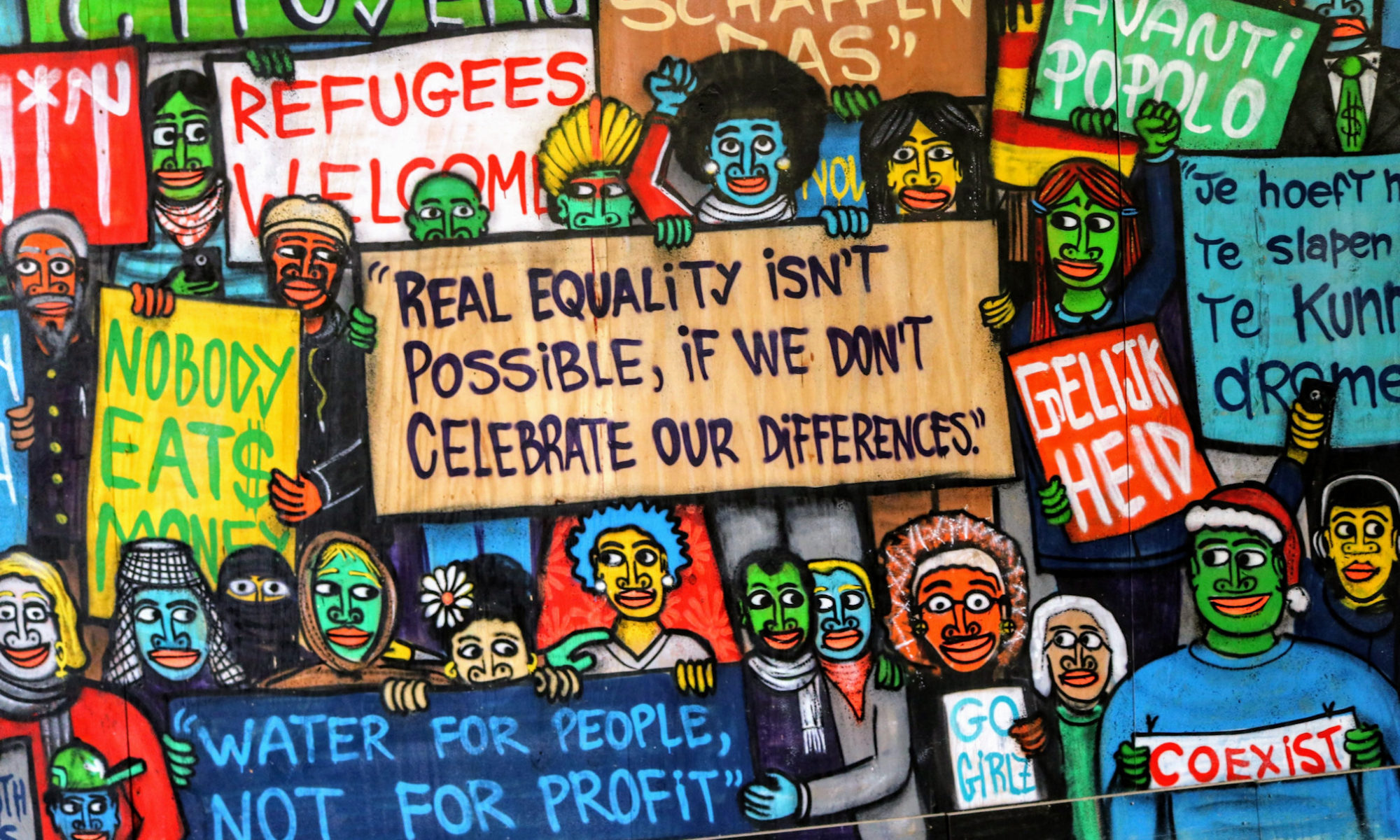
Das Deutsche Sudan-Netzwerk fordert konkrete Schritte zum Schutz der Zivilbevölkerung.
Sudan: High-income countries must use Berlin meeting to save lives as conflict hits three-year mark
International donors attending the aid conference for Sudan must secure increased funding and pressure warring parties to ensure unhindered humanitarian access to allow lifesaving healthcare services to be delivered in the country to civilians, including survivors of sexual violence, Amnesty International said today, ahead of the International Ministerial Conference on Sudan in Berlin on 15 April.
As aid has declined in Sudan, the needs have only increased. Behind these numbers are real lives, real people who have lost their homes, loved ones and livelihoods, who are fighting to survive the war and the disease and hunger it brings
Tigere Chagutah, Regional Director, Amnesty International, ESARO
Three years of conflict between the Rapid Support Forces (RSF) and the Sudanese Armed Forces (SAF) and their respective allies have created a humanitarian and health crisis in Sudan, with more than 33 million people in need of assistance. Yet, ongoing cuts to international foreign aid are threatening efforts to tackle a host of grave health risks, including malnutrition, cholera, trauma and injury.
“As aid has declined in Sudan, the needs have only increased. Behind these numbers are real lives, real people who have lost their homes, loved ones and livelihoods, who are fighting to survive the war and the disease and hunger it brings,” said Tigere Chagutah, Amnesty International’s Regional Director for East and South Africa.
“The Berlin meeting must not be another talking shop. International donors must seize this opportunity to commit more funding to frontline non-governmental organizations (NGOs) working in Sudan. They must recognize the terrible suffering of civilians and take meaningful action to alleviate it.
This urgently needed donor funding must be matched with redoubled diplomatic efforts by the international community to protect civilians – including humanitarians, health workers and local responders – and to push for accountability and justice for violations across Sudan”
Dire consequences of precarious funding
In late 2025, Amnesty International spoke to seven NGOs which either directly provide services – ranging from fuel deliveries to hospitals, to post-rape care for children in Sudan – or monitor human rights violations. Amnesty International also interviewed many people who had fled the country.
All the NGOs said insufficient funding had disrupted their operations – either forcing them to shut down or reduce their workforce. Some were lacking basic medicines, such as painkillers and antibiotics. For one international NGO (INGO), a limited supply of antibiotics led to tough decisions about who to prioritize for care.
The Berlin meeting must not be another talking shop. International donors must seize this opportunity to commit more funding to frontline non-governmental organizations (NGOs) working in Sudan. They must recognize the terrible suffering of civilians and take meaningful action to alleviate it.
Tigere Chagutah
One INGO told Amnesty International that it is in desperate need for ready-to-use therapeutic food (RUTF), a nutrient dense paste designed to treat children with severe acute malnutrition, and that it can only meet the needs of 50 per cent of the cases. CARE International estimates that up to 80 per cent of community kitchens have closed due to aid cuts, further worsening the malnutrition crisis.
Women and children disproportionately impacted
Health services for survivors of the widespread sexual violence that has been committed by all parties to the conflict has been significantly affected by aid cuts.
One women’s rights defender and activist told Amnesty International that grassroots groups had already been receiving very little lifesaving funding: “And then, after the funding cuts and setbacks to donor commitments, they are getting nothing. And that has influenced the fact that hundreds of women and little girls are being abandoned completely.”
She described access to sexual reproductive healthcare as “chaos” and said that, for survivors of sexual violence with traumatic fistula, the situation is “beyond painful.”
The escalating conflict in Sudan has caused over 4.5 million people to flee to neighbouring countries. In February, the United Nations issued an appeal for US$1.6 billion to support refugees across the region.
And then, after the funding cuts and setbacks to donor commitments, they are getting nothing. And that has influenced the fact that hundreds of women and little girls are being abandoned completely.
Activist
Some of the most at risk among them are children and adults with disabilities. Many living in displacement camps in Chad told Amnesty International of their struggles to access education and healthcare, as well as the wheelchairs and other devices that they need to move around
Yagoub*, 17, now walks with a crutch and has limited mobility after having been shot in the leg by the RSF in his village in North Darfur. He told Amnesty International he could not afford to pay for surgery to remove the shrapnel still lodged in his body: “[The medical staff] referred me to an advanced hospital… to do [an] x-ray and ultrasound… I need a lot of money… According to my previous consultation, surgery costs about 5 million Sudanese pounds (US$ 1,470).”
Yagoub said he could not go to school because it would take 10 to 20 minutes of walking to get there and he had no assistance to help him reach it.
Makawi*, a 15-year-old boy with what appears to be cerebral palsy, fled North Darfur while carried on his grandmother’s back. Without a wheelchair he cannot manoeuvre around the refugee camp in Chad where he now lives. There are no toilets or showers near the tent he shares with his grandmother: “If I need to go [to the toilet] at night, it is almost impossible.”
Makawi dreams of going to school, but it is a struggle to reach the school and too costly.
Political commitments must translate to increased aid
For NGOs working in Sudan, working on healthcare in a conflict can be complex and costly. Start-and-stop funding by donors has made it especially hard. NGOs explained that programmes must be planned months in advance, because bank systems have collapsed, and transport and security are hard to come by.
The picture described is one of scarcity and widespread violations of the rights to health and life. As one INGO leader said: “You will find the organizations still existing on the ground. But if you talk about, are you able to get enough supplies to support these facilities? My answer would be no. Are you able to get enough nutritional food for these health facilities? I will say no. Are you able to get enough immunizations or the vaccines for these facilities? My answer will be no… We don’t know what will happen tomorrow.”
According to the United Nations Office for the Coordination of Humanitarian Affairs, US funding for Sudan’s coordinated humanitarian plan halved between 2024 and 2025, and in 2025 less than 40% of the plan was financed by all donors.
In a welcome decision, following an Independent Commission for Aid Impact report on UK funding in Sudan, the UK foreign office recently prioritized Sudan and a focus on women and girls, but there remain questions around how these commitments will be delivered against a backdrop of drastic cuts to UK development staff and programs.
“It is vital that human rights, including the rights to food, health, housing, education, and water for millions of civilians are upheld despite the escalating conflict. To realise these rights, donors must urgently ensure sufficient international aid to meet essential immediate needs while also taking other longer term necessary measures such as debt relief including cancellation, to allow Sudan to spend more on vital public goods and services,” Said Tigere Chagutah
For decades, high-income states have had high level political commitments to allocate at least 0.7 per cent of their Gross National Income to overseas aid and, under international human rights law and standards, many states also have extraterritorial obligations to guarantee human rights. This commitment should translate to increased humanitarian aid for Sudanese NGOs to enable them respond to health emergencies.
Sudan, like other highly aid dependent countries in protracted conflicts, need the international community to act.
- Names have been changed to protect identities of the interviewees
More reading
https://www.amnesty.eu/news/eu-must-act-for-sudans-civilians-three-years-of-conflict/
The post Sudan: High-income countries must use Berlin meeting to save lives as conflict hits three-year mark appeared first on Amnesty International.
Eswatini: Supreme Court ruling on legal access offers limited relief for US deportees
Responding to the Supreme Court’s unanimous ruling confirming a High Court order granting lawyers access to individuals unlawfully removed by the United States (US), flown to Eswatini and held at Matsapha Correctional Complex, Amnesty International’s Deputy Regional Director for East and Southern Africa, Vongai Chikwanda, said:
“The Supreme Court’s ruling is an important step towards upholding the right to access a lawyer for people who have been unlawfully transferred by the US to Eswatini. However, it fails to resolve the deeper human rights violations at the heart of this abusive practice involving third-country removals. Amnesty International remains deeply concerned that these men continue to be arbitrarily detained.
The Supreme Court’s ruling is an important step towards upholding the right to access a lawyer for people who have been unlawfully transferred by the US to Eswatini.
Vongai Chikwanda, Deputy Regional Director, Amnesty ESARO
“Access to legal counsel is essential, but it cannot by itself redress the continuing arbitrary detention.
“The Eswatini authorities must now fully and effectively implement the Supreme Court order, ensure immediate and confidential access to lawyers, disclose the legal basis for the men’s continued detention or grant their release, and guarantee that every individual is able to challenge any onward removal.
Reports that Eswatini has agreed to receive many more deportees makes it all the more urgent that Eswatini and the US authorities immediately end this deeply abusive practice.
Vongai Chikwanda
“No one should be transferred to a country in violation of international law guarantees, then detained in secrecy without clear legal process, access to lawyers, and protection against onward unlawful removal. Reports that Eswatini has agreed to receive many more deportees makes it all the more urgent that Eswatini and the US authorities immediately end this deeply abusive practice.”
Background
In July 2025, the US removed a first group of five people to Eswatini where they were kept in arbitrary detention. This was followed by the removal of a further 10 individuals from the US to the Southern African country in October 2025. In March, four more men were transferred to the country and were detained at Matsapha Correctional Complex.
In August 2025, the African Commission on Human and Peoples’ Rights raised concerns regarding US removals of third-country nationals into African countries, including Eswatini.
The post Eswatini: Supreme Court ruling on legal access offers limited relief for US deportees appeared first on Amnesty International.
Israel/OPT: States must ensure safe passage for Global Sumud Flotilla as a civilian mission challenging ongoing genocide
On 12 April 2026, the Global Sumud Flotilla will once again set sail in a coordinated civilian initiative aim at breaking Israel’s unlawful blockade on the occupied Gaza Strip. Featuring more than 70 boats and 3,000 participants from 100 countries, the Spring 2026 mission includes a dedicated medical fleet of 1,000 healthcare professionals, carrying vital supplies to help Gaza’s decimated healthcare system. The mission seeks to deliver assistance to Palestinians enduring Israel’s ongoing genocide and decades of cruel apartheid. Responding to the launch of the Spring 2026 mission, Erika Guevara-Rosas, Amnesty International’s Senior Director of Research, Advocacy, Policy and Campaigns said:
“The Global Sumud Flotilla is a powerful symbol of international solidarity with Palestinians in Gaza, who are enduring an ongoing genocide and an inhumane blockade now approaching its 19th year. Israeli authorities must ensure safe passage for these unarmed activists and human rights defenders. There must be no repeat of Israel’s unlawful interceptions and arbitrary detentions that occurred in 2025, including the seizure of the Madleen and other vessels participating in the Global Sumud Flotilla, nor of the abuse and ill-treatment inflicted on activists during their detention last October.
The fact that these civilian missions continue to sail in the first place is a direct indictment of the international community’s devastating inaction.
Erika Guevara-Rosas, Amnesty International
“As the occupying power, Israel is legally obligated to ensure that Palestinians in Gaza have unfettered access to humanitarian aid, ranging from basic goods to life-saving supplies and goods, yet it continues to blatantly disregard its legal obligations and the binding provisional measures ordered by the International Court of Justice, in violation of international law.
“The fact that these civilian missions continue to sail in the first place is a direct indictment of the international community’s devastating inaction. States must uphold their legal obligations under international law and take concrete steps to help bring an end to Israel’s genocide against Palestinians in Gaza, including by pressuring Israel to end its unlawful blockade, which continues to inflict relentless suffering on Palestinians. States must also ensure the protection of those taking action to stop Israel’s impunity for its violations of Palestinians’ rights in Gaza.”
Background
The Spring 2026 flotilla arrives amid a dire humanitarian crisis where over 60% of children under two years are experiencing food poverty and thousands of pregnant and breastfeeding women continue to suffer from malnutrition, according to the UN. Six months on since the so-called ceasefire agreement in October 2025 and despite a reduction in the scale of attacks, Israel persists in its genocidal acts against Palestinians in Gaza by continuing to deliberately inflict conditions of life calculated to bring about their physical destruction. Israel continues to impose restrictions on the entry into Gaza of items indispensable to the survival of the civilian population including adequate food, medicines, medical equipment and assistive devices, shelter material and equipment necessary for the purification of water and removal of rubble, unexploded ordnance and waste. Israel is also limiting the distribution of aid, including by restricting which organizations are allowed to deliver relief within the Gaza Strip.
At least 723 Palestinians in Gaza, the majority civilians, have been killed since the so-called ceasefire and the overwhelming majority of the population remains displaced, while the Israeli forces remain fully deployed across nearly 60% of the Gaza Strip, which is effectively a no-go zone for Palestinians.
The post Israel/OPT: States must ensure safe passage for Global Sumud Flotilla as a civilian mission challenging ongoing genocide appeared first on Amnesty International.
Bangladesh: Death sentences for former police officers are not the answer to Abu Sayed killing
Responding to the death sentences handed down today, to two former police officers by the International Crimes Tribunal (ICT) for the killing of Abu Sayed during student-led protests in July 2024, Rehab Mahamoor, Amnesty International’s Regional Researcher and Campaigner, said:
“Abu Sayed and the many other victims of police violence during the July 2024 protests deserve justice and accountability. However, the death penalty has no place in any courtroom. It’s the ultimate cruel, inhuman and degrading punishment and its continued use by the ICT undermines efforts to deliver a just and lasting reconciliation to Bangladesh.
“In the past, Amnesty International and several other human rights organizations have also raised serious concerns that the ICT has not observed international fair trial and due process standards in many instances. Any proceedings undertaken by the ICT demand stringently impartial and transparent judicial proceedings.
The death penalty has no place in any courtroom
Rehab Mahamoor, Amnesty International’s Regional Researcher and Campaigner
“We urge the Bangladeshi authorities to take steps to establish a moratorium on the use of the death penalty, with a view to completely abolishing the punishment.”
Background
The ICT today handed death sentences to former assistant sub-inspector Amir Hossain and ex-constable Sujan Chandra Roy for their role in the killing of Abu Sayed, a student at Begum Rokeya University in Rangpur, during the July 2024 uprising. A further 28 former officers were also given prison sentences, including three who were sentenced to life in prison.
In July 2024, Amnesty International verified evidence of unlawful use of lethal and less lethal weapons by Bangladeshi authorities against student protesters including the killing of Abu Sayed, and called for accountability without recourse to death penalty.
Amnesty International opposes the death penalty in all cases, without exception as it violates the right to life enshrined in the Universal Declaration of Human Rights.
The post Bangladesh: Death sentences for former police officers are not the answer to Abu Sayed killing appeared first on Amnesty International.