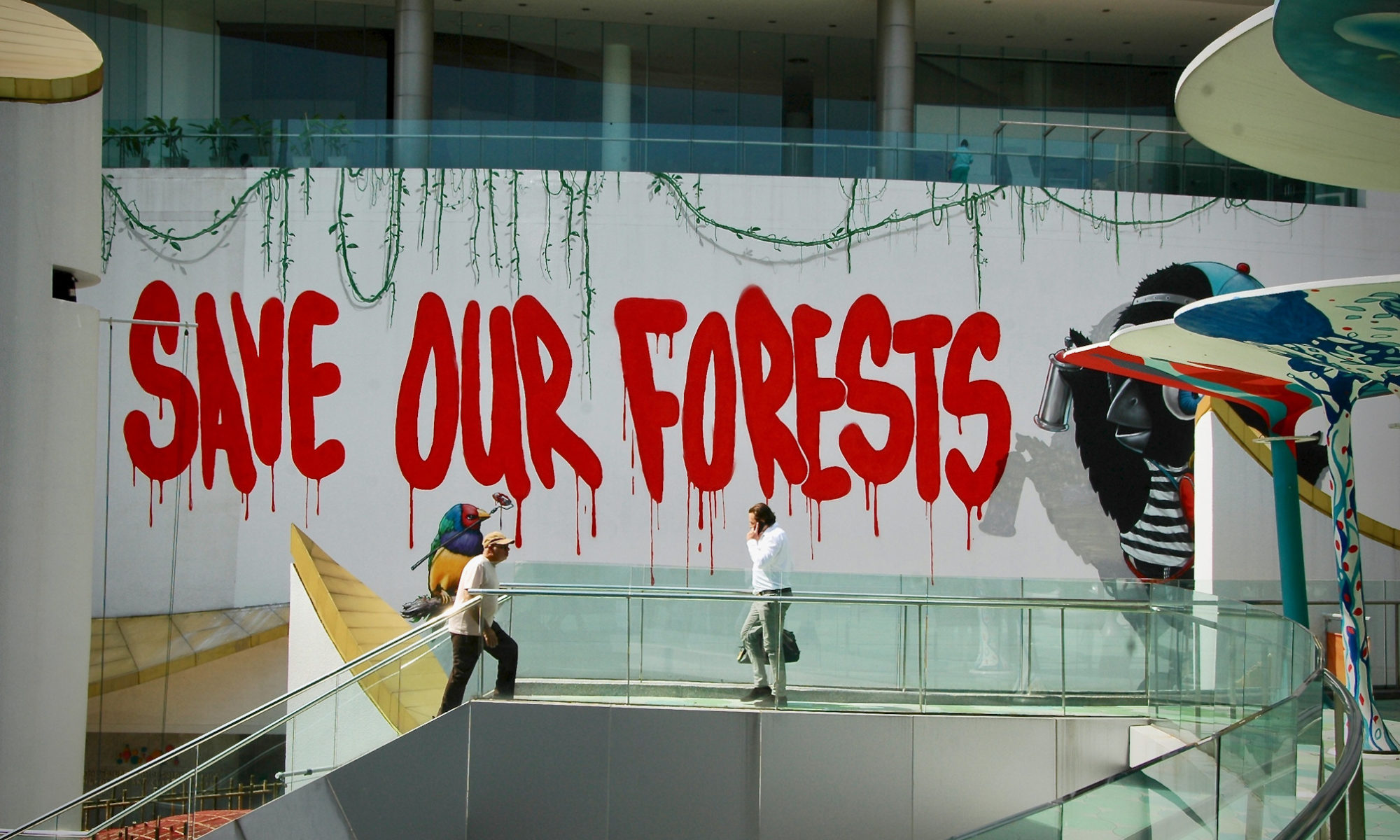
Global: Governments heading to Bonn must act on climate commitments to protect human rights 

States attending the June Climate Meetings next week in Bonn, Germany must use the talks to turn climate commitments into a concrete actionable rights-centric agenda for November’s COP31, Amnesty International said today.  

What happens in Bonn matters because it will shape the negotiations, priorities and level of ambition that governments carry into COP31 in Antalya, Türkiye later this year. These meetings are an important chance for governments to show they are ready to translate climate commitments made in the recently adopted United Nations General Assembly (UNGA) resolution on last year’s ICJ Advisory Opinion on climate change into action that is rooted in human rights, equity and justice.  

“Governments must now act with urgency to deliver on their legal obligations to protect humanity and to help impacted groups recover from harms caused by climate change. Climate action that ignores human rights is not only unjust, but also less effective,” said Ann Harrison, Amnesty International’s Climate Policy Advisor. 

“If governments want credible outcomes in Antalya, they need to show at Bonn that they are serious about moving from rhetoric to delivery.” 

In recommendations published ahead of the meeting, Amnesty International calls on governments to commit to a full, fast, fair and funded phase out of fossil fuels through a just transition, to scale up grants-based climate finance; provide full reparations for climate change related loss and damage, and to protect civic space and strengthen the participation of Indigenous Peoples, environmental human rights defenders and affected communities in climate decision-making.  

Climate action that ignores human rights is not only unjust, but also less effective.

Ann Harrison, Amnesty International’s Climate Policy Advisor.

The need for action is urgent 

Amnesty International is urging all parties to the climate treaties to build on progress at the recent conference in Santa Marta towards an equitable transition away from fossil fuels that leaves no one behind, including by ending fossil fuel subsidies while protecting people on lower incomes. 

It’s important that the Just Transition Mechanism agreed at COP30 is effective and funded in its setup so that it prioritizes human rights and the meaningful participation of civil society, affected groups and the free, prior and informed consent of Indigenous Peoples.  

The organization is also calling for major progress on climate finance. According to United Nations Framework Convention on Climate Change (UNFCCC) data, lower-income countries’ needs for mitigation and adaptation are estimated at USD 5 to 6 trillion by 2030, with the USD 300 billion per year by 2035 finance goal agreed at COP29 remaining far below what is needed. The shortfall in adaptation finance is particularly acute. 

“The fact that some countries insisted on removing references to climate finance from the recent UNGA resolution does not mean that obligations to provide it have gone away. We know the money is there, it’s a matter of political choice as to how it is allocated. It’s essential that the biggest polluters are made to pay for the harm they are causing,” said Ann Harrison. 

“Scaled up, primarily grants-based finance for climate action is the key to ensuring that the rights of all people, everywhere, now and in the future, are protected. This will ensure that they can live lives of dignity on a planet that can sustain both humans and the essential ecosystems of which we’re a part and on which we depend.” 

Amnesty International is further urging governments to adopt a reparative justice approach and to strengthen support for the Fund for Responding to Loss and Damage, including by ensuring that it operates in a fully human rights-compliant way and is backed by an ambitious resource mobilization strategy.  

Scaled up, primarily grants-based finance for climate action is the key to ensuring that the rights of all people, everywhere, now and in the future, are protected. 

Ann Harrison

Access and inclusion 

A central test for Bonn will be whether the talks are open and accessible to those most affected by climate change. Amnesty’s recommendations stress that frontline communities, Indigenous Peoples, environmental human rights defenders and marginalized groups must be able to participate meaningfully in climate negotiations. The organization has raised concerns about visa access for Bonn participants and has called for all host countries to provide a dedicated UNFCCC visa process.  

Amnesty International is also urging Germany and the COP31 co-hosts Türkiye and Australia to ensure that all participants can freely express themselves and peacefully demonstrate without undue restrictions and fear of reprisals. 

“Bonn must help shift the pendulum on climate towards justice. Governments should arrive ready to make progress on a just transition away from fossil fuels, which requires adequate climate finance and reparations for loss and damage, as well as the protection of civic space. Anything less would be another failure for people already paying the price of climate inaction,” said Ann Harrison. 

Bonn must help shift the pendulum on climate towards justice. 
Anything less would be another failure for people already paying the price of climate inaction

Ann Harrison

Background 

The June Climate Meetings will take place in Bonn from 8 to 18 June 2026. It is a key preparatory meeting ahead of COP31 in Antalya, Türkiye, from 9 to 20 November 2026. Amnesty International has released a briefing, “Recommendations to Parties to the UNFCCC on Human Rights-Consistent Climate Action in 2026”, ahead of the conference. Amnesty spokespersons will be available for expert comments and interviews at the climate meetings in Bonn.  

Contact: press@amnesty.org 

The post Global: Governments heading to Bonn must act on climate commitments to protect human rights  appeared first on Amnesty International.

Egypt: Drop charges against activists arrested for demanding release of unjustly jailed prisoners

The Egyptian authorities must immediately halt the unjust prosecutions of three human rights activists arrested solely for organizing a peaceful event calling for the release of those arbitrarily detained, Amnesty International said today.  

On 25 May, Egyptian police arrested pharmacist Hanan Altantawy, and lawyers Mohamed Abu al-Dayyar and Wafaa al-Masry, all members of the informal group the Committee to Defend Prisoners of Conscience (CDPC), for the group’s involvement in organizing a public event in Cairo two weeks earlier highlighting cases of people unjustly detained for political reasons. Altantawy and al-Masry were released on bail on the day of their arrest but prosecutors ordered that Abu al-Dayyar be held in pretrial detention for 15 days. All three face criminal investigations in connection with accusations of “disseminating false news”, with Abu al-Sayyar is additionally facing terrorism-related charges.  

“By pursuing these unjust prosecutions, President Abdel Fattah al-Sisi’s government is sending a clear message that it has no intention of changing course or addressing the country’s decade-long arbitrary detention crisis. It is rank hypocrisy for the authorities to claim progress on human rights to international partners such as the EU while arresting people for peacefully advocating justice and freedom for unjustly imprisoned activists, journalists and politicians,” said Mahmoud Shalaby, Regional Researcher at Amnesty International. 

Instead of arresting peaceful activists, the Egyptian authorities must end their relentless crackdown on freedom of expression and peaceful assembly and end the rampant use of arbitrary detention to intimidate activists that has devastated thousands of lives.

Mahmoud Shalaby, Regional Researcher at Amnesty International

“Instead of arresting peaceful activists, the Egyptian authorities must end their relentless crackdown on freedom of expression and peaceful assembly and end the rampant use of arbitrary detention to intimidate activists that has devastated thousands of lives. The authorities must immediately and unconditionally release Mohamed Abu al-Dayyar and drop all charges against Hanan Altantawy and Wafaa al-Masry.” 

On 12 May, the CDPC organized a public  exhibition titled ‘They don’t belong in prison’ at the Cairo headquarters of the political party Bread and Freedom, highlighting the cases of several arbitrarily detained individuals, including Ashraf OmarMarwa ArafaMohamed Adel, and Yehia Hussein Abdelhady

On 25 May, at around 1am, police went to the home of Abu al-Dayyar, the former campaign manager of presidential candidate Ahmed Altantawy, and arrested him. Egypt’s Supreme State Security Prosecution (SSSP) prosecutors opened investigations against him on accusations of “joining a terrorist group,” “disseminating false news,” and “using a website to promote terrorist activities.” They questioned him about the work of the CDPC, its exhibition and venue, as well as his reasons for working on Altantawy’s electoral campaign, according to his lawyer from the Egyptian Initiative for Personal Rights (EIPR).  

The police presented as evidence of the accusations above a screenshot of a Facebook post about prisoners of conscience and a CD containing material related to photographs displayed at the exhibition. 

This is not the first time the Egyptian authorities have targeted Abu al-Dayyar. In February 2024, a court sentenced him to a year in prison on charges of conspiring and inciting others to “disseminate election-related material without authorization.” These charges stemmed from calls made by Ahmed Altantawy’s electoral election campaign urging people to complete endorsement forms online, after his supporters faced obstacles and intimidation when they attempted to register endorsements at public notary offices.  

A few hours after Abu al-Dayyar’s arrest, on 25 May police arrested Wafaa al-Masry from where she was staying while she was on holiday in Egypt’s North Coast. SSSP prosecutors investigated her on charges of “disseminating false news,” according to her lawyer, human rights defender Mahienour El-Massry. They questioned her about her role in organizing the exhibition and the criteria the CDPC uses to select cases for its campaigns, among other issues. On the same day, prosecutors ordered her release pending investigations on bail of 50,000 EGP (USD 957).  

Also on the morning of 25 May, police raided Hanan Altantawy’s home in Giza and arrested her, according to human rights lawyer Nabeh Elganadi. SSSP prosecutors investigated her on charges of “disseminating false news” and questioned her about the work of CDPC and the exhibition. On the same day, prosecutors ordered her release pending further investigations, on bail of 50,000 EGP (USD 957).  

On 17 May, the CDPC issued a statement denouncing the arrest and intimidation of families of people held for political reasons in connection with the exhibition organized by the CDPC. Amnesty International learned that the authorities arrested several relatives of detainees in connection to the exhibition, before releasing them within days. 

The CDPC is an informal group of members of political parties, activists, and other public figures who came together in November 2025 to campaign for the release of all those unjustly imprisoned through legal, media, and political advocacy. 

Background 

Thousands of people continue to languish in arbitrary detention in Egypt solely for exercising their human rights, without legal basis or following grossly unfair trials. In November 2025, the UN Working Group on Arbitrary Detention (WGAD) stated with concern that the proliferation of arbitrary detention cases in Egypt indicates that the practice is systematic or widespread in the country. 

The post Egypt: Drop charges against activists arrested for demanding release of unjustly jailed prisoners appeared first on Amnesty International.

We will not be stunned into silence

In early 2025 photojournalist Marios Lolos was covering a demonstration in Athens about the Tempi rail tragedy when a police officer threw a stun grenade in his direction. It hit the left side of his head, exploding next to him. The impact resulted in him suffering permanent hearing loss and a head injury. 

“Had it exploded in front of my head and not a little bit later, we wouldn’t be speaking at the moment,” Lolos tells me, his voice thick with emotion. 

The veteran journalist and former president of the Greek Press Photo Union believes that the stun grenade was thrown at him intentionally. Footage verified by Amnesty International corroborates his testimony and suggests that he was deliberately targeted. 

Had the stun grenade exploded in front of my head and not a little bit later, we wouldn’t be speaking now

Marios Lolos, journalist and stun grenade survivor

Lolos’ experience is far from unique. In fact, it is part of a wider pattern in which the right to freedom of peaceful assembly in Greece is being blatantly violated both in law and in practice. Journalists frequently find themselves in the firing line alongside peaceful protesters who are arbitrarily detained, criminalized, and subjected to unlawful use of force by police. The physical and psychological injuries they suffer can be life changing.  

Marios Lolos’ testimony – along with over fifty of others – is included in a new report published by Amnesty International today. Our research finds that these disturbing abuses are underpinned by protest legislation that fails to comply with international and regional standards, and a persistent culture of impunity for abuses by law enforcement officials policing demonstrations.   

The report, based on two years of research, includes a series of testimonies describing how Greek police deployed stun grenades often directly at peaceful protesters and journalists, above their heads or at their feet, or at times lobbing them into dense crowds.  

Stun grenades are also known asadisorientation, distraction or pyrotechnic devices, “flash-bangs”, percussion or concussion grenades. They are designed to surprise, temporarily disorientate and blind people through intense exposure to sound and light, among other effects.  

The use of stun grenades, which are military grade devices, routinely cause burns to victims, hearing loss or damage, as well as other blast and fragmentation injuries. Their use against crowds of protesters can spark panic and stampede and they have been known to start fires.  

The type of stun grenade deployed by the Greek police emits a sound intensity of 170 decibels – louder than a jet engine at close quarters. In May 2022, student Giorgos Mavros suffereda perforated eardrum, hearing loss, a head injury as well as wounds and burns after police deployed stun grenades during a peaceful student demonstration in Thessaloniki. When I interviewed him this year, he told me that “the sensation was as if I had been struck by a large iron bar”.  Four years on, he is still suffering from the physical and psychological fallout from the injury. He told me how he gets anxious and fearful at the sound of loud bangs and he has largely stopped taking part in protests.  

The type of stun grenade deployed by the Greek police emits a sound intensity of 170 decibels – louder than a jet engine at close quarters

Amnesty International verified footage of police unlawfully using stun grenades in October 2025 next to a café where people were sitting outside. It came just after police had dispersed a protest in Athens. Bystanders were caught up in the chaos.  

The report also documents the unlawful use of batons by officers striking peaceful demonstrators, chasing protesters in so-called “baton charges”, and beating individuals already under police control. It documents the harmful misuse of chemical irritants and water cannon on protesters, as well as the unlawful use of force during arrest and/or detention and by police motorbike units.   

Despite their suffering, victims often struggle to get justice. Perpetrators often go unpunished, while investigations that are opened can take years to conclude. There are many other factors that can hamper accountability, such as flawed disciplinary investigations, the inability of criminal investigations to find perpetrators, some judicial rulings that risk legitimizing unlawful force and the failure of public order police to display identification numbers. At the same time, Greece’s police oversight mechanism (EMIDIPA), lacks sufficient staff and resources to undertake more of its own investigations. 

Faced with these challenges, Marios Lolos is sceptical about his chances of getting justice for his injury, despite lodging a complaint with EMIDIPA and a criminal investigation having been initiated. The police have also launched a disciplinary investigation into the incident. But Lolos has been here before. In 2012 his skull was broken and he sustained life-threatening head injuries when a riot police officer beat him with a baton during anti-austerity demonstrations. Although administrative courts confirmed the state was responsible for his injuries, not a single officer has been held accountable despite disciplinary and criminal investigations. His experience of police impunity is mirrored by that of many of his colleagues.  

The harm inflicted by Greek police in their unlawful use of force in protests, combined with shocking levels of impunity for police abuses, threaten to have a chilling effect on the right to peaceful protest, yet Lolos and other victims refuse to be stunned into silence.  

Military-grade devices have no place in the policing of protests in Greece or anywhere in the world

Nevertheless, participating in or reporting on peaceful protests should not require people to run the gauntlet or risk life and limb. Protest laws in Greece must be reformed and abusive policing practices and impunity must end. The use of stun grenades should be reserved only for high-risk special operations, such as hostage situations. They must be banned for use in the policing of demonstrations and other public assemblies. Military-grade devices have no place in the policing of protests in Greece or anywhere in the world. 

Kondylia Gogou, Amnesty International’s Regional Researcher for Europe.

This artice was first published here by EU Observer.

The post We will not be stunned into silence appeared first on Amnesty International.

Unjust one-year prison sentence for activist Ahmed Douma emblematic of Egypt’s ongoing arbitrary detention crisis

Responding to the news that Egyptian activist and writer Ahmed Douma has been convicted and sentenced to one year in prison following an unfair trial, Amnesty International’s Regional Researcher, Mahmoud Shalaby said:  

“The renewed unjust imprisonment after an unfair trial of Ahmed Douma is a devastating assault on the right to freedom of expression.  The weaponization of the criminal justice system against Ahmed Douma and other activists lays bare president Abdel Fattah al-Sisi’s government’s relentless campaign to crush peaceful dissent and restrict civic space.  

“Having already spent a decade in arbitrary detention under cruel and inhuman conditions, Ahmed Douma is being penalized yet again under the guise of bogus ‘false news’ charges, solely for publishing an article and a social media post criticizing detention conditions. His renewed detention is emblematic of the Egyptian authorities’ ongoing misuse of the criminal justice system to punish and deter peaceful dissent, destroying the lives of thousands of people and their families.  

Ahmed Douma has been targeted solely for peacefully exercising his human rights. Egyptian authorities must immediately and unconditionally release him, quash this politically motivated sentence, and end their persistent misuse of the criminal judicial system against him. 

Mahmoud Shalaby, Amnesty International’s Regional Researcher

“Ahmed Douma has been targeted solely for peacefully exercising his human rights. Egyptian authorities must immediately and unconditionally release him, quash this politically motivated sentence, and end their persistent misuse of the criminal judicial system against him. 

“Ahmed Douma’s trial was marred by gross fair trial violations. The court rejected defence requests for the court to examine the prison conditions that he had written about and to hear testimony from defence witnesses and experts. The trial was held behind closed doors and was inaccessible to the public. 

“This sentence exposes the hollow reality of the presidential pardons Ahmed Douma and others received in 2023 and signals that activists released from prolonged unjust detention are not safe from re-arrest.”   

Background 

Ahmed Douma is a prominent Egyptian poet, writer, and activist who played a leading role in the 25 January 2011 revolution. He spent nearly 10 years in prison following a politically motivated trial before being released via a presidential pardon in August 2023. Since his release, the authorities have continued to abuse the criminal justice system to target him, including seven separate investigations by the Supreme State Security Prosecution (SSSP), an arbitrary travel ban, and restrictions on enrolling in postgraduate studies.   

His latest conviction and sentencing to one year in prison stem from an article published on 25 March 2026 in Al-Araby Al-Jadeed concerning the impact of unjust imprisonment on state stability, as well as a social media post criticizing detention conditions. Since 6 April, he had been held in pretrial detention at the 10th of Ramadan prison under restrictive conditions, including receiving fewer visits than permitted under Egyptian prison regulations and being continuously exposed to intense light in his cell. His complaints, made during an online hearing before the judge at the Badr Misdemeanor Court’s pretrial detention review chamber, about being subjected to constant light bombardment in his cell were never investigated.  

The post Unjust one-year prison sentence for activist Ahmed Douma emblematic of Egypt’s ongoing arbitrary detention crisis appeared first on Amnesty International.

Nicaragua: Brooklyn Rivera’s death in state custody must be promptly, effectively and independently investigated

In response to the announcement of the death of Brooklyn Rivera, Miskitu Indigenous leader and prisoner of conscience, Ana Piquer, Americas Director at Amnesty International, said:

“Brooklyn Rivera should not have died in the custody of the Nicaraguan state. His death followed the deterioration of his health while he was being arbitrarily detained. During this time, the authorities held him without confirming his whereabouts, without access to his family or to trusted legal counsel, and without independent oversight to verify his situation. Amnesty International repeatedly warned that these circumstances placed his personal integrity and life at risk. Today, those warnings have materialized into a death that the state must explain.” 

Brooklyn Rivera should not have died in the custody of the Nicaraguan state. His death followed the deterioration of his health while he was being arbitrarily detained. During this time, the authorities held him without confirming his whereabouts, without access to his family or to trusted legal counsel, and without independent oversight to verify his situation.” 

Ana Piquer, Americas Director at Amnesty International

“This grave event cannot be met with silence or impunity. Under international human rights standards, all deaths in state custody must be investigated, as they may constitute unlawful deaths and, therefore, a violation of the right to life. We urgently call on governments in the region and international protection mechanisms to demand accountability from the Nicaraguan state and to call for a prompt, effective, thorough, independent, impartial and transparent investigation to clarify the circumstances of this potentially unlawful death. Now more than ever, they must also intensify their efforts on behalf of those who remain imprisoned for political reasons under conditions similar to those to which Rivera was subjected. Their lives are in grave danger.”

“The Nicaraguan authorities have an obligation to provide Brooklyn Rivera’s family with immediate and unrestricted access to all information related to his detention, the conditions in which he was deprived of his liberty, and the circumstances of his death. They must also ensure the dignified return of his remains so that he may be laid to rest in accordance with his wishes, respecting his identity as a Miskitu Indigenous leader and the traditions of his people. Any delay, concealment of information or reprisal against his family would further aggravate the state’s responsibility in this matter. Brooklyn Rivera’s family has the right to truth.”

The Nicaraguan authorities must ensure the dignified return of his remains so that he may be laid to rest in accordance with his wishes, respecting his identity as a Miskitu Indigenous leader and the traditions of his people. Brooklyn Rivera’s family has the right to truth.”

Ana Piquer, Americas Director at Amnesty International.

For more information or to arrange an interview, please contact press@amnesty.org

The post Nicaragua: Brooklyn Rivera’s death in state custody must be promptly, effectively and independently investigated appeared first on Amnesty International.