Reacting to news that a court in Russia has sentenced Aleksei Gorinov, a municipal councillor from one of Moscow’s districts, to seven years in jail for disseminating “knowingly false information” after he criticized Russia’s invasion of Ukraine, Bruce Millar, Amnesty International’s Eastern Europe and Central Asia Deputy Director, said:
“Aleksei Gorinov’s sentence is shocking. It is an unlawful reprisal for expressing his views, and not the administration of justice. Aleksei Gorinov did not commit any internationally recognized crime by calling the war unleashed by Vladimir Putin on Ukraine what it is, a criminal war. The Russian judiciary has once again sided with a government intent in silencing all forms of dissent.”
Aleksei Gorinov did not commit any internationally recognized crime by calling the war unleashed by Vladimir Putin on Ukraine what it is, a criminal war
Bruce Millar, Amnesty International’s Eastern Europe and Central Asia Deputy Director
Aleksei Gorinov did not plead guilty and used his last words in court to again denounce the war in Ukraine. “I am convinced that this war is the fastest route to dehumanization, when the line between good and evil is blurred. War is always violence and blood, torn bodies and severed limbs. It is always death. I do not accept this and reject it,” he said.
“The Russian authorities must immediately and unconditionally release Aleksei Gorinov and all people jailed simply for expressing their opinions and speaking out against the war, and drop all charges against them,” said Bruce Millar.
Background
On 8 July, the Meshchansky District Court of Moscow sentenced Aleksei Gorinov, a municipal councillor of the Krasnoselsky District, to seven years in prison. He was accused of disseminating “knowingly false information” about the Russian Armed Forces under the recently introduced Article 207.3 of the Criminal Code of the Russian Federation. This is the first case of an individual being sentenced under this article.
Aleksei Gorinov was indicted for a statement he made about Russian aggression in Ukraine during a council meeting on 15 March. He spoke about the deaths of Ukrainian children resulting from the war, which the Russian authorities continue to describe as a “special military operation.” Authorities said that Aleksei Gorinov had conspired with Elena Kotyonochkina who was presiding over the meeting “to discredit the military using his official position”. Elena Kotyonochkina escaped the arrest by leaving the country.
The official investigation into Gorinov’s case took only five days.
In total, more than 60 criminal cases under Article 207.3 are now being, or have been, investigated in Russia.
We’ve reached the midway point of 2022 and, as ever, it’s been a busy year for Amnesty International. With the world facing human rights challenges on so many fronts, one can easily lose sight of the many positive changes that have taken place across the globe over the past six months. Thanks to the tireless commitment of our supporters, Amnesty International has helped to free the wrongfully imprisoned, rewrite unjust laws, and hold the powerful to account. Here’s a round-up of human rights victories to celebrate so far this year…
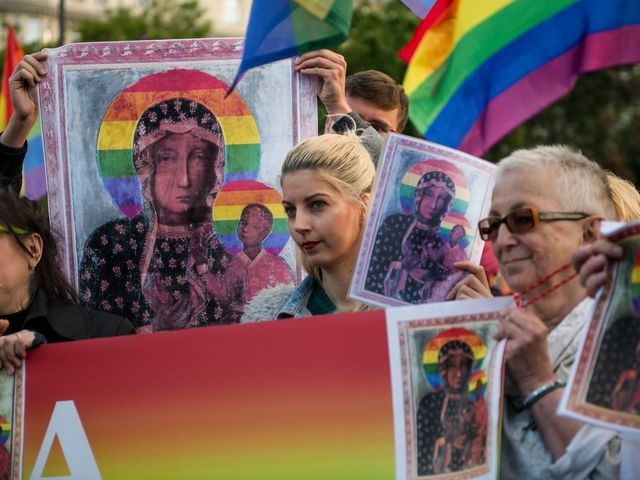
Ghana’s Parliament rejected a bill that would have further criminalized LGBTI people, introduced prison sentences for anyone expressing support or “sympathy” toward LGBTI people, and encouraged conversion therapy and gender “realignment” for children. Opposition to the bill came from groups including Amnesty International, who criticized it before the Parliament.
After nearly 30 years of advocacy and campaigning by Amnesty International Slovenia, the country’s President finally issued a public apology to the thousands of people from other former Yugoslav republics whose residency permits were revoked after Slovenia declared independence in 1992. The so-called “erasure” left some 26,000 people without residency and economic and social rights, depriving them of health and social benefits.
Following a long-term campaign by Amnesty International and other civil society organizations, Colombia decriminalized abortion during the first 24 weeks of a pregnancy. This achievement further boosted the momentum behind the movement for sexual and reproductive rights across Latin America, following the legalization of abortion in Argentina in 2020 and the decriminalization of abortion in Mexico 2021.
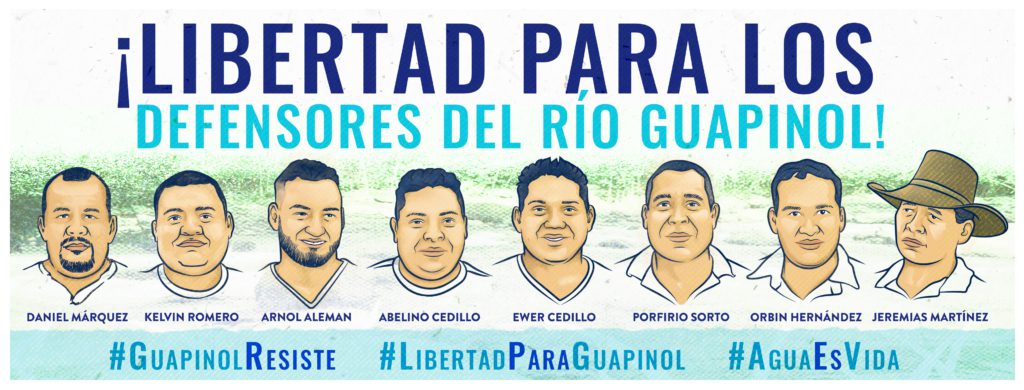
In Honduras, the “Guapinol eight”, water rights defenders and prisoners of conscience, were unconditionally released after two and a half years. Amnesty International carried out media, advocacy and campaigning work for more than a year to highlight their wrongful detention.
The UNHRC renewed the mandate of the Human Rights Commission on South Sudan, which is currently the only independent mechanism capable of collecting evidence for future accountability. Amnesty International actively advocated for its renewal through joint public letters to UNHRC member states, bilateral meetings with UNHRC member states and section engagement at capital level.
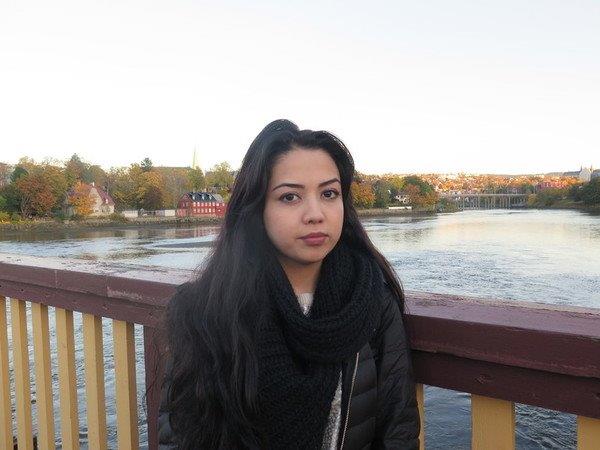
In 2018, Amnesty International launched a campaign on behalf of Tayebe Abassi, a then 18-year-old girl whose family faced being deported to Afghanistan from Norway, where they had lived since 2012. In April, Tayebe’s mother finally received a residency permit, giving her the right to stay with her children in Norway. Tayebe shared the following message to thank Amnesty International for its support:
“I wanted to ask you if that’s possible I could send my thankful message to Amnesty International and everyone who supported me and my family during our struggle. Looking back in time makes me feel strong and powerful, I found all of those support cards that I got from different Amnesty members around the world ” – Tayebe
In Libya, Mansour Atti, a journalist, blogger and head of the Red Crescent Committee and of the Civil Society Commission, was released ten months after his enforced disappearance. Amnesty International issued an urgent action, public statement and press release on his case and encouraged members and supporters to sign petitions, send letters and post on social media to call for his immediate and unconditional release.
Following months of advocacy and campaigning by Amnesty International and other civil society organizations, the European Union reached political agreement on the Digital Services Act (DSA). This landmark regulatory framework will, among other things, require Big Tech platforms to assess and manage systemic risks posed by their services, such as advocacy of hatred and the spread of disinformation.
In response to research by Amnesty International and partners, Mali’s authorities launched an investigation into an ‘anti-terrorist operation’ in the city of Moura, carried out by Mali’s armed forces and mercenaries from the Wagner group, that left at least 203 people dead. Based on eyewitness testimonies, Amnesty International’s joint-research had concluded that dozens of civilians were killed during the operation and that many people were unlawfully killed.
May
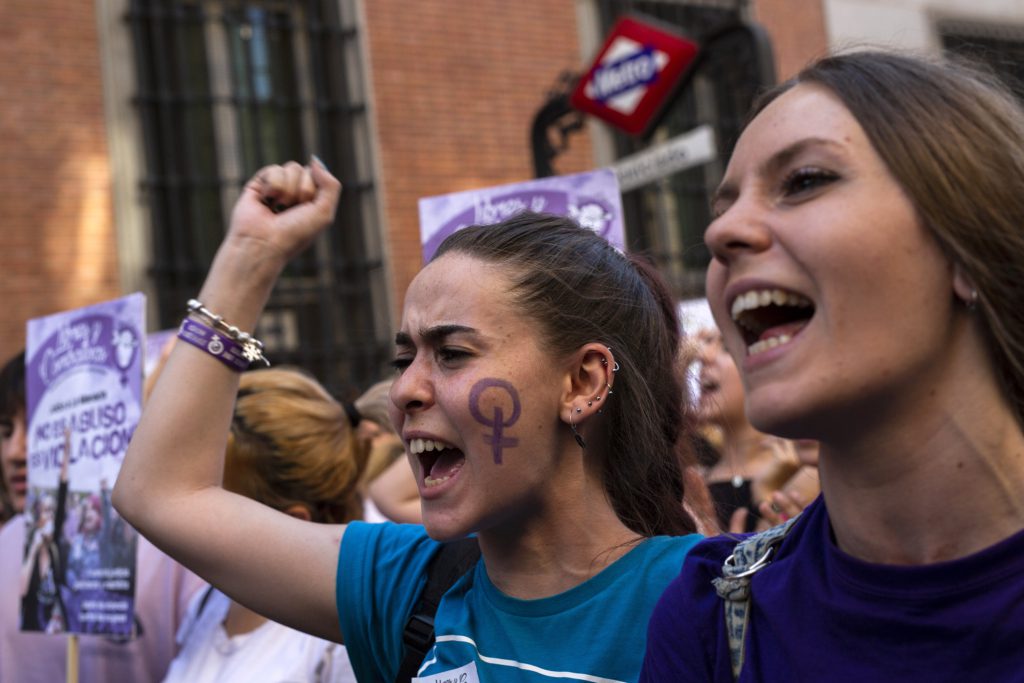
In a success for the women’s movement in Spain and for Amnesty International activists, who long campaigned for it, the lower chamber of Spain’s parliament passed a bill containing important measures to prevent, protect and prosecute rape. The law puts consent at the centre of the discussion around sexual violence, including rape.
Pablo Blazquez Dominguez/Getty Images
The UN Security Council (UNSC) renewed the arms embargo on the territory of South Sudan for another year. Amnesty International contributed to this result through research and targeted advocacy, including bilateral meetings with UNSC members during an advocacy mission to New York in April and section engagement at capital level.
In Guinea, a judicial investigation was launched against former political and police leaders for violations of the right to life, enforced disappearances, arbitrary detentions, and torture following the country’s constitutional crisis in 2020. Amnesty International has called repeatedly for an end to the impunity for these violations, publishing a report and multiple other outputs condemning the unlawful killings of dozens of demonstrators and the arbitrary detention of dozens of political activists and civil society representatives.
In a move long advocated by Amnesty International, States, civil society, and international organizations gathered in Geneva to finalize the text of a political declaration aimed at strengthening the protection of civilians arising from the use of explosive weapons in populated areas. It is expected that states will sign onto the political declaration at a diplomatic event later this year.
Responding to news that unjustly jailed ailing academic and human rights defender Dr. Abduljalil al-Singace, who has been refusing solid foods for a year, has now decided to also abstain from health-stabilizing salts in protest at the prison authorities’ withholding some of his medication, Amna Guellali, Amnesty International’s Deputy Director for the Middle East and North Africa, said:
“It is utterly outrageous to see how the Bahraini authorities have idly watched 60-year-old Abduljalil al-Singace’s health deteriorate as he goes through unnecessary suffering, over the past 365 days of his hunger strike, during which he consumed only liquids. He has been behind bars for over a decade solely for exercising his rights to freedom of expression and peaceful assembly and should never have been jailed in the first place.
“Bahraini authorities must immediately and unconditionally release him. They must urgently ensure he receives all the medication he requires without delay, has access to adequate and timely healthcare and is protected from further torture and other ill-treatment.
“Bahraini authorities are continuing to punish Abduljalil al-Singace for his peaceful role in Bahrain’s 2011 uprising. Not only have they unjustly imprisoned him, but they also unlawfully confiscated a book he was writing, prompting him to start his hunger strike. His work should be immediately handed over to his family.”
Background
Abduljalil al-Singace has served over a decade of his life sentence in Bahrain’s Jaw prison, where he has been subjected to torture and other ill-treatment.
On 8 July 2021, he started a hunger strike to protest the confiscation by prison authorities of a book on Bahraini dialects that he spent four years researching and writing. On 18 July 2021, authorities transferred him to the Kanoo Medical Centre, where he remains held, due to the deterioration of his health condition. On 29 June 2022, he announced that he would also stop taking salts which stabilize his health while abstaining from food to protest the authorities’ failure to promptly grant him his prescribed medication, including eye drops and analgesic creams for joint and muscle pain.
Abduljalil al-Singace suffers from multiple medical conditions, including severe intermittent headaches, a prostate problem, arthritis in his shoulder joint, tremors, numbness, and diminished eyesight. Authorities have not shared with him the results of an MRI scan of his shoulder taken in October 2021.
The Bahrain Independent Commission of Inquiry reported in 2011 that following his arrest police had subjected Abduljalil al-Singace to nightly beatings for two months while placed in solitary confinement, targeted his disability by confiscating his crutches, making him “stand on one leg for prolonged periods”, pushing his crutch “into his genitals”, and “threatened him with rape and made sexually explicit comments about his wife and his daughter”.
The Cameroonian authorities must ensure that human rights defenders are able to work free of intimidation and reprisals, Amnesty International said today after receiving reports that activists are being targeted with death threats for exposing human rights violations and abuses in Anglophone regions.
The individuals targeted include seven human rights defenders and a cyber-activist, all of whom had been documenting human rights violations and abuses in the English-speaking regions of North-West and South-West Cameroon, which are facing clashes between army forces and armed separatist groups.
Amnesty International is calling on Cameroonian authorities to guarantee the safety of these human rights defenders and ensure they can continue carrying out their work in a safe and enabling environment.”
Samira Daoud, Regional Director for West and Central Africa
“The authorities must urgently launch a thorough, independent and effective investigation into these threats and other abuses committed against human rights defenders”.
Unrelenting death threats
Akem Kelvin Nkwain, a human rights officer at the Centre for Human Rights and Democracy in Africa (CHRDA), an organization that has documented human rights violations and abuses by all parties to the conflict, told Amnesty International he received several death threats from alleged armed separatists.
The first threat came on 24 May 2022, shortly after Nkwain wrote on Twitter about a child killed by an improvised explosive device (IED) allegedly planted by separatist fighters in Kumbo in North-West Cameroon.
On 16 June 2022, he received calls and messages featuring photos of a captured policeman, dead civilians, bullets, guns, armed group members, and an image of himself being marked for killing.
One of the messages said: “We declare you and your whole entire family as traitors and enemies to the Ambazonian fighters. Until we reach your house, let that money bring you back to life when you get shot and kill.”
Felix Agbor Nkongho, a human rights lawyer and founder of the CHRDA, also received multiple death threats from alleged armed separatists by phone and on social media in reaction to his participation in a conference in Toronto organized by the Coalition for Dialogue and Negotiations, a US-based NGO focusing on the conflict in Cameroon, between 29 October and 1 November 2021.
Abductions
On 22 April 2022, four UN Special Rapporteurs focusing on human rights defenders, extrajudicial executions, the right to freedom of expression and the right to association, wrote to President Paul Biya raising concern over repeated death threats sent since 2015 to the president and the lawyer of the Organic Farming for Gorillas (OFFGO). OFFGO has exposed abuses by businesses in the North-West regions of Cameroon.
In May 2021, the lawyer received death threats by phone, and on 6 November 2021, he escaped an abduction attempt at his home in Bamenda. He was also reportedly abducted from his home and released two hours later on 19 February 2019. In a report released in January 2021, Final warning: death threats and killings of human rights defenders,the UN Special Rapporteur on the situation of human rights defenders detailed the threats against him.
In addition, his brother was also abducted and tortured on 16 May 2019 and on 27 March 2020 as a way to intimidate him. His brother-in-law was also shot twice in the leg by unknow individuals in his presence. Several complaints have been filed in previous years by OFFGO lawyer, but according to OFFGO officials, the authorities have failed to launch an investigation.
In May 2022, N’Zui Manto,a cyber-activist working from outside Cameroon was forced to leave the African country where he was living after the Cameroonian authorities identified him following information shared by the local police that raised fears of repatriation.
N’Zui MantotoldAmnesty International he started receiving death threats on social media at the beginning of 2019 since he publishes information about the Cameroonian army’s losses in Anglophone regions. On 28 May 2022, he received a message from a fake Facebook profile saying: “One day you will come across me. I will kill you like nothing.”
Tarnteh Amadu Ngangpanweh,a human rights defender for Conscience Africaine, a Cameroon-based NGO, told Amnesty International he began receiving death threats after attending a press conference in Yaoundé on 18 May 2020. The event, which was organized by a coalition of civil society organizations, shared findings from a report on the Ngarbuh massacre, in which more than 20 civilians were killed during a military operation on 13 and 14 February 2020.
Two days later, after Tarnteh published the report on Facebook, an unknown person messaged him on Facebook saying he “better stop such activities, because this is obviously the first and last time, I am warning you on conspiring to publish false information, the next time you will be sorry for yourself.”
Tarnteh received several other threatening calls in late 2020, July 2021 and December 2021 after he documented alleged detentions for ransom by security forces in North-West region, and after he published a report on abductions allegedly committed by armed separatists.
The apparent inaction of the Cameroonian authorities amid reports of abductions, intimidations, and repeated death threats is deeply concerning. Cameroon must urgently meet its obligations under international human rights law by supporting and protecting human rights defenders and their crucial work.”
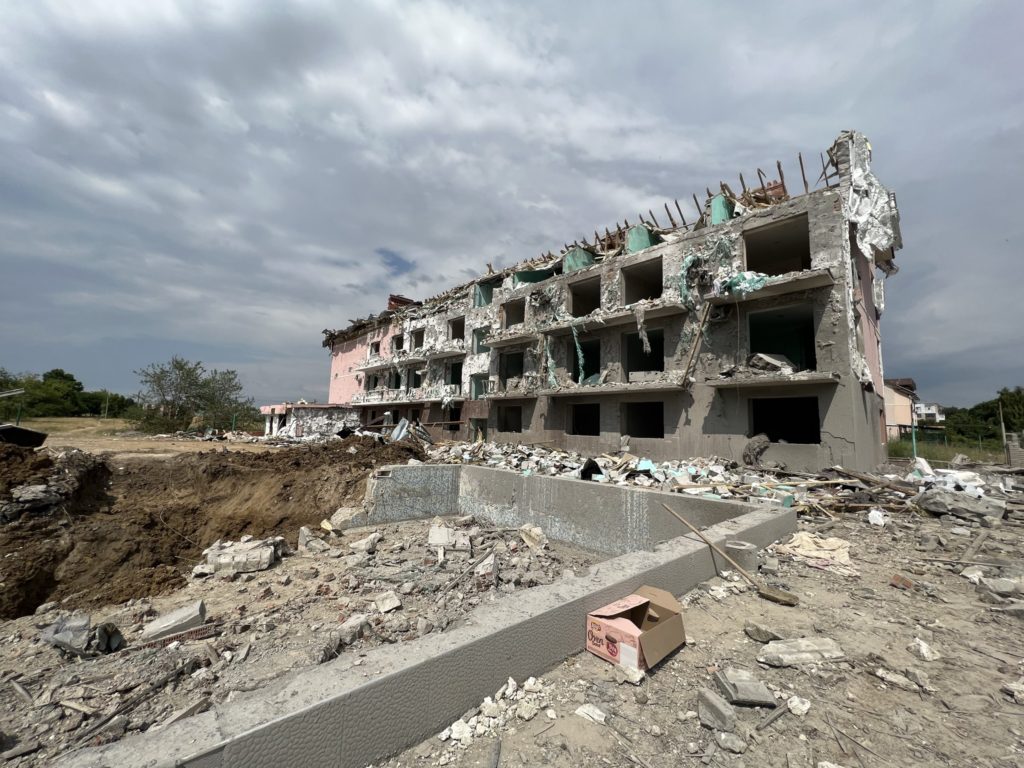
Russian air strikes on an apartment block and beach resort hotel in the coastal town of Serhiivka in southern Ukraine killed at least 21 civilians, Amnesty International said today following a new on-the-ground investigation.
The strikes, apparently using anti-ship missiles, hit the town in the Odesa region shortly before 1am on 1 July, injuring at least 35 people. Five people remain in serious condition in intensive care, meaning the total death toll may rise.
“These powerful weapons were designed to destroy warships, and firing them into residential areas is extremely reckless,” said Donatella Rovera, Amnesty International’s Senior Crisis Response Adviser.
“This attack is yet another example of the Russian military’s utter disregard for civilians in Ukraine as they continue to cause needless death and destruction. All those responsible for such war crimes must face justice for their actions.”
Amnesty International visited the strike locations in Serhiivka and found no evidence of the presence of Ukrainian soldiers, weapons, or other valid military targets nearby. Satellite imagery reviewed by Amnesty International also did not indicate any military activity in the area prior to the attack.
This attack is yet another example of the Russian military’s utter disregard for civilians in Ukraine
Local government officials told Amnesty International that the weapons used in the attack were two Kh-22 guided missiles. With an estimated warhead of more than 900kg and a targeting system designed to hit ships rather than land objects, the missile is potentially extremely inaccurate, and therefore completely inappropriate for use in a populated area.
Amnesty International’s Crisis Response weapons expert found ordnance fragments consistent with a large guided missile at the scene of the strike on the hotel. Notably, the fragments contained old-style rivets, consistent with a 50-year-old weapon such as a Kh-22.
Residential nine-storey building at 23 Budzhaska Street in Serhiivka, which Russian forces hit on 1 July, killing 15 civilians. Ⓒ Amnesty International
A core principle of international humanitarian law (the laws of war) is that parties to an armed conflict must at all times distinguish between civilians and civilian objects, and members of the military and military objectives. Military objectives can be targeted, but it is unlawful to target civilians or civilian objects. Prior to any attack, members of the military are required to take steps to ensure that they are reasonably certain they are not targeting civilians and civilian objects.
To date, there have been numerous examples of Russian forces routinely launching unlawful attacks in Ukraine which have killed and injured civilians, some of which may have been deliberate attacks on civilians or civilian objects.
Resort hotel strike
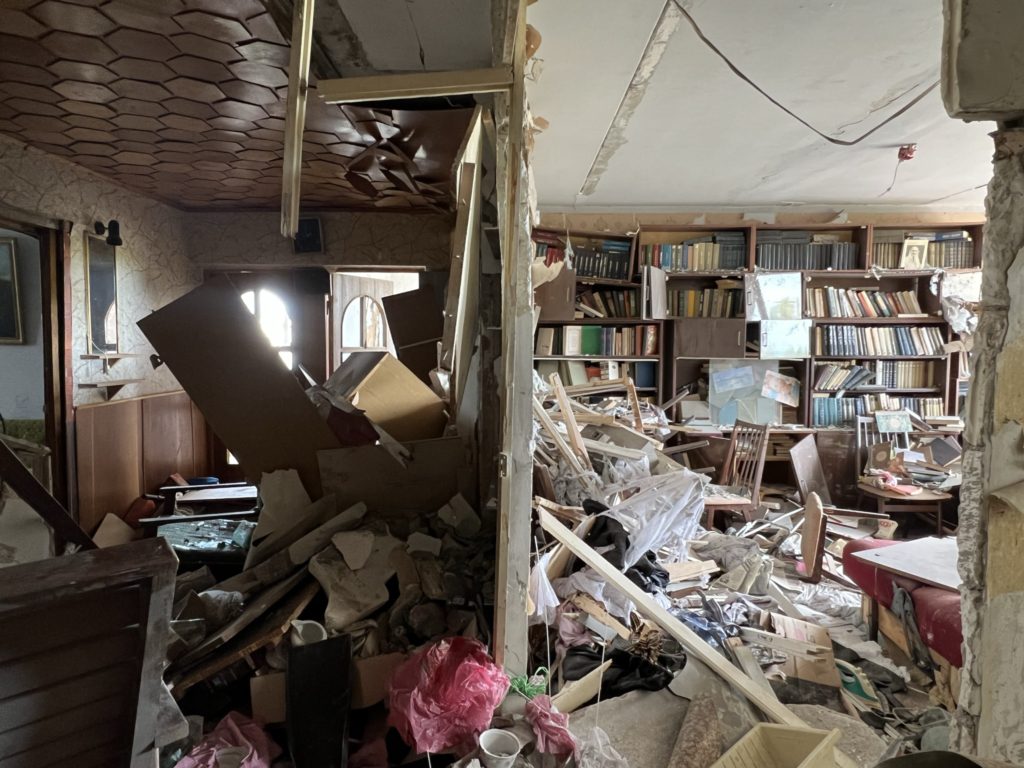
Just after midnight on 1 July, Russian forces launched at least two missiles towards the Black Sea resort of Serhiivka, around 45 miles southwest of the city of Odesa. The first missile hit the Godji Hotel, and killed six civilians. Just minutes later, a second missile hit the hardware store at the front of a residential nine-storey building at 23 Budzhaska Street, and killed 15 civilians.
Amongst those killed at the Godji Hotel were Nadiya Rudnitskaya, the hotel manager, and her 12-year-old son Dmytro Rudnitsky. Olha Ilyashevych, 30, and her mother Maria, who had both fled fighting from Slovyansk in the Donbas region, were also killed.
The fatalities also included Oleksander Shishkov, 41, a well-known football coach who lived in Odesa but who had been staying at the hotel following a children’s football match the day before between the local team and the team from the nearby town of Bilhorod-Dnistrovsky.
Godji Hotel resort in Serhiivka, destroyed by a Russian attack on 1 July, killing six civilians. Ⓒ Amnesty International
Residential block strike
Amongst those killed in the strike on Budzhaska Street were Volodymyr Chulak, a 68-year-old physical education teacher, his wife Tetiana, a 64-year-old chef, and their son Mykhaylo, 35, who lived in Odesa and was visiting his parents.
Tetiana Chulak’s sister Valentyna told Amnesty International: “I heard the explosions and ran to the street… I ran there [number 23] and into the building, and found Tetiana in her bed, dead, covered in smashed-up furniture and debris, and her husband Volodymyr was dead in the kitchen. Their son Mykhaylo had been standing on the terrace, and was directly hit by the missile; he was in shreds.”
Also killed were Halyna Rumashuk, a 50-year-old receptionist, and her husband Serhii, a 48-year-old builder. They had initially survived the strike and managed to escape the building, but the couple then returned to look for some of their belongings, when a wall collapsed and killed them both.
Roman, 36, a resident of the fourth floor of the building, told Amnesty International that he and his mother only survived because at the time of the strike they were behind a poured-concrete wall in their kitchen, bathing their puppy who had undergone surgery. The rest of their apartment was obliterated in the blast. Roman attempted to save his next-door neighbour, Proskovia Pavlenko, 63. She was mortally wounded in the blast, and died as he carried her from the building.
Natalia Yankovska and her partner Maksym Nedomov both died from serious injuries caused by the blast. Natalia’s two young sons from a previous marriage, aged 10 and 14, both remain in hospital, with one in critical condition.
Other victims killed in the strike on the residential block include Oleksander Sribny (47), Tetiana Nesterenko (64), and Vira Maksymenko (71).
Damage to the interior of the residential apartment block on Buszhaska street. Ⓒ Amnesty International
“The Russian military’s relentless bombardment of residential areas full of civilians, killing people as they sleep, shocks the conscience,” said Donatella Rovera.
“How many more civilians must die before there is justice and accountability for these crimes? The Russian forces responsible for these ongoing serious violations of international humanitarian law must be held accountable for their actions, and victims and their families must receive full reparations.”
Amnesty International’s ongoing documentation of violations of human rights and international humanitarian law committed during the war in Ukraine is available here.