Ukraine: As Ukraine retakes territory from Russia, securing evidence of alleged war crimes is crucial

Reacting to new evidence of alleged war crimes committed by Russian forces following military advances by Ukrainian forces retaking control of Russia-occupied territories, Marie Struthers, Amnesty International’s Director for Eastern Europe and Central Asia, said:

“As Ukraine regains control of land occupied by Russian forces, it must prioritize securing evidence of their alleged war crimes. Gathering such evidence is extremely resource-intensive, and so we are calling on the international community to provide resources that will assist Ukraine’s efforts. All ongoing and future trials over alleged war crimes must meet fair trial standards.”

As Ukraine regains control of land occupied by Russian forces, it must prioritize securing evidence of their alleged war crimes

Marie Struthers, Amnesty International’s Director for Eastern Europe and Central Asia

“In what appears to be a response to Ukraine’s military gains, Russia has launched attacks that caused significant damage to critical civilian infrastructure, including a power plant strike that led to power and water outages and disrupted civilian activities. We remind Russia that deliberate targeting of civilian infrastructure may amount to war crimes. These strikes must be investigated with a view to ensuring that anyone suspected of criminal responsibility is brought to justice.”

Background

In recent days, Ukrainian forces have reportedly regained control of over 3,000 square kilometres of territory previously occupied by Russia, including Izyum and Kupiansk, two key towns in Kharkiv oblast.

As Russian forces retreat, evidence of alleged war crimes committed by them and Russia-backed armed groups is emerging in the form of testimonies, video footage and photographs.

On 10 September, Ukrainian law enforcement agencies reported that police officers had exhumed the bodies of two men allegedly tortured and killed by Russian forces in Hrakove village, Kharkiv oblast, in March.

On 11 and 12 September, Russian military strikes damaged critical energy infrastructure, resulting in major disruptions to electricity and water supplies as well as train services.

The post Ukraine: As Ukraine retakes territory from Russia, securing evidence of alleged war crimes is crucial appeared first on Amnesty International.

Thailand: Mock fashion show protester sentenced to two years for ‘insulting the monarchy’

Responding to the conviction and sentencing to two years’ imprisonment of protester Jatuphon “Niw” Saeung for participating in a mock fashion show in Thailand in October 2020, Amnesty International’s Deputy Secretary General Kyle Ward said:

“The mock fashion show was a satirical take on the political situation of the country – a peaceful public event akin to a street festival with music, food and dancing. Participants should not be punished for participating in a peaceful assembly.

“This sentence, which is at least the 10th conviction for lèse-majesté – or insulting the monarchy – handed down since 2021, is a chilling prelude of what’s to come: a record number of 210 activists and protesters have been charged under Article 112 of Thailand’s Criminal Code since the beginning of overwhelmingly peaceful mass protests in 2020.

“We urge the authorities to immediately drop all charges against those who have merely exercised their human rights to freedom of expression and peaceful assembly, and release those arbitrarily detained.

“With protests picking up again in Thailand, this latest conviction underlines the degree to which Thai authorities continue to repress peaceful dissent.

“Thai authorities are obliged to protect the peaceful exercise of the rights to expression and assembly, but they instead continue to pursue criminal proceedings against demonstrators, many of them young people or even children. These young protesters should be free to express their opinions and participate in discussions in society, and should not face the prospect of unwarranted prison sentences and criminal records.”

Background

The Bangkok Criminal Court in Thailand initially sentenced a protester Jatuphon “Niw” Saeung to three years in prison on 12 September 2022 after authorities charged her with insulting the monarchy under Article 112 of the Criminal Code. Under this law, anyone convicted of defaming, insulting or threatening the king, queen, heir-apparent or regent may be given a jail term from three to 15 years. The Court reduced her sentence by one-third to two years in prison due to her provision of information to the authorities. In the same case, Niw was also convicted of violating the Public Assembly Act and subjected to a fine of 1,500 THB. The Court later reduced the fine to 1,000 THB. Niw is currently detained at the Central Women’s Correctional Institution in Bangkok while awaiting the Court of Appeal’s decision on her bail request.

United Nations human rights experts have repeatedly expressed their concern at the rise in the use of the provision, and how it casts a chilling effect on the peaceful exercise of freedom of expression and assembly. UN experts and other member states have further repeatedly called on the authorities to repeal Article 112 or amend it so that it would be consistent with Thailand’s international human rights obligations.

Niw took part in a satirical fashion show on Silom Road in Bangkok on 29 October 2020. She was accused of imitating and mocking the Thai Queen by wearing a traditional Thai dress.

The October 2020 demonstration was one of dozens in 2020 and early 2021, when tens and possibly hundreds of thousands predominantly peaceful and young demonstrators, including children, took to the streets to demand political, economic and social reforms in Thailand. Authorities have filed criminal proceedings against more than 1,800 activists, including over 280 children, for participating in protests and expressing their opinions.

Since November 2020, at least 210 people, including 17 children, have been accused of committing lèse majesté, according to Thai Lawyers for Human Rights, with ten convictions handed down from 2021 to 2022, the group said.

Amnesty International does not comment on the nature of speeches deemed in breach of the provision, but urges the authorities to uphold its duty under international law to respect, protect and promote the peaceful exercise of freedom of expression.

Thailand is a state party to the International Covenant on Civil and Political Rights (ICCPR), which protects the right to freedom of expression under its Article 19 and to peaceful assembly under its Article 21. The UN Human Rights Committee, the treaty body responsible for monitoring the implementation of the ICCPR, has expressed concerns regarding lèse majesté laws. It stated that all public figures, including those exercising the highest political authority, are legitimately subject to criticism and political opposition and that criticism of state institutions should not be prohibited. Even if the alleged violation of lèse majesté is seen as a defamation-related offence, the Committee has further stated that “imprisonment is never an appropriate penalty”.

Other UN member states have continuously made recommendations to abolish the lèse majesté provision in the Criminal Code, for example at the UN Human Rights Council’s Universal Periodic Review of Thailand. The Thai government has to date always rejected these recommendations. 

The post Thailand: Mock fashion show protester sentenced to two years for ‘insulting the monarchy’ appeared first on Amnesty International.

Mexico: Militarization of public security will lead to more human rights violations and perpetuate impunity

•          Amnesty International categorically rejects senators’ decision to legalize militarization in Mexico.

•          The approval of the proposal is in breach of Mexico’s Constitution and infringes on international treaties to which the country is a party.

•          Official figures on enforced disappearance, deprivation of life, torture, cruel and inhuman treatment, among others, show that state policy on public security over the last 16 years has further aggravated the already serious human rights crisis that the country faces.

The Senate’s approval of the proposal to formalize the affiliation of the National Guard with the Ministry of Defence (SEDENA) is an appalling act that puts the guarantee of human rights in Mexico at risk, Amnesty International said today.

“We deeply regret the Senate’s decision. We have already seen the disastrous results of the militarization of public security forces in Mexico over the last 16 years. Instead of continuing along this path, we call on the executive branch to design a plan for the progressive withdrawal of the armed forces from the streets, prioritizing the strengthening of civilian police forces and the development of public prevention policies aimed at guaranteeing public safety. Enough of human rights violations and impunity!” said Edith Olivares Ferreto, executive director of Amnesty International Mexico.

On 27 May 2019, Mexico established the National Guard as its main public security institution, under the civilian control of the Secretariat of Public Security and Citizen Protection. Since its establishment, the National Guard has been criticized for operating in an increasingly militaristic manner and the fact that more than 70% of its personnel come from the army or navy. In parallel, the National Guard has been criticized for the numerous human rights violations that are rightly attributed to it. Between 2020 and 2022, more than 1,100 complaints against this institution were presented before the National Human Rights Commission (CNDH) regarding crimes under international law including enforced disappearances, arbitrary detentions, unlawful killings and torture, among others.

“We deeply regret the Senate’s decision. We have already seen the disastrous results of the militarization of public security forces in Mexico over the last 16 years.

Edith Olivares Ferreto, executive director of Amnesty International Mexico

On 31 August 2022, President Andrés Manuel López Obrador proposed legislative reforms to increase the militarization of the National Guard even further. The proposed reforms: 1) formally place the National Guard under the military control of the Secretary of National Defence; 2) allow active military personnel to serve in the institution without leaving their military posts; 3) require high-level National Guard commanders to come from military posts; 4) allow crimes, including crimes under international law and human rights violations, perpetrated by National Guard personnel to be tried before military, not civilian, courts; and 5) institute military training for all National Guard personnel.

Militaristic proposal

The reforms approved by the Senate today are the latest in a series of laws and proposals relinquishing control to the military over public security functions in Mexico since 2006, in the context of the so-called “war on drugs”. This militaristic approach to public security has had disastrous consequences for human rights. There are more than 100,000 disappeared people in Mexico, while the army and the navy have been accused of generalized human rights violations. SEDENA has been the subject of more than 4,000 complaints of human rights abuses to the CNDH since 2014.

The members of congress and senators have decided to infringe on international norms stipulating that military involvement in public security activities should be exceptional and only apply under certain conditions. In light of these standards, the United Nations High Commissioner for Human Rights and other UN bodies have repeatedly expressed their concern over the use of militarized army and police forces in public security activities in Mexico. These concerns and recommendations have today been dismissed.

In its report on Mexico in April 2022, the UN Committee on Enforced Disappearances urged the Mexican state to “abandon the militarized approach to public security”, as it has been insufficient and inadequate in terms of protecting human rights. It also recommended strengthening civilian forces and establishing a plan for an orderly, immediate and demonstrable withdrawal of military forces from public security tasks.

The reality in figures

Amnesty International, together with civil society organizations, has warned that the militarized public security strategy has been a failure. Mexico is a much more dangerous country today than it was 16 years ago. Killings have increased 218% between 2006 and 2022; in 16 years more than 100 journalists have been killed (15 of these in the first eight months of this year) and over 97% of the more than 105,000 cases of disappeared people in the country occurred after December 2006.

Members of the Mexican military have committed frequent crimes under international law and serious human rights violations with impunity. From 2014 to date, the CNDH has received at least 6,661 complaints of human rights violations committed by SEDENA, SEMAR (the Ministry of the Navy) and the National Guard. In all those years, SEDENA has been among the 10 institutions with the most complaints, and that list includes the National Guard.

For more information or to arrange an interview, please contact:

Alejandro Juárez Gamero (Amnesty International Mexico): prensa@amnistía.org.mx

Duncan Tucker (Amnesty International Americas): duncan.tucker@amnesty.org

The post Mexico: Militarization of public security will lead to more human rights violations and perpetuate impunity appeared first on Amnesty International.

Egypt: Authorities must immediately drop all charges against four independent Mada Masr journalists

Responding to the opening of criminal investigations against the editor-in-chief and three journalists of Mada Masr, one of the few remaining independent media platforms in Egypt, in relation to an article on a pro-government party’s alleged corruption, Philip Luther, Middle East and North Africa Research and Advocacy Director at Amnesty International said:

“This latest attack on journalists who dare to deviate from the official narrative in Egypt further exposes the chasm between the Egyptian authorities’ self-declared commitment to human rights, including ‘free speech’, and the grim reality. Harassing one of the few remaining independent media platforms in Egypt reinforces concerns over the ability of independent civil society actors and others to voice their opinions without fear of reprisals at the fast-approaching UN Climate Change Conference to be held in Sharm al-Sheikh in November.

“The authorities must immediately drop all the bogus charges and close this politically motivated investigation against Mada Masr journalists”

Philip Luther, Amnesty International

“The authorities must immediately drop all the bogus charges and close this politically motivated investigation against Mada Masr journalists. They must also release all journalists who have been detained solely for carrying out legitimate media work and exercising their right to freedom of expression; end all forms of censorship, harassment and intimidation of journalists; and repeal the draconian media laws undermining press freedoms.”

On 7 September, Mada Masr editor-in-chief Lina Attalah and three journalists, Rana Mamdouh, Sara Seif Eddin and Beesan Kassab were questioned by prosecutors on charges of “spreading false news” and “defamation” of Nation’s Future party members and “deliberately disturbing [them]”, in addition to “operating an unlicensed website” in the case of Lina Attalah. According to Mada Masr’s lawyers, prosecutors asked the editor-in-chief to identify the authors and editors of the article in question as well as the outlet’s sources, institutional workflow and funding.

The journalists were all released on bail, but may still will face trial, if indicted, on charges punishable by up to two years imprisonment and fines.

The Egyptian authorities have increasingly consolidated their grip on the media in recent years through online censorship, raiding and closing independent media outlets and controlling content in both public and private media.

Background

In November 2019, security forces raided the Mada Masr office in Cairo and briefly detained four journalists, including the editor-in-chief Lina Attalah, in what appeared to be direct retaliation for a report on the Egyptian president’s son Mahmoud Al-Sisi being sidelined from a powerful intelligence position. Mada Masr has unsuccessfully sought a license since 2018.

Since 2013, the authorities have arbitrarily arrested, detained, prosecuted and/or convicted journalists and other media workers simply for expressing critical views or carrying out their media work. At least 23 journalists remain behind bars, including six who were detained during the last five months, simply for exercising their right to freedom of expression.

The post Egypt: Authorities must immediately drop all charges against four independent Mada Masr journalists appeared first on Amnesty International.
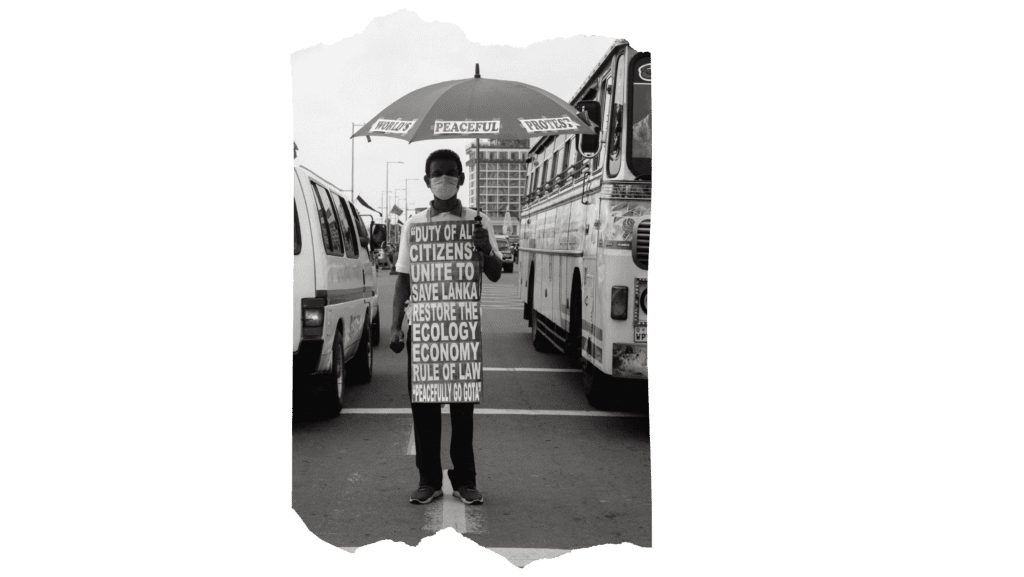
Sri Lanka: Authorities’ crackdown on protest rights must end 


Sri Lanka: Authorities’ crackdown on protest rights must end 

The Sri Lankan authorities have fiercely clamped down on protests and demonized protesters during a period of economic crisis and hardship in the country, Amnesty International said in a new digest released today. 

The briefing, Penalized for Protesting: Sri Lanka’s crackdown on protestors, details how the authorities have failed to protect peaceful protesters and resorted to excessive use of force, deploying the military to police protests and carrying out reprisals against protestors while also demonizing those who exercise their protest rights peacefully.

“Over the last few months, Sri Lanka has seen widespread protests over the worst economic crisis in the country’s post-independence history. People have the right to express discontent peacefully and the state has an obligation to facilitate this right but the Sri Lankan authorities have repeatedly and unrelentingly stifled the voice of the people,” said Yamini Mishra, Amnesty International’s South Asia Regional Director.

“The new government in Sri Lanka has continued resorting to the unlawful use of force, intimidation and harassment to subdue protestors, sending a chilling message to the people of Sri Lanka that there is no room for dissent. The right to freedom of peaceful assembly is a keystone of any rights respecting society. It must be respected and protected.”

It must be noted that there have been some incidents of violence during protests since the protest movement began in February 2022.  While these protests cannot be deemed as peaceful, the response by the authorities to such protest must still comply with human rights laws and standards. 

The Sri Lankan authorities have repeatedly and unrelentingly stifled the voice of the people.

Yamini Mishra, Amnesty International’s South Asia Regional Director

none

Tear gas, water cannons — and live ammunition

Since the protests began five months ago, the police and armed forces have routinely misused tear gas and water cannons against largely peaceful protesters. On two occasions, security forces fired live ammunition at protesters, killing at least one person in Rambukkana on 19 April.  

This unlawful use of force was also witnessed in other key incidents demonstrating the government’s refusal to facilitate the right to peaceful assembly, despite their obligations under international human rights laws and standards. 

Since President Ranil Wickremesinghe came into power on 21 July, over 140 protesters have been arrested, while a further 18 have been issued travel bans. Furthermore, Members of Parliament and the President have repeatedly described protesters as “terrorists”. President Wickremesinghe, meanwhile, also labelled protesters as “fascists” amid a broader pattern of demonizing the protest movement. The authorities have taken this one step further by weaponizing the draconian anti-terror law Prevention of Terrorism Act (PTA) to arrest three protesters. Amnesty International has, in the past, documented the use of the draconian PTA by the authorities to target, and harass minorities, activists, journalists and critical voices. The PTA is in violation of international human rights law and must be repealed.

Many of us got travel bans, and surveillance and tear gas attacks and baton charged and, at times, court orders and imprisonment…A protestor

none

The right to freedom of peaceful assembly is a keystone of any rights respecting society.
It must be respected and protected.

Yamini Mishra, Amnesty International’s South Asia Regional Director

none

none
none
none
none
none
none

‘They want me in jail’ 

Since 2 April, the authorities have arrested some people in a manner that flouts due process. Security forces did not produce official identification or produce arrest warrants or adequately explain the reason for arrests. Certain individuals were taken away and held for several hours at undisclosed locations. On these occasions, no confirmation of arrest was issued, nor were detainees given the opportunity to inform their relatives, friends or lawyers of their whereabouts.

One of the protestors told Amnesty International: “I’m still worried that they are trying to arrest me and accuse me of things I have not committed, because they want me in jail.” 

These arrests, which constituted unlawful deprivation of liberty, should immediately be stopped and the authorities must carry out arrests in keeping with their obligations under the international law and standards, including the ICCPR which prohibits arbitrary detention and protects the right to liberty and security of person. The authorities must also end their use of Emergency Regulations, which give sweeping powers to the police and the armed forces to search and make arrests without due process safeguards and have been shown to flout international human rights law.

I’m still worried that they are trying to arrest me and accuse me of things I have not committed, because they want me in jail.

A protestor

none

The Sri Lankan authorities should change course and immediately end their suppression of the
people’s right to protest.

Yamini Mishra

none

‘The state does not stand on the side of the people’ 

Another protestor, who suffered repeated harassment at the hands of the authorities, told Amnesty International: “Many of us got travel bans, and surveillance and tear gas attacks and baton charged and, at times, court orders and imprisonment… The state is always protecting and only defending political power and does not stand on the side of the people.” 

Amnesty International calls on the Sri Lankan authorities to drop all charges against those protesters who were participating peacefully in so called “unlawful assemblies”. All those facing such charges must be immediately released. The authorities must also hold prompt, transparent and impartial investigations into all allegations of attacks on peaceful protesters, with support from international observers.

“The relentless repression of the right to freedom of peaceful assembly, movement and expression speaks to Sri Lanka’s legacy of suppressing dissent. Given the immense and historic support for the peaceful protest movement, the Sri Lankan authorities should change course and immediately end their suppression of people’s right to protest,” said Yamini Mishra. 

The state is always protecting and only defending political power and does not stand on the side of the people.

A protestor

The relentless repression of the right to freedom of peaceful assembly, movement and expression speaks to Sri Lanka’s legacy of suppressing dissent.

END CRACKDOWN ON PEACEFUL PROTESTS

Add your voice to our global call to protect the protest and join our campaign today:

none

Background

International human rights law protects the right to protest through a number of separate provisions enshrined in various The right to protest is under threat across all regions of the world. Amnesty International’s new global campaign “Protect the Protest” is challenging attacks on peaceful protest, standing with those targeted and supporting the causes of social movements demanding human rights change.

The post Sri Lanka: Authorities’ crackdown on protest rights must end  appeared first on Amnesty International.