
Satellite image of Ibu volcano on 21 Oct 2025
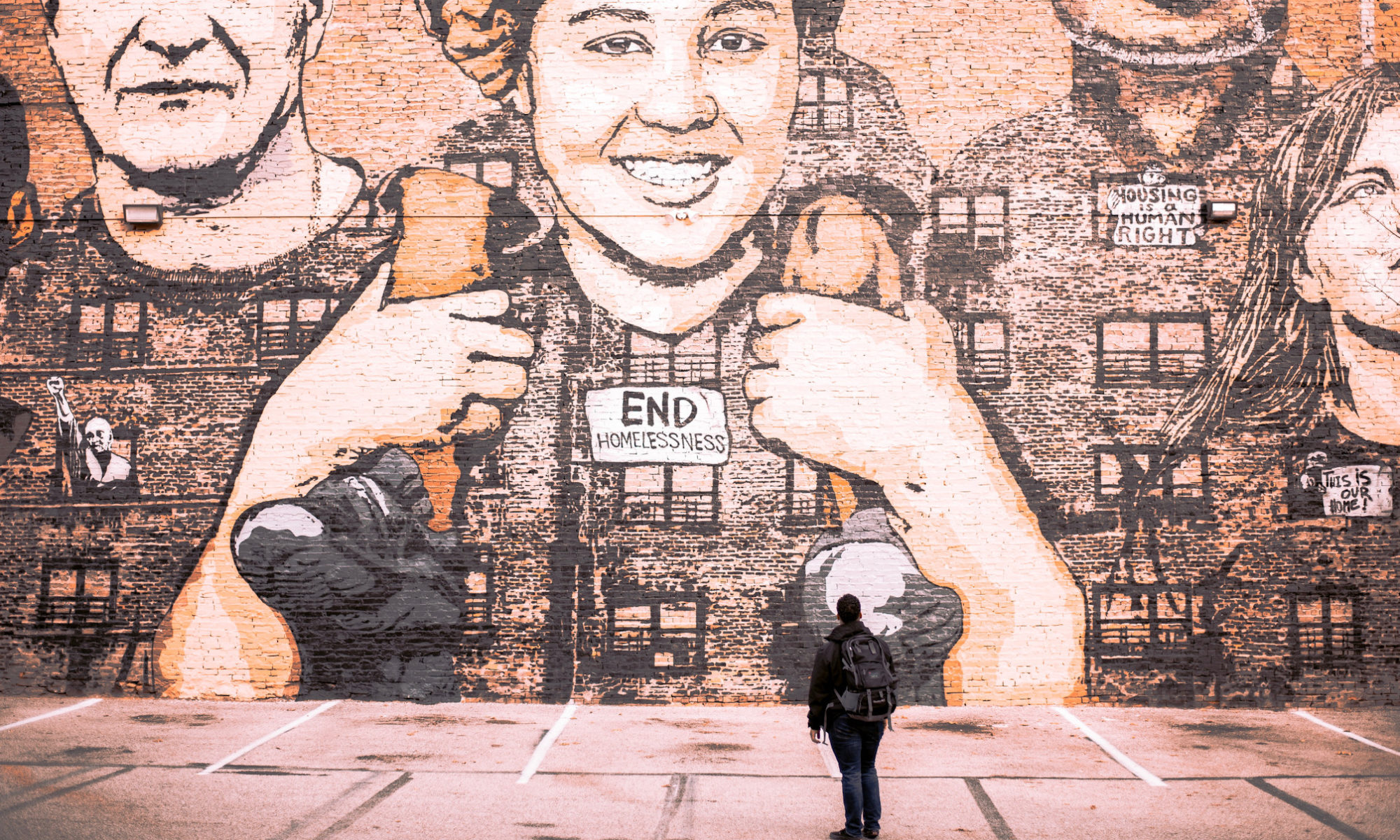
respect nature & human rights
Clinical psychologist Nancy Papathanasiou has been empowering LGBTQIA+ communities in Greece for close to 20 years, bringing people together, ensuring their stories are heard and campaigning for important changes to legislation.
In this story, Nancy shares their perspective on the importance of safety, support and why the LGBTQIA+ community should never settle for less than what they need…
I am a clinical psychologist and my “official” relationship with LGBTQIA+ communities started in 2007 through OLKE (Homosexual and Lesbian Community of Greece), after I came out myself in 2002.
While I said that I “officially” came out in 2002, the concept of coming out is multi-layered. People do many coming outs. Coming out to one’s parents is very significant even when one knows that their parents are generally accepting. I came out to my mother in 2002; however, I came out to myself and a group of close friends much earlier, in my adolescence, in 1993. Another coming out happened in 2007, another one in 2009 and potentially one a few days ago! Gender and sexuality can be a lifelong process, with lifelong coming outs.
In 2018, along with fellow psychologist Elena Olga Christidi, we founded Orlando LGBT+ as a scientific body that brings scientific data on LGBTQIA+ topics into public attention in Greece and speaks radically about issues pertaining to sexual orientation, gender identity and gender expression, and sex characteristics.
The team in Orlando LGBT+ consisted of psychologists and social workers who also openly identify as LGBTQIA+. What is radical about us is the communal and intersectional approaches we apply; we value knowledge as much as we value lived experience, with our main objective being the empowerment of communities.
In fact, the most important coming out was the one I did— and we did as a team— in 2018 with Orlando LGBT+; we came out all together as mental health professionals and this was a public disclosure: we came out as queer and this was written on a website.
At times, I have romanticised the idea of what community is. When thinking about a definition of community, it is important to first recognise that communities include different people with diverse backgrounds who are connected under a common umbrella— in this case LGBTQIA+.
With that said, I believe that communities are formed when people choose to come together while fully acknowledging their common struggles but also the different privileges that differentiate them.
In other words, one recognises that, despite what differentiates them, there is something that connects them with another individual, and actively chooses to “do something about it” while remaining conscious about the privileges they hold; to me, this is where communities are born.
Sometimes, we cannot easily imagine something we have not seen before; this includes imagining a future where we are safe and can age well. It is often the case that transgender youth can hardly imagine themselves as of old age, so we have to create and maintain safe spaces within communities where people are accepted, respected and protected from all forms of violence and mistreatment.
It’s important to focus on the familial dimension of communities. We choose our people and become family with them. Families that are chosen function as protection and are something worth trying for; we aim to preserve them and, to do so, we work on these relationships to overcome arising difficulties.
Often in LGBTQIA+ communities, we are all we have; and this is why bonding, connecting, preserving and developing are so valuable. Communities as chosen families can lead us to what is called “queer joy”. Happiness is truly understood, in my view, when one has come across what not being happy means.
Communities as chosen families can lead us to what is called ‘queer joy’. Happiness is truly understood, in my view, when one has come across what not being happy means.
Our present is what we have and what can offer us joy when we experience it together. In communities, our experiences are acknowledged, and they are something we can be vocal about and understood; in other words, there is space for us where we fit in. Our mental and physical health is improved when we can report and talk about (direct and indirect) discrimination; and it is easier to talk about them within our communities.
When we know that I will be heard, we will be more willing to talk about these experiences.
In communities, we can feel our feelings and care for each other.
When we think about our current realities, it is important to remember the case of Zak Kostopoulos’s murder. Zak’s case was a critical point; a reminder that, despite the introduction of all pro-LGBTQIA+ laws until then (civil partnership, legal gender recognition and foster parenting), we are not yet safe. Zak’s case echoes the visceral fear of deviating from the accepted norm that many of us have and which says: if we are identified [as LGBTQIA+] we will be lynched!
The cases of Nikos Sergianopoulos, a popular Greek actor, and well-known writer Kostas Tachtsis have also had a huge impact on me. In these murder cases, the society openly blamed the victims based on their real or perceived sexual and/or gender identities, and their sexual practices. In the case of Sergianopoulos, the media also outed him after his death. But what was more formative earlier in a way was Billy Bo’s death of HIV/AIDS in the 1980’s. He was a famous and charismatic young designer, and his death was the first public acknowledgement of HIV//AIDS -in an era that non straight sexualities were even more marginalised and stigmatized.
It’s clear that when we work together as a community, change is possible.
For me, it starts from when same-sex marriage became a topic of public discourse; this was back in 2008 with the well-known “Tilos marriages” which was an intracommunity action.
In addition, the civil partnership law was a result of the legal action that members of the communities started against the government on the grounds of discrimination. On the day when the bill would be voted, two main articles that equated the parties of the civil partnership with those of civil marriage regarding insurance and inheritance rights disappeared; members of the LGBTQIA+ communities who had access to the draft bill had to apply immense pressure to bring them back on the negotiation table.
It’s clear that when we work together as a community, change is possible.
Nancy Papathanasiou, PhD Clinical Psychologist
Scientific Director & Co-founder Orlando LGBT+
It was the same regarding legal gender recognition; for example, Colour Youth (LGBTQIA+ youth organization) pushed back against pathologizing views expressed by the Child Psychiatric Society of Greece; and it was the Greek Transgender Association that pushed for the law. Nothing would happen without constant community pressure.
All these pro- LGBTQIA+ laws were products of communities’ pressure. We should not settle for less than what we need and the rights we are entitled to; if laws are not providing for all our needs, we should keep demanding that our full rights are guaranteed. We should remember all the harshness we have survived through and reclaim our power. We need to tap into our already-proven resilience. This is particularly pertinent for young people today. When I was young, there was no going back in terms of LGBTQIA+ gains. Today, though, we see that laws and policies might be retracted, and we cannot take them for granted.
We’re grateful to organizations like Amnesty International who have continually supported us. What I truly appreciate is the uninterrupted and uninfluenced support it provides on trans rights; the organisation remains radical in its approaches on trans rights without being influenced by major backlash that follows today’s political developments worldwide.
Amnesty continues to be the umbrella that helps smaller organisations and activists to be heard more widely; in this way, it can continue to empower our communities. We need international organisations like Amnesty that can speak out unapologetically in turbulent times.
The post “Often in LGBTQIA+ communities, we are all we have” appeared first on Amnesty International.

On 14 October at dusk, a strong glow was observed at the summit of the volcano.
Likely strombolian activity took place atop the edifice that continued until 16 October with a decreasing trend. The activity was associated with a strong degassing reaching about 800 meters above the crater.
An ash plume reached an altitude of 6,5 km, propagating northeast.
The volcano currently shows the ongoing degassing from the summit.
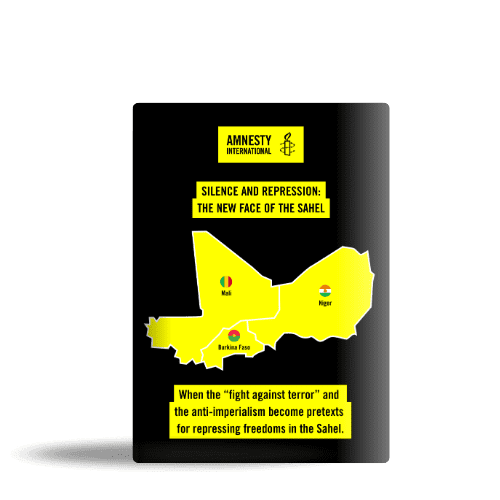
In the Sahel, repression is intensifying. Human rights defenders and journalists are being silenced under the pretext of national security.
The Sahel, a vast region connecting West and Central Africa, is a land of hope and solidarity. Its committed youth, resilient communities, and human rights defenders embody a force for change and inspiration.
But since 2020, the region has been plunged into an authoritarian spiral. Under the guise of “national security” and the fight against terrorism, the authorities of Burkina Faso, Mali, and Niger have stepped up attacks on fundamental freedoms.
Human rights defenders, journalists and citizens who speak out peacefully are now treated as enemies of the state.
+
cases of journalists, activists, human rights defenders, influencers and citizens arrested, threatened or forcibly disappeared simply for daring to speak out.
Coups d’état that have taken place in different countries have led to the establishment of military regimes in Burkina Faso, Mali and Niger, accompanied by a shrinking of civic space.
Authorities cite the “protection of national sovereignty” to justify censorship, the criminalisation of dissent and the closure of independent media.
Yet, despite the arrests, disappearances and threats, some voices continue to be raised.
In recent years, there have been dozens of cases of arbitrary detention, enforced disappearances, and targeted military conscription in Burkina Faso, Mali, and Niger. Journalists, activists, and human rights defenders risk their freedom, and sometimes their lives, as soon as they dare to speak out.
The cases presented below are an illustration of this.
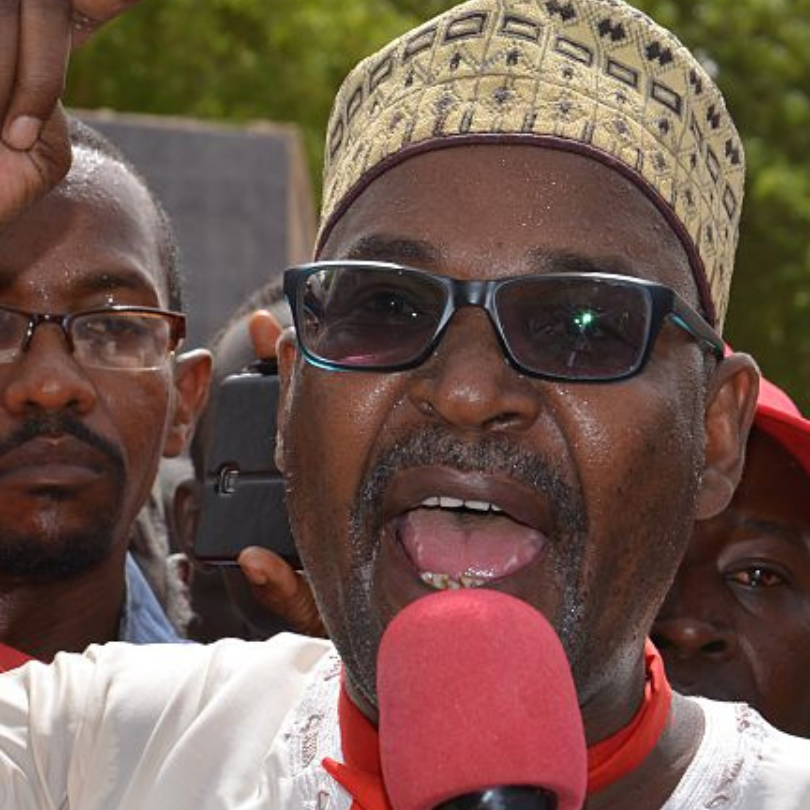
The case of Moussa Tchangari illustrates the abusive use of anti-terrorism laws to muzzle civil society in Niger.
Ousmane Diallo, Researcher at Amnesty International
Moussa Tchangari, secretary general of the organisation Alternative Espace Citoyen, is one of the major figures in Nigerien civil society.
He has campaigned for more than twenty years for fundamental freedoms, social justice and democratic governance.
On 12 November 2024, he criticised the decision of the Minister of the Interior to withdraw the accreditations of two humanitarian NGOs and to place several organizations on the national list of persons and entities involved in terrorism (FPGE).
This administrative measure results in the freezing of assets, travel restrictions and can lead to the loss of nationality, without prior judicial conviction.
On 3 December 2024, he was arrested and charged with:
Since 3 January 2025, he has been in pre-trial detention at Filingué prison, without having been heard by a judge on the merits.
Idrissa Barry, journalist and national secretary of the Servir et Non se Servir (SENS) movement, regularly denounced the atrocities committed against civilian populations in the context of the armed conflict.
On 18 March 2025, his movement denounced “deadly attacks” attributed to Volunteers for the Defense of the Homeland (VDP) against civilians in Solenzo.
The next day, Idrissa Barry was arrested by individuals presenting themselves as gendarmes and taken into an unregistered vehicle.
Since then, no authority has acknowledged his detention or provided any information on his fate.
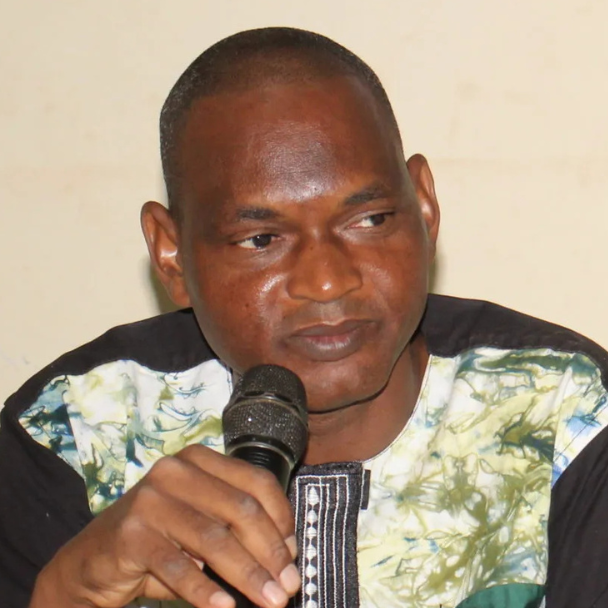
Enforced disappearance, prohibited by the International Convention for the Protection of All Persons from Enforced Disappearance, ratified by Burkina Faso in 2009, is a continuing crime as long as the victim remains not found.
Khadidiatou Diaw, Campaigner at Amnesty International
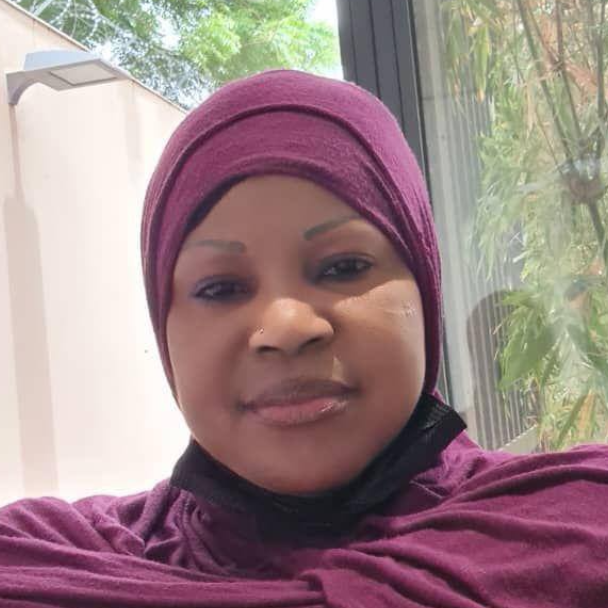
Le cas de Tantie Rose illustre la criminalisation croissante des opinions sur les réseaux sociaux au Mali.
Un défenseur des droits humains malien
Known as Tantie Rose, Rokiatou Doumbia is a Malian trader and influencer followed for her TikTok videos denouncing the high cost of living and insecurity.
On 13 March 2023, she was arrested in her shop after posting a video criticising living conditions under the military regime.
The prosecution is suing her for:
The Bamako court sentenced her to one year in prison in August 2023.
Although she has served her sentence, she remains in detention to this day.
President of the Platform Against Corruption and Unemployment (PCC), Clément Dembélé is one of the most respected voices in Malian civil society.
On 17 November 2023, he was arrested by the Judicial Investigation Brigade after publicly criticising the management of power cuts.
Authorities accuse him of sending a voice message containing “threats against the transitional president and his family.”
An independent forensic examination establishes that the voice in the recording is not his own.
On 17 April 2025, the judge of the National Cybercrime Unit closed the case due to lack of evidence.
Despite this, he remains detained at the Bamako Central Prison.

Continued detention despite a dismissal of the case constitutes a violation of the right to a fair trial guaranteed by the African Charter on Human and Peoples’ Rights, to which Mali is a signatory.
Marceau Sivieude, Amnesty International’s Regional Director for West and Central Africa
These cases are only the visible part of a systematic repression.
Behind them, dozens of other activists, journalists and citizens are facing intimidation and censorship.
We cannot remain silent.



Together, let’s make our voices heard for those we try to silence.
The post Silence and Repression: The new face of the Sahel appeared first on Amnesty International.
