On 11/10/2025 3:00:20 AM, an earthquake occurred in Japan potentially affecting 30 thousand in MMI IV. The earthquake had Magnitude 5.5M, Depth:22.865km.
Somalia: Thousands of climate-displaced individuals being failed by authorities and the international community – new report
Somali authorities and the international community have repeatedly failed to protect thousands of people from drought-affected communities in southern Somalia, exposing them to violations of their rights to food, water, family, health and life, Amnesty International said in a new report.
‘No rain, no food, no animals: The human rights impact of drought and displacement in Somalia’ documents how, between 2020 and 2023, climate change-related drought, coupled with conflict and marginalization, forced thousands of people to relocate to camps for internally displaced persons (IDPs) initially in southern Somalia and then to Dadaab Refugee Camp in Kenya. During these arduous journeys, the Somali authorities failed to provide relief, including health services and food.
Somalia is on the frontline of human-induced climate change. As the seventh most climate-vulnerable country in the world, Somalia’s authorities, with the support of the international community, must urgently address the marginalization of communities in southern Somalia who are acutely impacted by global warming caused mainly by fossil fuel combustion
Tigere Chagutah, Amnesty International’s Regional Director for East and Southern Africa
“Somalia is on the frontline of human-induced climate change. As the seventh most climate-vulnerable country in the world, Somalia’s authorities, with the support of the international community, must urgently address the marginalization of communities in southern Somalia who are acutely impacted by global warming caused mainly by fossil fuel combustion, said Tigere Chagutah, Amnesty International’s Regional Director for East and Southern Africa region.
“Somalia’s contribution to global warming is negligible, yet its people are bearing the brunt of the climate crisis, while also facing long running conflict and poverty. High income countries, especially those most responsible for climate change, must step in and meet their obligations to support Somalia in adapting to the effects of climate change.”
The report is based on interviews carried out between September 2024 and March 2025, with 177 people displaced into Dadaab Refugee Camp. Amnesty also interviewed emergency service providers, humanitarian workers, government officials, and climate change experts who either work in Somalia or have knowledge and experience of the country’s vulnerabilities to drought and climate change.
“Everything dried up”
Persistent drought in southern Somalia since 2022, made worse by human induced climate change, has combined with several other factors such as continued conflict to drive mass displacement. With water sources drying up, people have been forced to drink contaminated water, fostering the spread of water-borne diseases including cholera. The scarcity of local health facilities forced people to travel up to 1000km for treatment.

The drought also caused food prices to rise by up to 160% above pre-2020 levels across Somalia. This, coupled with depleted food stores, dry farmlands and reduced incomes, made food unavailable and inaccessible, resulting in rampant malnutrition and food insecurity, driving further displacement. The drought was eventually declared a national disaster in November, 2021.
Despite this growing health crisis, Somalia has failed to fulfil its human rights obligation to guarantee the rights of drought-affected individuals by not increasing its allocation to the health budget – which is currently less than 5% of overall government expenditure – to 15% as set out in the Abuja declaration, a commitment by African Union countries including Somalia to increase national health budgets.
“Limited resources and the ongoing conflict are not an excuse to neglect international obligations and necessary government action; Somalia erred by folding its hands. Having declared the drought a national disaster, authorities should have ensured there were enough resources to protect drought affected people, including by seeking extra international assistance,” said Tigere Chagutah.
Fadumo*, a 53-year-old mother of eight from Xabaalo Barbar in Baydhabo District, told Amnesty that after years of erratic rainfall and drought, she abandoned her farm and moved to an IDP camp in the capital Mogadishu because she had no food and water. The only available water, which was dirty and salty, was from a well 24 hours away on foot or donkey cart. After being unable to find work in Mogadishu, she moved to Dadaab.
Amnesty found that the Somali authorities failed to prevent family separation and the abandonment of children, older people and people with medical conditions during drought-induced displacement.
Bile*, a 33-year-old farmer and father of eight from Fargarow in Jilib, explained how his parents died after he had to move to Dadaab:
“When the drought came, everything dried up. I had eight children, a wife and my parents who were old and relied on me. So, when the drought came, we quickly finished the food that we had stored. I decided to move with my children and wife in 2023. However, since I was their only provider, my parents succumbed to the famine after I left them in Jilib.”
Due to the lack of early warning systems, floods also destroyed grains stored underground resulting in even greater food insecurity during the drought.
When the drought came, everything dried up. I had eight children, a wife and my parents who were old and relied on me. So, when the drought came, we quickly finished the food that we had stored. I decided to move with my children and wife in 2023. However, since I was their only provider, my parents succumbed to the famine after I left them in Jilib.
Bile*, a Somali farmer
“The Somali authorities must urgently come up with climate change resilience policies that also address the resulting loss and damage as witnessed among the most vulnerable communities in southern and central Somalia,” said Tigere Chagutah.
Multiple displacements
Many IDPs said they had been displaced more than once, initially into IDP camps or informal settlements within southern Somalia, where some government services were available and some NGOs were present. However, with many of these sites located in areas of high climate vulnerability, further displacements occurred due to drought or floods.
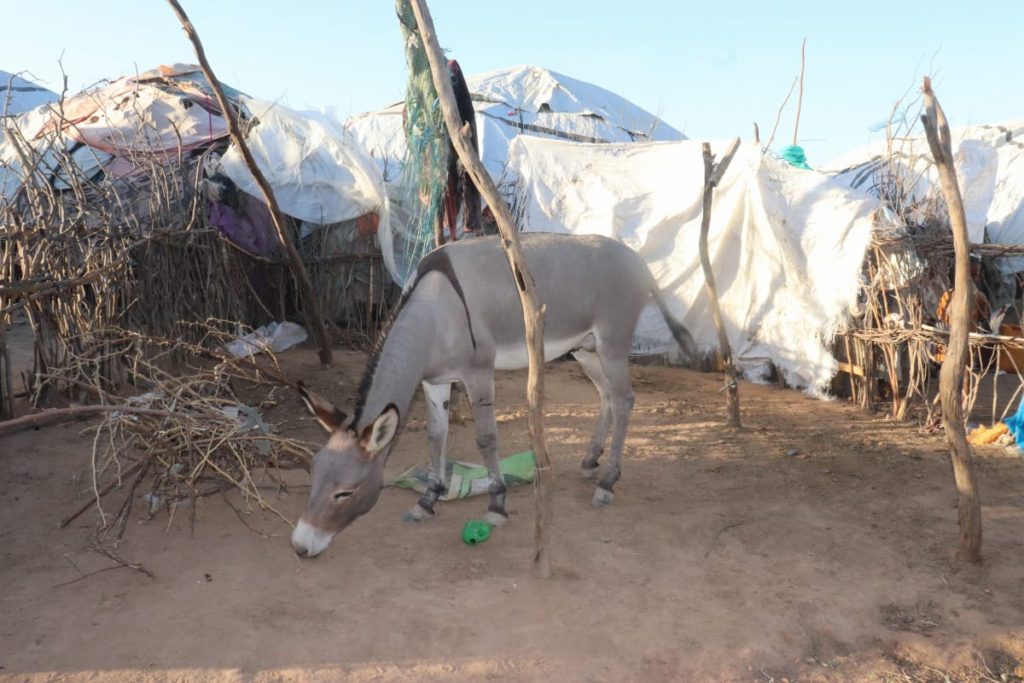
As the number of IDPs in southern Somalia soared, humanitarian actors lacked adequate resources to address their needs, forcing IDPs to move to Dadaab.
The journey to Dadaab on the Somalia-Kenya border is long and arduous. Depending on the mode of transport it can take anywhere between two days to six weeks. Those with resources could board or hire vehicles. However, the fares are exorbitant and out of reach for many, with some families telling Amnesty International that they had to sell household items, livestock, grains or even land to afford fares.
Having declared the drought a national disaster, authorities should have ensured there were enough resources to protect drought affected people, including by seeking extra international assistance.
Tigere Chagutah
Services from humanitarian organizations and government departments along the transport routes were largely absent, with the limited assistance available appearing to be centralized around settlements and IDP camps and not along transport corridors. This is despite Somalia’s obligations under its constitution and international law, including under the Kampala Convention, to protect those displaced by climate change.
Abdullahi, who travelled from Saakow in Somalia to Dadaab, said:
“When we got to Dhobley, well-wishers picked 15 women and children and gave them a lift in their vehicle to Dadaab. The men were left behind to walk with the donkey carts. We carried sorghum [a type of grain] and water for the children, but they were extremely malnourished on arrival because what we had only lasted a few days.”
The post Somalia: Thousands of climate-displaced individuals being failed by authorities and the international community – new report appeared first on Amnesty International.
Ibu Volcano Volcanic Ash Advisory: ERUPTION REP AT 09/1601Z EST VA DTG: 10/0100Z
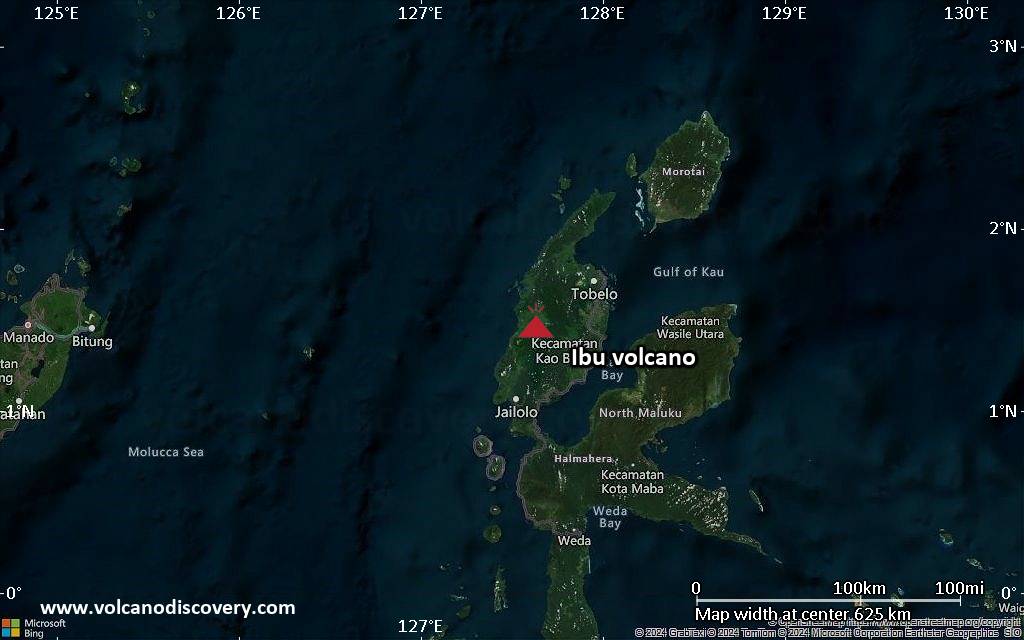
Volcanic Ash Advisory Center Darwin (VAAC) issued the following report:
FVAU01 at 01:15 UTC, 10/11/25 from ADRM
VA ADVISORY
DTG: 20251110/0120Z
VAAC: DARWIN
VOLCANO: IBU 268030
PSN: N0129 E12738
AREA: INDONESIA
SUMMIT ELEV: 1325M
ADVISORY NR: 2025/1259
INFO SOURCE: CVGHM, HIMAWARI-8
AVIATION COLOUR CODE: ORANGE
ERUPTION DETAILS: ERUPTION REP AT 09/1601Z
EST VA DTG: 10/0100Z
EST VA CLD: SFC/FL060 N0125 E12737 – N0129 E12733 – N0203
E12749 – N0159 E12809 – N0138 E12814 MOV NE 20KT
FCST VA CLD +6 HR: 10/0700Z SFC/FL060 N0125 E12735 – N0133
E12733 – N0153 E12803 – N0142 E12816 – N0126 E12810
FCST VA CLD +12 HR: 10/1300Z SFC/FL060 N0126 E12733 – N0134
E12733 – N0149 E12806 – N0137 E12817 – N0120 E12808
FCST VA CLD +18 HR: 10/1900Z SFC/FL060 N0127 E12735 – N0134
E12735 – N0141 E12801 – N0130 E12811 – N0118 E12801
RMK: VA NOT IDENTIFIABLE ON SATELLITE IMAGERY DUE TO MET
CLOUD OBSCURATION. GROUND REPORTS INDICATE INTERMITTENT
DISCRETE ERUPTIONS ARE ONGOING. HEIGHT AND MOVEMENT BASED ON
GROUND REPORTS AND MODEL GUIDANCE.
NXT ADVISORY: NO LATER THAN 20251110/0720Z=
Kilauea Volcano Volcanic Ash Advisory: CONS VA EMS to 13000 ft (4000 m)

Explosive activity continues. Volcanic Ash Advisory Center (VAAC) Washington warned about a volcanic ash plume that rose up to estimated 13000 ft (4000 m) altitude or flight level 130 and is moving at 20 kts in SW direction.
The full report is as follows:
FVXX26 at 22:39 UTC, 09/11/25 from KNES
VA ADVISORY
DTG: 20251109/2237Z
VAAC: WASHINGTON
VOLCANO: KILAUEA 332010
PSN: N1925 W15517
AREA: HAWAIIAN.IS
SUMMIT ELEV: 4009 FT [1222 M]
ADVISORY NR: 2025/028
INFO SOURCE: GOES-18. VONA. WEBCAM. NWP MODELS.
ERUPTION DETAILS: CONS VA EMS
OBS VA DTG: 09/2226Z
OBS VA CLD: SFC/FL130 N1925 W15517 – N1925 W15516
– N1911 W15529 – N1911 W15534 – N1916 W15535 –
N1925 W15517 MOV SW 20KT
FCST VA CLD +6HR: 10/0430Z SFC/FL130 N1926 W15517
– N1924 W15516 – N1903 W15536 – N1911 W15543 –
N1926 W15517
FCST VA CLD +12HR: 10/1030Z SFC/FL130 N1926
W15517 – N1924 W15516 – N1902 W15536 – N1911
W15544 – N1926 W15517
FCST VA CLD +18HR: 10/1630Z SFC/FL130 N1926
W15517 – N1924 W15516 – N1904 W15538 – N1913
W15544 – N1926 W15517
RMK: VONA RPRT RCVD FR VOL ACTIVITY. EMS OF GAS
AND VA OBS IN WEBCAM AND STLT IMG MOV SW EXT AT
LEAST 20NM FM SUMMIT. SW MVMT EXP THRU T+18.
…GATLING
NXT ADVISORY: WILL BE ISSUED BY 20251110/0430Z
Ibu Volcano Volcanic Ash Advisory: ERUPTION REP AT 09/1601Z EST VA DTG: 09/1900Z
Volcanic Ash Advisory Center Darwin (VAAC) issued the following report:
FVAU01 at 19:12 UTC, 09/11/25 from ADRM
VA ADVISORY
DTG: 20251109/1920Z
VAAC: DARWIN
VOLCANO: IBU 268030
PSN: N0129 E12738
AREA: INDONESIA
SUMMIT ELEV: 1325M
ADVISORY NR: 2025/1258
INFO SOURCE: CVGHM, HIMAWARI-8
AVIATION COLOUR CODE: ORANGE
ERUPTION DETAILS: ERUPTION REP AT 09/1601Z
EST VA DTG: 09/1900Z
EST VA CLD: SFC/FL060 N0129 E12734 – N0211 E12800 – N0210
E12820 – N0151 E12822 – N0125 E12738 MOV NE 25KT
FCST VA CLD +6 HR: 10/0100Z SFC/FL060 N0125 E12737 – N0129
E12733 – N0203 E12749 – N0159 E12809 – N0138 E12814
FCST VA CLD +12 HR: 10/0700Z SFC/FL060 N0125 E12735 – N0133
E12733 – N0153 E12803 – N0142 E12816 – N0126 E12810
FCST VA CLD +18 HR: 10/1300Z SFC/FL060 N0126 E12733 – N0134
E12733 – N0149 E12806 – N0137 E12817 – N0120 E12808
RMK: VA NOT IDENTIFIABLE ON SATELLITE IMAGERY. GROUND
REPORTS INDICATE INTERMITTENT DISCRETE ERUPTIONS ARE
ONGOING. HEIGHT AND MOVEMENT BASED ON GROUND REPORTS AND
MODEL GUIDANCE.
NXT ADVISORY: NO LATER THAN 20251110/0120Z=