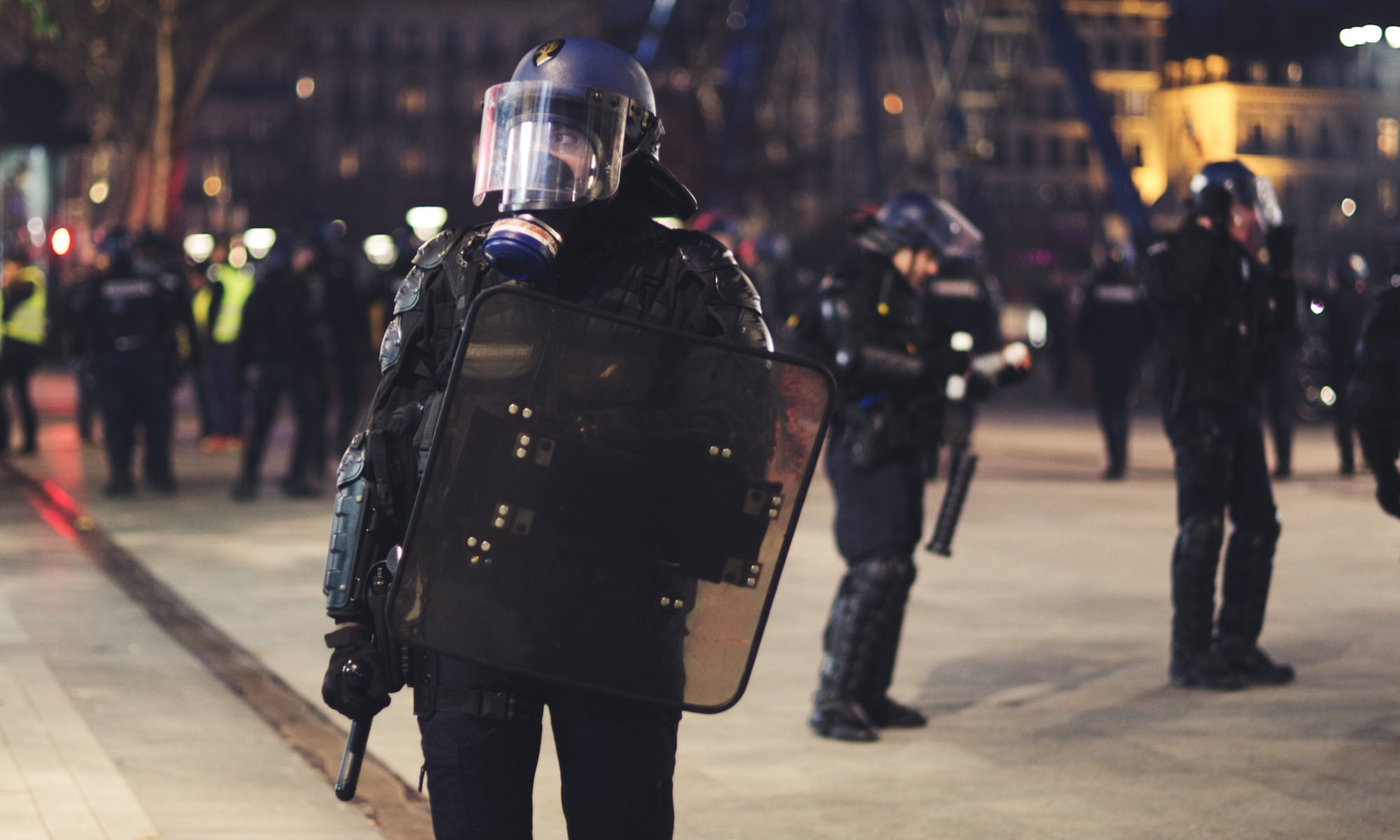
Colombia: The military criminal justice system should not act in cases of human rights violations

Military courts continue to investigate possible human rights violations and crimes under international law committed by members of the Colombian security forces, despite express prohibitions in national and international standards, Amnesty International said today in a new report.

The report Insist, persist, resist and never give up? Impact of the use of military criminal justice on impunity for human rights violations in Colombia shows that use of the military criminal justice system (JPM) prevents access to justice, violates the rights of victims and exacerbates the damage caused by impunity.

“The use of military criminal justice in possible human rights violations is not a technical error: it is a structural obstacle that contributes to impunity,” said Ana Piquer, Americas director at Amnesty International.

The use of military criminal justice in possible human rights violations is not a technical error: it is a structural obstacle that contributes to impunity.” 

Ana Piquer, Americas director at Amnesty International.

Undue intervention

According to international human rights standards, military judges should never preside over trials involving civilians, possible human rights violations or crimes under international law. The report points out the contradiction inherent in the fact that the National Police in Colombia is defined as a civilian body, yet its members are investigated and subjected to trial by the JPM. Amnesty International believes that this issue can only be permanently resolved through constitutional reform.

Despite two decades of legal and constitutional reforms to criminal law and military jurisdiction, plus a wealth of case law from the Constitutional Court and international position statements, military justice continues to act in cases involving possible human rights violations and crimes under international law committed by members of the military and police forces, especially crimes against life and personal integrity. “This prevents Colombia from adequately guaranteeing access to justice for the victims,” said Ana Piquer.

A decades-old problem

The report analyses the enforced disappearances in the 1980s of Luis Fernando Lalinde and Nydia Erika Bautista at the hands of the Colombian military; at the time, investigation into these cases was taken on by courts comprised by these same military forces, with impunity prevailing to this day, four decades on.

The situation of protesters injured or killed by members of the National Police in the context of protests occurring over the last two decades is also analysed. Although Colombian case law is consistent in pointing out that these cases must be subject to the ordinary courts, judges and prosecutors from both military and ordinary courts continue to wrongly assign them to the JPM, hindering the judicial process.

The report is based on information provided to Amnesty International by the Attorney General’s Office, the JPM and the Constitutional Court, and includes a systematic review of 398 cases of conflicts of jurisdiction referred to the Constitutional Court for resolution between February 2021 and October 2024.

Demanding justice for human rights violations or crimes under international law allegedly committed by members of the military or the National Police usually takes years and is a process that requires addressing institutional barriers that favour impunity. “The jurisdiction of the military criminal justice system must be strictly limited to crimes committed by active duty military personnel. It cannot be extended to human rights violations or civilians, in accordance with international standards,” concluded Ana Piquer.

The jurisdiction of the military criminal justice system must be strictly limited to crimes committed by active duty military personnel. It cannot be extended to human rights violations or civilians, in accordance with international standards”.

Ana Piquer, Americas director at Amnesty International.

Amnesty International recommendations

Amnesty International calls on the Colombian state to: 

  • Constitutionally exclude the National Police from the scope of jurisdiction of the JPM.
  • Approve legislative reforms to specify that the jurisdiction of the JPM does not extend to possible human rights violations or crimes under international law.
  • Adopt preventive measures to ensure that investigations into such crimes cannot be opened under the JPM, and that any that may already have been opened are transferred to the ordinary criminal justice system.
  • Provide mandatory and comprehensive training to JPM and ordinary justice operators on applicable international standards and constitutional jurisprudence.

For further information or to arrange an interview, please contact press@amnesty.org

The post Colombia: The military criminal justice system should not act in cases of human rights violations appeared first on Amnesty International.
South Africa must seize opportunity to show principled global leadership

By Agnès Callamard, Secretary General at Amnesty International

South Africa has played a leading role in international efforts to prevent, stop and punish Israel’s genocide against the Palestinians in Gaza. Now, as the nation prepares to host the first G20 Leaders’ Summit on African soil, it has an important opportunity to step up that pressure and fill the alarming void that has emerged in the international order.

While superpowers are undermining multilateralism through inaction and double standards, or actively attacking the international justice system, we look to states like South Africa to show principled leadership and champion a global vision that upholds and protects human rights universally.

The international community’s complicity or inaction in the face of Israel’s livestreamed genocide has been shameful and indefensible. World leaders’ collective failure to put a stop to Israel’s crimes under international law will stain their reputations for generations to come. Sadly, this was not for the first time. They have far too often allowed international law to be trampled on, betraying the legacy of the global consensus who said “never again” to the horrors of the Holocaust and the Second World War.

It has been particularly disconcerting to see the architects of the rules-based order take a sledgehammer at the values, principles or institutions underpinning it, from Russia’s invasion of Ukraine to the United States’ military support to Israel and its shameless sanctions against the International Criminal Court (ICC), the UN Special Rapporteur on human rights in the Occupied Palestinian Territory, and the Palestinian NGOs al-Haq, Al Mezan Center for Human Rights and the Palestinian Center for Human Rights.

The G20 summit in Johannesburg comes after the African Union became a permanent member in 2023, affording the group and its members enhanced influence on the international stage. Amid the global leadership vacuum and the Trump administration’s “America First” approach to foreign policy, President Cyril Ramaphosa’s government must seize this opportunity to reinvigorate multilateralism and forge a new order truly committed to upholding international law and equality.

South Africa has set a strong example and shown much-needed leadership in protecting Palestinian rights, including through the case it brought against Israel under the Genocide Convention at the International Court of Justice in December 2023, and in co-founding the Hague Group, a coalition of nations determined to hold Israel accountable, including through the ICC. This is an encouraging start, but the gravity of the situation around the world, with international law set aside in favour of the principle that “might is right”, means South Africa must help build a bigger tent by forging larger and stronger international alliances to press powerful states and their regional proxies into abiding by international law.

To be a credible advocate at global level, South Africa must show greater consistency in its own human rights record.

South Africa must use all its leverage to compel Israeli authorities to lift their 18-year-long illegal blockade and allow unimpeded access to humanitarian aid to civilians in the entire Gaza Strip. All parties must respect the cessation of hostilities and ensure international law and respect for human rights are adhered to. South Africa, like other states, must press Israel to end its unlawful occupation of the Palestinian Territory and dismantle its cruel system of apartheid against Palestinians.

Elsewhere, South Africa should leverage its influence over Russia to press for an end to its crimes and human rights violations in Ukraine and step up its international advocacy work around the overlooked conflicts in Sudan and the Democratic Republic of Congo. It must throw its full diplomatic weight behind regional and international accountability efforts and ensure the African Union urgently presses the Sudanese and DRC governments and forces such as the RSF and M23 to end their human rights abuses.

The world is also facing growing economic inequality both within and between countries. Much of this is a continuing legacy of colonialism and racial injustice, which South Africa itself still wrestles with, and is compounded by new and perpetuated inequalities driven by the response to human-induced climate change. African countries, including South Africa, have been instrumental in progressing a UN Tax Treaty to replace the current OECD-dominated one to ensure a fairer global tax system and address the billions lost every year to tax abuse. Yet there is still much to do, including a similar process and treaty on debt to tackle the unsustainable amounts owed by low-income countries, which are crippling their ability to deliver better and more climate-resilient economic and social rights enjoyment for their people. At 80 years old, the Bretton Woods financial system is clearly unfit for purpose and remains dominated by high-income countries who set the rules with often catastrophic consequences for lower-income nations. As a powerful voice for the global south, South Africa must ensure the G20 does not continue to neglect these vital issues but grasps the nettle and pushes for radical reform.

That said, to be a credible advocate at global level, South Africa must show greater consistency in its own human rights record. The Ramaphosa administration should address domestic issues, including mounting concern over corruption and impunity, and access to essential services such as water, sanitation and adequate housing. It must reassert its commitment to the ICC, which it had threatened to leave. And it should ensure it does not exhibit the double standards that are destroying universal values and the credibility of international law, by denouncing violations committed by its allies and using its influence to ensure these abuses are stopped and remedied.

From Gaza to Sudan, the DRC, Ukraine and Myanmar, to the planetary crises of climate change, biodiversity loss and pollution, the world is crying out for principled global leadership to help deliver justice, stability and accountability. South Africa should heed those calls, lead or support principled, collective and robust international action, and step up for humanity.


This article was originally published by The Daily Maverick

The post South Africa must seize opportunity to show principled global leadership appeared first on Amnesty International.

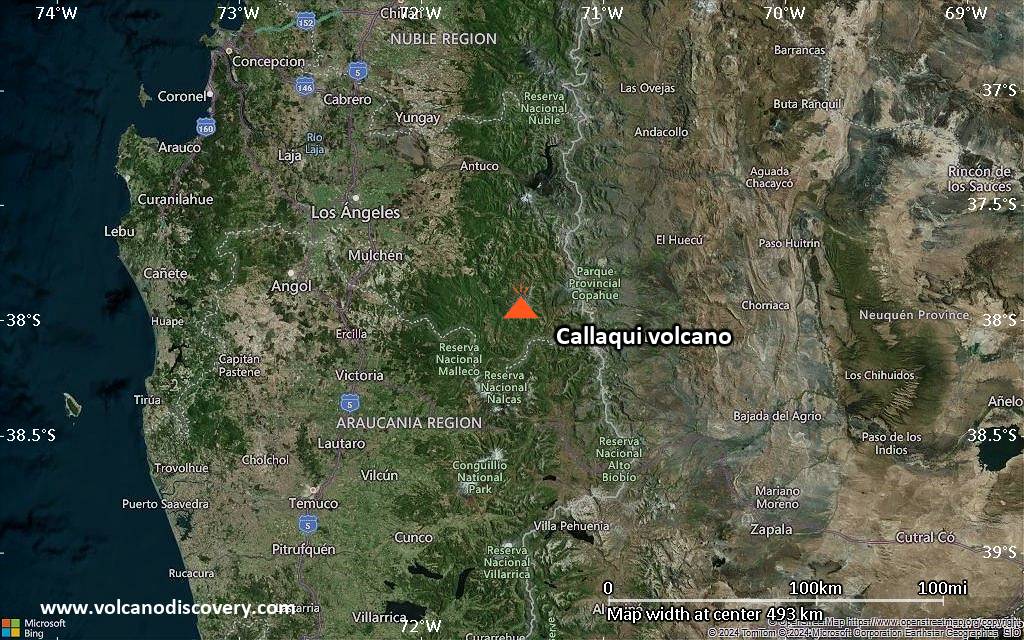
Callaqui Volcano Volcanic Ash Advisory: NO ERUPTION

Volcanic Ash Advisory Center Buenos Aires (VAAC) issued the following report:

FVAG01 at 13:35 UTC, 14/11/25 from SABM
VA ADVISORY
DTG: 20251114/1340Z

VAAC: BUENOS AIRES

VOLCANO: CALLAQUI 357091
PSN: S3754 W07126

AREA: CHILE

SUMMIT ELEV: 10380 FT [3164 M]

ADVISORY NR: 2025/002

INFO SOURCE: GOES-E. WEBCAM. ARS.

AVIATION COLOUR CODE: NOT GIVEN

ERUPTION DETAILS: NO ERUPTION

OBS VA DTG: 14/1320Z

OBS VA CLD: VA NOT IDENTIFIABLE FROM SATELLITE
DATA

FCST VA CLD +6 HR: 14/1920Z NO VA EXP

FCST VA CLD +12 HR: 15/0120Z NO VA EXP

FCST VA CLD +18 HR: 15/0720Z NO VA EXP

RMK: ALTHOUGH A PILOT REPORTED VA CLD AT 1313Z,
NO VA DETECTED IN SATELLITE IMAGERY. WEBCAM SHOWS
STEAM AT SUMMIT …SMN

NXT ADVISORY: NO FURTHER ADVISORIES=

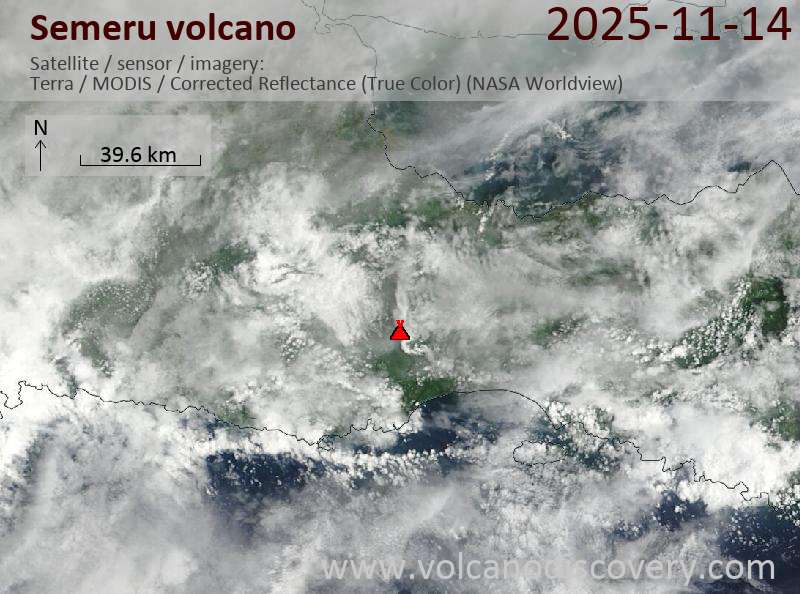
Semeru Volcano Volcanic Ash Advisory: VA ERUPTION REPORTED AT 14/1229Z EST VA DTG: 14/1310Z

Satellite image of Semeru volcano on 14 Nov 2025

Volcanic Ash Advisory Center Darwin (VAAC) issued the following report:

FVAU02 at 13:21 UTC, 14/11/25 from ADRM
VA ADVISORY
DTG: 20251114/1330Z
VAAC: DARWIN
VOLCANO: SEMERU 263300
PSN: S0806 E11255
AREA: INDONESIA
SUMMIT ELEV: 3657M
ADVISORY NR: 2025/1297
INFO SOURCE: CVGHM, HIMAWARI-8
AVIATION COLOUR CODE: ORANGE
ERUPTION DETAILS: VA ERUPTION REPORTED AT 14/1229Z
EST VA DTG: 14/1310Z
EST VA CLD: SFC/FL150 S0807 E11251 – S0803 E11251 – S0757
E11314 – S0805 E11319 – S0812 E11316 MOV E 15KT
FCST VA CLD +6 HR: 14/1910Z SFC/FL150 S0808 E11251 – S0804
E11251 – S0756 E11314 – S0805 E11320 – S0812 E11317
FCST VA CLD +12 HR: 15/0110Z SFC/FL150 S0803 E11251 – S0757
E11314 – S0805 E11319 – S0812 E11316 – S0808 E11251
FCST VA CLD +18 HR: 15/0710Z SFC/FL150 S0804 E11251 – S0757
E11314 – S0804 E11319 – S0812 E11316 – S0808 E11251
RMK: VA NOT IDENTIFIABLE ON SATELLITE IMAGERY DUE TO MET
CLOUD, HOWEVER GROUND REPORTS INDICATE INTERMITTENT DISCRETE
ERUPTIONS ARE ONGOING. HEIGHT AND MOVEMENT BASED ON RECENT
GROUND REPORTS AND MODEL GUIDANCE.
NXT ADVISORY: NO LATER THAN 20251114/1930Z=

Slovenia: MPs must reject draconian ‘security’ bill which puts rights at risk and targets Roma community

Ahead of an expected vote in Slovenia’s parliament on hastily proposed sweeping changes which would significantly expand police powers, restrict welfare rights and weaken key safeguards, Esther Major Amnesty International’s Deputy Director for Research in Europe, said:

“This draconian bill risks stripping all people in Slovenia of an array of vital human rights protections as well as posing a specific risk to a Roma population that already faces daily discrimination, exclusion and poverty.

“Under the guise of providing security these unjustified and disproportionate measures would significantly expand police and judicial powers, removing internationally recognized and crucial procedural safeguards.

“While not explicitly aimed at the Roma population, the vitriolic rhetoric used by the government to justify these measures raises serious fears that they would be deployed arbitrarily and discriminatorily against the Roma population. Coupled with the security crackdown, punitive restrictions on social benefits could further penalize the most marginalized families.

Under the guise of providing security these unjustified and disproportionate measures would significantly expand police and judicial powers

“Slovenian MPs must reject these harmful measures due to the dangerous consequences they could have for all Slovenians, particularly Roma people, placing them at heightened risk of human rights violations”

Background

The vote is expected on 17 November.

The draft Act on Urgent Measures to Ensure Public Security (dubbed the ‘Sutar Law’) was introduced by the Slovenian government on 6 November 2025, two weeks after a fatal incident in Novo Mesto involving a member of the Roma community.

The government has justified the proposed measures as necessary to restore public confidence in security institutions and to prevent future incidents of serious violence.

If adopted, the draft law would amend eight existing acts.

The post Slovenia: MPs must reject draconian ‘security’ bill which puts rights at risk and targets Roma community appeared first on Amnesty International.