On 12/4/2025 3:12:08 AM, an earthquake occurred in Pacific-Antarctic Ridge potentially affecting [unknown]. The earthquake had Magnitude 5.5M, Depth:10km.
Sakurajima Volcano Volcanic Ash Advisory: ERUPTED AT 20251203/2342Z FL060 EXTD SE OBS VA DTG: 04/0010Z to 6000 ft (1800 m)

Satellite image of Sakurajima volcano on 4 Dec 2025
Explosive activity continues. Volcanic Ash Advisory Center (VAAC) Tokyo warned about a volcanic ash plume that rose up to estimated 6000 ft (1800 m) altitude or flight level 060 .
The full report is as follows:
FVFE01 at 00:41 UTC, 04/12/25 from RJTD
VA ADVISORY
DTG: 20251204/0041Z
VAAC: TOKYO
VOLCANO: SAKURAJIMA [AIRA CALDERA] 282080
PSN: N3136 E13039
AREA: JAPAN
SOURCE ELEV: 1117M AMSL
ADVISORY NR: 2025/434
INFO SOURCE: JMA HIMAWARI-9
ERUPTION DETAILS: ERUPTED AT 20251203/2342Z FL060 EXTD SE
OBS VA DTG: 04/0010Z
OBS VA CLD: SFC/FL060 N3135 E13040 – N3132 E13046 – N3127 E13046 MOV
SE 20KT
FCST VA CLD +6 HR: 04/0610Z SFC/FL060 N3037 E13207 – N3026 E13212 –
N2956 E13118 – N3016 E13110
FCST VA CLD +12 HR: 04/1210Z SFC/FL060 N3002 E13247 – N2958 E13306 –
N2854 E13139 – N2859 E13122
FCST VA CLD +18 HR: NO VA EXP
RMK: NIL
NXT ADVISORY: 20251204/0600Z=
Volcanic activity worldwide 3 Dec 2025: Santiaguito volcano, Fuego, Popocatépetl, Soputan, Merapi, …

Map of today’s active volcanoes
Sakurajima (Kyushu, Japan): The Japan Meteorological Agency (JMA) reported that the eruption continued at Aira on 2 December 2025 (local). The alert level remained at „Level 3 – Restriction on proximity to the volcano“ (on a 5-level scale).
Source: Japan Meteorological Agency (JMA)
… [read more]
Canlaon (Central Philippines): The Philippine Institute of Volcanology and Seismology (PHIVOLCS) reported that the eruption continued at Kanlaon on 2 December 2025 (local). The alert level remained at „2 – Moderate Level of Volcanic Unrest“ (level 2 on a 0–5 level scale).
Source: Philippine Institute of Volcanology and Seismology (PHIVOLCS)
… [read more]
Taal (Luzon, Philippines): Volcanic Ash Advisory Center Tokyo (VAAC) issued the following report: ERUPTION AT 20251203/1659Z FL050 REPORTED OBS VA DTG:03/1700Z
…3 Dec:
The Philippine Institute of Volcanology and Seismology (PHIVOLCS) reported that the eruption continued at Taal on 2 December 2025 (local). The alert level remained at „1 – Low-Level Unrest“ (on a 0–5 level scale).
Source: Philippine Institute of Volcanology and Seismology (PHIVOLCS)
… [read more]
Karangetang (Siau Island, Sangihe Islands, Indonesia): The Center for Volcanology and Geological Hazard/Pusat Vulkanologi dan Mitigasi Bencana Geologi (CVGHM/PVMBG) reported that unrest continued at Karangetang on 2 December 2025 (local). The alert level remained at „Level 2 – Alert“ (on a 4-level scale).
Source: Center for Volcanology and Geological Hazard/Pusat Vulkanologi dan Mitigasi Bencana Geologi (CVGHM/PVMBG)
… [read more]
Raung (East Java): The Center for Volcanology and Geological Hazard/Pusat Vulkanologi dan Mitigasi Bencana Geologi (CVGHM/PVMBG) reported that the eruption continued at Raung on 2 December 2025 (local). The alert level remained at „Level 2 – Alert“ (on a 4-level scale).
Source: Center for Volcanology and Geological Hazard/Pusat Vulkanologi dan Mitigasi Bencana Geologi (CVGHM/PVMBG)
… [read more]
Ibu (Halmahera, Indonesia): Volcanic Ash Advisory Center Darwin (VAAC) issued the following report: GROUND REPORT OF DISCRETE ERUPTION WITH VA TO FL060
…3 Dec:
The Center for Volcanology and Geological Hazard/Pusat Vulkanologi dan Mitigasi Bencana Geologi (CVGHM/PVMBG) reported that the eruption continued at Ibu on 2 December 2025 (local). The alert level remained at „Level 2 – Alert“ (on a 4-level scale).
Source: Center for Volcanology and Geological Hazard/Pusat Vulkanologi dan Mitigasi Bencana Geologi (CVGHM/PVMBG)
… [read more]
Sangeang Api (Flores Sea, Indonesia): The Center for Volcanology and Geological Hazard/Pusat Vulkanologi dan Mitigasi Bencana Geologi (CVGHM/PVMBG) reported that unrest continued at Sangeang Api on 2 December 2025 (local). The alert level remained at „Level 2 – Alert“ (on a 4-level scale).
Source: Center for Volcanology and Geological Hazard/Pusat Vulkanologi dan Mitigasi Bencana Geologi (CVGHM/PVMBG)
… [read more]
Lewotobi (Flores): The Center for Volcanology and Geological Hazard/Pusat Vulkanologi dan Mitigasi Bencana Geologi (CVGHM/PVMBG) reported that the eruption continued at Lewotobi (Laki-Laki) on 2 December 2025 (local). The alert level remained at „Level 4 – Caution“ (on a 4-level scale).
Source: Center for Volcanology and Geological Hazard/Pusat Vulkanologi dan Mitigasi Bencana Geologi (CVGHM/PVMBG)
… [read more]
Soputan (North Sulawesi, Indonesia): The Center for Volcanology and Geological Hazard/Pusat Vulkanologi dan Mitigasi Bencana Geologi (CVGHM/PVMBG) reported that unrest continued at Soputan on 2 December 2025 (local). The alert level remained at „Level 2 – Alert“ (on a 4-level scale).
Source: Center for Volcanology and Geological Hazard/Pusat Vulkanologi dan Mitigasi Bencana Geologi (CVGHM/PVMBG)
… [read more]
Lewotolo (Lesser Sunda Islands): The Center for Volcanology and Geological Hazard/Pusat Vulkanologi dan Mitigasi Bencana Geologi (CVGHM/PVMBG) reported that the eruption continued at Lewotolok on 2 December 2025 (local). The alert level remained at „Level 2 – Alert“ (on a 4-level scale).
Source: Center for Volcanology and Geological Hazard/Pusat Vulkanologi dan Mitigasi Bencana Geologi (CVGHM/PVMBG)
… [read more]
Merapi (Central Java, Indonesia): The Center for Volcanology and Geological Hazard/Pusat Vulkanologi dan Mitigasi Bencana Geologi (CVGHM/PVMBG) reported that the eruption continued at Merapi on 2 December 2025 (local). The alert level remained at „Level 3 – Standby“ (on a 4-level scale).
Source: Center for Volcanology and Geological Hazard/Pusat Vulkanologi dan Mitigasi Bencana Geologi (CVGHM/PVMBG)
… [read more]
Semeru (East Java, Indonesia): The Center for Volcanology and Geological Hazard/Pusat Vulkanologi dan Mitigasi Bencana Geologi (CVGHM/PVMBG) reported that the eruption continued at Semeru on 2 December 2025 (local). The alert level remained at „Level 3 – Standby“ (on a 4-level scale).
Source: Center for Volcanology and Geological Hazard/Pusat Vulkanologi dan Mitigasi Bencana Geologi (CVGHM/PVMBG)
… [read more]
Marapi (Western Sumatra, Indonesia): The Center for Volcanology and Geological Hazard/Pusat Vulkanologi dan Mitigasi Bencana Geologi (CVGHM/PVMBG) reported that the eruption continued at Marapi on 2 December 2025 (local). The alert level remained at „Level 2 – Alert“ (on a 4-level scale).
Source: Center for Volcanology and Geological Hazard/Pusat Vulkanologi dan Mitigasi Bencana Geologi (CVGHM/PVMBG)
… [read more]
Dukono (Halmahera): The Center for Volcanology and Geological Hazard/Pusat Vulkanologi dan Mitigasi Bencana Geologi (CVGHM/PVMBG) reported that the eruption continued at Dukono on 2 December 2025 (local). The alert level remained at „Level 2 – Alert“ (on a 4-level scale).
Source: Center for Volcanology and Geological Hazard/Pusat Vulkanologi dan Mitigasi Bencana Geologi (CVGHM/PVMBG)
… [read more]
Awu (Sulawesi & Sangihe Islands): The Center for Volcanology and Geological Hazard/Pusat Vulkanologi dan Mitigasi Bencana Geologi (CVGHM/PVMBG) reported that unrest continued at Awu on 2 December 2025 (local). The alert level remained at „Level 2 – Alert“ (on a 4-level scale).
Source: Center for Volcanology and Geological Hazard/Pusat Vulkanologi dan Mitigasi Bencana Geologi (CVGHM/PVMBG)
… [read more]
Kerinci (Sumatra): The Center for Volcanology and Geological Hazard/Pusat Vulkanologi dan Mitigasi Bencana Geologi (CVGHM/PVMBG) reported that unrest continued at Kerinci on 2 December 2025 (local). The alert level remained at „Level 2 – Alert“ (on a 4-level scale).
Source: Center for Volcanology and Geological Hazard/Pusat Vulkanologi dan Mitigasi Bencana Geologi (CVGHM/PVMBG)
… [read more]
Iliwerung (Lesser Sunda Islands): The Center for Volcanology and Geological Hazard/Pusat Vulkanologi dan Mitigasi Bencana Geologi (CVGHM/PVMBG) reported that unrest continued at Iliwerung on 2 December 2025 (local). The alert level remained at „Level 2 – Alert“ (on a 4-level scale).
Source: Center for Volcanology and Geological Hazard/Pusat Vulkanologi dan Mitigasi Bencana Geologi (CVGHM/PVMBG)
… [read more]
Lokon-Empung (North Sulawesi, Indonesia): The Center for Volcanology and Geological Hazard/Pusat Vulkanologi dan Mitigasi Bencana Geologi (CVGHM/PVMBG) reported that unrest continued at Lokon-Empung on 2 December 2025 (local). The alert level remained at „Level 2 – Alert“ (on a 4-level scale).
Source: Center for Volcanology and Geological Hazard/Pusat Vulkanologi dan Mitigasi Bencana Geologi (CVGHM/PVMBG)
… [read more]
Aoba (Vanuatu): Explosive activity continues. Volcanic Ash Advisory Center (VAAC) Wellington warned about a volcanic ash plume that rose up to estimated 8000 ft (2400 m) altitude or flight level 080 and is moving at 05 kts in NW direction.
The full report is as follows: ERUPTION AT 20251202/1400Z CONTINUOUS LOW LEVEL ERUPTION to 8000 ft (2400 m)
Kilauea (Hawai’i): The United States Geological Survey – Hawaiian Volcano Observatory (USGS-HVO) reported that the eruption continued at Kilauea on 2 December 2025 (local). The alert level remained at „Watch“ (level 3 on a 4-level scale). The aviation alert level remained at „Orange“ (level 3 on a 4-level scale).
Source: United States Geological Survey – Hawaiian Volcano Observatory (USGS-HVO)
… [read more]
Shishaldin (Aleutian Islands, Alaska): The United States Geological Survey – Alaska Volcano Observatory (USGS-AVO) reported that unrest continued at Shishaldin between 1 December 2025 (local) and 2 December 2025 (local). The alert level remained at „Advisory“ (level 2 on a 4-level scale). The aviation alert level remained at „Yellow“ (level 2 on a 4-level scale).
Source: United States Geological Survey – Alaska Volcano Observatory (USGS-AVO)
… [read more]
Great Sitkin (United States, Aleutian Islands): The United States Geological Survey – Alaska Volcano Observatory (USGS-AVO) reported that the eruption continued at Great Sitkin between 1 December 2025 (local) and 2 December 2025 (local). The alert level remained at „Watch“ (level 3 on a 4-level scale). The aviation alert level remained at „Orange“ (level 3 on a 4-level scale).
Source: United States Geological Survey – Alaska Volcano Observatory (USGS-AVO)
… [read more]
Popocatépetl (Central Mexico): Explosive activity continues. Volcanic Ash Advisory Center (VAAC) Washington warned about a volcanic ash plume that rose up to estimated 20000 ft (6100 m) altitude or flight level 200 .
The full report is as follows: NEW VA EM. to 20000 ft (6100 m)
…3 Dec:
The Centro Nacional de Prevención de Desastres (CENAPRED) reported that the eruption continued at Popocatépetl between 1 December 2025 (local) and 2 December 2025 (local). The alert level remained at „Yellow Alert – Phase 2“ (level 4 on a 7-level scale).
Source: Centro Nacional de Prevención de Desastres (CENAPRED)
… [read more]
Santiaguito (Guatemala): Explosive activity continues. Volcanic Ash Advisory Center (VAAC) Washington warned about a volcanic ash plume that rose up to estimated 15000 ft (4600 m) altitude or flight level 150 .
The full report is as follows: OCNL VA EMS to 15000 ft (4600 m)
Fuego (Guatemala): Explosive activity continues. Volcanic Ash Advisory Center (VAAC) Washington warned about a volcanic ash plume that rose up to estimated 16000 ft (4900 m) altitude or flight level 160 .
The full report is as follows: ONGOING VA EMS to 16000 ft (4900 m)
Puracé (Colombia): Volcanic Ash Advisory Center Washington (VAAC) issued the following report: VA NOT SEEN IN SAT IMAGERY
…3 Dec:
The Servicio Geológico Colombiano (SGC) reported that unrest continued at Puracé on 2 December 2025 (local). The alert level remained at „Orange“ (level 3 on a 4-level scale).
Source: Servicio Geológico Colombiano (SGC)
… [read more]
Sangay (Ecuador): The Instituto Geofísico-Escuela Politécnica Nacional (IG-EPN) reported that the eruption continued at Sangay between 1 December 2025 (local) and 2 December 2025 (local). The alert level remained at „2 – Yellow“ (on a 4-level scale).
Source: Instituto Geofísico-Escuela Politécnica Nacional (IG-EPN)
… [read more]
Reventador (Ecuador): The Instituto Geofísico-Escuela Politécnica Nacional (IG-EPN) reported that the eruption continued at Reventador between 1 December 2025 (local) and 2 December 2025 (local). The alert level remained at „3 – Orange“ (on a 4-level scale).
Source: Instituto Geofísico-Escuela Politécnica Nacional (IG-EPN)
… [read more]
Sabancaya (Peru): The Centro Vulcanológico Nacional del Instituto Geofísico del Perú (CENVUL-IGP) reported that the eruption continued at Sabancaya between 1 December 2025 (local) and 2 December 2025 (local). The alert level remained at „Orange“ (level 3 on a 4-level scale).
Source: Centro Vulcanológico Nacional del Instituto Geofísico del Perú (CENVUL-IGP)
… [read more]
Volcano Activity Summary for 3 Dec 2025:
True climate justice demands a reckoning with colonialism
By Nciko wa Nciko and Samrawit Getaneh
The African Union declared 2025 to be the “Year of Justice for Africans and People of African Descent through Reparations”. The African Court on Human and Peoples’ Rights has an opportunity to make that more than just a slogan, as it considers the current request for an advisory opinion before it, on states’ human rights obligations in the context of climate change. It has an opportunity to issue a landmark opinion affirming the link between colonialism and the harms of climate change to people(s) across the continent. Such an opinion would mark a major step forward from the International Court of Justice and in Africa’s fight for reparative justice.
On July 30, 2025, Amnesty International published a report recounting how, during the French colonial era in Madagascar, authorities deliberately unleashed harmful, genetically manipulated cochineal parasites across some 40,000 hectares (98,850 acres) of a drought-resilient vegetation in the Androy region in Madagascar’s deep South.
Between 1924 and 1929, the parasites destroyed roughly 100km (62 miles) of vegetation cover each year.
Madagascar’s droughts are being intensified by human-induced climate change, driven largely by high-income historically high emitting countries, such as France – the very colonial power that left the Antandroy people vulnerable.
Nciko wa Nciko and Samrawit Getaneh
This was not a minor ecological loss. The vegetation had sustained the Antandroy people for generations, providing food and helping to preserve groundwater through chronic droughts. Its destruction erased a vital natural defence system against those droughts. More than a century later, the destruction has left the Antandroy people exposed to recurring mass hunger, displacement, and death whenever drought strikes.
Furthermore, Madagascar’s droughts are being intensified by human-induced climate change, driven largely by high-income historically high emitting countries, such as France – the very colonial power that left the Antandroy people vulnerable.
When science leads and politics lags
The scientific link between colonialism and climate vulnerability has long been established. In 2022, the Intergovernmental Panel on Climate Change (IPCC), which advises the United Nations on the science related to climate change, highlighted not only how colonialism contributed to the climate crisis itself but also how its enduring harms have left many communities in former colonies more vulnerable to climate effects, such as droughts, floods, cyclones and rising sea levels.
Effective climate action needs more than science; it also requires political backing for states, particularly those with greater historic responsibility for climate change, to act on mitigation, adaptation and financing strategies.
Nciko wa Nciko and Samrawit Getaneh
Effective climate action needs more than science; it also requires political backing for states, particularly those with greater historic responsibility for climate change, to act on mitigation, adaptation and financing strategies. When this doesn’t happen, countries with minimal historical responsibility who are suffering the most from climate change have no option but to seek clarity and accountability through a world court, in this case, the International Court of Justice (ICJ). The ICJ has the capacity to influence political processes. The ICJ, in particular, can lend global legitimacy to scientific evidence. Indeed, the ICJ has considerable moral and persuasive authority, often shaping the behaviour of states on the international political stage.
The opportunity for the ICJ to exert this influence arrived when in March 2023 Vanuatu, itself a former colony of both France and the United Kingdom, rallied the UN General Assembly to request an ICJ advisory opinion on states’ legal obligations regarding climate change. Formerly colonised nations in Africa and elsewhere joined the effort, many explicitly highlighting how colonial harms and climate injustices are interconnected.
When the ICJ delivered its opinion in July 2025, there was a glaring omission. The word “colonialism” appeared nowhere in relation to climate change, neither in the main opinion nor in the 12 separate opinions and declarations issued by its judges. The ICJ also sidestepped a critical question: how far back in time can claims for climate obligations reach? This question is crucial, because former colonial powers often claim that colonialism was not prohibited under international law when it was practised and, therefore, no legal obligation to provide reparations exists. They also often defend their role in causing climate change by arguing that they were unaware of the harm and faced no legal limits on greenhouse gas emissions until recently.
Customary international law shatters the colonial defence
Despite its regrettable silence on the question of colonialism, the ICJ offered some reassurances to countries that are bearing the combined consequences of colonialism and climate change by affirming that states’ climate change obligations are not confined to climate treaties. They also flow from customary international law, which dictates that a state’s responsibility can extend into the present if a wrongful act continues to affect the enjoyment of human rights, regardless of when that act originally occurred.
Engaging customary international law is significant because it reshapes the question that any Court ought to ask about colonial climate legacies. In this context, the relevant question is not whether states can be held accountable for the intertwined impacts of colonialism and climate change. Nor is it how far back we should look to assign responsibility for greenhouse gas emissions, which linger in the atmosphere for centuries. The question is: are harms rooted in the colonial era, including those that shape climate vulnerability, causing human rights violations today?
The simple answer is yes. The greenhouse gases now heating our planet and fuelling a cascade of rights violations have been trapped in the atmosphere for generations. They are the direct legacy of the fossil fuel burning that powered the industrial rise of former colonial powers since the 1750s and their post World War I & II economic recovery. In Madagascar, the French colonial administration’s destruction of the drought-resilient vegetation that had long sustained the Antandroy people stripped them of their natural defence against recurring droughts. This forced them into dependence and cheap labour within the colonial cash-crop economy. All this helped expand the forging of Europe’s economic paths and markets, which were powered by the burning of fossil fuels, releasing unprecedented quantities of greenhouse gases, which caused climate change.
The ICJ’s half measure: Opening the door, then closing it
By affirming that customary international law can ground claims for climate-related reparations, the ICJ appeared to open the door for climate demands tied to colonial harms. Yet, in the same opinion, the ICJ reinforced one of the very arguments long used by those who benefited from colonialism to reject responsibility.
The ICJ stated that full reparation — through restitution, compensation or satisfaction — is possible only when a “sufficiently direct and certain causal link” can be proven between the wrongful act and the injury. But making such a definitive link between innumerable acts of colonial violence and the impacts they had in exacerbating climate-change vulnerability is nearly impossible.
The requirement of such a definitive link as a precondition for colonial reparations, without qualifying how it could practically work for colonialism and climate change impacts, provides cover to countries like France. In Madagascar’s case, for instance, the French government could easily argue: “It has been a century since the colonial destruction of drought-resistant vegetation, and factors like population growth have played a role and the act of greenhouse gas emissions and destruction of ecosystems was not regarded as a violation. How can France be held legally responsible and realistically be expected to quantify reparations today?” As UN experts have observed, “the greatest barrier to reparations for colonialism and slavery is that the principal beneficiaries of both lack the political will and moral courage to make them a reality.”
Will the African court echo the ICJ’s silence, or break it?
Since May 2025, the African Court on Human and Peoples’ Rights has been reviewing a request for an advisory opinion on the human and peoples’ rights obligations of African states in the context of climate change. This is more than a procedural exercise. The request highlights the relationship between climate change and colonialism – a point that human rights actors intend to emphasise in their submissions before the court.
This is therefore a chance for the African Court to articulate what the ICJ would not: that the fight for climate justice is inextricably linked with Africa’s fight for reparative justice.
Nciko wa Nciko and Samrawit Getaneh
This is therefore a chance for the Court to articulate what the ICJ would not: that the fight for climate justice is inextricably linked with Africa’s fight for reparative justice. Such a stance would lay bare the plight of those still suffering the intersecting harms of colonialism and climate change such as the Antandroy. It would contribute to breathing life into the Year of Reparations and align with the African Commission’s 2022 Resolution on Africa’s Reparations Agenda, which provides the African Court a mechanism through which to push African states to pursue justice for the trade and trafficking of enslaved Africans, colonialism and colonial crimes, and racial segregation. The possibilities remain open. It may also encourage them to return to the ICJ to give the world court an opportunity to redeem itself.
This opinion piece first ran on Al Jazeera.
- Nciko wa NcikoAmnesty International Climate Justice Advisor in East and Southern Africa and its lead advisor on human rights in MadagascarNciko wa Nciko is an Amnesty International Climate Justice Advisor in East and Southern Africa and its lead advisor on human rights in Madagascar.
- Samrawit GetanehLegal researcher at the African Committee of Experts on the Rights and Welfare of the ChildSamrawit Getaneh is a legal researcher at the African Committee of Experts on the Rights and Welfare of the Child where she is the focal person for the topic of climate change.
The post True climate justice demands a reckoning with colonialism appeared first on Amnesty International.
Ibu Volcano Volcanic Ash Advisory: GROUND REPORT OF DISCRETE ERUPTION WITH VA TO FL060
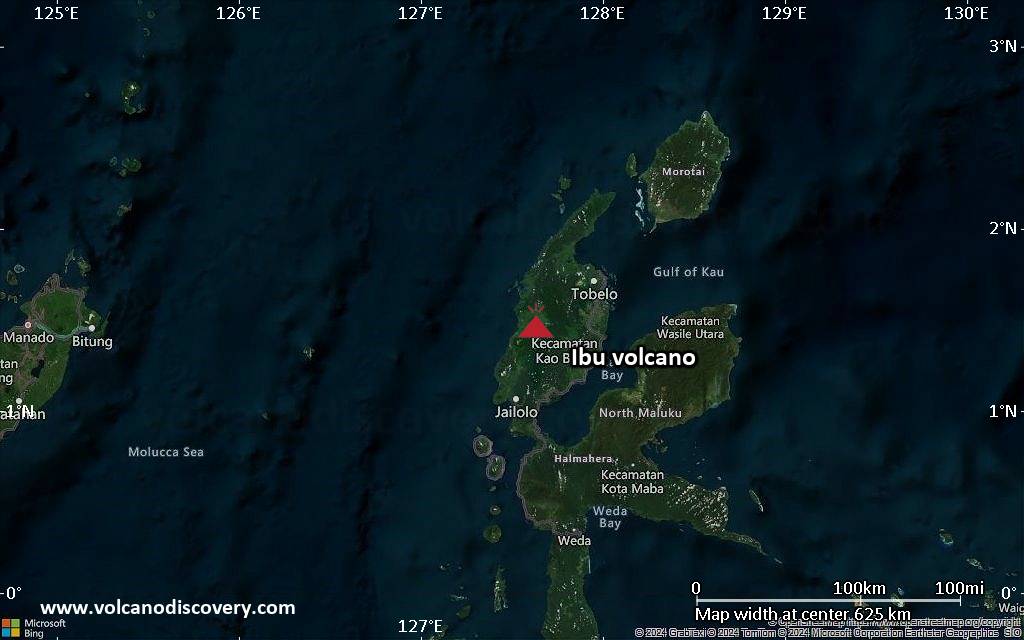
Volcanic Ash Advisory Center Darwin (VAAC) issued the following report:
FVAU01 at 15:52 UTC, 03/12/25 from ADRM
VA ADVISORY
DTG: 20251203/1550Z
VAAC: DARWIN
VOLCANO: IBU 268030
PSN: N0129 E12738
AREA: INDONESIA
SOURCE ELEV: 1325M AMSL
ADVISORY NR: 2025/1352
INFO SOURCE: CVGHM
ERUPTION DETAILS: GROUND REPORT OF DISCRETE ERUPTION WITH VA
TO FL060
EST VA DTG: 03/1530Z
EST VA CLD: SFC/FL060 N0128 E12736 – N0132 E12736 – N0138
E12810 – N0120 E12810 MOV E 15KT
FCST VA CLD +6 HR: 03/2130Z SFC/FL060 N0127 E12736 – N0132
E12735 – N0143 E12806 – N0125 E12809
FCST VA CLD +12 HR: 04/0330Z NO VA EXP
FCST VA CLD +18 HR: 04/0930Z NO VA EXP
RMK: VONA 03/1325Z GROUND REPORT OF ERUPTION WITH VA TO
5520FT MOVING NE. VA NOT DETECTED ON SATELLITE IMAGERY AS
SUMMIT OBSCURED BY MET CLOUD. FORECAST BASED ON REPORT AND
MODEL GUIDANCE. VA EXPECTED TO DISSIPATE WITHIN 6-12 HOURS.
NXT ADVISORY: NO LATER THAN 20251203/2150Z=