Fuego ashfall and Santa Maria lava flows stand out; Yakedake shows uplift

Central America and the Philippines stood out today with ashfall, lava effusion, and dome-related rockfalls, while several U.S. volcanoes held steady at elevated aviation alerts. Highlights include ashfall around Fuego, ongoing blocky lava effusion and occasional short-run pyroclastic flows at Santa Maria, and persistent lava effusion and high gas output at Mayon. Kilauea and Great Sitkin remained at Watch / Aviation ORANGE, and compared to yesterday Sabancaya’s classification shifted from “increased activity” to a continuing eruption.

United States
Great Sitkin (Watch / Aviation ORANGE) kept lava slowly erupting in the summit crater with rockfalls detected on seismic instruments.
Kilauea (Watch / Aviation ORANGE) stayed in eruption with no new details noted.
Farther west, Shishaldin (Advisory / Aviation YELLOW) produced vapor plumes alongside a weak thermal signal.

Indonesia
Halmahera’s Ibu and Dukono generated frequent explosions with low plumes (up to roughly 0.8–1.2 km above the vents).
On Java and nearby arcs, Semeru and Merapi showed numerous explosions and rockfalls, while Lewotolok logged over a hundred blasts with ash-gas plumes to a few hundred meters.
Unrest persisted at several others across Sulawesi, the Sunda arc, and Flores; most are at Level 2 – Alert, while Tangkuban Parahu remained at Level 1 – Normal.

Japan
Yakedake showed renewed summit-directed uplift on tiltmeters and ongoing fumarolic activity; the alert stayed at Level 2, restricting access near the crater.
An aerial survey noted no change in the main fumarole fields compared with last year’s observations.

Philippines
Mayon (Alert Level 3) continued lava effusion with minor Strombolian bursts and frequent rockfalls; instruments recorded numerous PDC-related signals and elevated SO2.
Kanlaon (Alert Level 2) produced plumes to 350 m, while Taal (Alert Level 1) emitted plumes to 500 m with a brief tremor episode.

Mexico
Popocatepetl released gas-and-vapor plumes and remained at Yellow Alert – Phase 2.

South America
Ecuador’s Reventador produced dozens of explosions with ash-gas plumes to about 1 km and thermal anomalies, and Sangay generated around 300 explosions with night glow.
In Peru, Sabancaya sent an ash–gas–steam plume to roughly 1.4 km above the crater amid volcanic earthquakes and a thermal anomaly.

Other
In Guatemala, Fuego produced up to 10 explosions per hour with ashfall in multiple communities, while Santa Maria continued blocky lava effusion at the Caliente dome with occasional short-run pyroclastic flows.
Nearby Pacaya exhibited fumarolic activity.
In Costa Rica, Poas stayed at Level 2 – Warning (Aviation Yellow), with Rincon de la Vieja and Turrialba also at Level 2 – Warning.

Source: Smithsonian/USGS GVP Daily Volcanic Activity Report — 27 January 2026.

Activity Summary for 27 January 2026

Volcano Country Activity Type Keynotes
Dukono Indonesia Eruption 1 explosion; plumes to 1.2 km above vent.
Fuego Guatemala Eruption Up to 10 explosions/hr; plumes to 737 m; ashfall in nearby communities.
Great Sitkin United States Eruption Lava slowly erupting in summit crater; rockfalls detected.
Ibu Indonesia Eruption 81 explosions; ash-gas plumes to 800 m.
Kilauea United States Eruption Eruption ongoing; Watch / Aviation ORANGE.
Kanlaon Philippines Eruption Plumes to 350 m; ongoing eruption.
Lewotolok Indonesia Eruption 102 explosions; ash-gas plumes to 200 m.
Marapi Indonesia Eruption Eruption ongoing; Alert Level 2 – Alert.
Mayon Philippines Eruption Lava effusion with minor Strombolian bursts; frequent rockfalls and PDC signals; SO2 at 3,364 t/d.
Merapi Indonesia Eruption Hot rockfalls to 1.7 km; 1 PDC; 113 rockfalls.
Popocatepetl Mexico Eruption Gas-and-vapor plumes; ongoing eruption.
Poas Costa Rica Eruption Eruption ongoing; Level 2 – Warning; Aviation Yellow.
Reventador Ecuador Eruption 68 explosions; ash-gas plumes to 1 km; thermal anomalies.
Sabancaya Peru Eruption Ash-gas-steam plume to 1.4 km; volcanic quakes; thermal anomalies.
Sangay Ecuador Eruption 300 explosions; ash-gas plumes to 1 km; night glow and SO2 degassing.
Santa Maria Guatemala Eruption Blocky lava effusion at Caliente dome; explosions with ash and short-run PDCs; ashfall reported.
Semeru Indonesia Eruption 97 explosions; rockfalls; felt seismicity.
Taal Philippines Eruption Plumes to 500 m; brief tremor episode (7 min).
Awu Indonesia Unrest Gas-and-vapor plumes to 50 m; ongoing unrest.
Bur ni Telong Indonesia Unrest Ongoing unrest; Alert Level 2 – Alert.
Iliwerung Indonesia Unrest Ongoing unrest; Alert Level 2 – Alert.
Karangetang Indonesia Unrest Gas-and-vapor plumes to 100 m; ongoing unrest.
Kerinci Indonesia Unrest Ongoing unrest; Alert Level 2 – Alert.
Lewotobi Indonesia Unrest Gas-and-vapor plumes to 100 m; ongoing unrest.
Lokon-Empung Indonesia Unrest Gas-and-vapor plumes to 25 m; ongoing unrest.
Pacaya Guatemala Unrest Fumarolic activity; ongoing unrest.
Raung Indonesia Unrest Ongoing unrest; Alert Level 2 – Alert.
Rincon de la Vieja Costa Rica Unrest Ongoing unrest; Level 2 – Warning; Aviation Yellow.
Sangeang Api Indonesia Unrest Ongoing unrest; Alert Level 2 – Alert.
Shishaldin United States Unrest Vapor plumes; thermal anomalies.
Soputan Indonesia Unrest Gas-and-vapor plumes to 30 m; ongoing unrest.
Turrialba Costa Rica Unrest Ongoing unrest; Level 2 – Warning.
Yakedake Japan Unrest Fumarolic activity at multiple vents; summit-directed uplift detected.
Tangkuban Parahu Indonesia Background Background activity; Alert Level 1 – Normal.

How is US President Trump impacting global climate action?

In 2024, for the first time, the global average temperature exceeded 1.5°C above pre-industrial levels, making rapid coordinated global climate action even more urgent.

Instead of supporting a fast and just phase out of fossil fuels, US President Donald Trump is recklessly assaulting global efforts to combat climate change in five key ways, by:

  1. Withdrawing the US from global climate bodies
  2. Promoting a disinformation campaign against established climate science
  3. Using bullying and coercive measures to push pro-fossil fuel policies
  4. Weakening domestic climate protections and defunding climate science
  5. Restricting civic space which harms climate activism

Which global climate bodies have the US quit and what is the impact?

The USA’s withdrawal from the landmark Paris Agreement came into effect on 27 January 2026. This is the second time the US has withdrawn from the agreement and comes on the heels of its declared intent to withdraw from the United Nations Framework Convention on Climate Change (UNFCCC), the Intergovernmental Panel on Climate Change (IPCC) and the Green Climate Fund (GCF). Trump has also called for the US’ departure from over 60 other international organizations, including several others related to climate change, biodiversity and renewable energy, calling them ‘wasteful, ineffective, or harmful’.

These announcements will likely accelerate the US’ defunding of key multilateral and bilateral climate institutions and programming.  US funding to these UN agencies and their critical work is expected to end imminently. The UN was already facing a financial crisis, exacerbated over the past year by the US’ refusal to pay its contribution to the regular budget. Trump also refused to spend money appropriated by Congress for foreign assistance, including to UN agencies, dismantled the US Agency for International Development (USAID) and other US agencies that provide direct support to communities harmed by climate change, and attacked programmes that address climate change.

What is the Paris Agreement and why is it important?

On 12 December 2015, states adopted the world’s most ambitious framework for fighting climate change during the UN Climate Change Conference in Paris (COP21). Under the Paris Agreement, governments agreed for the first time to try to limit global warming to 1.5° C above pre-industrial levels to avert the most catastrophic effects of climate change. The agreement requires all states to set regularly updated targets for reducing greenhouse gas emissions, for both the long and short term, and share their plans for reaching them.

What will be the impact on the Loss and Damage fund?

The US has also withdrawn from the board of the UN Fund for Responding to Loss and Damage (FRLD). Set up after difficult negotiations at COP27 in 2022, the Fund is dedicated to helping low-income climate vulnerable nations and communities recover from climate change-related “unnatural” disasters. As of 19 November 2025, a total of US$817.01 million has been pledged to the FRLD, including US$17.5 million from the US. However, it is unclear if it will now honour that meagre pledge.

The FRLD’s board meeting in July 2026 is expected to focus on finalizing the operationalization of the fund. It is up to all countries that can, especially those most responsible for climate change, to step up and ensure the fund is adequately resourced. The less that countries contribute, especially historically high-emitting countries including the United States, the more it will cost in the long run for countries on the frontlines of climate harms to address climate change-related losses and damages.

What is Trump’s stand on climate change and how is it encouraging disinformation on climate science?

Trump called climate change a “scam” when he took to the floor of the UN General Assembly in 2025. He also called sustainable energy policies the “greatest hoax in history” at the World Economic Forum in Davos in 2026.

A new report from the US Department of Energy says projections of future global warming are exaggerated. This is part of an effort by the Trump administration’s disinformation campaign to produce a false counter-narrative to global climate science and consensus, and to use this junk science as a justification for overturning climate regulation The US also cancelled a landmark climate change report, the sixth National Climate Assessment, and has taken down numerous webpages on climate science from official websites. The defenestration of these and other climate science programmes and institutions means less reliable information is available to the public and makes it harder for scientists around the world to fact check misleading information on climate change.

How has the US used bullying tactics to undermine global cooperation on climate and the environment?

Over 430 million tonnes of plastic is produced every year, most of it made from fossil fuels and quickly becoming waste that clogs up landfills or ends up in the oceans. Yet negotiations for a landmark Global Plastics Treaty failed to reach consensus last year as the US, along with other fossil fuel producing states, made it clear that it opposed cuts to plastic production.

The Trump administration has also successfully shelved a near-finalized global shipping carbon levy by threatening diplomats engaged in the negotiations and using threats to raise import tariffs to pressure nations.

Elsewhere, US lobbying pressure has greatly undermined the European Union’s corporate sustainability due diligence directive (CSDDD) which requires companies to fix human rights and environmental issues within their supply chains. The US has also actively sought alliances with political parties in Europe who are against climate action.

The purchase of US-produced so-called “natural” gas has been used as a bargaining chip in tariff negotiations; and US banks have retreated from climate action alliances.

What has been the impact of Trump’s anti-climate policies domestically?

The Trump administration has dismantled domestic climate action efforts and engaged in an unprecedented rollback of the regulations protecting people in the US from fossil fuel pollution and climate change.

He has gutted governmental agencies that provide emergency assistance to those harmed by extreme weather events made more likely and more intense by climate change; defunded diversity and climate programmes in US governmental agencies and universities resulting in mass layoffs, grant freezes, and attacks; increased taxpayer-funded subsidies to the fossil fuel industry; and threatened – in some cases successfully – US states with plans to reduce carbon emissions to end those policies. Trump’s “drill, baby, drill” approach has ramped up oil and gas production and fast-tracked deep-sea mining.

Since Trump returned to office, the US government has reduced the availability and collection of air pollution, weather and a host of other environmental and climate data that are used in the US and around the world. The administration has also directly threatened academic freedom and the right to access information, including on climate change, as part of a pattern consistent with rising authoritarian practices.  The US has also increased its military activities, particularly in Latin America and the Middle East, which have a heavy carbon footprint, not to mention the outrageous harm caused to human rights. In the instance of Venezuela, President Trump has cited the fossil fuel industry as part of his decision-making for unlawful action to remove Nicolas Maduro. 

How has Trump’s clampdown on civic space harmed climate activism?

The US government has cracked down on protest and dissent including by limiting climate activists’ ability to exercise their rights to freedom of expression, association and peaceful assembly through intimidation, demonization and threatened changes in laws.

The Energy Department has reportedly added “climate change,” “green” and “decarbonization” to its growing “list of words to avoid” . Climate activists have been described as “ecoterrorists” among other public attacks by the authorities. This has emboldened fossil fuel companies and other anti-climate action actors, and led to a growing threat of litigation against climate activists.

The Trump administration has also demonized marginalized populations, using racial rhetoric in ways that erode public support for essential public services — including those critical for helping Americans prepare for and withstand the impacts of climate change.

What should be done?

Climate change transcends borders and affects everyone, everywhere. It is often those least responsible that are hardest hit. Global cooperation is essential to equitably phase out fossil fuels, support a just transition for affected workers, protect vulnerable communities, and fund recovery from loss and damage. A fragmented approach will deepen climate harms like rising sea-levels, food scarcity, wildfires, extreme storms and floods, and lack of access to safe drinking water.

People and governments around the world must push back against all coercive efforts by the Trump administration. To cede ground now risks our collective future. Humanity must win.

Knowledge is power

Learn how you can take action against fossil fuels

People around the world are demanding the end of fossil fuels. Frontline communities are resisting and you can join them.

The post How is US President Trump impacting global climate action? appeared first on Amnesty International.

Bangladesh: Amnesty chief calls for human rights guarantees during election period in open letter to Muhammad Yunus

Bangladesh’s interim government must restore public trust by guaranteeing full respect for human rights and the rule of law in the fortnight ahead of next month’s national elections, Amnesty International’s Secretary General, Agnes Callamard, said in an open letter to Chief Advisor Muhammad Yunus, the country’s acting leader.

The letter, sent ahead of the 12 February polls, raises concerns about the authorities’ continued misuse of anti-terror legislation against journalists, and their failure to adequately safeguard the rights to life, security of persons, and freedom of expression, and association. It calls on the interim government to “ensure that laws, policies, and practices fully protect” these rights in the lead up to the elections.

“Bangladesh’s interim government had a mandate to restore human rights, in line with the nation’s obligations under international law. The coming weeks will be a decisive test of whether it will honour those responsibilities,” said Agnès Callamard, Amnesty International’s Secretary General.

“The authorities must uphold the rights of individuals and groups to speak freely – including during an election. Chief Advisor Yunus’s government must show genuine leadership by ensuring that all Bangladeshis can participate fully and safely in deciding their country’s future. They must ensure that the right to life is protected. No one should fear for their life for peacefully speaking their minds and sharing their views. ”

Chief Advisor Yunus’s government must show genuine leadership by ensuring that all Bangladeshis can participate fully and safely in deciding their country’s future

Agnès Callamard, Amnesty International’s Secretary General

Despite Bangladesh being a signatory to many of the core international human rights instruments, the interim administration has failed to give effect to these obligations. This includes the International Covenant on Civil and Political Rights, which enshrines the rights to freedom of expression, peaceful assembly and freedom of association that must be upheld, including during an election period.

In the letter, Agnès Callamard said: “Unlawful restrictions on these fundamental freedoms undermine public debate and participation in the electoral process, and weaken public trust in institutions.”

Since assuming power in 2024, the interim authorities have misused the draconian Anti-Terrorism Act (ATA) against journalists and other perceived critics. The letter cites the examples of Monjurul Alam Panna, who was arrested under the ATA in August 2025 for allegedly “attempting to overthrow the interim government,” and Anis Alamgir, who was detained under the ATA in December 2025, for allegedly “spreading propaganda for the Awami League.” Both journalists’ arbitrary arrests violate their rights to freedom of expression and association.

The letter also cites the interim authorities’ inadequate response to the violence that followed the killing of Sharif Osman Hadi on 18 December 2025, when the offices of media outlets The Daily Star and Prothom Alo were set alight, and the editor of the New Age newspaper, Nurul Kabir, was harassed. On the same day, Dipu Chandra Das, a Hindu man, was lynched following allegations of blasphemy.

Background

Ahead of the elections, Amnesty International has published a human rights charter outlining the core human rights priorities that any incoming government must address. The charter, available here, lays out concrete steps across eight key areas that the next government should take to bring Bangladesh closer to its obligations under international human rights law.

Agnès Callamard is an international human rights expert. A leading advocate for freedom of expression, a feminist, and an anti-racism activist, Dr. Callamard has been at the forefront of international efforts to combat some of the greatest human rights challenges of our time. She was appointed Secretary General of Amnesty International in 2021.

The post Bangladesh: Amnesty chief calls for human rights guarantees during election period in open letter to Muhammad Yunus appeared first on Amnesty International.

Annick Nonohou Agani: “I defend the rights of women who give birth in Benin”

Content warning: This story contains graphic stories of violence against women who give birth.

Annick Nonohou Agani, 51, from Benin, is a midwife, jurist, and human rights activist. She founded the Network of Patient-Friendly Caregivers (Réseau des Soignants Amis des Patients) and coordinates an initiative to reduce obstetric and gynecological violence in French-speaking Africa.

She is an award-winning midwife and has delivered around 3,000 babies. She is campaigning for childbirth practices that respect human rights in collaboration with Amnesty International.

Amnesty International Benin and its partners are working to educate public and healthcare professionals about patients’ rights, gynecological and obstetric violence, as well as access to healthcare for prisoners.

“My mother suffered obstetric violence. I was five or six years old at the time, and we were living in Niger. My father and I took my mother to the health center to give birth, but they wouldn’t let him in, so I stayed alone with my mother.

She was in a lot of pain and tried to call the health workers by raising her upper body on the delivery table, which was not wide. Unfortunately, she fell off the table. She wasn’t responding, so I called the health workers, who, without properly checking her breathing, declared her dead. An hour later, she started moving and talking again so I ran to get the health workers… They laughed at me and insulted me, saying that a dead body doesn’t talk! So, I went outside to call for help. In the end, my mother gave birth to my brother and they both survived. But her mistreatment by the clinic workers had a lasting impact on me… I told myself that whatever I became later in life, I would defend the rights of women who give birth.

Defending women’s rights

During my midwifery studies, I was already defending women’s rights. I didn’t want them to be mistreated. I started practicing in 2000, and began working with Amnesty International, conducting awareness-raising sessions with communities in northern Benin. In 2005, I decided to enroll in my first year of law school and completed my master’s degree in public law on the right to health.

Being both a midwife and a jurist allowed me to better assert myself in defending women. I was an activist, but I realized it was difficult to do it alone. I started working with women’s groups I knew through awareness raising sessions. I realized that we could bring about behavioral change through setting up women’s networks. I did internships in Morocco and Japan, where I learned how to deliver babies without violence. In 2013, I founded the Network of Patient-Friendly Caregivers, and today I am an activist at a regional level.  

Even today, in some delivery rooms in Benin, there are straps to whip those who are not pushing properly.

Annick Nonohou Agani

Obstetric violence is widespread

Obstetric violence occurs in almost every country in the world. The first form of violence is denying the father access to the delivery room. It also includes not allowing the woman to choose the position in which she gives birth. There is what is known as abdominal pressure, where staff continue to climb on women’s stomachs and thus bring the baby out. Childbirth is highly medicalized. Unnecessary C-sections are sometimes imposed. Naked women are also subjected to repeated touches by numerous students, and no one asks for their consent. On several occasions, I have supported women victims of obstetric violence who had been left alone on very narrow delivery tables without mattresses, as was the case for my mother.

There is normalized violence because it is part of our care protocols. This is institutional violence, such as episiotomy, the overuse of vacuum extraction and forceps to deliver the baby… Violent deliveries are normalized and women are objectified.

In our countries, it is believed that during childbirth, women must remain silent and not scream. Pain is denied. People say that a woman who cannot bear pain will not be able to give birth to a living child. There is also verbal abuse, with insults related to sexuality. We often hear phrases such as: “While you were enjoying sex, didn’t you think you might get pregnant, and that giving birth would hurt?”

Women are also beaten during childbirth, they are slapped. Even today, in some delivery rooms in Benin, there are straps to whip those who are not pushing properly. Sometimes, when you have a relative with you during childbirth and the midwife hits you, your relative may hit you and slap you in turn.

Protecting patients is paramount

One case that struck me was that of a woman who lost her baby during childbirth. The health workers refused to give her the body because they wanted to extort money from her. The government is fighting against these racketeering practices, as well as the illegal sale of medicines, but it continues.

We need to review midwifery training curricula. They must include human rights-based obstetric practices. It is also essential to update care protocols and make available all the tools and equipment necessary for non-violent childbirth. However, due to the patriarchy that prevails in our health centers, midwives who would like to practice non-violent childbirth face opposition from doctors.

People ask why we, as midwives, would talk about human rights. But we have a vision, we have a goal.

Annick Nonohou Agani

Previously, in Benin, there was no legislation to protect patients. Then, in 2021, the law on the protection of human health was passed, which states that the patient’s consent must be sought and renewed during care. But no law mentions obstetric violence.

The 2012 law on the prevention and punishment of violence against women did cover childbirth, but everything else was missing. There is no mention of the specific cases of pregnant women, women in labour, and women in the postpartum period, even though women must be protected at each of these stages. There are no criminal provisions to punish obstetric violence.

Specific legislation is needed for the prevention and punishment of gynecological and obstetric violence.

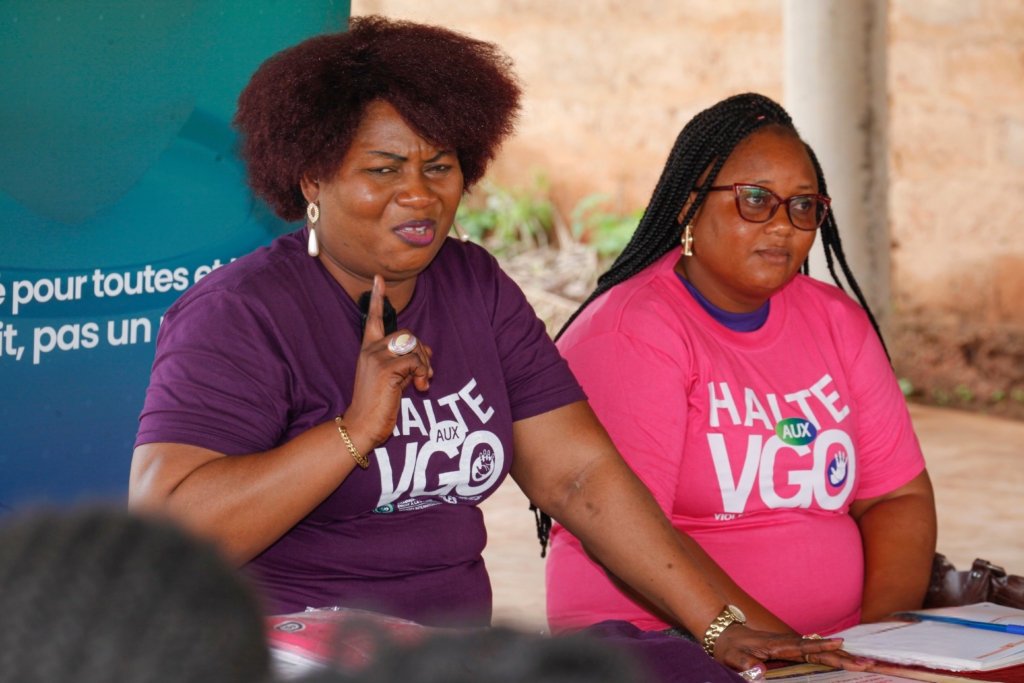
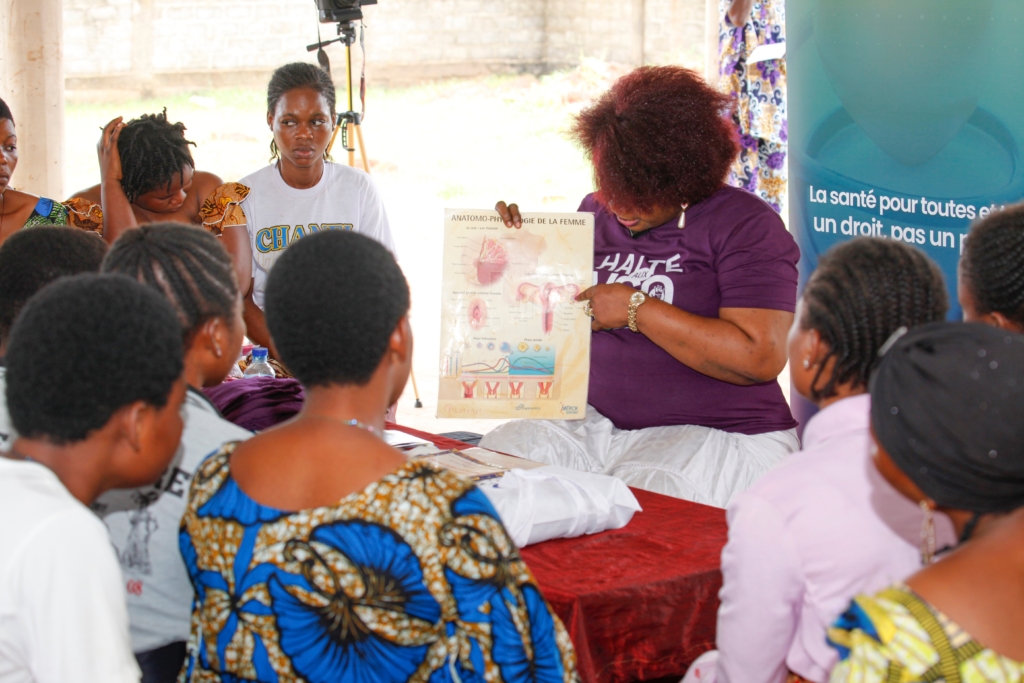
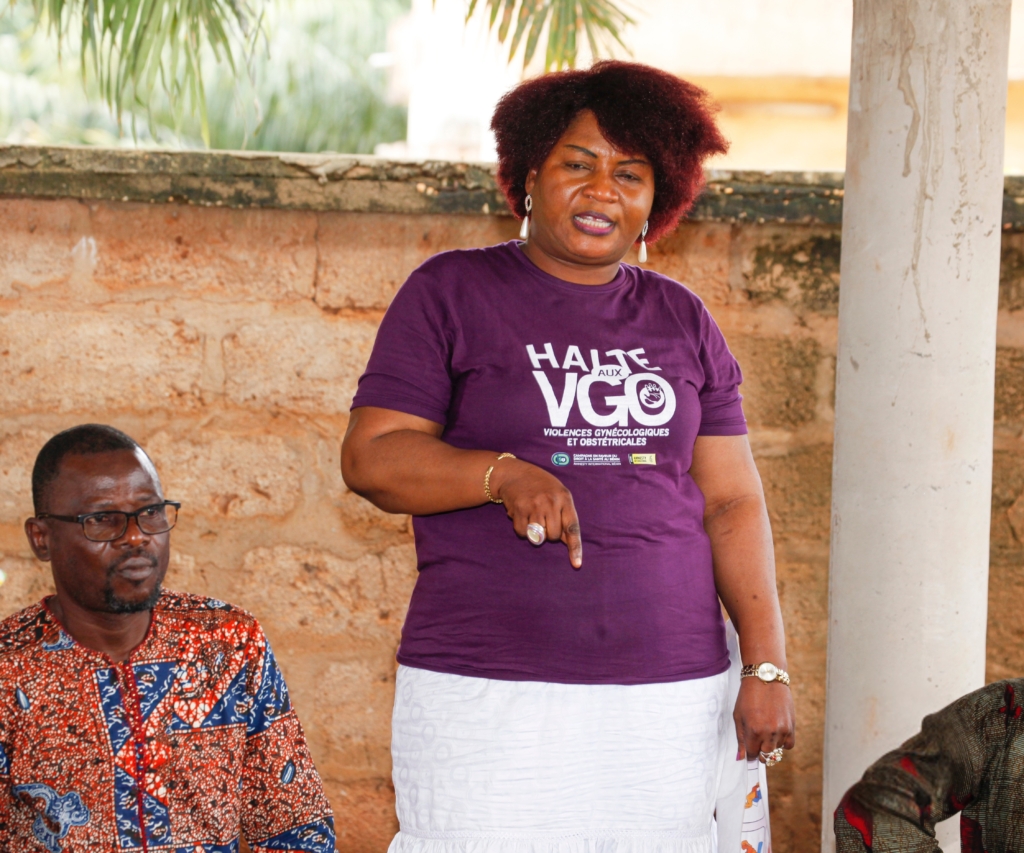
Beninese activist Annick Nonohou Agani during a community awareness session about gynecological and obstetric violence. © Amnesty International Benin

Bringing about change

Amnesty International’s campaign on the right to health has brought about change. We launched the Charter of Patients’ Rights and Responsibilities in September 2025 in collaboration with the Health Sector Regulatory Authority. We produced radio programs and conducted community awareness campaigns in all departments throughout Benin. This is the first time that gynecological and obstetric violence has been discussed in this way, and across the whole country.

We have detractors. People ask why we, as midwives, would talk about human rights. In their minds, we have nothing to do with that. But we have a vision, we have a goal. A paradigm shift is needed.

Most women do not know their rights, including those who have been to school. With social media today, some are beginning to be informed. An informed woman will not let herself be pushed around! Violence is beginning to decline, but we are not yet seeing public denunciations or complaints being filed… As a midwife, jurist, and activist, I am speaking out. Violence persists. It must be eliminated.”

Gender-based violence affects us all, but together we can create a safer world for everyone. 

Enroll on Amnesty’s online course on confronting and countering gender-based violence.

The post Annick Nonohou Agani: “I defend the rights of women who give birth in Benin” appeared first on Amnesty International.