
Amnesty fordert anlässlich des fünften Jahrestags des rassistischen Anschlags in Hanau politische Konsequenzen.
Etna volcano update: advancing lava flow

The copious ash plume and the lava flow at Etna as seen from space on 17 February (image: Sentinel-2)
The intense effusive-explosive activity at the volcano continues.
The lava, emerging from the fissure at the southern base of summit craters, continues to advance on the western flank, currently about 4,200 meters long.
Increased and near-frequent ash emissions continue to be active from the Southeast crater, dissipating dominantly in the southeastern direction. As visible in the latest Sentinel-2 satellite acquisition from 17 February, the entire northeast-southwest area of the edifice is being covered by fine ash material due to the prevailing SE wind direction.

A wider view of the ongoing eruption from Etna volcano, the continuous ash column drifts over the Mediterranean Sea (image: Sentinel-2)
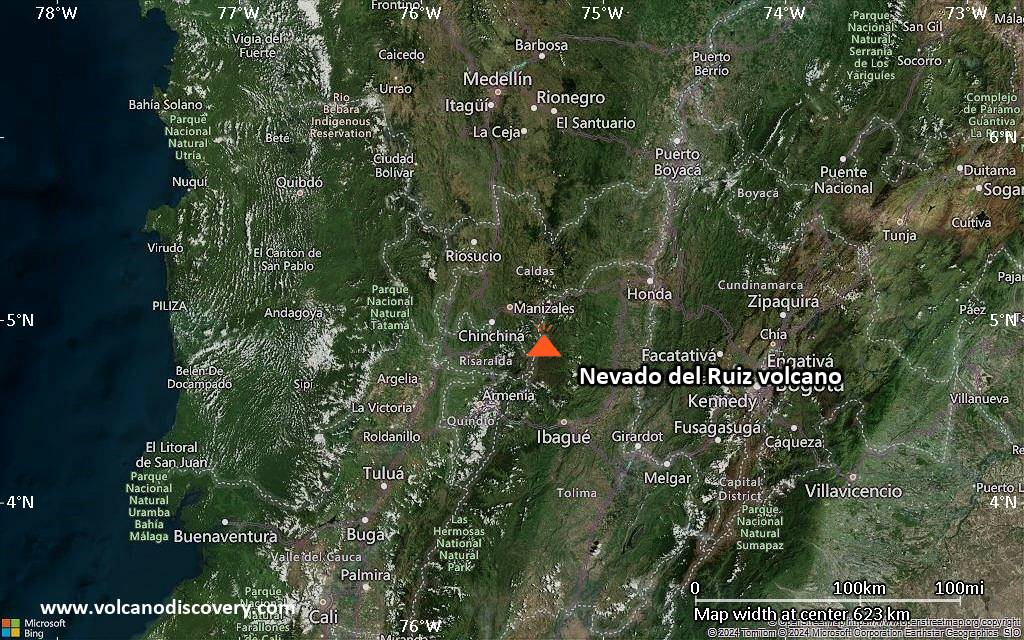
Nevado del Ruiz Volcano Volcanic Ash Advisory: SML VA EMS to 19000 ft (5800 m)
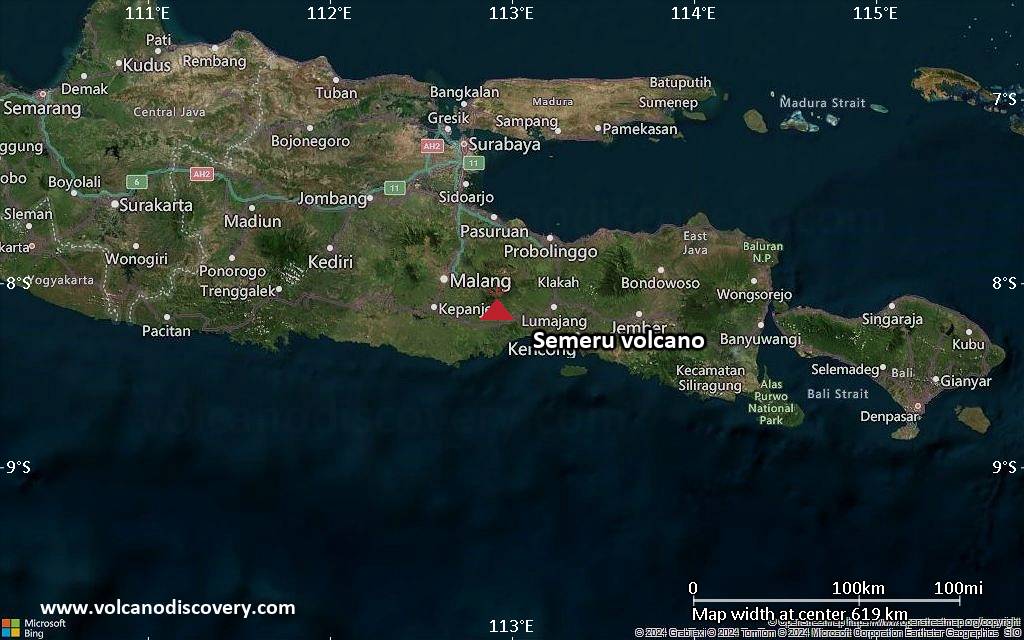
Semeru Volcano Volcanic Ash Advisory: VA TO FL150 LAST REPORTED AT 17/1738Z EST VA DTG: 17/2300Z to 15000 ft (4600 m)
Campi Flegrei volcano (southern Italy): new earthquake swarm, several magnitude 3+ tremors felt

Map showing locations of the ongoing seismic swarm in the Phlegrean Fields near Naples
Another seismic swarm is in progress at the Campi Flegrei volcanic field. Since its start at 16:53 Saturday afternoon (15 Feb 2025), 282 earthquakes with magnitudes between 0 and up to 3.9 have been detected by the volcano observatory in Naples (INGV-OV).
Out of these earthquakes, 5 events had magnitude of 3 or higher. The largest two of magnitude 3.9 occurred in two different seismogenic zones, one yesterday afternoon in the Gulf of Pozzuoli and another one this afternoon in the Solfatara-Pisciarelli area. Both quakes were felt widely in the area nearby.
The volcano observatory writes in its latest update that „we are going through a phase of intensification of bradyseism (= a slow vertical ground movements over periods of months, years or even decades, typical for the Campi Flegrei), a phenomenon that has already occurred in the past.
„For example, on May 20, 2024, a bradyseismic swarm was recorded of shorter duration than the current one, but characterized by events of magnitude 4.4, 3.8 and 3.6. Therefore, the presence of multiple events of magnitude 3.0 in particularly energetic swarms is not an anomaly.“
„Multi-parameter monitoring indicates that, at the moment, all parameters other than seismicity do not show significant anomalies, but maintain the usual increasing trends. The ground uplift proceeds at an average of about 10 millimeters per month. The flow in the main fumaroles has returned to the values recorded two weeks ago, after a slight temporary decline. The concentrations of gases emitted by the fumaroles also do not show significant variations compared to the usual anomalies.“
INGV advises the local population to „stick to the information provided through official channels“ (and not follow alarmist messages one probably will find on social media). All updates on the swarm and further information are available on the website of the GOSSIP database of the Vesuvius Observatory.