‘The Little Mermaid’ Returns—How YOU Can Help Real Animals Like Flounder, Sebastian, and Scuttle

The long-hyped live-action remake of Disney’s The Little Mermaid premieres on May 26, and PETA is psyched to sea some ocean-dwelling animals making a splash on screen in computer-generated imagery.

In light of this live-action remake, PETA is reminding everyone to show respect to fish, crabs, gulls, and other wildlife. We’re also running our “Go Vegan” PSA starring a mermaid tail–clad Daniella Monet in Anaheim and Orange, California, theaters from May 15 to June 11.

Here’s what happens to real animals like Flounder, Sebastian, and Scuttle and how you can help them:

Fish Like Flounder Aren’t ‘Pets’

The song “Under the Sea” says it all: “The fish on the land ain’t happy. They sad ’cause they in their bowl.” You wouldn’t want to see Flounder abducted from his home and confined to a tiny tank—so don’t support the pet trade.

Fishers snatch saltwater fish from their ocean homes and sell them to pet shops like Petco, which treat fish and other animals like inanimate merchandise. They end up confined to small tanks, where they’re deprived of the opportunity to engage in natural behavior and are often denied even the basic necessities of life. These sensitive, social beings aren’t commodities—they have lives and interests of their own.

Crabs Like Sebastian Don’t Belong on Your Plate

Much like Sebastian, real crabs are intelligent and learn from their mistakes. In the U.S. alone, the fishing industry kills tens of millions of crabs every year. Fishers often pull them from their ocean homes by dragging huge nets along the seafloor—which destroys entire ecosystems.
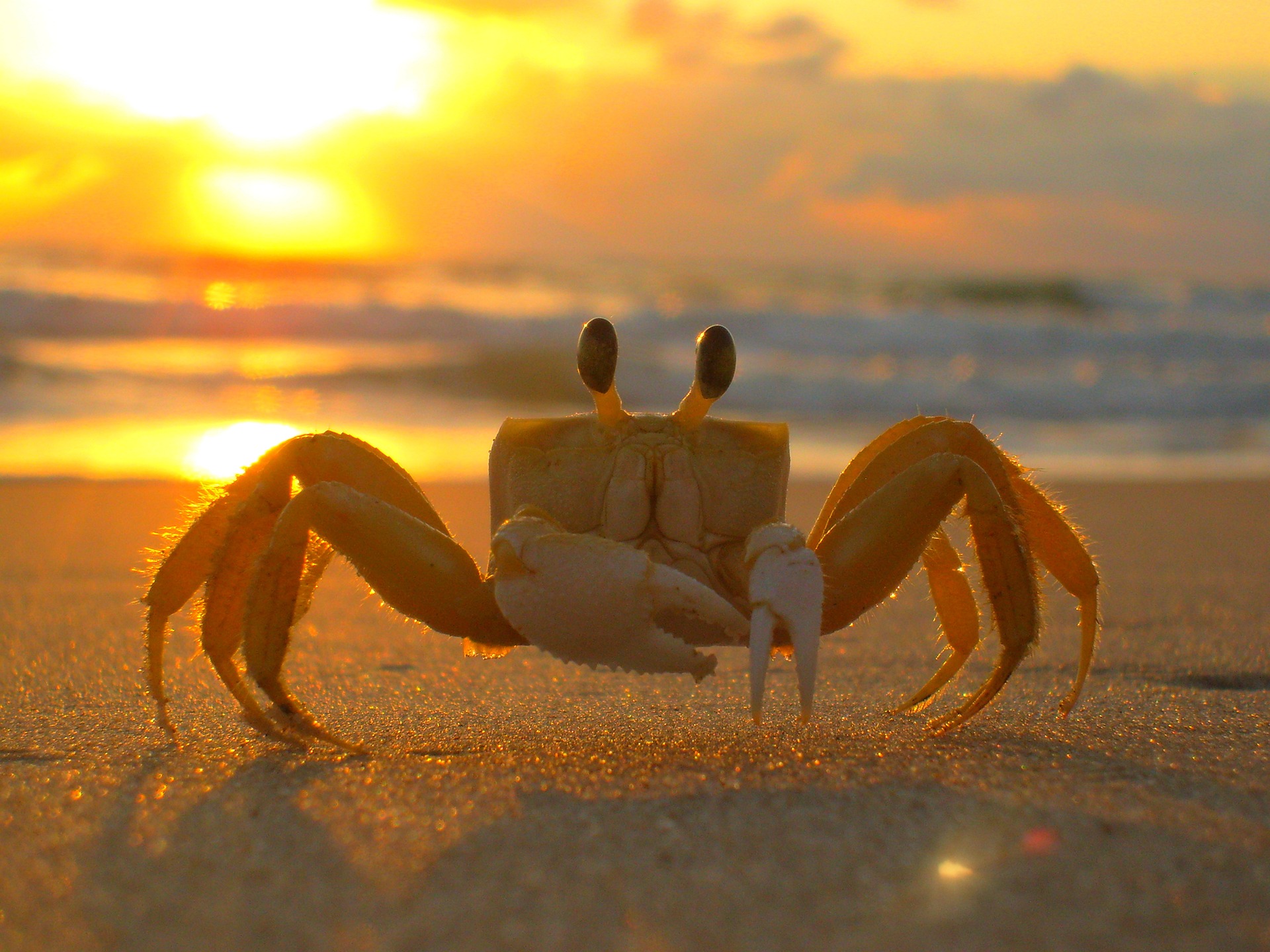
Crab next to a sunset on a beach

Crabs can feel pain, and they suffer immensely when they’re killed for food by being thrown into pots of scalding-hot water or steamed alive. They struggle so desperately to escape an excruciating death that their claws often break off.

No crustacean or any other animal belongs on your plate. Eat with compassion like The Little Mermaid’s lead actor, Halle Bailey, who’s a proud vegan.

Respect Shore-Dwelling Wildlife Like Scuttle

Gulls are intelligent, sensitive birds who just want to feed themselves, find a safe place to live, and protect their young. Like Scuttle, they’re resourceful problem-solvers.
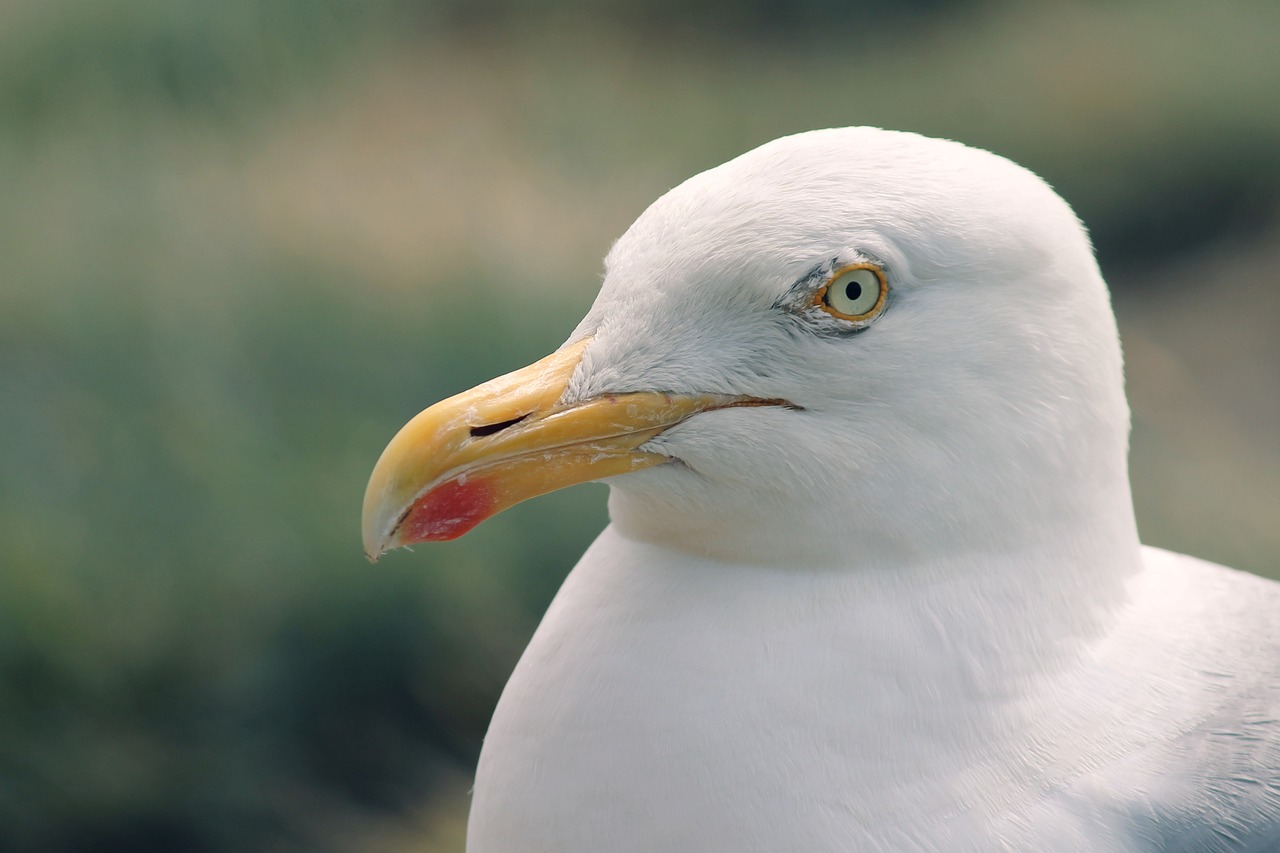
Head shot of a seagull

They face numerous hazards created by humans—they can become injured in collisions with buildings or traffic, get their beaks caught in fishing hooks, choke on pieces of plastic left on beaches, or get sick when they’re fed food scraps by beachgoers. Show respect to gulls by leaving them in peace, and call your local animal control service if you see one who’s injured or in danger.


Help PETA Protect Our Fellow Animals Under the Sea

PETA’s work helps suffering marine animals, including at pet stores, in the fishing industry, and at cruel marine parks. You can help us continue our lifesaving work by offering a kind donation:

The post ‘The Little Mermaid’ Returns—How YOU Can Help Real Animals Like Flounder, Sebastian, and Scuttle appeared first on PETA.
The ‘Coalition to End Horse Racing Subsidies’ on the Ground in Albany to End Horse Racing Sales Tax Exemptions

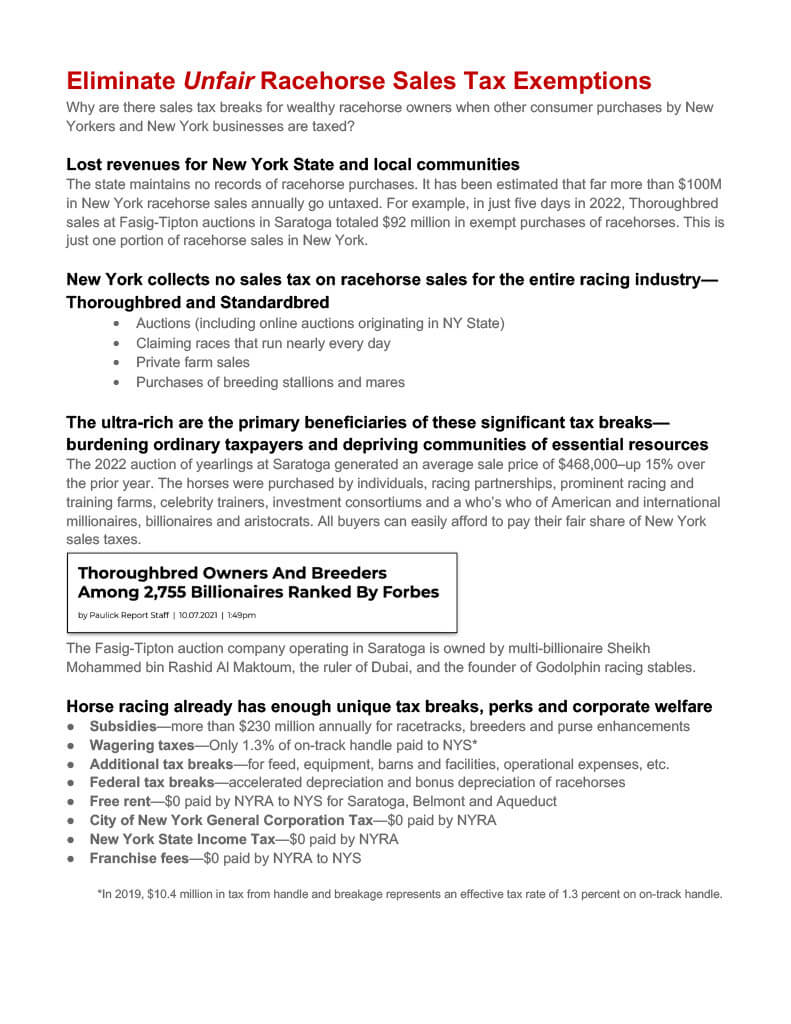
This week, the Coalition to End Horse Racing Subsidies—started by PETA and NYCLASS—put boots on the ground in Albany, New York, to provide critical information to legislators on the tax breaks that New York gives to the wealthy people who buy horses to use for racing. We urged officials to support the bills that would do away with this welfare for the rich.A one-page primer on the sales tax exemption.

The Wealthy Benefit While Horses Suffer

The ultra-rich are the primary beneficiaries of these significant tax breaks—burdening ordinary taxpayers and depriving communities of essential resources. In fact, if an individual purchases a horse for recreational or show purposes, they do pay a sales tax. Estimates show that New York state misses out on over $100 million a year in sales tax because of this racing tax exemption.

The 2022 auction of yearlings at Saratoga racetrack generated an average sale price of $468,000 each. It seems obvious that the individuals, racing partnerships, prominent racing and training farms, celebrity trainers, investment consortiums, and international bourgeoisie who can pay that much or more per horse can easily afford to pay their fair share of New York sales tax.

Help Us Help Horses

If you live in New York, please contact your representatives to support A1438 and S481, which would repeal the sales tax exemption on the purchase of horses who may be used for racing. New Yorkers deserve public funding from the ultra-wealthy, and horses deserve protection from humans who would harm them—repealing the tax exemption is just one step in dismantling the subsidies that grant the failing horse racing industry its preferential status in the state.

Please take time to learn more about New York’s other horse racing subsidies and support our work in defense of horses with the Coalition to End Horse Racing Subsidies:

The post The ‘Coalition to End Horse Racing Subsidies’ on the Ground in Albany to End Horse Racing Sales Tax Exemptions appeared first on PETA.

What Happened to Starving Monkeys After 40 Years?

In the 1980s, two separate groups of experimenters set out to answer a not-so-burning question: Will a sentient being live a longer, healthier life when kept in a state of perpetual hunger for, say, 40 years?

At the University of Wisconsin–Madison and at a National Institutes of Health (NIH) laboratory in Bethesda, Maryland, experimenters kept rhesus macaques on a starvation-like diet that fell 30% below their minimum standard daily calorie requirement.

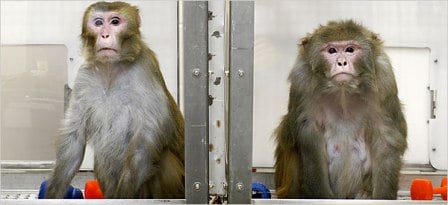
Photo of two rhesus monkeys sitting side by side, separated by a cage wall©️ University of Wisconsin | Jeff Miller
The monkeys in this Wisconsin NPRC photo were subjected to years of cruel treatment. Experimenters put the one on the left on an extremely low-calorie diet, leaving the monkey hungry most of the time, while the one on the right was fed sugary processed food, which monkeys never eat in nature.

And they kept them hungry like this for four decades.

What was their final, earth-shattering conclusion? Dunno, says the journal Nature.

The UW-Madison experimenters said the lives of their hungry monkeys were improved by food deprivation, but those at NIH said the opposite about theirs.

These conflicting outcomes, according to one experimenter, “cast a shadow of doubt on the translatability of the caloric-restriction paradigm as a means to understand aging and what creates age-related disease vulnerability.”

Starving monkeys isn’t science, you say? Who could possibly have predicted that?

We could have.

It’s apparently not enough to deprive monkeys of everything that makes life worth living and slowly drive them insane by keeping them caged in solitary confinement, interrupted only by periods of pain from needles and blood draws and myriad other daily horrors, but to also intentionally keep them hungry—for 40 years—is simply demented.

This is yet another horror story in an unfortunately endless litany of wasted lives, wasted money, and wasted time amassed on the taxpayers’ dole by experimenters who are doing nothing to help anyone and leaving misery in their wake.

PETA has a simple message for how to end these wrongs: Put modern science into all laboratories. Adopt PETA scientists’ Research Modernization Deal, a clear-cut roadmap to ending animal experiments and shifting to cutting-edge research models that will put U.S. laboratories on the vanguard of scientific innovation, leaving this garbage behind.

The post What Happened to Starving Monkeys After 40 Years? appeared first on PETA.

Influenza D Is Everywhere—Will You Go Vegan Before It’s Too Late?

What is influenza D, and why is it everywhere? We’ve already covered how people who murder animals for their flesh are breeding infectious diseases, and a recently released NPR piece provides a new perspective on the matter.

The article covers a small study conducted from 2019 to 2020 that found that influenza D, a bovine flu that has infected 50% of cows across the U.S., had jumped to 90% of the workers on five dairy farms. A 2016 study of farms that raise cows for meat or dairy found that 18% of the nearby population who didn’t work on them had influenza D antibodies. This means the study participants had been infected with the virus.

You may be surprised that you’ve never heard of something that’s infected so many people. To date, the influenza D virus has had a minimal impact on human health. But that may change in the coming days, weeks, or months. How do we stop influenza D and other viruses from starting the next pandemic?

Pandemics Start With Animal Suffering

As we’ve continued to grapple with the deadly, globally detrimental COVID-19 pandemic, we’ve had to make many changes in our daily lives. We’re cautious about indoor gatherings, we socially distance, and we wear a mask when we’re ill.

One thing that hasn’t changed may be the most dangerous: animal farms, the ground zero for future disease outbreaks. Although more and more farms are using terms like “grass-fed” or “organic” in an attempt to persuade consumers that they’re small, safe operations through techniques known as “greenwashing” and “humane-washing,” there’s simply no way to exploit animals at scale without circulating disease. COVID-19 is just the latest in a series of zoonotic epidemics and pandemics that have plagued humans, and it certainly won’t be the last, given how the food industry treats animals.

Prevention Is the Best Medicine

The cramped, desolate lots where farmers imprison most animals exploited for food are accelerated breeding grounds for super-illnesses. The only reasonable course of action we can take to slow the rapid mutation of diseases like influenza D is to stop farming animals. If you work in the animal-farming industry, stop! There are better ways to make a living. And preventing the next pandemic means going vegan, protesting against animal agriculture, and engaging in other forms of activism to help shut down the meat, egg, and dairy industries.

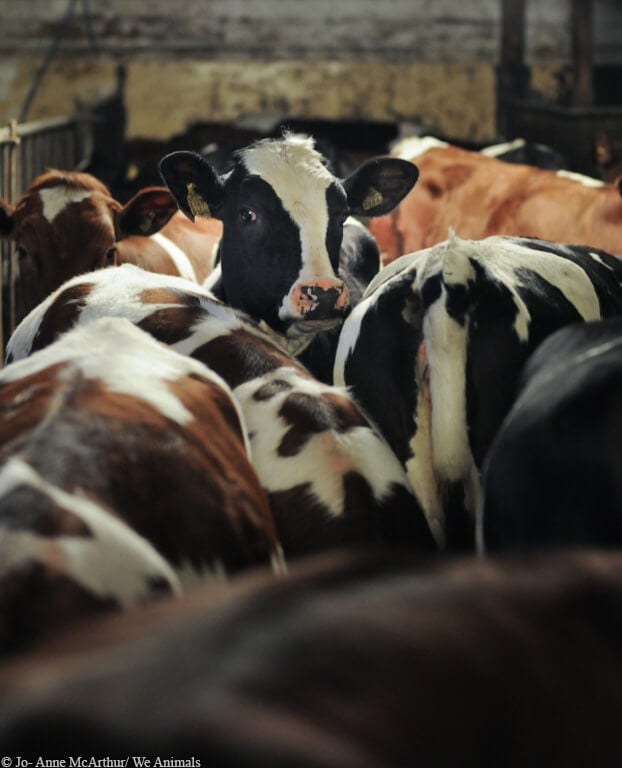
© Jo- Anne McArthur/ We Animals
In the meat industry, animals are imprisoned in a living hell, where disease runs rampant.

Justice for Animals Means a Safer Planet

Living vegan is the most powerful way you can help animals exploited on farms. By going vegan, you’ll save nearly 200 animals per year, sending a powerful message to the food industry that you don’t support dangerous and cruel animal exploitation.

PETA’s free vegan starter kit can help you make the switch. It’s packed with recipes, tips, and encouragement. As individual consumers, it’s up to us to create a more just and sustainable food system for humans and our fellow animals. Do your part to help prevent the next pandemic before it’s too late:

The post Influenza D Is Everywhere—Will You Go Vegan Before It’s Too Late? appeared first on PETA.