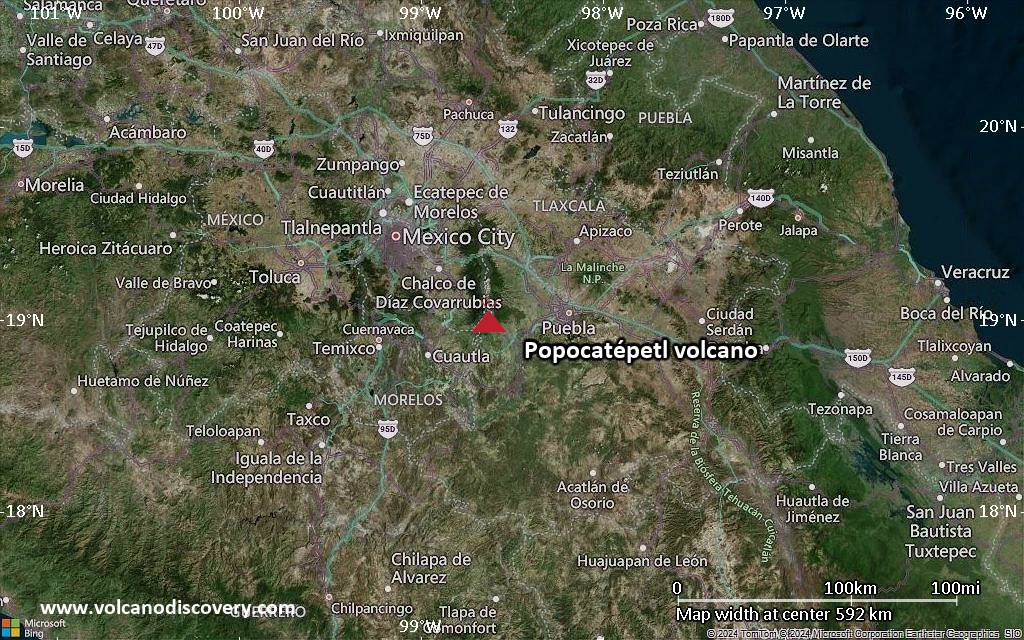
Semeru Volcano Volcanic Ash Advisory: VA TO FL150 REPORTED AT 06/0048Z MOV NE EST VA DTG: 06/0850Z to 15000 ft (4600 m)

White Island Volcano Volcanic Ash Advisory: ERUPTION AT 20251106/0120Z INTERMITTENT LOW LEVEL ERUPTION to 3000 ft (900 m)

Europe: Existing barriers to abortion access compounded by alarming attempts to roll back reproductive rights
European governments must act to ensure equal and universal access to abortion care in the face of ongoing restrictions and intensifying efforts to further limit access to abortion across the region, said Amnesty International in a report published today.
When rights aren’t real for all: The struggle for abortion access in Europe reveals how – despite hard won progress – harmful and dangerous obstacles continue to undermine access to abortion care. This is taking place in the context of increasingly well-resourced anti-rights groups ramping up their efforts to negatively influence policies and laws, often through the spread of fear and disinformation, aimed at further restricting access to abortion.
Hard-won victories on reproductive rights are at serious risk of being reversed by a wave of regressive policies
“The stark reality is that despite significant progress across Europe, abortion access is still restricted by a disturbing array of visible and invisible barriers,” said Amnesty International’s Senior Campaigner on Women’s Rights, Monica Costa Riba.
“Hard-won victories on reproductive rights are at serious risk of being reversed by a wave of regressive policies promoted by the anti-gender movement and championed by populist political actors deploying authoritarian practices.”
While law reforms in many European countries – with some notable exceptions – have made abortion more available, numerous administrative, social and practical barriers preventing universal abortion access remain in place. These include medically unjustified requirements which delay access, conscience-based refusals of care, a shortage of trained professionals, gestational time limits and high costs. Marginalized communities, including people with low incomes, adolescents, people with disabilities, LGBTIQ+ people, sex workers, people seeking asylum or with precarious migration status, are disproportionately affected by these obstacles.
These barriers, combined with various degrees of criminalization, result in further stigmatization, causing delays or even preventing access to essential healthcare. At least 20 countries in the region impose criminal sanctions on pregnant people who have an abortion outside the scope of the law.
Barriers to abortion
In addition to gestational time limits and criminalization, there are several key barriers to accessible abortion.
The cost of accessing abortion can be prohibitive particularly in countries where abortion care on request (when the decision to end a pregnancy rests with the pregnant person) is not included in their health insurance or national health system. This is the case in countries such as Austria, Bulgaria, Croatia, Cyprus, Czech Republic, Germany, Latvia, Montenegro, Romania, Bosnia & Herzegovina, North Macedonia, Kosovo and Serbia.
Several states are failing in their duty to guarantee access to abortion care in contexts of high numbers of conscience-based refusals of services, where healthcare professionals refuse to provide abortions due to personal views or religious beliefs, result in delays or denial of access. In countries such as Italy or Croatia, refusals of this kind are widespread and in Romania they are also on the rise, and in all cases the authorities are not taking the action they are obliged to under international law to mitigate the harms of such high refusal rates and guarantee access to abortion care to those in need.
At least 12 European countries continue to enforce medically unnecessary mandatory waiting periods before accessing a legal abortion and 13 countries enforce compulsory counselling. Albania, Belgium, Germany, Hungary, Latvia and Portugal require both mandatory waiting periods and compulsory counselling. In Hungary, those seeking an abortion are compelled to listen to the foetal heartbeat. In Türkiye, married women over the age of 18 are legally required to obtain spousal consent to terminate a pregnancy within the 10-week limit.
Every year, thousands of pregnant people are forced to travel abroad to seek the healthcare they need due to the difficulties they face in accessing abortion care in their countries.
Attempts to rollback access to abortion
Attempts to rollback of abortion access across Europe are being led by a well-funded, transnational anti-gender movement comprised of conservative and religious groups and institutions, think tanks, civil society organizations and media influencers.
In Croatia, the influence of anti-rights politicians in government, combined with a growing alliance between anti-abortion advocates and the Catholic Church, has led to repeated attempts to impose barriers to abortion access. In Slovakia, there have been repeated attempts in parliament to restrict or ban abortion access, while constitutional amendments passed in September 2025 will significantly erode reproductive rights.
Hungary has introduced new barriers to accessing abortion, contraception and family planning and Italy’s governing party has led legislative initiatives to allow anti-abortion groups and those “supporting motherhood” to access mandatory counselling centres for pregnant people seeking a legal abortion. In these cases, the authorities have justified the measures with arguments including low birth rates or false and racist rhetoric about migrants “replacing” the white “native” population.
Abortion is essential healthcare and a human right
Aggressive and sometimes violent anti-abortion protests and pickets outside sexual and reproductive health clinics have become an increasing barrier to abortion access. In Poland, an abortion centre set up in Warsaw in March 2025 has faced regular harassment and intimidation by groups protesting outside the building. In Austria, abortion healthcare providers face intimidation, including in front of their clinics, while family planning centres in France and centres providing mandatory counselling in Germany have also been attacked by anti-rights groups.
“Abortion is essential healthcare and a human right,” said Monica Costa Riba.
“European governments and institutions must act decisively to bring abortion provision in line with international standards by decriminalizing abortion, eliminating existing access barriers and firmly resisting any moves by anti-rights groups to dangerously block people’s access to safe and timely abortion care, putting lives and health at risk”.”
Background
The report examines 40 counties and draws on Amnesty International’s research over the last decade, as well as data from reliable sources compiled by other human rights and public health organizations, including the Center for Reproductive Rights (CRR)’s publication “Europe Abortion Laws 2025”, the European Parliamentary Forum for Sexual and Reproductive Rights (EPF)’s ‘European Abortion policy Atlas’ and the World Health Organization (WHO) Global Abortion Policies Database. It also draws on insights from 11 abortion rights activists and sexual and reproductive health and rights organizations interviewed between May and September 2025.
The post Europe: Existing barriers to abortion access compounded by alarming attempts to roll back reproductive rights appeared first on Amnesty International.
Tunisia: Rampant violations against refugees and migrants expose EU’s complicity risk
The Tunisian authorities have over the past three years increasingly dismantled protections for refugees, asylum seekers and migrants, particularly Black people, with a dangerous shift towards racist policing and widespread human rights violations that endanger their lives, safety and dignity, Amnesty International said today. The European Union risks complicity by maintaining cooperation on migration control without effective human rights safeguards.
In a new report, ‘Nobody Hears You When You Scream’: Dangerous Shift in Tunisia’s Migration Policy, Amnesty International has documented how, fuelled by racist rhetoric from officials, Tunisian authorities have carried out racially targeted arrests and detentions; reckless interceptions at sea; collective expulsions of tens of thousands of refugees and migrants to Algeria and Libya; and subjected refugees and migrants to torture and other ill-treatment, including rape and other sexual violence, while cracking down on civil society providing critical assistance.
In June 2024, Tunisian authorities ordered an end to the UN Refugee Agency (UNHCR) role in processing asylum claims, removing the only avenue for seeking asylum in the country. Yet EU cooperation with Tunisia on migration control has continued without effective human rights safeguards, risking EU complicity in serious violations and trapping more people where their lives and rights are at risk.
“The Tunisian authorities have presided over horrific human rights violations, stoking xenophobia, while dealing blow after blow to refugee protection. They must immediately reverse this devastating rollback by ending racist incitement and stopping collective expulsions that threaten lives. They must protect the right to asylum and ensure that they don’t expel anyone to places where they would be at risk of serious human rights violations. NGO staff and human rights defenders detained for assisting refugees and migrants must be released unconditionally,” said Heba Morayef, Regional Director for the Middle East and North Africa at Amnesty International.
“The EU must urgently suspend any migration and border control assistance aimed at containing people in Tunisia and halt funding to security forces or other entities responsible for human rights violations against refugees and migrants. Instead of prioritizing containment and fuelling violations, EU cooperation with Tunisia must shift its focus to ensuring adequate protection measures and asylum procedures are available in the country, and incorporate clear, enforceable human rights benchmarks and conditions, to avoid complicity in violations.”
Amnesty International conducted research between February 2023 and June 2023 and interviewed 120 refugees and migrants from nearly 20 countries (92 men, 28 women, eight children aged 16–17) in Tunis, Sfax, and Zarzis. The organization also reviewed UN, media, and civil society sources and the official pages of local Tunisian authorities. Ahead of publication, Amnesty shared its findings with Tunisian, European, and Libyan authorities. No response had been received by the time of publication.
A crisis fuelled by racist rhetoric
Testimonies reveal a migration and asylum system designed to exclude and punish rather than protect. At least 60 of those interviewed by Amnesty, including three children, two refugees and five asylum seekers, were arbitrarily arrested and detained. Black refugees and migrants were targeted amid systemic racial profiling and successive waves of racist violence from individuals and security forces, triggered by the public advocacy of racial hatred, starting with President Kais Saied’s remarks in February 2023 and echoed by other officials and parliamentarians since.
The Tunisian authorities have presided over horrific human rights violations, stoking xenophobia, while dealing blow after blow to refugee protection. They must immediately reverse this devastating rollback by ending racist incitement and stopping collective expulsions that threaten lives.
Heba Morayef, Amnesty International
The situation was aggravated by a surge of repressive measures targeting at least six NGOs providing critical support to refugees and migrants. This has had horrific humanitarian consequences and led to an enormous gap in protection. Since May 2024, authorities have arbitrarily detained at least eight NGO workers and two former local officials who cooperated with them. The next hearing in the trial of the staff of one of these organizations, the Tunisian Council for Refugees, is scheduled for 24 November.
‘We saw them drown’
Amnesty International investigated 24 interceptions at sea and spoke to 25 refugees and migrants who described life-threatening, reckless and violent behaviour by the Tunisian coastguard, such as dangerous ramming; high-speed manoeuvres threatening to capsize boats; hitting people and boats with batons; firing tear gas at close range; and the denial of any individualised protection assessment at disembarkation.
“Céline”, a Cameroonian woman migrant intercepted after departing from the eastern region of Sfax in June 2023, told Amnesty International:
“They kept hitting our [wooden] boat with long batons with sharp endings, they pierced it… There were at least two women and three babies without life vests. We saw them drown and then we could not see the bodies anymore. I have never been so scared.”
Despite ongoing concerns about the lack of transparent reporting regarding interceptions, in 2024 the Tunisian authorities stopped publicly sharing data on these operations after establishing a maritime search and rescue region (SRR) supported by the EU. Prior to that, they had reported a significant increase in interceptions.
‘Go to Libya, they will kill you’
From June 2023 onwards, Tunisian authorities started to collectively expel tens of thousands of refugees and migrants, mostly Black people, either following racially motivated arrests or following interceptions at sea. Amnesty International found that between June 2023 and May 2025, authorities carried out at least 70 collective expulsions, involving more than 11,500 people.
Tunisian security forces have been routinely dumping migrants, asylum seekers and refugees, including pregnant women and children, in remote and desert areas at the country’s borders with Libya and Algeria. They abandoned them without food or water and usually after confiscating their phones, identification documents and money, placing them at great risk to their lives and safety. Following the first wave of expulsions in June-July 2023, at least 28 migrants were found dead along the Libyan-Tunisian border and 80 migrants were reported missing.
These expulsions have been carried out without any procedural safeguards and in violation of the principle of non-refoulement.
While people pushed toward Algeria had to walk back from the border over weeks or faced risks of “chain refoulement” from Algeria to Niger, those sent toward Libya were often handed to the Libyan Border Guards or other militias who left them stranded or detained them in abusive facilities. Refugees and migrants in Libya are subjected to widespread and systematic human rights violations and abuses, carried out with impunity, that a UN fact-finding mission has found amount to a crime against humanity.
“Ezra”, an Ivorian man, told Amnesty International how Tunisian security forces expelled him to the Libyan border, overnight on 1-2 July 2023 from Sfax, with a group of 24 people, including at least one child.
“We reached the Libyan border zone at around 6am… One [Tunisian] officer said, ‘Go to Libya, they will kill you.’ Another officer said, ‘Either you swim, or you run to Libya.’ They gave us a bag filled with our smashed phones….”
The group attempted to walk up the coastline back to Tunisia, but Tunisian men in military uniforms intercepted them, pursued them with dogs, beat four of them and brought them back to the border.
“They made us chant ‘Tunisia no more, we will never come back’, again and again.”
Tunisian security forces subjected 41 men, women and children to torture and other ill-treatment during interceptions, expulsions or in detention.
“Hakim”, a Cameroonian national, described how officers drove and abandoned him and others at the Algerian border in January 2025:
“They took each of us one by one, surrounded us, they asked us to lay down, we were handcuffed… They beat us with everything they had: clubs, batons, iron pipes, wooden sticks… They made us chant ‘Tunisia no more, we will never come back’, again and again. They punched us and kicked us, everywhere on our body.”
Amnesty International also documented 14 incidents of rape or other forms of sexual violence by Tunisian security forces, some of which took place in the context of abusive pat or strip-searches conducted in a humiliating manner likely amounting to torture.
“Karine”, a Cameroonian woman, told Amnesty International that male National Guard officers raped her twice on 26 May 2025, first during an abusive strip search after an interception in the region of Sfax, then at the Algerian border after a collective expulsion.
EU reckless support at the expense of lives and dignity
Failing to learn from the devastating results of its cooperation with Libya, the ongoing EU-Tunisia cooperation on migration control has pursued and resulted in the containment of people in a country where they are exposed to widespread human rights violations. Such cooperation involves funding the Tunisian coastguard’s search-and-rescue capacities and providing training and equipment for border management to reduce irregular crossings to Europe.
“We reached the Libyan border zone at around 6am… One [Tunisian] officer said, ‘Go to Libya, they will kill you.’ Another officer said, ‘Either you swim, or you run to Libya.’ They gave us a bag filled with our smashed phones….”
Ezra”, an Ivorian man expelled to the Libyan border
The EU signed its Memorandum of Understanding with Tunisia in July 2023, developed without effective human rights safeguards, such as a transparent prior human rights impact assessment, independent human rights monitoring with clear procedures to follow up on allegations of violations, and an explicit suspensive clause allowing for the agreement to be suspended in case of violations. The European Ombudsman noted these shortcomings in an inquiry in 2024. This cooperation remains ongoing more than two years later, despite alarming and well-documented reports of violations. Yet, while prioritizing migration control at the expense of international law, it has been touted by European officials as a success, citing a significant reduction in irregular sea arrivals of people from Tunisia since 2024.
“The silence of the EU and its member states over these horrific abuses is particularly alarming. Each day the EU persists in recklessly supporting Tunisia’s dangerous assault on the rights of migrants and refugees and those defending them, while failing to meaningfully review its migration cooperation, European leaders risk becoming complicit,” said Heba Morayef.
The post Tunisia: Rampant violations against refugees and migrants expose EU’s complicity risk appeared first on Amnesty International.