Volcanic Ash Advisory Center Tokyo (VAAC) issued the following report:
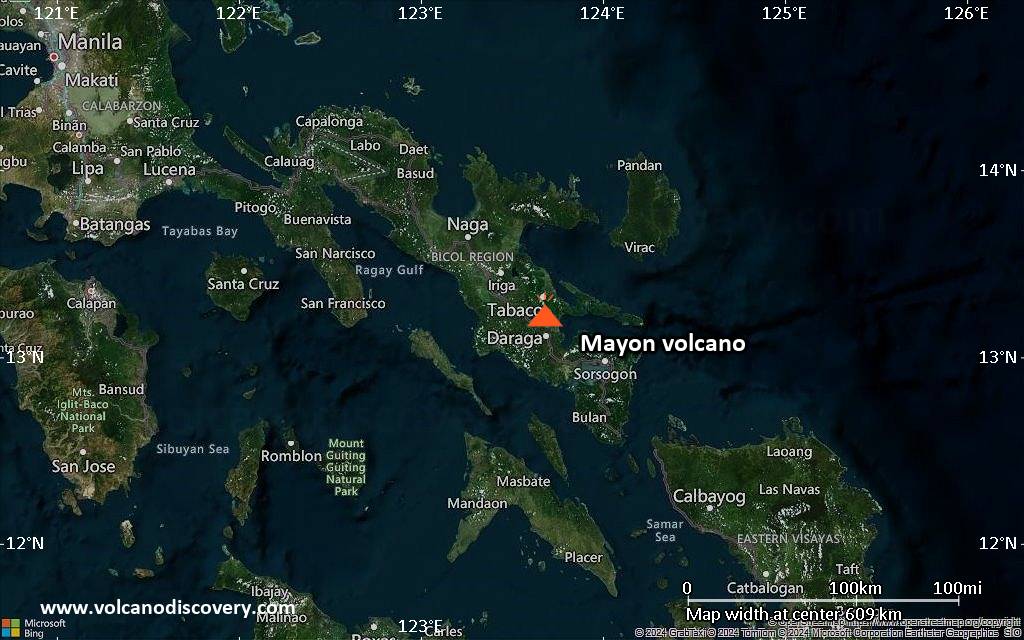
FVFE01 at 15:38 UTC, 27/02/26 from RJTD VA ADVISORY DTG: 20260227/1538Z VAAC: TOKYO VOLCANO: MAYON 273030 PSN: N1315 E12341 AREA: PHILIPPINES SOURCE ELEV: 2462M AMSL ADVISORY NR: 2026/232 INFO SOURCE: HIMAWARI-9 PHIVOLCS ERUPTION DETAILS: ERUPTION AT 20260227/1521Z VA CLD UNKNOWN REPORTED OBS VA DTG: 27/1520Z OBS VA CLD: VA NOT IDENTIFIABLE FM SATELLITE DATA WIND FL180 090/10KT
FCST VA CLD +6 HR: NOT AVBL FCST VA CLD +12 HR: NOT AVBL FCST VA CLD +18 HR: NOT AVBL RMK: WE WILL ISSUE FURTHER ADVISORY IF VA IS DETECTED IN SATELLITE IMAGERY. NXT ADVISORY: NO FURTHER ADVISORIES=
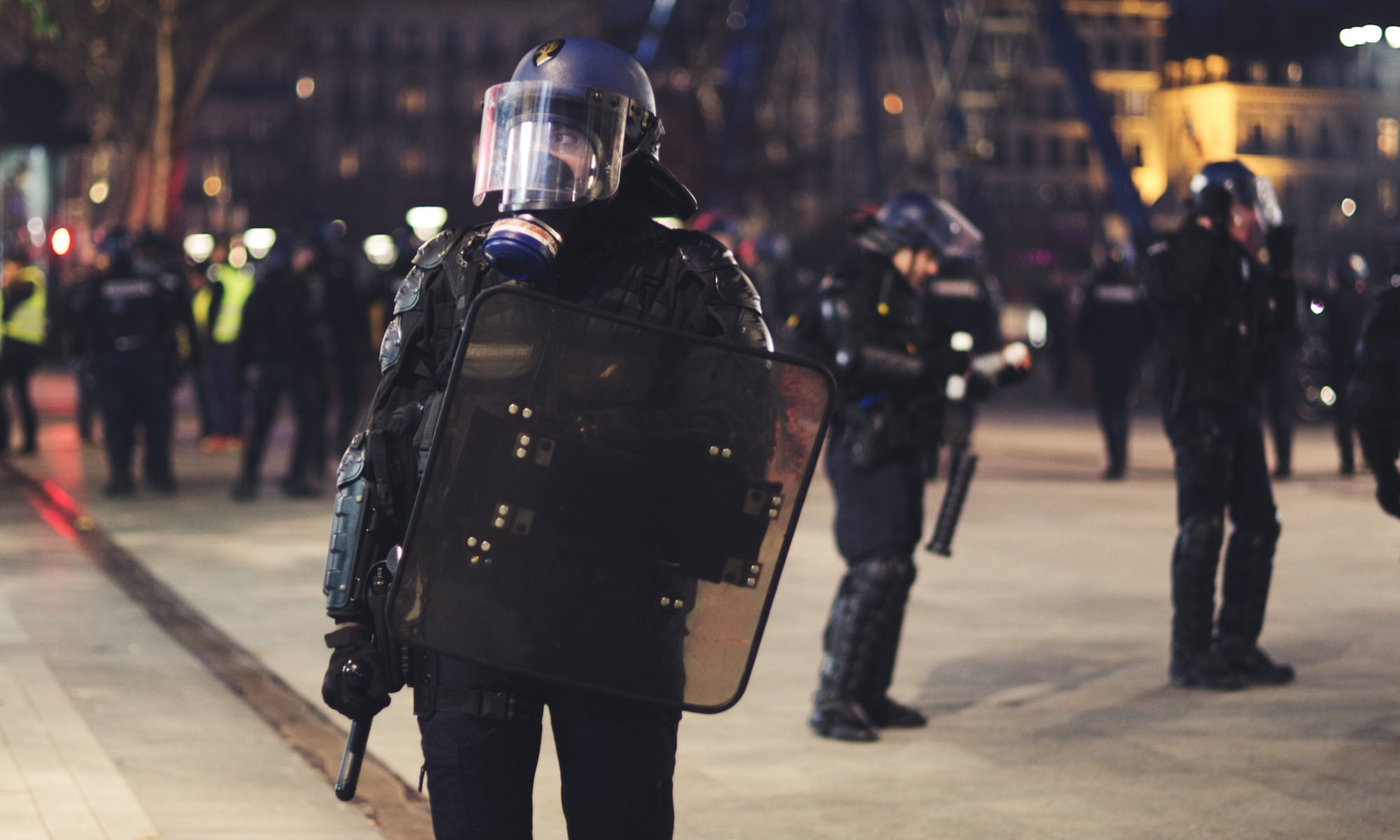
The Algerian authorities must ensure the upcoming retrial of 94 people in connection with the August 2021 events in the Kabylie region, in northeastern Algeria, adheres strictly to international fair trial standards without recourse to the death penalty and excluding any torture-tainted statements, Amnesty International said today.
On 1 March 2026, 94 individuals will face trial again by the Algiers Court of Appeals after the Supreme Court overturned a previous appeal ruling related to the lynching of an activist, devastating wildfires and other violence in the Kabylie region in August 2021. On 24 November 2022, 56 people were convicted of involvement in acts including membership in an organisation committing acts of sabotage, premeditated murder, torture and arson. They were sentenced to death in proceedings marred by uninvestigated torture claims and politically motivated charges.
During the initial trial, at least five defendants said they were subjected to torture and other ill-treatment in detention, including the use of electric shocks, attempted waterboarding, and threats of rape, to extract statements under duress, which were used to convict them. Despite this, the court failed to investigate the claims, with judges instead telling defendants it was their own responsibility to file complaints.
“The flawed investigation and grossly unfair trial that led to these callous death sentences are a stain on Algeria’s justice system. The new trial represents an important opportunity for the Algerian authorities to end the travesty of justice, redress past violations and ensure accountability without recourse to the death penalty,” said Diana Eltahawy, Deputy Regional Director for the Middle East and North Africa at Amnesty International.
“Justice for the terrible violence of the events of August 2021 must mean a fair trial fully in line with international standards. All allegations of torture and other ill-treatment must be thoroughly, impartially, transparently and effectively investigated and forced ‘confessions’ extracted under torture or duress must be excluded from evidence. Individuals detained solely for the peaceful exercise of their human rights must be immediately released and charges against them dropped.”
The new trial represents an important opportunity for the Algerian authorities to end the travesty of justice, redress past violations and ensure accountability without recourse to the death penalty
Diana Eltahawy, MENA Deputy Regional Director
Amnesty International analysed the initial ruling and interviewed three lawyers and four family members who asked to remain anonymous. According to the information gathered, the prosecution of at least 10 defendants sentenced to death appears to solely be based on their political affiliations or alleged ties to the Movement for the Self-determination of Kabylie (MAK), a political opposition group labelled as “terrorist” by the Algerian authorities. No evidence has been presented by the prosecution indicating their presence at the scene of the crime and/or linking them to acts of violence. Four of the 10 defendants were outside of the country at the time of the events.
Furthermore, the court failed to allow defence lawyers to cross examine prosecution witnesses including police officers, relying instead on written testimonies. In August 2021, Algerian television channels aired videos of 12 of the defendants in which they appeared to ‘confess’ their involvement in the lynching or their ties with the MAK, violating their rights to presumption of innocence and against self- incrimination.
Amnesty International is calling on the Algerian authorities to ensure the right to a fair trial, including by the rights to a fair and public hearing, to adequate defence and to examine witnesses.
Background
Algeria has not carried out any executions since 1993. Amnesty International opposes the death penalty unconditionally, in all cases and under any circumstances. Under international law, the imposition of the death penalty following unfair proceedings renders the punishment arbitrary.
Since April 2021, the Algerian authorities have extensively used Article 87 bis of the Penal Code and overbroad terrorism accusations to prosecute activists, human rights defenders, and journalists. Many have been targeted for demanding political change or for their alleged ties to the MAK or Rachad, both opposition groups which were designated as “terrorists” in 2022 through a process that runs counter to international human rights standards.
The current case involves the August 2021 lynching of activist Djamel Ben Smail in Larbaa Nath Irathen and the fires that spread throughout the Kabylie region, resulting in at least 90 deaths. On 24 November 2022, as shared by the public prosecutor’s office at the Court of Algiers, a criminal court in Algiers sentenced 49 individuals to death after convicting them on charges including terrorism, murder and setting fires, in addition to seven people sentenced to death in their absence. The court issued sentences ranging from two to ten years in prison against 28 others. Seventeen people were acquitted. While the Algiers Court of Appeals maintained 38 death sentences in October 2023 and retained prison sentences for 30 others and acquitted 26 people, the Supreme Court overturned the appeal ruling in cassation on 28 November 2024 and ordered a retrial. Among the defendants, 52 are currently detained.
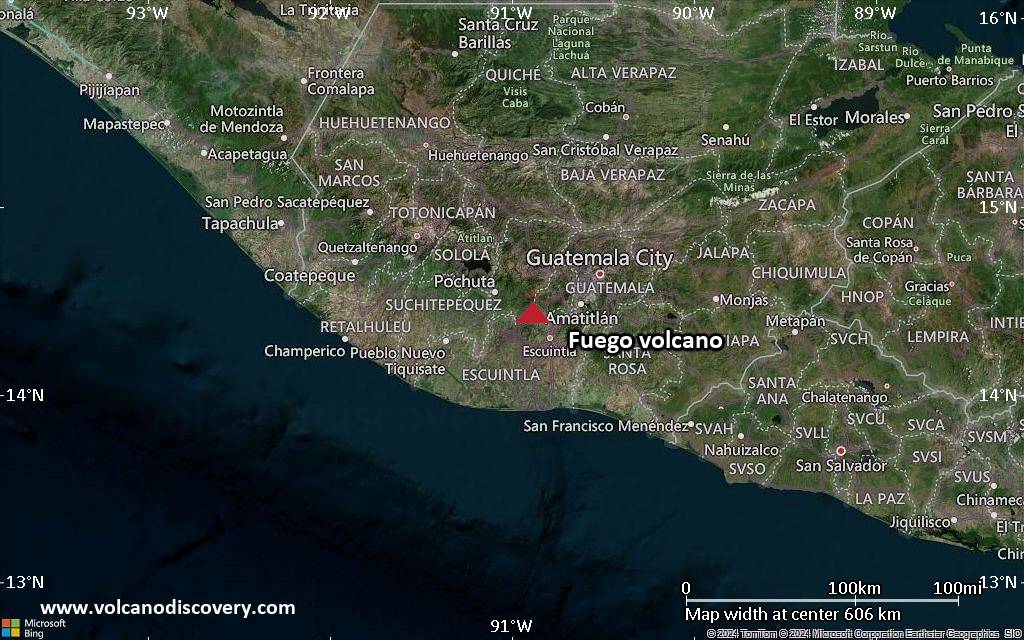
Explosive activity continues. Volcanic Ash Advisory Center (VAAC) Washington warned about a volcanic ash plume that rose up to estimated 15000 ft (4600 m) altitude or flight level 150 . The full report is as follows:
FVXX23 at 12:55 UTC, 27/02/26 from KNES VA ADVISORY DTG: 20260227/1253Z
RMK: CONS VA EMS OBS IN STLT IMG UP TO APPRX 33NM FM SUMMIT. FQNT VA EMS SEEN IN WEBCAM. NWP MDL GUIDANCE FCSTS GEN ENE MOVMT THRU T+12, THEN NNE MOVMT BY T+18. …MONAGHAN
As Trump tears down renewable energy, once again, Mozambique bears the brunt of climate harm caused by fossil fuel producers.
By Tigere Chagutah
In his address to the World Economic Forum (WEF) in Davos on 21 January, US President Donald Trumpargued against renewable energy solutions. In a wide-ranging speech, he described them as a “green new scam”, while calling world leaders, mainly from the Global North, to extract more fossil fuels to “avoid a catastrophic energy collapse”. The burning and production offossil fuels is the major driver of global warming, accounting for 89% of greenhouse gas emissions. In addition to global harm to the planet, fossil fuel productionharms nature and human rights.
As Trump made this speech, Mozambique was experiencing deadly floods caused by a tropical depression, an eventin part made more likely by human-induced climate change.
Mozambique is not helping itself
Daniel Chapo, Mozambique’s president,cancelled his participation at the 2026 WEF, ostensibly to monitor the impact of the floods and the delivery of assistance to victims. However, such actions are meaningless in the absence of an adequate, consistent and coherent implementation of Mozambique’s Climate Action Strategy.
As global calls for the world to equitably phase out fossil fuels and transition to renewable energy grow ever louder, Mozambique continues to invest heavily in fossil fuel production.
YASUYOSHI CHIBA/AFP/Getty Images
The country is home to the biggest fossil gas project in Africa, the Mozambique Liquefied Natural Gas project, in the poorest province of Cabo Delgado, owned by TotalEnergies, the French oil and gas giant. After its halt in 2021, due to a deadly attack by armed groups that have been fighting against the government since 2017, Chapo authorised the project to resume operation, despite strongallegations of human rights abuses and violations, and the improper displacement of communities to give way to the project.
Besides this project,there are three other major fossil fuel projects in the same province: Rovuma LNG, owned by Eni and ExxonMobil; Coral Sul FLNG, owned by Eni; and Coral North LNG, also owned by Eni. Combined, these facilities will produce9.9 gigatons of CO2 greenhouse emissions, which will significantly increase Mozambique’s total emissions.
In 2019, Cabo Delgado province was hit by Cyclone Kenneth, which flattened the villages of Quissanga, Macomia and Ibo, killing dozens and leaving thousands of people without shelter, food, crops and assets.
Deadly floods
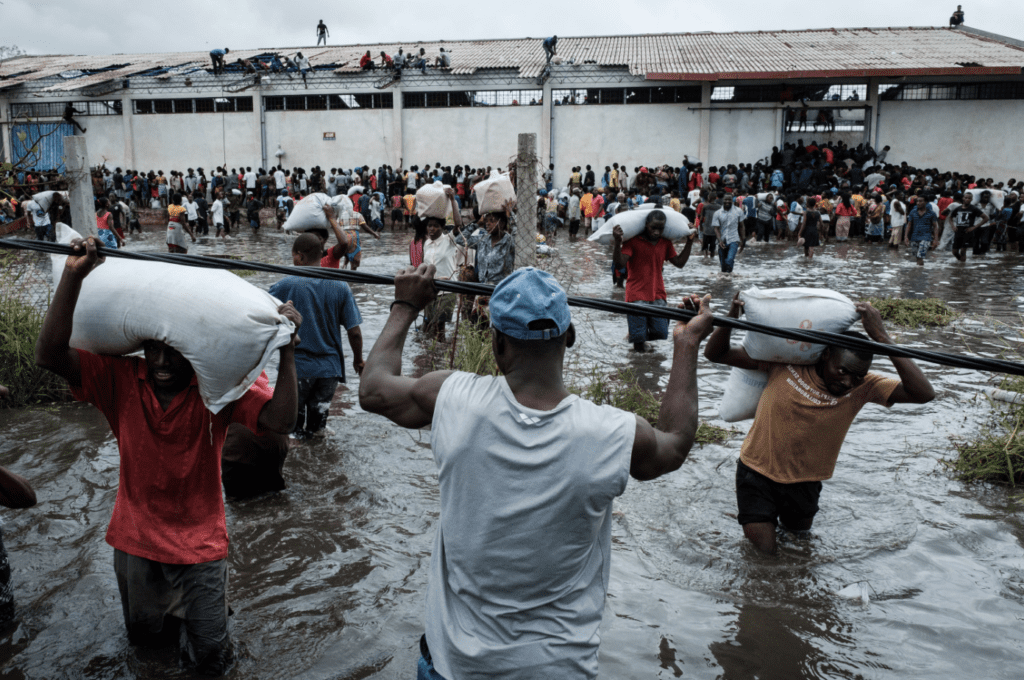
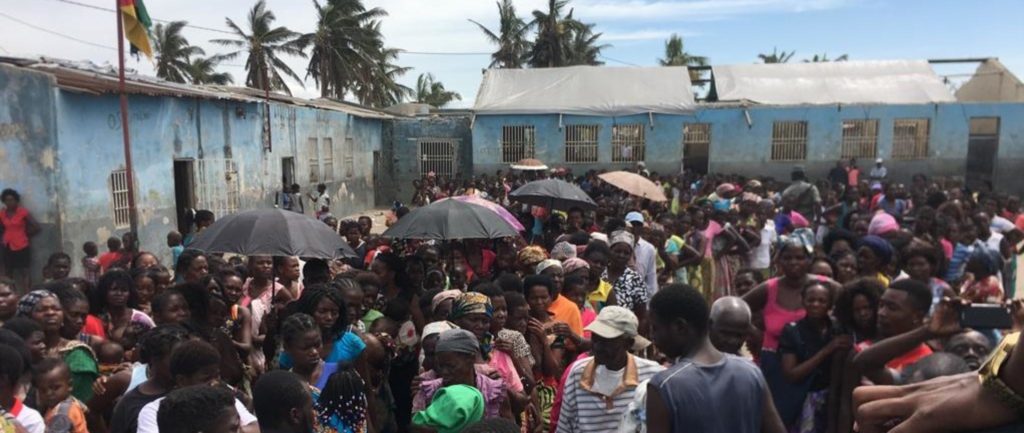
Once again, Mozambique is experiencing deadly climate-related floods. Between 9 and 26 January, about 692,522 people (151,962 families) were affected across southern and central Mozambique, mainly in Gaza (75%), Maputo and Sofala provinces, where 12 people died, 45 were injured, and four remain unaccounted for. The floods destroyed or damaged more than 4,000 homes and flooded almost 155,000 others.
According to the Mozambique Disaster and Risk Management Institute, since the beginning of the rainy season in October, 137 people have died and 800,000 people have been affected. About 72,000 homes were destroyed, and essential infrastructure, including roads, bridges, health care facilities, agricultural land and schools, was damaged.
Pictures taken by activists in different communities in Sofala province, Mozambique in the weeks after the cyclone.
The country will need $644-million to rebuild its essential infrastructure washed away by the rains, which are expected to continue, with the situation likely to worsen.
Despite its insignificant greenhouse gas emissions (60.26 megatons of CO2, about 0.11% of the global total, in 2024), Mozambique is among the top 10 countries most severely affected by climate change and natural hazards. Climate projections indicate that Mozambique’s land surface temperaturesare likely to keep rising.
Unprecedented warming
As Trumpfiercely opposes renewable energy, the world is warming at an unprecedented rate. After record heat in2024, the first year to exceed 1.5°C above pre-industrial levels, the critical temperature threshold set in the Paris Agreement, 2026 is likely to be the fourth year in succession with high temperature levels (at least 1.44ºC, above the pre-industrial levels).
Besides Trump’s obstruction of climate action and the devastating effects of climate change, research has shown that fossil fuel companies were responsible for half of all greenhouse gas emissions globally.
According to a recent update to the Carbon Majors’ database, state-owned companies comprised 17 out of the top 20 emitters. All 17 companies are controlled by countries that refused the proposed phase-out plan at COP30, including Saudi Arabia, Russia, China, Iran, the United Arab Emirates and India.
If the world wants to address global warming, unlike the outcome of COP30, at which world leaders failed to commit to a phase-out roadmap, the transition to renewable energy produced in a manner consistent with human rights is paramount, and it must be just.
As reflected inAmnesty International’s COP30 outcome analysis, this must also be accompanied by, inter alia, the operationalisation of the Fund for Responding to Loss and Damage, to meet the needs of vulnerable nations such as Mozambique, which is among the most affected by climate change impacts and is currently experiencing the unjust impact of climate change.
Higher income historical emitters must:
Provide technical and grant-based or non-debt financial assistance to support Mozambique’s mitigation and adaptation efforts; and
Provide reparations for loss and damage due to irreversible climate harm, such as the recent floods.
On its side, Mozambique must:
Invest in more robust emergency disaster response systems and provide remedies to individuals or groups affected by the floods; and
Embark on an equitable transition away from fossil fuels and invest in adaptation. DM
Tigere Chagutah is the regional director for Amnesty International East and Southern Africa.
This opinion piece first ran in South Africa’s Daily Maverick.