
PETA Statement: USDA’s New Rule Fixes a Fault but Paves the Way for More ‘Tiger Kings’

More than 25 years after the U.S. Department of Agriculture’s (USDA) own Office of Inspector General raised concerns about the USDA’s policy of automatically renewing federal Animal Welfare Act (AWA) licenses for even the worst violators—and more than seven years after PETA started suing over the “rubber-stamping” of chronic abusers—the agency has ended this policy. However, PETA is concerned that the USDA’s new licensing rule has, in other ways, made it easier for animal exhibitors to exploit animals. AWA licenses are now less expensive, even longtime licensees have three chances to qualify for licenses, and anyone whose license application is denied can request a lengthy, trial-type hearing—something that is not required by law and that will prolong animal suffering.

Below, please find a statement from PETA Foundation Deputy General Counsel of Captive Animal Law Enforcement Brittany Peet:

The USDA should never have rubber-stamped abusers’ licenses, and this new rule preventing that comes on the heels of PETA’s legal challenges to the practice—but now, with the huge decline in federal Animal Welfare Act enforcement, it’s fairly easy for roadside zoos and laboratories to get away with violating federal law. PETA is calling on the USDA to crack down on the “Tiger Kings” of the world, not bend over backwards to accommodate them.

PETA—whose motto reads, in part, that “animals are not ours to use for entertainment”—opposes speciesism, which is a human-supremacist worldview. For more information, please visit PETA.org.

The post PETA Statement: USDA’s New Rule Fixes a Fault but Paves the Way for More ‘Tiger Kings’ appeared first on PETA.
No Time to Waste on Animal Tests—PETA Helps Bolivia Develop Ventilators

With hospitals overrun with COVID-19 patients desperate for treatment, Bolivian engineers and physicians had no time to waste on misleading and cruel animal experiments in the development of lifesaving ventilators.

Thanks in part to guidance from PETA and Amor por los Animales Bolivia (APLAB), engineers at the Catholic University of Bolivia in La Paz successfully developed a ventilator to treat COVID-19 patients—without it ever being tested on animals.

Reportedly, the novel ventilators have so far proved functional and safe in simulation and human trials.

Working with physicians, Bolivian engineer Fabio Díaz Palacios contacted PETA and APLAB in search of a way to avoid cruel animal tests for the newly developed “mechatronic artificial manual breathing unit” (MAMBU) ventilator project. A PETA scientist quickly located information about advanced simulators that could accurately model the human lung.

The engineers validated their new MAMBU system through tests on a human manikin with artificial lungs, as shown in this video. From there, they began clinical studies.

So far, the MAMBU system has been tested in human patients with positive results!

Hospitals everywhere need the best equipment possible to respond to COVID-19.

Animals—often pigs—used in ventilator tests are commonly subjected to intubation, anesthesia, and artificial ventilation, which is painful and distressing. Instead of wasting precious time harming animals, these compassionate engineers and physicians created a new ventilator that has tested safe in simulation and human trials.

What they’ve done is extraordinary but completely possible for every other nation. PETA stands ready to help researchers around the world find animal-free testing methods that lead to quick, reliable results.

Experimenters treat animals like miniature models of humans, when in reality, studies show that a staggering 90% of basic research, most of which involves animals, fails to lead to treatments for humans.

© iStock.com/tep2626

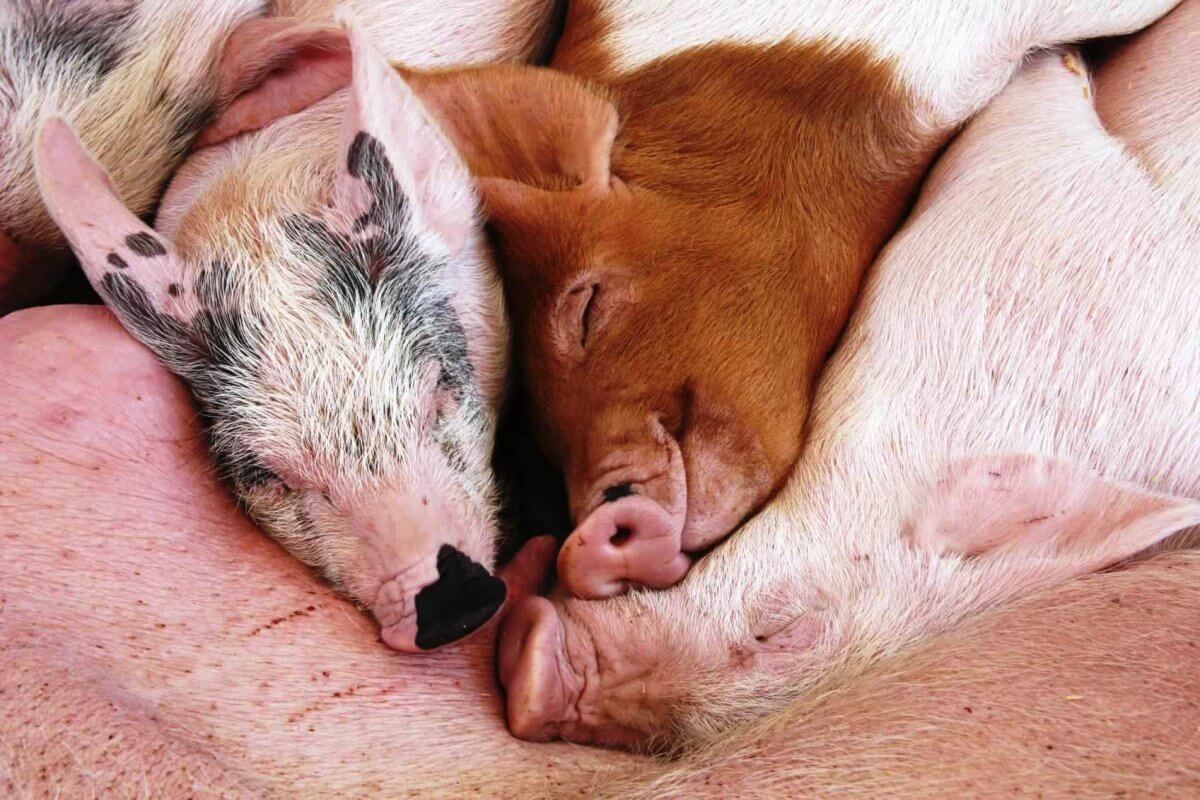
Pigs can bond with humans, like to play games, and even enjoy a good massage. Mother pigs “sing” to their young. Pigs have even rescued humans from drowning and fires.

All animals deserve equal consideration—they can experience pain, suffering, joy, and fear, just as we can, even though their physiology is quite different. In laboratories, experimenters treat animals—with all their personality and emotions—like inanimate science equipment.

What You Can Do

Testing for COVID-19 equipment and vaccines isn’t the only threat facing animals right now. Scores of those who were previously slated for use in archaic laboratory experiments have been deemed “nonessential” and subsequently slaughtered as university labs shutter or dramatically ramp down operations in response to the COVID-19 pandemic.

Help the animals imprisoned in laboratories at dozens of institutions. Take action through the button below:

Stop the Killing Spree Now!

The post No Time to Waste on Animal Tests—PETA Helps Bolivia Develop Ventilators appeared first on PETA.