
The post Tell VIVAZEN: There’s Nothing Zen About the Deadly Iditarod! appeared first on PETA.
Prestahnukur Volcano Volcanic Ash Advisory: PRESTAHNUKUR OBS VA DTG: 10/0900Z to 20000 ft (6100 m)

Explosive activity continues. Volcanic Ash Advisory Center (VAAC) London warned about a volcanic ash plume that rose up to estimated 20000 ft (6100 m) altitude or flight level 200 and is moving at 30 kts in NE direction.
The full report is as follows:
FVXX01 at 10:01 UTC, 10/03/26 from EGRR
VA ADVISORY
STATUS: EXER
DTG: 20260310/0949Z
VAAC: LONDON
VOLCANO: PRESTAHNUKUR 371070
PSN: N6436 W02038
AREA: ICELAND
SOURCE ELEV: 1385M AMSL
ADVISORY NR: 2026/004
INFO SOURCE: IMO
ERUPTION DETAILS: PRESTAHNUKUR
OBS VA DTG: 10/0900Z
OBS VA CLD: SFC/FL200 N6443 W02043 – N6431 W02040 – N6457 W02006 –
N6504 W02029 – N6443 W02043 MOV NE 30KT
FCST VA CLD +6 HR: 10/1500Z SFC/FL200 N6439 W02046 – N6519 W02005 –
N6628 W01708 – N6554 W01512 – N6421 W02044 – N6439 W02046
FCST VA CLD +12 HR: 10/2100Z SFC/FL200 N6649 W01814 – N6659 W01304 –
N6543 W01529 – N6421 W02043 – N6451 W02053 – N6649 W01814
FCST VA CLD +18 HR: 11/0300Z SFC/FL200 N6521 W02211 – N6653 W02220 –
N6747 W01251 – N6541 W01555 – N6419 W02041 – N6521 W02211 FL200/350
N6648 W02153 – N6712 W02131 – N6714 W02047 – N6645 W02121 – N6648
W02153
RMK: TOP OF ASH CLOUD ESTIMATED AT 5KM
NXT ADVISORY: NO LATER THAN 20260310/1545Z
=
Côte d’Ivoire: Pregnant women among those detained without cause since October 2025 crackdown
Five months on from opposition protests banned by the authorities that saw hundreds of people arrested, including pregnant women, some are still being held even though they had no involvement in the protests, while others have been convicted in unfair trials, Amnesty International said today.
In October 2025, a few days before the presidential election, hundreds of people, including protesters and passersby, were arrested during the crackdown on protests. Several of them have been convicted in unfair trials in which they were denied a lawyer. Dozens of others, including a pregnant woman, remain in pretrial detention, according to lawyers.
“Today, five months after their arrest, people are still being held solely because they happened to be in the vicinity of the protests. The Ivorian authorities must order their release,” said Marceau Sivieude, Amnesty International’s Regional Director for West and Central Africa.
“According to our information, several of the prisoners detained since October 2025 have not been allowed to see family members or lawyers, and are not receiving adequate medical care. We are very concerned about the situation of three women who, despite being in the advanced stages of pregnancy, are being held at the Abidjan prison complex.”
These women were caught up in raids while going about their daily business.
Lawyer Sylvain Tapi
Pregnant and held without cause for five months
Two of the pregnant women were convicted a few days after their arrest in October 2025 for ‘disturbing public order’, ‘participating in an unauthorized demonstration’, and ‘gathering on public roads’.
One of the women, a street seller and mother of four who is currently in the late stages of pregnancy, was arrested on 11 October while selling fruit juice near the site of a protest. She was sentenced on 16 October to three years in prison. Her family has been denied visitation rights. The second, a mother of five currently six months pregnant, was arrested on 11 October while in possession of a t-shirt bearing the colors of an opposition party, and sentenced on 22 October to the same punishment.
“These women were caught up in raids while going about their daily business. They are in an environment that is not conducive to a healthy pregnancy. They are severely affected both mentally and physically,” said their lawyer Sylvain Tapi.
Both women have appealed their sentences and are awaiting the date of their appeal hearing.
A third woman, who is currently seven months pregnant, is being held in pretrial detention. She went out on 20 October to buy cookies and witnessed protesters fleeing from members of security forces. She took refuge in her home, where she was beaten and taken away by policemen, according to her relatives.
The Ivorian authorities must respect the Nelson Mandela Rules for the treatment of prisoners.
Marceau Sivieude, Amnesty International’s Regional Director for West and Central Africa
Right to a fair trial must be guaranteed
Amnesty International has documented the cases of two men arrested near the protests who were tried and sentenced to three years in prison a few days after their arrest without legal representation. Both men were arrested on their way to work. One of them was searched and found to be carrying a membership card for an opposition party, according to his relatives who visit him in prison.
“In cases where offences have not been formally established, charges against prisoners must be dropped and they must be released immediately. Trials in the first instance and on appeal must be held as quickly as possible and with due regard for the rights of the defence. The Ivorian authorities also have the duty to ensure appropriate medical care for those detained, including prenatal care and facilitate family visits,” said Marceau Sivieude.
“The use of blanket bans on protests in October 2025 was a stark failure of the Ivorian authorities to uphold the rights to freedom of peaceful assembly, as stated by Amnesty International. We urge the Ivorian authorities to release all prisoners detained only for participating in peaceful protests.”
“Authorities must guarantee and ensure the human rights of everyone including the rights to liberty, freedom of expression and peaceful assembly, and uphold the country’s international human rights obligations under the African Charter on Human and Peoples’ Rights and the International Covenant on Civil and Political Rights. They must also respect the Nelson Mandela Rules for the treatment of prisoners.”
Background
On 2 October 2025, a few weeks before the presidential election, the National Security Council banned gatherings and deployed 44,000 members of the security forces across the country. On the same day, the prefect of Abidjan, the economic capital of Côte d’Ivoire, banned a peaceful gathering planned for 4 October by opposition parties to denounce the exclusion of two candidates from the presidential election.
On 11 October, groups of young people attempting to gather peacefully were dispersed with tear gas. Authorities reported 237 arrests in Abidjan and 18 in Dabou, about 50km from Abidjan, on that day.
On 12 October, two opposition parties called for daily demonstrations. On 16 October, the public prosecutor reported the arrest of approximately 700 people. On the same day, around 50 people were sentenced to three years in prison for disturbing public order, among other charges.
Following the presidential election on 25 October, Alassane Ouattara was declared the winner in the first round.
The post Côte d’Ivoire: Pregnant women among those detained without cause since October 2025 crackdown appeared first on Amnesty International.
Mayon Volcano Volcanic Ash Advisory: ERUPTION AT 20260310/0635Z VA CLD UNKNOWN REPORTED OBS VA DTG: 10/0650Z
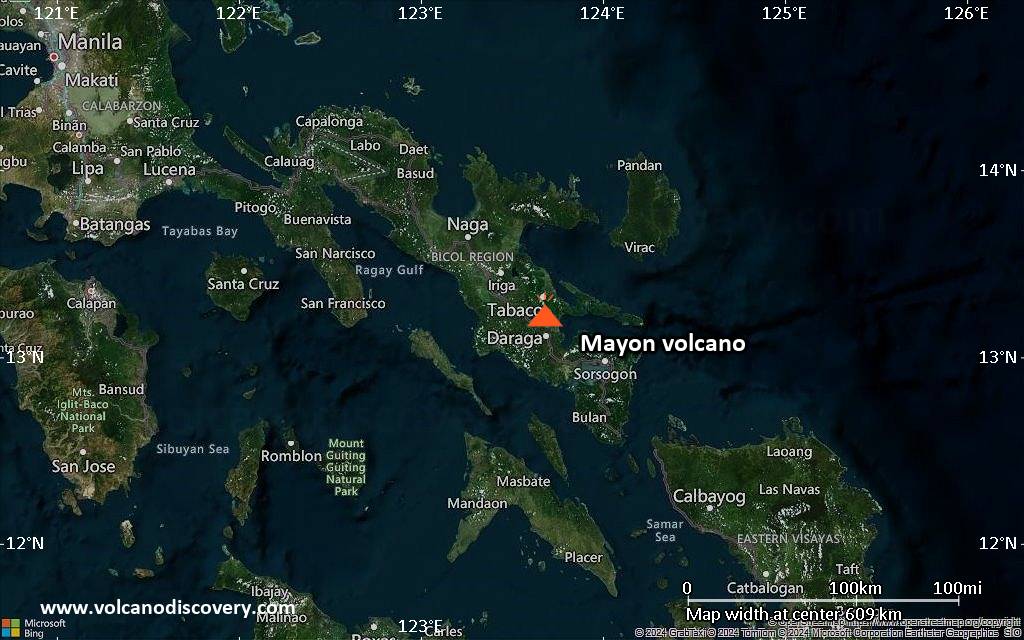
Volcanic Ash Advisory Center Tokyo (VAAC) issued the following report:
FVFE01 at 07:06 UTC, 10/03/26 from RJTD
VA ADVISORY
DTG: 20260310/0706Z
VAAC: TOKYO
VOLCANO: MAYON 273030
PSN: N1315 E12341
AREA: PHILIPPINES
SOURCE ELEV: 2462M AMSL
ADVISORY NR: 2026/288
INFO SOURCE: HIMAWARI-9 PHIVOLCS
ERUPTION DETAILS: ERUPTION AT 20260310/0635Z VA CLD UNKNOWN REPORTED
OBS VA DTG: 10/0650Z
OBS VA CLD: VA NOT IDENTIFIABLE FM SATELLITE DATA WIND FL180 280/14KT
FCST VA CLD +6 HR: NOT AVBL
FCST VA CLD +12 HR: NOT AVBL
FCST VA CLD +18 HR: NOT AVBL
RMK: WE WILL ISSUE FURTHER ADVISORY IF VA IS DETECTED IN SATELLITE
IMAGERY.
NXT ADVISORY: NO FURTHER ADVISORIES=
Three abortion rights defenders share their stories of hope
Across the world, governments and other actors are rolling back on decades of progress on gender equality, including access to abortion. But people are fighting back, determined to protect the rights so many have fought so hard to achieve.
As the Commission on the Status of Women holds its 70th session, three courageous human rights defenders from Burkina Faso, Poland and the United States share their strategies to protect access to abortion, their hopes for the future and the reasons why they believe that, despite the many increasing challenges, humanity must always win.
Cécile Yougbare, activist in Côte d’Ivoire: “I refuse to let women die from clandestine abortions when solutions exist”
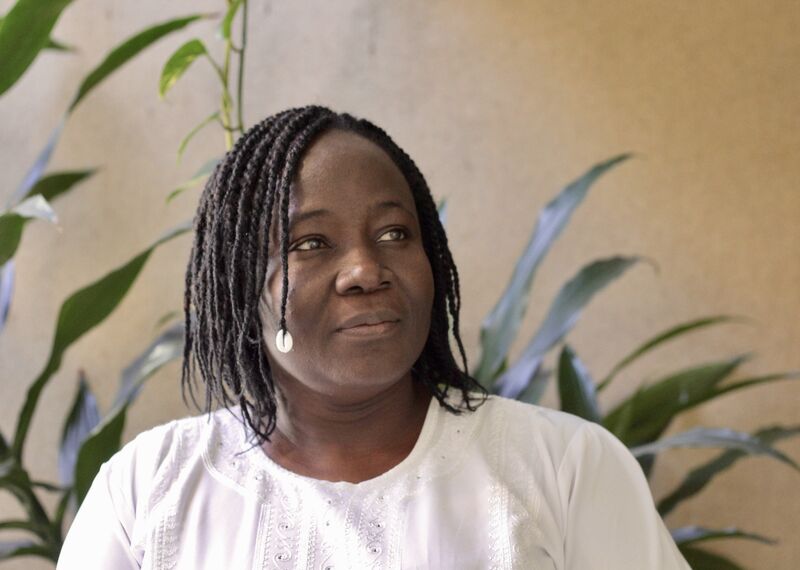
I am a human rights defender. I specialize in challenges related to women’s health because several factors, such as unsafe abortions, continue to cause preventable deaths among girls and women.
For 20 years, both through my community and professional commitments, my fight has focused on women’s rights and sexual and reproductive health rights, including access to safe abortions, working for the organisation Médecins du Monde.
Abortion rights advocates face many challenges, including psychological and physical violence. Abortion still is a taboo subject that carries a lot of stigma. Even where the law allows it in countries such as Benin, social and religious stigma persists.
I come from a very religious, Catholic family. In my family, we were taught about the Church and prayer, and many of my relatives who are priests and nuns expect us to embody the virtue of people who do not encourage abortion. When you go against these “family values” and beliefs, you can be subjected to personal attacks and psychological violence. However, my faith does not prevent me from working for social justice and saving lives by reducing preventable deaths due to unsafe abortions.
Challenges
Legal frameworks are restrictive and sometimes contradictory, which often leads to delays or a total lack of care.
The rollback on funding is also a great challenge. Most funds for humanitarian organizations today explicitly exclude abortion or impose restrictions while anti-rights movements receive increasing support. The fear of losing funds and insecurity overall is forcing many activists to self-censor.
Advocacy is one of our main strategies, complemented by evidence gathering. We collect evidence on maternal deaths to show the authorities that people are dying from preventable causes.
At the community level, we work to simplify legal language to transform a taboo subject into one of public health and human dignity.
Inspiration
My commitment is fuelled by the stories of women who have survived clandestine abortions and by the gaze of young women who realise that they finally have the right to decide for themselves.
My motivation is simple: I refuse to let young women die from clandestine abortions when solutions exist. I am very proud to be an advocate, because defending sexual and reproductive rights means defending human dignity, freedom of choice and equality.
Kinga Jelińska, activist from Poland: “We are creating a different way to approach health care, based on trust and dignity”
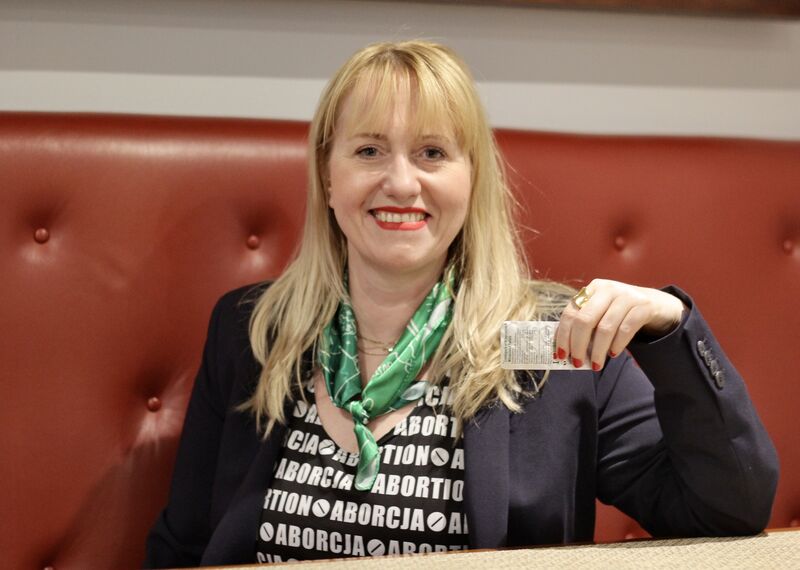
I live in Amsterdam, Netherlands, although I am originally from Poland.
In Poland, abortion was something hidden. In the Netherlands, it is available until 22 weeks of gestation. This made me realise that things could be done differently and motivated me to work for abortion to be accessible to all. I have always been a human rights activist, and women’s rights is something very close to my heart and soul.
A faulty paradigm
There is something fascinating about working on abortion because trying to regulate it doesn’t make sense. The whole paradigm seeks to exclude someone.
Limiting access to abortion has to do with politics, stigma, patriarchy and misogyny. When safe abortions are denied, people resort to unsafe methods, which are often deadly.
Reclaiming power
I work with the international feminist activist organisation Women Help Women.
We focus on self-managed abortion because it is a practical game changer, but also a political project of autonomy to fight against patriarchy and medicalisation.
We run a global online support service and send the medicines (Mifepristone and Misoprostol) to those who request them from us all over the world. In my country, Poland, we are the largest provider of abortion care. In 2024, the government reported 128 abortions were carried out. In contrast, we hear from 130 people a day. We are creating a different way to approach health care, based on trust and dignity.
Politics of care
We are human rights defenders. If someone says to you, “I need help,” it would be absolutely inhumane to say, “I’m not going to help you.”
A colleague in Poland, Justyna Wydrzyńska, had a criminal court case for assisting with an abortion that did not even take place. This exposes the crisis in the system because it criminalises empathy. In Poland, there is constant harassment of abortion rights defenders and no political will to protect us. It’s about harassing us to the point of exhaustion.
Organizations like Amnesty International act as both watchdog and amplifier — they expose human rights violations and make sure the world cannot ignore them. Access to safe abortion, including self-managed abortion, is not a grey zone or a political debate; it is a clear human rights issue rooted in bodily autonomy, health, and dignity. Amnesty helps ensure that this reality is named, documented, and defended at a global level.
The belief that we can imagine and do things better motivates me. My recipe for sustainable activism is having positive imagination mixed with a little bit of anger.
We have the tools and knowledge to provide good care. If we walk together towards the feminist practice of self-managed abortion, we can make a difference. I am very proud to be a human rights defender and abortion provider. It is about autonomy, care, support and solidarity.
Erin Grant, Abortion Care Network co-Executive Director: “Our primary strategy is to build community”

I’m the co-executive director, alongside Nikki Madsen, of the Abortion Care Network. We are the only membership organisation for independent abortion providers in the United States. ACN is an organisation, and the independent abortion providers are the human rights defenders as they deliver the majority of publicly available abortion care in the country, along with their allies.
A devastating situation
Since the fall of Roe vs Wade (the ruling that guaranteed the right to abortion in the United States), the situation is devastating: 100 abortion clinics have closed, and only 14% of US counties have an abortion provider.
The ruling created a state where abortion is essentially banned for a large number of people, especially those who are already marginalised: racialised people, low-income people, people with disabilities, and those living in rural areas. The system in the US has always been designed to serve the wealthy white elite, and the rest of us have been left behind.
The bans and constant harassment are working as they were intended: making abortion access more difficult, risky, expensive, inequitable, and now in some cases criminalized.
People are now forced to travel extreme distances, often thousands of miles, which takes time, money, and resources.
There is also a growing concern about digital surveillance and the legal risks involved in traveling out of state to receive care. This adds a layer of fear and insecurity.
Independent clinics are our ‘front line.’ They are the constant target of attacks, protests, and harassment.
Abortion is not a legal or illegal issue; abortion exists, with or without clinics.
Building community
Our primary strategy at ACN is to counteract the isolation imposed by anti-rights actors by building community. We share resources, best practices, and provide emotional support.
Our tagline is “Stronger Together,” and ACN believes that abortion providers need spaces that are designed to keep them in community with each other, normalize the care they provide, and further opportunities for the clinics, workers, and the people they serve.
A vital issue
The anti-abortion movement uses a very strong playbook of tactics to strip away the rights of people who are seen as “other.” In the US, there is a strong white supremacist movement that promotes the idea that if you are not blonde, blue-eyed, thin, able-bodied, and if you do not reproduce, you are not worthy of decent community care. I do not believe that.
Everyone deserves the opportunity to make their own decisions and to trust their own body. Reproductive health access and the right to bodily autonomy, like abortion, should be a vital issue, just like access to water, food, or decent housing.
Amnesty International is an important ally in connecting abortion care as a form of human rights work. Abortion Care Network has ally members who don’t provide abortion care, and they are crucial to the reproductive health, rights, and justice landscape, like lawyers, artists, researchers, and advocates. They also ensure that independent abortion providers feel seen and supported. Allies are critical. Amnesty International has a pivotal role to play in declaring abortion care and reproductive autonomy as a cornerstone of human rights and connecting the global story of the right to health. Amnesty International’s immeasurable reach ensures that everyone knows abortion providers are brave, resilient people, doing vital, generational work.
Listen to more stories from abortion rights activists
The post Three abortion rights defenders share their stories of hope appeared first on Amnesty International.