From 31/08/2020 to 03/09/2020, a Hurricane/Typhoon > 74 mph (maximum wind speed of 241 km/h) HAISHEN-20 was active in NWPacific. The cyclone affects these countries: Japan, Republic of Korea, Democratic Republic of Korea, China, (vulnerability High). Estimated population affected by category 1 (120 km/h) wind speeds or higher is 9.56 million.
Tim Stark of ‘Tiger King’ Ordered to Surrender Animals From ‘Wildlife in Need’
An Indiana judge has granted the state’s motion ordering roadside zoo owner Tim Stark to surrender all animals (excluding big cats) from Wildlife in Need (WIN) by September 18, pending the final outcome of the litigation charging Stark and WIN with charity fraud. This means the small exotic cats, primates, porcupines, foxes, wallabies, otters, bears, parrots, owls, and other animals relegated to his shoddy roadside zoo will soon be placed in new homes.
The new ruling omits big cats only because the process of finding new homes for the tigers, lions, and tiger/lion hybrids imprisoned at WIN was already secured per a federal court order that resulted from PETA’s successful Endangered Species Act lawsuit.
VICTORY! Tim Stark of #TigerKing just lost his lawsuit to PETA.
He'll no longer be able to separate big-cat cubs from their moms, force them to interact with the public, & declaw them.
This could be the beginning of the end of the cub-petting industry! https://t.co/OYJqtAFGCI
— PETA | #BreakingTheChain (@peta) August 5, 2020
The Indiana judge also ordered Stark to ensure that all animals at WIN receive continued care prior to their removal, and he warned the Tiger King villain against further intimidating or threatening those involved in implementing the order—the latter of which was specified after Stark was filmed (below) outside a courtroom yelling at witnesses.
It’s been a rough few months for Stark—after years of PETA action, the infamous animal exploiter’s exhibitor’s license was permanently revoked last month, meaning that he can never again legally use frightened bear cubs, sloths, spider monkeys, or any other species regulated by the U.S. Department of Agriculture in his cruel animal encounters. The good news came after he and WIN were assessed a total of $340,000 in civil penalties—$40,000 of which was assessed against him individually.
This is a warning to the entire big-cat cub-petting industry: Your days are numbered.
Find out how you can help PETA get animals out of the hands of other cruel exhibitors:
Take Action to Help Animals at Roadside Zoos
The post Tim Stark of ‘Tiger King’ Ordered to Surrender Animals From ‘Wildlife in Need’ appeared first on PETA.
Sangay Volcano Volcanic Ash Advisory: INTMT VA CLD EMS. to 20000 ft (6100 m)
Get Out Your Hankie: New Film Tells Story of Dog Presumed Dead
Edith always knew she deserved a starring role, and now she finally has one. The formerly chained dog, a fluffy black chow mix, is the star—along with dozens of other chained or penned dogs—of Breaking the Chain, a groundbreaking new documentary about PETA fieldworkers’ efforts to improve the lives of neglected “backyard dogs” produced by Oscar winner Anjelica Huston.
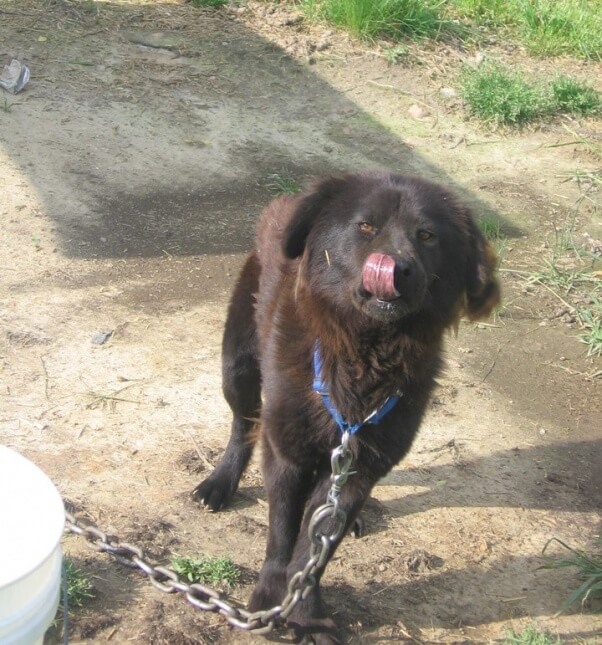
Edith (then called “Fluffy”) spent years yearning for a chance to show what she was capable of. The opportunity finally came on a chilly spring day when two PETA volunteers out delivering straw bedding spotted the aging, unkempt dog behind a rundown trailer in rural North Carolina. They put straw in her doghouse to keep her warm and dry, cleaned up her small patch of dirt, gave her some treats and ear scratches, took photos, and jotted down the owner’s name and address.
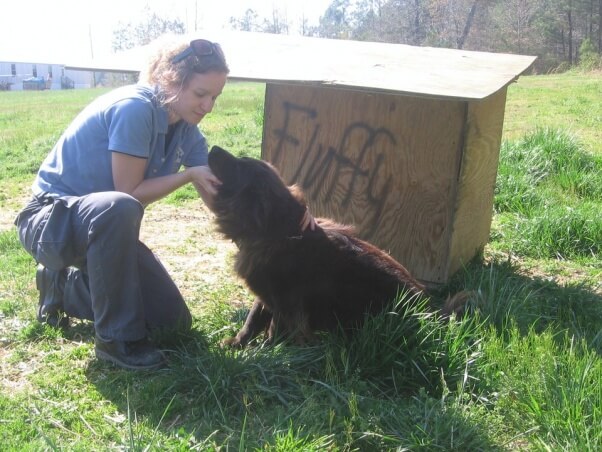
The next day at the Sam Simon Center—our headquarters in Norfolk, Virginia—PETA staffers Emily Allen and Jes Cochran were going through the volunteers’ photos and did a double take when they saw “Fluffy.” She sure looked like Edith, whom Jes had been visiting at another address for years and had delivered a doghouse to, transported to PETA’s mobile clinic for a free spay surgery, and routinely given lots of toys, treats, food, fresh water, and tummy rubs. However, two years earlier, Edith had disappeared, and Jes hadn’t known what had happened to her.
The life of every chained dog is heartbreaking, but Edith had struck a chord with Jes, who had been visiting her since she was a young, wriggling bundle of soft black fur. As the years passed, Edith’s puppy-like optimism and enthusiasm had never dimmed. Unlike many other chained dogs, who go mad from intensive confinement, she had never become fearful or aggressive. She always greeted Jes like an old friend, with face licks and by flopping over onto her back for tummy rubs. Edith never really cared about treats or toys—all she wanted was attention.
When Edith disappeared, Jes assumed the worst, knowing the many dangers that “backyard dogs” face, including contagious diseases, heartworms, exposure, heat exhaustion, dehydration, and attacks by loose dogs or cruel people.
You’ll have to watch the documentary to find out whether Edith and Jes were reunited. It’s available now on video-on-demand platforms such as Apple TV, iTunes, and Prime Video.
Breaking the Chain will also be shown at the Richmond International Film Festival and the American Documentary and Animation Film Festival in September and October. Don’t miss it!
The post Get Out Your Hankie: New Film Tells Story of Dog Presumed Dead appeared first on PETA.
UAB Whistleblower Comes Forward; Feds to Investigate University Lab
The U.S. Department of Agriculture (USDA) will investigate a University of Alabama–Birmingham xenotransplantation laboratory—where the organs of genetically modified pigs are transplanted into baboons—after a whistleblower gave documents, photos, and video footage to PETA that reveal acute animal suffering and scores of apparent violations of the federal Animal Welfare Act.
According to the whistleblower, experimenters did not follow proper protocols for animal care, failed to comply with common veterinary standards, used expired or incorrect medications, and falsified veterinary-care records to hide their failure to relieve animals’ suffering.
Among the whistleblower’s other allegations, a pig’s kidney had been transplanted into a baboon named Laja in January 2019. In a video taken in June 2019 to show the “success” of the surgery, Laja appears emaciated and is missing a lot of hair as she repetitively circles and somersaults in her cage, a sign of extreme psychological distress. As she got sicker—not better—following the transplant, fluid built up in her abdomen, pockets of fluid collected along her ulcerated surgery incision, and she developed an open sore on her thigh. Rather than properly treating the wounds, experimenters reportedly applied Woolite laundry detergent to them to hide the poor condition of her skin. She was killed in September 2019.
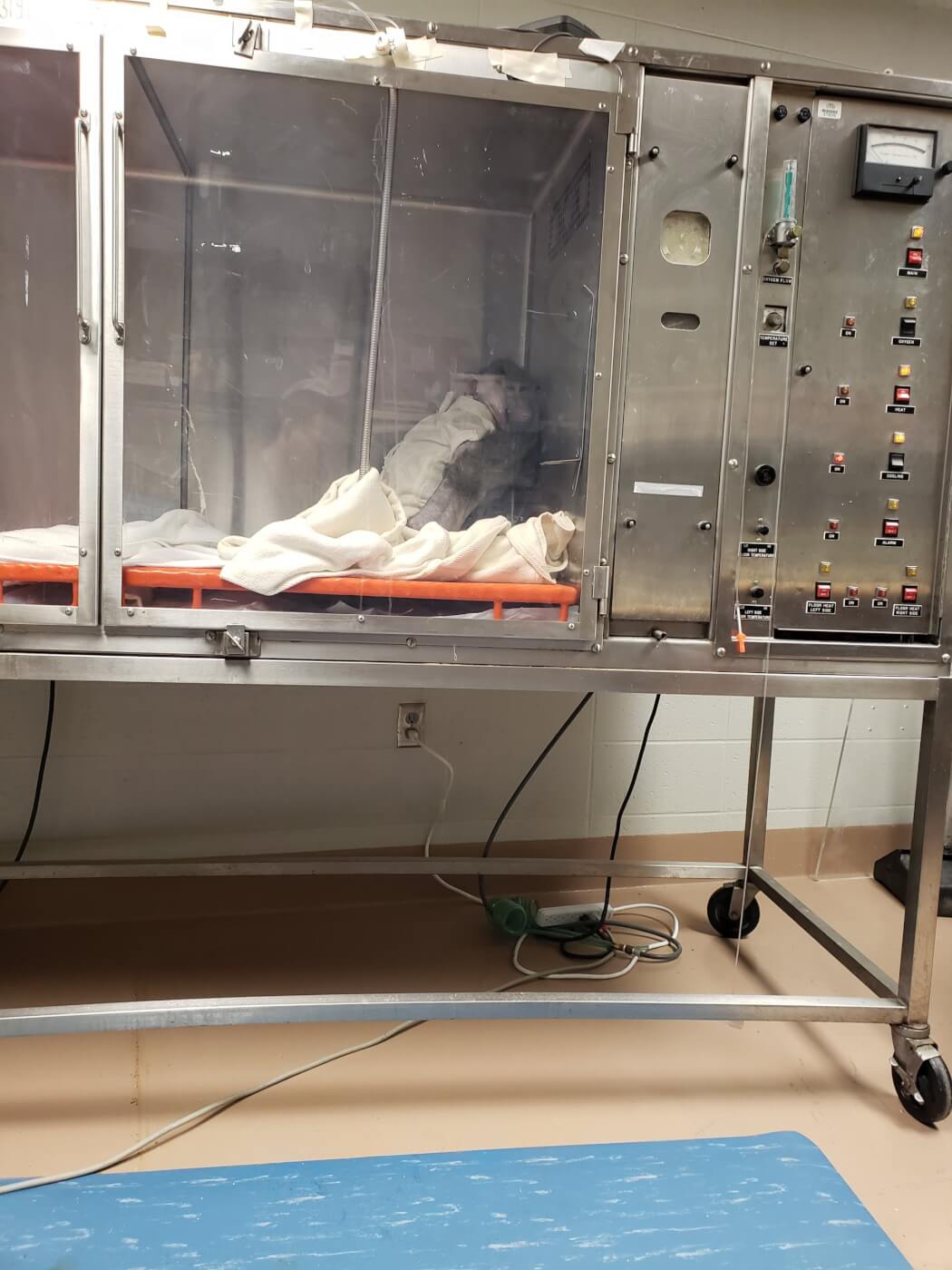
A photograph shows a baboon’s miserable post-operative condition after a pig’s heart was transplanted into her body. The intravenous tube can be seen leaking. The baboon reportedly died within two days. E-mails shared by the whistleblower reveal that experimenters discussed underfeeding a pig in order to keep her from growing too large for her organs to be removed and transplanted into another animal.
“Sensitive monkeys and pigs are being used in grisly Frankenstein experiments that have never worked,” says PETA Vice President of Laboratory Investigations Alka Chandna, Ph.D. “The school apparently can’t even comply with simple animal protection laws. University President Ray Watts should close this laboratory now.”
PETA is also urging the CEO of United Therapeutics—the company that has bankrolled these experiments with $19.5 million over five years—to rethink its funding, noting that implementing presumed organ-donation consent laws would increase organ availability, thus alleviating the shortage and saving more human lives.
PETA—whose motto reads, in part, that “animals are not ours to experiment on”—opposes speciesism, which is a human-supremacist worldview. For more information, please visit PETA.org.
The post UAB Whistleblower Comes Forward; Feds to Investigate University Lab appeared first on PETA.