Osman Kavala: Hope for his country, quietly hopeless about his chances for freedom

A conversation with Prisoner of Conscience Osman Kavala, by Amnesty International Türkiye’s Günal Kurşun 

A few weeks ago, as we approached the sombre milestone of Osman Kavala’s eighth year of unjust imprisonment, I visited him in the high security wing of Istanbul’s infamous jail, colloquially known as “the Silivri dungeon”. 

Sitting in the room reserved for lawyers’ visits, I sat face-to-face to Osman Kavala. We looked at each other through a thick pane of glass, rusted around its metal edges.  

I began by passing on greetings from many individual human rights defenders, together with collective greetings from colleagues at many civil society organizations. 

“Please convey my greetings to everyone,” replied Kavala, clear and resolute.  

And so began a conversation that would flow like water across the space between us. 

Kavala remains hopeful about Türkiye’s future; he believes that law and the public conscience will, sooner or later, find their way to the truth. For his own future, however, he is less optimistic: “It is hard to expect any change for me in the near future,” he says.  

In the stillness of that room, two sentiments hang side by side—hope for his country and a quiet hopelessness about the prospect of his own freedom. 

To be a bystander to this injustice and oppression makes us feel that not only Osman Kavala, but all of us, are prisoners

During my visit, the word “hope” circulated less as a private feeling than as a civic virtue. Kavala observed that diverse segments of society still show a will to live together; that young people’s ties with the wider world have not been severed; that the institutional ground of law, despite everything, has not been entirely razed; and Türkiye’s tradition of opposition has not been lost. Even through this prolonged darkness, a culture of solidarity has endured. 

His view of his own situation is less positive. 

“What I am facing is not a matter of one individual; it is a matter of the rule of law and the right to a fair trial. My personal freedom is, of course, important; but the core issue is the evidentiary standards on which judgments rest and the independence of the judiciary from political influence,” he tells me. “Keeping the legal debate within the language of law is the soundest contribution we can make to our shared future.”  

On the prison system more broadly, he points out that compulsory transfers have “become a kind of torture for both the prisoners and their families… Even in the period following the 1980 coup, when physical torture was widespread, our judges were more independent than they are today.”  

Osman Kavala was detained in 2017 and – despite a complete failure by prosecuting authorities to provide any evidence to substantiate the baseless charges laid against him – sentenced to aggravated life imprisonment without the possibility of parole. Despite two binding judgements by the European Court of Human Rights (ECtHR) ordering his immediate release, Türkiye’s highest court upheld the life sentence for Osman Kavala in September 2023. Two Constitutional Court applications he made following his conviction, and after it was upheld, are still pending a decision.  

In 2022, Amnesty International named Osman Kavala a prisoner of conscience and made clear that each day he spends behind bars is an affront to the concept of justice and human rights, principles that the Turkish state has committed itself to upholding. 

Three years on, Kavala remains deprived of his liberty. His case is widely regarded as a test of Türkiye’s obligations within the ECtHR system and an indictment of the system itself. The ongoing failure by Turkish authorites to give effect to clear and binding judgments speaks to the Turkish judiciary’s posture toward international legal obligations not just in Türkiye but for other Council of Europe member states too.  

On Saturday, dozens of prominent figures from the fields of journalism, academia, civil society and politics (including former President Abdullah Gül) shared messages of solidarity with Osman Kavala on the anniversary of his imprisonment. Writer Orhan Pamuk wrote: “To be a bystander to this injustice and oppression makes us feel that not only Kavala, but all of us, are prisoners.”  

We must keep pursuing the truth, insist on the language of law, and keep solidarity alive 

Türkiye now faces a painfully slow infringement procedure for its failure to comply with the ECtHR judgment. In the meantime, Osman Kavala is deprived of his liberty, alone in a cell in the dungeon.  

As we parted, Kavala expressed his belief that Türkiye will find its way through law, reason and dialogue; yet he is realistic about the timetable of his own freedom: “In prison, one learns time differently. I try to anchor hope not to calendar pages but to principles,” he tells me.  

Key among these principles is the right to a fair trial, reasonable suspicion, proportionate measures and judicial independence. But in Türkiye today, these principles are being tested for everyone. Only correct decisions in critical cases today will translate into legal security for us all tomorrow. 

Before Osman Kavala is led back to his cell, he asked me to send his greetings to all human rights defenders and to everyone dismissed by emergency decrees after the failed 2016 coup. His message is more than a greeting. It is a call to action. “We must keep pursuing the truth, insist on the language of law, and keep solidarity alive.”  

Günal Kurşun Lawyer, Amnesty International Türkiye Board Member

An extended version of this article was first published here by Bianet

The post Osman Kavala: Hope for his country, quietly hopeless about his chances for freedom appeared first on Amnesty International.

Russia: Street musicians jailed for a third time over anti-war songs

In response to the third time that Diana Loginova (aka Naoko) and Aleksandr Orlov, street music performers from the band Stoptime, are being held in administrative detention, Denis Krivosheev, Amnesty International’s Deputy Director for Eastern Europe and Central Asia, said:

“The repeated arrests of Naoko and her bandmates are punishment for their public performance which have become a breath of fresh air in a country gasping under repression and self-censorship.”

“Worse still, the authorities’ persistence in pursuing Naoko and her fellow musicians raises fears that they might be preparing criminal charges against them. Russian lawmakers have introduced so many repressive and vague laws that prosecuting someone for expressing anti-war views is little more than a technicality.”

“Authorities must immediately and unconditionally release Naoko and Aleksandr Orlov and other street musicians detained for acts of anti-war protest, simply exercising their right to freedom of expression. Their only ‘crime’ is singing songs that challenge the suffocating official narrative.”

Authorities must immediately and unconditionally release Naoko and Aleksandr Orlov and other street musicians detained for acts of anti-war protest, simply exercising their right to freedom of expression. Their only ‘crime’ is singing songs that challenge the suffocating official narrative

Denis Krivosheev, Amnesty International’s Deputy Director for Eastern Europe and Central Asia

Background

In October, videos of the street band Stoptime performing songs by exiled Russian musicians in Saint Petersburg went viral. Crowds joined in singing lyrics critical of the authorities, human rights violations and the war against Ukraine.

Police arrested the three band members – vocalist Diana Loginova (Naoko), guitarist Aleksandr Orlov and drummer Vladislav Leontyev – on 15 October, accusing them of “organizing a mass gathering that violated public order” (Article 20.2.2(1) of the Russian Code of Administrative Offences). Loginova and Leontyev were placed in so-called administrative detention for 13 days, and Orlov for 12 days. The court also fined Loginova 30,000 rubles (approximately US$ 370) for “discrediting the Russian armed forces” under Article 20.3.3 of the Code.

When their administrative detention expired on 27 and 28 October, police immediately re-arrested them under Article 20.2.2 for earlier performances, sentencing them to another 12–13 days. Naoko also received 13 days for “petty hooliganism” (Article 20.1 CAO) for allegedly using obscene language during one of her performances and a second fine for “discreditation.”

On 9–10 November, Orlov and Loginova were detained for the third time in a row as they left detention. The authorities have not disclosed the grounds for their new detention, continuing a pattern of “carousel arrests” – a practice used to prolong deprivation of liberty without filing criminal charges.

Their case sparked solidarity concerts across Russia. In Yekaterinburg, Evgeny Mikhailov was placed in administrative detention for 14 days for “petty hooliganism” for “shouting slogans and disturbing public order” and “discreditation of the Armed Forces.” In Perm, street musician Yekaterina Romanova (Ostasheva) received seven days of administrative detention for “refusal to undergo a drug test,” then another 15 days and 60 hours of community work for “disobeying the police.” Police also detained three performers in Saint Petersburg and one protester in Moscow, whose identities are not yet known.

The post Russia: Street musicians jailed for a third time over anti-war songs appeared first on Amnesty International.

Somalia: Thousands of climate-displaced individuals being failed by authorities and the international community – new report

Somali authorities and the international community have repeatedly failed to protect thousands of people from drought-affected communities in southern Somalia, exposing them to violations of their rights to food, water, family, health and life, Amnesty International said in a new report.

‘No rain, no food, no animals: The human rights impact of drought and displacement in Somalia’ documents how, between 2020 and 2023, climate change-related drought, coupled with conflict and marginalization, forced thousands of people to relocate to camps for internally displaced persons (IDPs) initially in southern Somalia and then to Dadaab Refugee Camp in Kenya. During these arduous journeys, the Somali authorities failed to provide relief, including health services and food.

Somalia is on the frontline of human-induced climate change. As the seventh most climate-vulnerable country in the world, Somalia’s authorities, with the support of the international community, must urgently address the marginalization of communities in southern Somalia who are acutely impacted by global warming caused mainly by fossil fuel combustion

Tigere Chagutah, Amnesty International’s Regional Director for East and Southern Africa

“Somalia is on the frontline of human-induced climate change. As the seventh most climate-vulnerable country in the world, Somalia’s authorities, with the support of the international community, must urgently address the marginalization of communities in southern Somalia who are acutely impacted by global warming caused mainly by fossil fuel combustion, said Tigere Chagutah, Amnesty International’s Regional Director for East and Southern Africa region.

“Somalia’s contribution to global warming is negligible, yet its people are bearing the brunt of the climate crisis, while also facing long running conflict and poverty. High income countries, especially those most responsible for climate change, must step in and meet their obligations to support Somalia in adapting to the effects of climate change.”

The report is based on interviews carried out between September 2024 and March 2025, with 177 people displaced into Dadaab Refugee Camp. Amnesty also interviewed emergency service providers, humanitarian workers, government officials, and climate change experts who either work in Somalia or have knowledge and experience of the country’s vulnerabilities to drought and climate change.

“Everything dried up”

Persistent drought in southern Somalia since 2022, made worse by human induced climate change, has combined with several other factors such as continued conflict to drive mass displacement. With water sources drying up, people have been forced to drink contaminated water, fostering the spread of water-borne diseases including cholera. The scarcity of local health facilities forced people to travel up to 1000km for treatment.

The drought also caused food prices to rise by up to 160% above pre-2020 levels across Somalia. This, coupled with depleted food stores, dry farmlands and reduced incomes, made food unavailable and inaccessible, resulting in rampant malnutrition and food insecurity, driving further displacement. The drought was eventually declared a national disaster in November, 2021.  

Despite this growing health crisis, Somalia has failed to fulfil its human rights obligation to guarantee the rights of drought-affected individuals by not increasing its allocation to the health budget – which is currently less than 5% of overall government expenditure – to 15% as set out in the Abuja declaration, a commitment by African Union countries including Somalia to increase national health budgets.

“Limited resources and the ongoing conflict are not an excuse to neglect international obligations and necessary government action; Somalia erred by folding its hands. Having declared the drought a national disaster, authorities should have ensured there were enough resources to protect drought affected people, including by seeking extra international assistance,” said Tigere Chagutah.

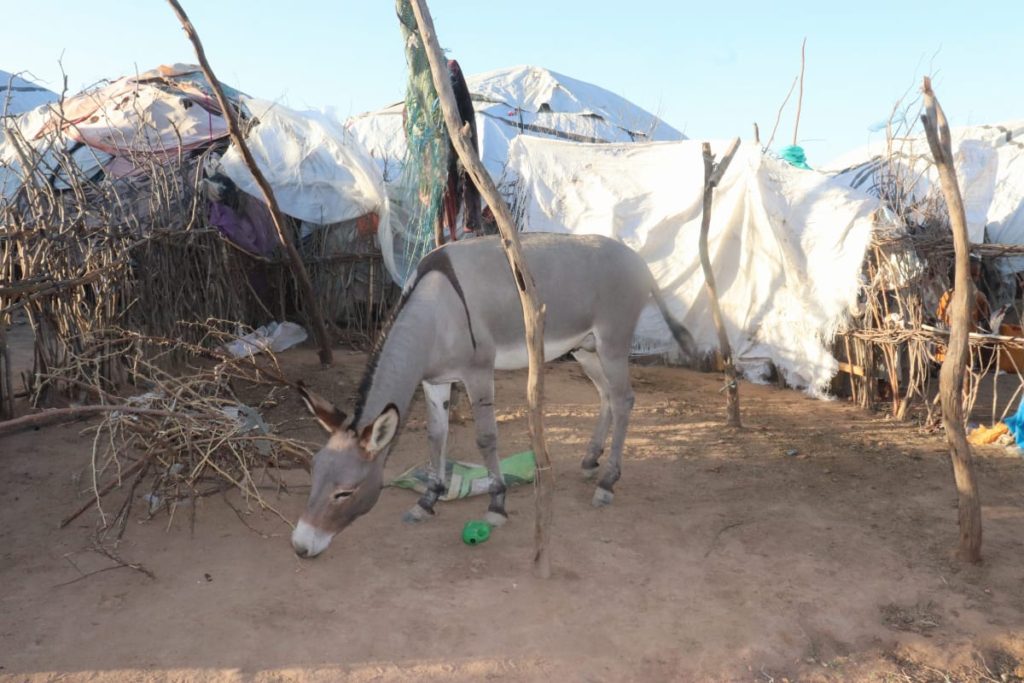
Fadumo*, a 53-year-old mother of eight from Xabaalo Barbar in Baydhabo District, told Amnesty that after years of erratic rainfall and drought, she abandoned her farm and moved to an IDP camp in the capital Mogadishu because she had no food and water. The only available water, which was dirty and salty, was from a well 24 hours away on foot or donkey cart. After being unable to find work in Mogadishu, she moved to Dadaab.

Amnesty found that the Somali authorities failed to prevent family separation and the abandonment of children, older people and people with medical conditions during drought-induced displacement.

Bile*, a 33-year-old farmer and father of eight from Fargarow in Jilib, explained how his parents died after he had to move to Dadaab:

“When the drought came, everything dried up. I had eight children, a wife and my parents who were old and relied on me. So, when the drought came, we quickly finished the food that we had stored. I decided to move with my children and wife in 2023. However, since I was their only provider, my parents succumbed to the famine after I left them in Jilib.”

Due to the lack of early warning systems, floods also destroyed grains stored underground resulting in even greater food insecurity during the drought.

When the drought came, everything dried up. I had eight children, a wife and my parents who were old and relied on me. So, when the drought came, we quickly finished the food that we had stored. I decided to move with my children and wife in 2023. However, since I was their only provider, my parents succumbed to the famine after I left them in Jilib.

Bile*, a Somali farmer

“The Somali authorities must urgently come up with climate change resilience policies that also address the resulting loss and damage as witnessed among the most vulnerable communities in southern and central Somalia,” said Tigere Chagutah.

Multiple displacements

Many IDPs said they had been displaced more than once, initially into IDP camps or informal settlements within southern Somalia, where some government services were available and some NGOs were present. However, with many of these sites located in areas of high climate vulnerability, further displacements occurred due to drought or floods.

As the number of IDPs in southern Somalia soared, humanitarian actors lacked adequate resources to address their needs, forcing IDPs to move to Dadaab.

The journey to Dadaab on the Somalia-Kenya border is long and arduous. Depending on the mode of transport it can take anywhere between two days to six weeks. Those with resources could board or hire vehicles. However, the fares are exorbitant and out of reach for many, with some families telling Amnesty International that they had to sell household items, livestock, grains or even land to afford fares.

Having declared the drought a national disaster, authorities should have ensured there were enough resources to protect drought affected people, including by seeking extra international assistance.

Tigere Chagutah

Services from humanitarian organizations and government departments along the transport routes were largely absent, with the limited assistance available appearing to be centralized around settlements and IDP camps and not along transport corridors. This is despite Somalia’s obligations under its constitution and international law, including under the Kampala Convention, to protect those displaced by climate change.

Abdullahi, who travelled from Saakow in Somalia to Dadaab, said:

“When we got to Dhobley, well-wishers picked 15 women and children and gave them a lift in their vehicle to Dadaab. The men were left behind to walk with the donkey carts. We carried sorghum [a type of grain] and water for the children, but they were extremely malnourished on arrival because what we had only lasted a few days.”

The post Somalia: Thousands of climate-displaced individuals being failed by authorities and the international community – new report appeared first on Amnesty International.

Europe: Existing barriers to abortion access compounded by alarming attempts to roll back reproductive rights 

European governments must act to ensure equal and universal access to abortion care in the face of ongoing restrictions and intensifying efforts to further limit access to abortion across the region, said Amnesty International in a report published today. 

When rights aren’t real for all: The struggle for abortion access in Europe reveals how – despite hard won progress – harmful and dangerous obstacles continue to undermine access to abortion care. This is taking place in the context of increasingly well-resourced anti-rights groups ramping up their efforts to negatively influence policies and laws, often through the spread of fear and disinformation, aimed at further restricting access to abortion.

Hard-won victories on reproductive rights are at serious risk of being reversed by a wave of regressive policies

“The stark reality is that despite significant progress across Europe, abortion access is still restricted by a disturbing array of visible and invisible barriers,” said Amnesty International’s Senior Campaigner on Women’s Rights, Monica Costa Riba. 

“Hard-won victories on reproductive rights are at serious risk of being reversed by a wave of regressive policies promoted by the anti-gender movement and championed by populist political actors deploying authoritarian practices.”  

While law reforms in many European countries – with some notable exceptions – have made abortion more available, numerous administrative, social and practical barriers preventing universal abortion access remain in place. These include medically unjustified requirements which delay access, conscience-based refusals of care, a shortage of trained professionals, gestational time limits and high costs. Marginalized communities, including people with low incomes, adolescents, people with disabilities, LGBTIQ+ people, sex workers, people seeking asylum or with precarious migration status, are disproportionately affected by these obstacles. 

These barriers, combined with various degrees of criminalization, result in further stigmatization, causing delays or even preventing access to essential healthcare. At least 20 countries in the region impose criminal sanctions on pregnant people who have an abortion outside the scope of the law.  

Barriers to abortion 

In addition to gestational time limits and criminalization, there are several key barriers to accessible abortion.  

The cost of accessing abortion can be prohibitive particularly in countries where abortion care on request (when the decision to end a pregnancy rests with the pregnant person) is not included in their health insurance or national health system. This is the case in countries such as Austria, Bulgaria, Croatia, Cyprus, Czech Republic, Germany, Latvia, Montenegro, Romania, Bosnia & Herzegovina, North Macedonia, Kosovo and Serbia.

Several states are failing in their duty to guarantee access to abortion care in contexts of high numbers of conscience-based refusals of services, where healthcare professionals refuse to provide abortions due to personal views or religious beliefs, result in delays or denial of access. In countries such as Italy or Croatia, refusals of this kind are widespread and in Romania they are also on the rise, and in all cases the authorities are not taking the action they are obliged to under international law to mitigate the harms of such high refusal rates and guarantee access to abortion care to those in need.  

At least 12 European countries continue to enforce medically unnecessary mandatory waiting periods before accessing a legal abortion and 13 countries enforce compulsory counselling. Albania, Belgium, Germany, Hungary, Latvia and Portugal require both mandatory waiting periods and compulsory counselling. In Hungary, those seeking an abortion are compelled to listen to the foetal heartbeat. In Türkiye, married women over the age of 18 are legally required to obtain spousal consent to terminate a pregnancy within the 10-week limit.  

Every year, thousands of pregnant people are forced to travel abroad to seek the healthcare they need due to the difficulties they face in accessing abortion care in their countries.  

Attempts to rollback access to abortion 

Attempts to rollback of abortion access across Europe are being led by a well-funded, transnational anti-gender movement comprised of conservative and religious groups and institutions, think tanks, civil society organizations and media influencers.  

In Croatia, the influence of anti-rights politicians in government, combined with a growing alliance between anti-abortion advocates and the Catholic Church, has led to repeated attempts to impose barriers to abortion access. In Slovakia, there have been repeated attempts in parliament to restrict or ban abortion access, while constitutional amendments passed in September 2025 will significantly erode reproductive rights. 

Hungary has introduced new barriers to accessing abortion, contraception and family planning and Italy’s governing party has led legislative initiatives to allow anti-abortion groups and those “supporting motherhood” to access mandatory counselling centres for pregnant people seeking a legal abortion. In these cases, the authorities have justified the measures with arguments including low birth rates or false and racist rhetoric about migrants “replacing” the white “native” population. 

Abortion is essential healthcare and a human right

Aggressive and sometimes violent anti-abortion protests and pickets outside sexual and reproductive health clinics have become an increasing barrier to abortion access. In Poland, an abortion centre set up in Warsaw in March 2025 has faced regular harassment and intimidation by groups protesting outside the building. In Austria, abortion healthcare providers face intimidation, including in front of their clinics, while family planning centres in France and centres providing mandatory counselling in Germany have also been attacked by anti-rights groups.  

“Abortion is essential healthcare and a human right,” said Monica Costa Riba.

“European governments and institutions must act decisively to bring abortion provision in line with international standards by decriminalizing abortion, eliminating existing access barriers and firmly resisting any moves by anti-rights groups to dangerously block people’s access to safe and timely abortion care, putting lives and health at risk”.” 

Background 

The report examines 40 counties and draws on Amnesty International’s research over the last decade, as well as data from reliable sources compiled by other human rights and public health organizations, including the Center for Reproductive Rights (CRR)’s publication “Europe Abortion Laws 2025”, the European Parliamentary Forum for Sexual and Reproductive Rights (EPF)’s ‘European Abortion policy Atlas’ and the World Health Organization (WHO) Global Abortion Policies Database. It also draws on insights from 11 abortion rights activists and sexual and reproductive health and rights organizations interviewed between May and September 2025.  

The post Europe: Existing barriers to abortion access compounded by alarming attempts to roll back reproductive rights  appeared first on Amnesty International.

Tunisia: Rampant violations against refugees and migrants expose EU’s complicity risk

The Tunisian authorities have over the past three years increasingly dismantled protections for refugees, asylum seekers and migrants, particularly Black people, with a dangerous shift towards racist policing and widespread human rights violations that endanger their lives, safety and dignity, Amnesty International said today. The European Union risks complicity by maintaining cooperation on migration control without effective human rights safeguards.

In a new report, ‘Nobody Hears You When You Scream’: Dangerous Shift in Tunisia’s Migration Policy, Amnesty International has documented how, fuelled by racist rhetoric from officials, Tunisian authorities have carried out racially targeted arrests and detentions; reckless interceptions at sea; collective expulsions of tens of thousands of refugees and migrants to Algeria and Libya; and subjected refugees and migrants to torture and other ill-treatment, including rape and other sexual violence, while cracking down on civil society providing critical assistance.  

In June 2024, Tunisian authorities ordered an end to the UN Refugee Agency (UNHCR) role in processing asylum claims, removing the only avenue for seeking asylum in the country. Yet EU cooperation with Tunisia on migration control has continued without effective human rights safeguards, risking EU complicity in serious violations and trapping more people where their lives and rights are at risk.

“The Tunisian authorities have presided over horrific human rights violations, stoking xenophobia, while dealing blow after blow to refugee protection. They must immediately reverse this devastating rollback by ending racist incitement and stopping collective expulsions that threaten lives. They must protect the right to asylum and ensure that they don’t expel anyone to places where they would be at risk of serious human rights violations. NGO staff and human rights defenders detained for assisting refugees and migrants must be released unconditionally,” said Heba Morayef, Regional Director for the Middle East and North Africa at Amnesty International.

“The EU must urgently suspend any migration and border control assistance aimed at containing people in Tunisia and halt funding to security forces or other entities responsible for human rights violations against refugees and migrants. Instead of prioritizing containment and fuelling violations, EU cooperation with Tunisia must shift its focus to ensuring adequate protection measures and asylum procedures are available in the country, and incorporate clear, enforceable human rights benchmarks and conditions, to avoid complicity in violations.”

Amnesty International conducted research between February 2023 and June 2023 and interviewed 120 refugees and migrants from nearly 20 countries (92 men, 28 women, eight children aged 16–17) in Tunis, Sfax, and Zarzis. The organization also reviewed UN, media, and civil society sources and the official pages of local Tunisian authorities. Ahead of publication, Amnesty shared its findings with Tunisian, European, and Libyan authorities. No response had been received by the time of publication.

A crisis fuelled by racist rhetoric

Testimonies reveal a migration and asylum system designed to exclude and punish rather than protect. At least 60 of those interviewed by Amnesty, including three children, two refugees and five asylum seekers, were arbitrarily arrested and detained. Black refugees and migrants were targeted amid systemic racial profiling and successive waves of racist violence from individuals and security forces, triggered by the public advocacy of racial hatred, starting with President Kais Saied’s remarks in February 2023 and echoed by other officials and parliamentarians since.

The Tunisian authorities have presided over horrific human rights violations, stoking xenophobia, while dealing blow after blow to refugee protection. They must immediately reverse this devastating rollback by ending racist incitement and stopping collective expulsions that threaten lives.

Heba Morayef, Amnesty International

The situation was aggravated by a surge of repressive measures targeting at least six NGOs providing critical support to refugees and migrants. This has had horrific humanitarian consequences and led to an enormous gap in protection. Since May 2024, authorities have arbitrarily detained at least eight NGO workers and two former local officials who cooperated with them. The next hearing in the trial of the staff of one of these organizations, the Tunisian Council for Refugees, is scheduled for 24 November.

‘We saw them drown’

Amnesty International investigated 24 interceptions at sea and spoke to 25 refugees and migrants who described life-threatening, reckless and violent behaviour by the Tunisian coastguard, such as dangerous ramming; high-speed manoeuvres threatening to capsize boats; hitting people and boats with batons; firing tear gas at close range; and the denial of any individualised protection assessment at disembarkation.

“Céline”, a Cameroonian woman migrant intercepted after departing from the eastern region of Sfax in June 2023, told Amnesty International:

“They kept hitting our [wooden] boat with long batons with sharp endings, they pierced it… There were at least two women and three babies without life vests. We saw them drown and then we could not see the bodies anymore. I have never been so scared.”

Despite ongoing concerns about the lack of transparent reporting regarding interceptions, in 2024 the Tunisian authorities stopped publicly sharing data on these operations after establishing a maritime search and rescue region (SRR) supported by the EU. Prior to that, they had reported a significant increase in interceptions. 

‘Go to Libya, they will kill you’

From June 2023 onwards, Tunisian authorities started to collectively expel tens of thousands of refugees and migrants, mostly Black people, either following racially motivated arrests or following interceptions at sea. Amnesty International found that between June 2023 and May 2025, authorities carried out at least 70 collective expulsions, involving more than 11,500 people.

Tunisian security forces have been routinely dumping migrants, asylum seekers and refugees, including pregnant women and children, in remote and desert areas at the country’s borders with Libya and Algeria. They abandoned them without food or water and usually after confiscating their phones, identification documents and money, placing them at great risk to their lives and safety. Following the first wave of expulsions in June-July 2023, at least 28 migrants were found dead along the Libyan-Tunisian border and 80 migrants were reported missing.

These expulsions have been carried out without any procedural safeguards and in violation of the principle of non-refoulement.

While people pushed toward Algeria had to walk back from the border over weeks or faced risks of “chain refoulement” from Algeria to Niger, those sent toward Libya were often handed to the Libyan Border Guards or other militias who left them stranded or detained them in abusive facilities. Refugees and migrants in Libya are subjected to widespread and systematic human rights violations and abuses, carried out with impunity, that a UN fact-finding mission has found amount to a crime against humanity.  

“Ezra”, an Ivorian man, told Amnesty International how Tunisian security forces expelled him to the Libyan border, overnight on 1-2 July 2023 from Sfax, with a group of 24 people, including at least one child.

“We reached the Libyan border zone at around 6am… One [Tunisian] officer said, ‘Go to Libya, they will kill you.’ Another officer said, ‘Either you swim, or you run to Libya.’ They gave us a bag filled with our smashed phones….”

The group attempted to walk up the coastline back to Tunisia, but Tunisian men in military uniforms intercepted them, pursued them with dogs, beat four of them and brought them back to the border.

“They made us chant ‘Tunisia no more, we will never come back’, again and again.”

Tunisian security forces subjected 41 men, women and children to torture and other ill-treatment during interceptions, expulsions or in detention.

“Hakim”, a Cameroonian national, described how officers drove and abandoned him and others at the Algerian border in January 2025:

“They took each of us one by one, surrounded us, they asked us to lay down, we were handcuffed… They beat us with everything they had: clubs, batons, iron pipes, wooden sticks… They made us chant ‘Tunisia no more, we will never come back’, again and again. They punched us and kicked us, everywhere on our body.”

Amnesty International also documented 14 incidents of rape or other forms of sexual violence by Tunisian security forces, some of which took place in the context of abusive pat or strip-searches conducted in a humiliating manner likely amounting to torture.

“Karine”, a Cameroonian woman, told Amnesty International that male National Guard officers raped her twice on 26 May 2025, first during an abusive strip search after an interception in the region of Sfax, then at the Algerian border after a collective expulsion.

EU reckless support at the expense of lives and dignity

Failing to learn from the devastating results of its cooperation with Libya, the ongoing EU-Tunisia cooperation on migration control has pursued and resulted in the containment of people in a country where they are exposed to widespread human rights violations. Such cooperation involves funding the Tunisian coastguard’s search-and-rescue capacities and providing training and equipment for border management to reduce irregular crossings to Europe.

“We reached the Libyan border zone at around 6am… One [Tunisian] officer said, ‘Go to Libya, they will kill you.’ Another officer said, ‘Either you swim, or you run to Libya.’ They gave us a bag filled with our smashed phones….”

Ezra”, an Ivorian man expelled to the Libyan border

The EU signed its Memorandum of Understanding with Tunisia in July 2023, developed without effective human rights safeguards, such as a transparent prior human rights impact assessment, independent human rights monitoring with clear procedures to follow up on allegations of violations, and an explicit suspensive clause allowing for the agreement to be suspended in case of violations. The European Ombudsman noted these shortcomings in an inquiry in 2024. This cooperation remains ongoing more than two years later, despite alarming and well-documented reports of violations. Yet, while prioritizing migration control at the expense of international law, it has been touted by European officials as a success, citing a significant reduction in irregular sea arrivals of people from Tunisia since 2024.

“The silence of the EU and its member states over these horrific abuses is particularly alarming. Each day the EU persists in recklessly supporting Tunisia’s dangerous assault on the rights of migrants and refugees and those defending them, while failing to meaningfully review its migration cooperation, European leaders risk becoming complicit,” said Heba Morayef.

The post Tunisia: Rampant violations against refugees and migrants expose EU’s complicity risk appeared first on Amnesty International.