Annick Nonohou Agani: “I defend the rights of women who give birth in Benin”

Content warning: This story contains graphic stories of violence against women who give birth.

Annick Nonohou Agani, 51, from Benin, is a midwife, jurist, and human rights activist. She founded the Network of Patient-Friendly Caregivers (Réseau des Soignants Amis des Patients) and coordinates an initiative to reduce obstetric and gynecological violence in French-speaking Africa.

She is an award-winning midwife and has delivered around 3,000 babies. She is campaigning for childbirth practices that respect human rights in collaboration with Amnesty International.

Amnesty International Benin and its partners are working to educate public and healthcare professionals about patients’ rights, gynecological and obstetric violence, as well as access to healthcare for prisoners.

“My mother suffered obstetric violence. I was five or six years old at the time, and we were living in Niger. My father and I took my mother to the health center to give birth, but they wouldn’t let him in, so I stayed alone with my mother.

She was in a lot of pain and tried to call the health workers by raising her upper body on the delivery table, which was not wide. Unfortunately, she fell off the table. She wasn’t responding, so I called the health workers, who, without properly checking her breathing, declared her dead. An hour later, she started moving and talking again so I ran to get the health workers… They laughed at me and insulted me, saying that a dead body doesn’t talk! So, I went outside to call for help. In the end, my mother gave birth to my brother and they both survived. But her mistreatment by the clinic workers had a lasting impact on me… I told myself that whatever I became later in life, I would defend the rights of women who give birth.

Defending women’s rights

During my midwifery studies, I was already defending women’s rights. I didn’t want them to be mistreated. I started practicing in 2000, and began working with Amnesty International, conducting awareness-raising sessions with communities in northern Benin. In 2005, I decided to enroll in my first year of law school and completed my master’s degree in public law on the right to health.

Being both a midwife and a jurist allowed me to better assert myself in defending women. I was an activist, but I realized it was difficult to do it alone. I started working with women’s groups I knew through awareness raising sessions. I realized that we could bring about behavioral change through setting up women’s networks. I did internships in Morocco and Japan, where I learned how to deliver babies without violence. In 2013, I founded the Network of Patient-Friendly Caregivers, and today I am an activist at a regional level.  

Even today, in some delivery rooms in Benin, there are straps to whip those who are not pushing properly.

Annick Nonohou Agani

Obstetric violence is widespread

Obstetric violence occurs in almost every country in the world. The first form of violence is denying the father access to the delivery room. It also includes not allowing the woman to choose the position in which she gives birth. There is what is known as abdominal pressure, where staff continue to climb on women’s stomachs and thus bring the baby out. Childbirth is highly medicalized. Unnecessary C-sections are sometimes imposed. Naked women are also subjected to repeated touches by numerous students, and no one asks for their consent. On several occasions, I have supported women victims of obstetric violence who had been left alone on very narrow delivery tables without mattresses, as was the case for my mother.

There is normalized violence because it is part of our care protocols. This is institutional violence, such as episiotomy, the overuse of vacuum extraction and forceps to deliver the baby… Violent deliveries are normalized and women are objectified.

In our countries, it is believed that during childbirth, women must remain silent and not scream. Pain is denied. People say that a woman who cannot bear pain will not be able to give birth to a living child. There is also verbal abuse, with insults related to sexuality. We often hear phrases such as: “While you were enjoying sex, didn’t you think you might get pregnant, and that giving birth would hurt?”

Women are also beaten during childbirth, they are slapped. Even today, in some delivery rooms in Benin, there are straps to whip those who are not pushing properly. Sometimes, when you have a relative with you during childbirth and the midwife hits you, your relative may hit you and slap you in turn.

Protecting patients is paramount

One case that struck me was that of a woman who lost her baby during childbirth. The health workers refused to give her the body because they wanted to extort money from her. The government is fighting against these racketeering practices, as well as the illegal sale of medicines, but it continues.

We need to review midwifery training curricula. They must include human rights-based obstetric practices. It is also essential to update care protocols and make available all the tools and equipment necessary for non-violent childbirth. However, due to the patriarchy that prevails in our health centers, midwives who would like to practice non-violent childbirth face opposition from doctors.

People ask why we, as midwives, would talk about human rights. But we have a vision, we have a goal.

Annick Nonohou Agani

Previously, in Benin, there was no legislation to protect patients. Then, in 2021, the law on the protection of human health was passed, which states that the patient’s consent must be sought and renewed during care. But no law mentions obstetric violence.

The 2012 law on the prevention and punishment of violence against women did cover childbirth, but everything else was missing. There is no mention of the specific cases of pregnant women, women in labour, and women in the postpartum period, even though women must be protected at each of these stages. There are no criminal provisions to punish obstetric violence.

Specific legislation is needed for the prevention and punishment of gynecological and obstetric violence.
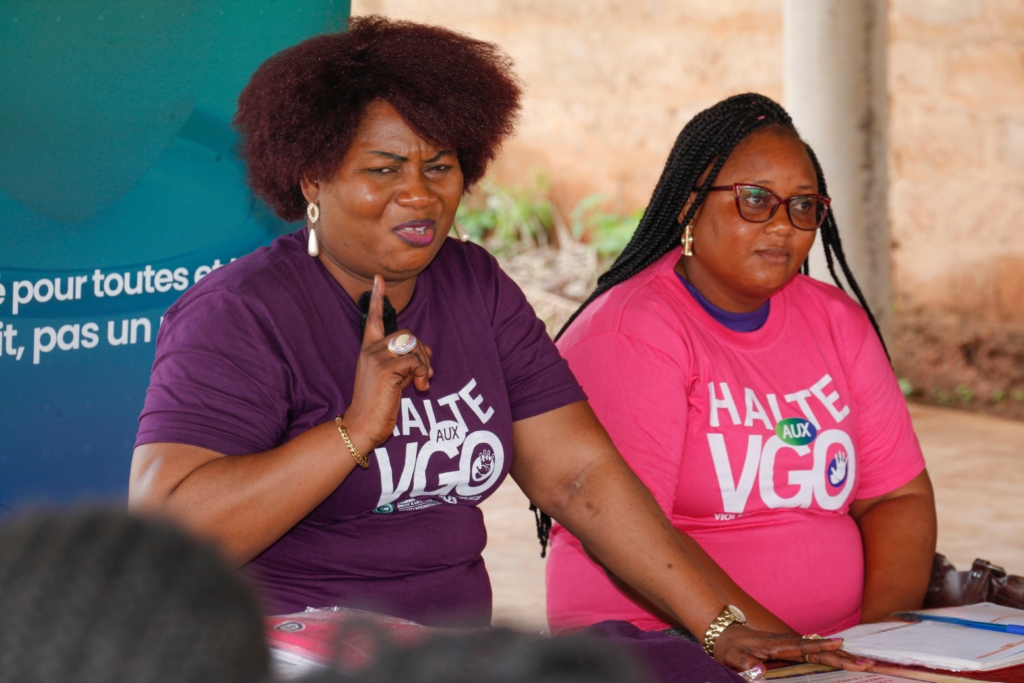
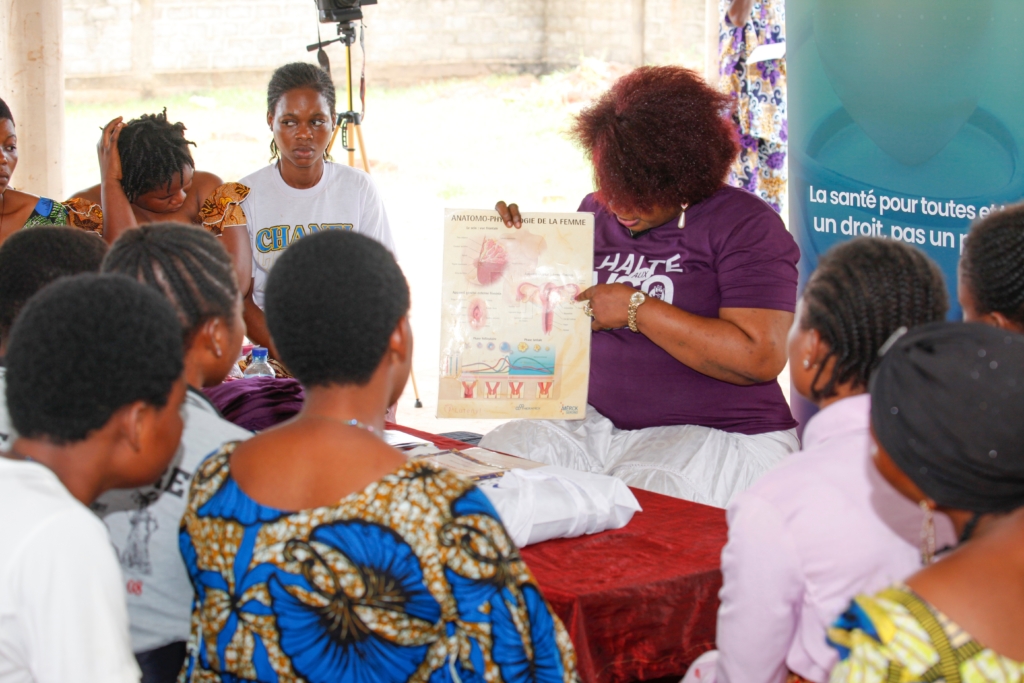
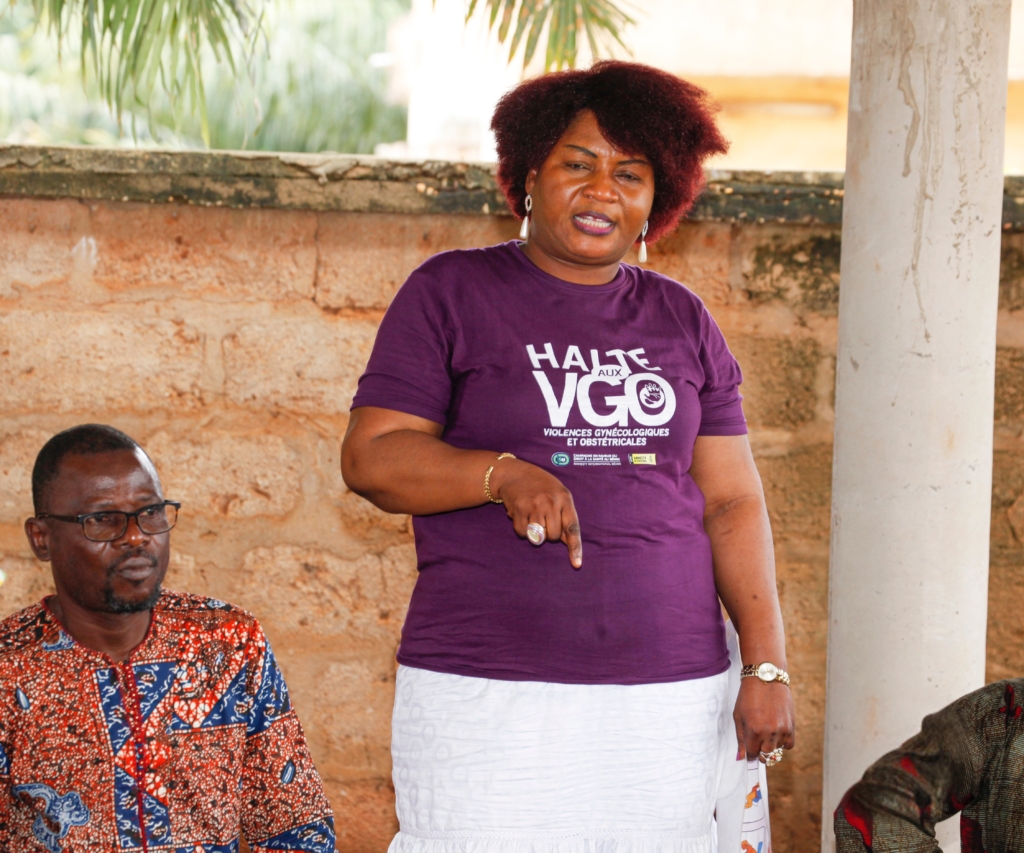
Beninese activist Annick Nonohou Agani during a community awareness session about gynecological and obstetric violence. © Amnesty International Benin
Bringing about change

Amnesty International’s campaign on the right to health has brought about change. We launched the Charter of Patients’ Rights and Responsibilities in September 2025 in collaboration with the Health Sector Regulatory Authority. We produced radio programs and conducted community awareness campaigns in all departments throughout Benin. This is the first time that gynecological and obstetric violence has been discussed in this way, and across the whole country.

We have detractors. People ask why we, as midwives, would talk about human rights. In their minds, we have nothing to do with that. But we have a vision, we have a goal. A paradigm shift is needed.

Most women do not know their rights, including those who have been to school. With social media today, some are beginning to be informed. An informed woman will not let herself be pushed around! Violence is beginning to decline, but we are not yet seeing public denunciations or complaints being filed… As a midwife, jurist, and activist, I am speaking out. Violence persists. It must be eliminated.”

Gender-based violence affects us all, but together we can create a safer world for everyone. 

Enroll on Amnesty’s online course on confronting and countering gender-based violence.

The post Annick Nonohou Agani: “I defend the rights of women who give birth in Benin” appeared first on Amnesty International.
Cambodia: Growing humanitarian crisis as escaped scamming compound survivors tell of murder, rape and torture

  • Thousands of stranded foreign nationals in dire need of consular assistance
  • Pregnant survivors report rape by compound bosses
  • ‘We had to force our way out’ – survivor

Thousands of people who recently escaped or were released from scamming compounds in Cambodia where they were subjected to grave abuses including rape and torture are now stranded and in urgent need of humanitarian assistance, Amnesty International said after gathering harrowing testimony from survivors.

Interviews with recently enslaved people – almost all foreign nationals – revealed a chaotic and dangerous situation for those who have been left without passports, money, medical care or any pathway to safety after leaving compounds run by criminal gangs. Amnesty spoke to 35 survivors, all of whom were released or had escaped within the past six weeks, including at least 11 released within the past week.

Survivors reported horrendous abuse. Several people told Amnesty of sexual assault by compound bosses, including at least two women who became pregnant as a result of attacks, while other gruesome punishments described included of a man who had his finger chopped off and another who had his throat cut.

 “This mass exodus from scamming compounds has created a humanitarian crisis on the streets that is being ignored by the Cambodian government. Amid scenes of chaos and suffering, thousands of traumatized survivors are being left to fend for themselves with no state support,” said Montse Ferrer, Amnesty International’s Regional Research Director.

“This is an international crisis on Cambodian soil. Our researchers have met people from Asia, Africa, Europe and the Americas. They are in urgent need of consular assistance in order to help get them home and out of harm’s way.”

‘Many people died’

Amnesty International estimates that thousands of people have been released or escaped from at least 17 scamming compounds across Cambodia in recent weeks. The testimony gathered appears to confirm mass escapes and releases from compounds observed in more than 25 videos geolocated by Amnesty International earlier this month. Many of those leaving compounds are stranded in the capital Phnom Penh and desperate for help.  Amnesty spoke to survivors from countries including Brazil, Indonesia, Myanmar, Nigeria, Sierra Leone, Liberia, Uganda, Kenya, Bangladesh, India, Philippines and Madagascar. 

Those interviewed reported no police or military presence during or since their escape/release, suggesting a lack of involvement from Cambodian authorities in the mass exodus from compounds. Some said they were met with beatings from guards when they tried to leave, while others were able to leave freely.

Amnesty spoke to two pregnant women who said they were raped by compound managers, while several other survivors reported sexual assault by managers. Many reported witnessing deaths in compounds, principally due to a lack of medical support blocked by compound managers. Others described witnessing torture or other cruel, inhuman or degrading treatment, including of a man who had his finger cut off as a punishment.

The people we have spoken to are deeply afraid. They urgently need their own governments to step in and help.

Montse Ferrer, Amnesty International’s Regional Research Director

One survivor told Amnesty International he witnessed the murder of a man who had his throat cut by a compound manager after he was caught trying to escape. Ten other survivors said police visited their compounds regularly, including to remove dead bodies, but without taking any action against the managers.

Another survivor *Delilah*, who escaped from a compound near Phnom Penh in Prey Veng, told Amnesty: “Many people died. We even try to put together money to help repatriate the bodies. People got sick but they don’t help us. I told them I couldn’t breathe.  When we forced our way out one guard shot his gun in the air. We had to force our way out because one guy is sick and he doesn’t want to die.”

In other cases, testimony suggested that compound managers had abandoned compounds leaving people free to leave.

Survivor *Mehi* said: “I had been in the compound for 12 months, fearing for my life. But one day several of us woke up and realized the compound managers had left the site and the security guards were gone. The doors and gates were left open and we walked out.”

Anti-trafficking groups in the area told Amnesty International the Cambodian government is not protecting or properly identifying victims of human trafficking, leaving them without support and vulnerable to exploitation by organized criminal groups operating in the area.

“The people we have spoken to are deeply afraid. They want to return home, but many have no passports or no money, let alone enough to purchase a flight out of the country,” Montse Ferrer said.

“The Cambodian authorities appear to be doing nothing to help, and NGO support is insufficient, especially in the wake of widespread aid funding cuts over the past year. These people urgently need their own governments to step in and help.”

Background

Amnesty International has previously interviewed more than 100 victims of the scamming industry who are often trafficked into compounds from outside of Cambodia where they are then enslaved, forced to scam or recruit others, deprived of their liberty and tortured if they do not comply with the orders of their bosses.

In July 2025, the Cambodian government announced a nationwide crackdown on scamming compounds in the country. The government later said it had freed more than 3,000 victims of human trafficking.

In June 2025, an Amnesty International report found that more than 50 scamming compounds across Cambodia were sites of widespread slavery, human trafficking, forced labour, torture and other human rights abuses, operating as prison‑like facilities controlled by organized criminal groups. The report concluded that Cambodian authorities had failed to prevent or address these violations, with evidence pointing towards state complicity or deliberate inaction that had allowed the industry to flourish.

The post Cambodia: Growing humanitarian crisis as escaped scamming compound survivors tell of murder, rape and torture appeared first on Amnesty International.

Global: US withdrawal from landmark Paris Climate Agreement threatens “a race to the bottom”

Responding to the withdrawal of the United States of America from the Paris Climate Agreement, Marta Schaaf, Amnesty International’s Programme Director for Climate, ESJ and Corporate Accountability, said:

“The US withdrawal from the Paris Agreement sets a disturbing precedent that seeks to instigate a race to the bottom, and, along with its withdrawal from other major global climate pacts, aims to dismantle the global system of cooperation on climate action.  The US is one of several powerful anti-climate actors but as an influential superpower, this decision, along with acts of coercion and bullying of other countries and powerful actors to double down on fossil fuels, causes particular harm and threatens to reverse more than a decade of global climate progress under the agreement.

“While the US may no longer be a party to the Paris Agreement, it still has legal obligations to protect humanity from the worsening impacts of climate change as confirmed by the International Court of Justice in its landmark 2025 Advisory Opinion.

“US-based climate advocates and activists now find themselves on the frontlines of a fight with implications for current and future generations everywhere. Global solidarity and support to ensure accelerating momentum to address climate change has never been more urgent. Those who witness the harms caused by climate change and who can speak safely – must speak up. Other governments too must push back against all coercive efforts by the US. Ceding ground now risks losing it for years. Neither the planet nor the people living on the frontlines of proliferating unnatural disasters have that much time.”

While the US may no longer be a party to the Paris Agreement, it still has legal obligations to protect humanity from the worsening impacts of climate change as confirmed by the ICJ in its landmark 2025 advisory opinion.

Marta Schaaf, Amnesty International’s Programme Director for Climate, ESJ and Corporate Accountability

Background

The Paris Agreement is a legally binding international treaty adopted more than a decade ago by 196 parties aimed at combating climate change by pursuing efforts to limit global warming to 1.5°C – a threshold that the world is rapidly surpassing.

The US withdrawal from the Paris Climate Agreement comes into effect tomorrow, 27 January, following an executive order signed by US President Trump in January 2025. Just earlier this month, the US also declared it will withdraw from United Nations Framework Convention on Climate Change (UNFCCC), Intergovernmental Panel on Climate Change (IPCC) and Green Climate Fund (GCF).

President Trump has also called for US withdrawal from over 60 other international organizations, including many others related to climate change, biodiversity and clean energy, calling them ‘wasteful, ineffective, or harmful’.

The post Global: US withdrawal from landmark Paris Climate Agreement threatens “a race to the bottom” appeared first on Amnesty International.

Global: Misuse of Interpol red notices to target dissidents a grave institutional failure

Reacting to media reports that states such as Russia, Türkiye and Tajikistan are extensively misusing Interpol red notices to target political dissidents and to repress human rights defenders, Erika Guevara Rosas Senior Director for Research, Advocacy, Policy and Campaigns of Amnesty International said:

“Media reports that Interpol red notices are being extensively misused, without internal scrutiny, to target dissidents, critics and activists are deeply concerning. Amnesty International, UN experts and other organizations have raised concerns about states’ misuse of international policing mechanisms for political purposes, and has documented instances of governments engaging in transnational repression of human rights defenders.

“Red notices should never be used for political purposes and Interpol must be willing to suspend states who misuse their processes. These reports must be urgently and independently investigated.

“Interpol’s failure to sanction or even challenge the states repeatedly involved in these practices casts doubt over its credibility as an institution. Interpol must strive for far greater transparency. The fact that these failures only came to light through a whistleblower is a damning indictment of its organizational culture. It is time for Interpol to clean up its act and to stop serving states’ political interests.”

Background

On 26 January 2026 BBC World Service and Disclose revealed the extent of states’ apparent abuse of Interpol’s wanted lists to target dissidents, critics and activists abroad. According to the media outlets’ analysis of thousands of files provided by a whistleblower, Interpol’s own independent complaints unit received more complaints about Russia than any other state. These complaints, generally coming from people who were targeted, led to more Russian cases being overturned than for any other country.

Interpol red notices are requests to worldwide law enforcement bodies to locate and provisionally arrest a person pending extradition, surrender, or similar legal action. Interpol’s constitution expressly states that the organization cannot be used ‘to undertake any intervention or activities of a political, military, religious or racial character’.

Amnesty has documented the misuse of these notices for political purposes and called on states and Interpol to apply greater scrutiny to politically motivated requests. Amnesty International will continue to campaign against the misuse of international policing mechanisms and for the protection of people at risk of human rights violations.

The post Global: Misuse of Interpol red notices to target dissidents a grave institutional failure appeared first on Amnesty International.

Myanmar: Jet fuel used in deadly air strikes flowing in on ‘ghost ships’ with suspected links to Iran

  • Myanmar military relies on ghost fleet to import jet fuel, evidence points to Iran links
  • 2025 is deadliest year on record for aerial attacks by military
  • More aviation fuel imported in 2025 than in any year since military coup

Aviation fuel used by the Myanmar military to launch deadly air strikes on civilians continues to enter the country via a murky supply chain that has “gone rogue” five years after the junta seized power, a new investigation by Amnesty International has found.

Amnesty’s analysis of trade, shipping, satellite and port authority data indicates that the Myanmar military is adopting the reported sanction-evasion tactics of countries such as Russia, Iran and North Korea by importing jet fuel on “ghost ships” which turn off their location-tracking Automatic Identification System (AIS) radar to avoid detection.

Such methods make it virtually impossible to identify the supplier. However, Amnesty International has tracked multiple shipments of aviation fuel to Myanmar since July 2024 – including on two US-sanctioned vessels with a history of exporting fuel from Iran. According to Kpler, a commodity intelligence platform that tracks global flows of fuels and other commodities, all shipments on these two vessels are assumed to be from Iran, while satellite imagery reviewed by Amnesty International points to a likely Iran connection.

Significantly, Myanmar Port Authority data shows that at least 109,604 metric tonnes of aviation fuel were imported into Myanmar in 2025, a 69 percent increase from 2024 and the highest amount in any year since the coup – despite sanctions imposed to stop fuel reaching the country.

“Five years after the coup, our analysis shows that the Myanmar junta continues to evade sanctions and find new ways to import the jet fuel it uses to bomb its own civilians – with 2025 being the deadliest year on record for aerial attacks since the junta takeover in 2021,” said Montse Ferrer, Amnesty International’s Regional Research Director.

“As aviation fuel shipments into the country increase despite sanctions and the well-documented surge in aerial attacks against civilians, the international community must do more to stop companies and governments facilitating a supply chain that has increasingly gone rogue. Every day of inaction will cost more lives.”

Ghost vessels bring deadly cargo to Myanmar

Amnesty International’s investigation confirmed the delivery of at least nine separate shipments of aviation fuel to Myanmar by four vessels between mid-2024 and the end of 2025, while also uncovering significant changes to how aviation fuel has entered Myanmar during this period.

One notable development was the import of fuel using ‘ghost ships’, which turn off their AIS during onloading and/or offloading – also known as “going dark” – and in some cases intentionally broadcast false or manipulated vessel positions to conceal the ship’s real location (known as ‘spoofing’).  

Such vessels may also repeatedly change their name, flag or ownership, and often load fuel through open-water ship-to-ship (STS) transfers, instead of in ports and terminals.

Such methods make tracking of the shipments and the suppliers extremely complicated. However, Amnesty has confirmed the import of aviation fuel to Myanmar on the following four vessels since mid-2024:

  • HUITONG 78 (IMO 9646479, now called BARAAWE 1) – Chinese-flagged vessel delivered one shipment in July 2024, following at least nine other shipments in 2023/2024.  The 12 July shipment to the Myan Oil terminal in Yangon happened while the vessel appeared to have its AIS radar off. According to AIS data analysis and satellite imagery, it likely loaded in Fujairah’s offshore anchorage area (FOAA) in the United Arab Emirates, an offshore area designated for bunkering, STS oil-product transfers and other maritime services, where it was sighted between 13-26 June.
  • YONG SHENG 56 (IMO 9657507, now called LS MERCURY) – Chinese-flagged vessel transported one shipment on 30-31 July 2024. Like the HUITONG 78, AIS data indicates that the YONG SHENG 56 was at FOAA, UAE, between 15-29 June and then travelled to Myanmar to offload.
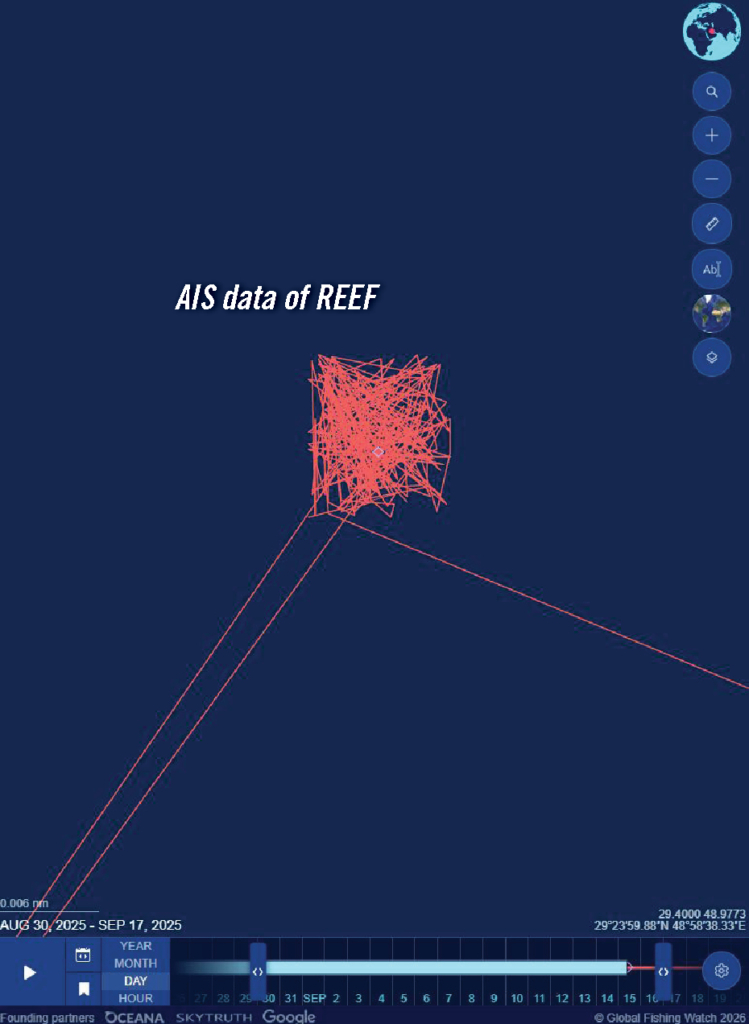
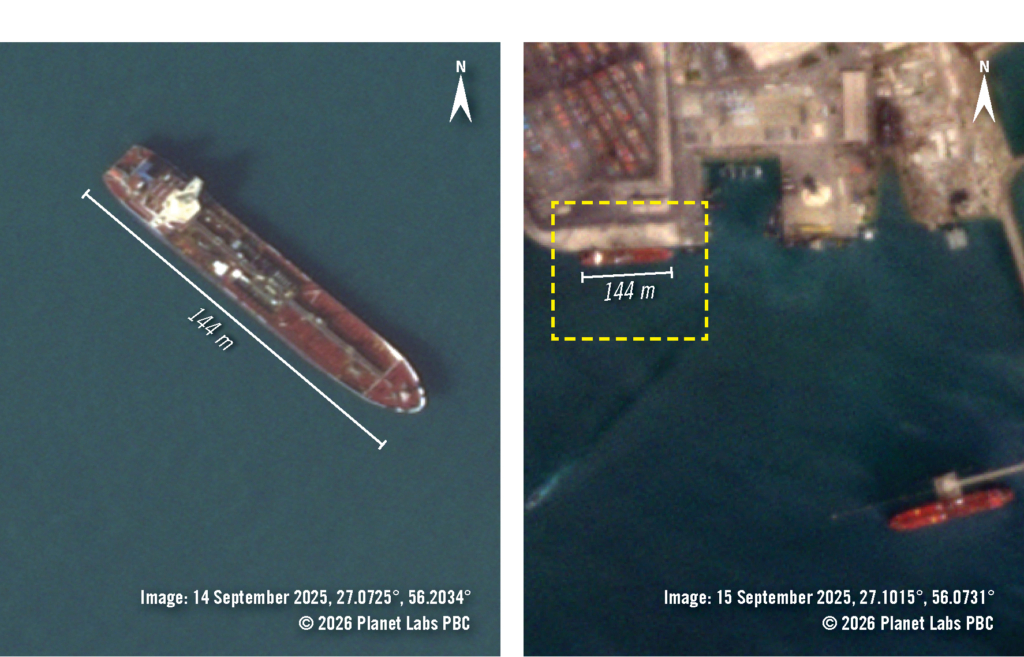
  • REEF (IMO 9263382, formerly BALTIC HORIZON) – Guinea-flagged vessel delivered shipments in Oct 2024, July 2025 and October 2025. Although its AIS data places the vessel near Kuwait and again near the UAE at the time of presumed onloading, this contradicts other verified information including satellite imagery, analyzed by Amnesty International’s Evidence Lab, which places this vessel at Bandar Abbas, Hormozgan province, Iran, with high confidence, in September 2025. During the same timeframe, the AIS data of the vessel also displays unnaturally geometric “box‑shaped” loitering patterns over 750 km from Bandar Abbas port, where no ships of similar size to REEF are present. This is inconsistent with normal navigation, indicating AIS manipulation or spoofing.
  • NOBLE (IMO 9162928, formerly ASTRA) – Guinea-flagged vessel delivered four shipments between January and June 2025. AIS data and satellite imagery indicate it loitered at FOAA, UAE, before traveling to Myanmar where it turned off its AIS radar. In at least one of the shipments, however, satellite imagery places NOBLE at Bandar Abbas, Hormozgan province, Iran, after FOAA and before arriving in Myanmar (June 2025 delivery). 

The image above shows the mapped AIS data of REEF (IMO 9263382) while loitering inside the Iranian EEZ (29.3996°, 48.9778°) in September 2025. The data forms a box-like pattern which is atypical for ships loitering and is likely an indication of spoofed data. Further, satellite imagery did not show a ship of similar dimensions to REEF in September.

While Amnesty International was unable to confirm the suppliers or origin of the aviation fuel, several indicators point to an Iran connection.

NOBLE and REEF both have a documented history of transporting sanctioned fuel from Iran, according to the US Office of Foreign Assets Control (OFAC), and both REEF and NOBLE have been sighted at Iran’s Bandar Abbas port in the last 13 months. In addition, Kpler assumed – drawing on AIS data, satellite imagery, customs information and other sources – that all of NOBLE and REEF’s shipments were from Iran.

Finally, the vessels involved display behavioural patterns characteristic of “ghost fleet” tankers, including AIS gaps, anomalous tracks or spoofing, and opaque STS transfers, which mirror methods commonly used by tankers that move sanctioned fuel from Iran.

High resolution satellite imagery from 14 September 2025 (left) shows a ship with the same measurements and layout as REEF (IMO 9263382) loitering approximately 7 km offshore of Bandar Abbas and over 750 km from the AIS signal location. The ship is present in imagery on 12, 13, 14 September and is no longer visible on 15 September. On 15 September, lower resolution imagery (right) shows a ship of the same size and layout newly at a pier in Bandar Abbas. The ship is in that location up to 17 September 2025.

Background

Since the military coup in Myanmar in February 2021, Amnesty International has documented a persistent and evolving supply chain enabling Myanmar’s military to obtain aviation fuel used in unlawful air strikes against civilians. Amnesty has called for a ban on aviation fuel and withdrawal of all companies involved in the supply chain to prevent further civilian harm.

Amnesty International’s Deadly Cargo report, published in collaboration with Justice for Myanmar in November 2022, revealed that multinational companies based in Singapore and Thailand were part of a supply chain that delivered Jet A‑1 aviation fuel to Myanmar.

Following sanctions introduced in 2023 targeting parts of the jet fuel supply chain, Amnesty International’s January 2024 analysis and July 2024 findings found a major shift in methods. Direct sales diminished; instead, fuel was bought and resold multiple times to obscure its origin. At least nine shipments reached Myanmar in 2023 and early 2024, many routed through a Viet Nam storage unit, revealing deliberate sanctions‑evasion tactics.

The post Myanmar: Jet fuel used in deadly air strikes flowing in on ‘ghost ships’ with suspected links to Iran appeared first on Amnesty International.