
Poland: State of emergency risks worsening already dire situation for 32 asylum-seekers at border

Spokespeople available for interview 

The Polish government’s declaration of a “state of emergency” at the border with Belarus presents serious risks for asylum-seekers trying to reach Poland and threatens to exacerbate the already dire situation faced by 32 Afghans including four women, 27 men and a 15-year-old girl, who have been held there without adequate food and clean water for over three weeks, after being pushed back from Poland, Amnesty International said. 

The state of emergency will restrict the already limited access and work of journalists reporting on the issue as it bans the use of recording equipment in the area. It will also hinder the work of lawyers assisting the asylum-seekers, as well as NGOs and activists carrying out vital human rights monitoring.

“A state of emergency allows a state to restrict certain human rights in extreme circumstances where there is a “threat to the life of the nation”. No such threat exists in Poland where the authorities are attempting to cynically exploit this power to target asylum seekers and those who support them,” 

Nils Muižnieks Director for Europe at Amnesty International

Finally, on 1 September, the UNHCR and Belarusian Red Cross with the support of Polish Red Cross brought humanitarian help to the group of Afghan asylum-seekers held at the border.

“While UNHCR and Red Cross have provided basic support, we remind the Polish authorities to fully comply with last week’s European Court of Human Rights order to provide those stuck at the border with food, water, clothing, adequate medical care and shelter. It must also ensure individual assessment of all asylum claims, and enable organizations, lawyers and other institutions to gain unhindered access to the group,” Nils Muižnieks said.

There are reports that Belarusian border guards are helping people to cross over into Poland, Lithuania and Latvia. On 6 July, Belarusian President Alyaksandr Lukashenka announced that he would not stop people crossing the border into those countries. However, this must not be used as an excuse for unlawful pushbacks of asylum-seekers and denial of access to the asylum procedure.

Under EU and international refugee law, Poland is obliged to ensure individual assessment of all asylum claims. Amnesty International calls on Poland’s government to end pushbacks, to ensure access to the territory for those seeking protection, and to immediately provide refugees held at the border with Belarus with essential humanitarian assistance.

For more information or to arrange an interview, please contact:        

Alison Abrahams on alison.abrahams@amnesty.org +32 483 680 812  or press@amnesty.org +44 20 7413 5566    

Amnesty International Urgent Action on the situation at Usnarz Górny

On 24 August an Amnesty International delegation visited Usnarz Górny, where the group had been held for 15 days. Amnesty International also obtained reports about the use of force and threats of violence by Polish border guards when pushing the group back to Belarus.

Since the group arrived at the border the Polish government announced changes to two laws: one on foreigners, and another on granting protection to foreigners. These changes will make it impossible for people crossing the border irregularly to be able to claim asylum in Poland. On 20 August, Poland’s Ministry of Interior issued an order to close its borders to persons entering the country “irregularly” and obliging them to immediately leave the territory of Poland until further notice.

On 25 August, soldiers of Poland’s army started building a fence on the border with Belarus. On 31 August, the Polish government requested the President of Poland to declare a state of emergency for 30 days in the regions bordering Belarus, on the grounds of risks posed by the “3,000 attempted border crossings in August”. The declaration of the state of emergency would include a ban on assemblies, protests, mass events, and cultural events, among others.

The post Poland: State of emergency risks worsening already dire situation for 32 asylum-seekers at border appeared first on Amnesty International.

France: Sentencing of police officer who assaulted Calais volunteer sends powerful message against impunity

Responding to the decision by a French court to sentence a police officer who assaulted Tom Ciotkowski, a British volunteer who was supporting asylum seekers in Calais in 2018, and then made false statements against him, Katia Roux Amnesty International Advocacy France’s, said:

“This is an important decision in a case that has become emblematic of the attacks by police on asylum seekers and the human rights defenders who support them.

“This prosecution which was only successful due to video evidence and determination of a small group of campaigners, will hopefully send a clear signal that the impunity for police violence will no longer be tolerated.

Tom Ciotkowski said:

“It has been a long and stressful three years, but I am pleased to see the police being held to account for their actions. If police abuses are left unchecked and unpunished the whole system rots from within. It is vital that such instances are able to be recorded and brought to light.”

“I dread to think what might have happened if myself and others were not able to film the incident. I could very well be the one being convicted today. I hope this decision contributes to a rethink of the hostile environment policy towards asylum seekers in Calais and elsewhere and that a new, compassionate approach is taken to the people struggling there and those trying to help them.”

For more information or to arrange an interview contact: 01 53 38 65 41 I 06 76 94 37 05 vtardivel@amnesty.fr or stefan.simanowitz@amnesty.org

BACKGROUND

Volunteer Tom Ciotkowski was pushed violently by police in 2018, charged with contempt and assault after he recorded a French police officer pushing another volunteer in Calais in 2018. Instead of being treated as a victim of police violence, he was dragged through the courts on trumped up charges until he was finally acquitted in June 2019.

His original prosecution reflected a wider European trend of criminalizing acts of solidarity, as a way of discouraging people from standing up in defense of the rights of migrants and refugees.

For more information see Amnesty’s the criminalization of solidarity report here https://www.amnesty.org/en/documents/eur01/1828/2020/en/0

The post France: Sentencing of police officer who assaulted Calais volunteer sends powerful message against impunity appeared first on Amnesty International.

Lebanese authorities must not deport six detained refugees to Syria

The Lebanese authorities must not deport six Syrian refugees who were arrested last week after collecting their passports from the Syrian embassy, Amnesty International said today, urging them to release the refugees or charge them with a recognizable offense.

A Lebanese army statement on 28 August confirmed that its intelligence directorate had over the past four days arrested the six men outside the embassy for entering the country irregularly, and that they had been handed over to the General Security directorate. The family do not know their whereabouts. Amnesty International believes they are now at imminent risk of deportation to Syria. 

“Lebanon’s General Security directorate must ensure that these men are not forcibly returned to Syria. Doing so could endanger their lives. Arbitrary detention, enforced disappearance and torture remain rife in Syria, and armed hostilities in some parts of the country have intensified significantly in recent months. No part of Syria is safe for returns, and these men must be protected,” said Lynn Maalouf, Deputy Director for the Middle East and North Africa at Amnesty International.

“Under international law, the prohibition of refoulement means that no one should be returned to a country where they are at real risk of serious human rights violations. Deporting these men would be a serious violation of Lebanon’s international obligations, including under the UN Torture Convention. Instead, Lebanese officials should release them or charge them with a recognizable offense.”

Lebanon began deporting Syrian refugees following a decision by the Higher Defence Council on 13 May 2019. 

Amnesty International spoke to the brother of one of the men. He said his brother had received a call from the embassy on 26 August, telling him to come and collect the passport he had applied for on 19 August. 

The man believes his brother was arrested after collecting the passport at the embassy, because he sent him a message saying he had the passport. He had entered Lebanon on 18 August with three other Syrians.

“My brother sent me a text message when he arrived to the Syrian embassy and sent another when he got his passport. After that, I didn’t hear back from him. My messages are not reaching him. I have no idea where he is. But I am assuming that he was in the embassy when he contacted me saying he picked up the passport,” he said. 

Under international law, the prohibition of refoulement means that no one should be returned to a country where they are at real risk of serious human rights violations.

Lynn Maalouf, Deputy Director for the Middle East and North Africa at Amnesty International

Five of the six men are believed to be from Daraa governorate in southern Syria, where violent clashes between Syrian government forces and armed groups have intensified in recent months. Hundreds have been killed or injured and tens of thousands of civilians have fled the area. Government forces have also placed a deadly siege on Daraa al-Balad.

Given the recent intensification of hostilities in Daraa al-Balad, Amnesty International is calling on the Lebanese and Jordanian authorities to allow people fleeing conflict in Syria legal entry and safe refuge. 

“The plight of these men should serve as a reminder of the growing risks faced by Syrian refugees in neighbouring host countries as well as the woefully insufficient numbers of international resettlement places available for refugees who have fled conflict and crisis in their home countries. We urge states worldwide, including EU member states, to do their fair share to protect refugees by boosting the number of resettlement places on offer,” said Lynn Maalouf.

The post Lebanese authorities must not deport six detained refugees to Syria appeared first on Amnesty International.

Chile: Amnistía Internacional envió un llamado a mandatarios europeos por su encuentro con el presidente Piñera

Ahead of the visit of Chilean president Sebastián Piñera to Spain, France, Italy and the United Kingdom, Amnesty International has sent a letter to each of the leaders of these European countries expressing its concern about the serious human rights violations and impunity that continue to put all people in Chile at risk and involve a continued failure to meet the state’s obligations in relation to justice, reparation for victims and their families, and guarantees of non-repetition.

“Almost two years on from the protests that began in October 2019 and the widespread attacks against the protestors by the Chilean Carabineros, investigations into serious human rights violations and possible crimes against humanity are making little progress,” said Erika Guevara-Rosas, Americas director at Amnesty International.

“No strategic commander has been prosecuted to date, and in many cases the same officials who are alleged to have committed human rights violations are still in their posts in charge of controlling the protests. The international community cannot be complicit in this impunity by remaining silent.”

Investigations into serious human rights violations and possible crimes against humanity are making little progress.

Erika Guevara-Rosas, Americas director at Amnesty International

Amnesty International has called on the authorities in Spain, France, Italy and the United Kingdom, in their exchanges with President Sebastián Piñera, to express how important it is that the Chilean authorities: 

  • Ensure that the National Prosecutor’s Office and the Judiciary have all the information and resources necessary to carry out prompt, thorough, impartial, and independent investigations into each of the responsibilities within the Carabineros’ line of command that were key in allowing the right to physical integrity to be widely violated in the context of the social demonstrations that began in October 2019.
  • Adopt all necessary measures to provide reparation to the victims and their families, including adequate rehabilitation, care and reparation for victims of ocular trauma, respecting all international standards of integral reparation applicable. In particular, the current Comprehensive Eye Reparation Programme (PIRO) should be strengthened, in response to the many criticisms raised by the victims themselves who are beneficiaries of this programme.
  • Promote the structural reform of the police institution Carabineros de Chile so as to effectively ensure that law enforcement agencies strictly follow international standards on the use of force, respect the life and physical integrity of all people and have effective mechanisms of accountability, both to civilian authorities and to the public.
  • Take all other necessary measures to protect freedom of expression and peaceful assembly and prevent the recurrence of events such as those documented by Amnesty International.

Amnesty International hopes that the meeting between the Chilean President and his European counterparts will be an opportunity to advance the protection and promotion of human rights in Chile.

Additional information:

Amnesty International has documented the widespread violation of the right to physical integrity by Carabineros officers during the protests that began in October 2019, which have undoubtedly marked a milestone in Chile’s recent history, due to the massive scale of the social demands and multiple repercussions at the social and political level. According to updated figures from the Public Prosecutor’s Office and the National Institute of Human Rights, there are more than 8,000 victims of state violence and more than 400 cases of eye trauma.

Amnesty International found sufficient evidence to argue that the widespread violations demonstrate a pattern of conduct that reveals an intention to harm demonstrators in order to silence protest, or accept such harm as a necessary evil. The scale and consistency of the human rights violations and possible crimes under international law committed could have been avoided, but the strategic and operational commanders of the police institution deliberately failed to implement certain measures within their power. They also deliberately allowed impunity within the institution and obstructed the Prosecutor’s Office’s access to information.

For more information or to arrange an interview, please contact:

Duncan Tucker (Amnesty International Americas): duncan.tucker@amnesty.org;

Ilsen Jara (Amnesty International Chile): ilsen.jara@amnistia.cl

The post Chile: Amnistía Internacional envió un llamado a mandatarios europeos por su encuentro con el presidente Piñera appeared first on Amnesty International.

Angelina Jolie and Amnesty International remind the world of its commitment to children’s rights with a book some adults won’t want children to read

Angelina Jolie and Amnesty International have joined forces to create a resource for children and young people to learn about their rights, with the publication of a new book which empowers teenagers to speak out against injustice.

Know Your Rights and Claim Them explains what child rights are, equips young people with the knowledge they need to protect themselves and others, and shows how governments are failing to uphold their commitment to child rights. It was written in collaboration with Professor Geraldine Van Bueren QC, one of the original drafters of the UN Convention on the Rights of the Child.

Angelina Jolie said:

“If governments kept their word, and if all adults respected children’s rights, there would be no need for this book. Children have rights just as adults do and they should have the power and agency to claim them.

“Know Your Rights and Claim Them is the book some adults don’t want children to read, as it will arm them with the knowledge to defend their rights and those of others.

“Governments signed up to protect children’s rights in 1989, yet many of them are still failing to listen to the voices of children. In some countries, girls as young as nine are forced into marriage. Globally, more than 61 million children don’t attend primary schools and, in 2019, one in six children were living in extreme poverty – a number that rose significantly during the pandemic. It’s time to remind the world of its commitment to children’s rights.”

Angelina Jolie and Amnesty International have joined forces to create a resource for children.

The book is available in bookshops in the UK from today, and available for pre-order in USA, Australia, New Zealand and Greece. With other countries including South Korea, Denmark and Germany following close behind. The authors’ goal is for the book to be published in all languages and countries, empowering many millions of young people to know and claim their rights.

The social and economic effects of the COVID-19 pandemic provide a stark reminder that many human rights issues have a disproportionate impact on young people and when it comes to issues that directly affect them, their voices are rarely heard or listened to. Know Your Rights and Claim Them aims to equip young people with the knowledge they need to stand up and have their say.

The book sets out how the concept of children’s rights came into being through the UN Convention on the Rights of the Child, which was designed to give children the right to a voice and to participate in all decisions that affect them. It also features how-to guides, along with the stories of a number of incredible young activists who are at the forefront of human rights change around the world. Whether campaigning on climate change, demanding access to education, or speaking out against racial discrimination and gun violence, these inspirational young people demonstrate the power of standing up for what we believe in.

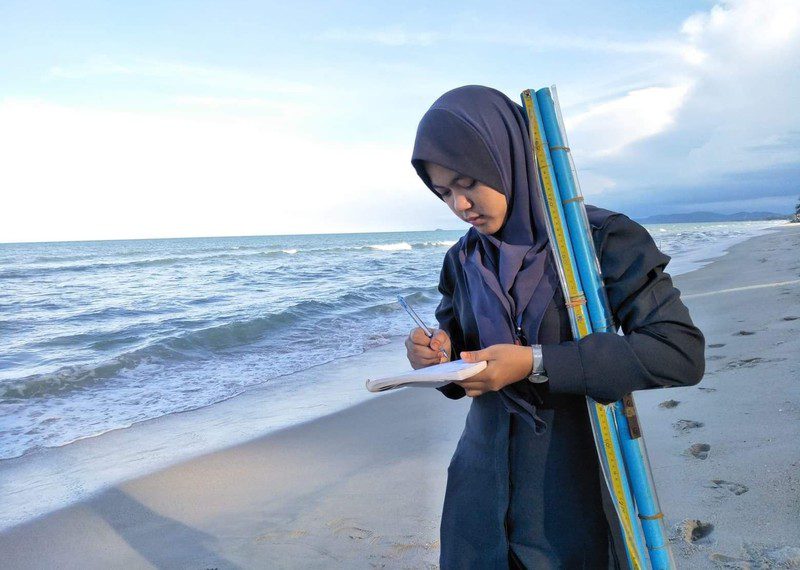
Khairiyah Rahmanyah, 19, was born to a fishing family who live close to the sea in southern Thailand. The sea near her home is a rich source of seafood and home to endangered marine species, such as sea turtles and rare pink dolphins. In 2020, when she was 17, Khairiyah launched a campaign against the Thai government’s plan to develop her village, Chana, into an industrial estate. As a result, the government decided to postpone their decision. However, the project has not been dropped, and the fight for her community continues.

Khairiyah Rahmanyah, 19, from Thailand.

“Words cannot explain how I feel to be part of this book,” said Khairiyah, who spent hours picketing, and travelled 1,000 kilometres to Government House in Bangkok to deliver a letter to the prime minister begging him to stop the development.

“I am really proud to be representing the stories of my community. I was born into activism and I have been fighting to protect my community since I was little. It has been painful to live this reality and I want life to be different for the next generation. As children, we must be allowed to learn about our rights and it’s up to adults to encourage, empower and support us.”

Children have a right to life, dignity and health; identity; equality and non-discrimination; a safe place to live; protection from harm; participation (including the right to be heard); bodily integrity; protection from armed violence; justice and liberty; privacy; minority and Indigenous rights; education; play; freedom of thought; and voice and peaceful protest. 

There are about 2.3 billion children in the world, nearly a third of the total human population. Given the devastating impact of the global pandemic on children and young people, it’s never been more crucial to arm them with the knowledge they deserve. This is their right – and it’s time for the world to listen and act.   

Agnès Callamard, Amnesty International’s Secretary General, said:

“We must all tackle the human rights issues of today, with an eye on the future, knowing we are accountable to the world of 2030. Not only must we ask ourselves – ‘how are our actions impacting the children of tomorrow?’ – we need to make sure that children are setting the agenda for the years to come. That can only happen if they know their rights and how to claim them.

“When children don’t, they’re at risk of abuse, discrimination, and exploitation, often at the hands of adults. They’re also at risk of being overlooked, unable to participate in important decisions about the world they live in and the problems they will inherit. Amnesty International is campaigning to ensure children’s rights are a priority for governments across the world.

“That’s why, alongside the book, we have launched an online human rights education course featuring young activists, which will serve as a powerful tool to empower young people and others to claim their rights across the world. When young people are educated about their rights, they are empowered to defend them, to stand up against injustice against themselves and others. Knowledge is key. We will all benefit from a world in which child rights are upheld.”

Know Your Rights and Claim Them will be released in the UK on 2 September 2021, with publication in Australia, Greece, New Zealand and USA to follow in October. The book will be available online and from all good bookshops. Amnesty International’s online human rights education course will be available on 2 September.

Join Angelina Jolie in conversation with some of these young people over Zoom tonight at 1830 BST/10:30 AM PST.

The post Angelina Jolie and Amnesty International remind the world of its commitment to children’s rights with a book some adults won’t want children to read appeared first on Amnesty International.