USA: Landmark YouTube and Meta social media ruling must lead to design changes to guarantee online safety

Responding to a US jury finding that Meta and YouTube were liable for designing platforms that are harmful to children and young people, Erika Guevara-Rosas, Amnesty International’s Senior Director of Research, Advocacy, Policy and Campaigns, said: 

“This damning verdict is a landmark moment in recognizing the harm caused by tech giants in the manipulative designs of their social media platforms. For years, social media companies including Meta and YouTube have profited from targeting children and young people with addictive design features that prioritize engagement over wellbeing. They have deliberately built into their platforms features such as infinite scroll, autoplay, and persistent notifications that are engineered to ‘hook’ young users into compulsive use. 

“The toxic impact of these unsafe design features was laid bare during the trial when 20-year-old KGM told the court in Los Angeles how she began using YouTube at just six and Instagram at nine. She described being online ‘all day long’ as a child. Over time, her compulsive use of these social media platforms intensified, leaving her struggling with addiction and deepening depression. 

“This court decision is clear: these platforms are unsafe by design and meaningful change is urgently needed. 

Erika Guevara-Rosas, Amnesty International’s Senior Director of Research, Advocacy, Policy and Campaigns

“Rather than using blunt tools like banning young teens from social media, states must require a fundamental overhaul of how these platforms operate, including addressing their addictive design. This is the only path to a truly safe social media.” 

Background 
 
Delivering the landmark judgement in KGM’s case, jurors said Meta and YouTube were negligent and ordered them to pay $6 million in damages. Meta and Google have both both stated separately that they disagree with the verdict and will appeal.  

Snap, the owner of Snapchat and TikTok were initially part of the case, but both companies reached a settlement before trial. 

The ruling could influence a raft of other cases accusing social media companies of causing children and young people harm. 
 
In a separate case in New Mexico, a jury also found Meta liable for harms to the mental health and safety of children in the state and ordered it to pay a hefty fine though Meta has indicated that it will appeal the decision. 

The post USA: Landmark YouTube and Meta social media ruling must lead to design changes to guarantee online safety appeared first on Amnesty International.
EU: European Parliament greenlights punitive detention and deportation plans

Responding to the European Parliament’s vote on its position on the European Union (EU) Return Regulation today, Eve Geddie, Director of Amnesty International’s European Institutions Office, said:

“Today the European Parliament has voted to expand the EU’s punitive and restrictive detention and deportation plans. This agreement – the result of a collaboration between the European People’s Party and political groups that support anti-migration policies – was rushed through negotiations without adequate scrutiny or meaningful human rights assessments.

“This marks a growing trend towards increasingly harmful, exclusionary, and draconian policies on migration, with worrying repercussions for due process and evidence-based policymaking. Far from reducing irregularity, these proposals risk trapping more people in precarious situations.

“Today, the European Parliament has voted to ramp up disproportionate requirements, sanctions and restrictions on people issued with a return decision, and to vastly expand its use of detention and for far longer periods, falling short of international legal standards.

“People will also risk being sent to ‘return hubs’ – offshore detention centres – in countries where they have never set foot. Amnesty International is unequivocal: return hubs carry grave risks of rights violations, cannot be implemented in a human rights compliant manner, and should be rejected in full.”

Background

The European Commission presented a proposal for a Return Regulation to replace the existing Return Directive in March 2025. In December 2025, Amnesty International warned that the European Council’s negotiating position on this proposal entailed “unprecedented detention, sanctions, and stripping of rights based on migration status.”

On 9 March 2026, the European Parliament’s Civil Liberties, Justice and Home Affairs (LIBE) Committee adopted its position on the Return Regulation. This followed rushed negotiations and votes on two different texts, including an alternative compromise by the European People’s Party with support from the European Conservatives and Reformists, Europe of Sovereign Nations and Patriots for Europe. It was this text that both received the LIBE Committee’s final support and was endorsed today as Parliament’s negotiating position on the reform.

Today’s vote paves the way for trilogue negotiations with the Council before the Regulation can be formally adopted. These are expected to advance quickly.

For further information please see:

Joint statement over 200 civil society organizations calling for deportation rules to be rejected

The post EU: European Parliament greenlights punitive detention and deportation plans appeared first on Amnesty International.

Georgia: Opposition politician Elene Khoshtaria given politically motivated prison sentence for graffiti

Reacting to the sentencing of opposition politician Elene Khoshtaria to one year and six months’ imprisonment for writing a slogan on an election poster, Denis Krivosheev, Amnesty International’s Eastern Europe and Central Asia Deputy Director, said:

“For a symbolic act of protest – writing barely visible graffiti on a street poster – Elene Khoshtaria will spend a year and a half in prison. This is yet another example of the criminal justice system being instrumentalized to punish dissent. Criminal sanctions for non-violent minor offences committed while peacefully expressing dissent are likely to be a disproportionate restriction of freedom of expression. In these cases, prison sentences should be avoided.

“In Elene Khoshtaria’s case, the severity of the punishment appears related not to material damage, but to her political opinions and the symbolic damage she has inflicted on the ruling party. The authorities must immediately release her, review her sentence, in particularly by quashing the prison term, and end all politically motivated trials without delay.”

In Elene Khoshtaria’s case, the severity of the punishment appears related not to material damage, but to her political opinions and the symbolic damage she has inflicted on the ruling party. The authorities must immediately release her, review her sentence, in particularly by quashing the prison term, and end all politically motivated trials without delay

Denis Krivosheev, Amnesty International’s Eastern Europe and Central Asia Deputy Director

Background

On 24 March, Tbilisi City Court sentenced the leader of the opposition party Droa, Elene Khoshtaria, to 1.5-years’ imprisonment under Article 187(1) of Georgia’s Criminal Code for “damaging or destroying another person’s property which has resulted in substantial damage”. She had written “Russian Dream” with a marker on election posters of the incumbent mayor of Tbilisi representing the ruling “Georgian Dream” party on 14 September 2025. According to the Prosecutor’s Office, the damage amounted to 570 GEL (210 USD).

Elene Khoshtaria stated that it was an act of solidarity with activist Megi Diasamidze, who had been detained for a similar act of protest several days earlier. Megi Diasamidze has been released on bail, and her case is still pending.

For over a year, and especially since the widely contested parliamentary elections in October 2025, protests have continued daily. The authorities have responded with ever-increasing repression, including arbitrary arrests, abusive criminal prosecutions, intimidation and harassment of protesters and other critics of the government, as well as a tightening of administrative and criminal legislation that significantly restricts the rights to freedom of expression, assembly and association.

The post Georgia: Opposition politician Elene Khoshtaria given politically motivated prison sentence for graffiti appeared first on Amnesty International.

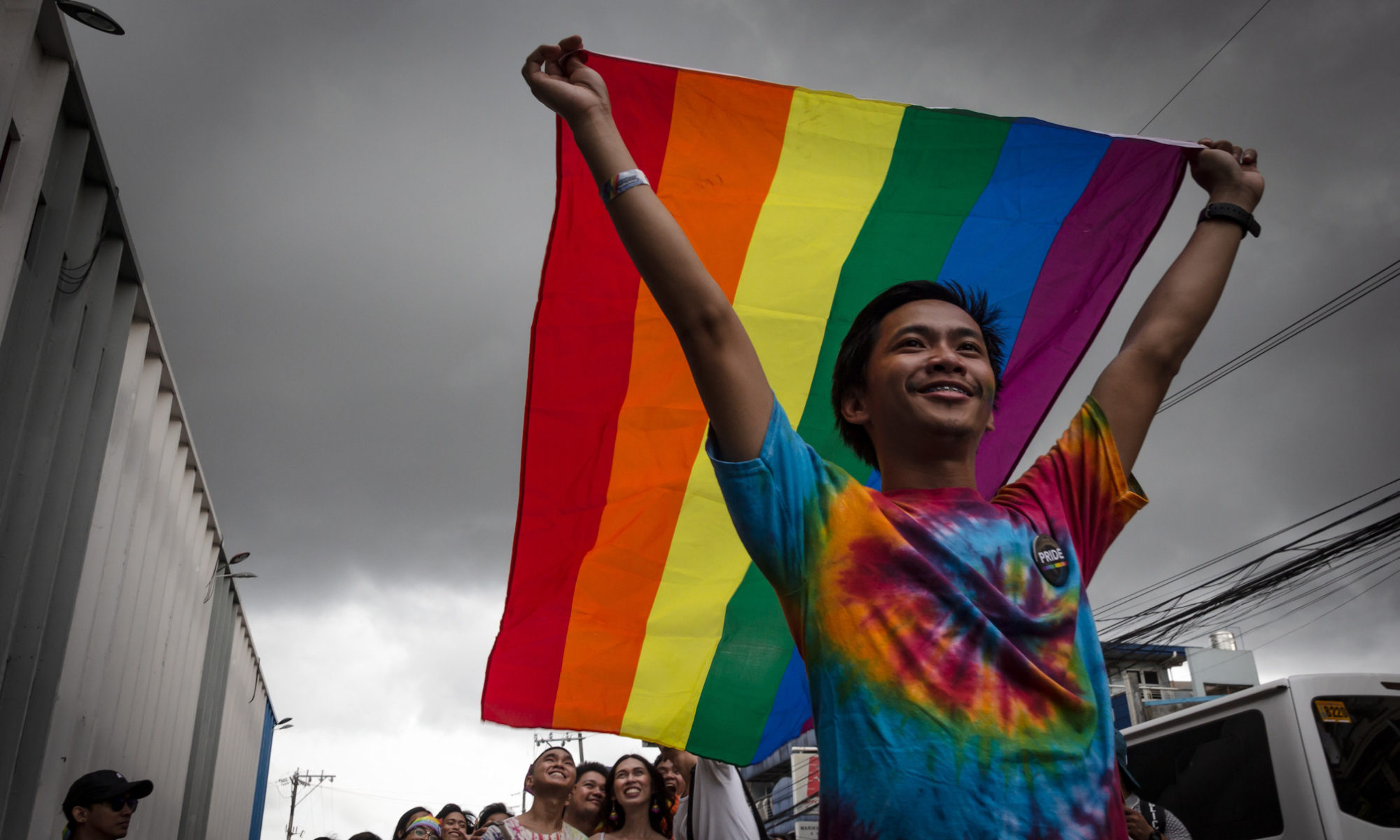
Russia: Four-year prison sentence for nightclub owner exposes deepening crackdown on LGBTI rights

Reacting to the sentencing of nightclub owner Tatiana Zorina to four years in a penal colony for purportedly organizing the “extremist activity” of a non-existent “international LGBT movement” at her venue, Marie Struthers, Amnesty International’s Eastern Europe and Central Asia Director, said:

“Tatiana Zorina’s sentencing is a stark illustration of how Russia’s abuse of ‘extremism’ legislation has spiraled into outright persecution targeting LGBTI people and their allies. Running a private venue intended as a space where LGBTI people can safely be themselves is not a crime. Denying this right is deplorable.”

Running a private venue intended as a space where LGBTI people can safely be themselves is not a crime. Denying this right is deplorable

Marie Struthers, Amnesty International’s Eastern Europe and Central Asia Director

“The Russian authorities must immediately overturn this conviction and release Tatiana Zorina. They must also repeal laws that arbitrarily label peaceful expression and association as ‘extremism’ simply because they relate to sexual orientation or gender identity that do not align with so-called ‘traditional values.’ This homophobic witch-hunt must end now.”

Background

On 23 March, the Ingodinsky District Court of Chita, Eastern Siberia, sentenced 23-year-old entrepreneur Tatiana Zorina to four years in a penal colony for “organizing the activities of an extremist organization.” In addition, the court banned her from administering online fora or leading public associations for four years upon release.

Tatiana Zorina was detained in late October 2024 following a police raid on the nightclub “Tochka”, formerly known as “Jackson”. The investigation claimed the venue was used to “promote the ideology” of the so-called “international LGBT movement,” a non-existent entity designated as an “extremist” organization in Russia on 30 October 2023 and invoked to arbitrarily target LGBTI people and those who associate with them.

By the end of 2025, at least 23 criminal cases had been opened on “extremism” charges related to LGBTI activities.

The post Russia: Four-year prison sentence for nightclub owner exposes deepening crackdown on LGBTI rights appeared first on Amnesty International.

USA/Iran: Trump’s warning that USA will attack Iran’s power plants is a threat to commit war crimes

Responding to statements by United States President Donald Trump that the USA would postpone strikes on Iran’s power plants and energy infrastructure by five days pending the outcome of discussions on the “resolution of hostilities”, Erika Guevara-Rosas, Amnesty International’s Senior Director of Research, Advocacy, Policy and Campaigns, said

“President Donald Trump must retract deeply irresponsible threats of acts that would unleash catastrophic harm on millions of civilians. The decision to not proceed with such attacks must be based on the USA’s obligations under international humanitarian law to avoid civilian harm – not the outcome of political negotiations. Going through with such attacks would cause devastating long-term consequences and severely undermine the international legal framework designed to protect civilians in wartime.

“The Islamic Republic of Iran’s authorities must also retract their threats to retaliate by striking power plants used by the USA and Israel as well as economic, industrial, and other energy infrastructure in Gulf Cooperation Council (GCC) states. They must end all unlawful attacks against energy infrastructure and desalination facilities in the GCC states. Desalination plants are critical for ensuring drinking water supply to millions of civilians in an arid region. They must further end unlawful attacks on commercial vessels in Strait of Hormuz. Iranian authorities must also immediately restore full internet access.

President Trump must immediately retract these dangerous threats and commit the US to upholding international humanitarian law.

Erika Guevara-Rosas, Amnesty International

“Intentionally attacking civilian infrastructure such as power plants is generally prohibited. Even in the limited cases that they qualify as military targets, a party still cannot attack power plants if this may cause disproportionate harm to civilians. Given that such power plants are essential for meeting the basic needs and livelihoods of tens of millions of civilians, attacking them would be disproportionate and thus unlawful under international humanitarian law, and could amount to a war crime.

“By threatening such strikes, the USA is effectively indicating its willingness to plunge an entire country into darkness, and to potentially deprive its people of their human rights to life, water, food, healthcare and adequate standard of living, and to subject them to severe pain and suffering.  

“When power plants collapse, horrific consequences cascade instantly. Water pumping stations would stop functioning, clean water would become scarce, and preventable diseases would spread. Hospitals would lose electricity and fuel, forcing surgeries to be cancelled and life-support machines to shut down. Food production and distribution networks would collapse, deepening hunger and causing widespread food scarcity. Many businesses would also shut down with devastating economic consequences including mass unemployment.  

“Causing catastrophic harm to the civilian electrical capacity – at a time when the Iranian authorities’ deliberate prolonged internet shutdown has already left Iran’s population isolated – would sever people’s last remaining connection to the outside world, including access to satellite television, at a time of extreme danger.

“President Trump must immediately retract these dangerous threats and commit the US to upholding international humanitarian law.”

Background

On 21 March, US President Donald Trump issued a 48-hour ultimatum to the Islamic Republic of Iran to reopen the Strait of Hormuz, warning that the United States would “obliterate” Iranian power plants, “starting with the biggest one first,” if the Iranian authorities failed to comply. The Islamic Republic of Iran said it would retaliate by targeting the “power plants of the occupying regime [USA] and the power plants of regional countries that supply electricity to USA bases, as well as the economic, industrial, and energy infrastructure in which Americans hold shares” if Trump follows through with his threat.

 On 23 March, Trump stated on social media that discussions with Iranian officials had taken place aimed at de‑escalating hostilities across the Middle East. He added that he had ordered a five‑day postponement of any planned military strikes against Iranian power facilities.

Attacks by the Islamic Republic of Iran have already caused harm to civilian essential infrastructure in GCC countries. On 8 March, Bahrain’s Ministry of Interior announced that an Iranian drone had caused material damage to a water desalination plant. The vice president of Bahrain’s Electricity and Water Authority told state TV that the attack did not affect water supplies or the capacity of the water network.

On 19 March the International Maritime Organization’s Council condemned threats and attacks by the Islamic Republic of Iran and the closure of the Strait of Hormuz.  As of 24 March, the IMO confirmed 18 incidents impacting commercial vessels in the “Strait of Hormuz and the Middle East”, some leading to deaths and injuries of seafarers in addition to damage.

As of 6 March, Iranian authorities stated that Israeli-USA strikes had killed 1332 people. On 15 March, the Ministry of Health stated that among those killed were 223 women and 202 children. At least 21 people have been killed across GCC states (six in Kuwait, two in Bahrain, two in Saudi Arabia, eight in the United Arab Emirates (UAE) and three in Oman). According to media reports attacks by the Islamic Republic of Iran have so far led to the death of 15 people in Israel. In the occupied West Bank, the Islamic Republic’s  attacks have killed three people.

The post USA/Iran: Trump’s warning that USA will attack Iran’s power plants is a threat to commit war crimes appeared first on Amnesty International.