Freedom of expression through photograpy

In October 2021 Pexels launched a photo challenge in partnership with Amnesty International asking photographers to address the theme of Freedom of Expression. The response was huge, with over 30,000 entries from all over the world, visualising the right to express thoughts and opinions freely through photography.

Here we showcase the 3 winning entries, and share with you a selection of the top images submitted!

1st place

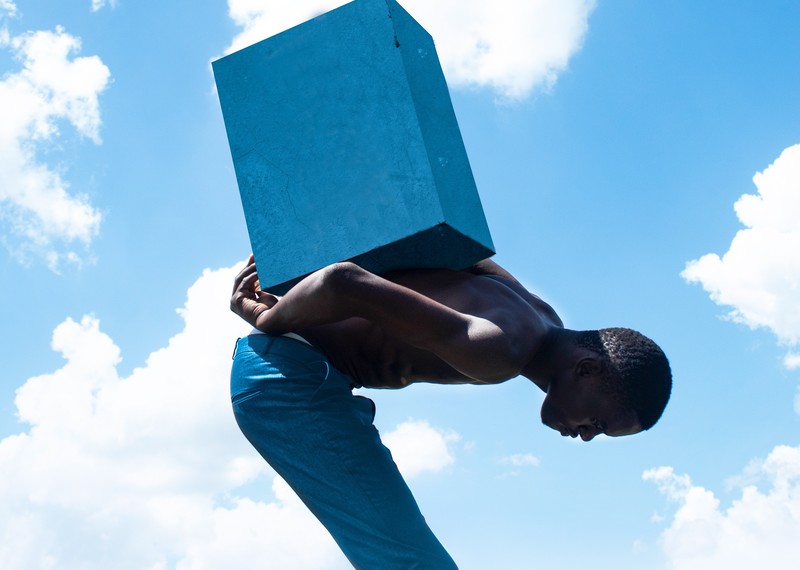
“The man holds on his back a heavy burden of depression, social injustice (racism, police brutality), and to some extent the pressure to”be a loyal citizen (with obligations to the nation that does not protect him).

“The man is shirtless to show some level of vulnerability (exposure to elements) and the act of being stripped of his rights. The background is a blue sky to show hope despite the tough times he is going through (because I always believe our struggles will eventually bear fruit even if it’s for the next generation).” – Teddy Tavan, Kenya

2nd place

“I took this photo in the middle of the strongest mobilization that Colombia had experienced in the recent years. November 2019 marked a protest that led youth to the streets, unions, universities and workers of Colombia to ask the Government for help, including solutions for public education.

“The protests lasted several months and it was on January 20, 2020 at 17:15 that I found the moment to freeze a moment between the protesters and the Esmad (Mobile Anti-riot Squad) in Bogota, Colombia.” Danilo Arenas – Colombia

3rd place

“Starting from a desire to refresh the mind in the open, me and two of my friends tried to express a complaint that was in our hearts: boredom for the past three years makes me want to move and create interesting works.” – Mochammad Algi, Indonesia

The best of the rest


To view a wider selection, visit the Pexels page.

The post Freedom of expression through photograpy appeared first on Amnesty International.

Changes on Amnesty’s International Board

Amnesty International is delighted to announce the election of Dr Anjhula Mya Singh Bais as the new Chair of its International Board. Dr Bais, of Malaysia is replacing Dr Vincent Adzahlie-Mensah of Ghana.

Tiumalu Peter Fa’afiu of New Zealand has been appointed Vice-Chair. Previously both Dr Bais and Mr Fa’afiu were Chairs of their respective Sections (country offices).

The 2021 Global Assembly also elected Renee Ngamau (Kenya), Nina Boel (Denmark) and Mandeep Singh (United Kingdom), as new International Board Members.  It also reappointed Fabiola Arce (Peru) for a two-year term.

The eleven-person International Board has a diverse set of skills and experience in fields including tech, media, finance, governance, human rights, mental health, and entrepreneurship. Led by Dr Bais, they are responsible for the global stewardship of Amnesty International’s mission and vision, its compliance with global policies and standards, governance over its International Secretariat (IS), and recruitment and oversight of its most senior staff member, the Secretary General.  

With a new Global Strategic Framework approved by the Global Assembly, the International Board will focus on the implementation of the Strategy, in addition to its obligations and responsibilities as a governance structure for a movement of over 10 million members. This includes a restructuring of global governance, growing its presence in the Global South, ensuring long-term financial sustainability and consolidating and extending Amnesty International’s position as a truly global movement.

The International Board has a number of Global Assembly-mandated committees and working groups that it leads in addition to supporting the International Secretariat in its strategic engagement with the Movement’s 65 Sections. 

With a London based Secretariat, the International Board are also Directors of Amnesty International Limited in accordance with UK law.

Amnesty’s International Board meets at least four times a year, its members are elected on staggered three-year terms by the Standing Representatives (usually the Chairs) of Amnesty International Sections and Structures (country offices) at its annual Global Assembly Meeting. 

Dr Anjhula Mya Singh Bais said: “I’m honoured to have been chosen by Amnesty members and activists to lead the tremendously talented group that make up our International Board. In a fast-changing world, in which human rights are under ever increasing pressure, the road ahead promises to be full of both challenges and opportunities for the organization. By harnessing the Movement’s many existing attributes, we aim to expand Amnesty’s presence across the world, deliver ever greater human rights impact, and position ourselves to meet the future that lies ahead.”

For more information about the work of the International Board, see here.

ENDS  

Contact: press@amnesty.org   

The post Changes on Amnesty’s International Board appeared first on Amnesty International.

Covid-19: Vaccination programmes across the world must adapt to reach the most marginalized

Covid-19 vaccination programmes across the world are excluding people from marginalized and discriminated groups by failing to take into account their unique circumstances, needs and vulnerabilities, said Amnesty International, in a public statement issued today.

Shortcomings in national vaccination programmes including insufficient or absent data collection, inadequate public information, and a failure to tackle distrust in health institutions and misinformation are disproportionately affecting the ability of groups including women, LGBTI people, Indigenous peoples, and ethnic minorities to access vaccines. These groups are also more severely affected by logistical and technical barriers to obtaining a vaccine and by a lack of civil society participation in the planning and execution of vaccine rollouts.

“Authorities across the world are currently not doing enough to ensure that vaccination programmes reach the most marginalized members of their societies. Common failings mean that states do not have a clear enough picture of Covid-19’s uneven impact on certain groups and that many are not receiving the information or support they need to get vaccinated,” said Rina Kika, researcher at Amnesty International.

“With the surge of Omicron and increasing prevalence of vaccination-based restrictions, it’s imperative that countries urgently address issues causing the inequitable and discriminatory distribution of vaccines.”

States collecting and reporting disaggregated Covid-19 data on the basis of ethnicity or race have reported higher infection and death rates of racial and ethnic minorities compared to other groups. However, only a handful of countries are collecting this data, which is crucial to addressing disproportionate effects on particular populations.

As well as collecting disaggregated information on Covid-19’s impact, Amnesty International is calling on states to collect data on vaccine uptake – currently also sorely lacking in most countries – to monitor the equality of access to vaccines and the extent to which certain groups are being excluded.

States are bound by international law to provide non-discriminatory and equal access to vaccines, which in the Covid-19 context means states must ensure that vaccines are not only available in sufficient quantities, but also that they are accessible to all populations. States must ensure that information about Covid-19 and how to obtain a vaccine is made available in formats that are accessible and understandable to all members of their populations.

Although internet access is unevenly distributed, many countries have continued to post most Covid-19 public information online, which may disproportionately exclude women, older persons, Indigenous peoples, the poor and those in rural areas, while other countries have failed to make information accessible to Indigenous peoples.

Insufficient data and contradictory information from public health authorities on the safety of Covid-19 vaccines during pregnancy created conditions for the spread of misinformation and conspiracy theories, as well as false claims about the vaccine’s impact on fertility.

Distrust in health institutions by marginalised groups because of structural inequalities, historic discrimination and abuse by health care providers also influences these groups’ access to and uptake of vaccines. In many countries, efforts to counter misinformation and distrust through targeted public health campaigns have been insufficient or absent.

Amnesty International is calling on states to ensure that public health information on Covid-19 and vaccines reaches all social groups and take steps to address concerns and questions around vaccine safety caused by the spread of false and misleading information.

The post Covid-19: Vaccination programmes across the world must adapt to reach the most marginalized appeared first on Amnesty International.

After coup, Myanmar military puts chokehold on people’s basic needs

The Myanmar military has been carrying out indiscriminate attacks on its civilian populations and obstructing access to necessities critical to their survival since it seized power nearly a year ago on 1 February, 2021, Amnesty International said today.

Amnesty International interviewed four displaced civilians and six local aid workers and volunteer humanitarian responders. Their powerful accounts highlight the military’s systematic attempts to starve people and prevent them from accessing health care as it seeks to crush armed resistance to the coup. 

For more than six decades, the military has applied a “four cuts” strategy in the country’s border areas, cutting off essential resources to destroy the support base of ethnic armed organizations fighting for self-determination. Now, it has expanded these tactics to areas where new People’s Defense Forces have emerged, as it continues to violently crack down on all forms of resistance to the coup. The military’s use of the four cuts strategy has had devastating consequences for the civilian population.

As part of its war against armed resistance, the military has not only launched indiscriminate airstrikes and burned hundreds of homes, but it has also cut off vital items and services for civilian populations across diverse ethnicities and geographic areas.      

The United Nations has identified 284,700 people internally displaced due to armed clashes and insecurity since the coup and at least two million people newly in need of humanitarian assistance in 2021, while projecting that humanitarian needs will further escalate in 2022.

On 9 December, the UN described “severely limited” humanitarian access with challenges including road blockages and increased scrutiny of humanitarian supplies and personnel.

“Since the military seized power, the people of Myanmar have faced extreme hardships. Hundreds of thousands have been forced to leave their own homes. Many are suffering from hunger and facing the frightening reality of having to survive without health or medical care even as the pandemic continues,” said Emerlynne Gil, Amnesty International’s Deputy Regional Director for Research. 

Barely surviving in the forest

Katherine* was entering the second trimester of her pregnancy when fighting between military forces and combined forces of civilian resistance groups and ethnic armed organizations erupted across Kayah State in May. The military responded to the new opposition front by conducting airstrikes, firing heavy artillery and shooting indiscriminately, causing 100,000 people to flee their homes as of 8 June, according to United Nations estimates. 

On 9 June, the UN Special Rapporteur on the situation of human rights in Myanmar Tom Andrews warned of “mass deaths from starvation, disease and exposure” across the state as the military cut off displaced people’s access to food, water and medicine, including by blocking aid deliveries.

When the fighting reached Katherine’s village in Demoso township, she and her husband fled into the forest with their two children. The family relocated several times for their safety and endured the rainy season sleeping under a sheet of tarpaulin. According to her husband, although they received some food from humanitarian aid groups and other villagers, it was insufficient. 

Around seven months into Katherine’s pregnancy, she began vomiting and suffering from dizzy spells, fatigue and shortness of breath. On one occasion, she went into seizures. By eight months, her limbs had swelled, and she had lost the ability to walk. She went into labor in October. Even though a midwife was present, neither Katherine nor her baby survived.

“She could not access nutritious food or warm shelter. My wife faced difficulties during her pregnancy, and she became weak and unable to deliver the baby,” said her husband.

She could not access nutritious food or warm shelter. My wife faced difficulties during her pregnancy, and she became weak and unable to deliver the baby.

-Katherine's husband

Kayah State’s Hpruso township has also seen mass displacement since May, but Francis* could not immediately flee with his family because he is paralyzed from the waist down. His wife and mother-in-law ran into the forest with their four children, and he joined them the next day, when people from his village came back for him and carried him.

The family returned home after a week and a half, but soon had to flee again because fighting resumed. In total, they spent about a month in the forest. “When we first ran, we just slept where we could, with no blanket or shelter. After one or two days, when things quieted down a bit, we brought some bedsheets and blankets [from home]. We stayed under a tarpaulin the whole time,” said Francis.

His family and others who had to flee their village not only had to survive with whatever food and water they could find. They also could not access medicine or medical supplies. Francis’ wife usually uses rubber gloves and catheters to assist his bowel movements and urination, but they ran out while in the forest. 

In June, a charity group offered him more stable shelter, where he now stays with his wife and two youngest children.  Although the shelter offers better facilities and access to resources than the forest, Francis said food is still limited. He also fears that the place where he is staying could come under attack.

Francis’ two older children are staying in their grandmother and aunt’s home, and they are still fleeing in and out of the forest as the fighting between the security forces and armed resistance groups continues. He wants to reunite with his children, but he worries it would create difficulties for those who are helping him. “If I choose to go back to the village and then I must flee again, I will be a burden to others. I cannot cope with that anymore, so I decided to stay here until things get better,” he said.

Carrying loved ones on their backs

In Sagaing and Magway Regions and Chin State, in Myanmar’s northwest, fighting between the military and civilian resistance groups as well as ethnic armed organizations has displaced more than 93,000 people according to the United Nations, as the military attacks residential areas with airstrikes, arson and indiscriminate gunfire.

Tial Lian,* age 30, fled into the forest from her village in Chin State’s Mindat township with her husband, two children, her father and grandmother when clashes escalated in May.

Because her father, age 77, and grandmother, whose age she estimates to be more than a hundred, are unable to walk well, Tial Lian and her husband carried them on their backs when their family fled. The family has since been going in and out of the forest, where Tial Lian and her husband have been constructing a small shelter out of tarpaulin. There would be times when, worried that their baby’s cries could alert soldiers to their location, the couple would run deeper into the forest with their children, leaving the two older people behind in the shelter for several days.

Sometimes, rats gnaw holes in the tarpaulin, which offers little protection from the elements. “When it rains, our tarpaulin cannot bear the weight of the water. We get soaked, and our blankets too,” said Tial Lian. They also sometimes go for days without eating because they do not dare to make a fire when soldiers are nearby. 

Even when they can travel back to their village, accessing food and medicine is difficult. “The roads to buy rice are blocked, and no one sells rice in the village either,” said Tial Lian.

“Because the road is blocked by soldiers, we have to pay 1500 kyats (approximately US$1) for supplies that would [usually] be only 1000 kyats,” she added. In addition to being short on rice, she said sometimes the family cannot access cooking oil, salt, or fish paste.

According to UN estimates, renewed fighting since March between the Kachin Independence Organization and the military in Myanmar’s northernmost Kachin State has displaced more than 15,000 people across the state.

Hkaw Reng* has not been back to her village in Injangyang township since fighting intensified in March. She left her village and walked with her one-year-old son for two days before setting up camp. They have since received limited humanitarian assistance. “Roads are blocked and the place where I am staying is remote, so it is hard to access food and medicine,” she said.

Around April, Hkaw Reng found out she was pregnant, but she has not yet received any prenatal care. She worries about how she will deliver the baby, as traveling to a medical facility could take hours and she would need to pass through military checkpoints on the way.

Cutting off supplies

Six local humanitarian responders described ways the military has severely limited aid responses, including by arresting aid workers and by confiscating or destroying food, medicine and relief supplies or restricting their transport.

“The military is denying life-saving aid to people. They are strangling their lifelines such as food and medical supply routes and threatening medical workers who only want to save lives,” said Emerlynne Gil. 

In November, the United Nations described a “fragile” security context in southeastern Myanmar and “heavily restricted” humanitarian access. 

In southern Shan State’s Moebye township, where fighting broke out in late May, a humanitarian response team made up of local youth tried to send relief supplies to displaced people hiding in the mountains on the morning of 8 June, according to one of the team’s members. The person, who is not being identified for fears of reprisals, said he and other members of the response team loaded a van with sacks of rice at a school which was being used as a storehouse. But when the van embarked, soldiers opened fire towards it. The van never reached its destination.

“We had to flee quickly and were not able to move the supplies,” he said.

That night, he watched from a distance as soldiers emptied the storehouse of its contents and burned them. More than 80 bags of rice, as well as other food items, medical supplies, and drums of gasoline were destroyed. The soldiers also destroyed a marked ambulance and another vehicle. “They burned everything except the portable toilets,” said the humanitarian responder.

The military is denying life-saving aid to people. They are strangling their lifelines such as food and medical supply routes and threatening medical workers who only want to save lives.

-Emerlynne Gil, Deputy Regional Director for Research

Military forces also aimed and fired their guns into the mountains, he said, causing people who had already been displaced from their homes to relocate again. Although they did not have enough food, they feared coming out of hiding to find more.

This response team member also relayed that in early October, a driver transporting food supplies designated for IDPs in Moebye was arrested between the towns of Nyaung Shwe and Pekon. “[Soldiers] confiscated all the dry food supplies and the truck and arrested the driver and his assistant.” 

The military also blocked the transport of medical supplies into Moebye since early October, according to him, and his team has been unable to receive donated relief items from Yangon. “The situation is not safe, so we don’t dare to go and collect donations and no drivers dare to transport them either.”

His team does not travel to the market in nearby Loikaw to purchase items themselves anymore and has delayed distributing some items because of the risks. They also face difficulties transferring funds to purchase items because few money transfer agents dare to help them, fearing they too could be targeted. 

This volunteer response team, which also partners with healthcare professionals to provide mobile clinics and emergency response services, sometimes had to delay or suspend these services due to fear of arrest. 

A civil society worker in neighboring Pekon township, where there have also been clashes and displacement since late May, told Amnesty International that the military started blocking roads there in June. “At first, we used other routes, but those were blocked too. Now, we are transporting [relief items] little by little but in some areas, we could not transport anything,” she said.

The military also regularly inspects the contents of vehicles at random checkpoints. “Lately, they have completely restricted transporting any medication. When people order medical supplies, [security forces] open the packages on the road and confiscate them,” she said.

Another civil society worker described similar challenges when attempting to distribute aid in Kayah State’s Loikaw, Demoso and Hpruso townships. “Soldiers stop and check a lot when we send food and tarpaulins for shelters and sometimes, we aren’t allowed to pass through. When we transport supplies, we cannot do it openly,” she said.

Her organization has removed the white flags it initially displayed on its vehicles to signal relief work. Furthermore, in order to avoid attention from the military, her organization now purchases aid in small quantities.

Fear of being attacked or caught in the crossfire has also delayed or stopped her team from reaching certain areas in Demoso township. “We have to look for a safe road which [the military] does not know about,” she said. “We stop in one place and keep the stuff, and when the road is clear, we resume the trip.”

Pervasive fear

Humanitarian responders in northwestern Myanmar are facing similar impediments, and the United Nations reported shortages of food, fuel and medical supplies on 9 December.

A volunteer with an emergency response team in Mindat, Chin State said that his group has been unable to send food or medical aid to many parts of the township due to blocked roads, and that the team delivers relief items in small quantities by motorcycle or on foot to reduce their visibility after one of its members was arrested while returning from delivering aid to displaced people.

In Sagaing region’s Kalay township, a civil society worker said that the military has “blocked all the main roads” and that security forces “check everything” in vehicles traveling in the area.

“They prohibit all items that can help [IDPs], and arrest people. There are times that we do not dare to help, and just wait,” she said. Her organization refrains from sending medicine altogether because they heard that the military confiscates all medicine at the entrance into the town.

The risks of transporting goods have also made it hard to find a driver in areas with ongoing fighting in Chin and Sagaing region where her organization operates, she said. “There were times when we had to negotiate and beg [drivers] to deliver food,” she said.

They prohibit all items that can help [IDPs], and arrest people. There are times that we do not dare to help, and just wait.

-civil society worker

A volunteer doctor in Sagaing region’s Yinmarbin township said that his team is unable to freely transport medicine or medical equipment. “Sometimes, [our suppliers] send it to us but we don’t receive it,” he said. He is part of a network providing mobile healthcare to conflict-affected communities and injured People’s Defense Force members, as well as food aid to displaced people in Sagaing region. 

The military has shut down the internet in 24 townships in central and northwestern Myanmar, including Yinmarbin, since September. The volunteer doctor said that he and his teammates consequently face a delay in accessing information about the ground situation, which had severely hampered their medical response, especially in areas where the military has at times blocked phone networks.

He and his teammates also face security risks. He told Amnesty International that in July, a temporary medical facility was hit by military shelling and gunfire, causing the volunteers and patients to flee. At least three volunteers from his network were also arrested, he said.

These accounts are emblematic of what is happening across the country and demonstrate how the Myanmar military is systematically depriving civilians of desperately needed supplies and medicine.

“We will see more lives lost if the military continues this brutal campaign against its own people. The military must allow full access for humanitarian workers in affected regions,” said Emerlynne Gil.

Note: *Names have been changed to protect their security.

The post After coup, Myanmar military puts chokehold on people’s basic needs appeared first on Amnesty International.

Where do you go when nowhere will welcome you?

States must protect thousands of Haitians on the move. This is how.

Two deadly earthquakes a decade apart. Political turmoil. The assassination of a President. Rampant insecurity. Kidnappings. Multiple massacres allegedly with state involvement. Food insecurity. Fuel shortages. A rise in gender-based violence.

The list goes on.

These are just some of the reasons why Haitians have, for years, made the decision that life was unsafe or untenable in their home countries and left in search of safety and stability for their families.

The state has, for years, failed to address the violence and instability throughout the country, and with natural disasters further destabilizing Haiti, many people have been left with few choices but to leave if they wished to survive. The international community’s efforts have also failed to address the most pressing human rights issues in the country.

Yet states within the Americas have also failed to protect them.

A few weeks ago, an Amnesty International and Haitian Bridge Alliance delegation travelled to Tapachula, Mexico, on the border with Guatemala, where we had the opportunity to interview more than 60 Haitians, all stuck in the city, which Mexican authorities have converted into a kind of “roofless prison,” while they await their asylum claims to be processed.

Haitians are not safe or secure anywhere. This was particularly clear after hearing dozens of people describe in detail how in multiple countries in the region, they had experienced human rights violations including detention and unlawful pushbacks, extortion, anti-Black racism, abuses including gender-based violence by armed groups, and destitution.

The majority of people we interviewed had left Haiti some years ago, and many went to live and work in Chile. However, they felt compelled to leave because of racism and the inability to regularize their immigration status under the Piñera administration. This left them with the uncertainty of knowing if their families were going to be safe. But although the people we spoke to could not stay in Chile, they told us they cannot return to Haiti.

All those we spoke with in Tapachula expressed fear of being deported to Haiti. One man told us he had fled Haiti months after unidentified men killed a relative who belonged to a political party. No one was ever prosecuted for the killing. A woman said she left after armed men went from house to house in her neighbourhood, burglarizing, beating and raping her family and her neighbours. She told us that reporting to the police was futile because they could not protect her, and she feared retaliation.

But that is just one part of the story.

While Mexico, the United States, and other countries in the region have the duty to ensure Haitians on the move are safe, as set out in a resolution recently published by the Inter-American Commission on Human Rights, they are not doing so.

According to the International Organisation of Migration, since mid-September, countries across the Americas have deported some 12,000 Haitians back to Haiti, the majority from the US.

In a public statement which Amnesty International, and seven other organizations, published today, we set out how the US continues to violate the rights of Haitian migrants and asylum seekers by expelling them under a Title 42 policy –an order under the guise of public health whose misuse to conduct mass expulsions has been widely condemned by the UN and health experts, among others — largely without providing access to the US asylum system or protection screenings mandated under the Convention against Torture.

But Mexican authorities are not doing much better. According to our research, Mexico’s immigration officials continue to pushback Haitians into Guatemala, often at night, without individualised assessments of people’s protection needs, and without giving them information about their right to claim asylum, in violation of international human rights standards.

As of November, more than 47,000 Haitians had claimed asylum in Mexico, but only 37% had received refugee status or complimentary protection, according to data from the Mexican Commission for Refugee Assistance (COMAR). This is compared with a success rate of 97% for Venezuelans or 84% for Hondurans. One of the reasons for this is Mexico is failing to consider Haitians refugees as defined under the Cartagena Declaration, something Mexico is already doing for other nationalities who are fleeing “massive human rights violations” or “generalized violence”, as defined in the Convention, and which clearly applies to Haiti. It is also failing to provide other forms of legal residency to Haitians, something Mexican law allows for.

But the story continues.

To arrive in Mexico, Haitians must travel overland through six to nine Latin American countries, always passing through the gruelling Darien Gap, a stretch of jungle and mountains filled with multiple dangers, including criminal armed groups.

Some of the people we interviewed teared up as they told us they had witnessed armed groups raping women migrants they had travelled through the jungle with or described the risks of the journey for their families. Even for researchers accustomed to documenting human rights violations, these stories are hard to listen to.

So too are the stories of constant microagressions to overtly racist acts that Haitians told us they experienced in many of the countries they travelled through.

“Wherever we go, they (people) look at us like ‘children of poor people’”, one man told us. Another woman said that on the bus in Chile she sometimes felt white people would move to another seat to avoid sitting next to her. Others said they experienced racial discrimination at work and were paid less and required to do more.

Another man told us that en route to Mexico, police officials in four separate countries stopped the bus he was travelling on, requested passports and then extorted everyone onboard, forcing them to pay between $20 and 30 for them to continue. On one occasion in Honduras, he said, the police made all the white people get off the bus, and then extorted all the black people who they kept inside. He was unsure if they also extorted the lighter skinned migrants, but felt Haitians were racially profiled and discriminated against.

For all these reasons, for many Haitians, nowhere is safe.

But it doesn’t have to be like this.

States across the region have in place the legal frameworks to provide Haitians with international protection in this situation, through granting asylum, or alternative forms of legal residency with appropriate safeguards, as also recommended by the UN.

In any research, you always remember the emotions people transmit. During this research trip, we will remember the dignity and determination of the Haitians we interviewed, and their strong need for stability after enduring so much trauma. They have travelled far in search of the things all humans work to secure – access to shelter, food, schools, and other basic needs. Governments across the region seem to forget that these protections are also protections governments have the obligation to provide, but which they are shamefully failing to fulfil.

This article was originally published in El Diario

The post Where do you go when nowhere will welcome you? appeared first on Amnesty International.